
Simple German Nut Filling (Nussfüllung) Recipe for Pastries


Welcome to BakeWithEase, your trusted guide to effortless and delicious baking! Ever wondered how to achieve that perfectly rich and nutty filling in traditional German pastries? Unlock the secrets to our Easy German Nut Pastry Filling and prepare to elevate your regional baking game. Discover a simple recipe that's surprisingly versatile and guaranteed to impress. Intrigued? Let's get baking!
- Simple German Hazelnut Filling (Haselnussfüllung) Recipe for Buchteln - BakeWithEase
- Introduction: Discover the Delight of Easy German Hazelnut Filling for Buchteln
- BakeWithEase's Easy German Hazelnut Filling Recipe: Step-by-Step Guide
- Preparing the German Hazelnut Filling: A Simple Process
- Using Your Easy German Hazelnut Filling
- Tips and Tricks for the Best German Hazelnut Filling
- German Hazelnut Filling Variations: Customize Your Haselnussfüllung
- Frequently Asked Questions About Haselnussfüllung (German Hazelnut Filling)
- Mastering German Hazelnut Filling: Conclusion and Further Baking Adventures with BakeWithEase
- Frequently Asked Questions
- Final Reflection: The Enduring Charm of Simple German Baking
- Unleash Your Inner Bäcker: Master the Art of Nussfüllung!
Simple German Hazelnut Filling (Haselnussfüllung) Recipe for Buchteln - BakeWithEase
Introduction: Discover the Delight of Easy German Hazelnut Filling for Buchteln
What is Haselnussfüllung? Exploring Traditional German Hazelnut Filling
Haselnussfüllung, literally translating to "hazelnut filling," is a beloved staple in German baking, particularly known for its rich, nutty flavor and moist texture. It's a sweet concoction primarily made from ground hazelnuts, sugar, and a liquid binder, often milk or cream, sometimes thickened with breadcrumbs or flour. This versatile filling is a key component in numerous German pastries, providing a delicious counterpoint to often simple doughs. While variations exist across regions and family recipes, the core remains a celebration of the humble hazelnut.
Historically, nut fillings, including those made with hazelnuts, have been a part of European baking traditions for centuries, evolving from simple ground nut and honey mixtures to the more refined versions we see today. In Germany, Haselnussfüllung is famously used in treats like Hefezopf (braided sweet bread), Nusszopf (nut braid), and, of course, the delightful Buchteln – soft, sweet yeast rolls often baked together and served with a vanilla sauce.
The specific combination of finely ground nuts, sweetness, and moisture creates a filling that remains tender and flavorful even after baking, making this easy German nut pastry filling a true classic.
Why This Easy Haselnussfüllung Recipe is Perfect for Home Bakers
Many traditional recipes for German hazelnut filling can involve multiple steps, including making a paste from scratch or using specific types of breadcrumbs. This easy Haselnussfüllung recipe, however, simplifies the process without sacrificing flavor or texture, making it incredibly accessible for anyone baking at home, regardless of experience level. It focuses on straightforward steps and commonly available ingredients, ensuring you can whip up this delicious filling whenever the craving strikes. The aim is to demystify what might seem like a complex component of German baking.
This particular easy German nut pastry filling recipe is designed for efficiency and reliable results. It streamlines the cooking process, reducing the time spent over the stove, and uses simple techniques like grinding nuts in a food processor or blender. By focusing on fresh, quality ingredients and clear instructions, home bakers can achieve a moist, flavorful Haselnussfüllung perfect for filling soft yeast doughs like Buchteln or spreading in various pastries. It's an ideal entry point into making your own authentic German fillings.
BakeWithEase's Easy German Hazelnut Filling Recipe: Step-by-Step Guide
Ingredients for the Perfect Haselnussfüllung
For a batch yielding enough easy German hazelnut filling for about 12-16 Buchteln:
- [ ] 200g whole hazelnuts (or good quality pre-ground, see FAQ)
- [ ] 100g granulated sugar
- [ ] 1 tsp vanilla sugar (optional, or 1/2 tsp vanilla extract)
- [ ] 1/2 tsp ground cinnamon
- [ ] Pinch of ground cloves (optional)
- [ ] 100-120ml milk or cream (start with less, add as needed)
- [ ] Zest of 1/4 lemon (optional, adds brightness)
The Importance of Fresh Hazelnuts for Flavor
The quality of your hazelnuts is paramount to creating a truly delicious easy German nut pastry filling. Hazelnuts contain oils that can go rancid over time, leading to an unpleasant bitter taste. Using fresh, recently purchased whole hazelnuts that you grind yourself just before making the filling ensures the brightest, purest nutty flavor. This makes a significant difference compared to using older or pre-ground nuts that may have lost some of their volatile aromas.
To ensure freshness, look for hazelnuts that are plump and have a pleasant, sweet aroma. Storing them in an airtight container in a cool, dark place or even the refrigerator can extend their shelf life. While pre-ground hazelnuts are convenient, grinding them yourself allows you to control the texture and guarantees maximum freshness right before cooking your Haselnussfüllung, resulting in a superior taste experience for your baked goods.
Sweeteners and Spices: Adding Depth to Your German Hazelnut Filling
Beyond the hazelnuts, sugar and spices are crucial for developing the characteristic flavor profile of a classic German hazelnut filling. Granulated sugar provides the necessary sweetness, balancing the richness of the nuts. Vanilla sugar or extract adds a layer of warmth and aroma, a common element in many German sweets. Cinnamon is a traditional spice that pairs beautifully with hazelnuts, providing a comforting, slightly woody note.
The optional pinch of ground cloves adds a hint of complexity and warmth, typical in many festive or autumnal German baked goods. Lemon zest, though not always included, can cut through the richness and add a lovely, subtle brightness that elevates the overall flavor of the easy German nut pastry filling. Experimenting with the amounts of these spices allows you to tailor the Haselnussfüllung to your personal preference, creating a filling that is uniquely yours.
Equipment Needed for Making Haselnussfüllung
- [ ] Food processor or high-speed blender for grinding hazelnuts
- [ ] Medium saucepan
- [ ] Wooden spoon or heatproof spatula
- [ ] Measuring cups and spoons
- [ ] Kitchen scale (recommended for accuracy)
Preparing the German Hazelnut Filling: A Simple Process
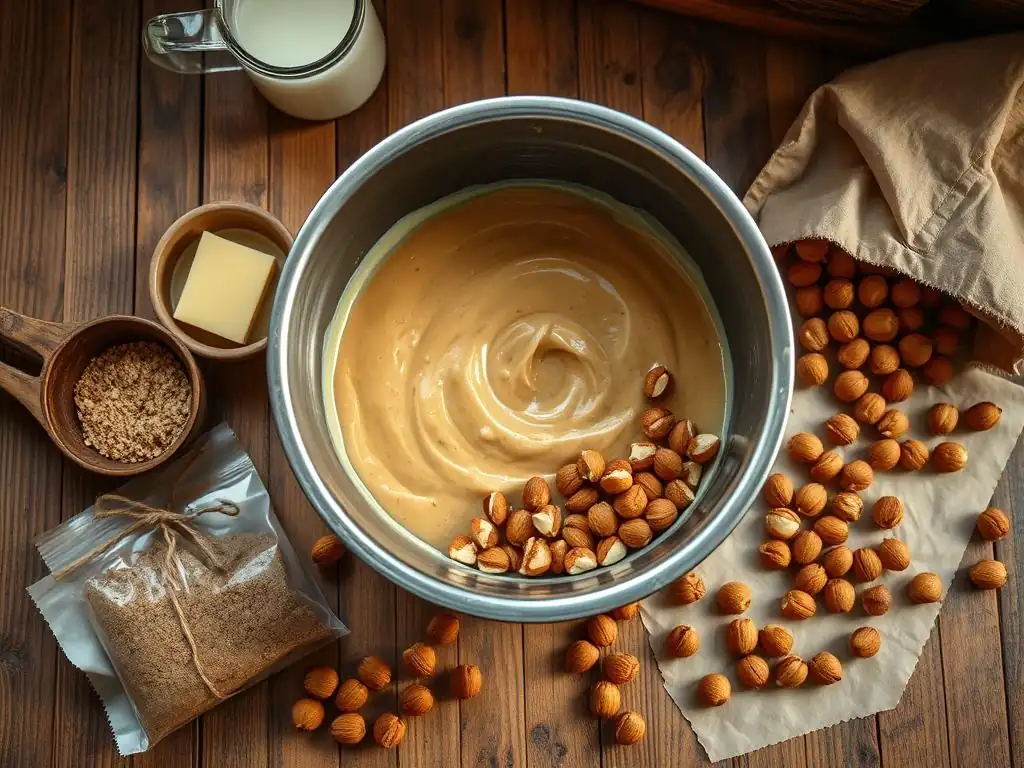
Step 1: Grinding the Hazelnuts for Optimal Texture
The first crucial step in making this easy German hazelnut filling is preparing the hazelnuts. If using whole hazelnuts, you'll need to grind them. Place the 200g of whole hazelnuts into your food processor or high-speed blender. Pulse the nuts in short bursts, stopping frequently to scrape down the sides and check the texture. The goal is a fine, flour-like consistency, but be careful not to over-process, as this can turn the nuts into a paste (nut butter) due to their natural oils.
Achieving the right texture is important for how the Haselnussfüllung will behave when baked inside pastries like Buchteln. A fine grind allows the filling to become moist and cohesive without being greasy. It should resemble coarse sand or fine breadcrumbs, not a smooth spread. This step usually takes only 30-60 seconds of pulsing depending on your equipment.
Step 2: Combining Ingredients for a Flavorful Base
Once the hazelnuts are ground to the desired texture, transfer them to a medium saucepan. Add the 100g of granulated sugar, 1 tsp vanilla sugar (or vanilla extract), 1/2 tsp ground cinnamon, the pinch of ground cloves (if using), and the lemon zest (if using). Stir these dry ingredients together with a wooden spoon or spatula to ensure the spices and sugar are evenly distributed among the ground hazelnuts.
Next, gradually add the milk or cream. Start with about 100ml and stir it into the nut mixture. The goal is to moisten all the dry ingredients. The mixture will look crumbly at first but should start to come together as you stir. The exact amount of liquid needed can vary slightly depending on the moisture content of your hazelnuts and the fineness of your grind. You want a mixture that is moist but not liquidy – it should hold together when pressed but still be somewhat crumbly.
Step 3: Cooking the Haselnussfüllung to Perfection
Place the saucepan with the combined ingredients over medium heat. Stir constantly as the mixture heats up. The sugar will begin to dissolve, and the hazelnuts will absorb the liquid. Continue to cook and stir for about 5-10 minutes. The mixture will thicken as it cooks and the starches in the nuts (and any potential thickeners if using a variation) activate.
During this cooking phase, the flavors meld together, and the texture develops. Keep stirring to prevent the bottom from sticking or burning. The Haselnussfüllung is ready when it forms a thick, spreadable paste that pulls away from the sides of the pan slightly. It should be moist and cohesive, not dry or overly wet. This careful cooking ensures the easy German nut pastry filling has the ideal consistency for filling pastries.
Achieving the Right Consistency for Filling Buchteln
The finished Haselnussfüllung should have a consistency similar to thick oatmeal or a firm paste. It needs to be firm enough to spoon or pipe into the center of your dough portions without being too runny, but also moist enough to remain tender and flavorful after baking inside the Buchteln. If the mixture seems too dry after cooking, you can add another tablespoon or two of milk or cream, stirring it in off the heat until incorporated.
Conversely, if it appears too wet, return it to low heat and stir for a few more minutes to allow some moisture to evaporate. Remember that the filling will thicken slightly as it cools. Once cooked to the correct consistency, remove the pan from the heat and let the Haselnussfüllung cool completely before using it to fill your pastries. Cooling is essential as hot filling can affect yeast dough.
Using Your Easy German Hazelnut Filling
Filling Classic German Buchteln
Buchteln are perhaps the most classic use for a rich German hazelnut filling. To fill Buchteln, you'll typically roll or pat out portions of sweet yeast dough into small circles or squares. Place a generous spoonful (about 1-2 tablespoons) of the cooled Haselnussfüllung in the center of each dough piece. Carefully gather the edges of the dough around the filling, pinching them tightly together to seal the filling inside, forming a ball or bun.
Place the filled Buchteln seam-side down in a buttered baking dish, often arranged close together so they puff up and stick slightly during baking, creating those characteristic tear-apart rolls. Allow the filled buns to proof before baking according to your Buchteln recipe. The easy German nut pastry filling will remain moist and delicious inside the soft, fluffy dough.
Beyond Buchteln: Creative Uses for Haselnussfüllung
While Buchteln are a perfect match, this easy German hazelnut filling is incredibly versatile for other baked goods. You can use it as a filling for braided sweet breads (Nusszopf), rolling it into the dough before braiding. It works wonderfully in yeast rolls, Danish pastries, or even as a layer in cakes, like a Nusskuchen (nut cake).
Consider using the Haselnussfüllung as a filling for cookies, perhaps sandwiched between two shortbreads or enclosed in a simple yeast cookie dough. It can also be spread onto puff pastry or phyllo dough before rolling and baking for quick and easy nut rolls or strudels. The possibilities are vast, allowing you to bring the comforting flavor of German hazelnut filling to many of your favorite baking projects.
Tips and Tricks for the Best German Hazelnut Filling

Storing Your Haselnussfüllung for Maximum Freshness
Proper storage is key to keeping your easy German hazelnut filling fresh and ready for use. Once the filling has cooled completely, transfer it to an airtight container. It can be stored in the refrigerator for up to 5-7 days. Ensure the container is well-sealed to prevent the filling from drying out or absorbing odors from the fridge.
For longer storage, Haselnussfüllung freezes exceptionally well. Place the cooled filling in a freezer-safe container or heavy-duty freezer bag, removing as much air as possible. It can be frozen for up to 3 months. To use frozen filling, thaw it overnight in the refrigerator. You might need to give it a good stir and potentially add a tiny splash of milk or cream if it seems a little dry after thawing.
Troubleshooting Common Haselnussfüllung Issues
Making this easy German nut pastry filling is straightforward, but sometimes minor issues can arise. Knowing how to address them ensures a successful result every time.
Preventing a Dry Filling
If your Haselnussfüllung seems too dry after cooking and cooling, it's usually because it didn't absorb enough liquid or cooked for too long. To fix this, simply stir in additional milk or cream, one tablespoon at a time, until the filling reaches the desired moist, paste-like consistency. Do this off the heat. A good rule of thumb is to add just enough liquid so it's easy to spoon and holds its shape without crumbling excessively.
Another factor contributing to dryness can be the type of hazelnuts or how finely they were ground. Very dry nuts or an extremely fine grind can absorb more liquid. Don't be afraid to adjust the milk quantity slightly during the cooking process if you notice it's thickening too quickly.
Adjusting Sweetness and Spice Levels
Taste your Haselnussfüllung after it has cooked and cooled slightly. If you prefer it sweeter, you can stir in a little extra powdered sugar (granulated sugar might not dissolve well once cooled). If you want more pronounced spice flavors, you can mix in a little extra cinnamon, cloves, or vanilla.
Remember that flavors can mellow slightly during baking, especially the spices. It's often better for the filling to taste slightly stronger (sweeter or spicier) before baking than you ultimately want the finished product to be. Adjusting these levels is part of personalizing your easy German nut pastry filling.
German Hazelnut Filling Variations: Customize Your Haselnussfüllung
This easy German hazelnut filling recipe is a fantastic base, but it's also wonderfully adaptable. Don't hesitate to experiment with additions to create your own unique version of Haselnussfüllung.
Adding Chocolate to Your Haselnussfüllung
Chocolate and hazelnuts are a classic pairing! You can easily incorporate chocolate into your German hazelnut filling for a richer, more decadent taste. Stir in about 50-70g of finely chopped dark or milk chocolate (or chocolate chips) into the warm Haselnussfüllung just after you take it off the heat. The residual heat will melt the chocolate, which you can then stir in until smooth and fully combined.
Alternatively, you can add a tablespoon or two of unsweetened cocoa powder along with the dry ingredients in Step 2. This will give the filling a subtle chocolatey undertone without the richness of melted chocolate. A chocolate-infused easy German nut pastry filling is particularly lovely in sweet rolls or as a cake layer.
Incorporating Dried Fruits and Zest
Adding dried fruits can introduce chewy texture and bursts of sweetness or tang to your German hazelnut filling. Finely chopped raisins, cranberries, or even dried apricots can be stirred into the cooked Haselnussfüllung once it has cooled slightly. About 30-50g of finely chopped dried fruit is usually sufficient.
You can also play with different zests beyond lemon. Orange zest, for instance, pairs beautifully with both hazelnuts and chocolate. Adding the zest of half an orange along with or instead of the lemon zest in Step 2 will give your Haselnussfüllung a lovely, fragrant citrus note.
Exploring Different Types of Spices in Your German Filling
While cinnamon and cloves are traditional, other spices can complement the hazelnut flavor in your easy German nut pastry filling. A pinch of nutmeg adds warmth, while a tiny amount of cardamom can introduce an exotic, fragrant element. You could also experiment with a touch of allspice.
Consider the final pastry you'll be using the filling in when choosing spices. For instance, cardamom might be lovely in a braided bread, while nutmeg could be perfect for a cake filling. Start with small amounts, maybe 1/8 or 1/4 teaspoon, as spices can be potent.
Frequently Asked Questions About Haselnussfüllung (German Hazelnut Filling)

Can I Use Pre-Ground Hazelnuts?
Yes, you can use pre-ground hazelnuts for this easy German hazelnut filling recipe for convenience. However, as mentioned earlier, using freshly ground nuts will provide the best flavor. If you use pre-ground hazelnuts, ensure they are as fresh as possible and store them properly. You might find that pre-ground nuts absorb liquid slightly differently, so you may need to adjust the milk quantity by a tablespoon or two.
How Long Does Haselnussfüllung Last?
When stored properly in an airtight container in the refrigerator, your homemade easy German nut pastry filling will last for approximately 5-7 days. If you need to keep it longer, it can be frozen for up to 3 months. Always check for any signs of spoilage, such as off odors or discoloration, before using.
Can This Recipe Be Made Vegan or Gluten-Free?
Making this Haselnussfüllung recipe vegan is quite simple. Replace the milk/cream with a plant-based alternative like almond milk, soy milk, or oat milk. The cooking process and quantities should remain largely the same. To make it gluten-free, ensure all your ingredients (like vanilla extract) are certified gluten-free. The core ingredients – hazelnuts, sugar, spices, and milk – are naturally gluten-free. This easy German nut pastry filling is highly adaptable!
Mastering German Hazelnut Filling: Conclusion and Further Baking Adventures with BakeWithEase
You've now mastered the art of making a simple, yet incredibly flavorful easy German hazelnut filling! This versatile Haselnussfüllung is the perfect addition to your baking repertoire, opening up a world of delicious German pastries. Whether you're filling classic Buchteln or experimenting with your own creations, the rich, nutty taste is sure to impress.
Expand Your German Baking Repertoire: Link to Buchteln and Dampfnudeln Recipes on BakeWithEase
Now that you have your delicious German hazelnut filling ready, why not put it to good use? This filling is ideal for our classic Buchteln recipe, those soft, sweet baked rolls that are a true German comfort food. You can find the step-by-step guide to making perfect Buchteln right here on BakeWithEase. Another delightful German yeast dumpling that pairs wonderfully with sweet fillings (or savory!) is Dampfnudeln – steamed buns often served with vanilla sauce or fruit compote. Explore our Dampfnudeln recipe to expand your skills further.
We love seeing what you bake! If you make this easy German nut pastry filling or use it in your pastries, share your photos and experiences with the BakeWithEase community. Your baking journey inspires others, and we can't wait to see the delicious treats you create with your homemade Haselnussfüllung. Happy Baking!
Frequently Asked Questions
What makes this German nut filling recipe easy?
The recipe uses simple, readily available ingredients and provides clear, step-by-step instructions making it accessible for bakers of all levels. It focuses on a straightforward process, avoiding complex techniques.
Can I use different types of nuts in this filling?
Yes, while the recipe likely specifies a type, you can often substitute with other nuts like walnuts, pecans, or hazelnuts, adjusting the roasting time as needed. Consider the flavor profile of each nut.
How should I store leftover German nut filling?
Store any leftover filling in an airtight container in the refrigerator. It typically lasts for 3-5 days and can be used in various pastries or desserts.
What types of pastries is this nut filling best suited for?
This type of filling is versatile and great for Buchteln, Schnecken (snails), or other rolled pastries. It can also be used in tarts and strudels to add a nutty flavor.
Is it possible to make this filling vegan or dairy-free?
Yes, you can substitute dairy butter with a vegan butter alternative and milk with a plant-based milk like almond or soy. Ensure all other ingredients are vegan-friendly.
Final Reflection: The Enduring Charm of Simple German Baking
The humble Nussfüllung, a seemingly simple nut filling, speaks volumes about the enduring power of traditional recipes and the joy of homemade treats. Its ease of preparation belies the rich history and comforting familiarity it brings to countless German pastries, a testament to the enduring appeal of uncomplicated pleasures. This recipe, passed down through generations, continues to connect us to culinary heritage and the satisfaction of creating something delicious from scratch.
The impact of this simple filling extends far beyond the kitchen; it represents a connection to family, tradition, and the comforting warmth of home-baked goods. It's a reminder that sometimes, the most satisfying experiences are the simplest. The best things in life are simple,
a phrase often heard, rings particularly true when considering the enduring appeal of this classic filling. Its versatility, allowing it to be adapted to personal preferences and dietary needs, further solidifies its place in the modern culinary landscape.
Now, I invite you to consider the possibilities. Don't just bake this Nussfüllung; experience it. Reflect on the simple act of creating something delicious from basic ingredients, and the joy it brings to yourself and those you share it with. Let this recipe be a springboard for your own culinary adventures, a reminder that even the smallest acts of creation can hold immense meaning and bring lasting satisfaction. Go forth and bake!
Unleash Your Inner Bäcker: Master the Art of Nussfüllung!
Thanks for joining us on this delicious journey into the world of German baking! We hope you've gained a newfound appreciation for the simplicity and rich flavor of Nussfüllung. Ready to take your baking skills to the next level?
- Try the recipe today! Experiment with different nuts or add a touch of your own personal flair to this classic filling. Share your creations with us—we'd love to see them!
- Share this recipe with a fellow baking enthusiast. Spread the joy (and the deliciousness!) of Nussfüllung.
- Leave a comment below! What's your favorite way to use Nussfüllung? What variations are you excited to try?
Ready to create your own masterpiece of German pastry? Let's hear your baking adventures!