
Bake Classic Christstollen with Ease: Your Simple Holiday Recipe

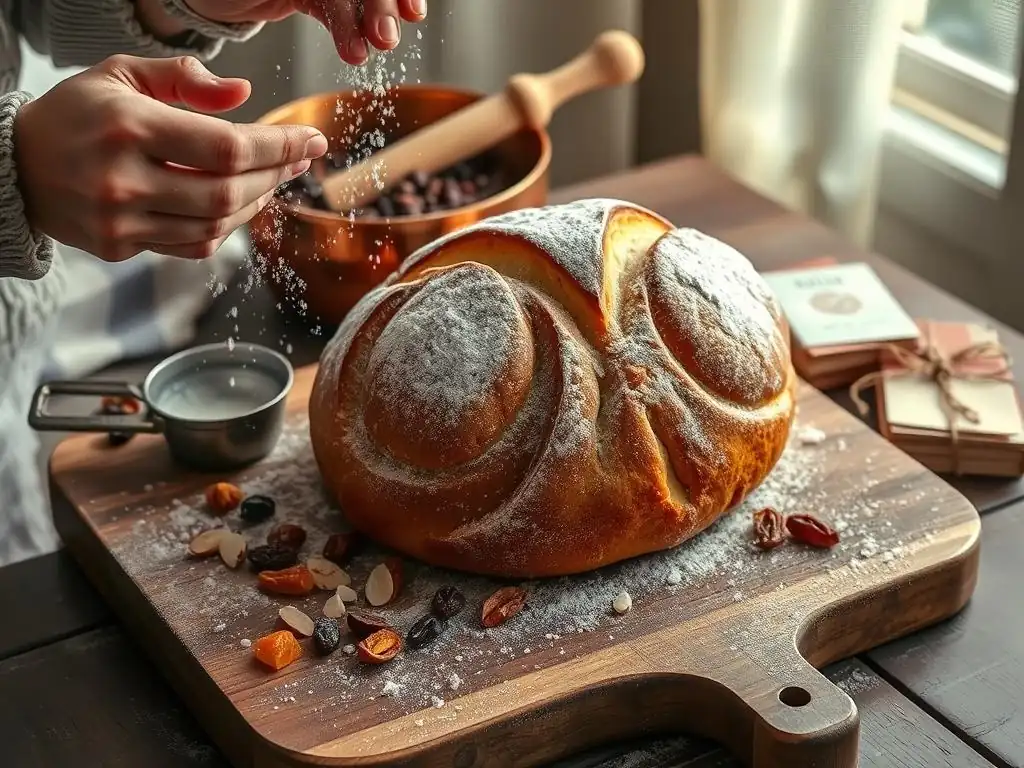
Welcome to BakeWithEase, your haven for baking brilliance! Ever dreamt of a perfect, melt-in-your-mouth Christstollen, but felt intimidated by traditional recipes? Prepare to be amazed! Dive into our latest guide and discover an easy Christstollen recipe for beginners, unlocking the secrets to this classic holiday treat. We'll guide you through each step, making even this traditionally complex bake surprisingly simple. Intrigued? Let's get baking!
- Introduction to Christstollen: A German Baking Tradition
- Easy Christstollen Recipe for Beginners: Step-by-Step Guide
- Tips and Tricks for the Perfect Christstollen
- Enjoy Your Homemade Christstollen!
- Frequently Asked Questions
- Final Reflection: The Enduring Magic of Christstollen
- Unlock the Magic of Stollen: Bake Your Best Yet!
Introduction to Christstollen: A German Baking Tradition
What is Christstollen? Understanding this Festive German Bread
Christstollen is a traditional German fruit bread, often enjoyed during the Christmas season. It's a rich, dense loaf typically containing dried fruit, nuts, and spices, often with a log of marzipan baked inside. The loaf is usually covered in melted butter and dusted generously with powdered sugar, giving it a snow-covered appearance symbolic of the swaddled Christ child, which is one interpretation of its shape. Historically, Stollen dates back to the 15th century in Dresden, Germany, where it was first mentioned in official documents around 1474 as a pastry baked for the Striezelmarkt, one of Germany's oldest Christmas markets.
This iconic bread is distinct from other fruitcakes due to its specific shape, rich butter content, and the traditional finishing process. While variations exist, a classic Christstollen from Dresden, known as Dresdner Christstollen, has strict regulations regarding ingredients and production methods, ensuring its quality and authenticity.
A typical loaf can weigh anywhere from 500 grams to over 2 kilograms, and its dense structure allows it to keep well for several weeks when stored correctly, making it a perfect bake-ahead holiday treat. The blend of citrus peel, raisins, currants, almonds, and fragrant spices like cardamom and cinnamon creates a unique aroma and flavor synonymous with German Christmas baking.
Why This Easy Christstollen Recipe is Perfect for Beginners
Embarking on a traditional bake like Christstollen might seem daunting, but this easy Christstollen recipe is specifically designed to guide beginners through the process with minimal stress. Many traditional Stollen recipes involve complex dough handling or lengthy fermentation periods, which can be challenging for those new to enriched breads. This simplified approach focuses on straightforward steps, clear instructions, and common ingredients, making the joy of baking this festive bread accessible.
We've streamlined techniques like dough mixing and shaping to remove common hurdles faced by beginner bakers. Instead of intricate folds requiring advanced skills, this guide uses a simple method to achieve the classic shape. Furthermore, the ingredient list is curated to focus on essentials while still delivering authentic flavor, avoiding obscure items that might be hard to find. By following this easy Christstollen recipe for beginners, you can confidently create a beautiful and delicious loaf that tastes homemade and truly captures the spirit of the holidays, proving that mastering German baking delights is within reach.
Easy Christstollen Recipe for Beginners: Step-by-Step Guide
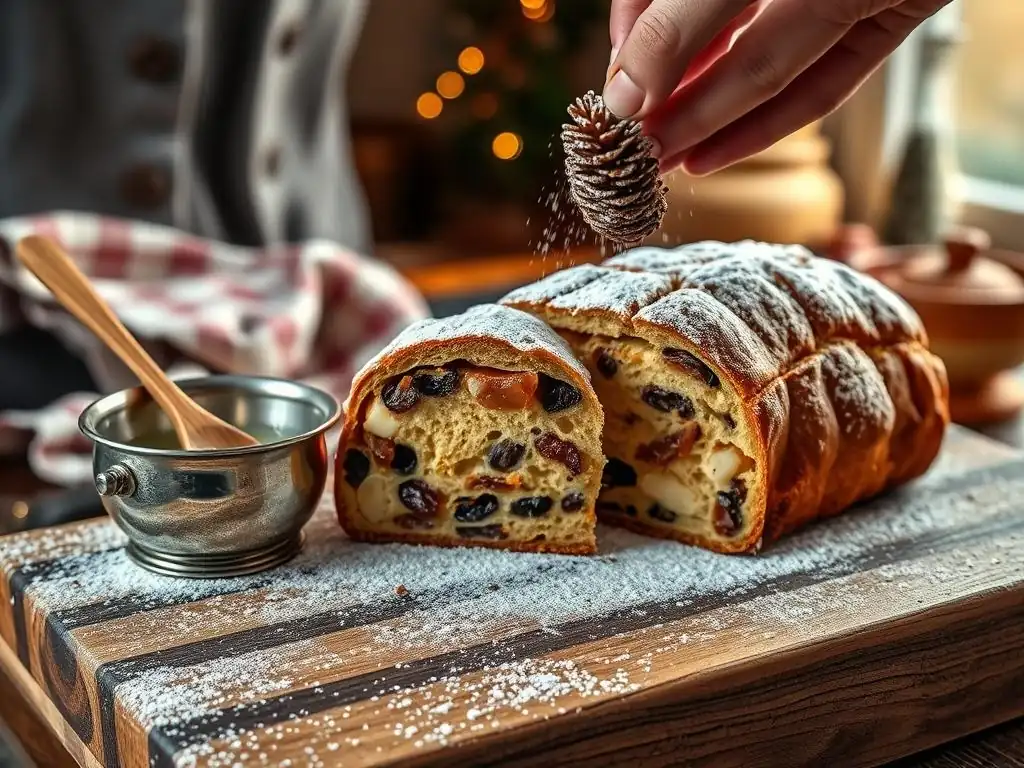
Gathering Your Ingredients: Christstollen Essentials
Before you begin baking your easy Christstollen recipe, it's crucial to have all your ingredients measured and ready. The quality of your ingredients significantly impacts the final taste and texture of your festive bread. For this beginner-friendly version, we focus on standard pantry staples and readily available dried fruits and nuts.
You'll need items like all-purpose flour, sugar, yeast, butter, milk, eggs, and a selection of dried fruits and nuts like raisins, currants, candied citrus peel, and slivered almonds. Ensure your butter is softened to room temperature, which is typically achieved by leaving it out for about an hour before baking.
Finding quality ingredients for your homemade Christstollen is generally quite easy. Most major supermarkets carry the essential dried fruits and nuts. Look for plump, moist raisins and currants, and good quality candied orange and lemon peel. Slivered almonds are preferable for texture.
Spices like ground cardamom, cinnamon, and a pinch of nutmeg are usually found in the spice aisle. For yeast, active dry yeast or instant yeast will work well; just check the package instructions for activation if using active dry. Using fresh ingredients, especially the dried fruits and yeast, will contribute to a better-tasting and more successful easy Christstollen recipe.
Key Ingredients for Authentic Christstollen Flavor
- All-purpose flour
- Granulated sugar
- Active dry or instant yeast
- Whole milk
- Unsalted butter
- Eggs
- Raisins
- Currants
- Candied orange peel
- Candied lemon peel
- Slivered almonds
- Ground cardamom
- Ground cinnamon
- Pinch of nutmeg
- Salt
- Powdered sugar (for finishing)
Where to Find Quality Christstollen Ingredients
- Local supermarkets (most common ingredients)
- Specialty baking stores (for high-quality candied peel or specific nut types)
- Online retailers (wider selection of organic or specific origin ingredients)
Preparing the Ingredients: A Baker's Checklist
A crucial step in many enriched bread recipes, including this easy Christstollen recipe, is properly preparing the dried fruits. Dried fruits like raisins and currants can be quite hard and dry, and soaking them helps them plump up, becoming juicy and flavorful within the loaf.
A common method is to soak them in warm water, orange juice, or even a festive spirit like rum or brandy for at least 30 minutes, or ideally for several hours or overnight. This ensures they distribute moisture evenly throughout the dough, preventing the final Christstollen from being dry and adding an extra layer of flavor, especially if using alcohol.
Activating the yeast is another vital preparation step if you are using active dry yeast. This involves dissolving the yeast in warm liquid (usually milk or water) with a pinch of sugar and letting it sit for 5-10 minutes until it becomes foamy. This foam indicates that the yeast is alive and active, ready to leaven your easy Christstollen dough.
If you are using instant yeast, this step is often not necessary as it can be mixed directly with the dry ingredients, but checking the package instructions is always recommended. Ensuring your yeast is active is key to a good rise and a light, airy (relatively for Stollen) crumb structure.
Soaking the Dried Fruits: Plumping Up for Flavor
- Combine dried fruits (raisins, currants, candied peel) in a bowl.
- Pour warm water, juice, or spirit over the fruit until covered.
- Let soak for at least 30 minutes, or preferably longer.
- Drain well before adding to the dough.
Preparing the Yeast: Activating the Dough's Rise
- If using active dry yeast, warm milk (to about 105-115°F or 40-46°C).
- Stir in a pinch of sugar and the yeast.
- Let stand for 5-10 minutes until foamy.
- If using instant yeast, proceed according to package directions (often mix directly with dry ingredients).
Mixing the Christstollen Dough: A Simple Method
Mixing the dough for this easy Christstollen recipe is straightforward. You'll combine the prepared yeast mixture (or just the instant yeast) with the warm milk, melted butter, eggs, sugar, and salt in a large bowl. Gradually add the flour, mixing until a shaggy dough forms.
Knead the dough, either by hand on a lightly floured surface or using a stand mixer with a dough hook, until it becomes smooth and elastic. This usually takes about 8-10 minutes by hand or 5-7 minutes in a mixer. Towards the end of kneading, incorporate the drained soaked fruits, nuts, and spices, distributing them evenly throughout the dough without overmixing.
Once the dough is mixed and the fruits and nuts are incorporated, it's time for the first rise. Place the dough in a lightly oiled bowl, turning to coat. Cover the bowl tightly with plastic wrap or a clean kitchen towel. Allow the dough to rise in a warm place, free from drafts, until it has roughly doubled in size.
This primary fermentation step is crucial for developing flavor and texture. Depending on the warmth of your kitchen and the yeast activity, this can take anywhere from 1 to 2 hours. A good indicator is when the dough springs back slowly when gently poked with a finger.
First Rise: Allowing the Dough to Develop
- Place kneaded dough in a lightly oiled bowl.
- Cover and let rise in a warm spot until doubled in size.
- Approximate time: 1-2 hours.
Shaping the Christstollen: The Unique Fold

Shaping the Christstollen is what gives it its distinctive form, often interpreted as a swaddled baby. For this easy Christstollen recipe, we'll use a simple method to achieve this classic look. After the first rise, gently punch down the dough to release the air. Turn the dough out onto a lightly floured surface and shape it into an oval or rectangular loaf, about 10-12 inches long and 6-8 inches wide. You can use a rolling pin for this, aiming for a thickness of about 1.5 to 2 inches.
Now, create the characteristic fold. Instead of folding the dough completely in half, which can be tricky with a fruit-laden dough, make an off-center fold. Using a rolling pin or the side of your hand, make a deep indentation lengthwise, slightly off-center (about one-third of the way across the width). Then, gently fold the smaller section of the dough over the larger section, pressing lightly to seal the seam underneath. This creates the iconic shape with a raised ridge, ready for its final rise and baking. Place the shaped loaf carefully onto a baking sheet lined with parchment paper.
How to Create the Classic Christstollen Shape
- Punch down risen dough and shape into an oval/rectangle (approx. 10-12" x 6-8", 1.5-2" thick).
- Make a lengthwise indentation slightly off-center (about 1/3 across).
- Fold the smaller section over the larger section.
- Place on a parchment-lined baking sheet.
Baking the Christstollen: Achieving Golden Perfection
Baking your easy Christstollen to golden perfection requires the right temperature and time. After shaping, let the loaf rest on the baking sheet for a second short rise, often called proofing, for about 30-45 minutes. This allows the dough to relax and expand slightly before hitting the heat. Preheat your oven to the correct temperature, typically around 325-350°F (160-175°C). A slightly lower temperature than regular bread baking helps prevent the outside from browning too quickly before the dense interior is fully cooked.
Place the baking sheet with the Christstollen in the preheated oven. The baking time will vary depending on the size of your loaf and your specific oven, but a typical 1-kilogram loaf might take anywhere from 50 to 70 minutes. You'll know it's done when the crust is a deep golden brown, and a skewer or cake tester inserted into the center (avoiding large fruits or nuts) comes out clean.
If the top starts to brown too quickly, you can loosely tent it with aluminum foil for the remaining baking time. Baking it thoroughly is important for structure and longevity.
Oven Temperature and Baking Time Guide
- Preheat oven to 325-350°F (160-175°C).
- Bake for approximately 50-70 minutes for a 1kg loaf.
- Tent with foil if browning too quickly.
- Check for doneness with a skewer.
Cooling and Finishing: The Final Touches
The finishing steps are what truly transform a baked loaf into a classic Christstollen. Immediately after taking the hot Christstollen out of the oven, while it's still piping hot, generously brush it all over with melted unsalted butter. Use a pastry brush to ensure complete coverage, getting into all the crevices. This butter soak adds richness, keeps the bread moist, and provides the base for the signature powdered sugar coating. A typical loaf might absorb anywhere from 50 to 100 grams of melted butter.
Once the butter is absorbed, allow the Christstollen to cool slightly on the baking sheet for about 10-15 minutes. Then, while it's still warm but not hot enough to melt the sugar instantly, dust it very generously with powdered sugar. You can use a sieve or a powdered sugar shaker for an even coating.
Some traditional methods even involve a second coating of butter and sugar after the bread has cooled completely and been stored for a while, but for an easy Christstollen recipe and immediate enjoyment, one generous dusting is perfect. This thick layer of powdered sugar not only gives it its iconic appearance but also helps preserve the loaf.
Brushing with Butter and Dusting with Sugar: The Christstollen Finish
- Immediately after baking, brush generously with melted butter.
- Let cool slightly (10-15 minutes) on the baking sheet.
- Dust thickly with powdered sugar while still warm.
Tips and Tricks for the Perfect Christstollen
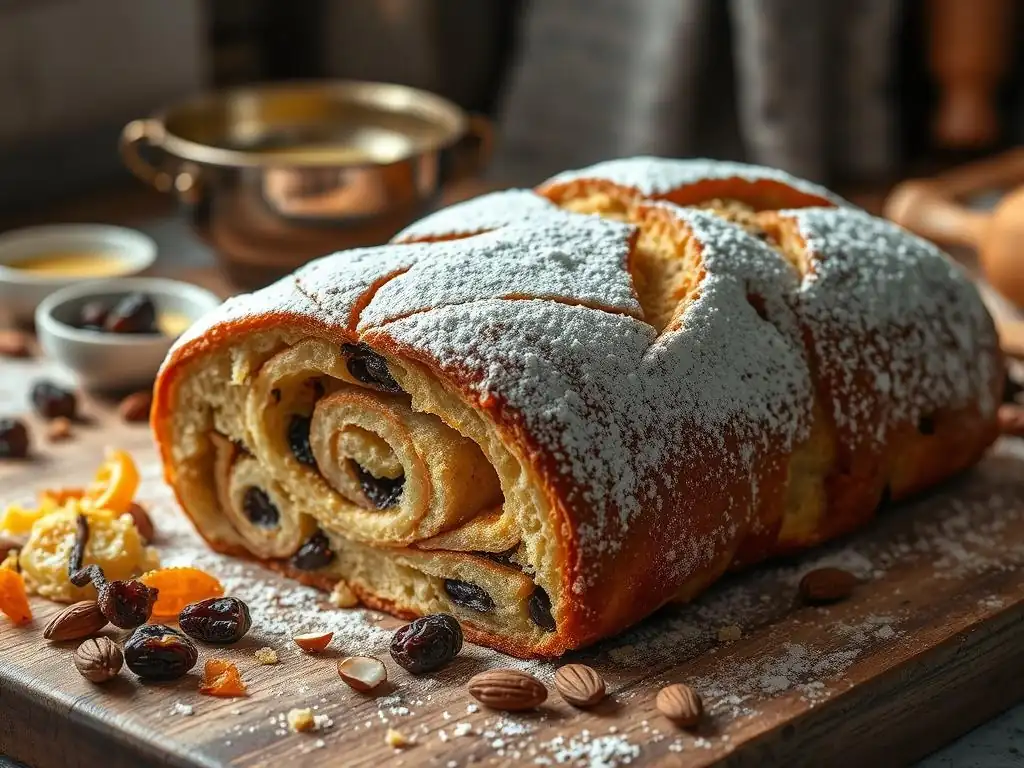
Troubleshooting Common Christstollen Baking Problems
One common issue when baking rich fruit breads like Christstollen is ending up with a dry loaf. This can happen if the dough is over-kneaded, the fruits are not properly soaked, or the bread is over-baked. To avoid dry Christstollen, ensure your dried fruits are plumped up before adding them to the dough – soaking in warm liquid for several hours is ideal.
Be careful not to over-knead the dough; stop as soon as it is smooth and elastic. When baking, use the recommended lower temperature and check for doneness using a skewer rather than relying solely on visual cues; over-baking by even a few minutes can dry it out.
Another frustrating problem is when your Christstollen dough is not rising as expected. This is almost always related to the yeast. Ensure your yeast is fresh and not expired. If using active dry yeast, make sure your liquid is the correct temperature for activation (too hot will kill it, too cold won't activate it) and that it becomes foamy before adding it to the dry ingredients.
The rising environment also matters; find a warm, draft-free spot in your kitchen. If your kitchen is cool, you can create a warmer spot by placing the covered dough in a slightly warm (turned off) oven with the light on. Patience is also key; sometimes dough just needs a little more time to rise, especially in cooler conditions.
Dry Christstollen: How to Avoid It
- Properly soak dried fruits.
- Do not over-knead the dough.
- Avoid over-baking; check doneness carefully.
Christstollen Dough Not Rising: Solutions and Prevention
- Ensure yeast is fresh and active.
- Use correct liquid temperature for yeast activation.
- Provide a warm, draft-free rising environment.
- Allow adequate time for rising.
Storing Christstollen: Keeping it Fresh
Proper storage is essential for keeping your homemade Christstollen fresh and delicious, especially since it's often baked ahead of time for the holiday season. Once your loaf has completely cooled and been finished with butter and sugar, wrap it tightly. Traditionally, Christstollen is wrapped first in parchment paper or wax paper, then in aluminum foil, and finally placed in an airtight container or a clean linen cloth stored in a cool, dry place. Avoid storing it in the refrigerator, as this can dry it out.
When stored correctly, a well-baked Christstollen can keep for several weeks, with some arguing its flavor actually improves over time as the moisture from the fruits permeates the bread. A typical loaf following an easy Christstollen recipe can last for 2-3 weeks at room temperature when wrapped properly. If you need to store it for longer, it freezes exceptionally well.
To freeze, double wrap the cooled, finished loaf tightly in plastic wrap and then foil, or place it in a freezer-safe bag. It can be frozen for up to 3-4 months. Thaw it wrapped at room temperature for 24 hours before serving.
How to Properly Store your homemade Christstollen.
- Ensure loaf is completely cool before wrapping.
- Wrap tightly in parchment/wax paper, then foil.
- Store in an airtight container or wrap further in a cloth.
- Keep in a cool, dry place (not the refrigerator).
- For longer storage, freeze double-wrapped.
Variations on the Classic Christstollen Recipe
While the classic Christstollen is wonderful on its own, adding a log of marzipan is a popular variation that takes this festive bread to the next level. Marzipan, an almond paste confection, adds a sweet, moist, and slightly chewy layer through the center of the loaf. To incorporate it into your easy Christstollen recipe, simply roll out a log of marzipan (about the length of your shaped dough before folding) and place it on the dough before making the off-center fold.
The dough is then folded over the marzipan log, so it's encased in the center during baking. This adds a delightful surprise when slicing the finished bread.
Another way to customize your homemade Christstollen is by boosting the holiday spices. The classic recipe includes cardamom, cinnamon, and nutmeg, but you can enhance the festive aroma and flavor by adding other warming spices. Consider including small amounts of ground cloves, mace, or even a touch of ginger.
You can also experiment with the type of alcohol used to soak the fruits; dark rum or brandy are traditional, but Grand Marnier or even apple juice can offer different flavor profiles. Feel free to adjust the mix of dried fruits and nuts as well, perhaps adding chopped walnuts, pecans, or dried cranberries, though staying true to the traditional mix helps maintain the classic Christstollen character.
Adding Marzipan: A Christstollen Variation
- Roll marzipan into a log the length of your dough oval.
- Place marzipan log on the dough before the off-center fold.
- Fold dough over the marzipan to encase it.
Spiced Christstollen: Boosting the Holiday Flavors
- Add small amounts of cloves, mace, or ginger to the spice mix.
- Experiment with different liquids for soaking fruits (e.g., rum, brandy, Grand Marnier).
- Adjust dried fruit and nut mix (e.g., add walnuts, pecans, cranberries).
Enjoy Your Homemade Christstollen!
Serving Suggestions and Pairing Ideas
Serving your beautiful homemade Christstollen is part of the joy of baking this festive treat. It's best enjoyed sliced thinly, typically about 1/4 to 1/2 inch thick. The dense, rich texture and sweet, spiced flavor make it perfect on its own, perhaps with a cup of coffee, tea, or mulled wine. The contrast between the soft bread, chewy fruit, crunchy nuts, and sweet powdered sugar is delightful. It's a wonderful addition to a holiday breakfast or brunch spread, or enjoyed as an afternoon treat during the festive season.
For an extra touch, you can serve slices with a little extra butter spread on top, although the loaf is already quite buttery. Another lovely pairing is with a dollop of whipped cream or crème fraîche, which cuts through the richness slightly. If you made the marzipan variation, ensure each slice gets a bit of the marzipan center. Christstollen's robust flavor also pairs well with fortified wines or spirits like port or sherry. However you choose to serve it, sharing your easy Christstollen recipe creation with family and friends is a cherished holiday tradition.
Christstollen: A Holiday Baking Delight
Baking Christstollen, especially using an easy Christstollen recipe for beginners, is a rewarding experience that fills your home with the intoxicating aromas of spices and fruit, truly capturing the essence of a German Christmas. From the simple steps of mixing the dough to the final dusting of powdered sugar, each stage brings you closer to a delicious piece of edible history. It's a bake that feels traditional and special, yet entirely achievable even if you're new to enriched breads.
This festive bread is more than just a recipe; it's a connection to centuries of German baking tradition and a centerpiece for holiday gatherings. The satisfaction of slicing into your homemade loaf, seeing the distribution of fruits and nuts, and tasting the rich, spiced flavors is immense. Whether you're baking it for the first time or making it an annual ritual, creating your own Christstollen is a delightful way to celebrate the holidays and share the warmth of homemade goodness. Enjoy every slice of this wonderful holiday baking delight!
Frequently Asked Questions
What makes this Christstollen recipe "easy" for beginners?
This recipe focuses on simplified steps and uses easily accessible ingredients, avoiding complicated techniques often found in traditional Christstollen recipes. It's perfect for those new to baking this festive bread.
What are the key ingredients that make Christstollen unique?
The unique flavor profile comes from a combination of dried fruits soaked in rum or brandy, marzipan, and a generous dusting of powdered sugar. Citrus zest also plays a crucial role.
How long does it take to prepare and bake this Christstollen?
The entire process, including soaking the fruit and baking, takes approximately 3-4 hours. However, most of the time is passive, allowing the dough to rise and the fruit to soak.
What can I do if I don't have marzipan?
While marzipan adds a distinct flavor and texture, you can omit it. Alternatively, you could try a homemade marzipan substitute using almond flour, powdered sugar, and almond extract.
How should I store my Christstollen to keep it fresh?
Wrap the cooled Christstollen tightly in plastic wrap and then in foil. Store it in a cool, dry place for up to two weeks. The flavors actually develop and improve over time.
Final Reflection: The Enduring Magic of Christstollen
The simple act of baking, especially a festive treat like Christstollen, connects us to traditions across generations and cultures. This recipe, designed for beginners, aims to demystify the process and bring the joy of this iconic bread to more kitchens. It's more than just a recipe; it's a gateway to a richer holiday experience.
The enduring appeal of Christstollen lies not just in its delicious taste, but in the comforting ritual of its creation. The kneading, the rising, the careful shaping – these actions are meditative, offering a respite from the often frenetic pace of the holiday season. It's a tangible link to the past, a tradition passed down through families, carrying with it the warmth and spirit of generations. Baking is at once child's play and adult joy. And love, of course.
- Paul Prudhomme. This quote perfectly encapsulates the emotional resonance of baking Christstollen, transforming a simple recipe into a cherished memory.
This holiday season, I invite you to step away from the screen, gather your ingredients, and experience the magic of creating your own Christstollen. Don't be intimidated by the seemingly complex process; embrace the journey, savor the aromas, and share the joy of your creation with loved ones. The memories you make, the connections you forge, will be far more valuable than any perfectly risen loaf. Let the warmth of this traditional bread fill your home and your heart this year.
Unlock the Magic of Stollen: Bake Your Best Yet!
Thanks for joining us on this delicious journey into the world of Christstollen! We hope you’ve gained the confidence to tackle this festive favorite. Ready to take your baking to the next level?
- Bake your own Christstollen today! Use our recipe as a springboard – experiment with different fruits, nuts, or spices to create your signature stollen.
- Share your baking triumphs (and tribulations!) with our community on social media using #BakeWithEaseStollen. We'd love to see your creations!
- Consider gifting a homemade stollen – it's the perfect way to share holiday cheer and show someone you care!
What unique twist will you add to your Christstollen this year? Let us know in the comments below!