
Bake Roscón de Reyes: A Festive Latin American Holiday Tradition

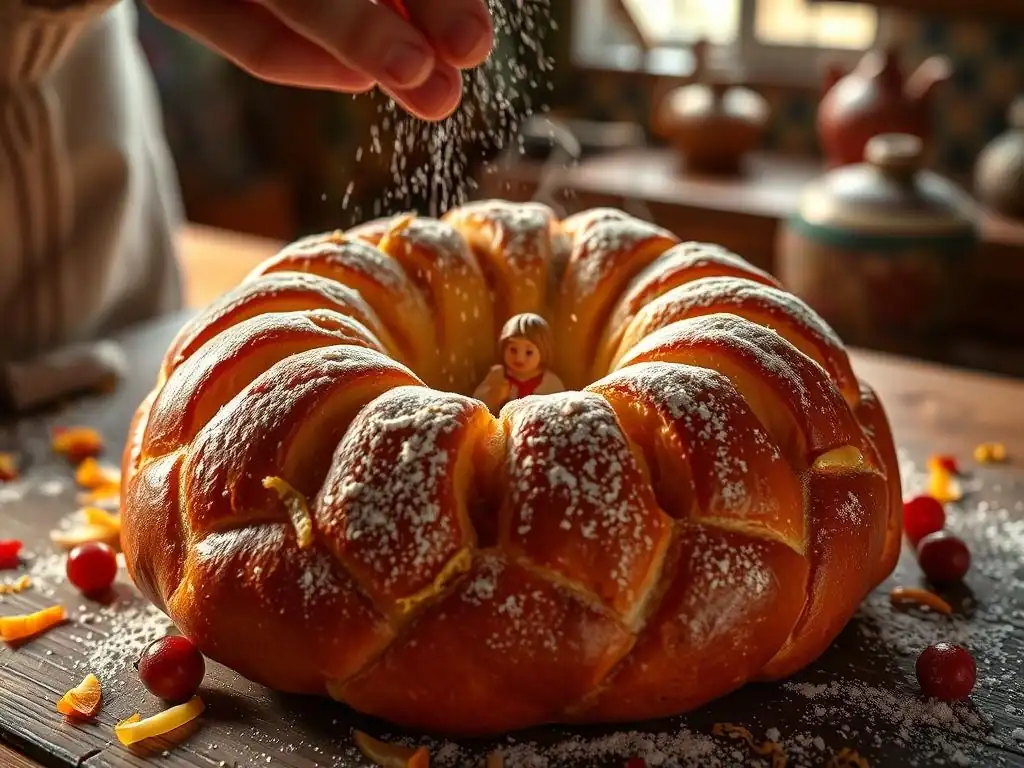
Welcome to BakeWithEase, your passport to a world of delicious possibilities! Ever wondered how to bring a touch of authentic Latin American holiday cheer to your kitchen? This month, we're diving into the delightful world of Roscón de Reyes. Join us as we unveil an Easy Spanish Roscon recipe, demystifying this festive bread and revealing the secrets to a perfectly baked, holiday-worthy treat. Get ready to create a memorable experience – the aroma alone will transport you!
- Bake Roscón de Reyes: A Festive Spanish Holiday Tradition with BakeWithEase
- Discover the Magic of Roscón de Reyes: An Easy Spanish Roscon Recipe
- What is Roscón de Reyes? A Traditional Spanish Sweet Bread
- Easy Spanish Roscon Recipe: Bake Your Own King's Cake
-
Step-by-Step Guide: Baking a Delicious Roscón de Reyes
- Preparing the Starter Dough (Sponge) for Roscón
- Mixing the Main Dough for Perfect Texture
- First Proofing: Letting the Dough Rise to Perfection
- Shaping the Roscón: Creating the Crown
- Adding the Traditional Decorations: Candied Fruits and Sugar
- Second Proofing: Ensuring a Light and Airy Roscón
- Baking the Roscón: Achieving a Golden-Brown Finish
- Cooling and Finishing Touches: Glaze and Whipped Cream Filling
- Tips for a Perfect Roscón de Reyes Every Time
- Serving and Enjoying Your Homemade King's Cake
- Beyond the Basic: Roscón de Reyes Recipe Variations
-
Frequently Asked Questions
- What is Roscón de Reyes and when is it traditionally eaten?
- What are the key ingredients that make Roscón de Reyes unique?
- Can I make Roscón de Reyes even if I'm a beginner baker?
- What kind of fillings are commonly used in Roscón de Reyes?
- What is the significance of the hidden figurine and bean in Roscón de Reyes?
- Final Reflection: The Enduring Sweetness of Tradition
- Unleash Your Inner Pastry Chef: Bake a Roscón de Reyes Today!
Bake Roscón de Reyes: A Festive Spanish Holiday Tradition with BakeWithEase
Discover the Magic of Roscón de Reyes: An Easy Spanish Roscon Recipe
Imagine a sweet, fragrant bread, shaped like a king's crown, adorned with vibrant candied fruits, and often hiding a delightful surprise inside. This is Roscón de Reyes, a beloved pastry traditionally enjoyed in Spain and parts of Latin America on January 6th, Epiphany or Three Kings' Day.
It's more than just a dessert; it's a centerpiece for family gatherings, a symbol of celebration, and a delicious way to mark the end of the Christmas season. Learning to bake this iconic treat at home can seem daunting, but with an easy Spanish Roscon recipe, it's entirely achievable for bakers of all levels.
At BakeWithEase, we believe every home baker can master classic pastries. This guide will walk you through creating your own beautiful and tasty Roscón de Reyes. We'll explore its rich history, share an accessible recipe, and provide tips to ensure your baking success. Get ready to fill your kitchen with the warm, inviting aroma of this festive Spanish bread, and bring a piece of this wonderful tradition to your table. Baking an easy Spanish Roscon recipe will become a highlight of your holiday season!
What is Roscón de Reyes? A Traditional Spanish Sweet Bread
Roscón de Reyes is a ring-shaped sweet bread, similar to a brioche, traditionally eaten in Spain and other Hispanic cultures on January 6th, the Feast of the Epiphany. Its name translates to "King's Ring," referencing the three Wise Men who visited the baby Jesus. The bread is typically decorated with candied fruits representing the jewels on a king's crown.
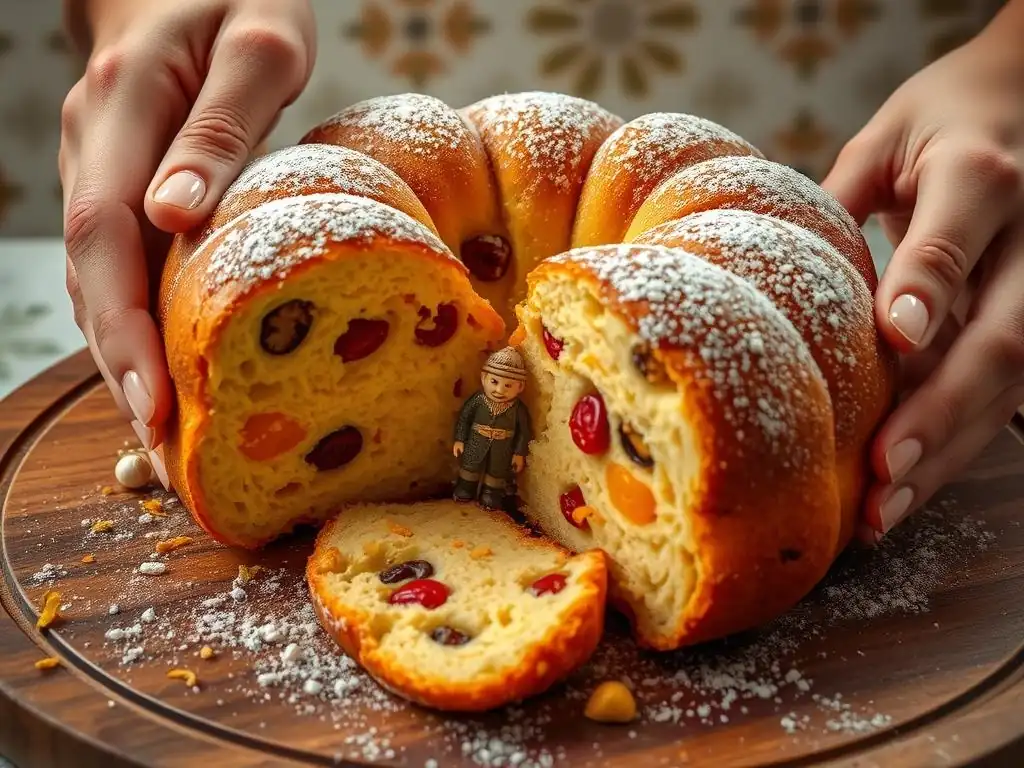
A small figurine, often of the baby Jesus or a king, and a fava bean (habas) are traditionally hidden inside. The person who finds the figurine is crowned king or queen for the day, while the person who finds the bean is said to have to pay for the roscón next year!
This festive pastry is a cornerstone of Epiphany celebrations, enjoyed at breakfast, after the Epiphany parade, or as a dessert after a celebratory meal. Its rich, slightly sweet dough, often flavored with orange blossom water and citrus zest, makes it a delightful treat that perfectly caps off the holiday festivities. Mastering an easy Spanish Roscon recipe allows you to partake in this joyous tradition from your own kitchen.
The History and Significance of Roscón de Reyes
The tradition of the Roscón de Reyes is believed to have ancient origins, possibly linked to Roman Saturnalia festivals where a round cake with a hidden bean was used to choose a temporary king. Over centuries, this custom evolved and merged with Christian celebrations. By the Middle Ages, similar cakes were appearing in France (Galette des Rois) and Spain, becoming associated with the Feast of the Epiphany and the arrival of the Three Kings.
Its significance lies deeply within the Epiphany celebration, marking the moment the Wise Men arrived bearing gifts. The hidden figurine symbolizes the need to find or protect the baby Jesus, while the bean represents abundance or, in later traditions, a playful debt. In Spain, millions of roscones are sold or baked each year leading up to January 6th.
While exact figures vary annually, estimates suggest well over 30 million roscones are consumed across the country during the Epiphany season, highlighting its immense cultural importance. The act of sharing and discovering the hidden treasures within the roscón makes it a communal and exciting experience for families.
Roscón de Reyes Variations Across Spain
While the basic concept of a ring-shaped sweet bread remains consistent, Roscón de Reyes features delightful regional variations across Spain. The most classic version is unfilled, simply adorned with candied fruits, sugar, and sometimes almonds. However, fillings are increasingly popular.
In Catalonia and Valencia, it's common to find roscones filled with nata (whipped cream) or crema (custard). Some bakeries also offer fillings like trufa (chocolate ganache) or cabello de ángel (pumpkin jam). The dough itself can also vary slightly; some regions prefer a denser crumb, while others aim for a lighter, more brioche-like texture. The decorations can also differ, with some areas favoring fewer or different types of candied fruits. Learning an easy Spanish Roscon recipe provides a wonderful foundation, and you can then explore these regional twists to find your favorite!
Why Roscón de Reyes is a Must-Bake Holiday Treat
Baking Roscón de Reyes offers a unique opportunity to connect with a rich cultural tradition and create a truly special holiday memory. The process, from preparing the dough to decorating the crown, is rewarding and fills your home with an incredible aroma of citrus and sweet bread. It's a fantastic project to undertake with family, especially children, who will love helping with the decoration and eagerly anticipate finding the hidden surprises.
Beyond the cultural connection, the Roscón is simply delicious. Its tender, aromatic crumb is perfect served with coffee, hot chocolate, or a glass of cava. Making it yourself ensures the freshest possible result, allowing you to control the quality of ingredients and tailor the flavors to your liking. An easy Spanish Roscon recipe is your gateway to enjoying this delightful pastry and making it a cherished part of your own holiday traditions.
Easy Spanish Roscon Recipe: Bake Your Own King's Cake
Ready to try your hand at this festive bake? This easy Spanish Roscon recipe is designed to be approachable for home bakers, breaking down the process into manageable steps. While it requires a bit of time for rising, the active work is straightforward and rewarding.
Here's what you'll need to create your own beautiful and tasty King's Cake. We'll provide approximate measurements, as slight adjustments might be needed based on flour and environmental conditions.
Ingredients for the Authentic Roscón de Reyes
To bake a classic Roscón de Reyes, you'll need a mix of standard baking ingredients and a few special ones that give it its distinctive flavor and aroma. For the dough itself, you'll typically use about 500-600 grams of strong bread flour, known for its higher protein content which helps develop gluten and gives the bread structure. You'll also need around 10-15 grams of fresh yeast or 5-7 grams of active dry yeast, which is crucial for the dough's rise. Sugar, approximately 100-120 grams, provides sweetness and aids in fermentation.
Other key ingredients for the dough include about 80-100 ml of milk, 2-3 large eggs, and 80-100 grams of unsalted butter, softened. The signature flavor comes from the zest of one orange and one lemon, and importantly, 1-2 tablespoons of orange blossom water (agua de azahar), which gives the roscón its characteristic fragrant note. A pinch of salt, around 5-7 grams, balances the sweetness.
For decoration, you'll need candied fruits (such as orange peel, cherries, and melon), pearl sugar, and an egg wash (one egg yolk mixed with a splash of milk). Optional additions include slivered almonds and a hidden figurine and fava bean.
Essential Equipment for Baking Roscón de Reyes at Home
Having the right tools makes baking an easy Spanish Roscon recipe much simpler and more enjoyable. You don't need highly specialized equipment, but a few basics are essential. A large mixing bowl is necessary for combining ingredients and allowing the dough to rise. If you have a stand mixer with a dough hook attachment, it will significantly reduce the effort needed for kneading, which is crucial for developing the gluten in this enriched dough.
You'll also need a clean surface for kneading by hand if you're not using a mixer. Parchment paper or a silicone baking mat is highly recommended for lining your baking sheet, preventing the roscón from sticking. A pastry brush is useful for applying the egg wash. Measuring cups and spoons are, of course, vital for accurate ingredient amounts. Finally, a baking sheet large enough to accommodate the shaped roscón is essential for baking. A scale is also very helpful for precise flour measurement.
Step-by-Step Guide: Baking a Delicious Roscón de Reyes
Baking Roscón de Reyes is a process that requires patience, mainly for the rising times, but the steps themselves are quite manageable. Follow this guide for a successful bake.
Preparing the Starter Dough (Sponge) for Roscón
Starting with a sponge (or masa madre in Spanish baking) helps activate the yeast and adds flavor depth to the final bread. To make the sponge, you'll typically combine a small amount of the total flour (around 50-70 grams) with the yeast and a little warm milk (about 50 ml) and a pinch of sugar. Mix these ingredients together in a small bowl to form a loose batter or soft dough.
Cover the bowl with plastic wrap and let it sit in a warm place for about 15-30 minutes. During this time, the yeast will become active, and the mixture should become bubbly and slightly increased in volume. This bubbling indicates that your yeast is healthy and ready to work, which is a great sign for your easy Spanish Roscon recipe.
Mixing the Main Dough for Perfect Texture
Once your sponge is active, you'll combine it with the remaining ingredients for the main dough. In your large mixing bowl (or stand mixer bowl), add the remaining flour, sugar, salt, citrus zests, and orange blossom water. Make a well in the center and add the eggs, remaining milk, and the activated sponge.
Begin mixing on a low speed (if using a mixer) or with a wooden spoon, gradually incorporating the dry ingredients into the wet. Once a rough dough forms, add the softened butter, piece by piece, mixing until it's fully incorporated. Continue kneading the dough for about 10-15 minutes by hand or 8-10 minutes in a stand mixer on medium speed until it is smooth, elastic, and no longer sticky.
It should pass the windowpane test, meaning you can stretch a small piece thin enough to see light through it without tearing. This careful kneading is key to achieving the perfect texture for your easy Spanish Roscon recipe.
First Proofing: Letting the Dough Rise to Perfection
The first proofing (or bulk fermentation) is crucial for developing flavor and giving the dough its structure. After kneading, shape the dough into a ball and place it in a lightly oiled bowl, turning it to coat all sides. Cover the bowl tightly with plastic wrap or a damp tea towel.
Place the bowl in a warm, draft-free spot. This could be inside a turned-off oven with the light on, or simply on a countertop in a warm room. The dough needs to double in size, which typically takes about 1.5 to 2.5 hours, depending on the temperature of your room. Be patient during this stage; a proper first rise contributes significantly to a light and airy Roscón.
Shaping the Roscón: Creating the Crown
Once the dough has doubled, gently punch it down to release the air. Turn the dough out onto a lightly floured surface. You can either shape it by making a hole in the center of the ball and gently stretching it outwards to form a ring, or by rolling the dough into a thick rope and joining the ends together. Aim for a ring about 20-25 cm (8-10 inches) in diameter, ensuring the hole in the center is large enough, as it will shrink during the second rise and baking.
Transfer the shaped ring onto a baking sheet lined with parchment paper. At this point, if you are adding a hidden figurine and bean, carefully insert them into the dough from the underside. Ensure they are fully enclosed. Shaping is a fun step in making your easy Spanish Roscon recipe!
Adding the Traditional Decorations: Candied Fruits and Sugar
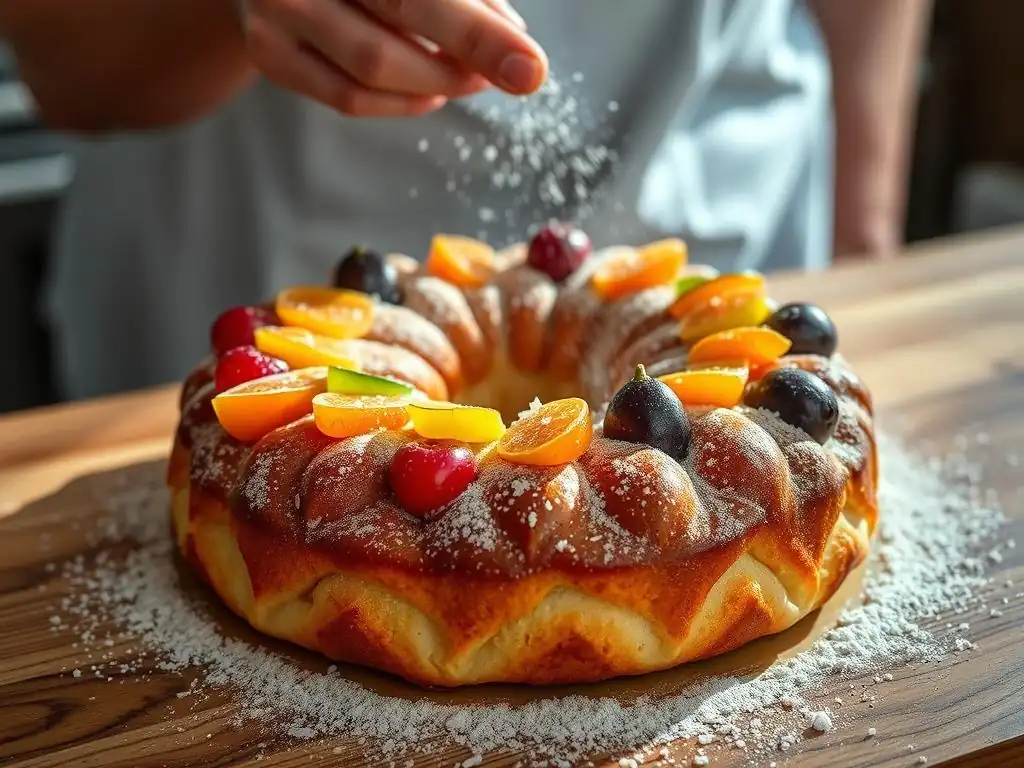
Decorating the Roscón is perhaps the most visually appealing step. Before the second rise, brush the surface of the shaped dough ring with the egg wash. This helps the decorations adhere and gives the finished bread a lovely golden sheen.
Arrange pieces of candied fruits around the ring, pressing them gently into the dough. Traditional choices include strips of candied orange peel, bright red candied cherries, and sometimes green candied melon. Sprinkle pearl sugar generously over the exposed dough areas. You can also add slivered almonds if desired. These elements not only add flavor and texture but also mimic the jewels on a king's crown, making your easy Spanish Roscon recipe look as festive as it tastes.
Second Proofing: Ensuring a Light and Airy Roscón
After shaping and decorating (except for the final glaze), the Roscón needs a second proofing. Cover the baking sheet loosely with plastic wrap or a large, light tea towel. Be careful not to let the plastic touch the dough, which could cause it to stick.
Let the Roscón rise again in a warm, draft-free place for about 45-75 minutes, or until it looks noticeably puffier and has increased in size by about 50-75%. It won't quite double again, but it should look light and airy. While the dough is proofing, preheat your oven to 180°C (350°F). This second rise is vital for achieving the desirable soft texture of a well-made Roscón.
Baking the Roscón: Achieving a Golden-Brown Finish
Once the Roscón has completed its second proofing and the oven is preheated, it's time to bake! Place the baking sheet in the center rack of the preheated oven.
Bake for approximately 25-35 minutes. The exact time will depend on your oven and the size of your Roscón. Look for a beautiful golden-brown color across the top and sides. To check for doneness, you can gently tap the bottom of the bread; it should sound hollow. Be careful not to overbake, as this can result in a dry Roscón. Achieving the perfect bake is the final step in bringing your easy Spanish Roscon recipe to life!
Cooling and Finishing Touches: Glaze and Whipped Cream Filling
After baking, carefully remove the Roscón from the oven and transfer it to a wire rack to cool completely. While it's still warm, you can brush it with a simple glaze made from powdered sugar mixed with a little milk or orange juice. This adds a touch of sweetness and a lovely sheen.
If you plan to fill your Roscón with whipped cream (nata) or custard (crema), wait until it is fully cooled. Use a serrated knife to carefully slice the Roscón horizontally through the middle. Whip heavy cream with a little sugar until stiff peaks form, or prepare a batch of pastry cream. Spread the filling generously onto the bottom half and carefully place the top half back on. A filled Roscón is a decadent variation of the easy Spanish Roscon recipe.
Tips for a Perfect Roscón de Reyes Every Time
Baking Roscón de Reyes is rewarding, and a few key tips can help ensure your success and make your easy Spanish Roscon recipe turn out beautifully.
Mastering the Dough: Achieving the Right Consistency
The dough for Roscón de Reyes is an enriched dough, meaning it contains fat (butter) and eggs, which make it rich and tender but can also make it a bit sticky to work with. The key is proper kneading. Whether by hand or mixer, knead until the dough is smooth, elastic, and pulls away from the sides of the bowl (in a mixer) or your hands (when kneading by hand). It should feel soft but not overly sticky.
If the dough feels too dry, add a tiny splash more milk. If it's too wet and sticky, add a tablespoon of flour at a time, kneading after each addition, until the desired consistency is reached. Avoid adding too much extra flour, as this can result in a dry, dense Roscón. Trust the process and the feel of the dough – an easy Spanish Roscon recipe relies on a well-developed, supple dough.
Working with Yeast: Ensuring a Good Rise
Yeast is the leavening agent that gives Roscón its light and airy texture. Ensure your yeast is fresh; check the expiration date on the package. If using active dry yeast, proof it first by dissolving it in a small amount of warm liquid (around 40-45°C or 105-115°F) with a pinch of sugar. It should become foamy within 5-10 minutes. If it doesn't, your yeast may be inactive, and you'll need a new packet.
During proofing, ensure the dough is in a warm, draft-free environment. Cold temperatures will significantly slow down or prevent the rise. Patience is key; let the dough rise fully according to the recipe's guidelines. An under-proofed Roscón will be dense, while an over-proofed one can collapse during baking or have a poor texture. Proper yeast handling is crucial for an easy Spanish Roscon recipe that rises beautifully.
Decorating Like a Pro: Creative Decoration Ideas for Roscón
While candied fruits and pearl sugar are traditional, don't hesitate to get creative with your Roscón decorations! You can arrange the candied fruits in patterns or use different colors and shapes. Some bakers like to add blanched almonds around the edge before baking for extra crunch.
After baking and cooling, you can add a simple glaze as mentioned, or dust with powdered sugar. If filling the roscón, you can pipe swirls of whipped cream or custard on top before adding the top layer for a decorative touch. For a modern twist, some people drizzle melted chocolate over the finished roscón. Let your imagination run wild to make your easy Spanish Roscon recipe uniquely yours.
Troubleshooting Common Roscón Baking Problems: Dry Dough, Uneven Bake, etc.
Baking can sometimes present challenges, but most Roscón issues can be resolved. If your dough is dry, it likely didn't have enough liquid or was over-kneaded, destroying the gluten structure. Ensure you measure liquids accurately and stop kneading once the dough is smooth and elastic.
An uneven bake can be caused by hot spots in your oven. Try rotating the baking sheet halfway through the baking time. If the top is browning too quickly, you can loosely tent it with aluminum foil. If your Roscón didn't rise well, check your yeast's freshness and ensure the proofing environment was warm enough. A dense Roscón is often a sign of under-proofing or inactive yeast. Learning from these issues will help you perfect your easy Spanish Roscon recipe over time.
Serving and Enjoying Your Homemade King's Cake

The best part of baking Roscón de Reyes is sharing it! This festive bread is meant to be enjoyed communally, especially on January 6th.
Traditional Ways to Serve Roscón de Reyes
The most traditional way to serve Roscón de Reyes is as a centerpiece for breakfast or an afternoon merienda (snack). Gather family and friends to slice the cake. The excitement builds as each person takes a piece, hoping to find the hidden figurine or bracing themselves for the fava bean!
Serve slices on plates, allowing everyone to appreciate the beautiful decoration and the aromatic bread. Have the "crown" ready for the person who finds the figurine. It's a simple ritual that adds immense joy to the occasion. Serving your easy Spanish Roscon recipe becomes a memorable event.
Pairing Roscón de Reyes with Beverages: Coffee, Hot Chocolate
Roscón de Reyes pairs wonderfully with warm beverages, perfect for a chilly January day. A classic pairing is with a cup of rich hot chocolate ( chocolate a la taza), especially in Spain. The slight bitterness of the chocolate contrasts beautifully with the sweetness of the bread.
Coffee is another excellent companion, whether it's a strong espresso, a café con leche, or a simple brewed coffee. For a celebratory touch, especially for adults, a glass of chilled cava (Spanish sparkling wine) is also a delightful pairing, cutting through the richness of the cake. Choose your favorite beverage to accompany your easy Spanish Roscon recipe!
Storing Roscón de Reyes for Optimal Freshness
Roscón de Reyes is best enjoyed fresh on the day it's baked. However, if you have leftovers, you can store them to maintain freshness for a day or two. Wrap the Roscón tightly in plastic wrap or aluminum foil, or place it in an airtight container at room temperature.
If the Roscón is filled with whipped cream or custard, it must be stored in the refrigerator. When ready to eat leftovers, you can gently warm slices in a microwave or a low oven for a few minutes to restore some of the softness. Proper storage ensures you can enjoy your easy Spanish Roscon recipe for a little longer.
Beyond the Basic: Roscón de Reyes Recipe Variations
While the classic Roscón is wonderful, you can explore exciting variations to suit different tastes or dietary needs.
Chocolate Roscón de Reyes: A Decadent Twist
For chocolate lovers, a chocolate Roscón de Reyes is a decadent treat. You can incorporate chocolate into the dough by adding a few tablespoons of cocoa powder along with the flour, potentially reducing the flour slightly to maintain consistency.
Alternatively, and perhaps more commonly, the Roscón can be filled with a rich chocolate ganache ( trufa) instead of cream or custard. Some bakeries even add chocolate chips to the dough or drizzle melted chocolate over the top after baking. This variation transforms the easy Spanish Roscon recipe into a rich, chocolatey delight.
Roscón de Reyes with Whipped Cream: Adding Cream or Custard
One of the most popular variations, especially in Catalonia and Valencia, is the Roscón filled with whipped cream ( nata) or pastry cream ( crema). This adds a layer of richness and moisture that complements the sweet bread beautifully.
To create this variation, simply slice the fully cooled Roscón horizontally and generously spread or pipe your prepared whipped cream or custard onto the bottom half before replacing the top. Ensure your filling is well-chilled before assembling. Adding a filling is a simple way to elevate your easy Spanish Roscon recipe.
Gluten-Free Roscón de Reyes: A Baking Alternative
Adapting traditional recipes for dietary needs is increasingly popular. While challenging due to the importance of gluten structure in this type of bread, creating a gluten-free Roscón de Reyes is possible using a blend of gluten-free flours and starches.
You'll typically need a mix of flours like rice flour, tapioca starch, and potato starch, often with the addition of a binder like xanthan gum to mimic the elasticity of gluten. The hydration levels and proofing times may vary compared to a traditional recipe. While it requires some experimentation, developing a gluten-free easy Spanish Roscon recipe allows more people to enjoy this festive tradition.
Frequently Asked Questions
What is Roscón de Reyes and when is it traditionally eaten?
Roscón de Reyes is a festive sweet bread eaten primarily in Spain and Latin America. It's traditionally enjoyed on January 6th, the Dia de los Reyes Magos (Three Kings Day).
What are the key ingredients that make Roscón de Reyes unique?
Besides the usual baking ingredients, Roscón de Reyes often includes orange blossom water which gives it a distinctive aroma and flavor. Candied fruits and a hidden figurine and bean are also common.
Can I make Roscón de Reyes even if I'm a beginner baker?
Yes! BakeWithEase provides simple recipes and step-by-step guides specifically designed for bakers of all levels, including beginners eager to try new things.
What kind of fillings are commonly used in Roscón de Reyes?
While traditionally eaten plain, Roscón de Reyes can be filled with whipped cream, pastry cream, or chocolate cream. These fillings add richness and flavor to the festive bread.
Finding the figurine is considered good luck, while finding the bean traditionally means the finder has to buy the Roscón next year! It's a fun tradition adding to the celebratory spirit.
Final Reflection: The Enduring Sweetness of Tradition
The simple act of baking a Roscón de Reyes transcends a mere recipe; it's a tangible connection to heritage, a celebration of family, and a delicious journey through Latin American culture. This easy Spanish Roscón recipe, shared within these pages, aims to make this beautiful tradition accessible to everyone, regardless of their baking experience. The rising popularity of global cuisines means that sharing these traditions is more important than ever before.
The Roscón's enduring appeal lies not just in its delightful taste, but in its ability to bring people together. It's a symbol of unity and shared joy, a reminder of the power of simple pleasures in a complex world. Food is symbolic of love when words are inadequate.
– Alan D. Wolfelt. This quote perfectly encapsulates the emotional resonance of sharing a homemade Roscón with loved ones, creating memories that will last a lifetime, far beyond the fleeting sweetness of the pastry itself.
Now, I invite you to roll up your sleeves, gather your ingredients, and embark on this culinary adventure. Don't be intimidated by the seemingly intricate process; the joy of creating something beautiful and meaningful with your own hands is far more rewarding than any store-bought treat. Let the aroma of orange blossom water and the warmth of the oven fill your home with the spirit of the holidays, and share this delicious tradition with those you cherish most. The Roscón de Reyes awaits!
Unleash Your Inner Pastry Chef: Bake a Roscón de Reyes Today!
Thanks for joining us on this delicious journey into the heart of Latin American holiday baking! We hope you've gained a new appreciation for the rich history and vibrant flavors of the Roscón de Reyes. Now it's time to put your newfound knowledge to the test!
- Bake your own Roscón de Reyes! This is the ultimate test of your baking skills and a guaranteed way to bring joy to your loved ones. Don't be afraid to experiment with your favorite fillings and glazes.
- Share your Roscón creations! Post a picture of your masterpiece on social media using #BakeWithEaseRoscón and inspire others to join the fun!
- Explore other festive baking recipes on BakeWithEase.com - we have a whole collection of seasonal treats just waiting to be discovered!
Ready to share the magic of the Roscón de Reyes with your community? What unique twist will you add to your baking adventure?