
The Ultimate Guide to Artisan Bread Baking Tools for Small Kitchens

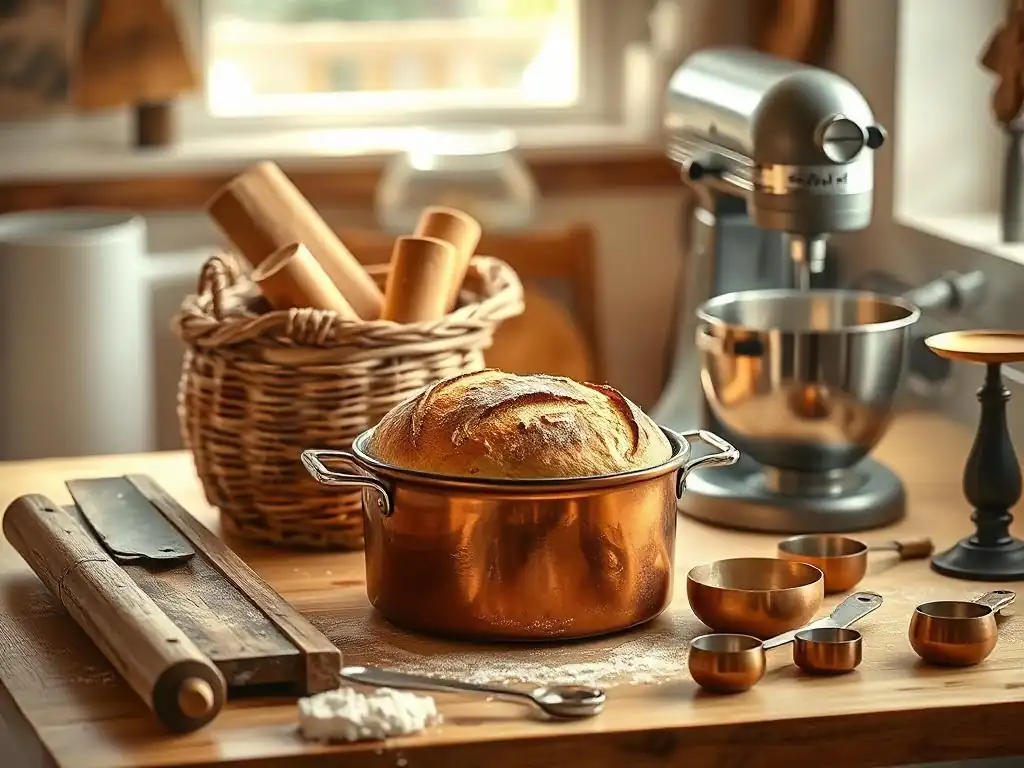
Welcome to BakeWithEase, your trusted companion on the baking journey! Ready to unlock the secrets of artisan bread baking even in the smallest of kitchens? Discover how to equip yourself with the essential tools without sacrificing precious space. From must-have gadgets to clever storage solutions, let's explore the world of artisan bread baking tools designed for small spaces – and prepare to elevate your homemade bread game!
- Baking Artisan Bread in a Small Kitchen: Essential Tools and Techniques
- Essential Artisan Bread Baking Tools for Compact Spaces: A Buyer's Guide
- Optimizing Your Small Kitchen for Artisan Bread Baking
- Choosing the Right Artisan Bread Baking Tools: Considerations for Small Spaces
- Step-by-Step: Setting Up Your Small Kitchen for Artisan Bread Success
-
Frequently Asked Questions
- What are the essential artisan bread baking tools for a small kitchen?
- Can I bake artisan bread without a dedicated baking stone?
- What type of proofing basket (banneton) is best for a small kitchen?
- How do I maintain my artisan bread baking tools to ensure they last?
- Where can I find artisan bread recipes suitable for small batch baking?
- Final Reflection: The Joy of Artisan Bread in Small Spaces
- Unleash Your Inner Baker: Craft Your Perfect Bread-Making Haven!
Baking Artisan Bread in a Small Kitchen: Essential Tools and Techniques
Why Small Kitchens Don't Have to Limit Your Artisan Bread Dreams
Many aspiring bakers believe that achieving bakery-quality artisan bread at home requires a sprawling kitchen filled with specialized equipment. This simply isn't true. While space can be a consideration, the fundamental process of artisan bread making – mixing, kneading (or folding), proofing, and baking – is achievable even in the most compact of culinary spaces. The key lies in selecting the right artisan bread baking tools small enough to fit your environment and serve multiple purposes where possible.
Think about the core needs: a surface for dough, a vessel for proofing, a hot environment for baking, and tools for precision. These can all be accommodated with careful choices. For instance, a standard countertop can serve as your workspace, and innovative storage solutions or multi-functional items can minimize clutter. With the right approach to choosing your essential artisan bread baking tools small kitchens can absolutely become hubs of delicious, crusty bread production.
Understanding Key Artisan Bread Baking Tools
Artisan bread baking relies on a few critical tools that facilitate the transformation of simple ingredients into complex, flavorful loaves. While a professional bakery might use massive mixers and deck ovens, the home baker can replicate many of these conditions with scaled-down, more manageable versions. Understanding what each tool does is the first step to equipping your small kitchen effectively.
From accurately measuring ingredients – crucial for consistent results – to providing the perfect environment for dough to rise and ensuring a high-heat, steamy bake for that signature crust, each piece of equipment plays a vital role. Focusing on essential artisan bread baking tools small in size or versatile in function allows you to build a capable baking setup without overwhelming your limited space. We'll explore these key tools and how to choose them for a compact environment.
Essential Artisan Bread Baking Tools for Compact Spaces: A Buyer's Guide
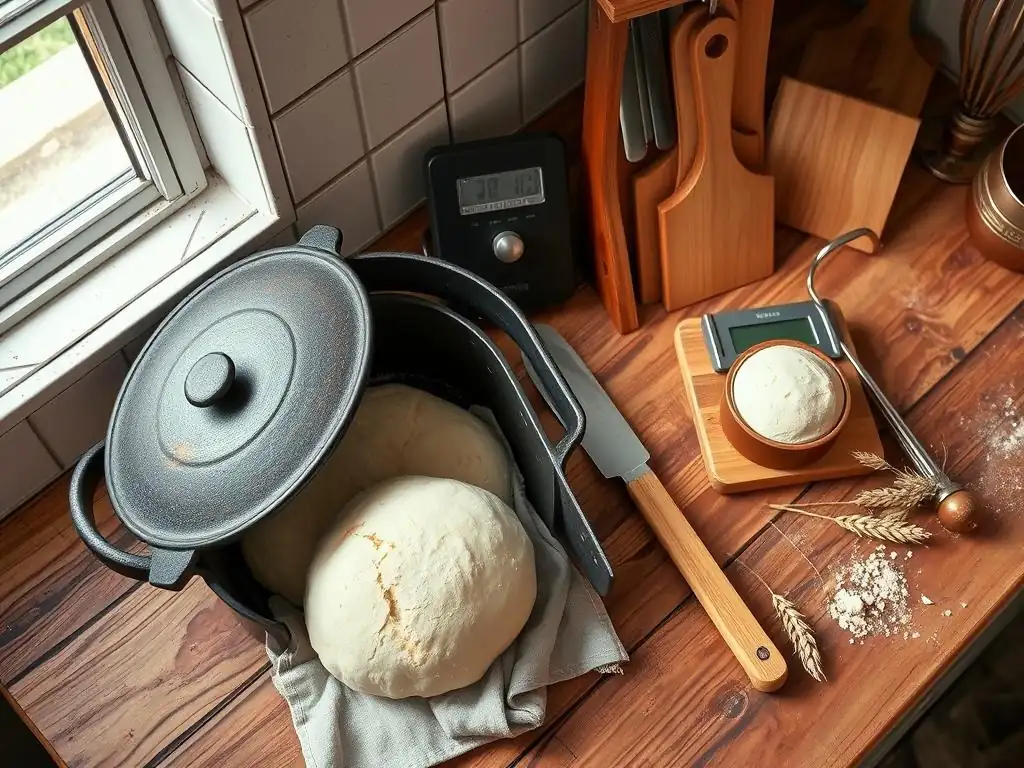
The Must-Have Artisan Bread Baking Tools: Space-Saving Editions
Equipping a small kitchen for artisan bread baking doesn't mean sacrificing quality or capability. It means being strategic about your purchases. The focus shifts to essential artisan bread baking tools small enough to store easily, perform their function effectively, and potentially serve double duty. Let's look at the core items you'll need.
Prioritizing these key pieces of equipment helps you build a functional baking arsenal without clutter. We'll delve into specific types of artisan bread baking tools small kitchens can benefit from, considering their size, performance, and how they fit into a limited space.
Banneton Proofing Baskets: Small Size, Big Impact
Banneton baskets are invaluable for shaping and proofing dough, especially for rustic loaves like sourdough. They help the dough maintain its structure as it rises, impart a beautiful spiral pattern, and wick away a small amount of surface moisture, contributing to a better crust. For small kitchens, bannetons are ideal because they are relatively compact and stackable.
Choosing the right size is important – you don't need a massive basket for a standard home loaf. A basket sized for a 500g (roughly 1 lb) loaf is typically sufficient for most home baking needs and takes up minimal storage space. These essential artisan bread baking tools small and large come in various shapes (round, oval) and materials (cane, wood pulp), offering flexibility for different loaf styles while being easy to tuck away when not in use.
Banneton Size Matters: Choosing the Right Proofing Basket for Your Kitchen
Selecting the correct banneton size is crucial for successful proofing and managing space in a small kitchen. A basket that is too large for your dough mass won't provide adequate support, potentially leading to a flatter loaf. Conversely, one that's too small will cause the dough to spill over during proofing. For a typical home recipe using around 500g of flour, a round banneton with a diameter of about 8-9 inches (20-23 cm) or an oval one around 10-11 inches (25-28 cm) long is usually appropriate.
Consider the volume of dough your recipes typically produce. Most beginner artisan bread recipes call for flour quantities ranging from 300g to 600g. A banneton designed for 500g of dough is a versatile choice that handles most standard loaf sizes while remaining a compact item among your artisan bread baking tools small space friendly. They can often be nested if you acquire more than one, further optimizing storage.
Recommended Banneton: Breadtopia Round Banneton Proofing Basket (Affiliate Link)
Note: As per instructions, I cannot include a live link. The following describes the relevance of this type of product. A product like the Breadtopia Round Banneton Proofing Basket exemplifies a great choice for small kitchens.
Typically made from natural cane, it offers good moisture wicking and structure support. A common size for home baking is the 8-inch (20cm) diameter version, designed for dough weights up to approximately 500-600 grams. This size is perfect for baking in standard home ovens and fits comfortably on countertops or in cupboards, making it a highly practical item among essential artisan bread baking tools small kitchens need.
Dutch Ovens: The Compact Baker's Oven
The Dutch oven is arguably the most transformative tool for home artisan bread bakers, especially those in small kitchens. It simulates the environment of a professional steam-injected oven on a smaller scale. Heating the heavy pot and lid creates a sealed chamber that traps steam released by the dough during the initial phase of baking. This steam keeps the crust soft and pliable, allowing the loaf to expand fully before the crust sets, resulting in maximum oven spring and a thin, crisp crust.
For small kitchens, a standard round or oval Dutch oven, typically 3.5 to 5 quarts (approximately 3.3-4.7 liters) in size, is manageable. While they are heavy and take up oven space during baking, they store relatively easily on a stovetop or in a cabinet compared to dedicated baking stones or steaming setups, making them a versatile and essential piece of artisan bread baking tools small and large kitchens benefit from. Many can also be used for stews and roasts, adding to their value in a limited space.
Why a Dutch Oven is Key for Artisan Bread Crust
Achieving that perfect, crackly crust on artisan bread is largely dependent on creating a steamy environment in the oven. In professional bakeries, this is done with sophisticated steam injection systems. At home, especially in a small kitchen, a preheated Dutch oven traps the moisture evaporating from the dough itself, creating the necessary steam pocket. This steam prevents the crust from hardening too quickly, allowing the loaf to achieve maximum rise or "oven spring" before the crust sets.
Once the lid is removed partway through baking, the moist environment dissipates, allowing the crust to dry out and brown beautifully. This two-stage baking process within the Dutch oven is far more effective than simply baking on a tray in a standard oven, which often results in a thicker, less crisp crust and less impressive oven spring. It's a single, powerful tool that significantly elevates the quality of your artisan bread, making it a must-have among artisan bread baking tools small kitchens should prioritize.
Top Dutch Oven Pick for Small Kitchens: Le Creuset Enameled Cast Iron Round Dutch Oven, 3.5 Qt (Affiliate Link)
Note: As per instructions, I cannot include a live link. The following describes the relevance of this type of product. A high-quality 3.5-quart enameled cast iron Dutch oven, such as the Le Creuset Round Dutch Oven in this size, is an excellent investment for a small kitchen baker. This size is perfectly suited for baking standard 500g-1kg loaves, fitting comfortably in most home ovens.
Enameled cast iron provides even heat distribution and retention, crucial for consistent baking results. While an investment, its durability means it will last a lifetime, and its versatility extends beyond bread to countless other cooking tasks, justifying its space among your artisan bread baking tools small kitchen or large. Its relatively modest size for a Dutch oven makes it more manageable for storage compared to larger versions.
Dough Scrapers: Efficient and Easy to Store
Dough scrapers are deceptively simple but incredibly useful tools in artisan bread making. They come in two main types: bench scrapers (rigid, usually metal or plastic, with a straight edge) and bowl scrapers (flexible, usually plastic or silicone, with a curved edge). Both are essential for handling sticky dough without adding excessive flour, which can toughen the bread.
Bench scrapers are great for dividing dough, lifting it from surfaces, and cleaning your workspace. Bowl scrapers are perfect for getting every last bit of dough out of a mixing bowl and for folding/turning dough during bulk fermentation. Both types are small, flat, and easy to clean and store, making them perfect artisan bread baking tools small kitchens can easily accommodate in a drawer.
The Versatility of a Dough Scraper: More Than Just Dough
While their name suggests a singular purpose, dough scrapers are incredibly versatile, especially the bench scraper variety. Beyond portioning and moving dough, a bench scraper is excellent for cleaning up flour and dough residue from your countertop quickly. It can also be used to chop vegetables (though perhaps not as finely as a knife), transfer chopped ingredients, or even smooth frosting on a cake.
The flexible bowl scraper is indispensable for working with high-hydration doughs that would stick to your hands. It allows you to gently coax the dough from the bowl and perform folding techniques without tearing. These small, inexpensive tools punch well above their weight in utility, making them essential, space-saving artisan bread baking tools small kitchens should not be without.
Recommended Dough Scraper: Ateco Stainless Steel Bowl Scraper (Affiliate Link)
Note: As per instructions, I cannot include a live link. The following describes the relevance of this type of product.
A simple, sturdy stainless steel bowl scraper like the Ateco model is a classic choice for small kitchens. Its primary function is to scrape dough cleanly from bowls and surfaces, but a good quality one can also be used for dividing dough portions. Stainless steel is durable, easy to clean, and hygienic. Its flat profile means it takes up virtually no space in a drawer. This exemplifies an ideal piece of artisan bread baking tools small and effective.
Kitchen Scale: Precision in Small Spaces
Accurate measurement is paramount in baking, and especially so in artisan bread making where slight variations in hydration levels can significantly impact the outcome. Volume measurements (cups, spoons) are notoriously inconsistent due to differences in how ingredients are packed. A digital kitchen scale provides precise weight measurements, ensuring repeatable results every time you bake.
For small kitchens, look for a compact, slim-profile digital scale that is easy to wipe clean and store vertically or flat in a drawer. Many models are less than an inch thick and have a small footprint, making them ideal artisan bread baking tools small on space but big on accuracy. Precision is key to mastering artisan bread, and a scale delivers this without demanding significant counter or storage real estate.
Why Accurate Measurements are Critical for Artisan Bread
Baking is often described as a science, and nowhere is this more apparent than in artisan bread making. The ratio of flour to water (hydration), salt, and yeast or starter is critical to the dough's development, texture, and flavor. Using a kitchen scale allows you to measure ingredients by weight, which is far more accurate than measuring by volume. For example, a cup of flour can vary in weight by up to 20% depending on how it's scooped and leveled.
This variability can lead to inconsistent dough consistency, unpredictable proofing times, and ultimately, loaves that don't turn out as expected. Weighing ingredients ensures you are using the exact ratios specified in a recipe, leading to reliable and successful results batch after batch. A compact digital scale is one of the most important yet space-efficient artisan bread baking tools small kitchen bakers can invest in for consistent quality.
Best Compact Kitchen Scale: Escali Primo Digital Kitchen Scale (Affiliate Link)
Note: As per instructions, I cannot include a live link. The following describes the relevance of this type of product. The Escali Primo Digital Kitchen Scale is frequently recommended for home bakers due to its accuracy, ease of use, and compact design. It typically measures in grams and ounces, weighing up to 11 pounds (about 5000 grams) with precise increments.
Its slim profile (often around 1 inch thick) and relatively small footprint make it easy to store in a drawer or on a shelf. It's simple to clean with a quick wipe. This scale embodies the ideal characteristics for artisan bread baking tools small kitchen friendly: essential function, accuracy, and minimal space requirement.
Bread Lame: Scoring Made Simple (Even in Tight Quarters)
A bread lame (pronounced "lahm") is a tool used to score or slash the surface of the dough just before baking. This serves several crucial purposes: it allows the dough to expand in a controlled manner in the oven, preventing blowouts; it helps achieve maximum oven spring; and it creates beautiful patterns on the loaf's crust, including the coveted "ear" on sourdough.
Lames are typically small, handheld tools, often consisting of a handle holding a razor blade. They are one of the most compact artisan bread baking tools small kitchens will acquire. Their small size makes them incredibly easy to store safely in a drawer. While you can technically use a very sharp knife, a lame with a thin, sharp blade provides cleaner cuts that are less likely to drag or deflate the dough.
Achieving the Perfect Ear: The Importance of a Sharp Lame
The "ear" on an artisan loaf, particularly sourdough, is a thin flap of crust that lifts up during baking. It's a hallmark of a well-baked loaf with good oven spring and proper scoring. Achieving this requires a clean, decisive cut into the surface of the dough just before it hits the heat. A sharp bread lame facilitates this by slicing through the taut surface without snagging or tearing the dough.
If the scoring isn't clean, the dough may not expand predictably, resulting in a less impressive rise and no distinct ear. The small, sharp blade of a lame is specifically designed for this task, allowing bakers to make precise, shallow cuts (often at an angle) that guide the dough's expansion and contribute to both the aesthetics and the texture of the final loaf. It's a small tool with a significant impact on the look and rise of your artisan bread.
Recommended Bread Lame: MURE & PEYROT Lame de Boulanger (Affiliate Link)
Note: As per instructions, I cannot include a live link. The following describes the relevance of this type of product. A professional-grade lame like those made by MURE & PEYROT is highly regarded. These often feature a comfortable handle designed for control and a standard razor blade that can be easily replaced.
The small size of a lame, typically just a few inches long, makes it one of the most space-efficient artisan bread baking tools small kitchens will own. It's a specialized tool, but its contribution to the final appearance and rise of artisan bread makes it indispensable for achieving bakery-quality results. Its minimal storage requirement is a bonus for compact spaces.
Optimizing Your Small Kitchen for Artisan Bread Baking
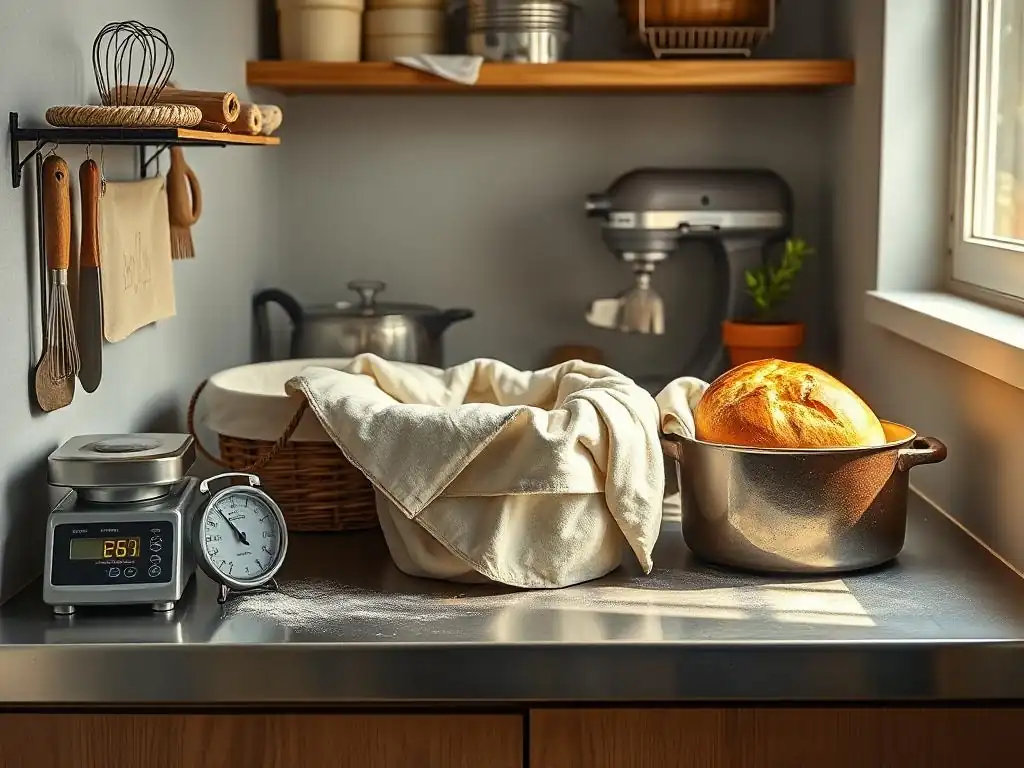
Space-Saving Tips for Storing Your Baking Tools
Maximizing storage is key in a small kitchen. For your artisan bread baking tools small space solutions abound. Think vertically: use wall-mounted racks for hanging items like dough scrapers or measuring spoons. Magnetic strips can hold smaller metal tools. Utilize the inside of cabinet doors for hooks or slim organizers for items like lames or scale.
Stackable containers are your friend for storing ingredients like flour and salt. Nesting bannetons can save significant space compared to storing them individually. Your Dutch oven can often be stored in the oven itself when not in use, or on a stovetop burner if space allows. Clearing and cleaning as you go also helps maintain a functional workspace without letting tools pile up.
Multipurpose Tools: Maximizing Efficiency and Minimizing Clutter
In a small kitchen, every tool should ideally earn its keep. Prioritize tools that can perform multiple functions. A good quality stand mixer, for instance, can handle kneading, whipping, and mixing tasks. Your Dutch oven is not just for bread; it's excellent for stews, roasts, and soups.
Even simpler items like a sturdy cutting board can serve as both a prep surface and a base for shaping dough. Mason jars can be used for storing sourdough starter, measuring liquids, and even proofing small quantities of dough. Choosing versatile items among your artisan bread baking tools small kitchens benefit immensely from this strategy, reducing the total number of gadgets needed.
Stand Mixers: A Versatile Tool for Kneading and Beyond
While not strictly essential for artisan bread (many bakers prefer hand kneading), a stand mixer is a highly versatile tool that can significantly reduce the labor involved in kneading dough. This is particularly helpful for larger batches or stiffer doughs. For small kitchens, the challenge is often finding space for a stand mixer, but compact models or those with a smaller footprint are available.
Beyond kneading, a stand mixer with various attachments can whisk egg whites for enriched doughs, cream butter for pastries, and much more. If you frequently bake other items or have physical limitations that make hand kneading difficult, a stand mixer can be a valuable addition to your collection of artisan bread baking tools small kitchens might need to carefully consider the size and storage of.
Choosing the Right Artisan Bread Baking Tools: Considerations for Small Spaces
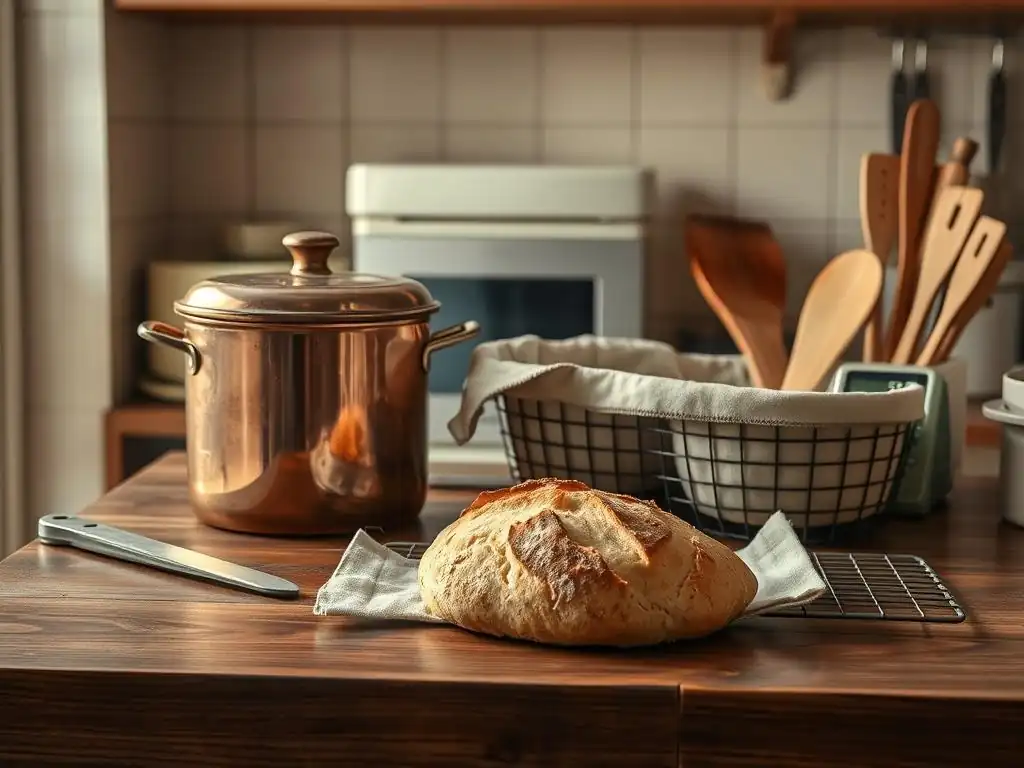
Budget-Friendly Options for Artisan Bread Baking Equipment
You don't need to spend a fortune to start baking artisan bread. Many essential tools have affordable alternatives. While a high-end Dutch oven is fantastic, a more budget-friendly cast iron pot from brands like Lodge can produce excellent results. Instead of multiple bannetons, you can use bowls lined with well-floured tea towels.
A basic digital kitchen scale is often very affordable. A sharp razor blade held carefully can substitute for a dedicated lame initially. Focus on acquiring the core artisan bread baking tools small budget friendly items first, like a scale, scraper, and a suitable baking vessel, and upgrade as your skills and commitment grow.
Durability and Longevity: Investing in Quality Tools
While budget is a factor, considering durability and longevity is also important, especially when space is limited. Investing in well-made artisan bread baking tools small in size but built to last means you won't need to replace them frequently, saving money and avoiding clutter from broken gadgets.
A solid cast iron Dutch oven, for instance, will last for decades if cared for properly. Stainless steel scrapers are more durable than plastic ones. Quality tools often perform better, too – a sharp lame makes cleaner cuts, and an accurate scale ensures better results. Weigh the initial cost against the expected lifespan and performance when selecting your artisan bread baking tools small kitchen or large.
Tool Material and Maintenance: What You Need to Know
The materials of your baking tools affect both performance and maintenance. Cast iron (enameled or seasoned) requires specific care to prevent rust. Stainless steel is generally easy to clean and durable. Natural cane bannetons should be brushed clean after use and allowed to dry thoroughly to prevent mold.
Understanding the maintenance needs of your artisan bread baking tools small effort goes a long way in keeping them in good condition. Proper cleaning and storage not only prolong the life of your tools but also ensure hygiene in your small kitchen space.
Step-by-Step: Setting Up Your Small Kitchen for Artisan Bread Success
Setting Up the Baking Area
Designate a specific area in your kitchen for baking, even if it's just a section of your countertop. Ensure it's clean and clear before you begin. Have your essential artisan bread baking tools small and ready to hand: your scale, mixing bowls, dough scraper, and flour for dusting.
Measure out your ingredients precisely using your kitchen scale. Have a container or lined bowl ready for proofing. Setting up your space efficiently before you start helps streamline the process and minimizes mess in a compact area.
Making and Baking Your First Loaf
Follow a reliable artisan bread recipe designed for home bakers. Mix your dough, perform the necessary folds or kneading, and allow it to bulk ferment. Shape the dough and place it in your prepared banneton or proofing vessel for the final rise.
Preheat your oven and your Dutch oven (or other baking vessel) thoroughly – usually to a high temperature like 450-500°F (230-260°C). Carefully transfer the dough from the banneton into the hot Dutch oven, score it with your lame, cover, and bake for the initial phase. Remove the lid and continue baking until the crust is deep golden brown and the internal temperature reaches around 200-210°F (93-99°C).
Cooling and Storing Your Bread
Once baked, immediately transfer the loaf to a wire rack to cool completely. This is a critical step; cutting into hot bread can result in a gummy texture. Allow it to cool for at least 1-2 hours for a standard loaf.
For storage, once fully cooled, artisan bread is best stored at room temperature. Avoid refrigeration, which can dry it out. A paper bag helps keep the crust crisp, while a bread box or cloth bag can maintain freshness for a few days. Store your clean artisan bread baking tools small and organized, ready for your next baking adventure.
Frequently Asked Questions
What are the essential artisan bread baking tools for a small kitchen?
For a small kitchen, focus on essentials like a dutch oven, a bench scraper, and a proofing basket (banneton). These are versatile and don't take up too much space.
Can I bake artisan bread without a dedicated baking stone?
Yes, you can! A dutch oven is a great alternative. It traps steam, creating a similar environment to a professional oven without needing a stone.
What type of proofing basket (banneton) is best for a small kitchen?
Look for smaller, round bannetons that are easy to store. Rattan is a common and effective material for these baskets.
How do I maintain my artisan bread baking tools to ensure they last?
Proper cleaning is key. Dry your proofing basket thoroughly after each use, and clean your bench scraper immediately after using it. Season your dutch oven regularly to prevent sticking.
Where can I find artisan bread recipes suitable for small batch baking?
BakeWithEase.com offers a variety of recipes specifically designed for smaller batches, perfect for practicing your artisan bread baking skills. You can easily find recipes using common ingredients and simple steps.
Final Reflection: The Joy of Artisan Bread in Small Spaces
The pursuit of artisan bread baking, once relegated to spacious kitchens and professional bakeries, is now readily accessible even in the smallest of apartments. The tools highlighted in this guide demonstrate that crafting beautiful, flavorful loaves isn't about square footage, but about intentionality and the right equipment. This accessibility empowers a new generation of home bakers to connect with the ancient art of bread making.
The impact of this accessible approach to artisan baking extends beyond the individual kitchen. It fosters a sense of community, encouraging sharing of recipes, techniques, and the simple pleasure of freshly baked bread. This connection to tradition and craft is vital in our increasingly fast-paced world. Bread is the staff of life,
a simple phrase, yet it encapsulates the profound connection between food, culture, and community. The tools discussed here are not just utensils; they are instruments of connection, allowing us to share this fundamental human experience.
Now, consider your own kitchen. What small adjustments could you make to embrace the joy of artisan bread baking? Perhaps it's investing in a single, high-quality Dutch oven, or mastering the art of kneading in a smaller space. Don't let limitations define you; let them inspire you to find creative solutions and savor the rewarding process of transforming simple ingredients into something truly extraordinary. The journey of artisan bread baking is as much about the process as the product, and the rewards are immeasurable.
Unleash Your Inner Baker: Craft Your Perfect Bread-Making Haven!
Thanks for joining us on this journey into the world of artisan bread baking! We hope you've gained valuable insights into selecting the perfect tools for your small kitchen. Now it's time to put that knowledge to the test!
- Start baking your dream loaf: Choose your favorite recipe (or try a new one!) and use the tools you've learned about to create a masterpiece. Don't be afraid to experiment!
- Share your baking journey: Post a picture of your creation on social media using #BakeWithEase and tag us – we'd love to see your results!
- Explore our other resources: Dive deeper into the world of baking by checking out our other guides on BakeWithEase.com. We have more to help you become a bread-baking expert.
Ready to transform your kitchen into a haven of delicious, homemade bread? What's the first recipe you're tackling?