
Decoding Cottage Food Laws: Can You Legally Sell Baked Goods From Home?


Welcome to BakeWithEase, your trusted companion in the baking journey! Ever dreamed of turning your kitchen into a mini-bakery? This week, we're diving into a topic that's crucial for aspiring home bakers: Decoding Cottage Food Laws. Are you wondering if you can legally sell your delicious creations from the comfort of your own home? Explore the article below and unlock the secrets to navigating these regulations, turning your passion into a potential business. Let's get baking...and selling!
- Understanding Cottage Food Laws and Home Baking Businesses
- Is Selling Baked Goods From Home Legal? Cottage Food Law Legality Explained
- Navigating Cottage Food Law Requirements: A Step-by-Step Guide
- Cottage Food Law Exceptions and Limitations: What You Need to Know
- Starting Your Home Bakery Legally: Leveraging Cottage Food Laws to Your Advantage
- Cottage Food Laws vs. Commercial Kitchens: Choosing the Right Path for Your Bakery
- Resources for Aspiring Home Bakers: Cottage Food Law Information and Support
-
Frequently Asked Questions
- What are cottage food laws?
- What types of baked goods are typically allowed under cottage food laws?
- Are there limits to how much I can earn selling cottage foods?
- Do I need a special license or permit to operate a cottage food business?
- Where can I find information about cottage food laws in my specific state?
- Final Reflection: The Sweet Taste of Legality and the Future of Cottage Food
- Unlock Your Baking Business: Turn Passion into Profit!
Understanding Cottage Food Laws and Home Baking Businesses
What are Cottage Food Laws? Defining the Legal Landscape for Home Bakers
Cottage food laws, also known as "home kitchen" or "homemade food" laws in some jurisdictions, are state-level regulations that allow individuals to produce and sell certain low-risk food items, primarily baked goods, jams, jellies, and candies, from their residential kitchens. These laws were established to support small-scale food entrepreneurs and promote local food systems by creating a pathway for legal operation without requiring the significant investment typically needed for a commercial kitchen.
The specific rules, including permitted foods, sales channels, and income limits, vary significantly from state to state, making understanding the local regulations paramount for anyone considering starting a home bakery.
These legal frameworks provide a crucial entry point into the food industry for many aspiring bakers. For instance, in a state with relatively liberal cottage food laws, a baker might be able to sell directly to consumers at farmers' markets, roadside stands, or even through limited online sales, provided the products meet specific safety criteria and are properly labeled.
Without these laws, selling food prepared in a home kitchen would generally be prohibited under standard food safety regulations designed for commercial establishments, effectively barring many small businesses from ever getting off the ground. Understanding the nuances of these laws is the first step in establishing the legality of selling baked goods from home.
Why Cottage Food Laws Matter for Aspiring Home Bakery Owners
Cottage food laws are incredibly important for individuals dreaming of turning their baking passion into a business. They dramatically lower the barrier to entry by eliminating the need for a costly commercial kitchen space, which can often involve tens or even hundreds of thousands of dollars in rent, equipment, and licensing fees.
For example, setting up a basic commercial kitchen might cost upwards of $50,000, whereas starting a cottage food operation can often be done with existing home kitchen equipment and minimal initial investment beyond ingredients and packaging. This accessibility allows bakers to test their market, build a customer base, and refine their products with significantly reduced financial risk.
Furthermore, these laws empower individuals, particularly those in rural areas or with limited access to capital, to create income opportunities from their homes. Many home bakers start their businesses while juggling other responsibilities, such as full-time jobs or childcare. The flexibility offered by cottage food laws allows them to set their own hours and scale their operations gradually. The legality afforded by complying with these regulations provides peace of mind and professional legitimacy, enabling bakers to focus on what they love – creating delicious baked goods – while operating within the bounds of the law.
Is Selling Baked Goods From Home Legal? Cottage Food Law Legality Explained
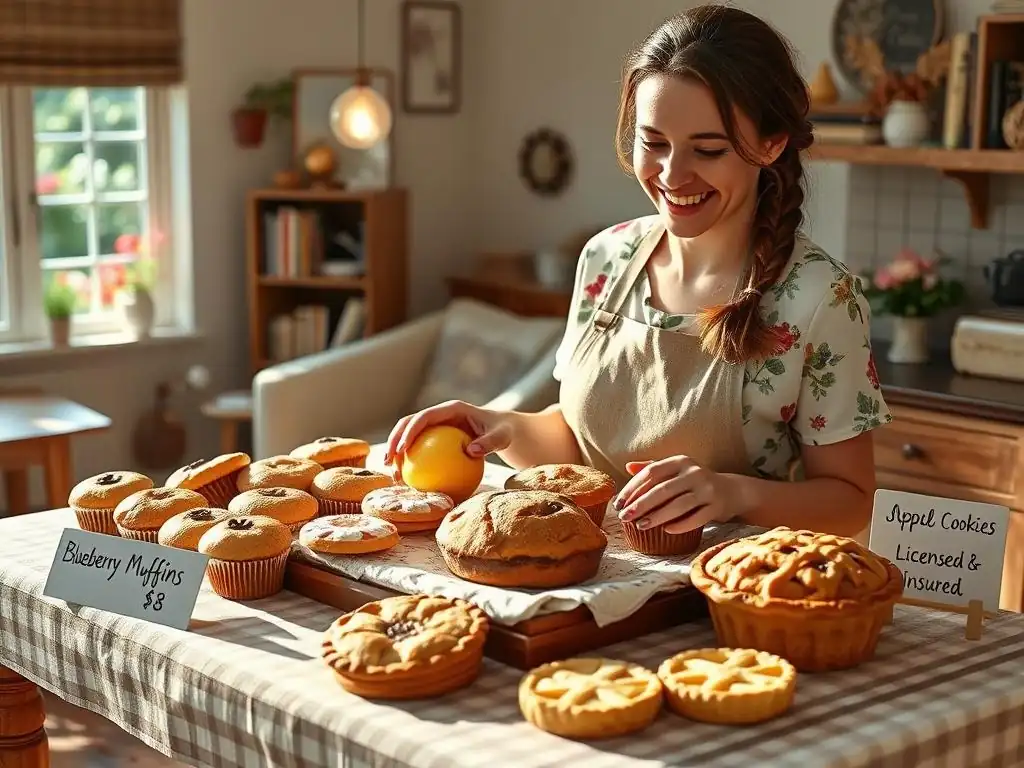
State-by-State Variations in Cottage Food Laws: A Comprehensive Overview
The legality of selling baked goods from home hinges entirely on the specific cottage food laws of the state where the baking takes place. There is no single federal cottage food law; each state, plus the District of Columbia and U.S. territories, has its own set of rules, and these rules can differ dramatically.
For example, some states might have a high annual gross sales limit, perhaps $100,000 or more, while others might cap sales at a much lower figure, like $25,000. Some states might allow sales through various channels, including online and retail stores, while others strictly limit sales to direct-to-consumer interactions like farmers' markets or pick-up from the home.
These variations extend to registration requirements, kitchen inspections, and permitted ingredients. In some states, you might only need to register your business and pay a small fee, while others may require a more involved application process or even a home kitchen inspection before granting permission to operate. The types of foods allowed also vary widely.
While baked goods are almost universally permitted under cottage food laws due to their low risk of spoilage, specific items like cheesecakes (which require refrigeration) or cream-filled pastries might be prohibited in some states but allowed in others with specific conditions. Understanding your state's specific regulations is non-negotiable for ensuring cottage food law legality.
Permitted Foods Under Cottage Food Laws: What Baked Goods Can You Sell?
Generally, cottage food laws permit the sale of non-potentially hazardous foods that do not require temperature control for safety. For bakers, this typically includes items like:
- Breads and rolls
- Cookies
- Cakes (excluding those with cream cheese or dairy-based frostings/fillings requiring refrigeration)
- Pastries (without potentially hazardous fillings or toppings)
- Muffins and scones
- Brownies and bars
- Fruit pies (typically double-crust varieties)
- Certain types of candies and confections
However, the exact list of permitted baked goods varies by state. For instance, some states might explicitly allow decorated cakes with specific types of frosting, while others might restrict anything requiring refrigeration. It's common for items like cheesecakes, custards, meringue pies, or anything containing raw eggs or fresh cream that isn't immediately consumed to be prohibited because they pose a higher risk of foodborne illness if not kept at proper temperatures. Always consult your state's specific cottage food law list of permitted foods to ensure the baked goods you plan to sell are legal.
Cottage Food Operations: Understanding Regulations for Home-Based Bakeries
Operating a home-based bakery under cottage food laws involves adhering to a specific set of regulations designed to ensure public safety. While these rules are typically less stringent than those for commercial kitchens, they are still mandatory. Common regulations often include requirements regarding the separation of business activities from personal kitchen use, such as storing ingredients and finished products separately from personal food items. Some states may mandate that only residents of the home can be involved in the preparation of cottage food products.
Furthermore, many states require home-based bakeries to register with the state's health department or agricultural department, sometimes involving a small annual fee. While full commercial kitchen inspections are usually not required, some states reserve the right to inspect the home kitchen if a complaint is received. Understanding these operational requirements, from proper sanitation practices within the home kitchen to how and where products can be sold, is vital for maintaining cottage food law legality and ensuring your home bakery operates smoothly and within the law.
Cottage Food Law Compliance Checklist: Ensuring Legal Operation
Ensuring your home bakery complies with cottage food laws involves a systematic approach. A compliance checklist can be incredibly helpful in navigating the specific requirements of your state. Key items on such a checklist typically include:
- Verify State Eligibility: Does your state have cottage food laws that permit selling baked goods from home?
- Review Permitted Foods: Are the specific baked goods you plan to sell allowed under your state's law?
- Check Sales Channel Restrictions: Can you sell at farmers' markets, online, from home, or wholesale?
- Understand Income Limits: What is the maximum annual gross sales allowed? (e.g., $50,000, $75,000, $100,000+)
- Registration/Permitting: Do you need to register with a state or local agency? Is there a fee?
- Labeling Requirements: Do your labels include all mandated information (business name/address, ingredients, allergens, "Made in a Home Kitchen" disclaimer, net weight, etc. )?
- Food Safety Training: Is a food handler's permit or specific food safety training required?
- Kitchen Requirements: Are there rules about kitchen usage, separation of ingredients, or who can prepare food?
Ticking off each item on a state-specific checklist ensures you've addressed the core legal requirements, significantly reducing the risk of inadvertently violating cottage food laws. This structured approach is fundamental to establishing and maintaining cottage food law legality for your home baking business.
Labeling Requirements for Cottage Food Products: Essential Information for Home Bakers
Proper labeling is a critical component of cottage food law compliance and is mandated in virtually every state. Labels serve to inform consumers about the product and are a primary way regulatory bodies ensure transparency. While requirements vary, common elements that must be included on the label of your home-baked goods are:
- The name and address of the cottage food operation (your home address).
- The common name of the food product (e.g., "Chocolate Chip Cookies," "Artisan Sourdough Bread").
- All ingredients of the food, listed in descending order by weight.
- Allergen information, clearly identifying major allergens like wheat, milk, eggs, soy, nuts, and peanuts, often in a separate "Contains:" statement.
- The net weight or volume of the food product.
- A specific disclaimer stating that the food was made in a home kitchen and is not subject to state food safety inspections. The exact wording for this disclaimer is often specified by the state.
- Nutritional information is typically not required unless you make a specific nutritional claim (e.g., "low fat").
Incorrect or incomplete labeling is a common pitfall for new home bakers and can lead to issues with regulators. Ensuring your labels meet all state-specific requirements is just as important as the quality of your baked goods for maintaining cottage food law legality.
Food Safety Training and Certification: Meeting Cottage Food Law Standards
Many states implementing cottage food laws require home bakers to demonstrate a basic understanding of food safety principles. This often means obtaining a food handler's permit or completing a state-approved food safety training course. These courses cover essential topics such as proper handwashing, preventing cross-contamination, safe food storage temperatures (though cottage foods are non-potentially hazardous, general knowledge is still required), and understanding food allergies.
For example, some states might require at least one person involved in the cottage food operation to hold a Food Handler's Permit, which can often be obtained online after a short course and test, usually costing around $10-$20. Other states might require a more comprehensive certification, such as ServSafe Food Handler or Manager certification, which involves a longer course and a more rigorous exam.
While the specific requirement varies, the underlying principle is consistent: ensuring that home bakers have the knowledge necessary to produce food safely for the public. Checking your state's requirements for food safety training is a crucial step in ensuring compliance and upholding the legality of your home bakery.
Cottage Food Law Exceptions and Limitations: What You Need to Know
Income Limits and Sales Restrictions: Understanding Cottage Food Law Boundaries
A significant limitation of many cottage food laws is an annual gross sales cap. This limit defines the maximum amount of money a home bakery can earn from selling cottage food products within a calendar year before they are typically required to transition to a commercial kitchen or obtain a different type of food business license. These limits vary widely by state.
For instance, some states have a relatively low limit, perhaps around $20,000 or $25,000 per year, while others are much more generous, allowing up to $50,000, $100,000, or even $250,000 in annual sales. A few states may not have an income cap at all, focusing more on the type of food sold and sales channels.
Understanding and tracking your annual sales is crucial. Exceeding the income limit means you are no longer operating legally under cottage food laws and must take steps to become a fully licensed commercial operation. This often involves renting or building a commercial kitchen space, undergoing regular inspections, and adhering to more complex regulations. While these limits can feel restrictive for growing businesses, they are a fundamental part of the cottage food law framework, designed to support small-scale operations rather than large commercial enterprises.
Direct Sales vs. Wholesale: Cottage Food Law Regulations on Distribution
Another common restriction within cottage food laws pertains to the channels through which products can be sold. Most states prioritize direct-to-consumer sales, where the person who bakes the food sells it directly to the end consumer. This typically includes venues like farmers' markets, roadside stands, community events, and sales directly from the home (pick-up or delivery). The rationale is that direct interaction allows the consumer to know exactly where their food comes from.
Wholesale sales, where the home baker sells their products to a third-party retailer (like a grocery store, coffee shop, or restaurant) who then resells the product to the consumer, are often prohibited or severely restricted under cottage food laws. Some states might allow limited wholesale, perhaps only to specific types of retailers or within a certain geographic area.
The logic behind restricting wholesale is that it adds another layer to the distribution chain, potentially increasing risks or reducing traceability compared to direct sales. Before planning your sales strategy, it is essential to verify what sales channels are permitted under your state's specific cottage food law legality rules.
Cottage Food Law and Online Sales: Selling Baked Goods Online Legally
The legality of selling baked goods online under cottage food laws is one of the areas with the most variation and ongoing change. Historically, many states limited sales to face-to-face transactions. However, with the rise of e-commerce, more states are updating their laws to permit online sales, often with specific conditions. These conditions might include:
- Sales only within the state where the food was produced.
- Restrictions on shipping certain types of products.
- Requirements for clear labeling and disclaimers on the website.
- Mandatory in-person pick-up rather than shipping.
Some states allow online ordering but still require the customer to pick up the product directly from the home or a designated farmers' market. Other states are more liberal, permitting shipping within state lines. A few states might even allow interstate sales under certain conditions, although this is less common and often involves navigating more complex federal regulations. If you plan to sell your baked goods through a website or social media, thoroughly researching your state's specific rules regarding online sales is critical to ensure cottage food law legality.
Starting Your Home Bakery Legally: Leveraging Cottage Food Laws to Your Advantage
Developing a Business Plan for Your Cottage Food Operation
Even for a small-scale home bakery operating under cottage food laws, developing a simple business plan is a valuable exercise. It helps structure your ideas, identify your target market, and plan your operations. A basic business plan for a cottage food operation might include sections like:
- Executive Summary: A brief overview of your business idea.
- Company Description: What is your bakery called? What is your mission?
- Products: What specific baked goods will you sell? (Ensure they are permitted under cottage food laws).
- Market Analysis: Who are your target customers? What is your competition?
- Marketing and Sales Strategy: How will you reach customers? Where will you sell (farmers' market, online, etc.)? (Adhering to sales channel restrictions).
- Operational Plan: How will you bake, package, and label products? (Following kitchen and labeling rules).
- Financial Plan: Startup costs (ingredients, packaging, small equipment), pricing, projected sales (staying within income limits), and expenses.
Creating this plan helps solidify your understanding of the legal framework you must operate within, particularly concerning permitted activities and sales limits. It transforms the abstract concept of cottage food law legality into concrete steps for building your business.
Marketing and Selling Your Home Baked Goods: Reaching Your Target Audience
Marketing and selling your delicious home-baked goods within the constraints of cottage food laws requires creativity and adherence to regulations. Since wholesale is often limited, focusing on direct-to-consumer strategies is usually key. This could involve:
- Setting up a booth at local farmers' markets or craft fairs.
- Selling directly from your home via pre-arranged pick-up times.
- Utilizing social media to showcase your products and announce availability.
- Building an email list for repeat customers.
- Offering local delivery if permitted by your state's law.
When marketing, be mindful of any restrictions on making health or nutritional claims unless you have the proper certifications and labeling. Always ensure your marketing materials align with the required labeling, including the "Made in a Home Kitchen" disclaimer where necessary. Effective marketing within the cottage food framework means building relationships with customers and highlighting the homemade, artisanal nature of your products, all while respecting the boundaries set by cottage food law legality.
Transitioning to a Licensed Bakery: Scaling Beyond Cottage Food Laws
As a home bakery grows and approaches or exceeds the state's cottage food law income limit, the owner must consider transitioning to a fully licensed commercial operation. This is a significant step that involves moving beyond the cottage food law legality framework. The process typically requires:
- Securing access to a commercial kitchen space. This could mean renting space in a shared commissary kitchen, building out a dedicated commercial kitchen, or finding a licensed incubator kitchen.
- Obtaining necessary local and state food business licenses and permits.
- Undergoing regular inspections by health authorities.
- Adhering to more extensive food safety regulations, including potentially more stringent requirements for equipment, storage, and employee training.
- Potentially changing labeling to remove the "home kitchen" disclaimer.
This transition allows for significant scaling, including unlimited income potential (from a regulatory standpoint) and the ability to pursue wholesale opportunities. While it involves considerably more overhead and regulatory complexity than operating under cottage food laws, it is the necessary path for a home bakery looking to expand significantly and move beyond the specific limitations governing cottage food law legality.
Cottage Food Laws vs. Commercial Kitchens: Choosing the Right Path for Your Bakery
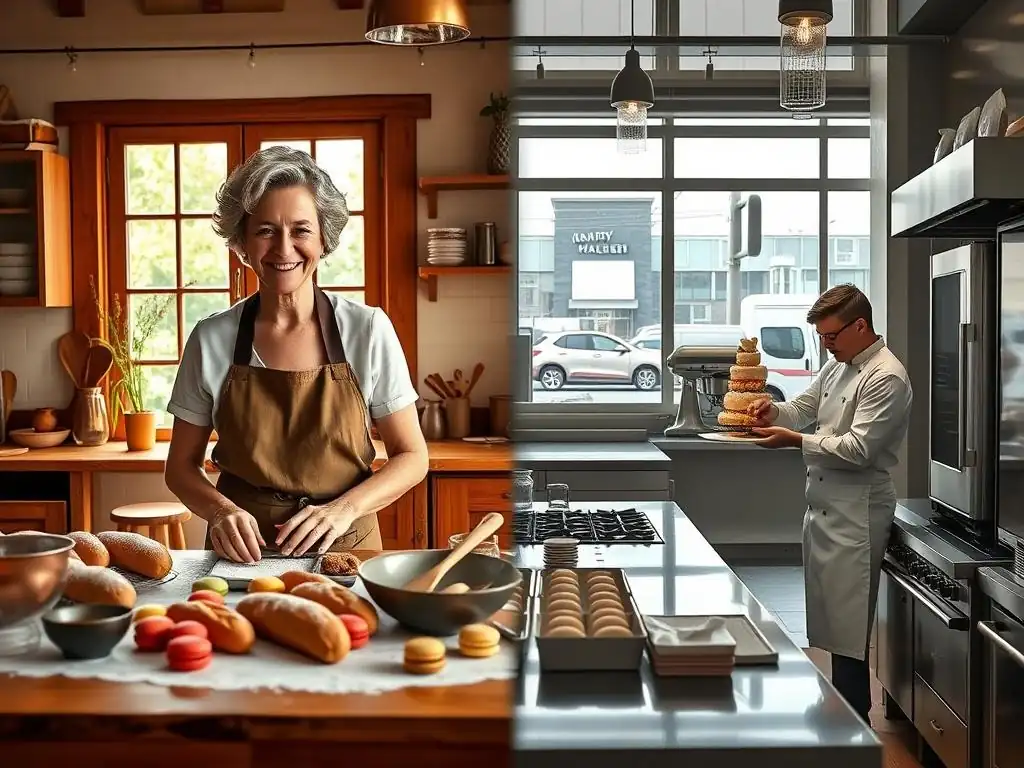
When Do You Need a Commercial Kitchen for Your Baking Business?
You need a commercial kitchen when your baking business activities exceed the scope or limitations of your state's cottage food laws. This is most commonly triggered by:
- Exceeding the Annual Gross Sales Limit: Once your sales surpass the state's defined cap (e.g., $50,000 or $100,000), you are no longer eligible to operate under cottage food regulations.
- Selling Prohibited Foods: If you want to sell items not allowed under cottage food laws, such as cheesecakes, cream pies, or potentially hazardous items.
- Pursuing Wholesale Opportunities: If your state's cottage food law prohibits or severely limits selling to retailers for resale, and you want to pursue this distribution channel.
- Selling Across State Lines: If you plan to ship products to customers in other states, which typically falls outside the scope of state-specific cottage food laws and may involve federal FDA regulations.
- Expanding Your Team Significantly: While some states allow family members to help, hiring employees outside your household often necessitates a commercial setup.
Deciding to move to a commercial kitchen is a strategic business decision driven by growth and expansion goals that go beyond the framework designed for smaller-scale, home-based operations focused on cottage food law legality.
Understanding the Costs and Benefits of a Commercial Kitchen
Transitioning to a commercial kitchen involves a significant increase in costs compared to a cottage food operation. Expenses can include:
- Rent or mortgage for the kitchen space.
- Utilities (gas, electricity, water) which will likely be higher than residential use.
- Commercial-grade equipment, which is often more expensive and requires different maintenance than home appliances.
- Increased insurance requirements.
- Licensing and permit fees, which are typically higher than cottage food registration fees.
- Regular inspection fees.
- Potential payroll costs if you hire employees.
However, the benefits can outweigh these costs for a growing business. A commercial kitchen allows for:
- Unlimited income potential (from a regulatory standpoint).
- Ability to sell a wider variety of products, including potentially hazardous items.
- Access to wholesale markets, significantly expanding your customer reach.
- Enhanced credibility and scalability, making it easier to grow your brand and potentially secure financing.
- Compliance with all food safety regulations for larger-scale production and distribution.
Weighing these costs and benefits against your business goals and the limitations imposed by cottage food law legality is essential when deciding if and when to make the leap to a commercial kitchen.
Resources for Aspiring Home Bakers: Cottage Food Law Information and Support
State-Specific Cottage Food Law Websites and Resources
The most crucial resource for any aspiring home baker is the official information provided by their state government. Every state agency responsible for regulating food safety (often the Department of Health or Department of Agriculture) typically publishes detailed information about their specific cottage food laws on their official website. These resources are invaluable because they provide the exact legal text, lists of permitted and prohibited foods, labeling requirements, sales channel restrictions, income limits, and application procedures specific to that state.
Finding this information usually involves searching the state government's website for terms like "cottage food law," "home kitchen," or "homemade food regulations" plus the state name. These official sources are the definitive guide to understanding cottage food law legality in your specific location and should be the first place you look for accurate information. Relying on outdated or unofficial sources can lead to misunderstandings and potential non-compliance.
Associations and Organizations Supporting Home-Based Food Businesses
Several national and state-level associations and organizations advocate for and support home-based food businesses, including those operating under cottage food laws. These groups often provide valuable resources, educational materials, networking opportunities, and updates on legislative changes related to cottage food laws. Examples might include local farmers' market associations, state-specific food business networks, or national advocacy groups focused on food freedom laws.
Joining such an organization can provide access to a community of peers facing similar challenges, offer insights into best practices for operating within the cottage food framework, and keep you informed about potential changes to cottage food law legality in your state. These groups often compile easy-to-understand summaries of state laws and can offer guidance based on collective experience.
Legal Considerations: Disclaimer and Importance of Legal Counsel
While this article provides general information about cottage food laws and cottage food law legality, it is essential to understand that food safety regulations are complex and vary significantly. The information presented here is for educational purposes only and should not be construed as legal advice. State laws are subject to change, and their interpretation can sometimes be nuanced.
Therefore, anyone starting or operating a home bakery under cottage food laws should consult with their state's relevant regulatory agency (like the Department of Health or Agriculture) to obtain the most current and accurate information specific to their situation. For complex questions or legal interpretation, seeking advice from a qualified legal professional familiar with food and business law in your state is highly recommended. Ensuring full compliance requires diligence and, at times, expert guidance beyond general informational resources.
Frequently Asked Questions
What are cottage food laws?
Cottage food laws are state-level regulations that allow individuals to bake and sell certain homemade food products directly to consumers from their homes without needing a commercial kitchen.
What types of baked goods are typically allowed under cottage food laws?
Generally, non-potentially hazardous foods like cookies, cakes, breads, and pastries are permitted. Items requiring refrigeration or with high-risk ingredients are often restricted or prohibited.
Are there limits to how much I can earn selling cottage foods?
Yes, most states have annual gross sales limits for cottage food businesses. These limits vary widely, so it's important to check your state's specific regulations.
Do I need a special license or permit to operate a cottage food business?
While a full-fledged commercial kitchen license is not usually required, some states mandate registration or a permit with the local health department. Labeling requirements are also generally enforced.
Where can I find information about cottage food laws in my specific state?
The best place to start is by contacting your state's Department of Agriculture or your local health department. They can provide detailed information on the rules and regulations in your area.
Final Reflection: The Sweet Taste of Legality and the Future of Cottage Food
The rise of home-based food businesses reflects a growing desire for entrepreneurial independence and a renewed appreciation for handcrafted goods. However, navigating the complex landscape of cottage food laws is crucial for success. Ignoring these regulations can lead to significant legal and financial repercussions, highlighting the urgent need for clarity and understanding in this burgeoning sector.
The impact of cottage food laws extends far beyond individual bakers and jam-makers; it shapes the very fabric of local economies and community engagement. These laws directly influence access to unique, locally-sourced products, fostering a sense of connection between producers and consumers often lost in mass production. The best things in life are homemade,
a sentiment echoed by countless individuals choosing to share their culinary passions with their communities. This simple phrase encapsulates the heart of the cottage food movement, a movement that deserves clear and accessible legal frameworks to thrive.
Now, consider your own culinary passions and entrepreneurial spirit. Are you ready to take the leap and share your creations with the world? Understanding the legal landscape is the first step. Research your local cottage food laws thoroughly, seek guidance from relevant authorities, and embrace the opportunity to contribute to a vibrant and growing community of home-based food entrepreneurs. The journey may be challenging, but the rewards – both personal and professional – are undeniably sweet.
Unlock Your Baking Business: Turn Passion into Profit!
Thanks for diving into the world of cottage food laws with us! We hope you gained a clearer understanding of the regulations and possibilities. Now it's time to take the next step.
- Explore your state's specific cottage food laws: This is the crucial first step to ensure you're operating legally and confidently. Understanding the specifics will empower you to bake with ease and peace of mind.
- Start planning your menu and branding: What delicious treats will you offer? What will make your business unique? Brainstorming now will lay the groundwork for success.
- Share this article with fellow baking enthusiasts: Let's build a community of home bakers who are informed and empowered!
Ready to transform your baking passion into a thriving business? What's the first delicious item you'll offer to your customers?