
Mastering the Baguette Score: Get That Beautiful "Ear"

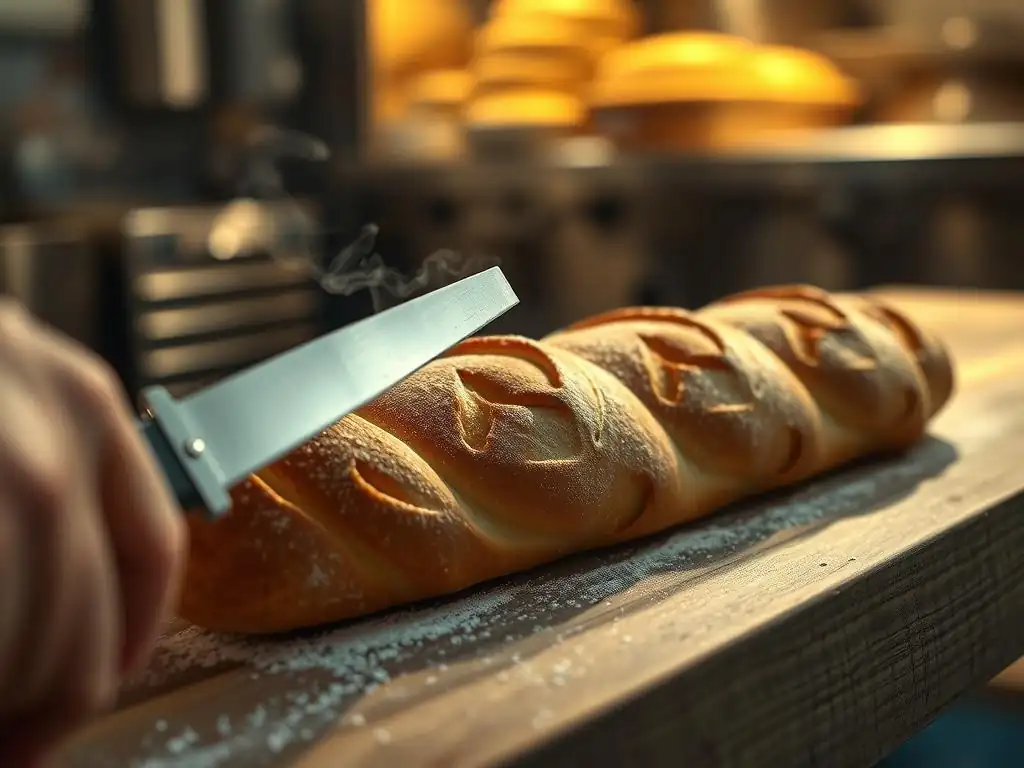
Welcome to BakeWithEase, your trusted companion on your baking journey! Ever wondered how to achieve that perfect, crisp "ear" on your baguette? Unlock the secrets to professional-looking loaves with our guide to baguette scoring techniques. We'll break down the process, making it surprisingly easy, even for beginners. Prepare to impress with your next batch – let's get scoring!
- Introduction to Baguette Scoring for the Perfect Bake
- Understanding Baguette Dough and Its Impact on Scoring
- Essential Baguette Scoring Techniques: A Step-by-Step Guide
- Troubleshooting Common Baguette Scoring Problems
- Easy Baguette Scoring Techniques for Beginners
- Baguette Scoring: Achieving the Perfect "Ear" Every Time
- Maintaining Your Baguette Scoring Tools for Optimal Performance
- Beyond the Basics: Experimenting with Baguette Scoring
- Conclusion: Elevate Your Baguette Baking with Perfect Scoring
- Frequently Asked Questions
- Final Reflection: The Enduring Allure of the Perfect Baguette Score
- Unleash Your Inner Boulanger: Bake the Perfect Baguette Ear!
Introduction to Baguette Scoring for the Perfect Bake
Why Baguette Scoring Matters: Beyond Aesthetics
Scoring, the art of cutting the surface of bread dough before baking, is far more than just decorative. For baguettes, specifically, it serves a vital functional purpose: controlling the dough's expansion during the intense heat of the oven. As the dough enters a hot oven, the trapped gases expand rapidly, a phenomenon known as "oven spring." Without controlled cuts, this pressure would cause the loaf to burst unpredictably at its weakest point, often along the bottom seam, resulting in an uneven shape and a less desirable crust structure.
Proper baguette scoring techniques create intentional weak points on the surface. These cuts guide the expansion, allowing the dough to rise predictably and evenly. This controlled expansion is what gives a well-baked baguette its characteristic shape and contributes to the development of a beautiful, crispy crust. The iconic "ear" – a raised flap of crust along one side of the score – is a direct result of effective scoring combined with good oven spring. Mastering these techniques is fundamental to achieving professional-looking and perfectly baked baguettes at home.
The Importance of a Sharp Blade for Scoring Baguettes
The tool you use for scoring is just as critical as the technique itself. A razor-sharp blade is absolutely essential for successful baguette scoring. A sharp blade glides through the dough's surface tension cleanly and quickly, making a precise cut without dragging, tearing, or deflating the dough. This clean cut allows the dough to open up optimally during oven spring.
Conversely, a dull blade will snag and pull the delicate dough surface. This can cause the dough to deflate, hinder the score from opening properly, and result in jagged, unattractive cuts that don't guide expansion effectively. Think of trying to cut a ripe tomato with a dull knife – it squishes rather than slices.
The same principle applies to scoring bread dough. Using a fresh, sharp blade, whether it's a dedicated bread lame or a very sharp utility knife, is perhaps the single most important factor in achieving clean cuts and maximizing the potential for that coveted "ear" when practicing baguette scoring techniques easy or advanced.
Understanding Baguette Dough and Its Impact on Scoring
Dough Hydration and Scoring Success
The hydration level of your baguette dough significantly impacts how easy or difficult it is to score cleanly. Hydration refers to the ratio of water to flour in the dough, typically expressed as a percentage (e.g., 70% hydration means 70g of water per 100g of flour). Higher hydration doughs, often above 75%, tend to be stickier and more slack, making them more challenging to score without the blade dragging. These doughs require a very sharp blade and confident, swift cuts to prevent them from sticking and tearing.
Lower hydration doughs, perhaps in the 65-70% range, are generally firmer and easier to handle and score. They offer more resistance, allowing for more control over the blade's path and depth. For beginners learning easy baguette scoring techniques, starting with a dough on the lower end of the typical baguette hydration range (around 68-70%) can be more forgiving. Regardless of hydration, ensuring the dough surface is not overly wet or sticky just before scoring is crucial; a light dusting of flour can sometimes help manage surface stickiness.
Gluten Development and Scoring Techniques
Proper gluten development is another key factor influencing scoring success. Gluten, formed by mixing flour and water and developing through kneading or folding, creates the elastic network that gives bread dough its structure. Well-developed gluten provides the dough with the necessary strength and elasticity to hold its shape and expand predictably during baking. Dough that is underdeveloped will be weak, potentially tearing irregularly when scored or collapsing during oven spring.
Adequate gluten development creates tension on the dough's surface. When you make a clean cut with a sharp blade, this surface tension helps the cut open wide and cleanly during oven spring. If the gluten is underdeveloped, the dough may not have enough strength to support the opening of the scores, leading to minimal expansion along the cuts.
Conversely, dough that is overly developed or too tight can be difficult to score without tearing and might even lead to blowouts outside the score lines as the internal pressure seeks the path of least resistance. Achieving the right balance of elasticity and extensibility through proper mixing and fermentation is vital for effective baguette scoring techniques.
Essential Baguette Scoring Techniques: A Step-by-Step Guide
Step 1: Preparing Your Baguette Dough for Scoring
Before you even pick up your scoring tool, ensure your baguette dough is properly prepared. The dough should have completed its final proofing stage. It should look visibly increased in size and feel light and airy, but still have enough structure to hold its shape.
Under-proofed dough is dense and will likely explode in the oven, while over-proofed dough can be fragile and collapse when scored or baked. Gently transfer your shaped baguette from its couche or proofing basket onto a transfer peel or parchment paper dusted with semolina or cornmeal – this helps it slide easily into the oven.
Consider chilling your shaped baguettes briefly before scoring. Placing them in the refrigerator for 15 to 30 minutes can firm up the surface, making it much easier to achieve clean, precise cuts, especially with stickier, high-hydration doughs. Ensure the surface is relatively dry; a damp surface will cause the blade to stick. This preparation step is crucial for setting yourself up for successful baguette scoring techniques.
Step 2: Choosing the Right Scoring Tool (Lame or Knife)
The most common and recommended tool for scoring baguettes is a bread lame (pronounced "lahm"). A lame is essentially a holder designed to securely hold a razor blade, often allowing for a curved edge. A curved blade is particularly useful for baguette scoring as it naturally encourages the creation of the "ear" by cutting at a shallow angle and lifting a flap of dough. There are various types of lames, including straight holders and curved holders, and experimenting might help you find what feels most comfortable for mastering baguette scoring techniques easy or complex.
While a dedicated lame is ideal, a very sharp knife can also work in a pinch. A sharp utility knife or a fresh single-edge razor blade held carefully can be used. However, these alternatives offer less control over the angle and depth compared to a purpose-built lame. Regardless of the tool, its sharpness is paramount. A dull blade will hinder your efforts and lead to frustration, so always use a fresh, sharp edge.
Step 3: Mastering the Basic Straight Score for Baguettes
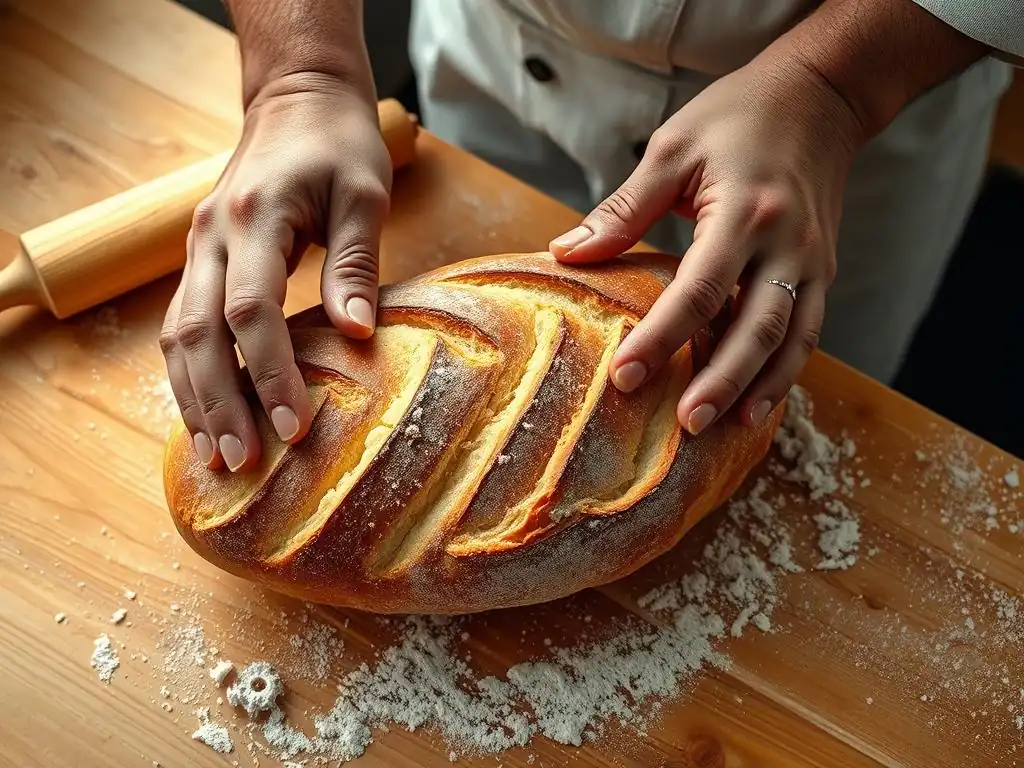
The basic straight score is fundamental to achieving a classic baguette look and is an excellent starting point for learning baguette scoring techniques easy. To execute this, hold your lame at a shallow angle to the dough surface – typically around 20 to 30 degrees. You want to cut along the surface, not straight down into it. Make a series of overlapping cuts down the length of the baguette.
Each cut should overlap the previous one by about one-third to one-half of its length. The depth of the cuts should be consistent, usually between 1/4 and 1/2 inch (0.5 to 1 cm). The shallow angle of the blade creates a flap of dough that will lift and crisp up during baking, forming the desired "ear." Practice maintaining this consistent angle and depth along the entire length of the loaf. For a standard baguette, 5-7 overlapping cuts are common.
Step 4: Advanced Scoring Patterns for Baguettes: The "Epi" and More
Once you've mastered the basic straight score, you can explore more advanced baguette scoring techniques. The "Epi" score, resembling a wheat stalk, is a popular decorative pattern. To create an Epi, make a series of diagonal cuts down the length of the loaf. After each cut, use the lame to gently lift the cut section and pull it slightly away and to the side, alternating directions down the loaf. This pattern requires practice to achieve a uniform, aesthetically pleasing result.
Other patterns exist, though they are less traditional for classic French baguettes. You might see simple crosshatching (parallel cuts across the width) or more elaborate designs. The principle remains the same: using cuts to control expansion. Experimenting with different patterns can be fun, but always remember that the core purpose is functional – guiding the oven spring. Mastering the basic straight score is the foundation for understanding how cuts behave before attempting more complex baguette scoring techniques.
Troubleshooting Common Baguette Scoring Problems
Baguette Dough Sticking to the Blade: Solutions
Dough sticking to your scoring blade is a common frustration, especially with high-hydration doughs. This often happens if the dough surface is too wet, the blade is dull, or the dough is too warm and sticky. A dull blade will drag and pull the dough rather than slicing cleanly, causing it to accumulate on the edge. Dough that is over-proofed can also be very delicate and prone to sticking.
To combat sticking, ensure your blade is razor-sharp – replace it frequently. If working with sticky dough, try dipping your lame blade in a glass of water or dusting it lightly with flour (rice flour works well as it doesn't burn) between each cut. Working quickly and confidently with decisive strokes can also help minimize contact time and prevent sticking. As mentioned earlier, a brief chill in the refrigerator before scoring can firm up the dough surface and reduce stickiness, making baguette scoring techniques easier to execute.
Scores Not Opening Up: Identifying the Cause
If your scores aren't opening up wide and forming that desirable crust structure, several factors could be at play. A primary reason is often insufficient oven spring, which can result from under-proofed dough (not enough gas built up) or over-proofed dough (weak structure collapses). A dull blade that tears the surface rather than cutting cleanly will also hinder opening. Inadequate steam in the oven environment, which is crucial for keeping the crust pliable in the initial baking phase, can also prevent scores from opening fully before the crust sets.
Beyond proofing and steam, the scoring technique itself can be the culprit. Scores that are too shallow won't provide a clear path for expansion. Scores that are too deep might cause the dough to collapse. Cuts made too vertically (close to 90 degrees to the surface) won't create the necessary flap of dough to lift into an ear; the cut will simply open straight up. Ensure you are using a shallow angle (20-30 degrees) and a consistent depth (1/4-1/2 inch) for effective baguette scoring techniques.
Baguettes Exploding in the Oven: Preventing Blowouts
An "explosion" or blowout in a baguette occurs when the dough's internal pressure during oven spring is released somewhere other than the intended score lines, often causing a rupture along a seam or a thin spot in the crust. This is a clear sign that your scoring did not adequately guide the expansion. The most frequent cause is under-proofed dough; it has immense potential for expansion in the oven, and if the scores aren't sufficient, it will find the path of least resistance elsewhere.
To prevent blowouts, ensure your dough is properly proofed – it should be light and airy but still have some structure. Use a razor-sharp blade to make clean, decisive cuts. Critically, ensure your scores are deep enough (around 1/4 to 1/2 inch) and at the correct shallow angle (20-30 degrees) to effectively act as vents. They need to be more appealing to the expanding dough than any other potential weak point. Combining proper proofing, sharp tools, and correct baguette scoring techniques is key to avoiding these frustrating blowouts.
Easy Baguette Scoring Techniques for Beginners
Simplified Scoring Methods for Home Bakers
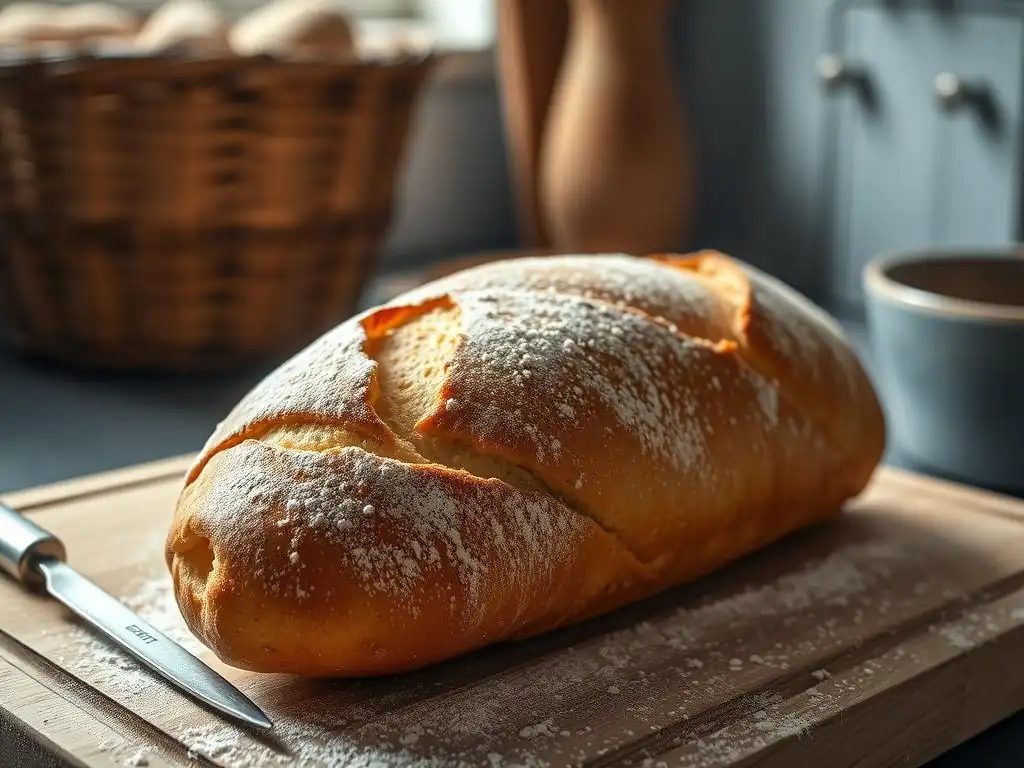
For those new to baking baguettes, the idea of scoring might seem daunting. Start simple! You don't need to make 7 perfectly overlapping cuts right away. Begin by practicing with just 2 or 3 well-executed, overlapping straight cuts down the length of the loaf. This allows you to focus on getting the feel for the shallow angle (20-30 degrees) and consistent depth (1/4-1/2 inch) without the pressure of completing a full pattern.
Using a simple, straight lame holder might feel more intuitive than a curved one initially. Also, consider practicing on smaller, batard-shaped loaves first, as they are shorter and easier to handle. As mentioned before, slightly chilling the shaped dough for 15-30 minutes before scoring can firm up the surface, making it less prone to tearing or sticking, which greatly simplifies the process for beginners practicing easy baguette scoring techniques.
Practice Makes Perfect: Tips for Improving Your Scoring
Like any baking skill, scoring improves significantly with practice. Don't be discouraged if your first few attempts aren't gallery-worthy. Focus on consistency in your angle, depth, and overlap. Try practicing on dough scraps or even rolled-up towels to get a feel for the movement and angle of the blade before working on your precious baguettes.
After baking, analyze your results. Did the scores open nicely? Did you get an ear? Did the loaf burst elsewhere? Use this feedback to adjust your technique for the next bake. Perhaps you need to angle the blade more shallowly, cut a little deeper, or adjust your proofing time. Consistent, mindful practice is the most effective way to refine your baguette scoring techniques and achieve the results you're looking for.
Baguette Scoring: Achieving the Perfect "Ear" Every Time
Understanding the Angle and Depth of Your Cuts
To consistently achieve that coveted "ear" on your baguette, paying close attention to the angle and depth of your scores is paramount. The angle should be shallow, ideally between 20 and 30 degrees relative to the surface of the dough. This shallow angle doesn't just cut the surface; it creates a flap of dough that is designed to lift and crisp up as the loaf expands in the oven. Cutting too vertically (closer to 90 degrees) will result in the score opening straight upwards rather than creating this lifting flap.
The depth of the cut is equally important. Aim for a consistent depth of approximately 1/4 to 1/2 inch (0.5 to 1 cm). If the cut is too shallow, it might not provide enough of a weak point to guide the full expansion of the dough, potentially leading to blowouts elsewhere.
If the cut is too deep, it can weaken the structure of the loaf too much, causing it to spread rather than rise upwards and form a defined ear. Finding the sweet spot for depth ensures the score functions correctly during oven spring, a critical aspect of effective baguette scoring techniques.
How Oven Spring Affects Your Baguette Score
Oven spring is the dramatic expansion that occurs during the first few minutes of baking as the dough's internal temperature rises and trapped gases rapidly expand. This phenomenon is directly responsible for transforming your scores into the final crust structure, including the formation of the ear. When the dough experiences strong oven spring, the clean cuts made with a sharp blade at a shallow angle open up wide, and the flap of dough created by the angle lifts and sets into a crispy, defined ear.
Effective baguette scoring techniques are designed to work with oven spring. They provide the path of least resistance for the expanding gases. If your dough is properly proofed (with ample gas built up) and has good gluten development, the oven spring will be powerful. Combined with the correct angle and depth of your scores and sufficient steam in the oven to keep the crust pliable initially, this powerful expansion will force the scores open along the intended lines, creating that beautiful, professional-looking ear.
Maintaining Your Baguette Scoring Tools for Optimal Performance
Cleaning and Sharpening Your Lame
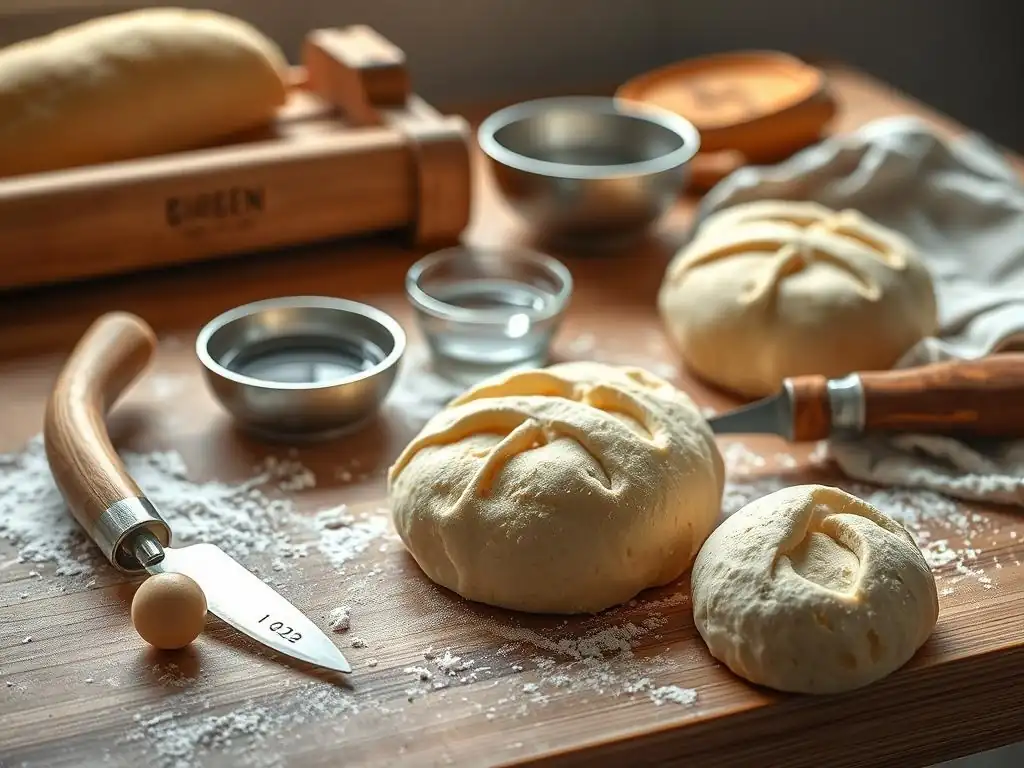
To ensure your baguette scoring tools perform optimally every time, proper maintenance is essential. After each scoring session, it's important to carefully clean any dough residue from the blade. Dough left to dry on the blade will make it less effective and can even lead to rust on standard carbon steel blades. Use a small brush or a damp cloth to gently wipe the blade clean, exercising extreme caution as the edge is very sharp.
Most lames use standard double-edged or single-edge razor blades, which are inexpensive and designed to be disposable. For the cleanest cuts and best results, it's recommended to replace the blade frequently. Depending on how often you bake, this might mean using a fresh blade every 1 to 3 baking sessions. A new, sharp blade is your best friend for achieving clean, effortless cuts and mastering baguette scoring techniques.
Storing Your Scoring Tools Properly
Proper storage of your baguette scoring tools is important for maintaining their condition and ensuring safety. Always store your lame or scoring blade in a way that protects the sharp edge and prevents accidental cuts. Many lames come with a protective cap or a small case specifically for this purpose. If using a loose razor blade, store it securely wrapped and out of reach.
Additionally, storing your scoring tool in a dry environment helps prevent rust, especially if using standard steel razor blades. Moisture can quickly dull the blade and cause corrosion. Keeping your tools clean and stored properly ensures they remain sharp, safe, and ready for use whenever you're ready to practice your baguette scoring techniques.
Beyond the Basics: Experimenting with Baguette Scoring
Different Scoring Patterns and Their Effects
Once you are comfortable with basic baguette scoring techniques, you can begin to experiment with different patterns. Varying the number of cuts, the angle slightly, or the overlap can change the final appearance of the loaf. For example, using more overlapping cuts might result in a slightly crispier crust overall due to the increased surface area exposed during baking. Cutting with a steeper angle (though still shallow) might produce a more pronounced, narrower ear.
Exploring different scoring patterns is a way to develop your signature baking style. While the classic straight score is traditional for baguettes, understanding how different cuts influence the dough's expansion allows you to predict the outcome and tailor the look of your loaves. Each pattern is essentially a different way of guiding the same fundamental process of oven spring.
Incorporating Flour and Other Ingredients into Your Scores
Beyond just the cuts themselves, you can enhance the visual appeal of your scored baguettes by incorporating other elements. Dusting the shaped loaf with flour before scoring is a popular technique. Rice flour is often preferred because it doesn't burn as easily as wheat flour in the hot oven, creating a lovely white contrast against the baked crust that clearly highlights the baguette scoring techniques you used.
While less common for classic baguettes, some bakers experiment with lightly pressing seeds (like sesame or poppy) into the scores before baking for added texture and flavor. However, for achieving the quintessential baguette look, a simple flour dusting is the most traditional and effective way to make your beautiful scoring stand out.
Conclusion: Elevate Your Baguette Baking with Perfect Scoring
Frequently Asked Questions
What is baguette scoring and why is it important?
Baguette scoring is making shallow cuts on the surface of the dough before baking. It's important because it controls how the bread expands in the oven, creating the signature "ear" and preventing uncontrolled bursting.
What are some easy baguette scoring techniques for beginners?
Beginners can start with a simple straight cut down the length of the baguette. Another easy technique is the overlapping score, making slightly angled cuts that overlap each other.
What tools are best for scoring baguettes?
A lame (pronounced "lahm"), which is a very sharp blade specifically designed for scoring, is ideal. A razor blade or a very sharp knife can also be used carefully.
How deep should I score my baguette?
The depth of the score depends on the type of cut, but generally, scores should be about 1/4 to 1/2 inch deep. Deeper cuts allow for more oven spring and a larger ear.
What causes a baguette to not score properly, resulting in a poor "ear"?
Several factors can contribute, including underproofed dough, a dull scoring tool, or scores that are not deep enough. The dough's hydration level also plays a role.
Final Reflection: The Enduring Allure of the Perfect Baguette Score
The pursuit of the perfect baguette, with its crisp, golden-brown crust and airy interior, is more than just a culinary quest; it's a testament to the power of precision and patience in achieving beauty. This article explored the seemingly simple, yet surprisingly nuanced, techniques involved in scoring baguettes, highlighting the crucial role this seemingly small detail plays in the final product. Mastering the score isn't just about aesthetics; it's about unlocking the full potential of the dough, allowing for optimal oven spring and that characteristic ear that defines a truly exceptional baguette.
The art of bread making, and specifically the meticulous scoring of a baguette, reflects a deeper cultural significance. It's a connection to tradition, a celebration of simple ingredients transformed through skill and dedication. The process itself is meditative, a quiet act of creation that yields tangible rewards. As the renowned baker, Lionel Poilâne, once said, Bread is the staff of life, but it is also a work of art.
This sentiment encapsulates the profound impact of even the smallest details, like the baguette score, on the overall experience of baking and consuming this everyday staple.
Now, I invite you to consider your own approach to baking, or even to any creative endeavor. What seemingly small details do you overlook? Where can you inject more precision and intentionality to elevate your work?
Remember the lessons learned here – the importance of a sharp blade, the confidence in your score, and the understanding that even the smallest details can make all the difference. Embrace the challenge, experiment with different scoring techniques, and discover the joy of achieving that beautiful, perfectly formed "ear" on your next baguette. The journey to mastery is a rewarding one, and the taste of success is undeniably sweet.
Unleash Your Inner Boulanger: Bake the Perfect Baguette Ear!
Thanks for joining us on this delicious journey into baguette baking! We hope you now feel confident in tackling that coveted "ear." Ready to put your new skills to the test?
- Bake your dream baguette: Try out the recipe and techniques we shared today – you'll be amazed at the difference! Don't be afraid to experiment with different flours and hydration levels.
- Share your success: Snap a picture of your masterpiece and share it on social media using #BakeWithEaseBaguette – we’d love to see your results!
- Explore other techniques: Dive into our library of bread recipes and videos on BakeWithEase.com – we have plenty of other techniques to help perfect your baking skills.
So, what unique ingredient or technique will you try next to elevate your baguette game? Let us know in the comments below!