
The Secret to a Golden Brown Baguette Crust

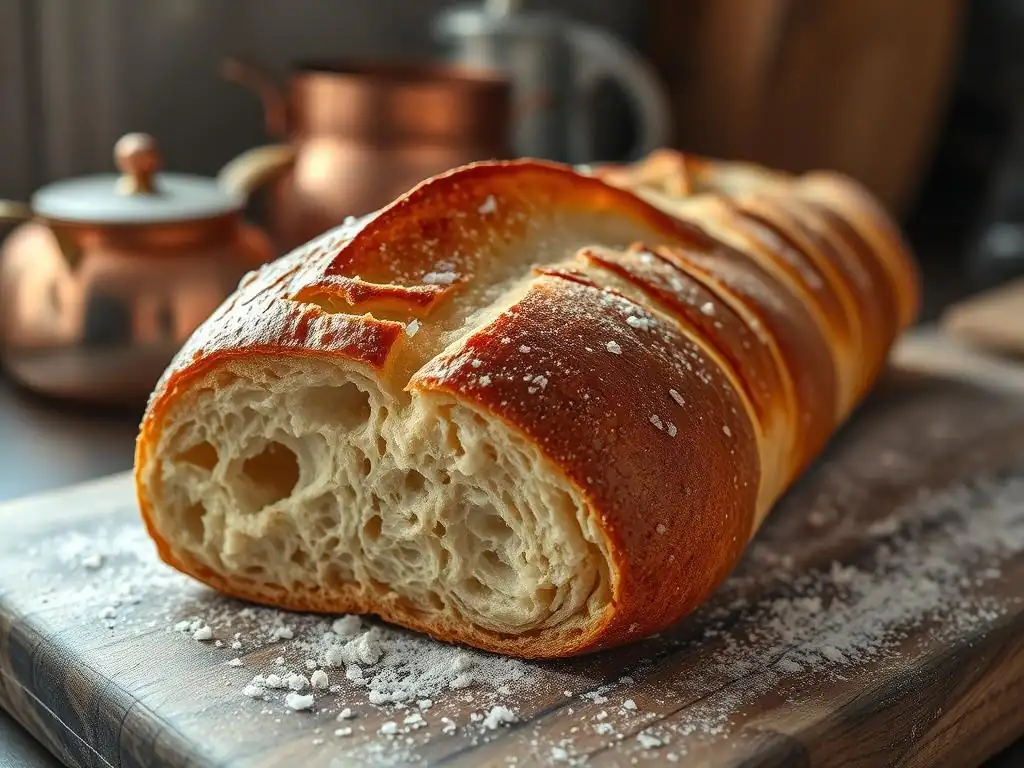
Welcome to BakeWithEase, your partner in crafting unforgettable baked goods! Ever dreamt of achieving that perfect, golden brown baguette crust at home? You're in the right place. Uncover the secrets and techniques that transform ordinary dough into a bakery-worthy masterpiece. Ready to elevate your bread baking game? Let's get started...
- BakeWithEase: Mastering the Artisan Baguette
- Achieving the Perfect Golden Brown Baguette Crust: An Introduction
- The Golden Brown Baguette Crust Recipe: Key Ingredients and Their Roles
-
Step-by-Step Guide: Baking a Baguette with a Golden Brown Crust
- Step 1: Mixing the Dough for Optimal Crust Formation
- Step 2: Bulk Fermentation: Developing Flavor and Structure
- Step 3: Shaping the Baguette: Achieving Consistent Thickness
- Step 4: Proofing: The Final Rise Before Baking
- Step 5: Scoring: Creating Beautiful and Functional Cuts
- Step 6: Baking: The Steam Injection Technique for a Crispy Crust
- Step 7: Cooling: Allowing the Crust to Set
- Tips and Tricks for a Consistently Golden Brown Baguette Crust
- Troubleshooting: Common Problems and Solutions for Imperfect Crusts
- Beyond the Basics: Exploring Advanced Techniques for Baguette Crust Perfection
- Enjoy Your Golden Brown Baguette: Serving Suggestions and Storage Tips
- Conclusion: Your Journey to Baguette Baking Mastery
-
Frequently Asked Questions
- What is the most important factor in achieving a golden brown baguette crust?
- What type of flour is best for a golden brown baguette crust recipe?
- How does scoring the baguette before baking affect the crust?
- Can I achieve a golden brown crust without a professional oven?
- What temperature should I bake my baguette at to get a golden brown crust?
- Final Reflection: The Enduring Allure of the Perfect Crust
- Unlock Your Inner Baker: Achieve That Perfect Crust!
BakeWithEase: Mastering the Artisan Baguette
Welcome to BakeWithEase.com: Your Guide to Perfect Baguettes
Welcome to BakeWithEase.com, your trusted companion on the rewarding journey of baking. Our passion is simplifying complex techniques and sharing the secrets to achieving baking perfection in your own kitchen, whether you're just starting out or honing your skills. Today, we're diving deep into one of the most satisfying achievements in bread baking: the elusive, crackling, golden brown baguette crust.
At BakeWithEase, we understand that baking a truly great baguette can seem intimidating, especially when aiming for that iconic golden crust that whispers of Parisian bakeries. Our goal is to demystify the process, providing clear, step-by-step guidance and the foundational knowledge you need. We'll break down the golden brown baguette crust recipe into manageable parts, explaining the 'why' behind each step, so you can consistently bake beautiful, delicious baguettes that you'll be proud to share.
Achieving the Perfect Golden Brown Baguette Crust: An Introduction
Why is a Golden Brown Crust So Desirable in a Baguette?
The golden brown crust on a baguette isn't just about aesthetics; it's a critical component of the overall sensory experience. Visually, it signals that the bread is perfectly baked, promising a delightful contrast to the soft, airy interior. That rich color is the result of complex chemical reactions that also contribute significantly to the bread's aroma and flavor profile.
Beyond looks, the golden brown crust provides that essential textural contrast – a crisp, shattering exterior that gives way to a tender, open crumb. This delicate balance between crispness and chewiness is a hallmark of a great baguette. A pale, soft crust simply doesn't deliver the same satisfying crunch or depth of flavor, making the pursuit of the perfect golden brown hue central to mastering this classic bread.
Understanding the Science Behind Crust Color
The beautiful golden brown color of a baguette crust is primarily the result of two chemical processes that occur during baking: the Maillard reaction and caramelization. The Maillard reaction is a complex series of reactions between amino acids and reducing sugars that begins to happen around 140°C (284°F). This process creates hundreds of new flavor compounds and is responsible for the browning of many cooked foods, including bread crusts.
Caramelization, on the other hand, is the browning of sugars when heated, typically starting at higher temperatures, around 160-180°C (320-356°F). While traditional baguette dough has very little sugar added, starches in the flour break down into simpler sugars during fermentation, providing fuel for caramelization. Both the Maillard reaction and caramelization contribute to the rich color, complex flavors, and appealing aroma of a well-baked golden brown baguette crust.
The Golden Brown Baguette Crust Recipe: Key Ingredients and Their Roles
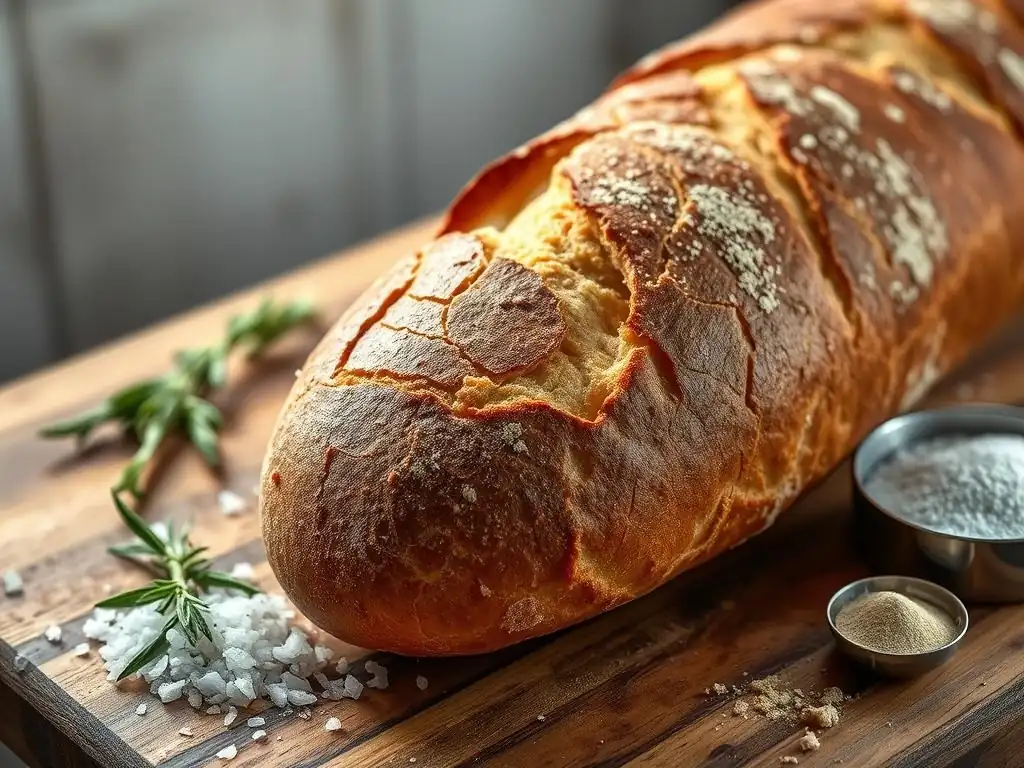
High-Quality Flour: The Foundation of a Great Crust
The type and quality of flour you use are fundamental to achieving a desirable crust. For classic baguettes, a high-quality bread flour with a protein content typically ranging from 11% to 13% is ideal. This protein forms gluten when hydrated and mixed, creating a strong, elastic network that allows the dough to trap gases produced during fermentation.
Proper gluten development is crucial because it enables the dough to rise significantly in the oven (oven spring) without collapsing. This rapid expansion stretches the dough's surface thinly, promoting the formation of a light, crisp crust rather than a thick, dense one. Flours like French Type 55 (T55) or Type 65 (T65) are traditionally used and have specific ash contents and protein levels suited for baguettes, but a good North American or European bread flour will yield excellent results for your golden brown baguette crust recipe.
Water: Hydration and Steam for Crust Development
Water plays a dual role in developing a great baguette crust. Firstly, the hydration level of the dough (the ratio of water to flour by weight) significantly impacts the crumb structure and, consequently, the crust. Baguette doughs are typically high hydration, often ranging from 70% to 80% water relative to flour. This higher water content leads to a more open, airy interior and a thinner, crispier crust.
Secondly, the water within the dough turns to steam when it hits the hot oven. This initial burst of steam keeps the dough surface pliable for the first few minutes of baking, allowing the loaf to achieve maximum oven spring before the crust sets. Without sufficient internal or external steam, the crust forms too quickly, restricting expansion and resulting in a smaller loaf with a potentially thicker, less ideally colored crust.
Yeast: Contributing to Flavor and Texture
Yeast is the engine of fermentation, consuming sugars in the dough and producing carbon dioxide gas and alcohol. The gas creates the airy structure characteristic of a baguette's crumb. While yeast doesn't directly contribute to the color of the golden brown baguette crust, its activity is vital for developing the dough's structure and contributing subtle flavor compounds through fermentation byproducts.
The rate and duration of fermentation, controlled by the amount of yeast and temperature, impact the dough's overall maturity and flavor profile. A longer, slower fermentation (especially cold fermentation) allows enzymes more time to break down starches into simpler sugars, which are then available for the Maillard reaction and caramelization during baking, potentially leading to a better-colored and more flavorful crust.
Salt: Enhancing Flavor and Crust Color
Salt, typically used at 1.8% to 2% of the flour weight in a baguette recipe, is more than just a flavor enhancer. It plays a key role in controlling yeast activity; it slows down fermentation, which helps develop a more complex flavor profile over time. Salt also strengthens the gluten network, contributing to better dough structure and oven spring.
Interestingly, salt also influences the Maillard reaction and caramelization. It can slightly affect the rate at which these browning reactions occur, contributing to the final color and flavor of the golden brown baguette crust. Ensuring the correct amount of salt is used is essential for balanced flavor and optimal crust development.
Step-by-Step Guide: Baking a Baguette with a Golden Brown Crust
Step 1: Mixing the Dough for Optimal Crust Formation
The mixing process is where the gluten network begins to form, which is essential for a well-structured baguette that can achieve great oven spring. For a golden brown baguette crust, you need a dough that is both extensible and elastic. Many bakers start with an autolyse – mixing just the flour and water and letting it rest for 20-60 minutes before adding yeast and salt. This allows the flour to fully hydrate and gluten development to begin passively.
After the autolyse, add the yeast and salt and mix until the ingredients are incorporated. Development can be finished with a stand mixer or by hand using techniques like stretch and folds over a period. Aim for a dough that is smooth, somewhat elastic, and passes the windowpane test (you can stretch a small piece thin enough to see light through it without tearing). Proper mixing sets the stage for good structure and even browning.
Step 2: Bulk Fermentation: Developing Flavor and Structure
Bulk fermentation, or the first rise, is where the magic of flavor development happens. After mixing, the dough rests in a bowl, typically at room temperature for 2-4 hours, or in the refrigerator for 12-24 hours or even longer for cold fermentation. During this time, the yeast produces gas, causing the dough to increase in volume, and enzymatic activity breaks down starches and proteins, creating complex flavors.
Regular stretch and folds (e.g., every 30-60 minutes for the first couple of hours at room temperature) help strengthen the gluten network and equalize the dough's temperature. A well-fermented dough will be airy and bubbly, with good structure. This structure is crucial because it allows the dough to expand properly in the oven, contributing to a lighter crumb and a thinner crust that browns beautifully.
Step 3: Shaping the Baguette: Achieving Consistent Thickness
Shaping baguettes requires a gentle touch to avoid degassing the dough too much while creating tension on the surface. Start by gently turning the dough out and dividing it if making multiple baguettes. Pre-shape each piece into a rough cylinder or log and let it rest for 15-20 minutes, covered. This resting period allows the gluten to relax, making the dough easier to shape.
For the final shape, gently flatten the dough, fold the top edge down to the center, press to seal, then fold the dough in half lengthwise, pressing the seam firmly with the heel of your hand. Roll the dough back and forth, applying gentle pressure from the center outwards, to lengthen it into the desired baguette shape, tapering the ends. Aim for consistent thickness along the length for even baking and coloring of your golden brown baguette crust.
Step 4: Proofing: The Final Rise Before Baking
Proofing is the final rise before the dough goes into the oven. Shaped baguettes are typically proofed seam-side down in a couche (linen cloth) or on parchment paper, often floured generously to prevent sticking. Proofing time varies depending on temperature and dough development, but it's often 45-90 minutes at room temperature. Cold-proofed baguettes go directly from the fridge to the oven after shaping.
Proper proofing is essential. Under-proofed dough won't have enough gas for optimal oven spring, resulting in a dense loaf and potentially a thick crust. Over-proofed dough can collapse in the oven, leading to a flat loaf with a pale, soft crust. The dough should look visibly puffy and feel light but still have some resistance when gently poked – it should spring back slowly, leaving a slight indentation.
Step 5: Scoring: Creating Beautiful and Functional Cuts
Scoring is the art of making precise cuts on the surface of the proofed dough just before baking. This step is not just for aesthetics; it serves a vital functional purpose. As the dough experiences oven spring, the score marks act as controlled vents, allowing the dough to expand predictably along the cuts rather than bursting randomly.
Use a very sharp blade, like a lame or razor blade, held at a low angle (around 30-45 degrees) to the dough's surface. The cuts should be about 1/2 inch deep and overlap slightly, typically by about one-third of the length of the previous cut. Proper scoring encourages the dough to open up beautifully, creating those desirable 'ears' that crisp up and brown intensely, contributing significantly to the visual appeal and texture of your golden brown baguette crust.
Step 6: Baking: The Steam Injection Technique for a Crispy Crust
Baking a baguette requires a very hot oven and the introduction of steam during the initial phase. The high temperature (often 230-250°C / 450-480°F) provides the necessary thermal shock for rapid oven spring. Steam is crucial for the first 10-15 minutes of baking; it keeps the dough surface moist and pliable, allowing it to stretch and expand fully without forming a crust too early.
Once the dough has achieved maximum oven spring, the steam should dissipate. The now-stretched and thin crust begins to dry out and the surface temperature rises rapidly, triggering the Maillard reaction and caramelization. This is when the crust transforms from pale and soft to that desired golden brown hue, becoming crisp and flavorful.
Creating Steam in a Home Oven: Methods and Best Practices
Achieving sufficient steam in a standard home oven is one of the biggest challenges in baguette baking. A common method involves preheating a baking stone or steel on the middle rack at a high temperature. Just before loading the baguettes, place a tray (like a cast iron skillet or broiler pan) on a lower rack and fill it with hot water or ice cubes immediately after putting the bread in. The goal is to create a humid environment quickly.
Another effective technique is baking inside a preheated Dutch oven or cloche. The lid traps the moisture released by the bread itself, creating a steamy micro-environment. After about 15-20 minutes, the lid is removed, allowing the crust to dry out and brown. Whichever method you choose, ensure the steam is present during the crucial initial phase of baking (the first 10-15 minutes) for optimal crust development.
Oven Temperature: The Sweet Spot for Baguette Baking
The ideal oven temperature for baking baguettes is very high, typically between 230°C and 250°C (450°F to 480°F). This intense heat is necessary for several reasons. Firstly, it provides the rapid heat transfer needed for maximum oven spring. Secondly, once the steam phase is over, this high temperature drives the surface temperature of the dough high enough to ensure the Maillard reaction and caramelization occur effectively, resulting in a deep golden brown baguette crust.
Some bakers start at the highest temperature their oven can reach (e.g., 250°C) for the first 10-15 minutes with steam, then reduce the temperature slightly (e.g., to 220°C / 425°F) for the remainder of the bake to prevent the crust from burning while the interior finishes cooking. Monitoring your oven with a separate thermometer is wise, as oven thermostats can be inaccurate.
Step 7: Cooling: Allowing the Crust to Set
Once your baguettes emerge from the oven with their beautiful golden brown crusts, the final, crucial step is cooling. Immediately transfer the baked baguettes to a wire rack. Cooling bread on a solid surface traps steam underneath, making the bottom crust soggy. A wire rack allows air circulation around the entire loaf.
Cooling isn't just about making the bread safe to handle; it's essential for the crust to fully crisp up and the interior moisture to redistribute. Cutting into a hot baguette too soon can result in a gummy crumb. Allow your baguettes to cool for at least 30-60 minutes. During this time, the crust will continue to set and harden, achieving that perfect, desirable crispness that complements the soft interior.
Tips and Tricks for a Consistently Golden Brown Baguette Crust
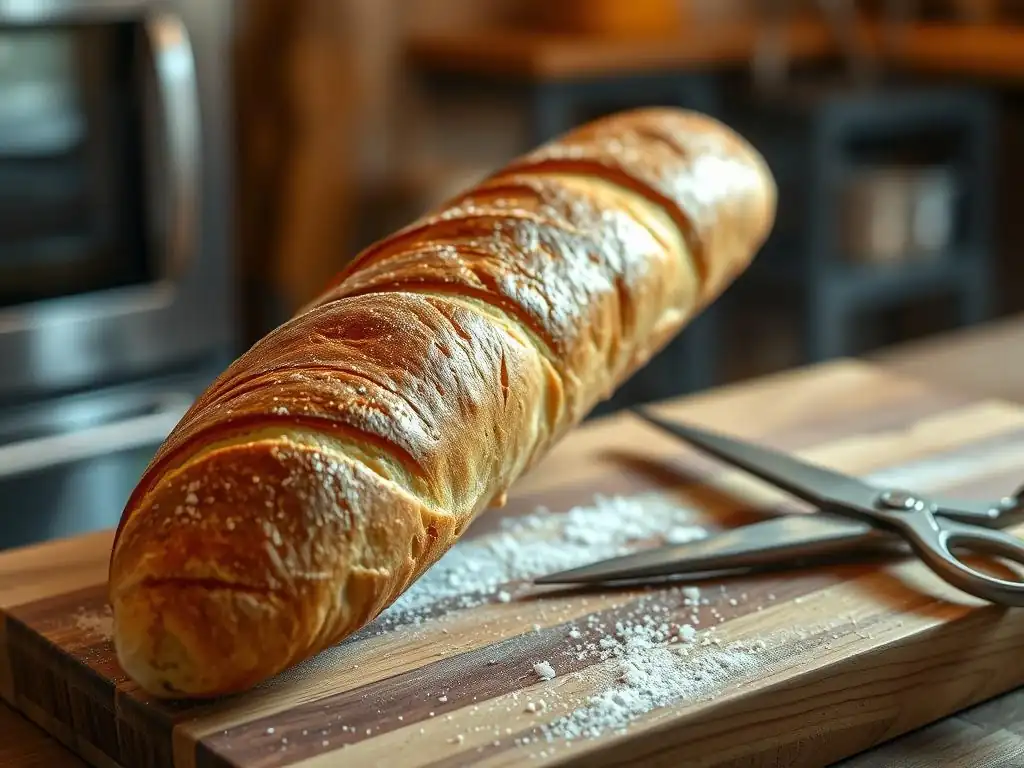
The Importance of Dough Hydration for Crust Development
As mentioned earlier, dough hydration significantly impacts the final crust. A hydration level typically between 70% and 80% (grams of water per 100 grams of flour) is common for baguettes. Higher hydration generally leads to a more open crumb and a thinner crust that tends to become crispier. The extra water also contributes more steam during baking.
Experimenting within this range based on your flour's absorption qualities is key. A dough that is too dry might result in a thicker, less crackly crust, while an overly wet dough can be difficult to handle but may yield an exceptionally light crumb and potentially a very delicate crust. Aim for a hydration that is manageable for you but high enough to encourage a thin, crisp crust.
Mastering the Art of Scoring: Angle and Depth
Precise scoring is not only functional but also influences how the crust develops aesthetically. Holding your lame or razor blade at a low angle (around 30 degrees) parallel to the loaf allows you to create a flap of dough that lifts and crisps into the characteristic "ear" during oven spring. Cuts that are too shallow may not open properly, leading to blowouts elsewhere on the loaf.
Conversely, cuts that are too deep can cause the loaf to spread sideways rather than expanding upwards, resulting in a flatter baguette. Aim for a depth of about 1/2 inch, ensuring each cut overlaps the previous one by roughly one-third of its length. Practice will help you achieve consistent, beautiful scores that contribute to a stunning golden brown baguette crust.
Utilizing a Baking Stone or Steel for Even Heat Distribution
Baking baguettes directly on a preheated baking stone or steel is highly recommended. These surfaces store and radiate intense heat, providing a powerful thermal shock to the base of the loaf as soon as it's loaded into the oven. This rapid heat transfer from below promotes excellent oven spring and helps set the bottom crust quickly, contributing to overall structure and even browning.
Ensure your stone or steel is thoroughly preheated, typically for 30-60 minutes or even longer, at the high baking temperature. Loading the baguettes onto this hot surface ensures the bottom crust develops properly alongside the top, preventing a pale or soft underside.
Controlling Oven Steam: A Crucial Element for Crust Color
Getting the steam right is arguably the most critical factor for developing a thin, crisp, golden brown baguette crust. Steam is needed only for the first 10-15 minutes of baking. It keeps the crust surface moist, allowing maximum expansion. After this initial phase, the steam must dissipate so the crust can dry out, increase in temperature, and brown.
If you are using a steam pan, remove it or open the oven door briefly to let the steam escape after the initial period. If using a Dutch oven, remove the lid after about 15-20 minutes. Insufficient steam leads to a thick, pale crust that sets too early. Too much steam for too long can result in a pale, soft crust. Mastering steam control is vital for achieving that perfect finish.
Monitoring Internal Temperature: Knowing When Your Baguette is Done
While the beautiful golden brown color of the crust is a strong indicator, relying solely on visual cues can sometimes lead to an underbaked interior. The most reliable way to know if your baguette is fully cooked is to check its internal temperature using an instant-read thermometer.
A baguette is typically done when its internal temperature reaches between 96°C and 100°C (205°F and 210°F). Insert the thermometer into the thickest part of the loaf. Baking to the correct internal temperature ensures the crumb is fully set and not gummy, while also allowing sufficient time for the crust to fully develop its color, flavor, and crispness.
Troubleshooting: Common Problems and Solutions for Imperfect Crusts
Pale Crust: Causes and Remedies
A pale crust is a common frustration and usually indicates insufficient heat, steam, or baking time during the critical browning phase. Causes can include an oven not fully preheated (or inaccurate temperature), not enough initial steam, removing steam too early, under-proofing (not enough sugar development for browning), or simply not baking long enough.
Remedies involve ensuring your oven is accurately preheated to the correct high temperature (e.g., 240°C / 465°F or higher), generating sufficient steam for the first 10-15 minutes, and baking until the internal temperature reaches 96-100°C (205-210°F). Ensure your dough is properly proofed to allow adequate sugar breakdown during fermentation.
Burnt Crust: Prevention and Recovery
A burnt crust, especially on the ends or edges, can happen if the oven is too hot, the baguettes are baked for too long, or they are placed too close to a heating element. Prevention starts with verifying your oven temperature. Ensure you are using the recommended temperature range (e.g., starting high, maybe reducing slightly).
Monitor your baguettes during the bake, particularly in the later stages. If the crust is browning too quickly while the interior isn't done, you can loosely tent the baguettes with aluminum foil. This helps shield the crust from direct radiant heat, slowing down the browning process and allowing the interior to catch up.
Thick, Hard Crust: Achieving the Right Balance
A baguette crust should be crisp and shatteringly thin, not thick and hard like a brick. This often results from insufficient initial steam, baking at too low a temperature, over-baking, or low dough hydration. Without enough steam, the crust sets too early and thickens.
To achieve a thinner, crispier crust, ensure you are generating plenty of steam during the first phase of baking. Verify your oven temperature is sufficiently high. Avoid over-baking; check the internal temperature. Consider slightly increasing your dough's hydration percentage in your golden brown baguette crust recipe (e.g., from 70% to 75%) if it's consistently too thick.
Soft, Chewy Crust: Adjusting Your Technique
A soft or chewy crust defeats the purpose of a baguette's texture. This is often caused by insufficient baking time or temperature, not allowing the steam to dissipate properly, or improper cooling. If the crust doesn't get hot enough for long enough, the Maillard reaction and caramelization won't fully develop, and it won't crisp properly.
Ensure you are baking at the correct high temperature and for long enough (until the internal temperature is reached). Crucially, make sure the steam is gone after the initial phase, allowing the crust to dry out. Always cool baguettes on a wire rack to allow air circulation and prevent condensation, which makes the bottom crust soft.
Beyond the Basics: Exploring Advanced Techniques for Baguette Crust Perfection
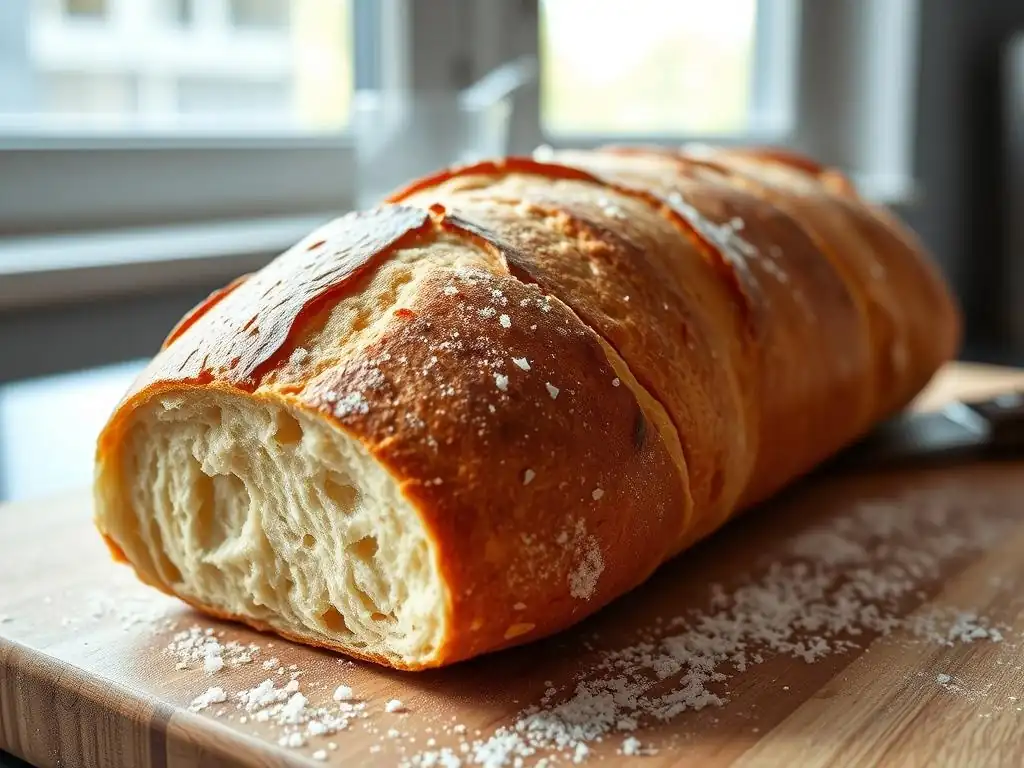
Using a Poolish or Biga for Enhanced Flavor and Crust Texture
Incorporating a pre-ferment like a poolish or biga into your golden brown baguette crust recipe can significantly enhance both flavor and crust quality. A poolish is a liquid pre-ferment (equal parts flour and water plus a small amount of yeast), while a biga is stiffer (less water than flour). These are typically mixed 8-16 hours before the main dough.
Pre-ferments undergo a longer, slower fermentation, developing more complex flavors and organic acids. This increased acidity can influence gluten development and potentially impact the Maillard reaction, contributing to a richer, more nuanced flavor in the crust and a slightly different texture compared to a straight dough.
Cold Fermentation: Developing Complex Flavors
Cold fermentation involves placing the dough (either during bulk fermentation or after shaping for proofing) in the refrigerator for an extended period, often 12 to 48 hours. The cold temperature dramatically slows down yeast activity but allows enzymes to work longer, breaking down starches and proteins more extensively.
This process develops deeper, more complex flavors in the dough, which translates to a more flavorful crust. Cold fermentation can also contribute to a more robust dough structure and potentially a slightly better oven spring, indirectly benefiting the crust's texture and appearance.
Baking with Different Flour Types: Experimenting with Flavor Profiles
While traditional baguettes are made with white flour, experimenting with a small percentage of other flour types can add interesting dimensions to your baguette's flavor profile and crust. Adding a small amount of whole wheat (e.g., 5-10%) can contribute nutty flavors and slightly alter the crust's color due to the bran and germ content.
Similarly, a tiny percentage of rye flour or specialty flours can add unique notes. Be aware that these flours absorb water differently and contain different compounds that might affect gluten development and browning. Start with small percentages (e.g., 5%) and adjust your hydration accordingly while observing how it impacts your golden brown baguette crust.
Enjoy Your Golden Brown Baguette: Serving Suggestions and Storage Tips
Pairing Your Baguette with Complementary Foods
A freshly baked baguette with a perfect golden brown crust is a culinary delight in itself, but it also serves as a fantastic vehicle for other flavors. Enjoy it simply ripped and dipped in high-quality olive oil and balsamic vinegar. It's the classic accompaniment to cheese boards, charcuterie platters, and pâtés.
Its crisp crust and airy interior make it ideal for soaking up broths from soups or sauces from stews and pasta dishes. Of course, it's also the foundation for incredible sandwiches, from simple ham and butter (Jambon-Beurre) to more elaborate fillings. The satisfying crunch of the crust enhances any pairing.
Storing Your Baguette for Maximum Freshness
The perfect golden brown baguette crust is at its absolute best within hours of baking. However, if you need to store it, avoid plastic bags, as they trap moisture and will quickly turn the crisp crust soft and chewy.
The best way to store a baguette at room temperature for up to a day is in a paper bag or wrapped loosely in a clean tea towel. This allows the crust to breathe and retain some of its crispness. For longer storage, it's best to slice the baguette and freeze the slices in an airtight container or freezer bag. You can then toast slices from frozen, bringing back some of the desirable texture.
Conclusion: Your Journey to Baguette Baking Mastery
The Golden Brown Baguette Crust Recipe: A Summary of Key Takeaways
Achieving that coveted golden brown baguette crust is a culmination of understanding and executing several key steps in the baking process. It starts with quality ingredients, particularly the right flour and sufficient hydration, which lay the groundwork for structure and steam. Proper mixing, fermentation, and proofing are essential for developing the dough's strength and flavor.
The shaping and scoring techniques guide the loaf's expansion in the oven. Finally, the baking environment – high temperature and precise steam control – is where the magic happens, triggering the Maillard reaction and caramelization that create the crust's color, flavor, and texture. Remember to cool your baguettes properly to preserve that hard-earned crispness. Mastering the golden brown baguette crust recipe is a rewarding skill that transforms simple ingredients into an extraordinary loaf of bread.
Frequently Asked Questions
What is the most important factor in achieving a golden brown baguette crust?
The steam during the initial baking phase is crucial. This creates a humid environment, allowing the crust to fully expand and develop that desirable golden brown color.
What type of flour is best for a golden brown baguette crust recipe?
Using bread flour with a high protein content is recommended. This helps develop gluten strength, which is essential for a crispy crust and airy interior.
How does scoring the baguette before baking affect the crust?
Scoring allows the baguette to expand properly during baking. This prevents cracking and allows for a more even and attractive golden brown crust.
Can I achieve a golden brown crust without a professional oven?
Yes! Simulating a steamy environment at home is possible. You can achieve this by using a Dutch oven or placing a tray of hot water in the oven.
What temperature should I bake my baguette at to get a golden brown crust?
Baking at a high temperature, typically between 450-475°F (232-246°C), is key. This helps to quickly develop the crisp, golden brown exterior we're looking for.
Final Reflection: The Enduring Allure of the Perfect Crust
The pursuit of the perfect golden brown baguette crust isn't just about aesthetics; it's a testament to the enduring power of simple ingredients transformed by skill and precision. A flawlessly browned crust speaks to the heart of baking – the alchemy of flour, water, and yeast, elevated to an art form. In a world obsessed with instant gratification, the time and care required to achieve this culinary masterpiece resonate deeply, reminding us of the rewards of patience and attention to detail.
The quest for that ideal crust has captivated bakers for centuries, transcending mere culinary technique to become a symbol of craftsmanship and dedication. It's a journey of experimentation, a dance between heat and hydration, resulting in a sensory experience that's both visually stunning and incredibly satisfying. As Julia Child once said, Find something you're passionate about and keep tremendously interested in it.
This perfectly encapsulates the spirit of baguette baking – a pursuit fueled by a deep-seated love for the process and the exquisite result.
Now, consider your own baking journey. What seemingly small detail have you overlooked that might be the key to unlocking your own golden brown baguette crust? Don't be afraid to experiment, to adjust temperatures, to refine your technique. Each loaf is a lesson, each crust a testament to your growing mastery. Embrace the imperfections, learn from the failures, and savor the triumphs. The perfect golden brown baguette crust awaits – and the journey to achieve it is just as rewarding as the destination itself.
Unlock Your Inner Baker: Achieve That Perfect Crust!
Thanks for taking the time to explore the secrets of a golden-brown baguette crust! We hope you gained valuable insights and are ready to elevate your baking game. Now, let's put that knowledge into action:
- Bake your dream baguette: Grab your ingredients and try the recipe today! We're confident you'll be amazed by the results. This is your chance to master the perfect crust.
- Share your success: Post a picture of your beautiful baguette on social media and tag us! We'd love to see your creations and celebrate your baking journey.
- Explore other recipes: Discover more amazing bread recipes on our website to further expand your baking skills!
Ready to transform your next baking project into a masterpiece? What unique twist will you add to your perfect baguette?