
The Rustic Beauty of Italian Pane Toscano (SaltFree Bread)

Welcome to BakeWithEase!
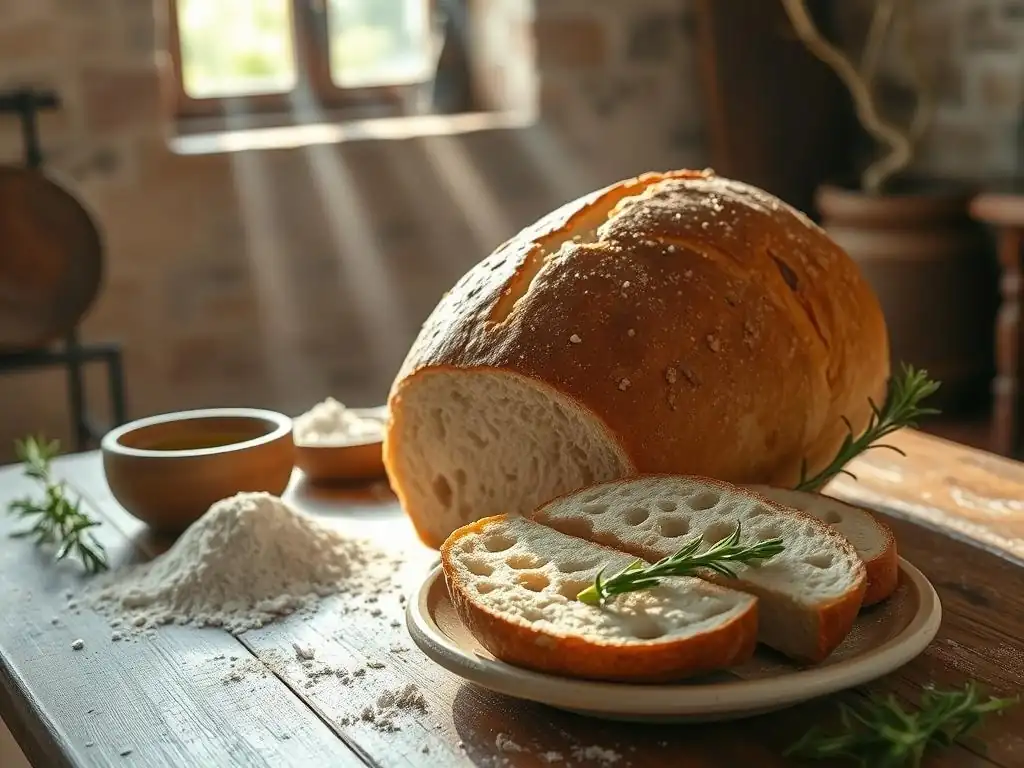
Discover the rustic charm and unparalleled flavor of authentic Italian baking. Ever wondered how to craft a truly unique bread that's both satisfying and surprisingly simple? Dive into our latest recipe and unlock the secrets behind Pane Toscano, the iconic salt-free Tuscan bread. Get ready to experience the taste of Italy with our detailed guide to creating your own delicious Saltfree Tuscan bread recipe - and prepare to be amazed at the incredible flavors that emerge without a single grain of salt! Intrigued? Let's get baking!
- The Rustic Beauty of Pane Toscano (Salt-Free Tuscan Bread)
- Introduction to Pane Toscano: A Tuscan Bread Tradition
- The History and Origins of Pane Toscano
- Pane Toscano Recipe: A Step-by-Step Guide for Home Bakers
- Tips and Tricks for Perfecting Your Pane Toscano
- Serving and Enjoying Your Homemade Pane Toscano
- Pane Toscano vs. Other Regional Italian Breads
- Variations on the Classic Pane Toscano Recipe
- The Health Benefits of Salt-Free Bread
- Conclusion: Embrace the Simplicity of Tuscan Baking
- Frequently Asked Questions
- Final Reflection: The Enduring Appeal of Salt-Free Baking
- Unleash Your Inner Baker: Craft the Perfect Pane Toscano!
The Rustic Beauty of Pane Toscano (Salt-Free Tuscan Bread)
Introduction to Pane Toscano: A Tuscan Bread Tradition
Understanding the Uniqueness of Salt-Free Bread
Pane Toscano stands out in the world of bread because of one striking omission: salt. While most bread recipes rely on salt to enhance flavor, control fermentation, and strengthen gluten structure, this traditional Tuscan loaf deliberately leaves it out. This characteristic isn't a mistake or an oversight; it's a defining feature that shapes its taste, texture, and historical significance.
The absence of salt results in a bread with a distinctively mild, almost sweet interior crumb, providing a perfect counterpoint to the often robust and savory flavors of Tuscan cuisine, such as cured meats, aged cheeses, and rich stews. Learning this unique approach is key when attempting a salt-free Tuscan bread recipe at home.
This lack of salt also influences the bread's physical properties. Without salt to tighten the gluten network, the dough can sometimes feel a bit more relaxed or sticky during handling, requiring careful technique. The crust tends to be wonderfully crisp and thick, contrasting beautifully with the soft, open crumb inside.
For anyone accustomed to baking with salt, mastering a salt-free Tuscan bread recipe presents a fascinating challenge and a rewarding experience, revealing how foundational ingredients (or their absence) fundamentally alter the final product. It's a testament to the ingenuity of regional baking traditions that a bread so simple can be so profoundly different and satisfying.
Mastering the Art of Pane Toscano
Baking authentic Pane Toscano is less about complex ingredients and more about understanding fundamental bread-making processes, particularly hydration, fermentation, and oven heat. The beauty of this bread lies in its simplicity, typically requiring just flour, water, yeast (or a natural starter), and time. Achieving the characteristic open crumb and rustic crust involves careful attention at each stage, from mixing the dough to the final bake. It's a practice that encourages patience and observation, teaching bakers to read the dough and understand its needs based on touch and appearance rather than relying heavily on salt as a forgiving agent.
Successfully recreating this salt-free Tuscan bread recipe means paying close attention to factors like the quality of the flour used – often a strong, unbleached bread flour is preferred – and the ambient temperature, which significantly impacts fermentation times. Developing a strong starter (biga) or ensuring active yeast is crucial for lift and flavor in the absence of salt's leavening support.
The high baking temperature and steam often used help create that signature thick, crackly crust. Mastering these elements allows home bakers to capture the essence of Tuscan bread, producing a loaf that is not only delicious but also steeped in tradition and history.
The History and Origins of Pane Toscano
Why is Pane Toscano Made Without Salt? Exploring the Historical Context
The tradition of baking bread without salt in Tuscany is often attributed to historical economic factors, specifically the high cost and taxation of salt centuries ago. During the medieval period, salt was a precious commodity, essential for food preservation (like curing meats and fish) and heavily controlled by rulers or powerful city-states.
Florence, a dominant power in Tuscany, historically levied significant taxes on salt, making it prohibitively expensive for ordinary people, especially peasants. Legend suggests a dispute between Florence and Pisa over salt trade routes or taxes further exacerbated the situation, leading Tuscans to simply omit salt from their most basic staple: bread.
This historical necessity transformed into a culinary identity. While other regions could afford to salt their bread, Tuscans adapted, developing a bread that complemented their regional cuisine rather than competing with it.
The strong flavors of Tuscan dishes – think robust olive oils, aged Pecorino cheese, hearty bean soups (like Ribollita), and intensely flavored cured meats like Prosciutto Toscano – are perfectly balanced by the blandness of the unsalted bread. It wasn't just about saving money; it became a deliberate choice that defined their gastronomic landscape, a tradition that persists today, making the salt-free Tuscan bread recipe a cornerstone of regional cooking.
From Peasant Food to Culinary Staple: The Evolution of Pane Toscano
Originally born out of necessity and the economic constraints faced by the common folk in Tuscany, Pane Toscano was truly a peasant bread. Its simple ingredients reflected the resources available: flour milled from local grains, water, and natural leavening or a small amount of yeast. It was the daily bread, meant to be consumed with simple, flavorful foods to make them more substantial.
The thick crust helped it stay relatively fresh for a few days, a practical advantage in households without modern storage. Its slightly stale form was also the base for many iconic Tuscan dishes like Pappa al Pomodoro and Ribollita, minimizing waste.
Over time, Pane Toscano transcended its humble origins to become a celebrated symbol of Tuscan identity and culinary philosophy – one that values simplicity, quality ingredients, and harmonious pairings. While the economic pressures that led to its salt-free nature are long gone, the tradition remains deeply ingrained. Today, it's sought after in bakeries across Italy and the world, appreciated for its unique character and versatility. The salt-free Tuscan bread recipe is no longer just sustenance; it's a cultural touchstone, representing a connection to the land, history, and the resourceful spirit of the Tuscan people.
Pane Toscano Recipe: A Step-by-Step Guide for Home Bakers
Ingredients for Authentic Pane Toscano
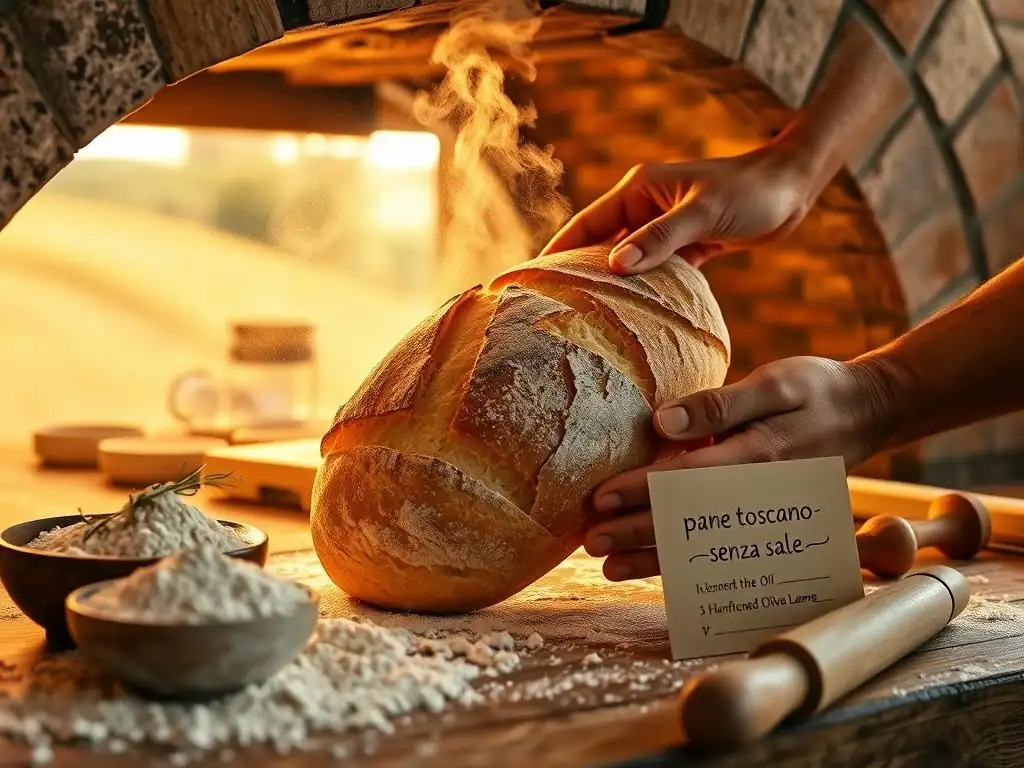
Crafting a traditional salt-free Tuscan bread recipe requires surprisingly few ingredients, putting the focus squarely on technique and the quality of each component. At its heart is flour – typically a strong bread flour, either Italian Type 00 or a high-gluten unbleached all-purpose flour, providing enough protein (around 12-14%) to develop a robust structure without salt.
For a standard loaf of about 700-800 grams, you might start with roughly 500 grams of flour. The water content is usually high, around 65-70% hydration relative to the flour weight, meaning about 325-350 milliliters of water, which contributes to the open crumb structure.
Leavening can come from commercial yeast or, traditionally, a natural sourdough starter (biga or lievito madre). If using commercial yeast for this salt-free Tuscan bread recipe, a small amount, perhaps 1-2 grams of active dry yeast or 3-4 grams of fresh yeast per 500g flour, is sufficient, especially when incorporating a pre-ferment. The most crucial ingredient, by its absence, is salt. That's it – just flour, water, and leavening. Some recipes might include a tiny pinch of sugar to kickstart yeast activity, but true traditional versions stick to the basics, relying on the fermentation process to develop complex flavors.
Equipment Needed to Bake Your Own Tuscan Bread
Baking a great salt-free Tuscan bread recipe doesn't require a professional bakery setup, but having the right tools can significantly improve your results. You'll need a sturdy mixing bowl, large enough to accommodate the dough as it rises – a 4-5 liter bowl is usually sufficient for a standard loaf. A kitchen scale is essential for accurately measuring ingredients, especially flour and water, as hydration levels are key in salt-free doughs. A dough scraper or bench knife is incredibly helpful for handling the sometimes sticky dough and for dividing and shaping.
For baking this salt-free Tuscan bread recipe, a preheated oven is non-negotiable, ideally capable of reaching temperatures around 230-250°C (450-475°F). Creating steam in the oven during the initial phase of baking is vital for achieving a thick, crackly crust; this can be done using a baking stone or steel and a steam pan, or by baking the loaf inside a Dutch oven or lidded pot.
A proofing basket (banneton) dusted with flour is excellent for giving the shaped loaf structure during the final rise and creating a nice pattern on the crust. Finally, a good sharp lame or razor blade is needed to score the dough just before baking, allowing for controlled expansion.
Step-by-Step Instructions: Baking Pane Toscano at Home
Preparing the Starter (Biga) for Enhanced Flavor
A traditional salt-free Tuscan bread recipe often uses a pre-ferment like a biga, which is a stiff dough starter made hours or even a day in advance. To prepare a biga, mix equal parts flour and water (e.g., 100g flour, 100g water) with a tiny pinch of yeast (less than 0.5g) until a stiff, shaggy dough forms.
Cover the bowl loosely and let it ferment at room temperature for 12-18 hours, or in the refrigerator for 24-48 hours for a slower, tangier ferment. The biga should be bubbly and slightly increased in volume when ready, contributing significant flavor and structure to the final dough despite the absence of salt.
Alternatively, you can use an active sourdough starter (lievito madre or liquid starter). For a salt-free Tuscan bread recipe, you might use around 100-150 grams of vigorous, recently fed sourdough starter per 500g of flour in the main dough. Ensure your starter is at its peak activity, bubbly and doubled in size, as its strength is crucial for leavening the dough without the aid of salt. Incorporating a pre-ferment is highly recommended for developing the characteristic complex flavor profile of authentic Pane Toscano.
Mixing and Kneading the Dough: Achieving the Perfect Texture
In a large mixing bowl, combine the prepared biga or sourdough starter with the remaining water for the main dough. Stir to disperse the starter. Add the rest of the flour. Mix with a sturdy spoon or your hands until a shaggy, wet dough forms and no dry pockets of flour remain. Because this is a salt-free Tuscan bread recipe, the dough will feel different from salted dough – likely stickier and less structured initially. Let the dough rest, covered, for 20-30 minutes (autolyse) to allow the flour to hydrate fully and gluten development to begin naturally.
After the rest, turn the dough out onto a lightly floured or wet surface. Knead the dough using your preferred method – by hand, stand mixer with a dough hook, or using stretch-and-fold techniques.
Kneading by hand might take 10-15 minutes, aiming for a smooth, elastic dough that passes the windowpane test (a small piece can be stretched thin enough to see light through it without tearing). Stretch-and-folds involve repeatedly stretching and folding the dough over itself in the bowl every 30-60 minutes during the initial fermentation, a gentler method that also builds structure effectively for this salt-free Tuscan bread recipe.
First Fermentation: Letting the Dough Rise Properly
Place the kneaded dough back into the clean bowl. Cover it tightly with plastic wrap or a damp kitchen towel to prevent drying. This is the bulk fermentation phase, where the dough develops flavor and volume. The duration will vary significantly based on the temperature of your kitchen and the strength of your leavening. At a warm room temperature (around 24-26°C or 75-79°F), this might take 2-3 hours. If using a cooler temperature or a less vigorous starter, it could take 4-6 hours or even longer.
During the first fermentation for your salt-free Tuscan bread recipe, it's beneficial to perform 2-3 sets of stretch-and-folds within the first hour or two. This further strengthens the gluten and redistributes the yeast, promoting a more even rise. The dough should increase significantly in volume, roughly doubling or even tripling, and appear bubbly and alive. You'll know it's ready when it feels airy and light, and a gentle poke leaves an indentation that slowly springs back.
Shaping the Pane Toscano Loaves
Once the bulk fermentation is complete, gently turn the dough out onto a lightly floured surface. Avoid degassing it too much; you want to preserve the air pockets that have developed. Divide the dough into the desired number of loaves (traditionally, Pane Toscano is a large, round loaf, but smaller loaves are also common).
For a single large loaf from 500g flour, handle the entire mass. If making smaller loaves, divide the dough using a bench knife. Allow the dough portions to rest, covered, for 10-15 minutes to relax the gluten, which makes shaping easier for this salt-free Tuscan bread recipe.
To shape a traditional round loaf (boule), gently pat or stretch the dough into a rough circle or rectangle. Fold the edges towards the center, creating tension on the surface as you pull the dough taut against the work surface. Cup your hands around the dough and gently rotate it, tucking the edges underneath to create a smooth, tight surface tension on top.
This tension is crucial for achieving a good oven spring. Place the shaped loaf seam-side up in a floured proofing basket or seam-side down on parchment paper, depending on how you plan to bake your salt-free Tuscan bread recipe.
Second Fermentation: Proofing for a Light and Airy Crust
The second fermentation, or proofing, allows the shaped loaf to rise again before baking. Place the proofing basket (or dough on parchment) inside a plastic bag or cover it loosely with plastic wrap to maintain humidity and prevent a skin from forming. The proofing time will again depend on temperature. At room temperature, it might take 60-90 minutes. For a longer, more flavorful proof, you can retard the dough in the refrigerator for 8-12 hours or even longer; this is an excellent technique for developing deeper flavors in a salt-free Tuscan bread recipe.
The dough is properly proofed for your salt-free Tuscan bread recipe when it has increased significantly in size (perhaps 50-80% from its shaped volume) and feels light and airy. A gentle poke test should leave an indentation that springs back slowly, but not completely. If it springs back immediately, it needs more time. If it collapses, it's over-proofed. While proofing, make sure your oven is preheating thoroughly, along with any baking stones or Dutch ovens you plan to use, as a hot oven is critical for the initial oven spring and crust development.
Baking: Achieving a Golden-Brown Crust and Fully Cooked Interior
Preheat your oven to a high temperature, ideally 230-250°C (450-475°F), for at least 30-60 minutes with your baking stone or Dutch oven inside. This ensures the baking surface and the oven environment are scorching hot, which is crucial for achieving a good crust on your salt-free Tuscan bread recipe. Just before baking, carefully invert the proofed loaf onto the hot baking surface (stone or Dutch oven). Score the top of the loaf with a sharp lame or knife – a simple cross or parallel slashes are traditional for Pane Toscano – to allow the bread to expand without tearing.
If baking on a stone, create steam by pouring a cup of hot water into a preheated pan placed on the bottom rack of the oven (be cautious of steam). If using a Dutch oven, place the lid on. Bake covered (if using a Dutch oven, or with steam if on a stone) for the first 20-25 minutes.
Then, remove the lid (or the steam pan) and reduce the oven temperature slightly (to around 220°C or 425°F) to allow the crust to brown and crisp up. Continue baking for another 20-30 minutes, or until the crust is deep golden brown and the internal temperature of the loaf reaches 93-99°C (200-210°F). Let your beautiful salt-free Tuscan bread recipe cool completely on a wire rack before slicing to ensure the crumb sets properly.
Tips and Tricks for Perfecting Your Pane Toscano
Mastering the Biga: The Key to Authentic Flavor
The biga is more than just a starter in a salt-free Tuscan bread recipe; it's a flavor powerhouse. Because there's no salt to enhance the taste, the complex flavors developed during the long, slow fermentation of the biga become paramount. A properly ripened biga will have a slightly alcoholic or fruity aroma and be bubbly and airy.
Using a stiff biga (lower hydration, like 50-60% water to flour) is traditional and contributes structure to the dough, while a more liquid biga (higher hydration) can add a tangier flavor profile. Experiment with different fermentation times and temperatures for your biga to see how it impacts the final bread's taste.
Don't rush the biga. Allowing it to ferment for the recommended 12-18 hours at room temperature, or even longer in the fridge, gives the wild yeasts and bacteria time to break down starches and proteins, creating a depth of flavor that simple direct-mix dough cannot replicate.
The amount of biga used in the final dough can also be adjusted; a higher percentage (e.g., 30-50% of the total flour weight coming from the biga) will result in a more flavorful and slightly tangier loaf. Mastering this pre-ferment is arguably the most important step in achieving a truly authentic and delicious salt-free Tuscan bread recipe.
Achieving the Perfect Crust: Techniques for Crispiness
The crust is a defining characteristic of Pane Toscano – thick, rustic, and wonderfully crackly. Achieving this requires high heat and moisture in the oven's initial phase. Preheating your oven to a very high temperature (230-250°C or 450-475°F) is crucial. This high heat provides an immediate burst of energy, causing the dough to expand rapidly (oven spring) and starting the crust formation process quickly. A baking stone or steel, preheated for a long time (at least 30 minutes), helps transfer heat efficiently to the bottom of the loaf, ensuring a good base crust.
Steam is equally important for your salt-free Tuscan bread recipe. In the first 15-20 minutes of baking, steam keeps the surface of the dough moist and pliable, allowing it to expand fully before the crust hardens. Without adequate steam, the crust forms too quickly, restricting oven spring and resulting in a denser loaf and a thinner crust.
Baking in a preheated Dutch oven with the lid on traps the moisture released by the dough, creating its own steamy environment. If baking on a stone, creating steam by adding water to a hot pan or spraying the oven walls is necessary. After this initial steam phase, removing the steam source and lowering the temperature slightly allows the crust to dry out and crisp up beautifully.
Troubleshooting Common Issues in Salt-Free Bread Baking
Problem: Dough Too Sticky, Solution: Reduce Hydration
Working with a salt-free Tuscan bread recipe can be challenging because the dough often feels stickier than its salted counterparts. Salt tightens the gluten network, making dough easier to handle. Without it, higher hydration levels can make the dough quite slack and adhesive. If you find your dough consistently too sticky to manage, even with wet hands or a bench scraper, the simplest solution is to slightly reduce the hydration in your next batch. Start by using 5-10% less water relative to the flour weight (e.g., if your recipe calls for 350ml water for 500g flour, try 300-325ml).
Alternatively, if you want to maintain a high hydration for a more open crumb in your salt-free Tuscan bread recipe, focus on developing gluten strength through techniques like stretch-and-folds during the bulk fermentation. Performing 3-4 sets of folds at 30-minute intervals can transform a very sticky dough into a more manageable, elastic mass. Ensuring you are using a high-protein bread flour (12-14% protein) also helps, as stronger flour can absorb more water and build a more robust structure without salt.
Problem: Bread Too Dense, Solution: Extend Proofing Time
A dense crumb in your finished salt-free Tuscan bread recipe often indicates insufficient fermentation or proofing. Without salt to regulate yeast activity, it can be harder to gauge when the dough is ready. If your bread is consistently dense, it likely means the dough didn't develop enough gas (carbon dioxide) during the bulk fermentation or the final proof to create an airy structure. Try extending the bulk fermentation time; look for the dough to significantly increase in volume (at least double) and show visible bubbles.
Similarly, the final proof is critical. If the loaf doesn't feel light and airy before baking, it needs more time. The poke test is a good indicator: if the indentation springs back immediately, it's under-proofed. Allow it to proof until the indentation springs back slowly. Using a pre-ferment like a biga or sourdough starter provides a more gradual and sustained leavening power, which is beneficial for developing a lighter crumb in this salt-free Tuscan bread recipe. Ensure your yeast or starter is active and healthy before beginning the process.
Serving and Enjoying Your Homemade Pane Toscano
Traditional Pairings: What to Eat with Pane Toscano
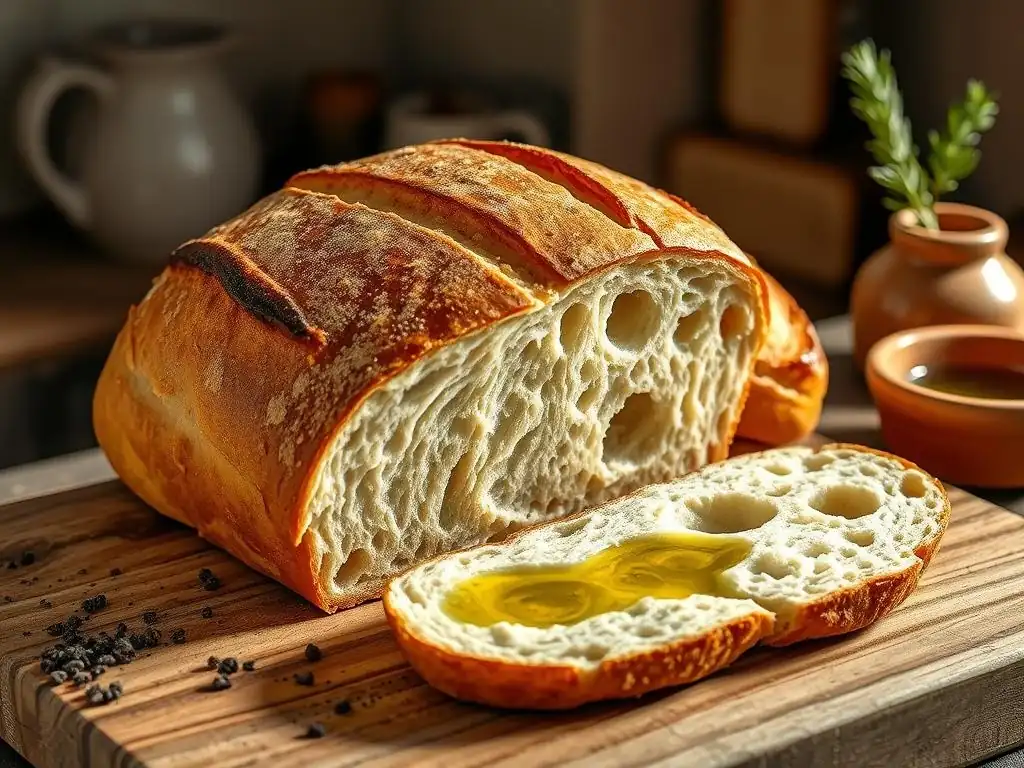
The beauty of Pane Toscano lies in its simplicity, making it the perfect vehicle for the bold flavors of Tuscan cuisine. Because it lacks salt, it doesn't clash with or overpower salty accompaniments. A classic pairing is simply drizzled with high-quality extra virgin olive oil – the peppery, fruity notes of the oil sing against the bread's mildness. It's also the ideal bread for Fettunta, grilled slices rubbed with garlic and drizzled with oil, a simple yet profound taste of Tuscany.
Pane Toscano is indispensable with Tuscan soups like Ribollita (a hearty vegetable and bread soup) and Pappa al Pomodoro (a thick tomato and bread soup), where stale bread is used to thicken the broth and absorb the flavors. It's the perfect accompaniment to a platter of Tuscan cured meats like Finocchiona (fennel salami) or Prosciutto Toscano, whose saltiness is balanced by the bread. Aged Pecorino Toscano cheese, another salty regional specialty, is also a classic match. Serving your homemade salt-free Tuscan bread recipe with these traditional foods allows you to fully appreciate its intended role in the Tuscan diet.
Creative Uses for Pane Toscano: Beyond the Bread Basket
While traditionally served fresh or used in classic Tuscan soups, homemade Pane Toscano is versatile enough for many other culinary applications. Its sturdy crust and relatively dense crumb make it excellent for toasting or grilling, providing a firm base for bruschetta toppings. Try it with a simple tomato and basil topping, or get creative with roasted vegetables, goat cheese, or tapenade. The fact that it's unsalted means you can add salty or flavorful toppings without the overall dish becoming too saline.
Stale Pane Toscano is a treasure, not waste. Beyond Ribollita and Pappa al Pomodoro, it's the foundation for Panzanella, a refreshing salad made with soaked stale bread, tomatoes, cucumbers, onions, and basil, dressed with olive oil and vinegar. Cubes of stale bread can also be toasted or fried to make croutons for salads or soups.
Its ability to absorb liquids and flavors makes it perfect for bread puddings (savory or sweet, though the lack of salt might lean it towards savory unless sugar is added) or as a binding agent in meatballs or stuffings. Don't let any piece of your delicious salt-free Tuscan bread recipe go to waste!
Storing Your Pane Toscano: Keeping It Fresh for Longer
Pane Toscano, with its thick crust, tends to stay fresh for a few days at room temperature. The best way to store it is simply wrapped in a clean linen towel or a paper bag. This allows the crust to breathe, keeping it crisp, while protecting the interior from drying out too quickly. Avoid storing it in plastic bags or airtight containers at room temperature, as this traps moisture and can make the crust soft and the bread prone to mold, especially in humid conditions.
If you won't finish your salt-free Tuscan bread recipe within 2-3 days, consider slicing it and freezing the slices in an airtight freezer bag. Frozen slices can be popped directly into a toaster or under a broiler for quick enjoyment. For longer storage of a whole or partial loaf, wrap it tightly in plastic wrap, then foil, and freeze for up to a few months.
Thaw wrapped at room temperature, then refresh the crust by warming it in a preheated oven (around 180°C or 350°F) for 5-10 minutes. This method helps preserve the quality of your homemade salt-free Tuscan bread recipe.
Pane Toscano vs. Other Regional Italian Breads
Comparing Pane Toscano to Pane di Altamura
Italy boasts an incredible diversity of regional breads, each with its own history and characteristics. Pane Toscano stands in contrast to many of these, particularly those from the south. A notable comparison is Pane di Altamura, a famous DOP-protected bread from the Puglia region.
While both are large, rustic loaves typically made with minimal ingredients (flour, water, starter, salt), the key difference is, of course, the presence of salt in Pane di Altamura and its specific flour. Pane di Altamura is made exclusively with durum wheat semola flour from the Altamura region, which gives it a distinct golden color, nutty flavor, and a very sturdy, chewy texture.
Pane Toscano, on the other hand, is traditionally made with soft wheat flour ( grano tenero ), typically Type 00 or Type 0, resulting in a whiter, softer interior crumb compared to the dense, golden crumb of Altamura. The fermentation methods also differ, with Altamura often using a sourdough starter (lievito madre) specific to its tradition.
While both breads share a heritage of using natural leavening and being baked in hot ovens, their fundamental differences in flour type and the inclusion or exclusion of salt create vastly different sensory experiences, showcasing the rich variety within Italian baking. Mastering a salt-free Tuscan bread recipe gives you a taste of one end of this spectrum.
The Role of Salt (or Lack Thereof) in Italian Bread Baking Traditions
The absence of salt in Pane Toscano highlights its significant presence in the bread traditions of almost every other Italian region. From the chewy, focaccia-like bread of Liguria to the crusty loaves of Rome (Pane Casareccio) and the flavorful, often olive oil-enriched breads of the south, salt is a standard ingredient. It plays multiple roles: enhancing the bread's flavor, controlling the rate of yeast fermentation (slowing it down for better flavor development), and strengthening the gluten structure, making the dough easier to work with and contributing to a better rise and crumb.
The Tuscan tradition of salt-free bread is therefore a unique anomaly born from historical circumstance. It demonstrates how regional conditions and necessity shaped culinary practices. While bakers elsewhere in Italy relied on salt's functional benefits and flavor contribution, Tuscans developed techniques to achieve desirable texture and relied on pre-ferments for flavor, creating a bread designed to complement their salty local fare. Understanding this contrast enriches the appreciation for a salt-free Tuscan bread recipe and its place within the broader context of Italian bread-making history.
Variations on the Classic Pane Toscano Recipe
Adding Herbs for Unique Flavor Profiles
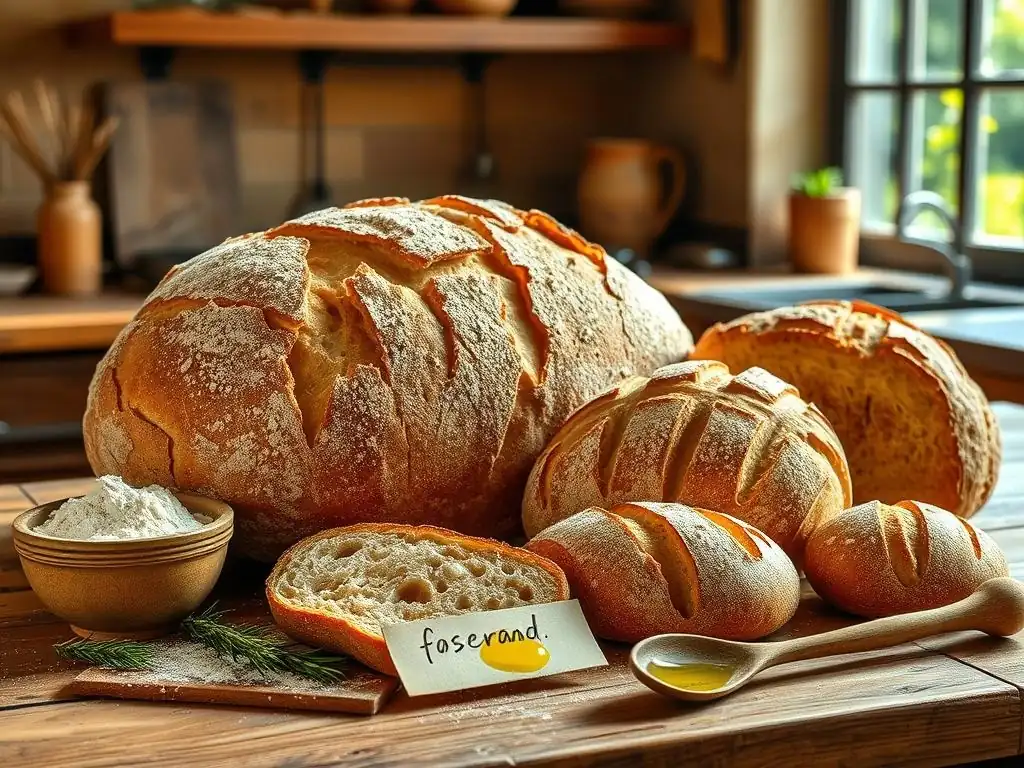
While the classic salt-free Tuscan bread recipe is plain, its mildness makes it an excellent canvas for subtle flavor additions. Incorporating fresh or dried herbs can add a delightful aromatic dimension without overpowering the bread's character. Tuscan rosemary is a popular choice; finely chopped fresh rosemary can be kneaded into the dough during the mixing stage, or whole sprigs can be placed on top before baking. The heat of the oven releases the fragrant oils, infusing the crust and crumb.
Other herbs that pair well include sage, oregano, or a mix of Italian herbs. For a loaf using 500g of flour, start with 1-2 tablespoons of finely chopped fresh herbs or 1-2 teaspoons of dried herbs. You can also infuse the water used in the dough by steeping herbs in warm water before mixing. Adding herbs transforms the simple salt-free Tuscan bread recipe into an Herb Pane Toscano, offering a different sensory experience while maintaining the traditional texture and salt-free nature.
Experimenting with Different Flours: From Whole Wheat to Spelt
The traditional salt-free Tuscan bread recipe uses soft wheat flour, but experimenting with different flours can yield interesting variations in flavor, texture, and nutritional profile. Substituting a portion of the white flour with whole wheat flour (e.g., 10-20% of the total flour weight) will result in a loaf with a slightly darker color, nuttier flavor, and increased fiber content. Keep in mind that whole wheat absorbs more water, so you might need to slightly increase the hydration.
Ancient grains like spelt or kamut can also be incorporated into your salt-free Tuscan bread recipe. Spelt flour, for instance, has a unique, slightly sweet flavor and creates a tender crumb. It behaves differently from modern wheat, sometimes developing gluten more quickly but also being more prone to tearing if over-kneaded. Using 20-30% spelt mixed with bread flour is a good starting point. These flour variations allow bakers to explore new dimensions of this classic loaf while staying true to the spirit of simple, wholesome ingredients.
The Health Benefits of Salt-Free Bread
Understanding the Nutritional Value of Pane Toscano
As a simple bread made primarily from flour and water, the basic nutritional profile of Pane Toscano is similar to other lean bread types. It is a source of carbohydrates, providing energy. Made with white bread flour, it contains some protein (depending on the flour's protein content, typically 10-14%) and small amounts of B vitamins and iron, which are often added back to enriched flours. Whole wheat versions will provide significantly more dietary fiber, vitamins, and minerals compared to loaves made with refined flour.
The most significant nutritional aspect of a salt-free Tuscan bread recipe is, of course, the complete absence of added sodium. While naturally occurring sodium in flour is negligible (a standard loaf might have less than 5-10mg per serving from the flour itself), most commercial breads contain a significant amount of added salt – often 300-600mg or more per slice, contributing substantially to daily sodium intake. Pane Toscano offers a clean slate, allowing individuals to control their sodium intake entirely through their accompaniments.
Reducing Sodium Intake: A Healthier Bread Option
For individuals looking to reduce their dietary sodium, baking a salt-free Tuscan bread recipe is an excellent strategy. High sodium intake is linked to increased risk of high blood pressure, heart disease, and stroke. The average adult consumes significantly more sodium than recommended by health guidelines (often exceeding 3,400mg daily, compared to a recommended limit of 2,300mg, or even 1,500mg for some). Bread is a common source of hidden sodium in many diets because it's consumed regularly and salt is a functional ingredient in most recipes.
By choosing or baking a salt-free Tuscan bread recipe, you eliminate a major source of added sodium from your diet. This is particularly beneficial when pairing the bread with naturally salty foods like cured meats, cheeses, or olives, allowing you to enjoy these flavors without excessive sodium consumption. While Pane Toscano is not a "health food" in itself (it's still primarily carbohydrates), its lack of added salt makes it a distinctly healthier choice compared to most commercially available breads for those monitoring their sodium levels.
Conclusion: Embrace the Simplicity of Tuscan Baking
Baking Pane Toscano is an invitation to connect with a centuries-old tradition, a testament to how necessity can shape culinary excellence. This salt-free Tuscan bread recipe challenges the conventional wisdom that bread needs salt to be delicious and functional, proving that simplicity, quality ingredients, and careful technique can produce a loaf with unique character and charm. From understanding its historical roots in Florence's salt taxes to mastering the nuances of a salt-free dough, the journey of baking Pane Toscano is deeply rewarding.
Try Our Pane Toscano Recipe
We encourage you to try this salt-free Tuscan bread recipe yourself. Experience the subtle flavor of the plain crumb, the satisfying crunch of the rustic crust, and the joy of creating something so traditional with your own hands. It's a perfect project for bakers looking to expand their skills and explore regional Italian baking. While it may present new challenges compared to salted doughs, the results – a truly authentic Pane Toscano – are well worth the effort.
We'd love to hear about your experience baking this salt-free Tuscan bread recipe. What challenges did you face? What pairings did you enjoy? Share your photos and stories! Baking is a journey, and learning from each other makes it even better. Embrace the rustic beauty of Pane Toscano and share your success with the BakeWithEase community.
Frequently Asked Questions
What makes Pane Toscano (Tuscan bread) unique?
Pane Toscano is unique because it's traditionally baked without salt. This allows it to perfectly complement the savory flavors of Tuscan cuisine.
Why is there no salt in a traditional Pane Toscano recipe?
Historically, the absence of salt in Pane Toscano was due to taxation on salt in the region. This tradition has continued and become a defining characteristic.
Can I add salt to this "Saltfree Tuscan bread recipe" if I prefer?
While the recipe is traditionally salt-free, you can add a small amount of salt (approximately 1 teaspoon) if you prefer a more familiar flavor. Remember to adjust your baking time accordingly.
What kind of flour works best for this recipe from BakeWithEase?
A high-protein bread flour is recommended for achieving the best texture and rise in Pane Toscano. This will create a chewy and satisfying crumb.
How should I store Pane Toscano to keep it fresh?
Store Pane Toscano in a paper bag or bread box at room temperature. It's best enjoyed within a few days of baking for optimal freshness.
Final Reflection: The Enduring Appeal of Salt-Free Baking
The resurgence of interest in salt-free baking, particularly within the context of traditional breads like Pane Toscano, highlights a growing awareness of both health and culinary heritage. This isn't simply a trend; it's a conscious shift towards mindful eating and a deeper appreciation for the intrinsic flavors of simple ingredients. The subtle nuances of taste revealed in salt-free bread challenge our preconceived notions of what constitutes "good" bread, opening up a world of possibilities for both bakers and eaters.
The journey of crafting Pane Toscano without salt is a testament to the power of tradition, revealing the beauty inherent in simplicity. It forces us to rely on the quality of the ingredients and the precision of the technique, resulting in a bread that is both nourishing and deeply satisfying. The absence of salt doesn't diminish the experience; rather, it enhances it, allowing the natural sweetness of the flour and the subtle tang of the sourdough to shine through. The best bread is the one that is made with love and respect for the ingredients.
– This sentiment, though not directly attributed, perfectly encapsulates the spirit of salt-free baking.
Now, consider your own kitchen. Imagine the possibilities: the aroma of freshly baked Pane Toscano filling your home, the satisfying crust giving way to a soft, airy crumb. I encourage you to embark on this culinary adventure, to experiment with salt-free baking, and to discover the unique rewards it offers. Not only will you expand your baking repertoire, but you'll also gain a deeper understanding of the art of bread making and the profound connection between food, health, and tradition. The journey starts with a single loaf.
Unleash Your Inner Baker: Craft the Perfect Pane Toscano!
Thanks for joining us on this delicious journey into the world of salt-free Italian bread! We hope you now feel confident and inspired to create your own rustic masterpiece. Ready to take the next step?
- Bake your own Pane Toscano: Gather your ingredients and follow our recipe – you'll be amazed at the simple process and incredible result! Let the delightful aroma fill your kitchen.
- Share your baking journey: Tag us on social media with your photos – we'd love to see your stunning loaves! Use #BakeWithEasePaneToscano to connect with other baking enthusiasts.
- Explore more salt-free recipes: Discover the vast potential of salt-free baking on our website – we have plenty more delicious surprises waiting for you!
What unique twist will you add to your Pane Toscano to make it truly your own?