
Understanding pH in Sourdough: A Key to Flavor and Structure

Welcome to BakeWithEase, your companion in the delicious world of baking! Ever wondered if the secret to perfectly tangy and airy sourdough lies beyond just flour and water? Prepare to unlock a crucial element: pH. This article, "Understanding pH in Sourdough: A Key to Flavor and Structure," delves into the fascinating science behind sourdough pH levels, revealing how mastering this aspect can elevate your baking from good to extraordinary. Curious to know how a simple measurement can transform your starter and your loaves? Let's explore!
Sourdough pH Levels Explained: A Summary of Key Takeaways
Maintaining a Healthy Sourdough Starter: The Importance of pH Monitoring
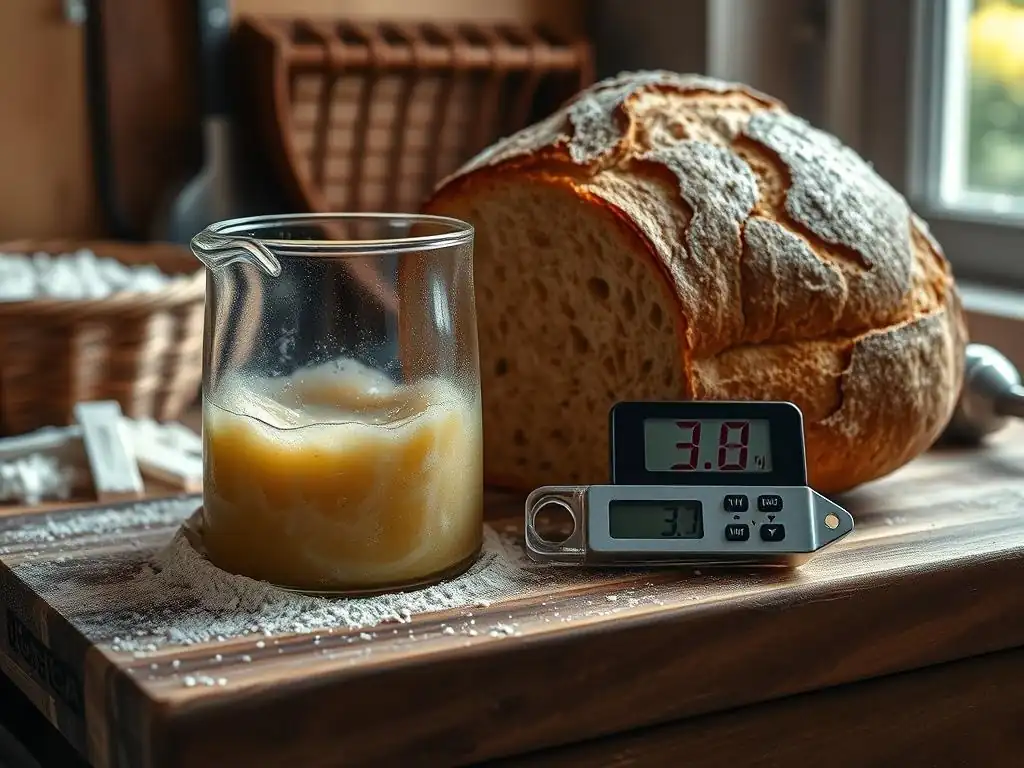
Understanding and monitoring the pH of your sourdough starter is fundamentally important for its long-term health and vigor. A starter is a complex ecosystem of lactic acid bacteria (LAB) and wild yeasts, and their activity is highly dependent on the acidity level. The ideal pH range for a thriving sourdough starter is typically between 3.5 and 4.5.
Within this range, the LAB produce acids that inhibit the growth of undesirable microorganisms, like mold and harmful bacteria, while creating an environment where the wild yeasts can flourish and produce carbon dioxide for leavening. Monitoring the pH allows you to catch issues early, such as a starter becoming too alkaline (which can happen with infrequent feeding or contamination), before it shows visible signs of decline.
Regular pH monitoring provides a crucial window into your starter's fermentation cycle. By tracking the pH drop after feeding, you can learn exactly when your starter reaches its peak activity (often correlating with the lowest pH before it stabilizes or starts to rise slightly as food runs out). For example, a starter fed at a 1:1:1 ratio (starter:flour:water) and kept at 75°F (around 24°C) might drop from a post-feeding pH of around 5.5-6.0 down to 3.8-4.0 within 6-8 hours.
Knowing this cycle, informed by pH readings, allows you to use your starter at its optimal point for baking, ensuring consistent leavening power and flavor development batch after batch. It moves starter management from guesswork to a more precise, scientific approach.
Achieving Consistent Sourdough Results Through pH Control
Consistency is the baker's ultimate goal, and controlling sourdough pH levels is a powerful tool to achieve it. The pH of your dough throughout the fermentation process directly impacts key characteristics of the final bread, including crumb structure, crust development, and flavor profile. For instance, maintaining an appropriate pH during bulk fermentation (typically starting around 5.5-6.0 and dropping to 4.0-4.5) is essential for proper gluten development.
If the pH drops too low too quickly, certain enzymes (proteases) can become overly active, degrading the gluten network and leading to a gummy or flat loaf. Conversely, insufficient acidity can result in a bland flavor and a lack of oven spring.
Beyond gluten and structure, managing sourdough pH levels explained through careful monitoring allows you to manipulate flavor. Lower pH levels generally correlate with higher concentrations of acetic acid, contributing a sharper, tangier flavor. Higher pH levels (within the acceptable range) or shorter fermentation times tend to favor lactic acid production, resulting in a milder, creamier tang. By understanding how feeding ratios, temperatures, and fermentation times influence pH, you can intentionally guide your dough towards the desired flavor profile and structure, transforming unpredictable bakes into reliable, delicious outcomes.
Further Resources for Understanding Sourdough pH (Books, Online Forums, Scientific Articles)
Delving deeper into the science of sourdough pH can significantly enhance your baking skills. While this article provides a strong foundation, continuous learning is key to mastering sourdough. Many excellent baking books dedicated to sourdough touch upon the role of pH and fermentation science, offering detailed explanations and practical advice drawn from years of experience. These resources often provide tables or graphs illustrating pH changes over time under different conditions, offering valuable insights into how your own starter and dough might behave.
Additionally, the vibrant online baking community offers numerous forums and groups where experienced bakers discuss complex topics like sourdough pH levels explained through personal experimentation and shared knowledge. Engaging with these communities can provide practical troubleshooting tips and expose you to different perspectives and techniques. For those with a scientific inclination, academic papers and articles on lactic acid fermentation and microbial ecology in sourdough offer the most detailed information, exploring the specific metabolic pathways of the bacteria and yeasts and their precise pH dependencies. While potentially dense, these resources provide the foundational science behind the art of sourdough.
Sourdough pH: Recipes and Practical Examples
Recipe 1: Long-Fermented Sourdough Loaf (Demonstrates Lowering pH for Tangy Flavor)
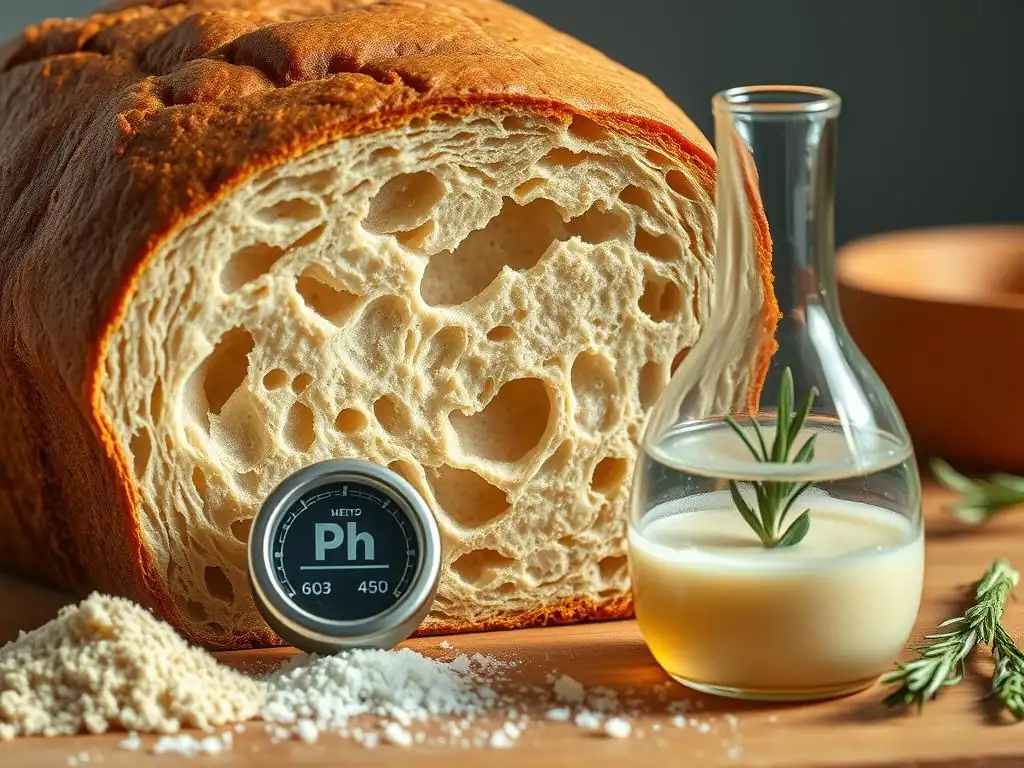
A long-fermented sourdough loaf is a classic example of how manipulating time and temperature can intentionally lower pH, resulting in a pronounced tangy flavor. The principle here is to extend the fermentation period, particularly the cold proofing stage, which encourages the lactic acid bacteria (LAB) to produce more acetic acid relative to lactic acid. Acetic acid develops more readily at lower temperatures (below 50°F or 10°C) and over longer periods.
For instance, a typical schedule might involve a bulk fermentation of 4-8 hours at room temperature (say, 72°F or 22°C), followed by a cold proofing stage in the refrigerator for 24 to 48 hours, or even longer. During the cold proof, the dough's metabolic activity slows significantly, but the acid production continues, leading to a gradual drop in pH, potentially from around 4.5 after bulk fermentation down to 3.8 or even 3.6 by the end of the cold proof.
To achieve this tangy profile, the process focuses on maximizing the duration at lower temperatures. After mixing and initial bulk fermentation (including folds), the dough is shaped and placed into a proofing basket before being immediately refrigerated. This long, slow cold proof allows ample time for acetic acid to accumulate, intensifying the sourness.
While exact pH readings would require a meter, the tangible result of this process is a bread with a distinct, sometimes sharp, sour flavor profile. This method also contributes to a stronger gluten structure due to the extended cool fermentation, often resulting in excellent oven spring and a well-developed crust. It's a demonstration of how extending the fermentation timeline, especially at cool temperatures, directly impacts the final sourdough pH levels explained through flavor.
Recipe 2: Levain Bread (Demonstrates Controlled pH for Mild Flavor)
In contrast to the long-fermented tangy loaf, a levain bread often aims for a milder, creamier flavor profile, achieved by using a levain (a build of starter specifically for the bake) at its peak activity and controlling the main fermentation to prevent excessive acid development. The levain itself is typically built using a ratio that promotes faster activity (e.g., 1:2:2 or 1:3:3 starter:flour:water) and used within a relatively short window, often 4-8 hours after feeding, when its pH might be in the range of 4.0-4.3 – active but not yet overly acidic.
Using this young, vigorous levain helps kickstart fermentation quickly.
The main dough fermentation for a milder loaf often involves a shorter bulk fermentation period compared to tangy loaves, perhaps 3-5 hours at room temperature (75-80°F or 24-27°C), followed by a shorter cold proof (maybe 8-12 hours) or even a room temperature proof if baking the same day. This faster fermentation cycle, combined with potentially warmer temperatures during bulk fermentation (which favor lactic acid production over acetic acid), keeps the overall pH from dropping as low as in the tangy loaf.
The dough might finish bulk fermentation around pH 4.5-4.8 and the final proof around pH 4.0-4.2. The result is a bread with a subtle, pleasant tang that complements the other flavors of the flour, offering a different expression of sourdough pH levels explained by fermentation management.
Frequently Asked Questions
What is the ideal pH range for a healthy sourdough starter?
The ideal pH range for a healthy sourdough starter is typically between 3.5 and 4.5. This acidity helps to inhibit undesirable bacteria and promote flavor development.
Why is pH important in sourdough baking?
pH is crucial because it affects both the flavor and structure of your sourdough. A lower pH inhibits harmful bacteria, contributing to a tangy flavor and stronger gluten development.
How can I measure the pH of my sourdough starter?
You can measure the pH of your sourdough starter using pH strips or a digital pH meter. These tools provide a reading that indicates the acidity level.
What happens if my sourdough starter's pH is too high?
If your sourdough starter's pH is too high, it becomes more susceptible to undesirable bacteria and mold. This can result in an off-flavor and a weakened starter.
How can I lower the pH of my sourdough starter?
You can lower the pH of your sourdough starter by feeding it more frequently with a higher ratio of flour to water. This encourages the production of lactic and acetic acids, which lower the pH.
Final Reflection: The Tangible Magic of Sourdough pH
Understanding sourdough's pH is not merely a scientific pursuit; it's the key that unlocks the bakery's hidden alchemy. A deep dive into the intricate relationship between acidity, microbial activity, and the final product reveals a world of flavor and texture far beyond simple bread making. Mastering pH control allows bakers to move from simply producing edible loaves to crafting truly exceptional, nuanced sourdoughs.
The impact of pH on sourdough extends far beyond the individual baker's kitchen; it's a fundamental aspect of the craft's evolution. The pursuit of the perfect sourdough starter, with its carefully balanced ecosystem of yeasts and bacteria, reflects a broader cultural appreciation for artisanal food production and a return to traditional methods. As we strive for better understanding, we connect with a long history of bread making, passed down through generations. Bread is the staff of life,
they say, and understanding its intricate chemistry elevates this staff to an art form.
Now, consider your own sourdough journey. What have you learned about the delicate balance within your starter? How has adjusting the pH influenced your baking results? I encourage you to continue experimenting, to observe the subtle shifts in flavor and texture as you refine your understanding of this crucial element. The path to sourdough mastery is a journey of continuous learning, and each loaf baked is a testament to your growing expertise. Embrace the process, savor the results, and share your discoveries with others. The world of sourdough awaits your exploration.
Unlock Your Sourdough's Potential: Master the pH Factor!
Thanks for diving into the fascinating world of sourdough pH! You've now got the knowledge to elevate your baking game. Ready to put your newfound understanding into practice?
- Track your sourdough's pH: Start meticulously recording your starter's and dough's pH levels over several bakes. This consistent data will become your secret weapon for consistent results.
- Share your discoveries: Tell us about your pH experiments and the unique flavors you uncover! Join our BakeWithEase community and share your successes and challenges.
- Experiment with different flours and hydration levels: See how pH changes with various flours and hydration percentages. Discover surprising flavor profiles!
What unique flavor profile will you unlock by mastering your sourdough's pH?