
The Role of Water Temperature in Baguette Dough

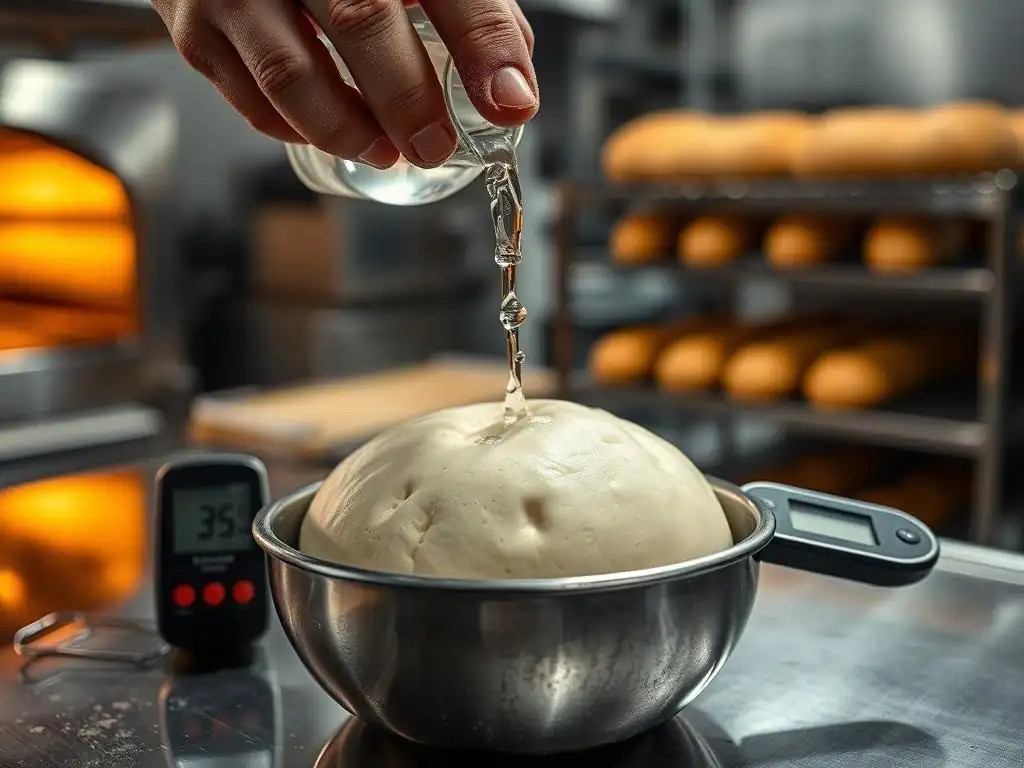
Welcome to BakeWithEase, your haven for mastering the art of baking!
Ever wondered how a seemingly simple ingredient can make or break your baguette? This week, we're diving deep into a crucial element often overlooked: the water temperature in your baguette dough. Discover the secrets behind achieving that perfect crust and airy crumb. Intrigued? Read on to unlock the key to baking truly exceptional baguettes!
- The Role of Water Temperature in Baguette Dough: Perfecting Your Bake
- Introduction: Mastering Baguettes with Precise Water Temperature
- Understanding the Science Behind Water Temperature in Baguette Dough
- The Ideal Water Temperature Range for Baguette Dough
- Water Temperature Too High: Potential Problems in Baguette Dough
- Practical Tips for Achieving the Right Water Temperature for Baguettes
- Troubleshooting Common Water Temperature Issues in Baguette Baking
- Advanced Techniques: Exploring Different Water Temperature Strategies
- Conclusion: Consistent Water Temperature for Consistent Baguette Success
- Frequently Asked Questions
- Final Reflection: The Perfect Proof: Water Temperature's Crucial Role in Baguette Baking
- Unlock Perfectly Crusty Baguettes: Master the Art of Water Temperature!
The Role of Water Temperature in Baguette Dough: Perfecting Your Bake
Introduction: Mastering Baguettes with Precise Water Temperature
Creating the perfect baguette is an art form, and like any art, it requires attention to detail. While ingredients like high-quality flour, water, salt, and yeast are fundamental, one often overlooked factor significantly impacts the final outcome: the temperature of the water used in your baguette dough. Getting the baguette dough water temperature right is crucial for controlling fermentation, developing structure, and ultimately achieving that coveted crispy crust and airy interior.
Understanding the nuances of water temperature for baguette dough allows bakers to take control of the process rather than being at the mercy of environmental factors. It's not just about mixing ingredients; it's about initiating a complex biological and chemical reaction that transforms simple components into something truly special. Precision with water temperature sets the stage for successful gluten development and yeast activity, laying the foundation for an exceptional artisan baguette.
Why Water Temperature Matters for Authentic Baguettes
The temperature of the water directly influences the initial temperature of your entire dough. This initial dough temperature is a critical factor in controlling the rate of yeast activity. If the water is too cold, the yeast will be sluggish, leading to a slow or stalled fermentation. Conversely, if the water is too warm, the yeast can become overly active, fermenting too quickly and potentially exhausting itself before the dough has developed properly.
Furthermore, water temperature affects how quickly the flour hydrates. Warmer water speeds up hydration, which can be beneficial in some recipes but can also lead to a stickier dough that is harder to handle if not managed correctly. Colder water hydrates more slowly, allowing for a more controlled and often preferred development of the gluten network over a longer period. This careful control of hydration and yeast activity through the baguette dough water temperature is key to developing the complex flavors and textures characteristic of authentic baguettes.
Achieving Optimal Dough Consistency for Artisan Baguettes
Optimal dough consistency is paramount for shaping and baking baguettes effectively. The right baguette dough water temperature contributes significantly to reaching this desired state. Dough that is too cold tends to be stiff and difficult to work with, resisting shaping and struggling to achieve the necessary oven spring. This can result in dense baguettes with a tight crumb structure.
On the other hand, dough that is too warm can become excessively sticky and slack, making it challenging to build tension during shaping. A slack dough may spread rather than hold its form, leading to flat baguettes. It can also ferment too rapidly, potentially collapsing before baking. Therefore, carefully controlling the water temperature for baguette dough is essential for developing dough that is pliable, elastic, and has the perfect balance of strength and extensibility needed for successful baguette shaping and baking.
Understanding the Science Behind Water Temperature in Baguette Dough
The science of baking is fascinating, and water temperature plays a central role in several key processes within your baguette dough. It's not just a solvent for the dry ingredients; it's an active participant in the chemical and biological transformations that occur from mixing to baking. Understanding these mechanisms helps explain why precise control over the baguette dough water temperature is so important.
Water temperature directly impacts the hydration of flour, the activity of yeast, and the overall temperature of the dough mass. These factors are interconnected and influence everything from gluten development and fermentation speed to the eventual flavor profile and crust characteristics of your baked baguette. Mastering these scientific principles is a significant step towards consistently producing high-quality artisan bread.
The Impact of Water Temperature on Gluten Development
Gluten development begins when water is added to flour. The proteins glutenin and gliadin absorb water and, through mixing and kneading, link together to form the elastic network we know as gluten. The speed of this hydration and subsequent gluten formation is influenced by water temperature. Warmer water hydrates the flour more quickly than cold water.
While faster hydration might sound appealing, very warm water can sometimes lead to a less extensible gluten network, potentially making the dough tear more easily. Colder water, on the other hand, slows down hydration and gluten development, allowing for a more gradual and controlled process. This slower development, often coupled with longer fermentation times, can result in a stronger yet more extensible gluten structure, ideal for the open crumb characteristic of a great baguette. The baguette dough water temperature therefore directly impacts the strength and elasticity of your dough.
How Water Temperature Affects Yeast Activity in Baguette Dough
Yeast are living organisms responsible for fermentation, producing carbon dioxide gas that makes the dough rise and contributing significantly to flavor development. Yeast activity is highly sensitive to temperature. There's an optimal temperature range where yeast thrives, typically between 75°F and 85°F (24°C-30°C) for dough temperature, though this varies slightly depending on the yeast type (active dry, instant, fresh).
Using water that is too cold will significantly slow down yeast activity, prolonging fermentation and potentially leading to an under-proofed loaf. Conversely, using water that is too hot can initially hyper-activate the yeast, causing it to consume sugars too quickly and potentially exhaust itself. Temperatures above 130°F (54°C) can kill yeast. Therefore, controlling the temperature of water for baguettes is paramount to ensuring the yeast ferments at the desired rate, producing the right amount of gas and flavor compounds over the intended proofing time.
Water Temperature and the Final Dough Temperature (FDT) Explained
The baguette dough water temperature is the primary factor influencing the final dough temperature (FDT) immediately after mixing. The FDT is the temperature of the dough mass as a whole, and it's a critical metric for bakers because it dictates the rate of fermentation. Most baguette recipes aim for a specific FDT, often in the range of 75°F to 78°F (24°C to 26°C), to ensure controlled fermentation.
Achieving the target FDT requires calculating the necessary water temperature based on other variables, such as the temperature of the flour, the ambient room temperature, and even the friction generated by mixing. The formula used for this calculation highlights just how significant the water temperature component is. By precisely controlling the initial baguette dough water temperature, bakers can consistently hit their target FDT, leading to more predictable and repeatable fermentation results, which is key to mastering the baguette.
The Ideal Water Temperature Range for Baguette Dough
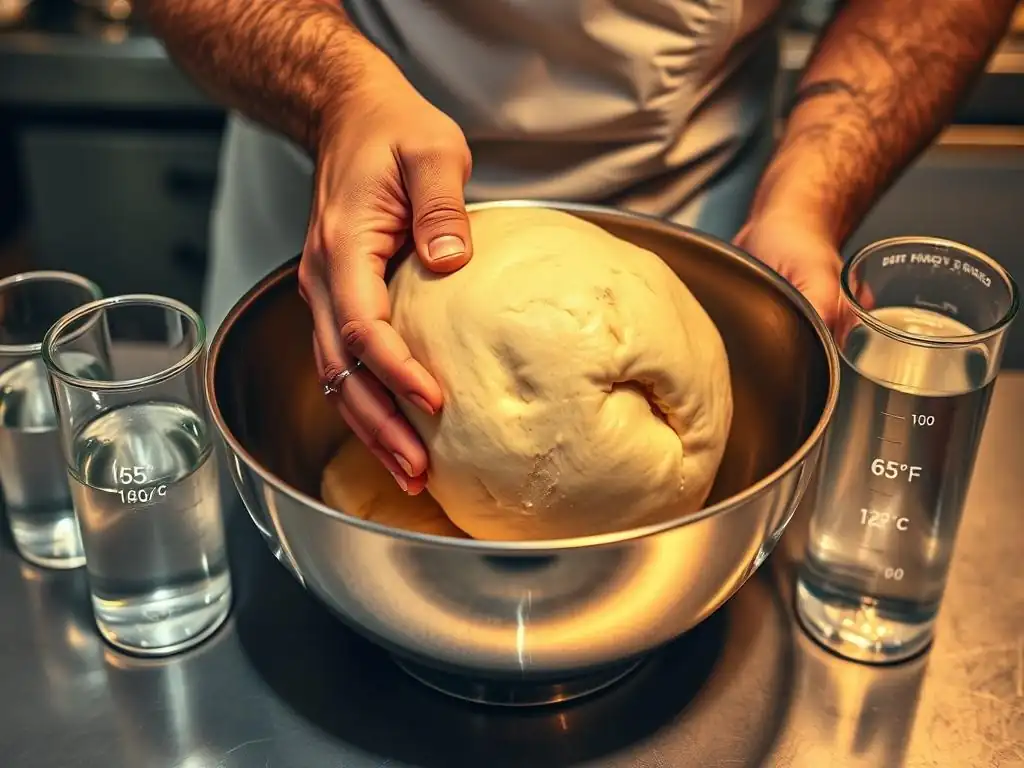
Pinpointing a single "ideal" water temperature for all baguette doughs is tricky, as it depends on several factors including your desired final dough temperature, the temperature of your ingredients, and your environment. However, bakers typically aim for a final dough temperature (FDT) between 75°F and 78°F (24°C to 26°C) for traditional baguette fermentation schedules. The water temperature you use will be adjusted to help you achieve this FDT.
Generally, the water temperature will be warmer than the target FDT, as it needs to warm up the cooler flour and account for heat loss or gain from the environment and mixing. For example, if your flour and room are around 70°F (21°C) and you want an FDT of 76°F (24.5°C), your water might need to be around 80°F to 85°F (27°C to 29.5°C), but this requires calculation. Understanding how to calculate the correct baguette dough water temperature is more important than knowing a single magic number.
Determining the Target Dough Temperature for Baguettes
The target dough temperature is the temperature you want your dough to be immediately after mixing. For most traditional baguette recipes, this target is often set between 75°F and 78°F (24°C and 26°C). This range is considered optimal for balanced yeast activity, allowing for a fermentation period that develops good flavor without being excessively slow or fast.
Choosing a target dough temperature depends on your desired fermentation timeline and the characteristics you want in your final loaf. A slightly lower target temperature (e.g., 74°F/23°C) will result in slower fermentation, potentially building more complex flavors over a longer period. A slightly higher target (e.g., 80°F/27°C) will speed things up. Experienced bakers often adjust their target FDT based on their schedule and the ambient temperature of their kitchen. This target FDT is the starting point for calculating your required baguette dough water temperature.
Calculating the Correct Water Temperature: A Step-by-Step Guide
Achieving the target final dough temperature requires a simple calculation. A common method uses the formula:
Desired Dough Temperature x Number of Factors - (Flour Temperature + Room Temperature + Starter Temperature (if using) + Friction Factor) = Required Water Temperature
For a simple straight dough baguette (no starter), the "Number of Factors" is often 3 (Flour, Room, Water). The "Friction Factor" accounts for the heat added during mixing – this varies by mixer and mixing time, but a common estimate is 20°F to 30°F (11°C to 17°C) for a stand mixer.
Let's use an example: Target FDT = 76°F, Flour Temp = 70°F, Room Temp = 72°F, Estimated Friction Factor = 25°F. (76°F * 3) - (70°F + 72°F + 25°F) = 228°F - 167°F = 61°F. In this scenario, you'd need water around 61°F (16°C).
Another common formula, simpler for straight doughs:
(Desired Dough Temperature x 3) - Room Temperature - Flour Temperature = Required Water Temperature
This second formula implicitly bakes the friction factor into the constant '3'. Using the same example:
(76°F * 3) - 72°F - 70°F = 228°F - 142°F = 86°F. This formula suggests water around 86°F (30°C).
Note: Different formulas exist. The key is to pick one and use it consistently, adjusting the friction factor or constant based on your experience. Always measure your flour and room temperature accurately before calculating the necessary baguette dough water temperature.
Factors Influencing Water Temperature Calculation (Room Temperature, Flour Temperature)
As the calculation formulas show, room temperature and flour temperature are major variables influencing the required baguette dough water temperature. Flour temperature can vary significantly depending on where it's stored – flour stored in a cool pantry might be 65°F (18°C), while flour stored in a warmer kitchen cupboard could be 75°F (24°C). Room temperature fluctuates seasonally and with your home's heating/cooling.
These temperatures directly affect the starting temperature of your dough mass. If your flour and room are cold, you'll need warmer water to bring the overall dough temperature up to your target FDT. If they are warm, you'll need cooler water. Accurately measuring both your room temperature and the temperature of your flour (stick a thermometer in the flour bag) is essential before you calculate and adjust your water temperature for baguette dough. Ignoring these factors will lead to inconsistent FDTs and unpredictable baking results.
Water Temperature Too High: Potential Problems in Baguette Dough
Using water that is too hot for your baguette dough can lead to a cascade of problems, primarily related to overly rapid fermentation and compromised dough structure. While warm water speeds up yeast activity, excessively high temperatures can push the yeast into overdrive, causing it to ferment too quickly and potentially die off.
This rapid fermentation often occurs before the gluten structure has fully developed, resulting in dough that is sticky, difficult to handle, and lacks the strength needed for proper shaping and oven spring. The consequences range from poor texture to undesirable flavors, ultimately preventing you from achieving that perfect artisan baguette. Controlling the baguette dough water temperature on the higher end is just as critical as avoiding temperatures that are too low.
Over-Proofing and its Effects on Baguette Structure
One of the most common issues with using water that is too hot is over-proofing. High baguette dough water temperature leads to an accelerated fermentation rate. The yeast produces gas rapidly, causing the dough to rise quickly. However, if this happens too fast, the gluten network may not have time to strengthen sufficiently to support the gas produced.
When over-proofed, the dough can become fragile and may even start to collapse before it goes into the oven. During baking, it lacks the necessary structure to expand, resulting in poor oven spring and a dense, often gummy crumb. The characteristic open, airy structure of a baguette is lost, replaced by a tight, sometimes uneven texture. This is a direct consequence of the yeast working too fast due to elevated dough temperature caused by overly warm water.
Weak Gluten and Sticky Dough Issues
High water temperature for baguette dough can also negatively impact gluten development. While warm water hydrates flour quickly, if the temperature is excessive, it can sometimes lead to a less stable gluten network. The proteins might hydrate rapidly, but the resulting structure can be weaker and less extensible compared to gluten developed more slowly at cooler temperatures.
This compromised gluten structure often manifests as a sticky, difficult-to-handle dough. It resists forming a smooth, elastic ball during kneading and tends to tear easily when stretched. Shaping baguettes from sticky, weak dough is challenging, making it hard to create the necessary surface tension for a good crust and structure. The stickiness is often a sign that the balance between hydration speed and gluten development has been disrupted by the high initial dough temperature.
Off-Flavors and Accelerated Fermentation
Beyond structural issues, using water that is too hot can also lead to undesirable flavor development in your baguette dough. Yeast fermentation produces not only carbon dioxide but also various flavor compounds, including organic acids and alcohols. These compounds contribute to the complex taste profile of a well-fermented baguette.
When fermentation is rushed due to a high baguette dough water temperature, the production of these flavor compounds is also accelerated and can be unbalanced. This can result in a dough that tastes overly yeasty or produces off-flavors that aren't desirable in a classic baguette. Furthermore, rapid fermentation can consume the available sugars too quickly, potentially limiting the Maillard reaction during baking, which contributes to crust color and flavor. A controlled fermentation, achieved through the correct water temperature, allows for a more balanced and nuanced flavor development.
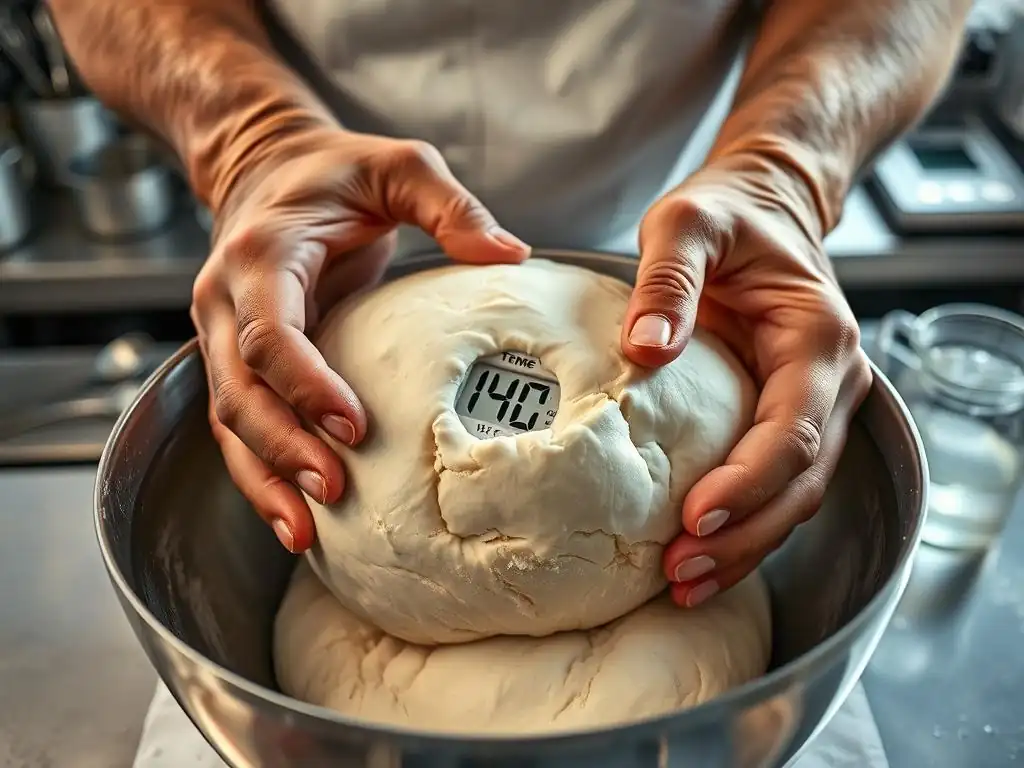
Just as using water that is too hot can cause problems, using water that is too cold for your baguette dough can lead to its own set of challenges. Cold temperatures significantly slow down yeast activity and hydration, impacting fermentation speed, dough consistency, and ultimately, the final bread quality.
While some advanced techniques intentionally use cold water for very long, slow fermentation (like in a cold proof), using water that is simply too cold for a standard recipe and fermentation schedule will result in a sluggish process that may not fully develop the dough or flavors within the expected timeframe. Getting the baguette dough water temperature right means avoiding extremes in either direction.
Under-Proofing and Dense Baguette Crumb
The most common issue with using water that is too cold is under-proofing. Low baguette dough water temperature results in a low initial dough temperature, which significantly slows down yeast activity. The yeast produces gas much more slowly than intended, meaning the dough takes an excessively long time to rise, or may not rise sufficiently at all within the recipe's typical proofing time.
Under-proofed dough lacks the necessary volume and gas development. When baked, it doesn't expand properly in the oven, leading to poor oven spring. The resulting baguette will be dense and heavy, with a tight, compact crumb structure instead of the desired open, airy interior. The crust might also be pale and lack crispness due to insufficient sugar development during the slow fermentation.
Stiff Dough and Difficulty in Handling
Using cold water can also result in a stiff dough that is difficult to work with. Cold water hydrates the flour more slowly, and the overall cold temperature of the dough makes it less pliable and elastic. The gluten network develops more slowly and feels tighter at lower temperatures.
A stiff, cold dough is resistant to shaping. It's harder to stretch and fold, difficult to form into tight baguettes, and lacks the extensibility needed for proper development during proofing and baking. This difficulty in handling can lead to poorly shaped loaves and further exacerbate issues with oven spring and crumb structure. While cold fermentation is a technique, unintended cold dough from low baguette dough water temperature can be frustrating to manage.
Delayed Fermentation and Lack of Flavor Development
Beyond just slowing down the rise, using water that is too cold delays the entire fermentation process. While a longer, slow fermentation at controlled cold temperatures (like in the refrigerator) can develop complex flavors, unintended slow fermentation at moderately cold temperatures might simply result in insufficient flavor development within the recipe's timeline.
The yeast needs adequate time and a suitable temperature range to produce the desirable flavor compounds. If the process is significantly slowed down by a low initial temperature of water for baguettes, the dough might be ready to bake structurally (or you might bake it because of time constraints) before the flavors have had a chance to fully mature. This can result in a bland baguette lacking the characteristic depth of flavor.
Practical Tips for Achieving the Right Water Temperature for Baguettes
Now that we understand why baguette dough water temperature is important and what happens when it's wrong, let's look at practical ways to ensure you get it right consistently. It's not about guesswork; it's about measurement and adjustment. Incorporating simple tools and techniques into your baking routine can make a significant difference in the predictability and quality of your baguettes.
Achieving the correct water temperature requires paying attention to your environment and ingredients. It's a skill that develops with practice, but starting with good habits will set you up for success. Don't be intimidated by the calculations; with a little practice, they become second nature.
Using a Thermometer for Accurate Measurement
This is perhaps the most crucial tip: always use a reliable thermometer to measure your water temperature. Eyeballing temperature is simply not accurate enough when aiming for a specific final dough temperature. A digital instant-read thermometer is ideal for quickly checking the temperature of your water, flour, and even the dough itself after mixing.
Before you mix, measure your room temperature and flour temperature. Then, calculate your target water temperature using one of the formulas discussed earlier. Heat or cool your water as needed and check its temperature with the thermometer before adding it to your ingredients. After mixing, take the temperature of your dough ball to confirm it's close to your target FDT. This step-by-step measurement process ensures your baguette dough water temperature is precisely what your recipe and calculations call for.
Adjusting Water Temperature Based on Seasonal Changes
Room and flour temperatures fluctuate significantly throughout the year, especially if you don't have strict climate control in your kitchen. In the summer, your kitchen might be 80°F (27°C), and your flour could be similarly warm. In the winter, they might drop to 65°F (18°C) or even lower. These seasonal changes have a major impact on the required baguette dough water temperature.
Using the calculation formula is essential here. In summer, you will almost certainly need colder water – potentially straight from the tap or even chilled slightly – to counteract the warmer room and flour temperatures and hit your target FDT. In winter, you will need warmer water, perhaps 85°F to 95°F (30°C to 35°C), to bring the overall dough temperature up. Always measure and calculate, rather than guessing based on the season.
Using Ice Water for Lowering Dough Temperature
Sometimes, even using the coldest tap water isn't enough to bring the dough temperature down, especially in a hot environment or when using a high-friction mixer. In such cases, you may need to use ice water. To make ice water, simply put ice cubes in a container of water and let it sit for a few minutes until the temperature drops significantly, often into the 30s or low 40s°F (around 1°C to 5°C).
When calculating, you can aim for a very low water temperature. However, a simpler approach is to use a portion of your total water as ice water. For example, if you need 300g of water, you might use 250g of cold tap water and add a few ice cubes to the remaining 50g, letting them melt partially or fully before adding the water. Be sure to measure the temperature of the final mixture before adding it to the dough. Using ice water allows you to dramatically lower the starting baguette dough water temperature when necessary.
Troubleshooting Common Water Temperature Issues in Baguette Baking
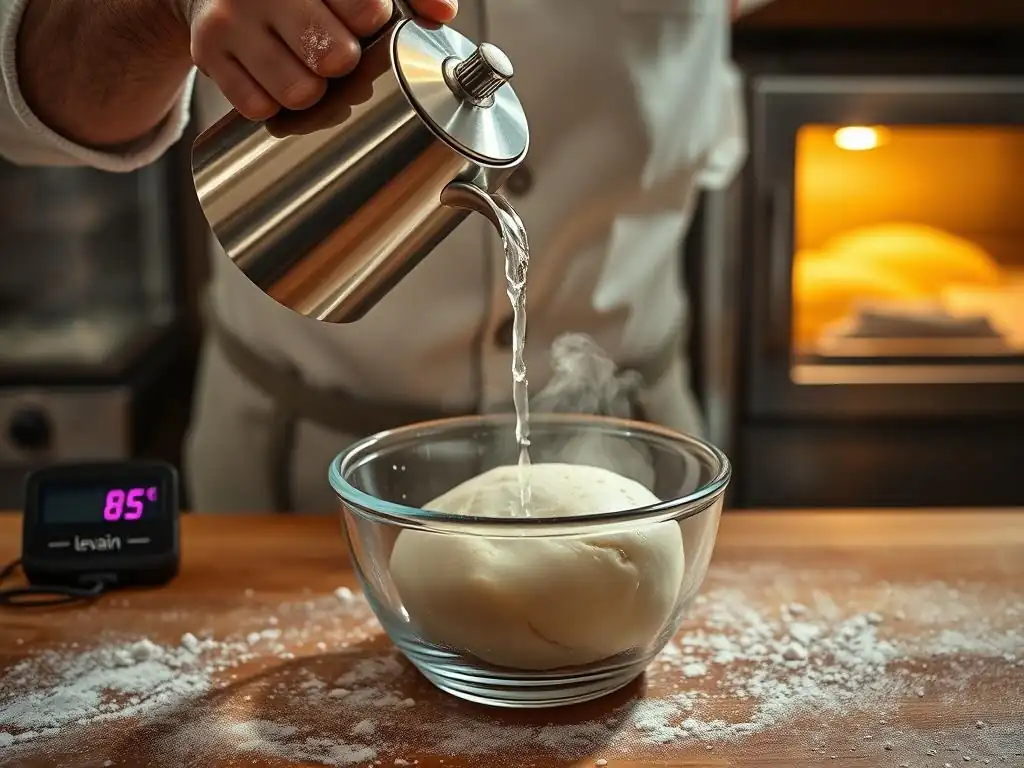
Even with careful measurement and calculation, sometimes things don't go exactly as planned. Your dough might feel too sticky, or it might not be rising as expected. These issues can often be traced back, at least in part, to an incorrect initial baguette dough water temperature or an unexpected change in dough temperature during fermentation.
Knowing how to identify the symptoms of water temperature problems and having strategies to correct them can save a batch of dough. While it's hard to perfectly fix an FDT that's far off target after mixing, you can sometimes mitigate the issues and learn for your next bake.
My Dough is Too Sticky: What to Do?
If your baguette dough is excessively sticky immediately after mixing, it could be due to using water that was too warm or slightly over-hydrating the dough for its gluten development capacity. A high baguette dough water temperature can lead to rapid hydration and potentially weaker gluten initially.
- Assess the stickiness: Is it just a little tacky, or truly soupy and difficult to handle? A slightly tacky dough is often fine.
- Consider adding a tiny bit more flour: If it's excessively sticky and you suspect over-hydration or weak gluten from warm water, you can carefully knead in a tablespoon or two of flour. Be cautious not to add too much, as this will change the hydration ratio.
- Focus on gluten development: If the stickiness is due to weak gluten (possibly from warm water rushing things), extended kneading or a series of stretch and folds during the bulk fermentation can help build strength.
- Adjust for next time: Note the initial water temperature used and the resulting dough consistency. Next time, consider lowering the water temperature for baguette dough slightly or reducing the total water amount by a small percentage.
My Dough Isn't Rising: Troubleshooting Steps
Slow or no rise (under-proofing) is a classic sign of dough that is too cold, often resulting from a low initial baguette dough water temperature.
- Check the dough temperature: Use your thermometer to measure the current temperature of the dough mass. If it's significantly below the target FDT (e.g., below 70°F/21°C), this is likely the cause.
- Find a warmer spot: Move your dough to a warmer location for fermentation. Options include:
- Near a warm appliance (oven, refrigerator vent - but not on them).
- In a turned-off oven with the light on (this often provides a gentle warmth, maybe 75-85°F). Be careful not to turn the oven on.
- In a proofing box if you have one, set to your target FDT.
- Increase fermentation time: A colder dough will simply take longer to ferment. Be patient and allow extra time for the dough to double (or reach the required volume increase) before proceeding. Don't rush it just because the clock says it should be ready.
Adjusting Water Temperature After Initial Mix
Unfortunately, there is no practical way to significantly change the overall temperature of a batch of dough once the water has been incorporated and mixing is complete. Adding hot or cold water at this stage would disrupt the dough's consistency and structure.
The adjustment for an incorrect baguette dough water temperature happens before you mix your ingredients. This highlights the importance of accurate measurement and calculation upfront. If you realize your dough is too cold or too warm after mixing, your options are limited to adjusting the environment the dough ferments in (warming it up if too cold, finding a cooler spot if too warm) and adjusting the fermentation time accordingly. Learning from the current batch's outcome is the best way to ensure you get the water temperature for baguette dough right next time.
Advanced Techniques: Exploring Different Water Temperature Strategies
While a target FDT of 75-78°F (24-26°C) is common for standard baguette recipes, bakers sometimes intentionally manipulate baguette dough water temperature to achieve specific results, particularly regarding flavor development and fermentation speed. These techniques involve using colder or warmer water than standard calculations might suggest for a typical bulk fermentation.
Exploring these advanced strategies can add new dimensions to your baguette baking, allowing you to control fermentation over different timeframes and influence the final characteristics of your bread. They demonstrate the versatility and importance of understanding how water temperature for baguette dough impacts the entire process.
Using Cold Water Dough for Enhanced Flavor and Extended Fermentation
One popular advanced technique involves intentionally using cold water to create a dough with a low initial FDT, often in the range of 60°F to 65°F (15°C to 18°C). This is typically paired with a very long, slow fermentation, often conducted in the refrigerator for 12 to 24 hours or even longer.
The cold temperature drastically slows down yeast activity, leading to a significantly extended fermentation period. This slow process allows more time for enzymatic activity in the dough to break down starches into sugars and proteins into amino acids. It also provides ample time for the yeast and other microorganisms (if using a sourdough starter or poolish) to produce a wider range of complex flavor compounds.
Baguettes made with this cold fermentation approach often have a more nuanced, deeper flavor and a wonderfully open crumb structure. The initial baguette dough water temperature is intentionally low to facilitate this extended, cold proofing.
Water Temperature's Role in Autolyse Technique for Baguettes
The autolyse technique involves mixing only the flour and water for a recipe and letting it rest for 20 minutes to several hours before adding salt and yeast/starter. This resting period allows the flour to fully hydrate without the interference of salt (which tightens gluten) or yeast activity.
The temperature of the water used for the autolyse affects the rate of hydration and enzymatic activity during this rest period. Using room temperature or slightly warm water (matching the flour temperature) is common, as it promotes hydration. However, some bakers experiment with cooler water, especially for longer autolyse periods, to prevent enzymatic activity from becoming excessive, which could degrade the gluten. The water temperature for the baguette dough during the autolyse sets the stage for how quickly hydration occurs before the main mixing phase begins.
Considerations for Using Warm Water in a Poolish
A poolish is a type of preferment made with equal parts flour and water (by weight) and a small amount of yeast, fermented for several hours at room temperature or in the refrigerator. It's added to the final dough to boost flavor and fermentation activity. When preparing a poolish, the water temperature for the baguette dough component (the poolish itself) is less critical than the final dough temperature it will contribute to, but still important for the poolish's fermentation rate.
If you want a fast poolish ready in 2-4 hours, you might use warmer water (around 80-85°F / 27-30°C) and ferment it at room temperature. For a longer, overnight poolish (12-16 hours), cooler water (65-70°F / 18-21°C) and a cooler fermentation environment are typically used. The temperature of the water in the poolish influences how quickly it becomes active and ripe, which in turn affects when it's ready to be incorporated into the final baguette dough mix.
Conclusion: Consistent Water Temperature for Consistent Baguette Success
Mastering the art of baking baguettes involves understanding and controlling each variable in the process. As we've explored, the baguette dough water temperature is far more than just a minor detail; it's a critical factor that influences everything from how your flour hydrates and how your yeast ferments to the final texture, flavor, and appearance of your bread.
By paying attention to the temperature of your ingredients and environment, performing simple calculations, and using a thermometer, you can consistently achieve the desired final dough temperature. This control over dough temperature leads to more predictable fermentation, better gluten development, and ultimately, more successful and delicious baguettes batch after batch. Don't underestimate the power of precise water temperature for baguette dough in your journey to baking perfection.
Recap: Key Takeaways for Perfecting Baguette Dough
- The baguette dough water temperature directly impacts the final dough temperature (FDT), which controls yeast activity and fermentation rate.
- A target FDT of 75-78°F (24-26°C) is common for standard baguette recipes.
- Water temperature affects how quickly flour hydrates and influences gluten development.
- Too hot water leads to fast fermentation, potential over-proofing, weak/sticky dough, and off-flavors.
- Too cold water leads to slow fermentation, under-proofing, stiff dough, and insufficient flavor development.
- Always use a thermometer to measure water, flour, and room temperature.
- Calculate the required water temperature for baguette dough based on your target FDT and ingredient temperatures.
- Adjust water temperature based on seasonal changes and kitchen environment.
- Cold water techniques can be used intentionally for extended, flavor-enhancing fermentation.
- Consistent control of baguette dough water temperature is key to consistent baguette quality.
Resources for Further Bread Baking
For those eager to deepen their bread baking knowledge, explore resources on fermentation science, baker's percentages, and specific techniques like autolyse and preferments. Understanding these concepts further empowers you to manipulate variables like baguette dough water temperature to achieve your desired baking outcomes. Many excellent books and online communities delve into the science and craft of artisan bread, providing detailed guidance on temperature control and other essential elements. Continue experimenting and learning – each batch is an opportunity to refine your skills!
Frequently Asked Questions
How crucial is water temperature when making baguette dough?
Water temperature is extremely important because it directly affects the dough's final temperature. This impacts fermentation and the gluten development, leading to the desired baguette texture.
What happens if the water is too warm when making baguette dough?
Using water that is too warm can cause the dough to rise too quickly. This results in a weak gluten structure and a dense, uneven crumb in the final baguette.
Water that's too cold will slow down the yeast activity and fermentation process. This can result in a tight, underdeveloped dough that lacks flavor and proper rise.
What is the ideal water temperature for baguette dough, according to BakeWithEase?
While it depends on other factors like room temperature, a good starting point is generally between 70-75°F (21-24°C). This helps achieve the optimal dough temperature for baguette making.
How can I accurately measure the water temperature for my baguette dough?
Use a reliable kitchen thermometer to ensure accurate water temperature. Combine the water with the other ingredients and then check the final dough temperature for best results.
Final Reflection: The Perfect Proof: Water Temperature's Crucial Role in Baguette Baking
The quest for the perfect baguette hinges on a seemingly simple detail: water temperature. A seemingly minor adjustment can dramatically impact the final product, transforming a dense, disappointing loaf into a masterpiece of airy crumb and crisp crust. Understanding this subtle yet powerful influence is not just about technical baking; it's about unlocking the potential of a classic.
The exploration of optimal water temperature in baguette dough has profoundly shaped my own baking journey, revealing the artistry hidden within seemingly mundane processes. It's a reminder that even the most established recipes are not static, but rather a starting point for experimentation and refinement. The baker's touch is not merely a matter of skill, but of understanding the subtle interplay of ingredients and process.
This quote, though not directly about water temperature, perfectly encapsulates the spirit of this investigation – the journey towards mastery is a continuous process of learning and adaptation.
Now, it's your turn. Consider the impact of even the smallest details in your own endeavors. Don't be afraid to experiment, to adjust, to tweak your own "recipe" for success. The next time you bake a baguette, remember the power of precise water temperature and let that knowledge guide you towards creating your own perfect loaf. The journey towards baking excellence begins with a single, perfectly measured degree.
Unlock Perfectly Crusty Baguettes: Master the Art of Water Temperature!
Thanks for diving into the world of perfect baguettes with us! You've now unlocked a key ingredient to achieving that incredible crust and airy crumb: precise water temperature. Ready to put your newfound knowledge into practice?
- Bake a test baguette TODAY! Experiment with different water temperatures (following the guidelines in the article) and observe the results. Note the differences in crust color, texture, and overall taste. This is the best way to personalize your baking process.
- Share your baking journey: Post a picture of your baguette on social media and tag BakeWithEase – we’d love to see your results!
- Explore other bread-baking techniques: Delve deeper into our archives to discover more tips and tricks for creating your dream loaf!
What surprising difference did controlling water temperature make in your baking results? Let us know in the comments!