
Using a Lame: Your Key to Precise Baguette Scoring

Welcome to BakeWithEase!
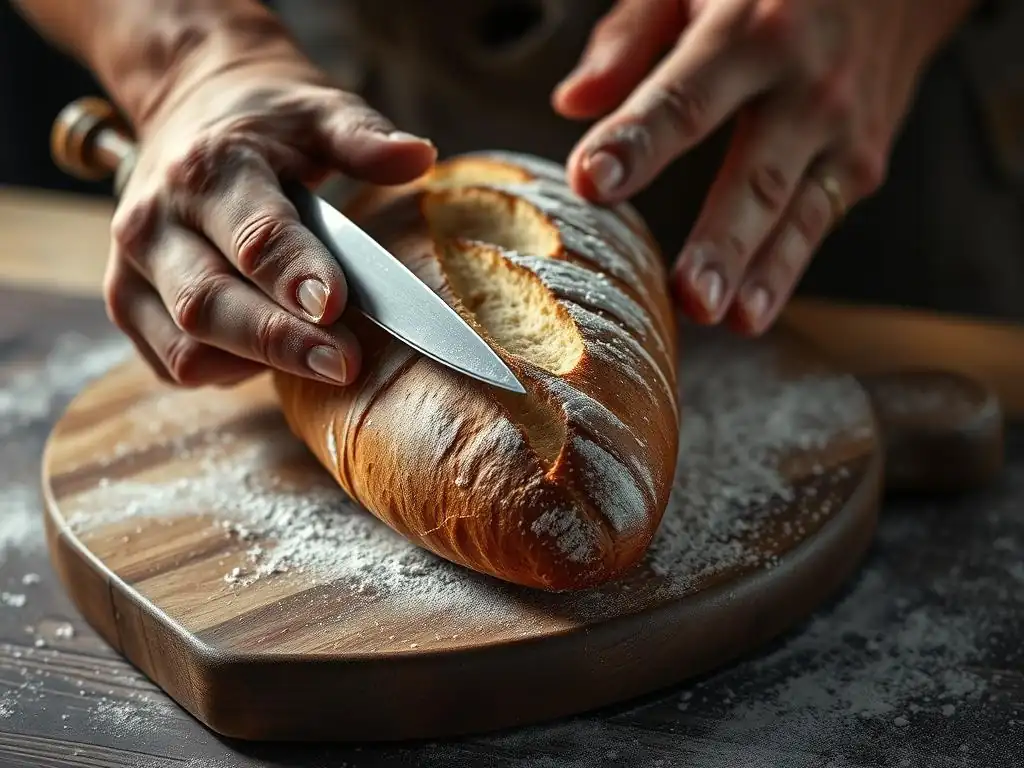
Unlock the secret to bakery-worthy baguettes! Ever wondered how those perfect, artistic slashes appear on a crusty French loaf? This article delves into the baguette scoring lame technique, revealing how this seemingly simple tool is essential for achieving that beautiful bloom and optimal oven spring. Discover the nuances of angle, depth, and blade choice, and prepare to elevate your bread baking from ordinary to extraordinary. Ready to create baguettes that are as visually stunning as they are delicious?
- Mastering Baguette Scoring: Achieving Perfect Loaves with a Lame
- Introduction to Baguette Scoring and the Lame
- Types of Baguette Scoring Lames
- Step-by-Step Guide to Baguette Scoring
- Troubleshooting Scoring Problems
- Lame Maintenance
- Advanced Techniques and Tips
- Conclusion: Perfecting Your Baguette Baking
-
Frequently Asked Questions
- What is a baguette scoring lame and why is it important?
- Why is the baguette scoring lame technique crucial for a good baguette?
- What angle should I hold the lame at when scoring a baguette?
- What are some common mistakes people make when using a baguette scoring lame?
- Where can I find a good baguette scoring lame and learn more about baguette scoring lame technique?
- Final Reflection: The Humble Lame: A Baker's Precision Tool
- Unlock Your Inner Boulanger: Master the Art of Baguette Scoring!
Mastering Baguette Scoring: Achieving Perfect Loaves with a Lame
Introduction to Baguette Scoring and the Lame
Why Scoring Matters: Oven Spring, Crust, and Aesthetics
Scoring baguette dough isn't just about making pretty patterns; it's a critical step that dramatically impacts the final loaf. When a baguette enters a hot oven, the rapid heat causes the gases within the dough to expand quickly – this is known as oven spring. Without scoring, the crust would set too fast, and the expanding gases would burst through the weakest point, resulting in an uncontrolled, often unsightly split. Precise scoring provides controlled vents, allowing the dough to expand predictably and maximize oven spring, leading to a taller, more airy loaf with a better internal structure.
Beyond oven spring, the method of scoring influences the crust development and the overall appearance of the baguette. The cuts open up during baking, exposing more surface area to the heat, which contributes to a crispier crust with desirable blisters and color. A well-executed baguette scoring lame technique creates the iconic look of an artisan baguette, with characteristic "ears" (the raised flap of crust next to a score).
This not only makes the loaf visually appealing but also adds textural contrast, from the crispy ear to the softer interior crumb. Mastering this technique is essential for achieving professional-looking and tasting baguettes.
The Lame: An Essential Tool for Precise Scoring
A lame (pronounced "lahm") is a specialized tool used for scoring bread dough, particularly high-hydration doughs like those used for baguettes. Essentially, it's a very sharp razor blade attached to a handle. The extreme sharpness of the blade is paramount. Unlike a knife, which can drag and tear the delicate surface of proofed dough, a sharp lame makes a clean, swift incision. This clean cut is crucial for allowing the dough to expand properly during oven spring without collapsing or tearing uncontrollably.
Using a lame allows bakers to make precise, controlled cuts at specific angles and depths, which is key to executing the baguette scoring lame technique effectively. While some bakers might attempt scoring with a sharp knife or even scissors, a dedicated lame provides the necessary control, sharpness, and ergonomic design to achieve consistent results, especially when working with multiple loaves. It is an indispensable tool for anyone serious about baking artisan baguettes with that signature open crumb and beautiful crust.
Types of Baguette Scoring Lames
Straight Lames: Simplicity and Precision
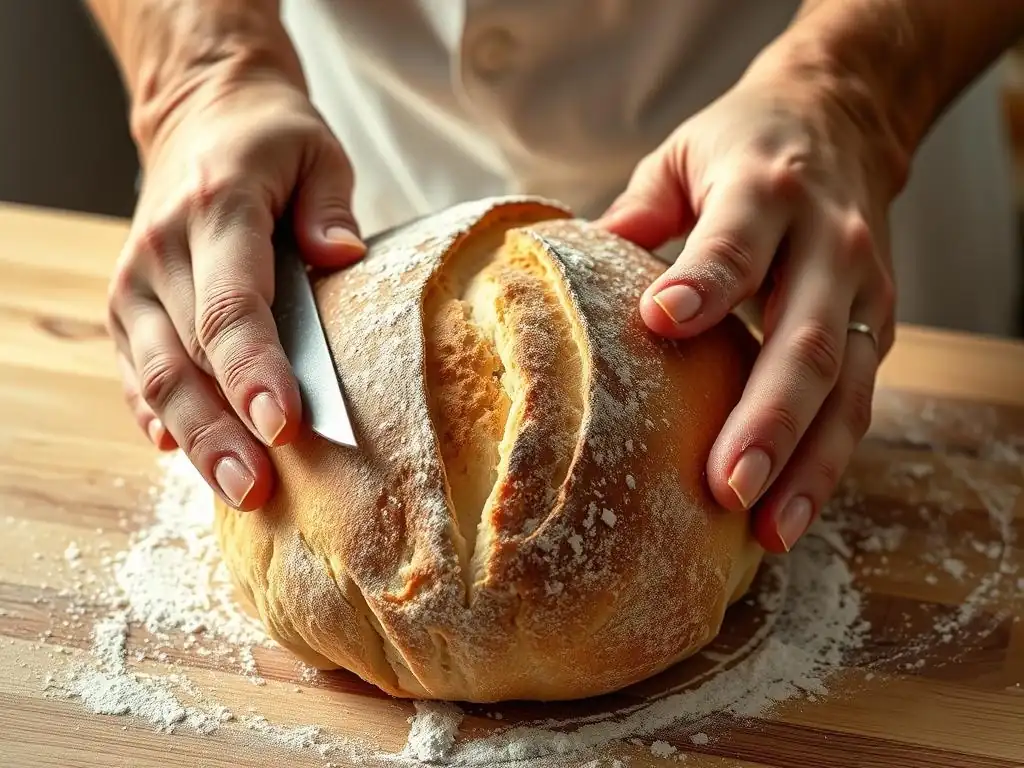
A straight lame typically holds the razor blade flat and straight, parallel to the handle. This configuration is excellent for making direct, deep cuts into the dough. When you hold a straight lame perpendicular (at a 90-degree angle) to the dough's surface, you can create a clean, deep slash that encourages significant expansion along the cut. This is often preferred for simpler scoring patterns or when a deep, controlled opening is the primary goal, such as a single central cut on a rustic loaf.
The straight lame design offers straightforward control, making it a good starting point for learning the basics of scoring. While it can be used for diagonal cuts, it's less naturally suited for creating the classic "ear" on a baguette compared to a curved blade. Its strength lies in its ability to make decisive, clean cuts that promote maximum oven spring along the scored line, making it a reliable tool for various bread types, including but not limited to baguettes where a simple slash is desired.
Curved Lames: Artistic and Decorative Scoring
Curved lames hold the razor blade in a curved shape, often using the flexibility of a standard double-edged razor blade bent into an arc. This curvature is specifically designed to facilitate the creation of the iconic "ear" on baguettes and other artisan loaves. By holding a curved lame at a shallow angle (typically between 20 and 30 degrees) to the dough's surface and making a swift cut, the curved blade lifts a flap of dough. As the loaf bakes and expands, this flap crisps up into the desired ear.
The curved lame allows for more nuanced and artistic scoring patterns, especially the overlapping diagonal slashes characteristic of traditional baguettes. The angle and curve work together to control how the dough opens, guiding the expansion upwards and outwards rather than just splitting open. Mastering the baguette scoring lame technique with a curved blade requires practice to find the right angle and pressure, but it is essential for achieving the classic aesthetic of a perfectly baked baguette.
Disposable vs. Reusable: Cost and Convenience
Baguette scoring lames come in designs that use either disposable or reusable blades. Disposable lames often have the blade permanently fixed or use proprietary cartridge systems. While convenient, these can be more expensive over time and generate more waste. Reusable lames, which are far more common among artisan bakers and enthusiasts, typically use standard double-edged razor blades that can be easily replaced when they become dull. A pack of 100 razor blades might cost around $10-20 and last for many months or even years depending on baking frequency, offering significant cost savings compared to continually buying disposable options.
The choice between disposable and reusable often boils down to initial investment versus long-term cost and environmental considerations. Reusable lames tend to have more substantial handles made from materials like wood or metal, offering a better grip and feel. Replacing the blade on a reusable lame is a simple process, ensuring you always have the sharpest possible edge for your baguette scoring lame technique, which is crucial for preventing dough drag and achieving clean cuts.
Handles and Grips: Ergonomics for Control
The handle of a baguette scoring lame is more than just something to hold; it significantly impacts control and comfort during the scoring process. Handles come in various materials, including wood, plastic, and metal, and different shapes and lengths. A well-designed handle provides a secure and comfortable grip, allowing the baker to make swift, confident cuts without the hand slipping or feeling awkward. Ergonomics are key, especially when scoring multiple loaves.
Some lames feature long handles, which can be helpful for reaching across wide loaves or providing a different leverage point. Others have shorter, more compact handles for closer work. The material can also affect the feel; wood offers a classic look and natural grip, while plastic can be lighter and easier to clean. Ultimately, the best handle is one that feels balanced and comfortable in your hand, enabling you to execute your baguette scoring lame technique with precision and confidence.
Step-by-Step Guide to Baguette Scoring
Preparing the Dough: Proofing and Handling
Successful baguette scoring begins long before the lame touches the dough. Proper proofing is absolutely critical. The dough must be adequately proofed – not under-proofed (too tight and resistant) and especially not over-proofed (too fragile and prone to collapse). A well-proofed baguette dough should feel airy and slightly expanded, passing the "poke test" where a gentle poke leaves an indentation that slowly springs back about halfway. This indicates the dough has enough structure to hold a score but is relaxed enough to open beautifully in the oven.
Handling the proofed dough gently is also paramount. After final shaping and proofing (often done in a couche or proofing basket), transfer the dough carefully to your baking surface (like a peel or parchment paper). Avoid degassing the dough or disturbing its delicate structure.
The surface of the dough should have a slight "skin" on it, which helps the blade glide smoothly. If the dough feels too wet or sticky on the surface, a very light dusting of rice flour can help, but too much flour can inhibit the blade from catching the surface properly for the baguette scoring lame technique.
Holding the Lame: Angle and Pressure
The way you hold the lame dictates the type of cut you make and how the dough will expand. For creating the classic baguette "ear" with a curved lame, hold the blade at a shallow angle, typically between 20 and 30 degrees relative to the surface of the dough. Imagine you are trying to slice under the surface layer, not cut straight down. This angle is essential for lifting that flap of dough that becomes the ear. For a straight lame used for a deep, open cut, you might hold it closer to a 90-degree angle.
Pressure should be confident and consistent. You need enough pressure to cleanly slice through the surface tension and into the dough, but not so much that you compress or deflate the loaf. The movement should be swift and decisive – a quick flick of the wrist or a smooth, continuous pull, depending on the length of the score. Hesitation or slow, sawing motions will drag the dough and result in a messy, uneven cut, hindering the effectiveness of your baguette scoring lame technique.
The First Cut: Confidence and Precision
The first cut is often the most nerve-wracking for new bakers, but it's crucial to approach it with confidence. Position the lame at the starting point of your intended score, ensuring the correct angle (e.g., 20-30 degrees for an ear). Take a breath, and in one fluid motion, make the cut along the desired path. The length and depth will vary based on the pattern and dough hydration, but aim for a depth of about 1/4 to 1/2 inch (around 0.5 to 1 cm) for standard baguette scores.
Precision in the first cut sets the stage for subsequent scores and the overall symmetry of the loaf. A clean, confident cut indicates that the dough is properly proofed and the lame is sufficiently sharp. If the dough resists or drags, it might suggest under-proofing or a dull blade. Practice making single, clean cuts on scrap dough or even paper towels to get a feel for the movement before attempting it on your precious baguette loaves. This initial success builds confidence for mastering the full baguette scoring lame technique.
Common Scoring Patterns
The "Epi" Cut: Sheaf of Wheat Design
The "Epi" scoring pattern is designed to mimic a sheaf of wheat, creating a visually stunning loaf often served as pull-apart bread. This technique involves making a series of diagonal cuts along the length of the baguette, then using your lame to swing each cut to the side, separating segments of the dough. Starting from one end, make a diagonal cut about 2-3 inches long. Without lifting the blade entirely, pivot it or use your finger to gently push the cut segment to the side.
Repeat this process down the length of the loaf, alternating sides with each cut. Each segment should overlap the previous one slightly, creating the characteristic layered look. This pattern requires careful handling of the dough and precise use of the lame to ensure clean separation of each "leaf." While beautiful, the Epi cut can sometimes result in a slightly less open crumb compared to simpler slashes, as the numerous cuts provide many small vents for expansion rather than a few large ones. Mastering the baguette scoring lame technique for the Epi requires patience and practice.
The Simple Slash: Elegant and Effective
The simple slash is the most common and often most effective scoring pattern for traditional baguettes. It involves making several parallel or slightly overlapping diagonal cuts along the top of the loaf. For a standard baguette (around 18-20 inches or 45-50 cm), typically 3 to 5 slashes are made. Each slash should be roughly 6-8 inches (15-20 cm) long, overlapping the previous one by about 1-2 inches (2.5-5 cm). The angle is crucial here – using a curved lame at a shallow angle (20-30 degrees) will help create those desirable ears.
This pattern provides controlled points of expansion that allow the dough to achieve significant oven spring and develop a beautiful, open crumb structure. The simplicity of the pattern highlights the quality of the bake and the skill of the scorer. Consistency in angle, depth, and overlap is key to achieving a symmetrical loaf with evenly developed ears. This pattern is fundamental to the baguette scoring lame technique and a benchmark for success.
Custom Designs: Personalizing Your Loaves
Once you've mastered the basic baguette scoring lame technique, you can experiment with custom designs to personalize your loaves. This could include intricate patterns, geometric shapes, or even simple artistic motifs. While less traditional for baguettes, these designs are popular on other types of bread like boules or batards. For baguettes, simple variations like fewer, longer slashes or slightly different angles can alter the final appearance.
Creating custom designs requires a steady hand and a clear vision of how the cuts will open during baking. It's helpful to sketch your design beforehand. Keep in mind that complex patterns with many shallow cuts may not provide the same level of controlled oven spring as simple, deep slashes, potentially affecting the crumb structure. However, they offer a wonderful way to express creativity in your baking and make your loaves uniquely yours, showcasing your evolving baguette scoring lame technique skills.
Troubleshooting Scoring Problems
Dough Sticking: Prevention and Solutions
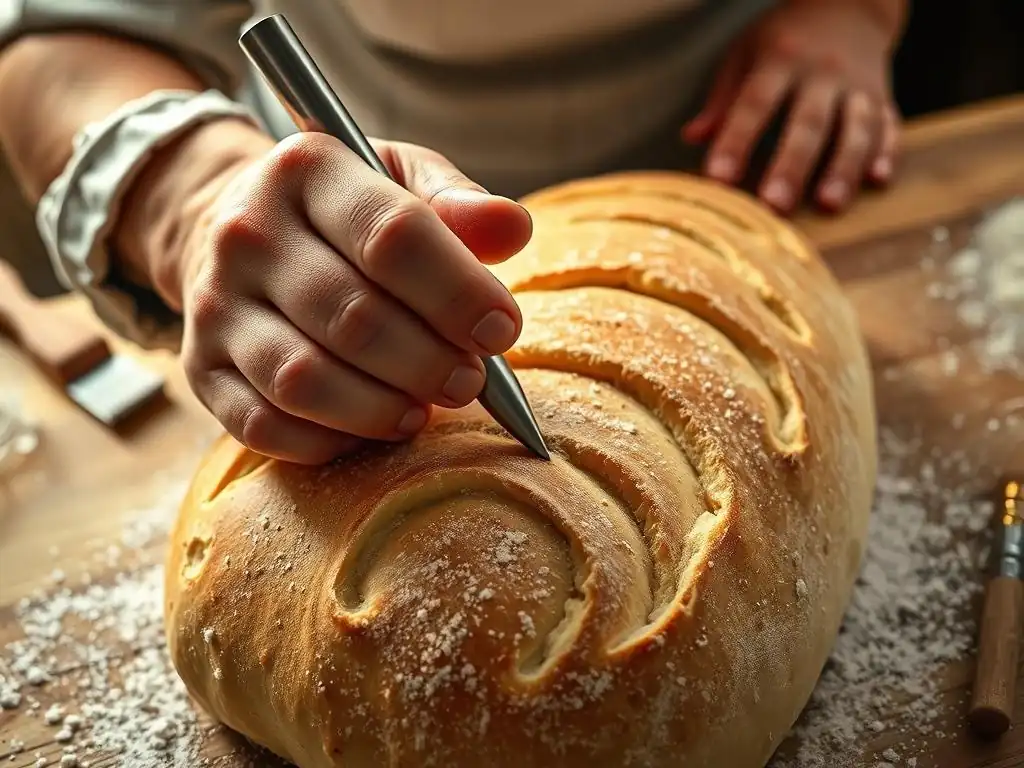
One frustrating issue when scoring is the dough sticking to the blade, resulting in ragged, uneven cuts instead of clean slashes. This is often caused by the dough surface being too wet or the lame blade being dull. Prevention starts with proper proofing and handling to ensure the dough surface isn't excessively sticky. A very light dusting of rice flour (which doesn't absorb into the dough like wheat flour) on the surface of the loaf just before scoring can help the blade glide smoothly.
If the dough still sticks, try dipping or spraying the lame blade with a little water or oil between cuts. Keep a small cup of water or a pastry brush handy for this purpose. Ensure you are using a brand new, sharp blade; a dull blade is the most common culprit for sticking and dragging.
If you're confident the blade is sharp and the surface isn't overly wet, chilling the dough in the refrigerator for 10-15 minutes before scoring can firm up the exterior and make scoring easier. Addressing sticking issues is vital for executing a clean baguette scoring lame technique.
Shallow Cuts: Achieving Oven Spring
Shallow cuts occur when the blade doesn't penetrate deep enough into the dough (less than 1/4 inch or 0.5 cm). While shallow decorative cuts have their place on some loaves, for baguettes aiming for maximum oven spring and a good ear, shallow cuts are detrimental. They don't provide sufficient release points for the expanding gases, leading to either uncontrolled bursting elsewhere on the loaf or limited upward expansion. The result is often a flatter loaf with little or no ear development.
To achieve deeper, more effective cuts, ensure your lame has a sharp blade. Use a confident, decisive motion with adequate pressure. Don't hesitate; a swift cut is less likely to drag. Practice on less critical loaves or even scrap dough to get a feel for the necessary depth. Remember the angle – a shallow angle with a curved lame encourages the ear, but the depth of the incision needs to be sufficient (around 1/4-1/2 inch) to allow for proper expansion beneath that flap. Adjusting your baguette scoring lame technique to ensure sufficient depth is key for optimal oven spring.
Deep Cuts: Avoiding Deflation
While shallow cuts inhibit oven spring, cuts that are too deep (more than 1/2-3/4 inch or 1-2 cm) can be equally problematic. Cutting too deeply, especially into an already well-proofed and airy dough, risks deflating the loaf. You might hear the air escaping as you cut, or the dough might visibly sink slightly after scoring. Deep cuts can also cause the loaf to spread outwards excessively during baking rather than springing upwards, leading to a flatter profile.
Finding the right depth requires practice and understanding the dough's state of proof. A properly proofed dough requires less depth to open effectively than a slightly under-proofed one. Aim for that sweet spot of around 1/4 to 1/2 inch. Use a controlled motion and rely on the sharpness of the blade rather than brute force to penetrate the dough. If you accidentally cut too deep, try to gently smooth the cut edges together slightly, though this is often difficult with wet dough. Learning to judge the correct depth is a vital part of refining your baguette scoring lame technique.
Uneven Scoring: Maintaining Consistency
Uneven scoring refers to variations in the length, depth, angle, or overlap of your cuts across a single loaf or between multiple loaves. This leads to asymmetrical loaves with uneven oven spring, lopsided ears, or inconsistent crust development. Causes include inconsistent pressure, varying blade angle, hesitation during the cut, or simply lack of practice. Maintaining consistency is crucial for achieving professional-looking results with your baguette scoring lame technique.
Focus on developing muscle memory through repetition. Practice making multiple cuts on a surface like styrofoam or a rolled-up towel to get a feel for maintaining a consistent angle and pressure. When scoring actual dough, try to keep your body and arm position consistent for each cut. Use visual cues – aim for the same overlap distance between slashes, and try to ensure the cuts are parallel or follow a consistent curve. Patience and deliberate practice are the best ways to overcome uneven scoring and achieve beautiful, symmetrical baguettes.
Lame Maintenance
Cleaning: Preventing Rust and Bacteria
Proper cleaning of your baguette scoring lame is essential for hygiene and longevity, particularly for the blade. After each use, the blade will have dough residue on it. This wet dough can lead to rust forming on the razor blade, especially standard carbon steel blades, and can also harbor bacteria. Immediately after scoring, gently wipe the blade clean with a damp cloth, being extremely careful not to cut yourself. For more stubborn dough, a small brush (like a pastry brush) can help.
After wiping, it is crucial to thoroughly dry the blade. Moisture is the enemy of razor blades. Use a clean, dry cloth to carefully wipe the blade dry, or let it air dry completely in a dry environment before storing. For handles, follow the manufacturer's instructions; wooden handles should typically not be soaked and may benefit from occasional oiling. Keeping your lame clean prevents rust, ensures a hygienic tool, and prolongs the life of your blades, which is key to effective baguette scoring lame technique.
Razor blades used in baguette scoring lames are designed to be incredibly sharp but also disposable. Unlike knives, you don't typically "sharpen" them in the traditional sense with a stone or steel. Instead, sharpening simply means replacing the dull blade with a fresh, sharp one. A dull blade will drag and tear the dough, making clean scoring impossible and leading to the issues discussed earlier (sticking, uneven cuts).
How often you need to replace the blade depends on your baking frequency and the type of dough you're scoring. As a general guideline, replace the blade after every 5-10 scoring sessions, or sooner if you notice the blade starting to drag or skip instead of gliding cleanly. Standard double-edged razor blades are inexpensive when bought in bulk, making frequent replacement practical. Always handle used blades with extreme caution when removing them and dispose of them safely (e.g., in a blade bank or sturdy container). Using a consistently sharp blade is fundamental to successful baguette scoring lame technique.
Storage: Protecting the Blade
Proper storage of your baguette scoring lame is important for maintaining the sharpness and preventing accidents. Always store the lame in a safe place where the sharp blade is protected and cannot accidentally cut someone reaching into a drawer. Many lames come with a protective cover or case for the blade; always use this when the lame is not in use.
Store the lame in a dry environment to prevent the blade from rusting. Avoid leaving it exposed on a counter where it could get wet or be knocked off. If your lame has a wooden handle, avoid storing it in overly humid conditions. Proper storage ensures that when you reach for your lame for your next baking session, the blade is still sharp, clean, and ready to perform the baguette scoring lame technique effectively and safely.
Advanced Techniques and Tips
Flour Enhancement: Improving Visibility
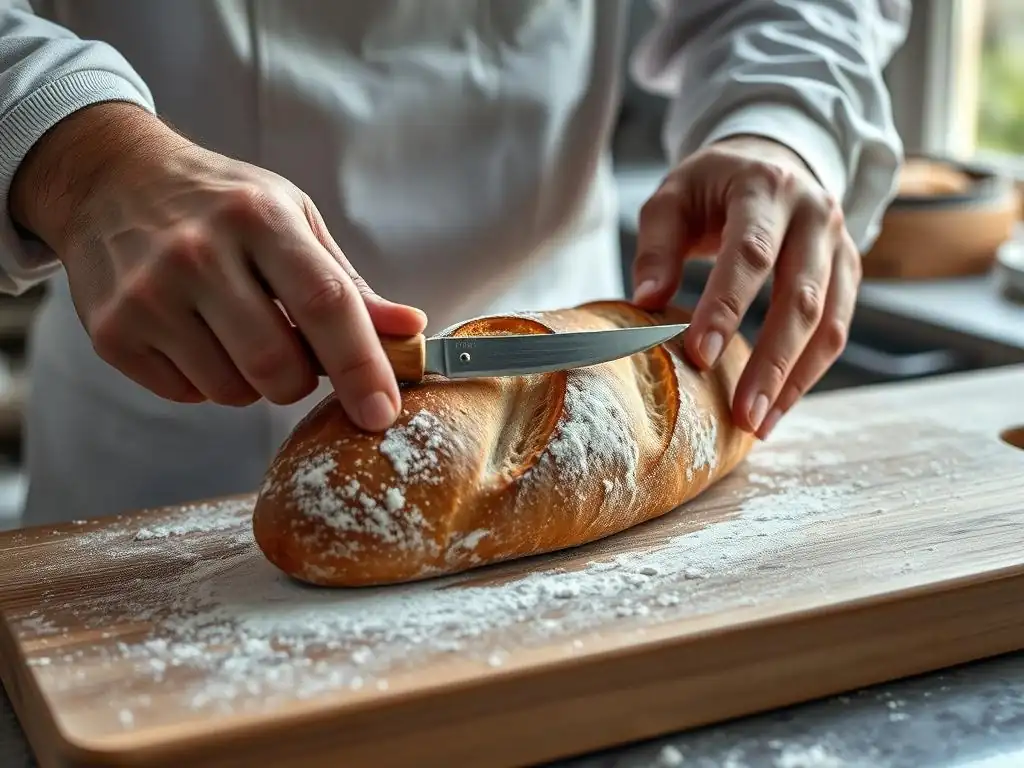
For doughs that are the same color as the surface you're scoring on (like proofed dough on a couche), it can sometimes be difficult to see your intended scoring lines clearly. A simple technique to enhance visibility is to lightly dust the surface of the proofed dough with a contrasting flour just before scoring.
Rice flour is excellent for this as it is very fine, doesn't contain gluten, and doesn't absorb into the dough quickly. A light dusting of white rice flour on a darker whole wheat dough, or even just a slightly heavier dusting of the same flour, can make the surface lines more visible.
Use a fine-mesh sieve or a small dusting wand to apply the flour evenly. The goal is just enough to see your lines, not so much that it creates a thick layer or inhibits the blade. This visual guide can significantly improve the precision and consistency of your baguette scoring lame technique, allowing you to follow your planned pattern more accurately, especially for complex or overlapping designs.
Cold vs. Room Temperature Dough: Adjusting Technique
The temperature of your dough significantly affects how easy it is to score and how it behaves during the cut. Cold dough, particularly dough that has been retarded in the refrigerator overnight, is generally much easier to score cleanly. The cold firms up the surface and the internal structure, making it less prone to sticking or deflating. When scoring cold dough, the blade glides smoothly, allowing for very precise and confident cuts. This is why many artisan bakers proof their baguettes in the fridge for the final stage.
Scoring dough at room temperature (after a warm proof) requires a lighter, swifter hand. The dough is more relaxed and delicate, making it more susceptible to tearing or deflating if cuts are hesitant or too deep. If scoring room temperature dough, ensure your lame is exceptionally sharp and your movements are quick and decisive. Adjusting your pressure and speed based on dough temperature is an important refinement of your baguette scoring lame technique.
Hydration Levels: Modifying Scoring
The hydration level of your baguette dough also influences the scoring process. High-hydration doughs (e.g., 75% hydration and above) are wetter, stickier, and more extensible. They are generally harder to score cleanly than lower-hydration doughs (e.g., 65-70%). High-hydration doughs are more prone to sticking to the blade and can spread more easily if cuts are not made swiftly.
When working with high-hydration dough, ensure the dough is properly developed and has good surface tension after shaping. A light dusting of rice flour is often very helpful. Use an extremely sharp lame and make your cuts with speed and confidence. You might find that slightly less depth is needed to achieve good opening, as the dough is already quite airy. Conversely, lower-hydration doughs are firmer and more forgiving, allowing for slightly slower or deeper cuts if needed. Adapting your baguette scoring lame technique to the dough's hydration is key to consistent success.
Scoring for Different Styles: Baguette de Tradition, Baguette Viennoise
Different baguette styles sometimes call for slight variations in scoring. The classic Baguette de Tradition, known for its irregular, open crumb and crispy crust, is typically scored with a few long, overlapping diagonal slashes (3-5 usually) using a curved lame to encourage prominent ears. These long cuts facilitate maximum expansion along the length of the loaf.
A Baguette Viennoise, which is often enriched with milk, sugar, or butter and has a softer crust and crumb, might be scored differently. Sometimes they are left unscored, given a single straight cut down the middle, or scored with multiple shorter, parallel cuts across the top. The scoring pattern should complement the dough's composition and the desired final texture and appearance. Understanding these stylistic differences helps refine your baguette scoring lame technique for specific recipes.
Conclusion: Perfecting Your Baguette Baking
Practice and Patience: Keys to Mastery
Mastering the baguette scoring lame technique, like any artisan skill, requires practice and patience. Your first attempts may not yield perfect results – cuts might be uneven, the dough might stick, or the ears might not develop as desired. This is completely normal. Each loaf you score provides valuable feedback. Pay attention to how the dough feels, how the blade glides, and how the scores open in the oven.
Don't get discouraged by imperfect loaves. See them as learning opportunities. Try adjusting your angle, pressure, speed, or dough proofing slightly based on your observations. Keep your lame sharp and your dough properly proofed. With consistent effort and a willingness to learn from each bake, you will gradually develop the feel and control needed to execute beautiful, effective scores every time. The journey of perfecting your baguette scoring lame technique is rewarding.
Further Resources: Expanding Your Knowledge
To continue improving your baguette scoring lame technique and overall baguette baking skills, explore additional resources. Look for video tutorials that visually demonstrate different scoring angles and techniques, as seeing the motion can be very helpful. Consult comprehensive bread baking books that delve into the science behind proofing, dough handling, and oven spring.
Engage with online baking communities or forums where experienced bakers share tips and troubleshoot problems. Reading about others' experiences with different dough hydrations, temperatures, and lame types can provide valuable insights. Experiment with different types of lames or blades to see what works best for you. Continuously seeking knowledge and applying it in your kitchen is the best way to elevate your baguette baking and truly master the art of using a lame.
Frequently Asked Questions
What is a baguette scoring lame and why is it important?
A lame is a specialized razor blade tool used for scoring bread dough, particularly baguettes. It's important because it allows for precise cuts, controlling how the bread expands in the oven.
Why is the baguette scoring lame technique crucial for a good baguette?
The baguette scoring lame technique is crucial because it controls the direction and extent of oven spring. Improper scoring can lead to uneven expansion and unattractive breaks.
What angle should I hold the lame at when scoring a baguette?
Generally, you should hold the lame at a 45-degree angle to the surface of the dough. This creates a flap that allows for optimal expansion during baking.
What are some common mistakes people make when using a baguette scoring lame?
Common mistakes include using a dull blade, pressing too hard, and not scoring deep enough. These errors can result in tearing the dough or preventing proper oven spring.
Where can I find a good baguette scoring lame and learn more about baguette scoring lame technique?
You can find lames at most baking supply stores or online retailers. BakeWithEase.com offers step-by-step guides and tips on mastering the baguette scoring lame technique.
Final Reflection: The Humble Lame: A Baker's Precision Tool
The art of the perfect baguette relies not just on the dough, but on the precision of the scoring—and that precision hinges on mastering the humble lame. A seemingly simple tool, the lame elevates the baking experience from a simple process to a refined craft, impacting the final product's visual appeal and even its texture. The seemingly insignificant act of scoring becomes a critical moment, shaping the iconic ear formation and influencing the overall rise.
The impact of the lame extends beyond the individual baker; it speaks to a deeper connection with tradition and technique. The careful consideration given to each cut, the feel of the blade against the dough, it's a meditative practice that connects us to generations of bakers who came before. Bread is our daily bread, but it is also a symbol of our culture and our history.
This quote, while not directly about lames, speaks to the larger significance of bread-making, and the lame plays a crucial, often overlooked, role in that history.
Now, consider your own baking journey. What seemingly small details have had a disproportionately large impact on your results? I encourage you to experiment with different lames, different scoring techniques, and to truly appreciate the artistry involved in this often-overlooked step. Embrace the challenge of mastering the lame; the reward is not just a beautifully scored baguette, but a deeper understanding of the craft and a renewed appreciation for the simple act of baking.
Unlock Your Inner Boulanger: Master the Art of Baguette Scoring!
Thanks for taking the time to explore the world of precise baguette scoring! We hope you now feel confident in achieving those beautiful, ear-worthy results. Ready to put your new skills to the test?
- Bake your perfect baguette: Grab your ingredients and try out the techniques you’ve just learned. Don’t forget to share a photo of your masterpiece on social media using #BakeWithEaseBaguette!
- Experiment with different lame styles: Explore the subtle differences between various lame blades and their impact on your scoring. Which one becomes your favorite?
- Join our baking community: Share your results, ask questions, and connect with fellow bread enthusiasts in the comments below. Let’s learn together!
What unique scoring pattern will you create for your next baguette?