
Understanding Flour Strength: Choosing the Right Flour for Advanced Sourdough

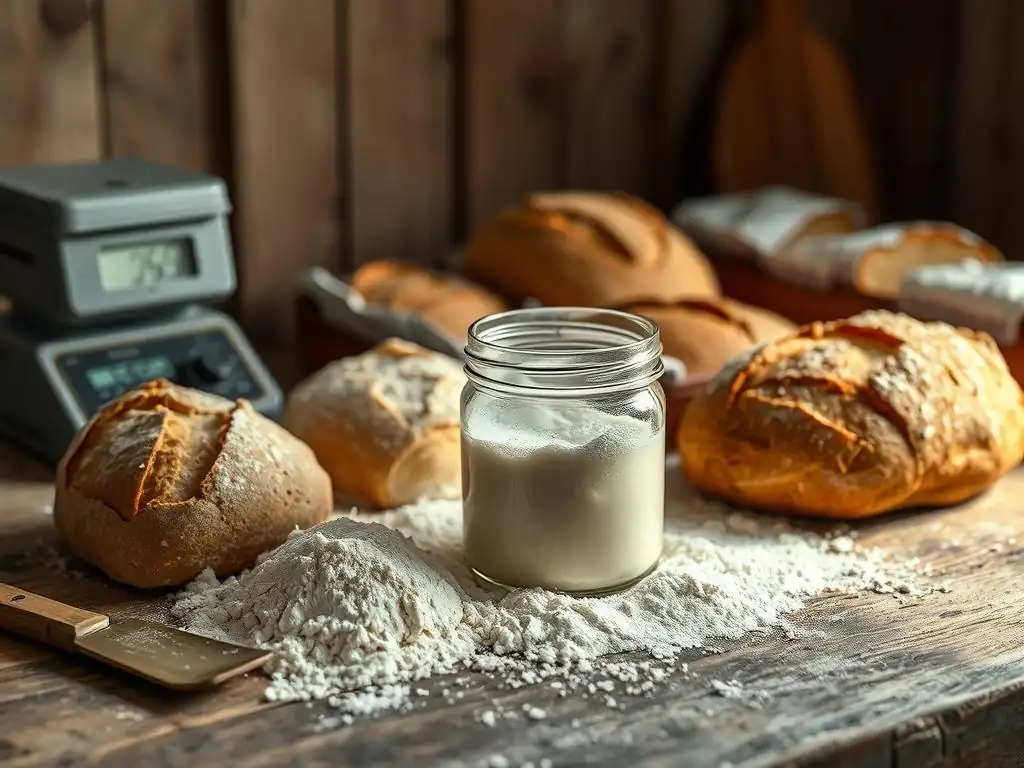
Welcome to BakeWithEase, your trusted companion in the world of baking! Ever wondered if your sourdough starter is performing at its peak, but your loaves still lack that perfect rise? It might be time to delve deeper into the nuances of flour strength. Understanding the subtleties of flour is crucial for achieving exceptional results, especially when it comes to sourdough. Prepare to unlock the secrets behind achieving that coveted oven spring and delightfully chewy crumb as we guide you through our Sourdough Flour Strength Guide, designed to elevate your baking game to the next level. Let's get baking!
- Introduction to Flour Strength in Sourdough Baking
- What is Flour Strength and Why Does it Matter for Sourdough?
- Deciphering Flour Labels: Understanding Flour Specifications for Sourdough
- The Sourdough Flour Strength Guide: Matching Flour to Your Baking Goals
- Advanced Sourdough Techniques and Flour Strength Requirements
- Blending Flours for Optimal Sourdough Performance
- Troubleshooting Sourdough Issues Related to Flour Strength
- Experimenting with Flour Strength: Finding Your Perfect Sourdough Flour
- Conclusion: Mastering Flour Strength for Sourdough Success.
-
Frequently Asked Questions
- What is flour strength and why is it important for sourdough?
- How does flour strength affect my sourdough starter?
- What types of flour are considered strong flours suitable for sourdough?
- Can I mix different types of flour to achieve the desired flour strength for sourdough?
- Where can I find information on the protein percentage of my flour?
- Final Reflection: The Power of Understanding Flour Strength in Sourdough Baking
- Unlock Your Sourdough Potential: Master Flour Strength Today!
Introduction to Flour Strength in Sourdough Baking
Embarking on the journey of advanced sourdough baking opens up a world of possibilities, from achieving that coveted open crumb to mastering challenging high-hydration doughs. As you move beyond basic recipes, understanding the fundamental role of flour becomes paramount. It's not just about choosing "bread flour" or "all-purpose"; it's about delving into the concept of flour strength and how it directly impacts the structure, texture, and overall success of your sourdough creations. This guide aims to illuminate the nuances of flour strength, helping you make informed decisions to elevate your baking.
What is Flour Strength and Why Does it Matter for Sourdough?
Flour strength is a critical concept often discussed among experienced bakers, and it's particularly vital when working with sourdough's long fermentation times and unique leavening process. It refers primarily to the amount and quality of protein within the flour, which directly influences gluten development. A stronger flour can handle more hydration and longer fermentation, resulting in a more robust dough capable of trapping the gases produced by your sourdough starter, leading to a better rise and crumb structure.
Defining Flour Strength: Protein Content and Gluten Development
Flour strength is primarily determined by its protein content, specifically the proteins glutenin and gliadin. When flour is mixed with water, these proteins hydrate and bond together through mixing and kneading, forming a complex, elastic network known as gluten. This gluten network is what gives dough its structure and elasticity, allowing it to stretch and hold the carbon dioxide gas produced by fermentation.
Flours with a higher percentage of protein generally develop a stronger gluten network, making them "stronger" flours. For example, typical all-purpose flour might contain 10-12% protein, while bread flour usually falls between 12-14%, and high-gluten flour can exceed 14%. This difference in protein percentage is a key indicator in any sourdough flour strength guide.
The quality of the protein also plays a role. Different wheat varieties have proteins with varying characteristics, affecting how easily and effectively the gluten network forms. A flour might have a decent protein percentage but poor protein quality, resulting in a weaker dough than expected. This is why relying solely on protein percentage isn't the entire story, but it remains the most accessible and widely used metric for assessing flour strength. Understanding this relationship is the first step in mastering your sourdough flour strength guide.
The Impact of Flour Strength on Sourdough Structure and Texture
The strength of your flour directly dictates the structure and texture of your finished sourdough loaf. A strong flour, high in protein, allows for the development of a robust gluten network capable of stretching significantly without tearing. This elasticity is crucial for trapping the large volume of gases generated during the long, slow fermentation characteristic of sourdough. When baked, this strong network sets, resulting in a loaf with excellent oven spring and an open, airy crumb structure – the hallmark of a well-baked sourdough.
Conversely, using a weak flour with low protein content will result in a less developed gluten network. This network will struggle to support the dough's weight and contain the fermentation gases, often leading to a flatter loaf with a dense, tight crumb. While weak flours have their place in baking (think tender cakes or biscuits), they are generally not suitable as the sole flour for a traditional, airy sourdough loaf. The ability of the flour to withstand the stresses of fermentation and baking is a direct consequence of its strength.
Why Flour Strength is Crucial for Advanced Sourdough Techniques
Advanced sourdough techniques, such as high hydration baking (often 75% hydration or more) or very long, cold fermentations (24-48 hours or longer), place significant demands on the dough's structure. High hydration means there is a larger volume of water for the flour's protein to absorb and manage, requiring a robust gluten network to maintain dough integrity.
A weak flour would simply collapse under this amount of water, resulting in a slack, unmanageable dough. For example, attempting an 85% hydration loaf with standard all-purpose flour (around 11% protein) is likely to result in a pancake-like dough that is impossible to shape and handle, yielding a flat, dense loaf.
Similarly, extended fermentation times increase the acidity of the dough and the activity of enzymes that can break down the gluten network over time. A strong flour's more resilient network is better equipped to withstand this prolonged enzymatic activity and acidic environment, maintaining its structure and gas-holding capacity throughout the fermentation process. This resilience is essential for achieving maximum oven spring and the desired open crumb characteristic of advanced sourdough. Mastering the sourdough flour strength guide means knowing which flour can handle these challenging conditions.
Deciphering Flour Labels: Understanding Flour Specifications for Sourdough
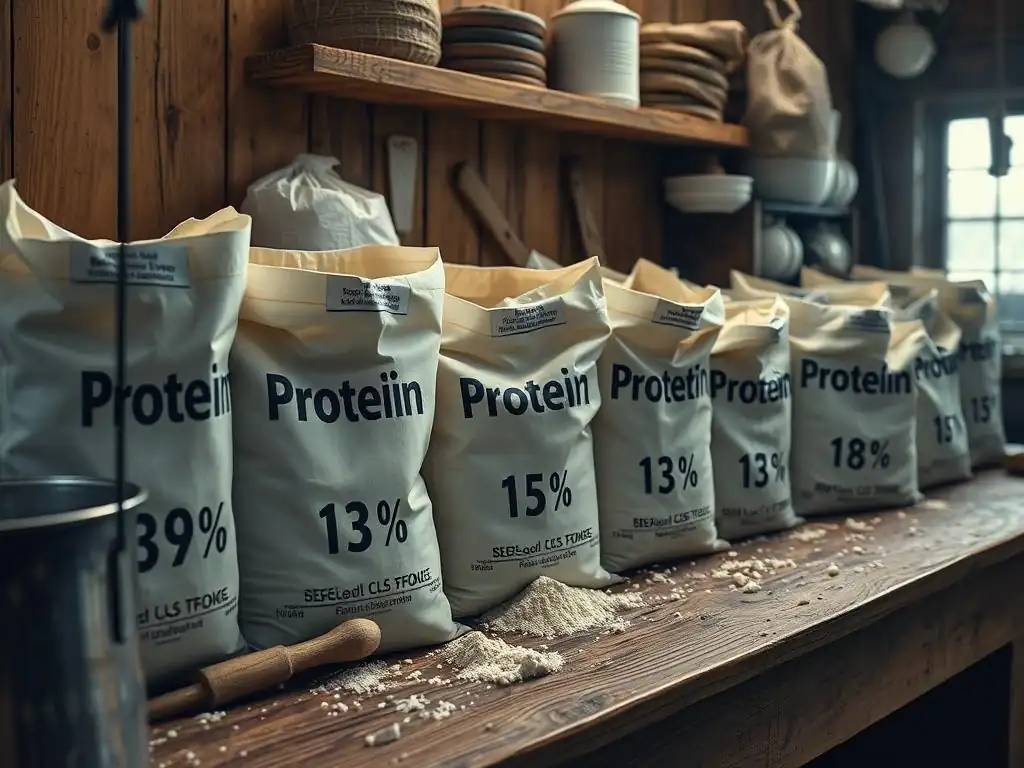
Understanding what the information on a flour bag actually means is a key part of mastering your sourdough flour strength guide. While protein percentage is the most commonly cited metric for strength, other specifications like ash content and falling number provide valuable insights into the flour's characteristics and how it will perform in sourdough baking, affecting flavor, fermentation rate, and overall dough handling.
Protein Percentage: A Key Indicator of Flour Strength
As discussed, protein percentage is the most direct indicator of a flour's potential strength. It's typically listed on the nutrition facts panel of the flour bag. For sourdough, especially advanced techniques, bakers often look for flours with 12% protein or higher.
Bread flour, with its typical 12-14% protein, is a common choice. High-gluten flour, often 14% protein or more, provides even greater strength for very high hydration or challenging doughs. For instance, King Arthur Baking Company's Bread Flour has 12.7% protein, making it a reliable choice for many sourdough recipes, while their Sir Lancelot High-Gluten Flour boasts 14.2% protein, ideal for achieving maximum volume and structure.
It's important to note that regulations regarding protein labeling can vary by region and company. Some labels list protein per serving size (e.g., 4g per 30g serving), requiring a simple calculation (4g / 30g * 100% = 13.3%) to determine the percentage. Others list it directly. Always check the nutrition panel to confirm the protein content. This figure gives you a solid starting point for assessing the flour's potential strength and how it fits into your sourdough flour strength guide.
Ash Content: How it Affects Sourdough Flavor and Fermentation
Ash content refers to the mineral content left after a flour sample is burned. It's reported as a percentage of the original weight. Minerals are concentrated in the outer layers of the wheat kernel (the bran and germ), so flours that include more of these components, like whole wheat or high-extraction flours, will have a higher ash content.
White flours, made from the refined endosperm, have lower ash content. For example, a fine white bread flour might have an ash content of around 0.5-0.6%, while whole wheat flour can be 1.5% or higher. European flour type classifications (like Type 55, Type 65, Type 80, Type 110, Type 150) are based on ash content, indicating the level of refinement.
Higher ash content brings more flavor and nutrients to the flour. These minerals and the associated bran/germ also contain enzymes that can increase dough activity and potentially speed up fermentation. While this can add complexity and depth of flavor to sourdough, the presence of bran and germ can also interfere with gluten development, requiring adjustments to hydration and handling. Knowing the ash content helps predict how a flour will behave in terms of fermentation speed and flavor profile within your sourdough flour strength guide experiments.
Falling Number: Assessing Flour Quality for Sourdough Starters
The Falling Number is a test that measures the alpha-amylase enzyme activity in flour. Alpha-amylase breaks down starch into sugars, which are food for yeast and bacteria in sourdough. The test involves mixing flour and water, heating it, and measuring the time it takes for a plunger to fall through the mixture. A lower falling number indicates higher enzyme activity (the mixture is thinner, so the plunger falls faster). A higher falling number indicates lower enzyme activity.
For sourdough, moderate enzyme activity is beneficial as it provides fermentable sugars. However, excessive alpha-amylase activity (very low falling number, typically below 250 seconds) can lead to excessive starch breakdown, resulting in a sticky, gummy crumb and poor loaf volume. Flour with a falling number that is too high (very low enzyme activity, typically above 400 seconds) might result in slow fermentation.
Ideally, flour for baking, especially for long-fermented doughs like sourdough, should have a falling number between 250 and 350 seconds. While not always listed on retail bags, it's a specification millers use and is relevant for understanding flour quality, particularly for feeding your sourdough starter and ensuring consistent fermentation in your sourdough flour strength guide endeavors.
The Sourdough Flour Strength Guide: Matching Flour to Your Baking Goals
Choosing the right flour is perhaps the most critical decision in sourdough baking after cultivating a healthy starter. Different flours possess varying levels of strength, which makes them suitable for different applications. Matching the flour's characteristics to your desired outcome – whether it's a lofty loaf, a tender crust, or a complex flavor profile – is key to success. This section of the sourdough flour strength guide explores common flour types based on their strength and how they perform in sourdough.
Strong Flour for Sourdough: High-Protein Options and Uses
Strong flours are the workhorses of sourdough baking, providing the necessary structure to support the long fermentation and achieve excellent oven spring. They are characterized by high protein content, which translates to a robust gluten network capable of trapping significant amounts of gas. These flours are essential for traditional, airy sourdough loaves and challenging high-hydration recipes.
Bread Flour: The Classic Choice for Sourdough Loaves
Bread flour is the go-to flour for many sourdough bakers, and for good reason. It typically contains 12-14% protein, offering a strong yet manageable gluten structure. This protein level provides the elasticity and strength needed for dough development, allowing for good volume and an open crumb. It handles moderate to high hydration well (e.g., 70-80% hydration) and stands up to the enzymatic action during standard sourdough fermentation times (e.g., 12-24 hours).
Using bread flour alone is sufficient for many excellent sourdough recipes. It strikes a balance between strength and ease of handling, making it suitable for both beginners and experienced bakers working on their sourdough flour strength guide journey. For example, a simple recipe using 100% bread flour at 75% hydration is a reliable starting point for achieving a classic country loaf with a beautiful crust and open interior.
High-Gluten Flour: Boosting Structure in Challenging Doughs
High-gluten flour is the strongest flour commonly available, boasting a protein content often exceeding 14%. As the name suggests, it's designed to develop an exceptionally strong gluten network. This makes it ideal for situations where maximum dough strength is required, such as extremely high hydration doughs (85% hydration or more), doughs with heavy inclusions (like nuts or seeds that can weaken the structure), or when trying to achieve the largest possible oven spring.
While its strength is a major advantage, high-gluten flour can also make dough stiffer and potentially harder to handle if not properly hydrated and developed. It requires sufficient water and mixing to fully hydrate the high protein content and build the strong gluten network. Using a small percentage of high-gluten flour blended with bread flour is a common technique to add structural support without making the dough too difficult to work with, providing a targeted boost to your sourdough flour strength guide approach.
King Arthur Baking Company Sir Lancelot: An Excellent High-Gluten Flour
King Arthur Baking Company's Sir Lancelot High-Gluten Flour is a prime example of a high-quality, strong flour. With a protein content of 14.2%, it is specifically milled to provide maximum dough strength and elasticity. This flour is often favored by professional bakers and serious home enthusiasts tackling challenging doughs.
Using Sir Lancelot, even as a partial substitute (e.g., replacing 10-20% of the bread flour in a recipe), can dramatically improve dough handling and loaf volume, especially in high-hydration formulas. For instance, if you're struggling with a very wet dough becoming a sticky mess, substituting some of your bread flour with Sir Lancelot can provide the structural backbone needed to make it manageable and achieve a better rise. It's a valuable tool in the advanced sourdough flour strength guide arsenal.
Medium Flour for Sourdough: Versatile Options for Various Bakes
Medium-strength flours offer a balance between protein content and tenderness, making them versatile for a range of sourdough applications beyond the classic crusty loaf. They are suitable for recipes where a slightly less robust structure is acceptable or desired, or when blended with stronger flours.
All-Purpose Flour: When and How to Use It in Sourdough
All-purpose flour is the most common flour in many kitchens, typically containing 10-12% protein. While it falls into the medium-strength category, its performance in sourdough can vary depending on the specific brand and its protein level. Some brands lean closer to 12% protein, performing reasonably well for standard sourdough loaves at moderate hydration (65-70%). Others closer to 10% protein will result in a weaker dough less capable of achieving a significant rise.
All-purpose flour can be used successfully in sourdough, especially for recipes like sourdough discard pancakes, quick breads, or even some loaves at lower hydration levels. It can also be blended with stronger flours to temper their strength or with weaker flours to add some structure. If using it for a classic loaf, be prepared for a potentially smaller rise and a denser crumb compared to using bread flour, unless you adjust hydration downwards or incorporate techniques like stretch and folds more frequently to compensate for the lower protein. It's a flexible component in your sourdough flour strength guide explorations.
Whole Wheat Flour: Balancing Flavor and Structure
Whole wheat flour is milled from the entire wheat kernel, including the bran and germ, giving it a higher protein content than white all-purpose flour, often in the 13-14% range. However, despite its high protein, whole wheat flour is often considered functionally weaker in terms of gluten development for a few reasons. The sharp edges of the bran and germ particles can cut through the developing gluten strands, hindering the formation of a strong network. Additionally, the bran and germ absorb more water than the endosperm, requiring higher hydration, which further challenges the gluten structure.
Despite these challenges, whole wheat flour is highly valued in sourdough for its rich flavor, aroma, and nutritional benefits. It's commonly used in blends with white bread flour (e.g., 20-50% whole wheat) to add complexity without completely sacrificing structure. When incorporating whole wheat, you'll typically need to increase the hydration level compared to using 100% white flour to ensure the bran is fully hydrated. This balance is a key consideration in your sourdough flour strength guide when using whole grains.
Bob's Red Mill Organic All-Purpose Flour: A Reliable Mid-Range Option
Bob's Red Mill Organic All-Purpose Flour is a widely available flour that often falls into the higher end of the all-purpose protein range, typically around 11-12%. This makes it a reliable mid-range option for various sourdough applications. While perhaps not providing the explosive oven spring of a high-gluten flour, it can produce very respectable sourdough loaves, especially at moderate hydration levels.
Its versatility makes it a good choice for sourdough discard recipes, enriched sourdough doughs (like brioche), or as a base for blending with stronger or weaker flours. It offers a good balance of structure for general baking needs. Many bakers successfully use this type of all-purpose flour as their primary flour, adjusting techniques or hydration to suit its strength, demonstrating the adaptability required in a comprehensive sourdough flour strength guide.
Weak Flour for Sourdough: Low-Protein Options and Their Applications
Weak flours have a low protein content and develop a tender, delicate gluten network. While not suitable for the main structure of a traditional sourdough loaf, they are essential for creating lighter textures in specific sourdough applications, particularly pastries and enriched doughs.
Cake Flour: Delicate Sourdough Pastries and Desserts
Cake flour is the weakest commercially available flour, typically containing only 7-9% protein. It is finely milled and often chlorinated (though unchlorinated versions exist), which further weakens the gluten-forming proteins and helps it absorb more liquid and sugar. This results in an extremely tender crumb, making it perfect for cakes, biscuits, and delicate pastries.
While you wouldn't use 100% cake flour for a rustic sourdough loaf, it can be incorporated into sourdough recipes designed for a soft texture. For example, a sourdough scone or muffin recipe might benefit from the tenderizing effect of cake flour. It's also sometimes used in small percentages in blends for enriched sourdough breads where a softer crumb is desired, contrasting with the focus on structure in a typical sourdough flour strength guide for loaves.
Pastry Flour: Enhancing Tenderness in Sourdough Crusts
Pastry flour falls between cake flour and all-purpose flour in terms of protein content, typically ranging from 8-10%. It offers a balance that provides some structure but still yields a tender result. It's excellent for pies, tarts, cookies, and, as the name suggests, pastries.
In sourdough baking, pastry flour isn't used for the main loaf body but can be beneficial in specific contexts. For instance, some bakers might use a small percentage in sourdough pizza dough or focaccia to achieve a more tender bite. It's also ideal for sourdough-based pastry recipes like danishes or croissants, where a delicate, flaky texture is paramount. Its moderate weakness is its strength in these specific applications.
King Arthur Baking Company Cake Flour: Ideal for Tender Crumb
King Arthur Baking Company's Cake Flour is a popular example of a high-quality weak flour, with a protein content around 9.4%. It is unbleached and unenriched, offering clean flavor while still providing the low protein needed for tenderness.
This flour is perfectly suited for creating light and tender sourdough discard recipes like quick breads, muffins, or pancakes. If you're developing a sourdough recipe for something like cinnamon rolls or babka where a very soft, pull-apart crumb is desired, a percentage of cake flour could be incorporated into the dough blend to achieve that specific texture goal, demonstrating a different facet of the sourdough flour strength guide.
Advanced Sourdough Techniques and Flour Strength Requirements

As you delve into more complex sourdough methods, the relationship between technique and flour strength becomes even more pronounced. Certain advanced approaches absolutely demand a flour with specific characteristics to succeed. Understanding these requirements is key to mastering these techniques.
High-Hydration Sourdough: The Need for Strong Flour
High-hydration sourdough refers to doughs with a large ratio of water to flour, often 75% hydration or higher (meaning the water weight is 75% or more of the flour weight). These doughs are typically slack, sticky, and challenging to handle but can result in incredibly open, airy crumbs and thin, crispy crusts when successful. Achieving success with high hydration is impossible without strong flour. The high protein content of bread flour or high-gluten flour is necessary to absorb and manage the large volume of water.
A strong gluten network provides the framework to hold this extra water within the dough structure. Without it, the dough would essentially be a soupy mess, unable to develop tension or hold shape. For example, an 80% hydration dough requires a flour with sufficient protein (ideally 12.5% or higher) to build a network capable of supporting its own weight and trapping fermentation gases.
Techniques like frequent stretch and folds or coil folds are employed to help build strength in these wet doughs, but they rely on the inherent strength provided by the flour. This is a prime example of why a detailed sourdough flour strength guide is invaluable.
Long Fermentation Sourdough: How Flour Strength Impacts Dough Stability
Long fermentation, particularly cold fermentation in the refrigerator for 24-72 hours, is a technique used to develop complex flavors and improve dough handling. During this extended period, enzymes naturally present in the flour continue to break down starches into sugars and, crucially, can also begin to break down the gluten network. The dough also becomes more acidic due to the increased activity of lactic acid bacteria.
A strong flour with a robust gluten network is much more resistant to this enzymatic degradation and acidic environment over time. It maintains its integrity and elasticity, ensuring that the dough doesn't become overly degraded or "soupy" by the end of the long fermentation period.
Using a weaker flour for a very long cold ferment would likely result in a dough that has lost much of its structure, leading to poor oven spring and a dense crumb. A strong flour ensures the dough remains stable and capable of a good rise even after prolonged fermentation, a key factor in your sourdough flour strength guide planning.
Sourdough Scoring and Oven Spring: Achieving Optimal Results with the Right Flour
Sourdough scoring is the act of cutting the surface of the dough before baking. This serves multiple purposes: it allows the dough to expand predictably during oven spring, prevents blowouts, and creates decorative patterns. Oven spring is the rapid expansion of the loaf in the initial stages of baking, driven by the final push of gas expansion before the crust sets. Both scoring effectiveness and optimal oven spring are heavily influenced by flour strength.
A strong flour develops a dough with good surface tension and elasticity. This makes it easier to score cleanly with a sharp blade (lame). As the dough bakes, the strong, elastic gluten network allows the scored cuts to open up dramatically and the loaf to expand upwards and outwards, achieving maximum volume.
A dough made with weak flour will often be slack with poor surface tension, making scoring difficult (the blade drags or tears the dough) and resulting in less dramatic or uneven oven spring as the structure cannot support rapid, significant expansion. The right flour strength is foundational to achieving those beautiful ears and open scores.
Blending Flours for Optimal Sourdough Performance
One of the most rewarding aspects of advanced sourdough baking is the ability to blend different flours to achieve specific characteristics that a single flour cannot provide. Blending allows you to combine the structural benefits of strong flours with the flavor, texture, or nutritional advantages of other types, creating unique and optimized doughs for your specific baking goals.
Combining Strong and Weak Flours: Achieving the Perfect Balance
Blending a strong flour (like bread flour or high-gluten flour) with a weak flour (like pastry or cake flour) is a technique used to achieve a desired balance of structure and tenderness. For example, if you want a sourdough loaf with a slightly softer crumb than a purely bread flour loaf, you might replace 10-15% of the bread flour with all-purpose or even pastry flour. This reduces the overall protein content and gluten potential, resulting in a less chewy interior.
Conversely, if you're working with a recipe that uses a medium-strength flour but you want more structure for a higher rise or better handling, you could replace a portion of that flour with bread or high-gluten flour. This technique is particularly useful for adapting recipes or fine-tuning the texture of sourdough rolls, burger buns, or enriched breads, offering flexibility within your sourdough flour strength guide.
Adding Whole Grain Flours: Adjusting Hydration and Fermentation
Incorporating whole grain flours (like whole wheat, rye, spelt, or kamut) into your sourdough blend adds significant flavor, aroma, color, and nutritional value. However, as noted earlier, the bran and germ in whole grains can impede gluten development and absorb more water. Therefore, when adding whole grain flours, adjustments are often necessary.
Typically, you will need to increase the overall hydration of the dough to compensate for the higher absorption rate of the whole grains. A good starting point is often adding 5-10% more water for every 10-20% of white flour replaced with whole grain. Additionally, the presence of bran and germ can sometimes accelerate fermentation due to increased enzymatic activity and microbial load. You might need to monitor fermentation more closely and potentially reduce fermentation times or temperatures compared to a 100% white flour dough. Experimentation is key here, making notes in your sourdough flour strength guide journal essential.
70% Bread Flour, 20% Whole Wheat, 10% Rye: A Complex Flavor Profile
A classic and popular flour blend among sourdough bakers is a mix like 70% white bread flour, 20% whole wheat flour, and 10% rye flour. This specific combination is a great example of how blending optimizes both structure and flavor. The 70% bread flour provides the necessary strong gluten network for structure, oven spring, and an open crumb. The 20% whole wheat adds nutty, complex flavors, nutrients, and helps contribute to a darker crust color, while the 10% rye adds a distinct tangy, earthy note and further enhances the sourdough character.
This blend typically requires a higher hydration than 100% white flour, often in the 75-85% range, to properly hydrate the whole wheat and rye. The presence of the whole grains also means fermentation might proceed slightly faster than a pure white loaf. This blend is a fantastic starting point for exploring the world of mixed-flour sourdoughs and demonstrates how different flours contribute unique properties to the final bread, highlighting the practical application of a sourdough flour strength guide.
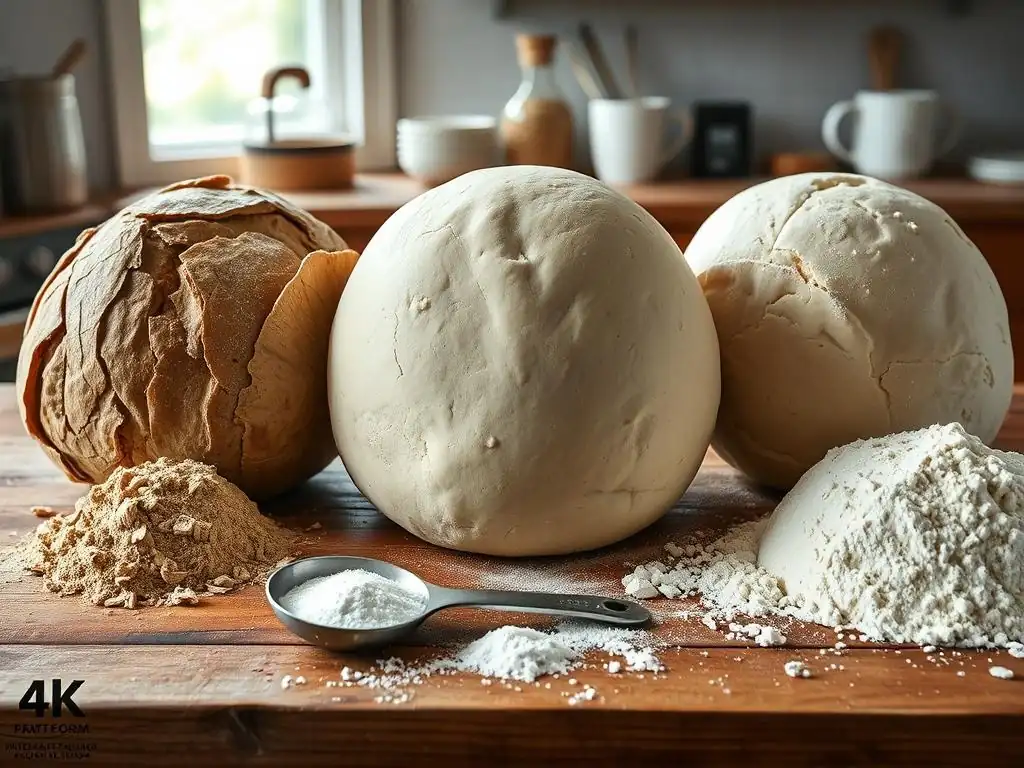
Many common sourdough problems can be traced back, at least in part, to using a flour with inappropriate strength for the recipe or technique. Recognizing these issues and understanding how flour strength contributes to them is vital for diagnosing problems and improving your baking results.
Flat Sourdough Loaves: Identifying Weak Flour as the Culprit
One of the most disheartening outcomes in sourdough baking is a flat loaf with poor volume. While under-proofing or issues with shaping can contribute, a primary cause is often using flour that is too weak. If the flour's protein content is too low (e.g., using a standard all-purpose flour at high hydration), the resulting gluten network will not be strong enough to support the weight of the dough or trap the significant volume of CO2 gas produced during fermentation and oven spring.
The dough may appear to rise somewhat during bulk fermentation, but it will likely spread outwards rather than upwards, and during baking, it will lack the structural integrity to expand vertically. The crumb will typically be dense and tight rather than open and airy. If you consistently get flat loaves despite following proofing and shaping guidelines, consider if your flour strength is adequate for your hydration level and technique. Consulting a sourdough flour strength guide can help you select a more appropriate flour.
Dense and Gummy Sourdough: Recognizing the Role of Overly Strong Flour
While weak flour leads to flat loaves, using overly strong flour isn't automatically a guarantee of success and can lead to different issues, such as a dense or gummy crumb. If a very strong flour (like high-gluten flour) is used without sufficient hydration or mixing, its high protein content may not fully hydrate. This can result in a stiff dough that is difficult to develop properly.
Furthermore, if a very strong dough is not given enough time for enzymes to break down some of the starch and protein during fermentation (especially in shorter fermentations), the resulting crumb can be chewy and sometimes have a gummy texture. Overworking a very strong dough can also tighten the gluten excessively. Ensuring adequate hydration, proper mixing, and sufficient fermentation time are crucial when working with strong flours to avoid these issues. A sourdough flour strength guide emphasizes that matching technique to flour is key.
Difficult Sourdough Scoring: Addressing Dough Elasticity Issues
Difficulty scoring your sourdough loaf cleanly before baking is often a sign of issues with dough tension and elasticity, which are directly linked to flour strength and gluten development. If the dough is too slack and lacks surface tension (often due to weak flour or insufficient gluten development), the lame will drag or tear the surface instead of making a clean cut. The dough may also deflate slightly as you attempt to score it.
Conversely, if the dough is overly tight and elastic (potentially due to very strong flour, insufficient hydration, or over-mixing), the surface might resist scoring, and the cuts may not open well during baking. The dough needs to have a balance of extensibility (ability to stretch) and elasticity (ability to snap back) for optimal scoring and oven spring. If scoring is a persistent problem, evaluate both your flour choice (using a sourdough flour strength guide) and your dough development techniques (mixing, stretch and folds).
Experimenting with Flour Strength: Finding Your Perfect Sourdough Flour
The best way to truly understand flour strength and how it impacts your sourdough baking is through hands-on experimentation. Different flours, even of the same type from different millers, can behave differently. Developing an intuition for how various flours feel and perform is a key step in becoming an advanced sourdough baker.
Testing Different Flours: Small-Batch Baking and Observation
Instead of committing to a large batch with an unfamiliar flour, try baking small test loaves. Use your standard sourdough recipe but swap out the flour or try a blend. Keep the hydration consistent initially, or make slight adjustments based on the flour type (e.g., slightly more water for whole wheat). Bake the loaves side-by-side if possible or over consecutive days using the same starter and conditions.
Observe the dough throughout the process: How does it feel during mixing and kneading? How does it handle during stretch and folds? How does it rise during bulk fermentation and proofing? How easy is it to shape and score? Note the oven spring and, most importantly, the final crumb structure and texture. This direct comparison is invaluable for building your personal sourdough flour strength guide knowledge.
Adapting Recipes to Different Flour Strengths: Hydration and Fermentation Adjustments
Once you understand the general strength of a flour, you can adapt existing recipes. If using a stronger flour than the recipe calls for, you might be able to increase the hydration slightly to take advantage of its water absorption capacity and achieve a more open crumb. Alternatively, you might need slightly less mixing time to avoid over-developing the gluten.
If using a weaker flour, you will likely need to decrease the hydration to maintain dough structure. You might also need to incorporate more stretch and folds or reduce fermentation times, as the weaker gluten network may not withstand prolonged activity. Learning to make these intuitive adjustments based on flour strength is a hallmark of an experienced sourdough baker and a key part of mastering your sourdough flour strength guide.
Keeping a Sourdough Baking Journal: Tracking Your Flour Experiments
To make the most of your experiments, keep a detailed baking journal. For each bake, record:
- Date
- Recipe (including exact flour type(s) and percentages)
- Hydration level
- Starter activity/condition
- Mixing method and duration
- Number and timing of stretch and folds/coil folds
- Bulk fermentation time and temperature
- Proofing time and temperature
- Baking method and temperature
- Observations on dough handling, rise, scoring, oven spring
- Final crumb structure, texture, and flavor
This journal becomes a personalized sourdough flour strength guide, allowing you to track which flours and techniques yielded the results you desired and identify patterns or issues related to specific flours. Over time, you'll build a valuable database of your own experiences, making future flour choices much easier.
Conclusion: Mastering Flour Strength for Sourdough Success.
Frequently Asked Questions
What is flour strength and why is it important for sourdough?
Flour strength refers to the protein content and its ability to form gluten. Stronger flours, with higher protein, are crucial for sourdough as they provide the structure needed for the long fermentation process and open crumb structure.
How does flour strength affect my sourdough starter?
Stronger flours provide more food for the yeast and bacteria in your starter. This results in a more vigorous and stable starter, which is essential for consistent sourdough baking. Weak flours can lead to a sluggish or inactive starter.
What types of flour are considered strong flours suitable for sourdough?
Typically, bread flour and high-gluten flour are considered strong flours. These flours have a higher protein percentage, usually 12% or higher, which is ideal for sourdough's long fermentation.
Can I mix different types of flour to achieve the desired flour strength for sourdough?
Yes, you can blend flours. Combining a stronger flour with a weaker flour (like all-purpose) allows you to customize the gluten development and texture of your sourdough. This is a common technique for controlling dough extensibility.
Where can I find information on the protein percentage of my flour?
The protein percentage is usually listed on the flour packaging. If it's not directly stated, look for the nutritional information panel, which often includes the protein content per serving. This can be used to calculate the percentage.
Final Reflection: The Power of Understanding Flour Strength in Sourdough Baking
The quest for the perfect sourdough loaf hinges on a single, often overlooked element: flour strength. Understanding the nuances of protein content and its impact on gluten development is not merely a technical detail; it's the key that unlocks consistent, beautiful, and flavorful sourdough bread. Ignoring this crucial factor can lead to frustrating failures, while mastering it opens doors to a world of baking possibilities.
The journey of understanding flour strength has profoundly impacted my own baking, transforming it from a sometimes frustrating endeavor into a deeply satisfying and creative process. It's no longer about following recipes blindly, but about understanding the fundamental building blocks of the bread itself. The baker who understands his flour understands his bread.
– This unspoken truth resonates deeply, highlighting the interconnectedness of ingredient knowledge and baking success. The ongoing exploration of different flour types and their unique properties continues to inspire me, pushing the boundaries of my own baking creativity.
Now, it's your turn. Take this knowledge and apply it to your own sourdough adventures. Experiment with different flour strengths, observe the changes in dough development, and savor the unique characteristics each flour brings to your loaves. Don't be afraid to fail – each failed loaf is a lesson learned, bringing you closer to mastering the art of sourdough and crafting bread that truly reflects your understanding and skill. The journey of understanding flour strength is a continuous one, filled with delicious discoveries and the rewarding satisfaction of a perfectly risen loaf.
Unlock Your Sourdough Potential: Master Flour Strength Today!
Thanks for diving into the world of flour strength and its impact on your sourdough baking! We hope you now feel more confident in choosing the perfect flour for amazing results. Ready to put your new knowledge into practice?
- Bake a test loaf: Use your newly acquired knowledge to select a flour and bake a sourdough loaf. Note the texture and crumb—it's all about hands-on learning!
- Share your experience: Tell us about your baking journey! Share photos of your creations and feedback on the flour you chose in the comments section below. Let's learn together!
- Explore further: Investigate different flour types not mentioned in this article and experiment with blends to create your unique signature sourdough.
What unique flour blend will you create to elevate your sourdough game?