
Bake With Ease: Simple Gingerbread Biscuits


Welcome to BakeWithEase, where the sweet aroma of success is always within reach! Are you ready to embark on a delightful baking adventure? Forget complicated techniques and endless ingredient lists. Today, we're diving into a classic treat perfect for beginners: an easy gingerbread biscuit recipe that will fill your kitchen with warmth and festive cheer. But what's the secret to getting that perfect snap and subtly spiced flavor? Read on to unlock the simple steps and discover why this recipe is a must-try for any aspiring baker!
- Bake With Ease: Simple Gingerbread Biscuits - An Easy Recipe for Beginners
- Introduction to Easy Gingerbread Biscuit Baking
- Easy Gingerbread Biscuit Recipe for Beginners: Step-by-Step
- Making Your Gingerbread Biscuit Dough: A Simple Process
- Rolling, Cutting, and Baking Your Gingerbread Biscuits
- Decorating Your Easy Gingerbread Biscuits
- Storing Your Homemade Gingerbread Biscuits
- Troubleshooting Common Gingerbread Biscuit Baking Issues
- Variations on the Basic Gingerbread Biscuit Recipe
- Conclusion: Enjoy Your Delicious Homemade Gingerbread Biscuits
-
Frequently Asked Questions
- What makes this gingerbread biscuit recipe "easy" for beginners?
- What are some common mistakes beginners make when baking gingerbread biscuits, and how can I avoid them?
- Can I substitute any of the ingredients in this gingerbread biscuit recipe?
- How do I ensure my gingerbread biscuits bake evenly and don't burn?
- What are some creative ways to decorate these gingerbread biscuits after baking?
- Final Reflection: The Sweet Simplicity of Shared Moments
- Unleash Your Inner Baker: Gingerbread Bliss Awaits!
Bake With Ease: Simple Gingerbread Biscuits - An Easy Recipe for Beginners
Introduction to Easy Gingerbread Biscuit Baking
Why Gingerbread Biscuits are Perfect for Beginner Bakers
Gingerbread biscuits hold a special place in the world of baking, offering a delightful combination of warmth, spice, and sweetness. For anyone just starting their baking journey, tackling an easy gingerbread biscuit recipe for beginners is an excellent choice. The ingredients are typically simple and accessible, often already found in your pantry. Unlike complex pastries that require delicate techniques, gingerbread dough is quite forgiving, allowing for mistakes and adjustments without ruining the final product. This makes mastering the basics feel achievable and builds confidence in the kitchen.
Furthermore, the process of making gingerbread biscuits involves fundamental baking skills such as measuring ingredients accurately, mixing dough, rolling and cutting shapes, and understanding oven temperatures. These skills are transferable to countless other baking projects. The distinct aroma of ginger and spices filling your home is an immediate reward, making the effort feel worthwhile from the moment the dough goes into the oven. It's a truly satisfying bake that delivers delicious results even for novice bakers.
BakeWithEase's Guide to Simple Gingerbread Biscuits
At BakeWithEase, our philosophy is to demystify baking and make it enjoyable for everyone, regardless of experience level. This guide to simple gingerbread biscuits is specifically designed with the beginner baker in mind. We break down each step into clear, manageable instructions, ensuring you understand not just what to do, but why you're doing it. Our easy gingerbread biscuit recipe beginners will find straightforward uses common household kitchen tools, meaning you don't need fancy equipment to get started.
We focus on providing practical tips and insights that anticipate common challenges faced by newcomers. From correctly measuring sticky ingredients like molasses or golden syrup to knowing how to handle dough that's too soft, we cover the essentials. Our aim is to empower you to create delicious, perfectly spiced gingerbread biscuits from scratch, building a strong foundation for future baking adventures. Get ready to discover how wonderfully simple and rewarding baking can be!
Easy Gingerbread Biscuit Recipe for Beginners: Step-by-Step
Ingredients for Your First Gingerbread Biscuits
Essential Gingerbread Biscuit Ingredients Checklist
Here is a checklist of the core ingredients you will need for this easy gingerbread biscuit recipe beginners love. These amounts are approximate and can yield around 15-20 medium-sized biscuits, depending on your cutter size. You'll typically need about 250g of plain flour, sometimes referred to as all-purpose flour, which provides the structure for the biscuits. Next, you'll need a leavening agent, usually around 1 teaspoon of bicarbonate of soda (baking soda) to help the biscuits rise slightly and become tender.
The distinct flavour comes from spices, primarily ground ginger. We recommend about 1-2 teaspoons, depending on how spicy you like them. You'll also need a sweetener and binder, such as 75g of soft brown sugar and 75g of butter or margarine. Finally, a liquid sweetener like 3 tablespoons of golden syrup or molasses is crucial for flavour, colour, and texture. Ensure your butter is softened at room temperature for easier mixing.
Optional Ingredients for Enhanced Flavor
While the essential ingredients form the base of a classic easy gingerbread biscuit recipe beginners can master, adding a few extras can elevate the flavour profile. Consider incorporating other warming spices like ground cinnamon, ground nutmeg, or ground cloves. Just a half teaspoon of cinnamon and a pinch of nutmeg or cloves can add complexity and depth to the ginger flavour. You can experiment with the spice blend to find your perfect balance.
Another optional addition is a touch of citrus zest, such as half a teaspoon of finely grated orange or lemon zest. This provides a bright counterpoint to the rich, spicy flavours. Some bakers also like to add a pinch of salt, around a quarter teaspoon, which helps to balance the sweetness and enhance the overall taste of the biscuits. Remember, these are optional, so feel free to stick to the basics for your very first batch.
Equipment Needed for Easy Gingerbread Biscuit Baking
Must-Have Baking Tools
To successfully make this easy gingerbread biscuit recipe beginners will need a few basic tools commonly found in most kitchens. You'll definitely need a large mixing bowl to combine your ingredients; a medium-sized one will likely be too small once all the flour is added. Accurate measurement is key in baking, so a set of measuring spoons for spices and bicarbonate of soda is essential, along with kitchen scales or measuring cups for flour, sugar, and butter.
You'll also need a sturdy rolling pin to roll out the dough evenly. Baking sheets (cookie sheets) are necessary to bake the biscuits on, and it's a good idea to have at least two so you can be rolling and cutting one batch while another is baking. Lastly, some form of biscuit or cookie cutter is needed to shape your biscuits. Simple round cutters work perfectly, or you can use classic gingerbread person shapes if you have them.
Nice-to-Have Equipment for Easier Baking
While not strictly necessary, certain tools can make the process of making an easy gingerbread biscuit recipe beginners edition even smoother. Using an electric mixer, either a hand mixer or a stand mixer, can significantly speed up the creaming of butter and sugar and the mixing of the dough, though it's easily done by hand with a wooden spoon. Parchment paper or silicone baking mats are incredibly useful for lining your baking sheets. They prevent the biscuits from sticking and make cleanup much easier.
A wire cooling rack is also beneficial. Once your biscuits are baked, transferring them to a rack allows air to circulate around them, helping them cool evenly and preventing them from becoming soggy on the bottom. If you plan on decorating, a small palette knife or offset spatula is handy for spreading icing smoothly, and piping bags with simple nozzles can help with more detailed decoration, though a simple spoon or knife works just fine for basic icing.
Making Your Gingerbread Biscuit Dough: A Simple Process

Step 1: Combining Dry Ingredients for Gingerbread Biscuits
The first step in creating your easy gingerbread biscuit recipe beginners dough is to combine all the dry ingredients. This ensures that the leavening agent and spices are evenly distributed throughout the flour before they are mixed with the wet ingredients. In your large mixing bowl, weigh or measure out the plain flour and add the ground ginger, bicarbonate of soda, and any other ground spices like cinnamon or nutmeg if you are using them.
Using a whisk or a spoon, gently stir these dry ingredients together. You want to make sure there are no clumps of bicarbonate of soda or pockets of concentrated spice. Sifting the flour and spices together is an optional step that can help ensure everything is well combined and aerated, leading to a slightly lighter texture, but simply stirring well is sufficient for a beginner's recipe.
Step 2: Adding Wet Ingredients and Mixing the Dough
Once the dry ingredients are ready, it's time to incorporate the wet components. In a separate bowl (or you can do this in the same bowl if you're using an electric mixer to cream butter and sugar first), cream together the softened butter and soft brown sugar until the mixture is light and fluffy. This process incorporates air, contributing to the biscuit's texture. Then, add the golden syrup or molasses and mix until everything is well combined and has a smooth, somewhat glossy appearance.
Now, gradually add the dry ingredients to the wet mixture. Start by adding about half of the flour mixture and mixing until just combined. Then, add the remaining dry ingredients and mix until a dough starts to form. You might need to switch from a spoon to using your hands to bring the dough together fully, especially in the final stages. Be careful not to overmix; stop as soon as the dough comes together into a cohesive ball. The dough should be relatively firm but pliable.
Step 3: Chilling the Gingerbread Biscuit Dough for Optimal Results
Chilling the gingerbread biscuit dough is a crucial step for achieving the best results when making an easy gingerbread biscuit recipe beginners might overlook. Once your dough has come together, flatten it into a disc shape, wrap it tightly in plastic wrap or beeswax wrap, and place it in the refrigerator. The chilling process serves several important purposes that improve the texture and handling of the dough.
Firstly, chilling allows the butter in the dough to firm up. This makes the dough much easier to roll out without sticking to your surface or rolling pin. Secondly, it gives the gluten in the flour time to relax, which prevents the biscuits from shrinking excessively during baking and results in a more tender biscuit. Aim to chill the dough for at least 30 minutes, but an hour is even better. You can even chill it overnight if preparing ahead; just let it sit at room temperature for 10-15 minutes before rolling if it's very hard.
Rolling, Cutting, and Baking Your Gingerbread Biscuits
Step 4: Rolling Out the Dough to the Perfect Thickness
Once your gingerbread biscuit dough is properly chilled, it's time to roll it out. Flour a clean, dry surface generously to prevent the dough from sticking. You can also roll the dough between two sheets of parchment paper, which completely eliminates sticking and makes cleanup a breeze. Take your chilled dough disc and place it on the floured surface or between the parchment sheets.
Using your rolling pin, begin rolling the dough from the centre outwards, applying even pressure. Rotate the dough occasionally if not using parchment paper to ensure it's not sticking and to help it roll out evenly. The ideal thickness for gingerbread biscuits is typically around 5mm (about 1/4 inch). Rolling it too thin can result in brittle biscuits that break easily, while rolling it too thick might lead to biscuits that are soft in the centre and don't hold their shape as well. Consistency in thickness is key for even baking.
Step 5: Cutting Out Your Gingerbread Biscuit Shapes
With the dough rolled to a consistent 5mm thickness, you're ready to cut out your shapes. Dip your biscuit cutters in flour before pressing them firmly into the dough. This helps prevent the dough from sticking to the cutter and ensures a clean release. Press the cutter straight down without twisting, as twisting can seal the edges of the biscuit, potentially affecting its shape during baking.
Place the cut-out shapes onto your prepared baking sheets. If using parchment paper, you can lift the paper with the shapes onto the sheet. Try to space the biscuits about 2-3 cm (around 1 inch) apart, as they will spread slightly during baking. Gather the dough scraps, gently press them back together, re-roll, and continue cutting out shapes until all the dough is used. Avoid overworking the scraps, as this can make the resulting biscuits tough.
Tips for Clean and Precise Cuts
Achieving clean and precise cuts is satisfying and results in beautifully shaped easy gingerbread biscuit recipe beginners can be proud of. Ensure your dough is adequately chilled; warm dough is much stickier and harder to cut cleanly. Flour your cutters between each cut, especially if working with intricate shapes. This simple step makes a significant difference in preventing dough from getting stuck inside the cutter.
When pressing the cutter into the dough, use firm, even pressure straight down onto a flat surface. Avoid wiggling the cutter. Once pressed, you can gently lift the excess dough from around the cut-out shape rather than trying to lift the shape itself immediately. This often leaves the shape perfectly on your rolling surface, ready for you to carefully transfer it to the baking sheet using a thin spatula or palette knife if needed.
Step 6: Baking the Gingerbread Biscuits to Golden Perfection
Preheat your oven to the correct temperature before placing the biscuits inside. For most standard ovens, this is typically 180°C (350°F). If you have a fan or convection oven, a slightly lower temperature of 160°C (320°F) is usually recommended. For gas ovens, aim for Gas Mark 4. Allowing the oven to fully preheat ensures that the biscuits start baking immediately at the correct temperature, which is vital for consistent results.
Carefully place the baking sheets with your cut-out gingerbread biscuits into the preheated oven. The baking time for gingerbread biscuits can vary depending on their size and thickness, as well as your specific oven, but it typically ranges from 8 to 12 minutes. Keep a close eye on them, especially towards the end of the baking time. The biscuits are ready when the edges appear slightly darker and the centres look set. They will firm up further as they cool.
Oven Temperature and Baking Time Guidelines
Setting the oven to the correct temperature is critical when following an easy gingerbread biscuit recipe beginners are attempting. An oven thermometer can be a helpful tool to verify your oven's accuracy, as some ovens can run hotter or cooler than the dial indicates. A temperature of 180°C (160°C Fan / Gas Mark 4) is a standard starting point for many biscuit recipes.
For baking time, start checking your biscuits around the 8-minute mark. Smaller or thinner biscuits will bake faster. Look for visual cues: the edges should be lightly golden brown and the centres should no longer look wet or shiny. If you prefer a slightly softer biscuit, bake for the shorter time; for a crispier biscuit, bake for the longer time until they are a deeper golden colour. Remember to allow them to cool on the baking sheet for a few minutes before transferring them to a wire rack, as they are delicate when hot.
Decorating Your Easy Gingerbread Biscuits

Simple Icing Techniques for Gingerbread Biscuits
Decorating gingerbread biscuits is a fun part of the process and allows for creativity. For an easy gingerbread biscuit recipe beginners can tackle, simple icing is perfect. Royal icing is a popular choice because it dries hard and provides a smooth finish, making it ideal for outlining and filling. A basic royal icing can be made by whisking together about 250g of icing sugar (powdered sugar) with 1-2 tablespoons of water or lemon juice until you reach a thick, pipeable consistency. Add liquid just a few drops at a time until it's right.
You can use a small piping bag with a fine nozzle, a piping bag with the tip snipped off, or even just a small spoon and a steady hand to apply the icing. Start by outlining the biscuit, then fill in the centre. Use a toothpick to gently spread the icing to the edges and pop any air bubbles. For flood icing (thinner icing to fill larger areas), add a few more drops of water to a portion of the thick icing until it's the consistency of pouring cream.
Royal Icing Recipe for Beginners
Making royal icing for your easy gingerbread biscuit recipe beginners will find simple involves just two main ingredients: icing sugar (powdered sugar) and a liquid. While traditional recipes use egg white, a simpler version for beginners uses water or lemon juice. You'll need approximately 250g of icing sugar. Gradually add 1 tablespoon of water or fresh lemon juice to the icing sugar in a bowl.
Mix thoroughly with a spoon or whisk until combined. The consistency should be thick enough to hold a line when piped but still flow smoothly enough to fill an area. If it's too thick, add more liquid, a drop at a time. If it's too thin, add more icing sugar, a tablespoon at a time. Lemon juice adds a nice flavour and helps the icing set slightly firmer. Once mixed, keep the icing covered with a damp cloth or plastic wrap pressed directly onto the surface to prevent it from drying out before use.
Other Decoration Ideas for Gingerbread Biscuits
Beyond classic royal icing, there are many other simple ways to decorate your easy gingerbread biscuit recipe beginners batch. A simple glaze made from icing sugar mixed with a little milk or water is easy to whip up and provides a softer set than royal icing. You can dip the tops of the biscuits in this glaze or drizzle it over them using a spoon.
Melted chocolate is another delicious option. You can dip half of the biscuit in melted milk, dark, or white chocolate. Alternatively, drizzle melted chocolate over the cooled biscuits in a zig-zag pattern. For a truly simple decoration, a light dusting of icing sugar over the cooled biscuits creates a lovely, snowy effect, perfect for festive gingerbread. Edible glitter or coloured sugar crystals can also be sprinkled onto wet icing or glaze for a touch of sparkle.
Adding Sprinkles, Candies, and More
Adding sprinkles, small candies, or other edible decorations is a fantastic way to add colour and texture to your easy gingerbread biscuit recipe beginners have baked. The best time to add these decorations is while any icing or glaze is still wet. The icing acts as glue, holding the decorations in place as it dries.
Small candies like chocolate chips, mini marshmallows, or even smarties can be pressed gently into wet icing to create features like buttons or eyes on gingerbread people. Sprinkles, nonpareils, or edible glitter can be scattered over iced areas for a festive look. Before adding decorations, think about the design you want to achieve. For example, outline a gingerbread person, flood the middle, and then immediately add sprinkle "buttons" or candy eyes before the flood icing sets. Let the icing and decorations set completely for several hours, or even overnight, before storing or stacking the biscuits.
Storing Your Homemade Gingerbread Biscuits
Proper Storage Methods to Maintain Freshness
Proper storage is essential to keep your delicious, easy gingerbread biscuit recipe beginners batch tasting fresh and maintaining their texture. Once the biscuits are completely cooled and any icing or decoration has fully set (this can take several hours), they should be stored in an airtight container. Metal biscuit tins or plastic containers with tight-fitting lids work well.
Layer the biscuits in the container, placing a sheet of parchment paper or greaseproof paper between layers to prevent them from sticking together, especially if they are iced. Store the container in a cool, dry place, away from direct sunlight or heat sources like ovens. The pantry or a kitchen cupboard is usually ideal. Avoid storing them in the refrigerator, as this can introduce moisture and make them soft.
How Long Do Gingerbread Biscuits Last?
When stored correctly in an airtight container at room temperature, homemade gingerbread biscuits from an easy gingerbread biscuit recipe beginners can follow typically stay fresh for quite a while. They will maintain their best quality, in terms of texture and flavour, for about 1 to 2 weeks. After this period, they might start to lose some of their crispness or the intensity of their spice flavour.
While they are generally safe to eat for longer, their quality diminishes. If they become soft, you can sometimes crisp them up again by placing them on a baking sheet in a low oven (around 150°C / 300°F) for just a few minutes, but be careful not to burn them. For longer storage, plain gingerbread biscuits (without icing) can often be frozen for up to 3 months, wrapped tightly in plastic wrap and then placed in a freezer-safe container.
Troubleshooting Common Gingerbread Biscuit Baking Issues
Dough Too Sticky? Here's What to Do
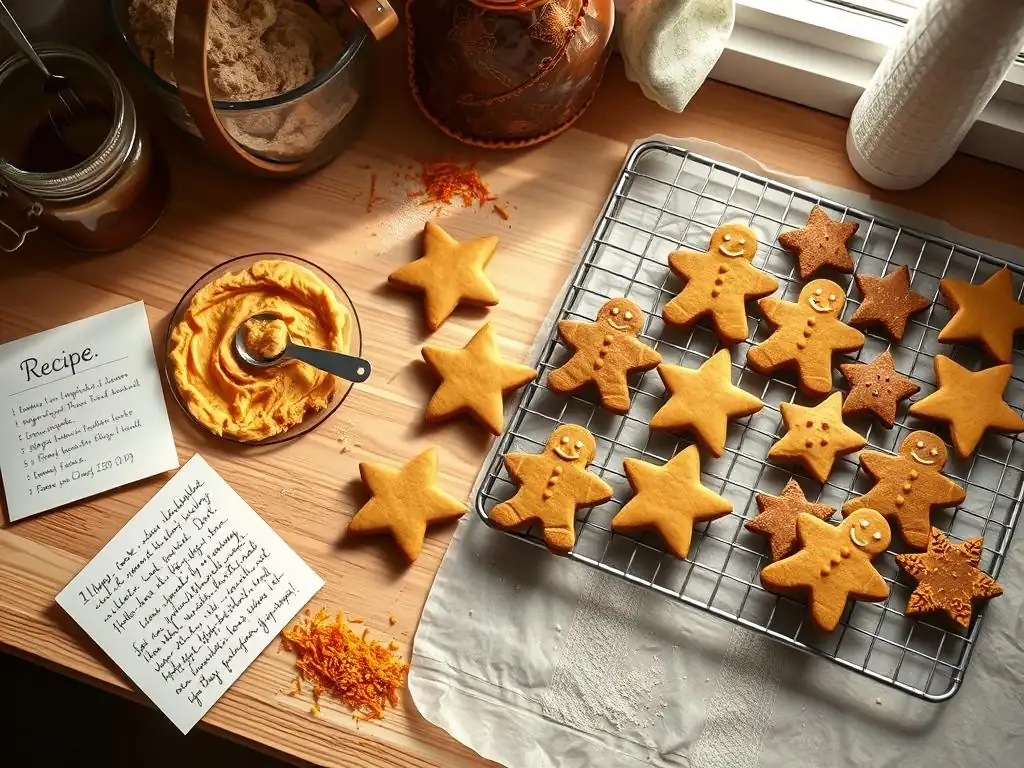
One common issue when making an easy gingerbread biscuit recipe beginners might encounter is dough that is too sticky to roll. This can happen if the measurements weren't quite right, if the butter was too soft, or if the dough hasn't been chilled sufficiently. The first and simplest solution is to chill the dough for longer. Place it back in the refrigerator for another 30-60 minutes. Cold dough is much firmer and less sticky.
If chilling alone doesn't solve the problem, you can try adding a small amount of extra flour to the dough. Knead in a tablespoon of flour at a time, just until the dough is manageable and no longer excessively sticky. Be careful not to add too much flour, as this can result in dry or tough biscuits. Alternatively, try rolling the dough between two sheets of parchment paper; this technique works wonders for sticky dough as it never touches your surface or rolling pin.
Biscuits Too Hard or Too Soft?
The texture of your easy gingerbread biscuit recipe beginners bake can sometimes be either too hard or too soft. If your biscuits turned out too hard and crisp, it might be due to overmixing the dough (developing too much gluten), rolling the dough too thin, or baking them for too long or at too high a temperature. Ensure you measure accurately, roll the dough to the recommended 5mm thickness, and bake only until the edges are golden, not dark brown.
If the biscuits are too soft or even crumbly, this could be because they were baked for too short a time, the oven temperature was too low, or the dough was rolled too thick. Ensure your oven is properly preheated and check the biscuits for the recommended visual cues of doneness (golden edges, set centres). If rolled too thick, they will need a longer baking time to cook through. Using the correct ratio of butter to flour is also key; too much butter can sometimes lead to a crumbly texture.
Icing Not Setting Properly?
If the icing on your easy gingerbread biscuit recipe beginners batch isn't setting or drying hard, there are a couple of likely culprits. The most common reason is that the icing was too thin. Royal icing, especially when made with water or lemon juice, needs to be quite thick to set firmly. If it's too watery, it will remain tacky or soft.
To fix this, simply add more icing sugar to the mixture, a tablespoon at a time, and mix thoroughly until you reach the desired consistency. If you used lemon juice, the acidity helps it set; water might result in a slightly softer set. Ensure the environment where the biscuits are drying isn't too humid, as high humidity can prevent icing from drying. Give the icing plenty of time to set – ideally several hours, or even overnight, uncovered in a dry place.
Variations on the Basic Gingerbread Biscuit Recipe
Spiced Gingerbread Biscuits: Adding Extra Warmth
While the basic easy gingerbread biscuit recipe beginners learn typically includes ginger, you can easily enhance the warmth and complexity by adding other spices. A classic addition is ground cinnamon; use about half a teaspoon alongside the ginger. Ground nutmeg and ground cloves are also wonderful additions, though they have stronger flavours, so just a pinch (about 1/4 teaspoon of each) is usually sufficient.
You can experiment with other warming spices like allspice or cardamom, using them sparingly at first. The key is to find a balance that complements the ginger without overpowering it. When adding extra spices, simply whisk them in with the flour and ground ginger in the dry ingredients step (Step 1). This minor adjustment yields a significantly richer and more aromatic spiced gingerbread biscuit.
Chocolate Gingerbread Biscuits: A Decadent Twist
For chocolate lovers, transforming an easy gingerbread biscuit recipe beginners are familiar with into a chocolate version is surprisingly simple and adds a decadent twist. You can do this by substituting a small amount of the plain flour with unsweetened cocoa powder. For example, if your recipe calls for 250g of flour, use 230g of flour and 20g of cocoa powder. Whisk the cocoa powder in with the dry ingredients (Step 1).
This substitution adds a lovely chocolate flavour and a darker colour to the biscuits while maintaining the classic gingerbread spice notes. The amount of cocoa can be adjusted based on how intense you want the chocolate flavour to be, but starting with a small substitution is best to ensure the texture isn't negatively affected. Chocolate gingerbread biscuits are particularly delicious when dipped in or drizzled with melted white chocolate.
Gluten-Free Gingerbread Biscuits: A Recipe Adaptation
Adapting an easy gingerbread biscuit recipe beginners use to be gluten-free is possible with a few simple changes. The most straightforward method is to substitute the plain flour with a good quality gluten-free flour blend. Look for a blend that is suitable for baking and ideally contains xanthan gum, or add about 1/2 teaspoon of xanthan gum per 250g of flour blend if it's not included.
Follow the rest of the recipe as written, paying attention to the dough consistency, as gluten-free doughs can sometimes be a little more delicate or crumbly. Chilling is particularly important for gluten-free dough to make it easier to handle and roll. Baking times might be similar, but keep an eye on them as gluten-free flours can sometimes brown a little faster. The resulting biscuits will have the familiar gingerbread flavour but with a texture suitable for those avoiding gluten.
Conclusion: Enjoy Your Delicious Homemade Gingerbread Biscuits
You've successfully navigated the steps to create your own batch of simple gingerbread biscuits! Following this easy gingerbread biscuit recipe beginners guide has hopefully shown you that baking from scratch can be accessible, enjoyable, and incredibly rewarding. From gathering your ingredients and mixing the dough to rolling, cutting, and baking, each stage contributes to the final delicious outcome.
Whether you've opted for classic, spiced, or even chocolate variations, the warmth and aroma of freshly baked gingerbread are truly special. These biscuits are perfect for sharing with friends and family, enjoying with a cup of tea, or even using as festive decorations. Don't worry if your first batch isn't absolutely perfect; baking is a skill that improves with practice. The most important thing is that you tried, you learned, and you created something wonderful.
We love seeing what our community bakes! If you've followed this easy gingerbread biscuit recipe beginners guide and created your own delicious biscuits, we encourage you to share your success. Take a photo of your finished gingerbread creations – whether they're perfectly iced, simply dusted, or creatively decorated – and share them. It's inspiring for other beginner bakers to see real results.
Sharing your baking journey helps build a supportive community where we can all learn from each other. Did you find a step particularly easy or challenging? Did you add an extra spice or try a unique decoration? Let us know! Your experience can help others who are just starting out with their easy gingerbread biscuit recipe beginners attempt. Celebrate your achievement and inspire fellow baking enthusiasts!
Frequently Asked Questions
What makes this gingerbread biscuit recipe "easy" for beginners?
This recipe focuses on simple ingredients and straightforward instructions, minimizing complex techniques. We break down each step for easy understanding and success.
What are some common mistakes beginners make when baking gingerbread biscuits, and how can I avoid them?
Common mistakes include overmixing the dough, which leads to tough biscuits, and using too much flour. Measuring ingredients accurately and gently mixing are key.
Can I substitute any of the ingredients in this gingerbread biscuit recipe?
While substitutions are possible, they can affect the texture and flavor. You could potentially use a different type of flour, but the results may vary. Experiment with caution and small batches.
How do I ensure my gingerbread biscuits bake evenly and don't burn?
Ensure your oven is properly preheated and that your baking sheet is centered. Rotate the baking sheet halfway through baking for even heat distribution.
What are some creative ways to decorate these gingerbread biscuits after baking?
You can use royal icing for intricate designs, sprinkle with colored sugars, or even dip them in melted chocolate for a festive touch!
The enduring appeal of baking lies not just in the delicious results, but in the process itself—a comforting ritual that connects us to tradition and to each other. This simple gingerbread biscuit recipe, designed for beginners, aims to demystify the art of baking and make it accessible to everyone. It's a testament to the power of shared experiences, created one perfectly spiced biscuit at a time.
The scent of warm gingerbread, the satisfying crumble of a perfectly baked biscuit, these are sensory memories that evoke feelings of warmth, comfort, and connection. These simple pleasures, often overlooked in our fast-paced lives, hold a significant place in our cultural heritage. Baking, in its essence, is a form of storytelling, passed down through generations. Food is symbolic of love when words are inadequate.
- Alan D. Wolfelt. This sentiment perfectly encapsulates the emotional resonance of sharing homemade treats with loved ones.
Now, I invite you to take this recipe and make it your own. Experiment with different spices, glazes, or decorations. Most importantly, share the joy of baking with someone special. Whether it's a family gathering, a friendly get-together, or a quiet moment of self-care, let the simple act of creating these gingerbread biscuits be a reminder of the sweetness life offers, and the enduring power of connection.
Unleash Your Inner Baker: Gingerbread Bliss Awaits!
Thanks for joining us on this gingerbread journey! We hope you’ve gained some delicious inspiration and newfound confidence in the kitchen. Ready to transform your baking skills?
- Bake a batch of these amazing gingerbread biscuits today! Use the recipe as a springboard – experiment with different spices or glazes!
- Share your gingerbread creations with us on social media using #BakeWithEaseGingerbread – we'd love to see your baking magic!
- Explore our other easy recipes on bakewithease.com for more baking adventures.
What unique twist will you add to your gingerbread biscuits to make them truly your own?