
Why Your Victoria Sponge Cracks (And How to Fix It)

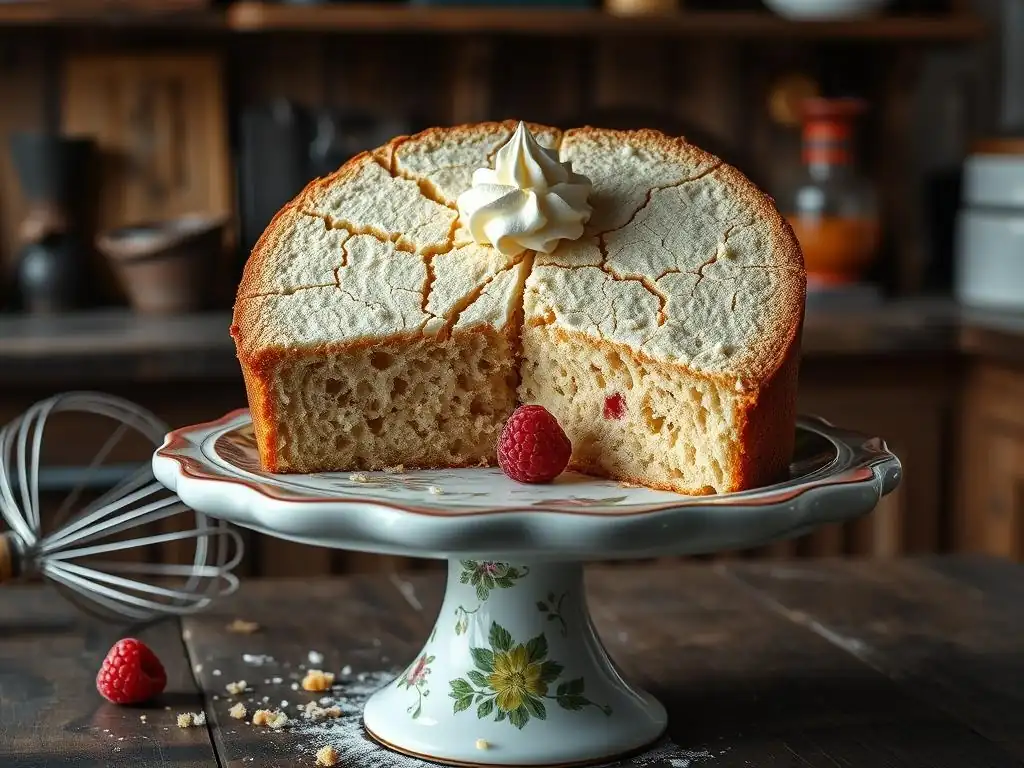
Welcome to BakeWithEase, your haven for all things baking! Ever wondered why your Victoria sponge cracks and how to achieve that perfectly smooth, golden top? You're in the right place. We're diving deep into the science and secrets behind this classic British bake, uncovering the cracking reasons and offering simple solutions. Get ready to elevate your baking game and impress with a flawless Victoria sponge every time. Intrigued? Let's explore!
Achieving Cracking Perfection (Without the Cracks!)
Ah, the Victoria Sponge. A true cornerstone of British baking, beloved for its simple elegance, light and airy texture, and perfect pairing with jam and cream. It seems deceptively simple: equal weights of butter, sugar, flour, and eggs. Yet, many bakers face a common frustration – a cracked top. That beautiful, smooth surface intended for a dusting of icing sugar or a dollop of cream is marred by splits. Understanding why your Victoria sponge cracks is the first step towards achieving that coveted flawless finish. It's a common challenge, and one we'll tackle head-on here at BakeWithEase.
The good news is that a cracked Victoria sponge is usually still delicious! The flavor isn't compromised, and with a little clever decoration, you can easily hide the evidence. However, for those striving for baking perfection, or perhaps entering a local bake-off, knowing the common Victoria sponge cracking reasons is invaluable. We'll explore the science behind these splits and provide practical, easy-to-implement solutions to help you bake a consistently beautiful sponge, ensuring your efforts result in a cake that's not only tasty but also picture-perfect every single time.
- 1. Oven Temperature Issues & Cracking
- 2. Overmixing the Batter: Gluten Development and Cracks
- 3. Incorrect Flour to Fat Ratio: Balance is Essential
- 4. Insufficient Liquid in the Batter: A Dry Sponge Cracks Easily
- 5. Using the Wrong Size Tin: Uneven Baking and Cracking
- 6. Baking Too High in the Oven: Concentrated Heat and Cracking
- Solution 1: Mastering Oven Temperature Control
- Solution 2: Gentle Mixing Techniques for a Tender Sponge
- Solution 3: Achieving the Perfect Flour to Fat Balance
- Solution 4: Ensuring Adequate Moisture in Your Batter
- Solution 5: Selecting the Correct Baking Tin Size
- Solution 6: Optimizing Oven Rack Placement
Understanding Victoria Sponge Cracking Reasons
The Science Behind a Cracked Cake Top
When a cake bakes, several things happen simultaneously. The heat causes the leavening agents (like baking powder or the air creamed into the butter and sugar) to produce gases, making the batter rise. Simultaneously, the proteins in the flour (gluten) and eggs begin to set, giving the cake its structure.
Moisture in the batter turns to steam, also contributing to lift. If the top surface of the cake sets too quickly – perhaps due to high heat or being too close to the top element – it forms a crust before the rest of the cake has finished rising. As the interior continues to expand, this rigid crust can't stretch, and the pressure causes it to split, leading to the dreaded Victoria sponge cracking.
Think of it like a soufflé – if the top sets too soon, it won't rise evenly. In a Victoria sponge, this rapid setting is often caused by uneven heat distribution or excessive heat. The center of the cake, which takes longer to bake and set, continues to push upwards, forcing the already-set crust on the surface to break. Understanding this interplay between heat, rising, and setting is crucial to diagnosing the specific Victoria sponge cracking reasons in your own kitchen. It's a delicate balance, and temperature control plays a significant role in preventing these splits.
Why is My Victoria Sponge Splitting? Common Causes
There isn't just one single culprit when it comes to Victoria sponge cracking. Often, it's a combination of factors. One of the most frequent Victoria sponge cracking reasons is an oven that's too hot or has hot spots. While a recipe might call for 180°C (350°F), your oven's thermostat might be inaccurate, or the temperature might fluctuate wildly. This intense heat can cause the outside of the cake, particularly the top, to bake and set prematurely.
Other common causes include issues with the batter itself. Overmixing can develop too much gluten, resulting in a tougher structure that is less flexible and more prone to splitting as it rises. An incorrect ratio of ingredients, such as too much flour or not enough liquid, can lead to a dry batter that lacks the necessary moisture and elasticity to expand smoothly.
Even something as simple as using the wrong size tin can contribute to Victoria sponge cracking, as it affects the depth of the batter and how evenly the heat penetrates. We'll delve into each of these specific Victoria sponge cracking reasons in more detail to help you pinpoint exactly what might be going wrong.
Key Culprits Behind Victoria Sponge Cracking: A Detailed Breakdown
1. Oven Temperature Issues & Cracking
Oven temperature is arguably the most significant factor contributing to Victoria sponge cracking reasons. A temperature that is too high, or fluctuates unevenly, can cause the cake's exterior to bake and set before the interior has fully risen. For a typical Victoria sponge baked in a 20cm (8-inch) tin, a standard temperature is around 180°C (350°F), or slightly lower for fan ovens, perhaps 160-170°C (325-340°F). If your oven is actually running hotter than this, the top crust forms rapidly. As the cake continues to expand underneath, the rigid top layer has nowhere to go but crack. This is a classic example of how heat stress leads to Victoria sponge cracking.
Moreover, many ovens, especially older models, have inaccurate internal thermostats. The dial might say 180°C, but the actual temperature inside could be 200°C (400°F) or more. Hot spots within the oven cavity also contribute to uneven baking and potential cracking. If one side or the center of the cake receives significantly more direct heat, that area will set faster, pulling at the softer areas and causing splits. Understanding and controlling your oven's true temperature is paramount in avoiding this primary Victoria sponge cracking reason.
High Oven Temperature: A Recipe for Disaster
When the oven temperature is excessively high, the surface of your Victoria sponge batter is exposed to intense heat right from the start. This causes the proteins and starches at the top to denature and solidify very quickly, forming a firm crust. Simultaneously, the leavening agents in the center of the cake are still actively producing gas and causing the batter to expand. The pressure from this internal expansion builds, and because the top crust lacks elasticity due to rapid setting, it cannot stretch to accommodate the rising batter.
This phenomenon is a leading cause of Victoria sponge cracking. The crack usually appears as one or more significant splits across the top, often running along the direction of the last bit of expansion. For instance, if the center is the last to rise, a crack might appear centrally. Baking at 190°C (375°F) or higher when the recipe calls for 180°C dramatically increases the likelihood of this happening. It's like trying to inflate a balloon inside a rigid box – eventually, something has to give.
Inaccurate Oven Temperature: Testing is Key
Relying solely on your oven's internal dial can be misleading and is a frequent, overlooked Victoria sponge cracking reason. Oven thermostats can drift over time, sometimes by as much as 20-30°C. If your oven consistently runs hotter than the setting indicates, you are effectively baking at too high a temperature without realizing it. This leads directly to the rapid crust formation and subsequent cracking discussed earlier. Even if the average temperature is correct, significant temperature swings during the baking cycle can also cause issues.
Investing in an inexpensive oven thermometer is a simple yet effective way to verify your oven's true temperature. Place it inside the oven on the middle rack and check the temperature after it has preheated for at least 15-20 minutes. You might be surprised to find it differs significantly from the setting. Knowing the actual temperature allows you to make necessary adjustments, setting the oven dial lower to achieve the desired baking temperature and significantly reduce the likelihood of Victoria sponge cracking.
2. Overmixing the Batter: Gluten Development and Cracks
Overmixing the Victoria sponge batter after adding the flour is a common mistake that can contribute significantly to Victoria sponge cracking reasons. Flour contains proteins, primarily glutenin and gliadin, which, when hydrated and agitated, form gluten. Gluten provides structure and elasticity to baked goods, which is desirable in bread, but less so in a tender sponge cake. The traditional Victoria sponge method, often using the creaming method, aims to create a light, tender crumb.
When you overmix after the flour is added, you develop more gluten than is needed or desired for a sponge. This results in a batter that is tougher and more elastic. As the cake bakes and rises, this overly developed gluten network creates a strong, less pliable structure. This structure resists the upward expansion of the cake's center. Just like the rigid crust from high heat, this stiff internal structure can cause the top to split under the pressure of the rising batter, adding another item to the list of potential Victoria sponge cracking reasons.
The Impact of Overmixing on Victoria Sponge Texture
Beyond causing cracks, overmixing fundamentally changes the intended texture of a Victoria sponge. A perfectly baked Victoria sponge should have a fine, even crumb that feels light and tender in the mouth. Overmixing develops tough gluten strands that result in a cake with a denser, chewier, and less desirable texture. The air bubbles incorporated during the creaming of butter and sugar (and from the leavening agent) can also be knocked out or become unevenly distributed by excessive mixing.
This loss of delicate structure combined with the development of tough gluten makes the batter less able to expand smoothly and evenly in the oven. The resistance from the overdeveloped gluten can create stress points within the cake as it rises, leading to splits and contributing to Victoria sponge cracking. The goal when adding flour is simply to combine it until no dry streaks remain, preserving the delicate air pockets and minimizing gluten development for that signature tender crumb.
3. Incorrect Flour to Fat Ratio: Balance is Essential
The classic Victoria sponge recipe relies on a balanced ratio, typically equal weights of butter, sugar, flour, and eggs. This specific balance is key to achieving the desired texture and structure. An incorrect ratio, particularly one that is unbalanced towards flour or away from fat, can increase the chances of Victoria sponge cracking. Fat (butter) plays a crucial role in tenderizing the cake by coating the flour particles and inhibiting excessive gluten development. It also adds moisture and richness.
If there is too much flour relative to the fat and liquid, the batter will be too dry and stiff. A dry batter lacks the necessary flexibility and moisture to expand smoothly as it bakes. The structure sets too quickly and becomes rigid, making it highly susceptible to splitting under the pressure of internal rising. This imbalance is a significant, though often overlooked, Victoria sponge cracking reason. Ensuring your ingredients are measured accurately is vital.
Why the Flour and Fat Ratio Affects Cracking
Consider a batter with an excess of flour or insufficient fat. The high proportion of flour means there's more protein available to form gluten, and less fat to prevent its development. This leads to a stronger, more rigid batter structure. Additionally, a higher flour content without a proportional increase in liquid results in a drier mix. Dry batters are less extensible – they don't stretch well.
As the cake bakes and rises, the stiff, dry batter resists expansion. The internal pressure from rising steam and leavening gases forces the weakest point, which is often the developing top crust, to break. This contrasts with a batter with a correct ratio, which has enough fat and moisture to remain pliable and expand smoothly with the rising action. Maintaining the classic 1:1:1:1 ratio (or very close to it) is fundamental in preventing this type of Victoria sponge cracking.
4. Insufficient Liquid in the Batter: A Dry Sponge Cracks Easily
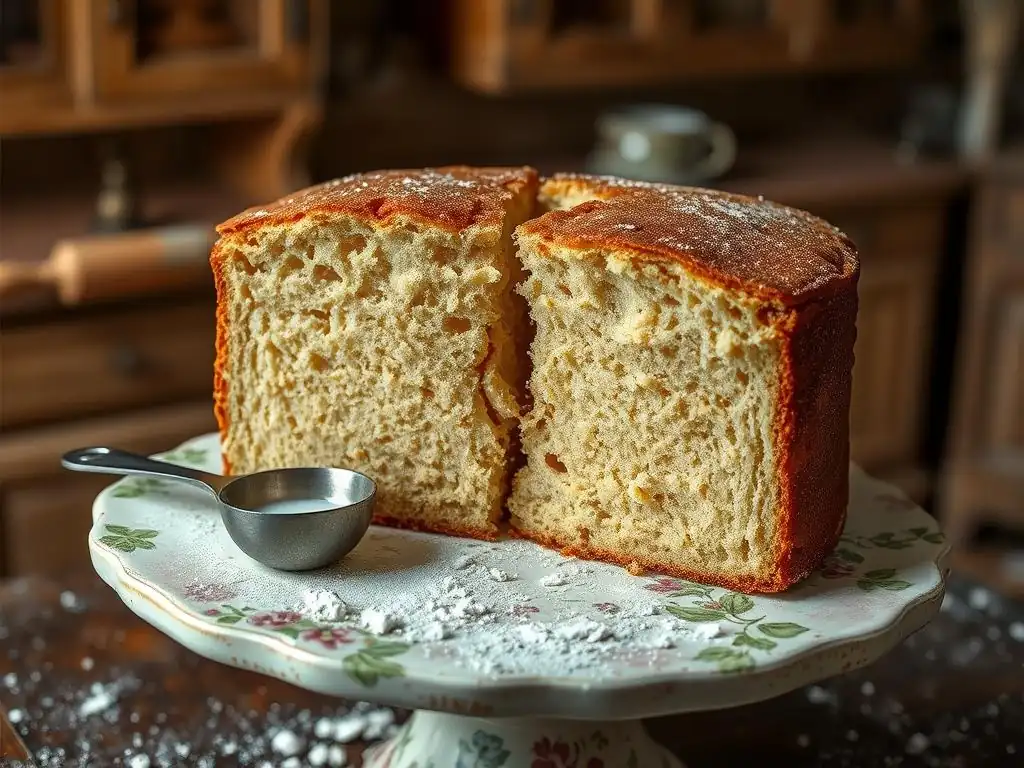
Similar to an incorrect flour-to-fat ratio, insufficient liquid in the Victoria sponge batter is another common culprit for cracking. While the primary liquids are typically the eggs and the moisture within the butter, some recipes might include a splash of milk. The total liquid content contributes significantly to the batter's consistency and moisture level. A batter that is too dry will behave much like one with too much flour – it will be stiff and less extensible.
As the cake bakes, moisture in the batter turns to steam, which aids in the rising process. A batter with insufficient moisture will not generate enough steam, and its structure will set too quickly. This rapid setting, combined with the inherent stiffness of a dry batter, makes it prone to cracking as the limited internal expansion occurs. Ensuring the batter has the correct consistency – often described as dropping easily from a spoon – is key to avoiding this Victoria sponge cracking reason.
The Importance of Moisture for a Smooth Cake Top
Moisture provides elasticity and flexibility to cake batter during baking. It keeps the protein network supple, allowing the cake to expand smoothly and evenly as it rises. A well-hydrated batter will rise without putting excessive stress on the developing crust. The steam generated from the moisture also contributes to the cake's lift and helps keep the crumb tender.
When a Victoria sponge batter lacks sufficient moisture, the structure sets prematurely, becoming brittle. As the cake attempts to rise, this brittle structure cannot stretch, leading to significant cracks on the surface. The ideal batter consistency is crucial; it shouldn't be too stiff. If your batter feels thick or heavy after mixing, it might lack sufficient liquid, contributing to potential Victoria sponge cracking. Trusting the recipe's liquid amounts and ensuring your ingredients are at room temperature (which helps them emulsify better) are important steps.
5. Using the Wrong Size Tin: Uneven Baking and Cracking
The size and depth of your baking tin play a more significant role in Victoria sponge cracking than you might think. Recipes are typically developed and tested using standard tin sizes, often 20cm (8-inch) round tins, sometimes specified as deep. If you use a tin that is too small for the amount of batter, the batter will be much deeper. This increased depth means the heat takes longer to penetrate to the center of the cake.
While the center is still raw and rising, the edges and top surface in a deep tin are exposed to the oven's heat and can set prematurely. This creates a situation similar to having the oven too hot – a set crust over a still-rising interior.
The pressure from the rising center forces the set crust to split. Conversely, using a tin that is too large results in a shallow cake that might bake too quickly and dry out, though cracking is less common in this scenario compared to using a tin that's too small and deep for the recipe quantity.
Tin Size Matters: Avoiding Cracking with the Right Equipment
Using the correct tin size, as specified in the recipe, ensures that the batter depth is appropriate for the recommended baking time and temperature. For a classic Victoria sponge using around 170-200g of each main ingredient, two 20cm (8-inch) sandwich tins (approx 3-4cm deep) are standard. If your recipe yields a larger quantity of batter or specifies a deeper tin, adjust accordingly or split the batter between more tins.
If you must use a deeper tin than specified with a standard amount of batter, consider reducing the oven temperature slightly (e.g., from 180°C to 170°C) and increasing the baking time. This allows the heat to penetrate more gently to the center, giving the entire cake a chance to rise and set more evenly, thereby reducing the likelihood of Victoria sponge cracking caused by uneven baking depth. Always grease and line your tins properly to ensure easy release and even heat transfer.
6. Baking Too High in the Oven: Concentrated Heat and Cracking
The position of your cake tin within the oven cavity is another factor that can contribute to Victoria sponge cracking reasons. Ovens heat from the top and bottom, and often the top element can be particularly strong. Placing your cake tin on the very top rack exposes the surface of the batter to intense, direct radiant heat from the top element.
This concentrated heat on the surface causes it to bake and set much faster than the rest of the cake. Just like baking at too high a temperature overall, this leads to a rigid top crust forming prematurely. As the center of the cake continues to rise and expand, the set top cannot stretch and consequently splits. This is a specific instance of heat stress causing Victoria sponge cracking, localized to the top surface due to proximity to the heat source.
Oven Rack Placement for Even Baking
For most cakes, including Victoria sponges, the ideal placement in the oven is on the middle rack. This position allows for the most even distribution of heat from both the top and bottom elements. The cake is far enough from the direct heat sources that the edges and top don't set too quickly, allowing the entire cake to rise uniformly.
Placing the cake too low might result in a tough bottom crust, while placing it too high dramatically increases the risk of the top setting and Victoria sponge cracking. If you are baking two sponges simultaneously (as is typical for a Victoria sponge), place them on the same rack if possible, or on two racks positioned in the upper and lower thirds of the oven, ensuring they are not directly under or over each other if they are on different racks. Avoid placing them too close to the oven walls, especially if you suspect your oven has hot spots.
How to Prevent Your Victoria Sponge from Cracking: Solutions and Techniques
Now that we've explored the common Victoria sponge cracking reasons, let's look at how to prevent them. Small adjustments to your technique and equipment can make a big difference in achieving that perfect, smooth top. Here are some reliable solutions.
Solution 1: Mastering Oven Temperature Control
As high or uneven heat is a primary cause of Victoria sponge cracking, accurate temperature control is your first line of defense. Don't blindly trust your oven dial. Ovens can be notoriously inaccurate, sometimes off by 20°C or more. This discrepancy can easily turn a perfect baking temperature into one that causes rapid crust formation and subsequent splitting.
Taking steps to verify and manage your oven's true temperature is essential for consistent baking results and preventing Victoria sponge cracking. This involves a simple tool and a bit of patience, but the payoff is consistently beautiful cakes.
Using an Oven Thermometer for Accuracy
The simplest and most effective way to master oven temperature is by using an independent oven thermometer. These are widely available and relatively inexpensive. Place the thermometer on the middle shelf of your cold oven. Preheat the oven to the temperature specified in your recipe (e.g., 180°C / 350°F). Let the oven preheat for at least 20-30 minutes to ensure it has reached a stable temperature.
Check the reading on the oven thermometer. If it reads higher or lower than your oven's setting, note the difference. For example, if your dial is set to 180°C but the thermometer reads 200°C, you know your oven runs hot. For future baking, set your oven dial lower, perhaps to 160°C, to actually achieve 180°C. This simple step directly addresses one of the most common Victoria sponge cracking reasons.
Adjusting Baking Time Based on Temperature
Once you know how your oven's actual temperature compares to its setting, you can adjust not only the setting but potentially the baking time as well. If your oven consistently runs hot even after adjusting the dial, your cake might bake faster than the recipe states. If it runs cool, it will take longer. Always start checking for doneness a few minutes before the recipe's minimum time.
Use the skewer test – insert a clean skewer into the center of the cake; it should come out clean. If it comes out with wet batter, it needs more time. If it comes out with moist crumbs, it's likely done. Overbaking a cake in a hot oven can also contribute to dryness and potential cracking, so accurate temperature and attentive timing are key to preventing Victoria sponge cracking and achieving a perfect texture.
Solution 2: Gentle Mixing Techniques for a Tender Sponge
Mixing technique, especially after adding the flour, is critical for preventing over-development of gluten, which leads to a tough texture and contributes to Victoria sponge cracking reasons. The goal is to incorporate the dry ingredients just enough to create a cohesive batter, preserving the airy structure created during the creaming stage.
Aggressive or prolonged mixing with a machine or even by hand once the flour is in can quickly develop gluten. This results in a batter that is less pliable and more resistant to the gentle expansion needed for a smooth-topped sponge. Mastering a light touch at this stage is essential for a tender crumb and preventing Victoria sponge cracking.
Folding Instead of Stirring: Preserving Air
When incorporating the flour mixture (flour, baking powder if used), switch from a mixer or vigorous stirring to a gentle folding motion using a spatula or large metal spoon. Folding involves cutting down through the center of the batter and scraping up the mixture from the bottom, then folding it over the top. Rotate the bowl as you go.
This technique minimizes agitation, reducing gluten development. It also helps to preserve the air bubbles that were painstakingly incorporated during the creaming of butter and sugar, which are vital for the cake's rise and light texture. Gentle folding ensures the flour is just combined, preventing the batter from becoming tough and reducing the risk of Victoria sponge cracking.
Stop Mixing When Just Combined
The key rule when adding flour to cake batter is to stop mixing as soon as you see no more dry streaks of flour. It's better to have a tiny pocket of unmixed flour (which will likely disappear during baking) than to overmix. This usually takes only a few seconds if using a machine on low speed, or about 15-30 seconds of gentle folding by hand.
Overmixing, even for just an extra 10-15 seconds, can be enough to start developing significant gluten, especially if using a stand mixer on a higher speed. Be mindful and stop mixing the moment the flour is incorporated. This simple step is crucial for a tender crumb and avoiding Victoria sponge cracking caused by a tough batter structure.
Solution 3: Achieving the Perfect Flour to Fat Balance
Ensuring the correct balance of ingredients, particularly the flour to fat ratio, is fundamental to the success of a Victoria sponge and preventing Victoria sponge cracking. The classic recipe's equal weight ratio is a tried-and-tested formula for a reason – it provides the ideal balance of structure (from flour and eggs) and tenderness/moisture (from butter and eggs). Deviating significantly from this can lead to issues.
Measuring ingredients accurately is paramount here. Baking is a science, and proportions matter. Using too much flour or not enough fat can create a dry, stiff batter that is prone to cracking as it bakes.
Measuring Ingredients Accurately
For baking, especially recipes sensitive to ratios like the Victoria sponge, using a digital kitchen scale is highly recommended over volume measurements (like cups). Weighing ensures you have the exact amount of each ingredient called for in the recipe. For example, a cup of flour can vary significantly in weight depending on how it's scooped and settled. Using 170g of flour will be consistent every time you bake.
Accurate weighing prevents accidental imbalances, such as adding too much flour, which leads to a drier, stiffer batter more prone to cracking. This simple step directly addresses one of the potential Victoria sponge cracking reasons related to ingredient proportions.
Using the Right Type of Flour
Most traditional Victoria sponge recipes call for plain (all-purpose) flour or sometimes a specific cake flour. Using flour with a different protein content can affect gluten development. Bread flour, for instance, has a higher protein content and will develop more gluten if mixed the same way, potentially contributing to toughness and cracking.
Cake flour has a lower protein content and is often chlorinated, which weakens gluten bonds and results in a very tender cake. While not strictly necessary for a Victoria sponge, using it can help ensure a very tender crumb. Stick to the type of flour specified in your recipe to maintain the intended balance and minimize the risk of Victoria sponge cracking.
Solution 4: Ensuring Adequate Moisture in Your Batter
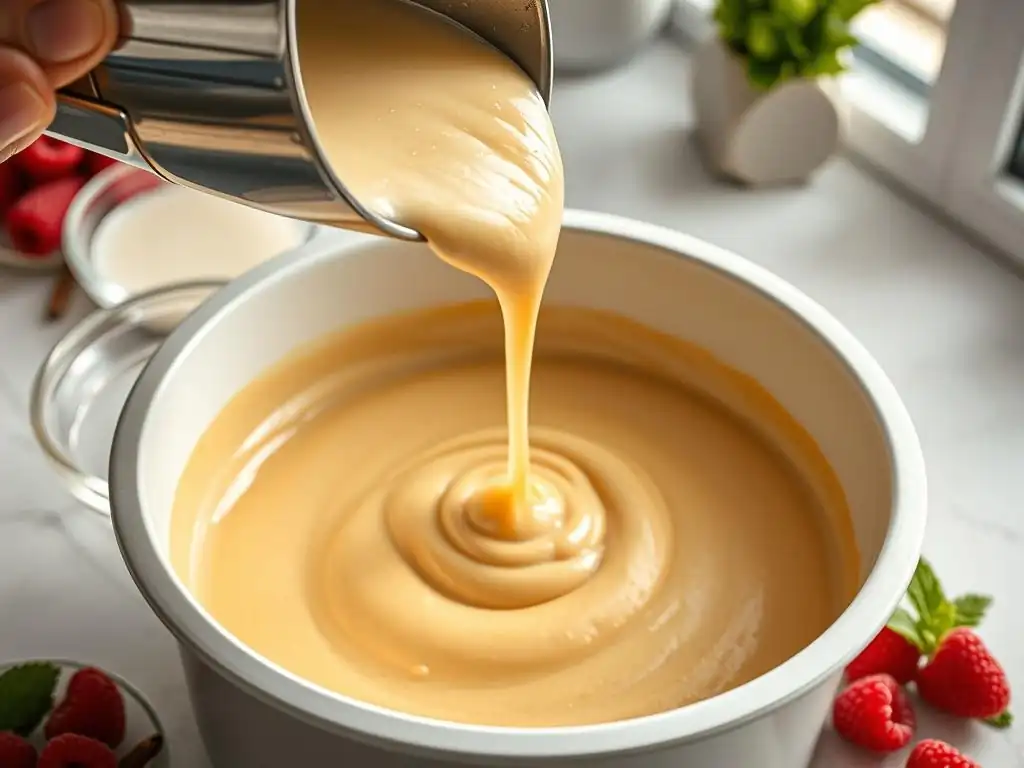
A batter with sufficient moisture is more pliable and expands more smoothly during baking, significantly reducing the likelihood of Victoria sponge cracking. The primary sources of moisture in a Victoria sponge are the eggs and butter, but the overall balance with the dry ingredients is key.
If your batter feels too stiff, it might lack adequate liquid. This can happen due to inaccurate measuring, using different size eggs than intended, or even variations in flour absorption. Ensuring the batter has the correct consistency is a vital step in preventing a dry, cracking sponge.
Adding the Right Amount of Liquid
Follow your recipe's liquid quantities precisely, using accurate measurements (preferably by weight for eggs and butter). If your recipe calls for a splash of milk, add it as specified. The final batter consistency should be soft and should drop easily from a spoon without being runny.
If you find your batter consistently too stiff despite following the recipe, consider if your flour is particularly absorbent or if your eggs are smaller than average. In such cases, you might need to add a tiny splash (perhaps 1-2 tablespoons) of milk or the liquid specified in the recipe to achieve the correct consistency, helping to prevent Victoria sponge cracking caused by dryness.
Consider Adding Sour Cream or Yogurt for Extra Moisture
While not traditional, some modern Victoria sponge variations incorporate a small amount of sour cream or Greek yogurt into the batter. These ingredients add fat and moisture, resulting in a very tender and moist crumb. The acidity can also react with baking soda (if used) to aid leavening.
Adding a couple of tablespoons of full-fat sour cream or yogurt can act as an insurance policy against dryness and contribute to a more flexible batter less prone to Victoria sponge cracking. If you struggle with dry sponges, this could be a helpful modification, though it will slightly alter the classic flavor profile.
Solution 5: Selecting the Correct Baking Tin Size
Using the appropriate baking tin size ensures the batter depth is correct for even heat penetration and uniform rising, helping to prevent Victoria sponge cracking. As discussed, a tin that is too small for the batter quantity results in a deep cake that bakes unevenly – the outside sets while the inside is still rising, leading to splits.
Most standard Victoria sponge recipes are designed for specific tin dimensions, typically 20cm (8-inch) round sandwich tins. Adhering to these specifications is important for consistent results and avoiding Victoria sponge cracking related to uneven baking depth.
Using a Deep Cake Tin (Appropriately Sized)
A standard Victoria sponge recipe yielding around 800g to 1kg of batter is usually divided between two 20cm (8-inch) round tins that are typically 3-4cm deep. Using tins that are too shallow for this amount of batter isn't usually the cause of cracking, but using tins that are too deep for a standard recipe quantity is.
If your recipe specifically calls for a single, deeper tin (e.g., 20cm round and 7cm deep), ensure you are using a recipe formulated for that tin size, or adjust the baking temperature lower (e.g., 160-170°C) and increase the baking time to allow the heat to reach the center without overbaking the exterior. This modification helps prevent Victoria sponge cracking in deeper cakes.
Evenly Distributing the Batter in the Tin
Once the batter is mixed, divide it evenly between the prepared tins. Use a scale to weigh the batter into each tin for perfect uniformity. This ensures both cakes bake at the same rate. Once the batter is in the tin, gently spread it evenly with a spatula, pushing it slightly up the sides of the tin.
Creating a slight well or dip in the center of the batter before baking can also help promote a flatter top and reduce the likelihood of Victoria sponge cracking. The edges, being shallower, will set first. The dip in the center means the middle has a little further to rise to catch up, allowing it to expand more evenly with the edges rather than pushing forcefully through a set crust.
Solution 6: Optimizing Oven Rack Placement
Where you position your cake in the oven significantly impacts how it bakes and whether the top sets too quickly, leading to Victoria sponge cracking. The goal is to find the spot with the most even heat distribution.
Avoiding the top rack is a key strategy. The direct radiant heat from the upper element can cause the surface to form a crust rapidly while the inside is still expanding, a classic scenario for Victoria sponge cracking.
Placing the Cake in the Center of the Oven
For most standard ovens, the middle rack offers the most consistent and even temperature throughout the baking cycle. Placing your Victoria sponge tins on the middle rack ensures they are equidistant from the top and bottom heating elements (and often the side walls), promoting uniform baking.
This position allows the cake to rise evenly without the top setting prematurely due to intense direct heat. It's a simple adjustment that can make a significant difference in preventing Victoria sponge cracking and achieving a beautifully level or slightly domed top.
Avoiding Top Rack Placement for Even Baking
As a rule of thumb, avoid placing your Victoria sponge on the top rack of the oven. This position exposes the top surface to the most intense heat, causing it to bake and set much faster than the rest of the cake. This rapid setting of the crust over a still-rising interior is a primary cause of Victoria sponge cracking.
If you are baking multiple cakes and must use more than one rack, place the Victoria sponges on the middle or slightly lower racks. If you are baking other items that require the top rack, bake the sponges separately if possible, or ensure the items on the top rack are not directly above the sponges, blocking heat flow or radiating excessive heat downwards.
Victoria Sponge Troubleshooting: Cracked Cake Repair
Even with the best intentions and techniques, sometimes a Victoria sponge cracks. Don't despair! A cracked cake is still delicious and perfectly usable. Knowing how to handle a cracked sponge immediately after it comes out of the oven and how to decorate it can save the day and hide any imperfections, ensuring your dessert still looks appealing.
A slight crack is common and often fixable or easily hidden. Major splits, while visually disappointing, don't affect the taste. Learning simple repair and decoration techniques means that even when faced with Victoria sponge cracking, you can still present a lovely cake.
Fixing a Cracked Victoria Sponge: Immediate Actions
If you notice a crack appearing while the cake is still in the oven, there's not much you can do at that point without collapsing the cake. Once the cake is out of the oven and cooling, if the crack is slight and the cake is still warm and pliable, you might be able to gently press the edges of the crack together. Use a clean finger or a spatula dipped in warm water. Be very gentle, as the cake is fragile when warm.
For more significant cracks, attempting to press them together might cause the cake to sink or crumble. In these cases, it's best to let the cake cool completely in the tin for 10-15 minutes before turning it out onto a wire rack. Accept the crack and move on to the next step: decoration. Trying to force a cooled, set cake back together will likely just cause more damage.
Hiding Cracks: Decoration Techniques
The beauty of a Victoria sponge is that it's traditionally filled and topped, which provides the perfect opportunity to conceal any imperfections like Victoria sponge cracking. This is where you can get creative and ensure that despite any splits, your cake looks stunning.
No one needs to know about the crack if it's expertly hidden beneath a layer of deliciousness! This is often the easiest and most effective "fix" for a cracked Victoria sponge.
Using Icing, Cream, or Fruit to Conceal Imperfections
The classic filling for a Victoria sponge is jam and whipped cream (or buttercream). A generous layer of whipped cream or buttercream spread across the bottom sponge is excellent for filling and hiding minor cracks on that layer. For the top sponge, which is usually presented upwards, the filling and topping are your best friends for concealing Victoria sponge cracking.
- Whipped Cream and Berries: A thick layer of whipped cream spread over the top sponge, especially if piled higher in the center, can easily cover most cracks. Fresh berries (like strawberries, raspberries) arranged attractively on top of the cream add visual appeal and further distract from or cover any splits.
- Buttercream: A more robust option, buttercream can be spread thickly over the top sponge. Piping swirls or dollops of buttercream is particularly effective at hiding uneven surfaces and cracks.
- Dusting of Icing Sugar: While a light dusting on a perfect cake looks lovely, it highlights cracks. However, a heavy dusting, particularly if focused over the cracked area, can sometimes soften the appearance of small splits. It's less effective for major cracks than cream or icing.
- Jam: While jam is usually the filling, a thin layer of slightly warmed, strained jam brushed over the top before adding other toppings can sometimes help "glue" down small surface flakes around a crack.
Ultimately, a cracked Victoria sponge is a canvas for delicious decoration. Embrace the opportunity to fill and top generously!
Recipe for a Crack-Free Victoria Sponge (BakeWithEase Approved)
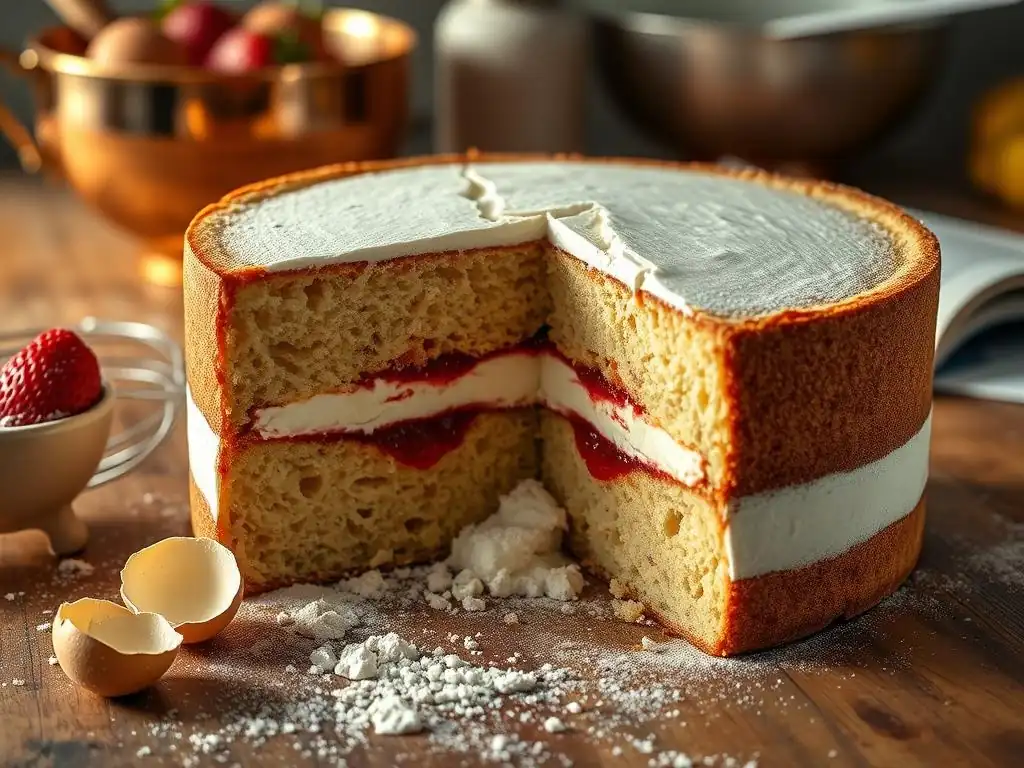
Here is a reliable Victoria sponge recipe incorporating the techniques discussed to minimize the risk of Victoria sponge cracking. This recipe uses the creaming method, known for producing a light, airy sponge.
Ingredients for a Perfect Victoria Sponge
175gunsalted butter, softened (at room temperature)175gcaster sugar3large eggs (approx50-60geach), at room temperature, lightly beaten175gself-raising flour, sifted1 tspbaking powder (optional, adds extra lift insurance)1-2 tbspmilk (optional, if batter seems a little stiff)
For Filling:
- Strawberry or raspberry jam
- Whipped cream or buttercream
Step-by-Step Baking Instructions to Prevent Cracking
- Preheat Oven: Preheat your oven to
180°C (350°F)or160°C (325°F)for fan/convection ovens. Crucially, use an oven thermometer to verify the temperature. Adjust your oven's dial setting if necessary to achieve the target temperature. - Prepare Tins: Grease and line the bases of two
20cm (8-inch)round sandwich tins (approx3-4cmdeep) with baking parchment. - Cream Butter and Sugar: In a large bowl, cream the softened butter and caster sugar together using an electric mixer (handheld or stand mixer) or a wooden spoon until the mixture is pale, light, and fluffy. This should take
3-5 minuteswith a mixer. This step incorporates air, which is vital for rise. - Add Eggs Gradually: Gradually add the lightly beaten eggs, a little at a time, mixing well after each addition. If the mixture looks like it's curdling, add a tablespoon of the sifted flour.
- Fold in Flour: Sift the self-raising flour (and baking powder if using) over the wet mixture. Using a large metal spoon or spatula, gently fold the flour into the batter until just combined. Do not overmix. Stop as soon as you see no dry streaks of flour. If the batter seems a little stiff, gently fold in
1-2 tablespoonsof milk. - Divide Batter: Weigh the batter into the two prepared tins to ensure they have equal amounts. Gently spread the batter evenly in the tins, pushing it slightly up the sides and creating a slight dip in the center.
- Bake: Place the tins on the middle rack of your preheated oven. Bake for
20-25 minutes, or until the cakes are golden brown, have shrunk slightly from the sides of the tin, and spring back when lightly pressed in the center. A skewer inserted into the center should come out clean. - Cool: Let the cakes cool in their tins for
10-15 minutesbefore gently turning them out onto a wire rack to cool completely. - Fill & Decorate: Once completely cool, spread jam over the base of one cake, top with whipped cream or buttercream, and place the second cake on top. Dust with icing sugar or decorate as desired, using your filling and topping to hide any minor imperfections if needed.
[ ] Verify oven temperature with an oven thermometer.
[ ] Use room temperature ingredients.
[ ] Cream butter and sugar until pale and fluffy (incorporate air).
[ ] Add eggs gradually.
[ ] Gently FOLD in the flour until JUST combined (do not overmix).
[ ] Use the correct size tins and divide batter evenly.
[ ] Bake on the middle oven rack.
[ ] Check for doneness using a skewer.
[ ] Cool completely before filling.
Conclusion: Baking the Perfect Victoria Sponge, Every Time
Baking a Victoria sponge is a delightful process, and while Victoria sponge cracking can be a frustrating hurdle, it's one that is entirely surmountable with a little knowledge and attention to detail. By understanding the underlying Victoria sponge cracking reasons – primarily related to oven temperature, mixing technique, ingredient balance, and tin size/placement – you gain the power to prevent them.
Focusing on accurate oven temperature using a thermometer, adopting a gentle hand when folding in the flour, ensuring your ingredients are measured correctly, and using the right tin in the correct oven position are the key takeaways. These techniques, combined with a reliable recipe like the one provided, will significantly increase your success rate.
Mastering the Art of Victoria Sponge Baking with BakeWithEase
Here at BakeWithEase, our goal is to empower you to tackle baking challenges with confidence. The journey to a perfect, crack-free Victoria sponge is a great way to refine fundamental baking skills. Each bake is a learning opportunity, and even if a crack appears, you've still created a delicious cake.
By focusing on the specific Victoria sponge cracking reasons we've discussed and implementing the suggested solutions, you'll be well on your way to consistently baking beautiful, tender, and smooth-topped Victoria sponges that are a joy to behold and even more so to eat. Happy baking!
Frequently Asked Questions
Why does my Victoria sponge cake crack on top?
The most common reason is too high of an oven temperature, causing the cake to rise too quickly and crack under the pressure. Also, overmixing the batter can develop too much gluten, leading to a tougher texture and cracking.
Can using the wrong size pan contribute to cracking?
Yes, using a pan that's too small will force the cake to rise excessively, increasing the likelihood of cracking. A pan that's too large can lead to uneven baking and cracking.
Does the type of flour I use matter when it comes to cracking?
Absolutely. Using strong bread flour instead of cake or all-purpose flour will result in a tougher cake that's more prone to cracking. Cake flour is generally recommended.
How does the amount of baking powder affect cracking?
Using too much baking powder can cause the cake to rise rapidly and unevenly, resulting in a cracked surface. Always measure baking powder carefully and use the amount specified in the recipe.
Can I prevent cracking by making adjustments to the recipe?
Yes, you can. Consider lowering the oven temperature by 25 degrees. Also, ensure you are accurately measuring ingredients, especially leavening agents like baking powder.
Final Reflection: The Enduring Allure (and Occasional Cracks) of the Victoria Sponge
The perfect Victoria sponge, a symbol of British baking heritage, remains surprisingly relevant today. Its seemingly simple construction belies a delicate dance of ingredients and technique, a microcosm of the challenges we face in achieving our goals – whether in baking or in life. A cracked sponge isn't a failure; it's a lesson learned, an opportunity for improvement, and a reminder that even the most classic recipes require attention to detail.
The Victoria sponge's enduring popularity speaks volumes about our desire for comfort, tradition, and the simple pleasures in life. It's more than just a cake; it's a connection to family gatherings, afternoon teas, and cherished memories. The frustration of a cracked top, however, mirrors the setbacks we encounter in our own pursuits. As the saying goes, The only way to do great work is to love what you do.
And if we approach our baking – and our lives – with that same passion and attention, even the occasional crack won't diminish the sweetness of the reward.
So, the next time you find yourself facing a slightly imperfect Victoria sponge, remember the lessons learned within these pages. Don't be discouraged; embrace the imperfections. Take the time to understand the "why" behind the cracks, just as you should take the time to understand the challenges you face in your own life.
With patience, practice, and a little bit of love, you'll not only master the art of the perfect Victoria sponge, but you'll also gain a deeper appreciation for the journey itself. The perfectly risen cake is a beautiful thing, but the lessons learned along the way are even more valuable.
Unlock Your Perfect Victoria Sponge!
Thanks for taking the time to explore the secrets of a flawless Victoria sponge! We hope you gained valuable insights into avoiding those pesky cracks. Now, it's time to put your newfound knowledge to the test.
- Bake your best Victoria sponge yet! Try out the tips we shared and see the difference. Don't be afraid to experiment with different techniques.
- Share your baking triumph! Post a picture of your perfect sponge on social media and tag us – we'd love to see it!
- Discover more baking secrets: Dive into our other articles on classic baking techniques for even more delicious results.
Ready to transform your baking game? What's your biggest baking challenge, and how will you tackle it now?