
Unlock Your Cake's Potential: Essential Decorating Tools Revealed

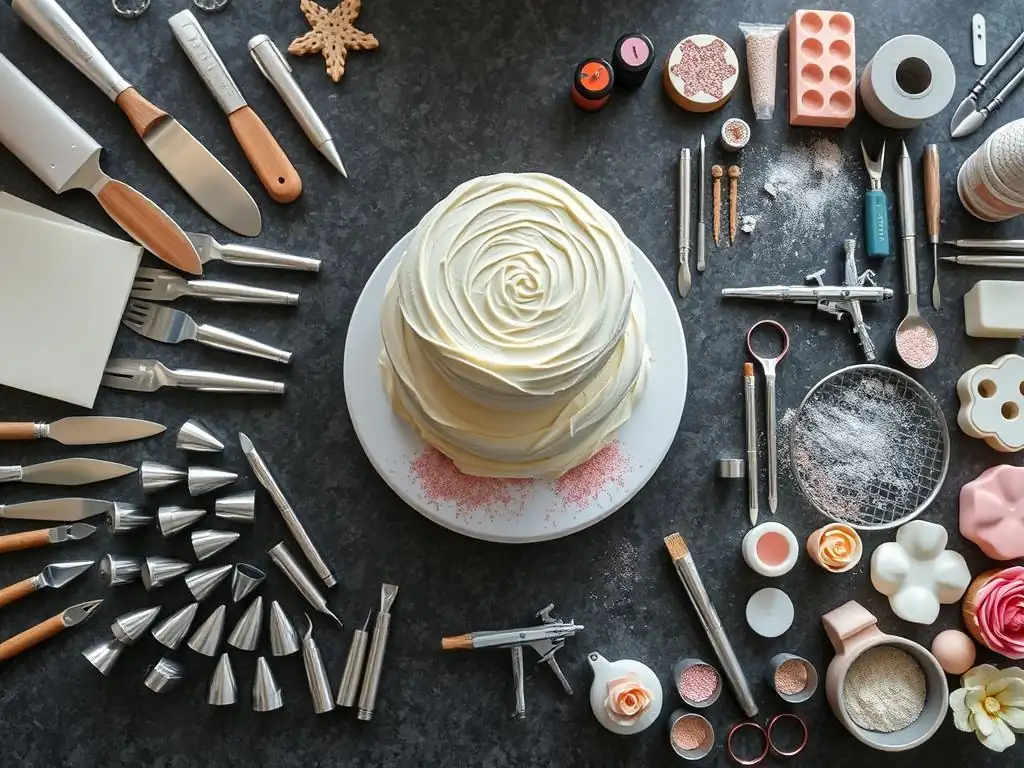
Welcome to BakeWithEase, your trusted companion on your baking journey! Ever wondered how to transform a simple cake into a masterpiece? This guide will unlock the secrets! Dive into our Cake Decorating Tool Guide and discover the essential equipment that will elevate your creations from simple treats to stunning showstoppers. Are you ready to unleash your inner artist and create cakes that are as beautiful as they are delicious? Let's get started!
- Unlock Your Cake's Potential: Essential Decorating Tools Revealed - A Cake Decorating Tool Guide
- BakeWithEase Presents: Your Ultimate Cake Decorating Tool Guide
- Why You Need the Right Cake Decorating Tools
- Essential Cake Decorating Tools: A Comprehensive Guide
- Choosing the Right Cake Decorating Tools for You
- Top Cake Decorating Tool Sets: Reviews and Recommendations
- Maintaining Your Cake Decorating Tools: Tips and Tricks
- Where to Buy Cake Decorating Tools: Online and Local Retailers
- Level Up Your Baking: Beyond the Tools
- Conclusion: Unlock Your Cake Decorating Potential with the Right Tools
-
Frequently Asked Questions
- What are the most essential cake decorating tools for a beginner?
- How do I choose the right piping tips for different cake decorating techniques?
- What is the purpose of a cake turntable and is it really necessary?
- Where can I find affordable cake decorating tools without sacrificing quality?
- How do I properly clean and store my cake decorating tools?
- Final Reflection: The Sweet Art of Transformation
- Unleash Your Inner Cake Artist!
Unlock Your Cake's Potential: Essential Decorating Tools Revealed - A Cake Decorating Tool Guide
BakeWithEase Presents: Your Ultimate Cake Decorating Tool Guide
Welcome to the world of beautiful cakes! Master the art of cake decoration with our essential tool guide.
Embarking on the journey of cake decoration can feel daunting, but with the right guidance and the proper equipment, you can transform a simple cake into a stunning masterpiece. This comprehensive cake decorating tool guide is designed to walk you through the essential items you'll need, whether you're just starting out or looking to refine your skills. We'll explore everything from basic frosting spatulas to specialized fondant tools, ensuring you understand the purpose and utility of each item.
Think of your tools as extensions of your creativity. Just as an artist needs brushes and paints, a cake decorator relies on spatulas, piping tips, and smoothers to bring their vision to life. Our goal is to demystify the world of cake decorating tools, making it accessible and exciting for everyone. By the end of this guide, you'll have a clear understanding of the must-have items to start your cake decorating adventure or enhance your current collection.
Why You Need the Right Cake Decorating Tools
Achieving Professional Results: The Importance of Quality Tools
The quality of your cake decorating tools directly impacts the final appearance and finish of your cake. While it's true that skill plays a significant role, trying to achieve smooth buttercream edges or intricate piping with subpar equipment can be incredibly frustrating and often leads to less-than-ideal results. Investing in reasonably good quality tools ensures precision, durability, and ease of use, allowing you to focus on the creative process rather than battling unwieldy or ineffective instruments.
For instance, a sturdy, flat icing smoother made from metal or rigid plastic will give you consistently sharp edges on your buttercream or ganache, a look often associated with professional cakes. Conversely, a flimsy plastic smoother might bend, resulting in wavy or uneven sides. Similarly, properly sized and shaped piping tips create defined, beautiful designs like rosettes or shells, whereas cheap or misshapen tips can produce distorted or messy patterns. Using the right tools eliminates unnecessary hurdles and helps you achieve that polished, professional look you're aiming for in your cake decorating projects.
Cake Decorating for Beginners: Getting Started with the Basics
For those new to the world of cake decoration, the array of available tools can seem overwhelming. The good news is you don't need everything at once. Starting with a few fundamental tools will allow you to practice basic techniques and build confidence before expanding your collection. Essential beginner tools typically include an offset spatula for spreading, a bench scraper or icing smoother for the sides, a few basic piping bags and tips (like a round and a star tip), and perhaps a small turntable.
These core tools enable you to master foundational skills such as crumb coating, applying a final layer of frosting, smoothing the sides and top, and piping simple borders or dots. Many beginner cake decorating tool guides recommend starting with a basic set that includes these items. For example, a typical starter set might contain one or two spatulas (perhaps 6-inch and 8-inch), a plastic bench scraper, ten disposable piping bags, and five assorted tips. This allows you to tackle classic techniques like creating smooth surfaces or piping simple swirls on cupcakes or small cakes.
Beyond the Basics: Expanding Your Cake Decorating Arsenal
Once you've mastered the fundamentals and feel comfortable with basic frosting and piping, you might find yourself wanting to try more complex designs or techniques. This is where you start to expand your cake decorating arsenal. Tools for working with fondant, airbrushing systems, specialized modeling tools, and a wider variety of piping tips for specific flowers or patterns become relevant.
Expanding your collection allows you to explore advanced methods like creating sugar flowers with petal tips and modeling tools, adding realistic textures with impression mats, or achieving gradient colors with an airbrush. For example, if you want to create realistic buttercream roses, you'll need specific petal tips (like a Wilton #104 or #124) and flower nails. If fondant is your focus, a non-stick rolling pin, cutting wheels, and various sculpting tools are essential. This phase is about acquiring tools that enable the specific, intricate designs you envision for your cakes.
Essential Cake Decorating Tools: A Comprehensive Guide
Leveling and Layering Cakes: Foundation for Decoration
Cake Levelers: Achieve Perfectly Flat Layers Every Time
A cake leveler is a crucial tool for creating even cake layers, which is the absolute foundation for stable, beautiful layered cakes. Cakes often dome slightly in the center as they bake, and attempting to stack uneven layers can lead to leaning towers or uneven frosting application. A cake leveler, which is typically a wire or serrated blade stretched across a frame, allows you to easily slice off the domed top, resulting in flat, uniform layers ready for stacking and filling.
Using a cake leveler helps ensure that each layer is the same thickness, contributing to a professional look and feel. For example, using an adjustable wire leveler, you can set the height to precisely 1.5 inches (approximately 4 cm) or 2 inches (approximately 5 cm) for each layer, guaranteeing consistency. This precision is key when building multi-tiered cakes, where even slight variations in layer height can cause instability. Some levelers feature multiple adjustable wires, allowing you to slice a single cake into several thin layers for more intricate fillings.
Cake Boards and Drums: Sturdy Support for Your Creations
Cake boards and drums provide essential structural support for your cakes, especially when stacking layers or transporting your finished masterpiece. Cake boards are typically thinner (around 1/8 inch or 3mm thick) and are often used between cake layers or as a base for single-tier cakes. Cake drums, on the other hand, are much thicker and stronger (ranging from 1/2 inch to 1 inch or 12mm to 25mm thick), designed to support heavier, multi-tiered cakes and provide a substantial base for presentation.
Using the correct size and type of board or drum is vital for stability and presentation. A common practice is to use a cake drum that is 2 to 4 inches (approximately 5 to 10 cm) larger in diameter than the bottom tier of your cake. This provides a border for decoration or text and makes the cake easier to handle and transport.
For instance, a 10-inch diameter cake might sit on a 12-inch or 14-inch cake drum. The rigidity of the drum prevents the cake from flexing or cracking during movement, a critical factor for ensuring your decorated cake arrives at its destination intact.
Frosting and Icing Application: Smooth and Even Finishes
Offset Spatulas: The Go-To Tool for Smooth Frosting
Offset spatulas are indispensable for applying and smoothing frosting or ganache onto your cakes. Their unique design, with a blade that is angled away from the handle, keeps your knuckles from dragging through the frosting as you work. They come in various sizes, typically measured by the length of the blade, such as 4-inch, 6-inch, 8-inch, or 10-inch blades (approximately 10 cm to 25 cm).
Smaller offset spatulas (like 4-inch or 6-inch) are perfect for delicate tasks such as spreading frosting between layers, filling cupcakes, or making small adjustments. Larger spatulas (8-inch or 10-inch) are ideal for applying and smoothing frosting over the entire surface of a cake quickly. Using the flat edge of an offset spatula allows you to create smooth, even coatings, which is the critical first step before attempting any detailed decoration. Many decorators use an offset spatula for the initial "crumb coat" layer and the final smoothing layer.
Icing Smoothers: Achieve Perfectly Polished Cakes
To get those perfectly smooth sides and sharp edges that are the hallmark of professional-looking cakes, an icing smoother (also known as a bench scraper) is essential. These flat, rigid tools are held against the side of the cake as you rotate it, scraping away excess frosting and creating a flat, even surface. They come in various materials, including metal, plastic, and acrylic, and often have different edge types (straight, serrated).
Metal smoothers tend to be the most durable and can be slightly heated for an extra-smooth finish on certain frostings. Plastic smoothers are lightweight and affordable, making them a popular choice for beginners. Using an icing smoother in conjunction with a turntable allows you to achieve incredibly smooth results efficiently. For instance, after applying a generous amount of frosting to the sides, holding a straight-edged smoother at a 90-degree angle to the cake board while spinning the turntable helps remove excess frosting and creates a uniformly smooth surface around the entire cake circumference.
Piping Bags and Tips: Creating Intricate Designs
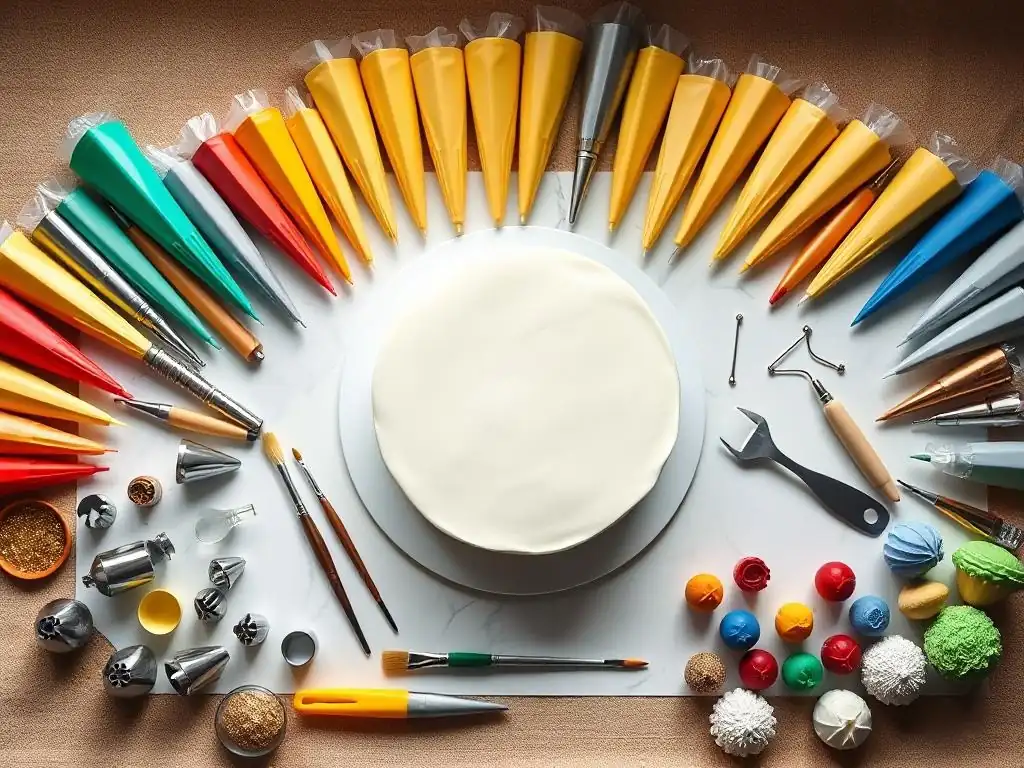
Piping bags and tips are the primary tools for adding decorative flair to cakes, cupcakes, and cookies. Piping bags hold the frosting or icing and come in disposable plastic, reusable plastic, or fabric options. Piping tips are small, cone-shaped nozzles inserted into the bag, with various openings that determine the shape of the frosting as it's squeezed out. The variety of tips available is vast, ranging from simple round and star tips to specialized petal, leaf, and basketweave tips.
Disposable bags are convenient for quick color changes and easy cleanup, often coming in rolls of 100 or more. Reusable bags are more environmentally friendly and durable but require thorough washing. Piping tips are typically made of metal (stainless steel) or plastic.
Metal tips are generally preferred for their durability and sharp, defined openings. A basic set might include a few round tips (e.g., sizes #3, #12), star tips (e.g., #1M, #21), and maybe a petal tip (#104). These allow you to pipe dots, lines, shells, rosettes, swirls, and basic flowers, covering a wide range of fundamental cake decorating techniques.
Decorating Techniques and Tools: Adding Flair and Detail
Piping Tips: Creating Borders, Flowers, and More
Delving deeper into piping tips reveals a world of creative possibilities for your cake decorating projects. Beyond the basic round and star shapes, you'll find tips designed to create specific effects. Petal tips, with their angled openings, are used to form realistic buttercream flowers like roses, peonies, or ruffles. Leaf tips have a V-shaped opening and are perfect for piping leaves to complement floral designs. Basketweave tips produce flat or ribbed strips of frosting that can be layered to mimic a woven basket.
The sheer number of available tips can be overwhelming, but they are often categorized or numbered (like the common Wilton or Ateco numbering systems). For example, a Wilton #1M is a large open star tip popular for piping swirls on cupcakes, while a #2D is a closed star tip that creates ruffles. A set of 20-30 assorted tips provides a good range for trying out different borders (shell border using a star tip), writing messages (using a small round tip like #3), and creating various floral elements. Experimenting with different tips is key to discovering new decorative techniques.
Fondant Tools: Shaping and Detailing Fondant Decorations
Working with fondant opens up another dimension of cake decorating, allowing for smooth coverings, sculpted figures, and intricate cutouts. Special tools are required to handle and shape this pliable sugar paste. Essential fondant tools include a non-stick rolling pin (often silicone or plastic) for rolling fondant evenly, a fondant smoother (similar to an icing smoother but used to smooth fondant over the cake), and various cutting tools like pizza cutters, exacto knives, and cookie cutters.
For more detailed work, modeling tools and impression mats are invaluable. Modeling tools come in sets with different shaped ends (ball, cone, shell, star) used for sculpting figures, creating textures, or thinning the edges of petals. Impression mats are textured sheets pressed onto fondant to create patterns like brick, wood grain, or lace. A basic set of fondant tools might include a rolling pin, smoother, cutting wheel, and a few basic modeling tools, enabling you to cover a cake smoothly and add simple cutouts or figures.
Airbrush Systems: Adding Color and Dimension
Airbrush systems offer a way to apply thin, even layers of color to cakes, creating smooth gradients, shading, or applying color through stencils. While perhaps not a beginner's first purchase, an airbrush can add a professional touch and achieve effects difficult to replicate with traditional frosting methods. The system consists of an air compressor, an airbrush gun, and food-safe airbrush colors.
Using an airbrush allows for rapid and consistent color application over large areas. For example, you can create a seamless ombré effect by gradually changing the distance or angle of the airbrush from the cake. Stencils can be used with an airbrush to add intricate patterns or images with crisp lines. While requiring a bit of practice to master control, an airbrush can dramatically enhance the visual depth and realism of a cake, particularly for themed or artistic designs.
Measuring and Precision Tools: Accurate Recipes and Decor
Measuring Cups and Spoons: Essential for Consistent Results
While primarily baking tools, accurate measuring cups and spoons are fundamental to successful cake decorating because they ensure your cake layers and frosting recipes turn out correctly. Consistent results in baking are achieved through precise measurements. Using standard dry measuring cups for flour and sugar and liquid measuring cups for milk and oil is crucial.
Similarly, using accurate measuring spoons for ingredients like baking powder, soda, vanilla extract, or food coloring ensures your cake has the right texture, rise, and flavor, and your frosting has the correct consistency and color saturation. An off-balance recipe can lead to cakes that are too dense, too crumbly, or frosting that is too thin or too thick, all of which make the decorating process more challenging. Investing in a good set of stainless steel or sturdy plastic measuring tools is a small but significant step towards consistent baking and decorating success.
Turntables: Rotate for Easier Frosting and Decorating
A cake turntable, also known as a revolving cake stand, is a tool that significantly simplifies the process of frosting and decorating a cake. It allows you to rotate the cake smoothly while you hold your spatula or piping bag steady, making it much easier to apply even layers of frosting, create smooth sides, pipe consistent borders, or add intricate details around the cake's circumference.
Turntables come in various materials, including plastic, metal, and glass, and some even tilt for easier access to the top surface. Plastic turntables are generally the most affordable and lightweight, suitable for occasional use. Metal turntables, often made of aluminum, are more durable and stable, offering a smoother rotation, which is beneficial for detailed work. Using a turntable can reduce the time and effort required to achieve a polished finish, especially when working on larger or multi-tiered cakes. It is widely considered an essential cake decorating tool guide inclusion for anyone beyond the absolute beginner stage.
Choosing the Right Cake Decorating Tools for You
Considering Your Skill Level: Beginner, Intermediate, or Advanced?
When building your collection of cake decorating tools, your current skill level is a primary consideration. If you are a beginner, focus on acquiring a few fundamental tools that allow you to practice basic techniques like leveling, frosting, and simple piping. Overspending on highly specialized tools you won't use immediately can be unnecessary. Start with an offset spatula, an icing smoother, a basic set of piping bags and tips, and a cake leveler.
As you move to an intermediate level, you might want to add more variety to your piping tips, explore different types of spatulas, and perhaps invest in a sturdier turntable. Advanced decorators might look into specialized tools for sugar flowers, airbrushing equipment, or high-quality fondant tools. Many cake decorating tool guides recommend starting small and gradually adding tools as your skills and interests develop.
Budget Considerations: Finding Affordable Options
Cake decorating tools are available at a wide range of price points, from budget-friendly plastic options to professional-grade stainless steel equipment. When considering your budget, remember that you don't always need the most expensive tools to achieve good results, especially when starting out. Many reputable brands offer quality tools at accessible prices.
For beginners or those on a tight budget, look for sturdy plastic tools or basic stainless steel sets. A good quality plastic bench scraper might cost around $5-$10, while a basic set of 10-12 piping tips and bags might range from $15-$30.
If you plan on decorating frequently, investing a bit more in durable items like a metal turntable or a set of high-quality stainless steel spatulas can be worthwhile in the long run, as they will last longer and perform better. Researching reviews in a cake decorating tool guide can help you find the best value for your money.
Material Matters: Stainless Steel, Plastic, or Silicone?
The material of your cake decorating tools affects their performance, durability, and ease of cleaning. Common materials include stainless steel, plastic, and silicone. Stainless steel is highly durable, rust-resistant, and easy to sanitize, making it an excellent choice for spatulas, piping tips, and metal smoothers. It offers rigidity and precision.
Plastic tools are typically more affordable, lightweight, and come in various colors. They are suitable for many tasks like using plastic bench scrapers or disposable piping bags. However, some plastic tools can be less rigid than their metal counterparts, which might affect performance for tasks requiring sharp edges or firm pressure. Silicone is often used for non-stick rolling pins, spatulas, and molds due to its flexibility and heat resistance. Each material has its strengths, and a well-rounded cake decorating tool guide will likely include a mix of tools made from different materials, chosen for their specific application.
Top Cake Decorating Tool Sets: Reviews and Recommendations
Best Beginner Cake Decorating Tool Set
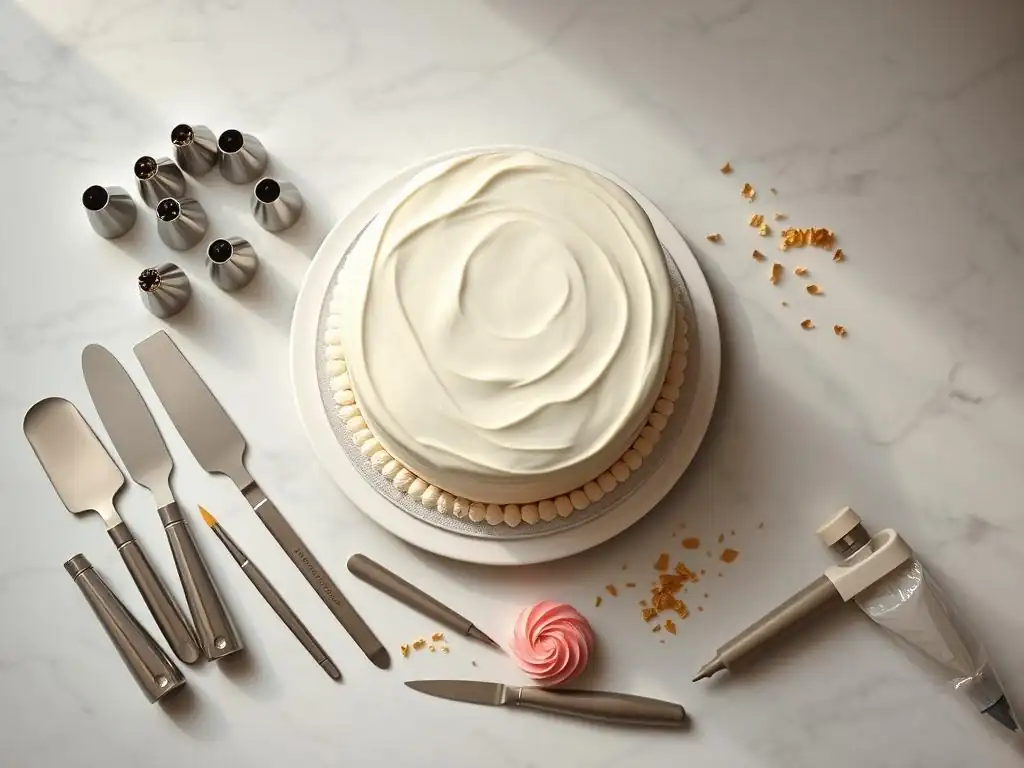
A good beginner cake decorating tool set should provide the essential tools needed to learn fundamental techniques without being overwhelming. Look for sets that include a variety of basic piping tips (round and star), disposable or reusable piping bags, at least one offset spatula (around 6-8 inches), an icing smoother or bench scraper, and possibly a small cake leveler.
Sets that offer around 20-30 pieces are often ideal, as they include the core necessities plus a few extra tips to experiment with. Many popular baking brands offer beginner sets specifically curated for those just starting their cake decorating journey. A well-regarded beginner set might cost between $20 and $50 and should contain tools that are easy to clean and handle.
Best Professional Cake Decorating Tool Set
For those pursuing cake decorating professionally or looking to invest in high-quality, extensive equipment, a professional set offers durability, precision, and a wider range of specialized tools. These sets typically feature stainless steel piping tips (often 50 or more different shapes and sizes), multiple high-quality offset and straight spatulas, durable metal icing smoothers, a professional-grade metal turntable, and perhaps tools for working with fondant or gum paste.
Professional sets are designed for frequent, demanding use and are built to last. They often include specialized tips for creating complex flowers, intricate patterns, and fine details. While more expensive, potentially ranging from $100 to several hundred dollars or more depending on the scope, the investment is justified by the tools' performance, longevity, and the ability to execute a broader array of advanced techniques.
Best Budget-Friendly Cake Decorating Tool Set
Finding a budget-friendly cake decorating tool set doesn't mean sacrificing functionality entirely. Many affordable sets focus on providing the most commonly used tools in durable plastic or basic stainless steel. These sets are perfect for casual bakers or those wanting to try cake decorating without a significant upfront investment.
A solid budget-friendly set might include around 10-20 essential pieces, such as a few standard piping tips, disposable piping bags, a plastic bench scraper, and a small offset spatula. While they may not have the extensive variety or premium feel of professional sets, they provide the necessary items to practice and improve basic decorating skills. Look for sets in the $10-$30 range from reputable brands known for offering good value. This type of set is an excellent starting point highlighted in any practical cake decorating tool guide.
Maintaining Your Cake Decorating Tools: Tips and Tricks
Cleaning and Storage: Keeping Your Tools in Top Condition
Proper cleaning and storage are crucial for extending the lifespan of your cake decorating tools and ensuring they are hygienic for future use. After each use, clean tools promptly, especially those used with frosting or fondant, to prevent residue from hardening. Most metal and plastic tools can be washed with warm, soapy water. Piping tips, with their small openings, often benefit from a small brush specifically designed for cleaning them to remove all traces of frosting.
Ensure all tools are thoroughly dried before storing, particularly metal items, to prevent rust. Store piping tips upright in an organizer or container so they are easy to find and don't get damaged. Spatulas can be stored in drawers or utensil crocks. Piping bags should be cleaned (if reusable) and dried completely before folding or rolling for storage. Proper storage keeps tools organized, protected, and ready for your next baking project.
Extending the Lifespan of Your Tools
Beyond regular cleaning, a few practices can help extend the lifespan of your cake decorating tools. Avoid using abrasive scrubbers on plastic tools, which can cause scratching. For metal tools like stainless steel tips or spatulas, avoid soaking them for extended periods, as this can sometimes lead to rust or corrosion, even with stainless steel.
Handle delicate tools, such as fine piping tips or thin modeling tools, with care to prevent bending or breaking. If using a turntable with a spinning mechanism, avoid forcing it to turn if it feels stiff; cleaning around the bearing might be necessary. Storing tools away from extreme temperatures or humidity also helps maintain their condition. Treating your tools well ensures they perform reliably for many cakes to come, making this cake decorating tool guide advice valuable for maintaining your investment.
Where to Buy Cake Decorating Tools: Online and Local Retailers
Online Retailers
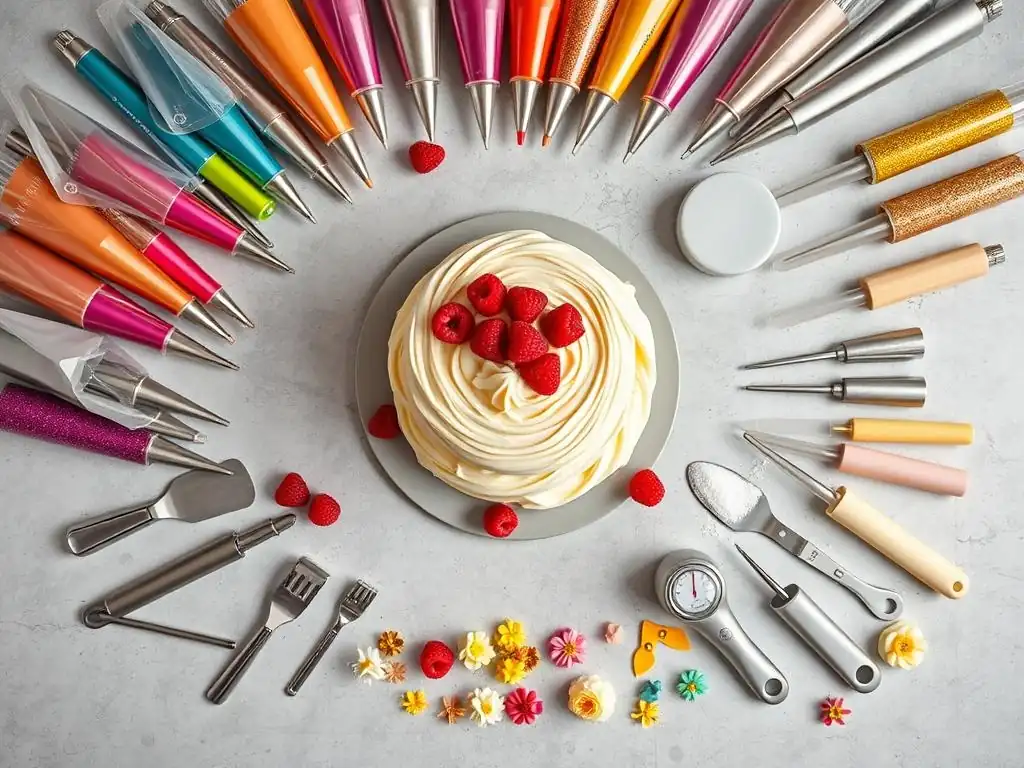
Online retailers offer an unparalleled selection of cake decorating tools, ranging from basic items to highly specialized equipment from various brands. Major online marketplaces typically stock a vast inventory, making it easy to compare prices and read reviews from other customers. Specialty online baking supply stores often carry a wider range of professional-grade tools, unique items, and specific brand products that might be harder to find elsewhere.
Shopping online provides convenience and access to a global market of tools. You can often find comprehensive cake decorating tool guide bundles or sets online that offer good value. However, the downside is you cannot physically inspect the tools before purchasing, and you need to factor in shipping times and costs.
Local Retailers
Local retailers provide the advantage of being able to see and feel the cake decorating tools before you buy them. Craft stores with baking sections, dedicated baking supply stores, and even some large supermarkets often carry a selection of essential cake decorating tools. Shopping locally allows for immediate gratification and the ability to ask questions to knowledgeable staff.
Dedicated baking supply stores, while perhaps less numerous, often offer a more specialized range of tools and ingredients, catering to more serious bakers and decorators. While the selection might be smaller than online, supporting local businesses and having the ability to physically examine tools can be a significant benefit for some shoppers.
Level Up Your Baking: Beyond the Tools
Easy Cake Recipes to Practice Your Skills
Having the right cake decorating tools is the first step; the next is putting them to use! Practicing on simple cake recipes allows you to focus on honing your decorating techniques without the complexity of an elaborate bake. A classic vanilla or chocolate cake is a perfect canvas for trying out different frosting techniques, practicing smooth finishes with your icing smoother, or experimenting with various piping tips.
Recipes for cupcakes are also excellent for practice, as they are smaller and quicker to bake, allowing for multiple decorating attempts in a single session. Trying out simple designs like swirls with a star tip or basic borders with a round tip on cupcakes can build your confidence before tackling larger cakes. Finding reliable, easy recipes is an important part of any cake decorating tool guide journey.
Advanced Cake Decorating Techniques
Once you've mastered the basics with your essential cake decorating tools, you can begin exploring more advanced techniques. This might include working with different mediums like royal icing for intricate details, modeling chocolate for sculpting, or learning advanced piping methods like lambeth piping or brush embroidery.
Advanced techniques often require specific tools, such as fine-tipped brushes, specialized cutters, or different consistency icings. Learning these techniques opens up new avenues for creativity and allows you to create increasingly complex and impressive cake designs. Continuing to learn and acquire new skills, alongside the tools that support them, is key to growing as a cake decorator.
Conclusion: Unlock Your Cake Decorating Potential with the Right Tools
Mastering the art of cake decoration is a rewarding journey, and having the right tools by your side is essential for success. From leveling your cake layers with precision using a cake leveler to creating stunning designs with a variety of piping tips and bags, each tool plays a vital role in transforming a simple cake into a work of art. This cake decorating tool guide has covered the essentials you need to get started and expand your skills.
Remember to choose tools that match your skill level and budget, and always prioritize quality for the most frequently used items. Proper cleaning and maintenance will ensure your tools remain in excellent condition for years of decorating fun. With the foundational tools and a willingness to practice, you are well on your way to unlocking your full cake decorating potential. Happy baking and decorating!
Frequently Asked Questions
What are the most essential cake decorating tools for a beginner?
For beginners, the most essential tools are a good offset spatula for frosting, a set of basic piping tips for borders and simple designs, and a cake turntable for smooth frosting application.
How do I choose the right piping tips for different cake decorating techniques?
Different piping tips create different effects. Star tips are great for borders, round tips for writing and lines, and petal tips for making flowers. Experiment to find what you like!
What is the purpose of a cake turntable and is it really necessary?
A cake turntable allows you to rotate the cake smoothly while frosting and decorating, ensuring even coverage and a professional finish. While not strictly necessary, it significantly improves the process.
Where can I find affordable cake decorating tools without sacrificing quality?
Look for starter kits from reputable brands. Also, check online retailers for sales and discounts on individual tools. Don't be afraid to read reviews before purchasing.
How do I properly clean and store my cake decorating tools?
Wash all tools thoroughly with warm soapy water after each use. Ensure they are completely dry before storing them in an airtight container to prevent rust and contamination.
Final Reflection: The Sweet Art of Transformation
The right tools don't just make cake decorating easier; they unlock a world of creative potential, transforming simple baked goods into edible masterpieces. From the novice baker nervously wielding a piping bag to the seasoned professional crafting intricate sugar flowers, the journey of cake decorating is profoundly shaped by the instruments we choose. This journey, as we've explored, is one of empowerment and self-expression, far exceeding the simple act of applying frosting.
The impact of accessible cake decorating tools extends beyond individual creativity; it fosters a vibrant community of bakers sharing techniques, inspiring each other, and celebrating the joy of creation. This shared passion, fueled by readily available resources and a wealth of online tutorials, is a testament to the power of accessible artistry. The best things in life are the simple things, and the simplest things are often the most beautiful.
This sentiment perfectly encapsulates the magic of transforming a plain cake into something extraordinary with the right tools and a little imagination.
Now, it's your turn. Consider the tools you already possess and the techniques you've mastered. What new heights of cake decorating artistry can you reach? Don't be afraid to experiment, to push your boundaries, and to embrace the transformative power of a well-stocked decorating kit. The next edible masterpiece is waiting to be born – and you have the power to bring it to life.
Unleash Your Inner Cake Artist!
Thanks for taking the time to explore the world of cake decorating with us! We hope you now feel empowered to create stunning, show-stopping cakes. Ready to take your skills to the next level?
- Master a new decorating technique: Try your hand at a rose swirl, a delicate piping pattern, or even a complex fondant sculpture – the possibilities are endless!
- Share your creations: Post a photo of your masterpiece on social media and tag us – we'd love to see your baking journey!
- Join our online community: Connect with fellow baking enthusiasts in our forum to share tips, tricks, and inspiration.
What amazing cake design will you bring to life next?