
The Foundation of Fabulous Cakes: Essential Decorating Tools Revealed

Welcome to BakeWithEase, your haven for baking bliss!
Ever wondered what separates a good cake from a show-stopping masterpiece? This guide unveils the essential cake decorating tools that every baker needs in their arsenal. Discover how to transform simple ingredients into edible art, and unlock the secrets to professional-looking cakes. Ready to build the foundation for fabulous cakes? Let's dive in!
Creating a truly fabulous cake is an art form, and like any artist, a baker needs the right tools. Whether you're aiming for a simple, elegant finish or an elaborate, multi-tiered masterpiece, having the correct essential cake decorating tools at your fingertips makes all the difference. These aren't just fancy gadgets; they are fundamental instruments that help you achieve smooth finishes, intricate designs, and perfectly constructed layers.
Getting acquainted with the basic cake decorating essentials can feel overwhelming at first, given the vast array of options available. However, focusing on a core set of must-have items will set you on the path to success. This guide will walk you through the foundational tools that every aspiring and experienced cake decorator should consider adding to their collection, covering everything from achieving that flawless frosting swirl to building stable cake structures.
- Must-Have Tools for Cake Decorating Beginners
- Icing Essentials: Mastering Frosting and Decoration
- Leveling and Layering: Tools for Perfect Cake Construction
- Sculpting and Shaping: Working with Fondant and Gum Paste
- Measuring and Precision: The Importance of Accuracy in Cake Decorating
- Cleaning and Maintenance: Caring for Your Cake Decorating Tools
- Expanding Your Cake Decorating Arsenal: Beyond the Basics
- Achieving Cake Decorating Success: Practice and Patience
-
Frequently Asked Questions
- What are the most essential cake decorating tools for a beginner?
- What type of piping tips are most versatile for cake decorating?
- How important is a cake turntable for achieving professional-looking results?
- What is the best way to clean and store cake decorating tools to prolong their lifespan?
- Can I substitute any of the recommended tools with household items for cake decorating?
- Final Reflection: Mastering the Art of Cake Decorating
- Unleash Your Inner Cake Artist Today!
Must-Have Tools for Cake Decorating Beginners
Starting your journey into cake decorating doesn't require a professional-grade kitchen setup. A few key essential cake decorating tools can empower you to transform a simple baked cake into a stunning creation. Think of these initial purchases as your foundational investment in mastering this enjoyable craft.
Learning to use these basic cake decorating essentials effectively is more important than owning every tool on the market. Practice with these fundamental items will build your skills and confidence, preparing you for more complex techniques as you progress.
Getting Started: The Basic Cake Decorating Toolkit
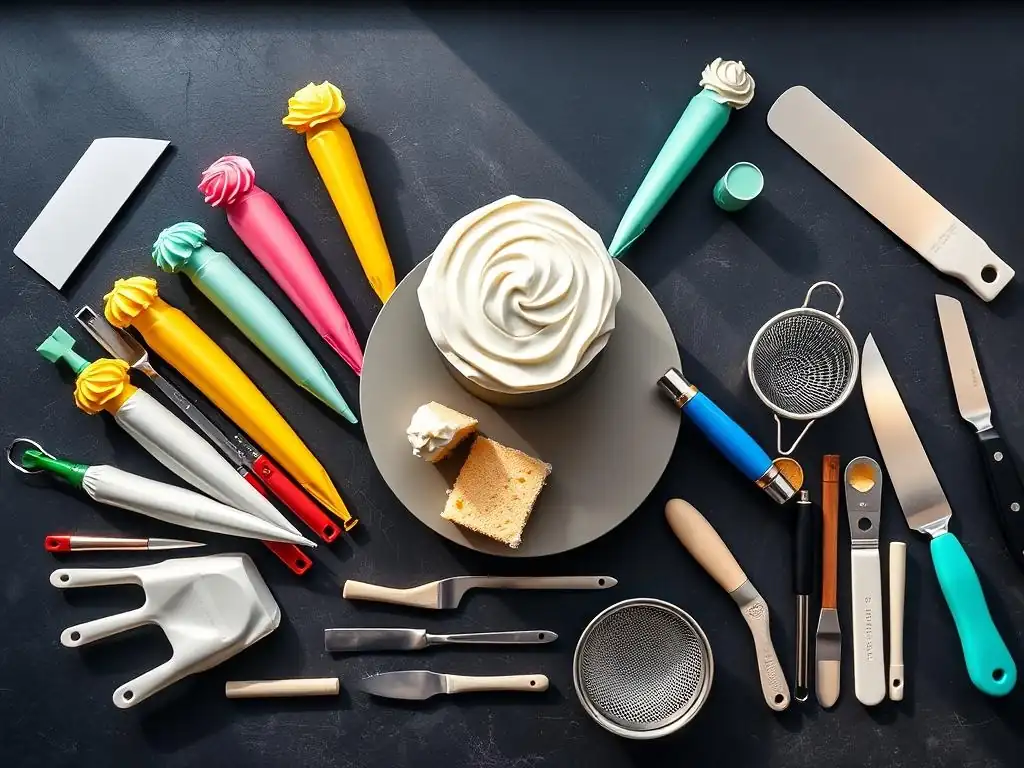
For beginners, assembling a basic toolkit is the first step. This typically includes items like an offset spatula for frosting, a set of piping bags and a few basic piping tips, a cake scraper for smooth sides, and a cake turntable. These tools are versatile and can be used for a wide range of decorating tasks, from applying a simple crumb coat to piping basic borders and rosettes.
A good starting set of piping tips might include a round tip (like size 12 or 4A) for dots and lines, a star tip (like 1M or 21) for rosettes and borders, and possibly a petal tip (like 104) for ruffles. An 8-inch offset spatula is incredibly useful for frosting cakes up to 9 or 10 inches in diameter, allowing you to spread icing smoothly without your knuckles dragging on the cake surface.
Why Invest in Quality Decorating Tools?
Investing in quality essential cake decorating tools might seem like an unnecessary expense when starting out, but it significantly impacts the ease of use, durability, and ultimately, the quality of your finished cake. Cheaper tools can bend easily, rust, or lack the precision needed for clean work, leading to frustration and less impressive results.
For instance, a sturdy, well-balanced offset spatula with a comfortable grip makes spreading frosting far easier and helps achieve a smoother finish compared to a flimsy alternative. Similarly, high-quality piping bags are less likely to burst under pressure, and precisely cut piping tips produce sharper, more defined designs, allowing you to execute techniques like piping consistent buttercream rosettes or sharp zigzags with greater success.
Icing Essentials: Mastering Frosting and Decoration
Frosting is often the canvas for cake decoration, and having the right cake decorating essentials for applying and shaping icing is crucial. These tools help you achieve everything from a perfectly smooth surface to elaborate piped details.
Mastering the use of these icing tools takes practice, but the results – smooth sides, sharp edges, and beautiful piped decorations – are incredibly rewarding and fundamental to creating visually appealing cakes.
Offset Spatulas: Achieving Smooth and Even Frosting
Offset spatulas are indispensable for applying and smoothing frosting. Their angled blade keeps your hand clear of the cake surface, allowing for controlled, even spreading. They come in various sizes, but an 8-inch or 10-inch offset spatula is a versatile choice for covering cakes of standard sizes, like 8-inch or 9-inch rounds.
Beyond just spreading, offset spatulas are also used for creating texture, lifting delicate decorations, and smoothing the top surface of your cake. Using a warm offset spatula can help achieve an extra-smooth finish on certain types of frosting, melting the outermost layer slightly for a glass-like effect. This simple tool is truly one of the most essential cake decorating tools for any baker.
Piping Bags and Tips: Creating Intricate Designs
Piping bags and tips are the gateway to creating borders, writing messages, filling cupcakes, and piping complex designs like flowers or basketweave. Piping bags are available in reusable (silicone, nylon) or disposable plastic options, while tips come in metal or plastic and a vast array of shapes and sizes, each producing a different effect.
A basic set of metal tips, often numbered according to a standard system (like Wilton or Ateco), is a great starting point. You'll also need couplings to easily swap tips on a single bag of frosting, which is a huge time-saver when working with multiple designs or colors. Mastering pressure control and angle with the piping bag is key to achieving clean, consistent piped decorations.
Different Piping Tip Shapes and Their Uses
Piping tips are categorized by their opening shape, which determines the design they produce.
- Round Tips: Create dots, lines, beads, and messages. Sizes range from tiny (for fine writing) to very large (for filling macarons or piping large mounds of frosting). A common large round tip like the Ateco 808 is perfect for piping cupcake swirls.
- Star Tips: Produce star shapes, rosettes, shells, and zigzags. Open star tips give a more defined shape, while closed star tips create a more intricate, ruffled effect. The Wilton 1M is a classic open star tip beloved for its easy rosettes.
- Petal Tips: Used for piping ruffles, borders, and flower petals (like roses or carnations). Varying the pressure and angle allows for different petal shapes. The Wilton 104 is a popular choice for buttercream flowers.
- Leaf Tips: Create realistic leaves. The tip has a V-shaped opening.
- Basketweave Tips: Produce flat or ribbed strips for basketweave patterns.
Cake Scrapers: Perfecting the Finishing Touches on Your Cakes
Cake scrapers, also known as bench scrapers or icing scrapers, are flat tools, often made of plastic or metal, used to smooth the sides of a frosted cake and create sharp edges on the top. While an offset spatula can do this to some extent, a dedicated scraper held against the side of a rotating cake on a turntable provides a much smoother, more professional finish.
Scrapers come with different edges – some are smooth for a perfectly flat surface, while others have textured edges (like combs) to create decorative patterns in the frosting. Using a straight, smooth scraper and slowly turning the cake on a turntable while holding the scraper steady is the standard technique for achieving those coveted sharp edges and smooth sides that elevate a cake's appearance.
Leveling and Layering: Tools for Perfect Cake Construction
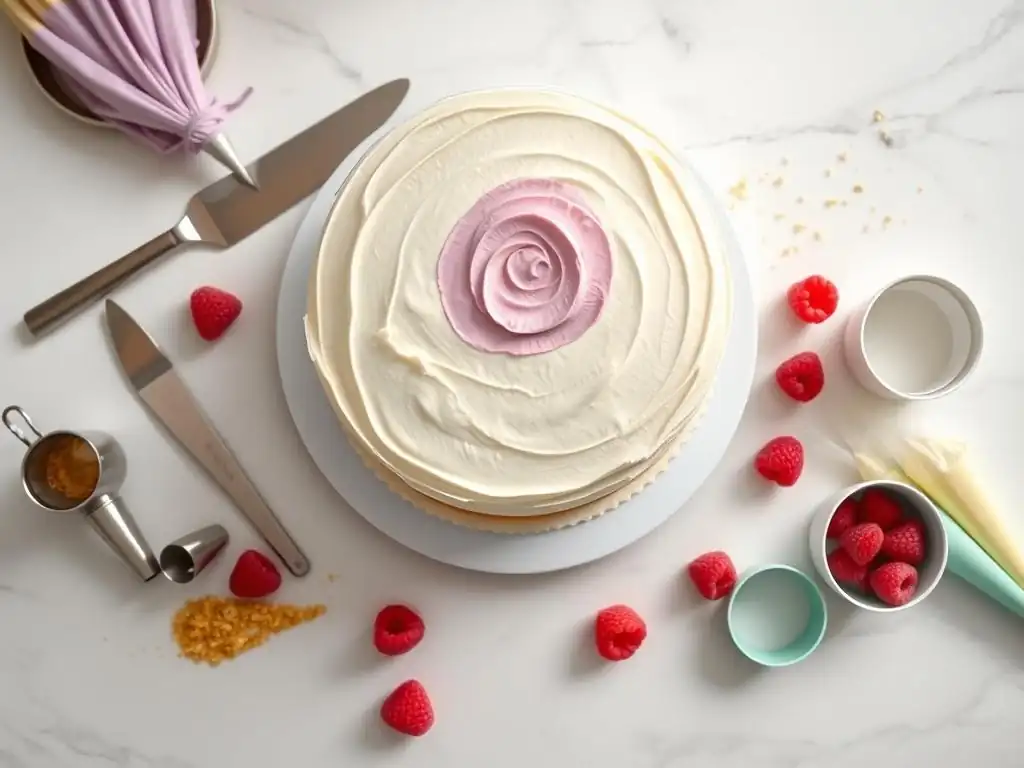
Building a stable and visually appealing layered cake requires precision in preparing the cake layers themselves. Uneven layers can lead to a lopsided cake that's difficult to stack and decorate neatly. These essential cake decorating tools ensure your foundation is solid.
Achieving perfectly level layers and a stable base is fundamental to successful cake decorating, especially for multi-tiered creations. These tools simplify what could otherwise be a frustrating step.
Cake Levelers: Ensuring Even Cake Layers
Cake levelers are adjustable wire saws or serrated blades held within a frame, designed to slice horizontally through a cake layer, creating an even thickness. This is crucial for stacking layers neatly and ensuring each layer is the same height, which contributes to a stable and professional-looking finished cake.
Instead of trying to slice a cake freehand with a knife (which often results in uneven layers), a cake leveler allows you to set the desired height (e.g., 1.5 inches or 2 inches) and glide the wire or blade through the cake consistently. This simple step prevents the dreaded "leaning tower of cake" and makes frosting between layers much easier.
Cake Boards and Turntables: A Stable Foundation for Decorating
Cake boards and turntables work together to provide a stable base and easy access to all sides of the cake during decoration. Cake boards are sturdy circles or squares (usually cardboard or foam) on which the cake sits. They provide support, making it easier to move the finished cake. The cake is typically attached to the board with a dollop of frosting.
A cake turntable (or lazy Susan) is a revolving stand that allows you to easily rotate the cake while you apply frosting or pipe decorations. This eliminates the need to constantly walk around the cake or awkwardly reach across it, ensuring smooth, continuous application of frosting and precise piping. A good quality turntable that spins smoothly and has a non-slip base is a worthwhile investment among your essential cake decorating tools.
Sculpting and Shaping: Working with Fondant and Gum Paste
For decorators venturing beyond buttercream, working with fondant and gum paste opens up a world of possibilities for creating smooth coverings, sculpted figures, and delicate edible decorations. These pliable mediums require specific cake decorating essentials for best results.
Working with fondant and gum paste offers creative freedom, allowing for smooth finishes and intricate 3D elements. The right tools make these mediums much easier to handle and shape.
Fondant Smoothers and Modeling Tools: Creating Clean Lines and Details
Fondant smoothers are flat, often plastic tools with a handle, used to smooth rolled fondant once it's draped over a cake. They help eliminate wrinkles, air bubbles, and imperfections, ensuring a perfectly smooth surface. Using two smoothers simultaneously – one on top and one on the side – helps create sharp edges.
Modeling tools, often made of plastic or food-safe metal, come in sets with various tips (ball, cone, knife, shell, etc.). These are used for shaping figures, creating textures (like wood grain or fabric folds), making indentations, and adding fine details to fondant or gum paste decorations. A basic set of 5-10 different modeling tools covers most common sculpting tasks.
Silicone Molds: Creating Consistent Shapes and Designs
Silicone molds are flexible molds used to create consistent shapes and designs from fondant, gum paste, chocolate, or other edible mediums. They come in countless patterns, from simple pearls and buttons to intricate lace borders and detailed figurines. Using a mold is a quick way to produce uniform decorations, especially when you need multiple identical pieces.
To use a silicone mold, you typically press the fondant or gum paste firmly into the cavity, scrape away the excess, and then carefully unmold the piece. This allows decorators to easily add professional-looking elements like realistic flowers, themed characters, or elegant borders without needing advanced sculpting skills.
Measuring and Precision: The Importance of Accuracy in Cake Decorating
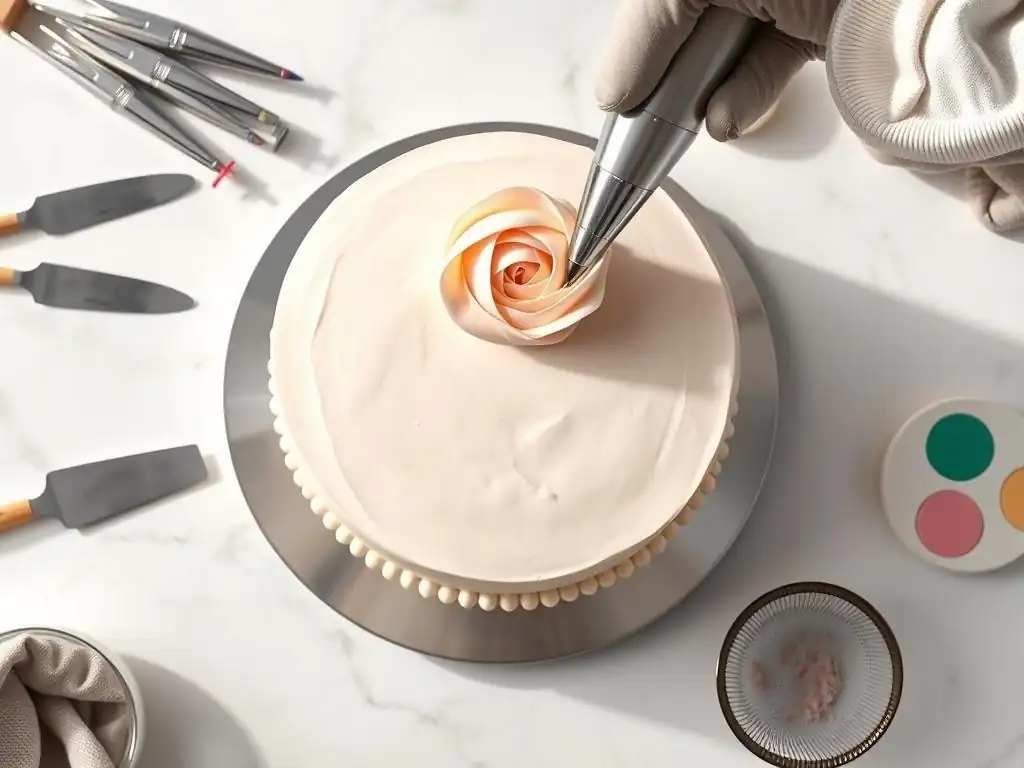
While decorating might seem purely artistic, accuracy is key, starting with the cake recipe itself. Consistent results rely on precise measurements, both in baking the cake and sometimes in planning the decoration layout. These essential cake decorating tools ensure your foundation is sound.
Accuracy in measuring ingredients is fundamental to baking a successful cake. Skipping this step can lead to dense layers, dry crumbs, or cakes that don't rise properly, making decoration much harder.
Measuring Cups and Spoons: For Consistent Cake Recipes
Accurate measuring cups and spoons are non-negotiable for successful baking. Using the correct amount of flour, sugar, leavening agents, and liquids ensures your cake has the proper texture, rise, and flavor. Dry ingredients like flour should typically be spooned into the measuring cup and leveled off, while liquids require liquid measuring cups with pour spouts.
Using a standard set of measuring cups (1/4, 1/3, 1/2, 1 cup) and spoons (1/4, 1/2, 1 teaspoon, 1 tablespoon) is a basic requirement. Consistency in how you measure is also vital; always level off dry ingredients and read liquid measurements at eye level. This precision is the first step to a cake that's ready for decorating.
Digital Kitchen Scales: Precise Measurements for Flawless Results
For the utmost accuracy, especially in baking techniques like making macarons or professional-style cakes where ratios are critical, a digital kitchen scale is an invaluable tool. Measuring ingredients by weight rather than volume eliminates inconsistencies caused by how ingredients are packed into cups (e.g., packed brown sugar vs. loosely packed).
Many professional recipes, particularly those from outside the US, specify ingredients by weight (grams or ounces). Using a digital scale provides a level of precision that volume measurements simply cannot match, leading to more consistent and reliable baking results. While not strictly a decorating tool, a perfectly baked cake is the most essential starting point for any decoration.
Cleaning and Maintenance: Caring for Your Cake Decorating Tools
Taking good care of your essential cake decorating tools ensures they last longer, remain hygienic, and perform optimally every time you use them. Proper cleaning and storage are just as important as knowing how to use the tools themselves.
Neglecting proper cleaning can lead to residue buildup, damage, or rust, diminishing the effectiveness and lifespan of your tools. A little care goes a long way in protecting your investment.
Proper Cleaning Techniques for Different Tools
Most cake decorating tools should be washed promptly after use to prevent frosting or dough from hardening on them. Warm, soapy water is usually sufficient. Piping tips and bags, which can trap residue, require special attention. Using a small brush, like a bottle brush or even an old toothbrush, can help clean inside piping tips.
For metal tools like spatulas or some modeling tools, drying them thoroughly immediately after washing is crucial to prevent rust. Silicone molds can usually be washed in the dishwasher or by hand and should be air-dried. Disposable piping bags should, of course, be discarded after a single use.
Storage Solutions to Keep Your Tools Organized
Organizing your essential cake decorating tools makes them easy to find and keeps them protected. Piping tips can be stored in dedicated tip organizers or small containers. Larger tools like spatulas and scrapers can be kept in drawers, tool caddies, or upright in jars.
Keeping tools organized not only saves time but also prevents damage. Storing piping tips loosely in a drawer, for example, can lead to them getting bent. Using compartmentalized storage solutions, whether purchased organizers or repurposed containers, helps maintain the condition of your tools and keeps your workspace tidy.
Expanding Your Cake Decorating Arsenal: Beyond the Basics
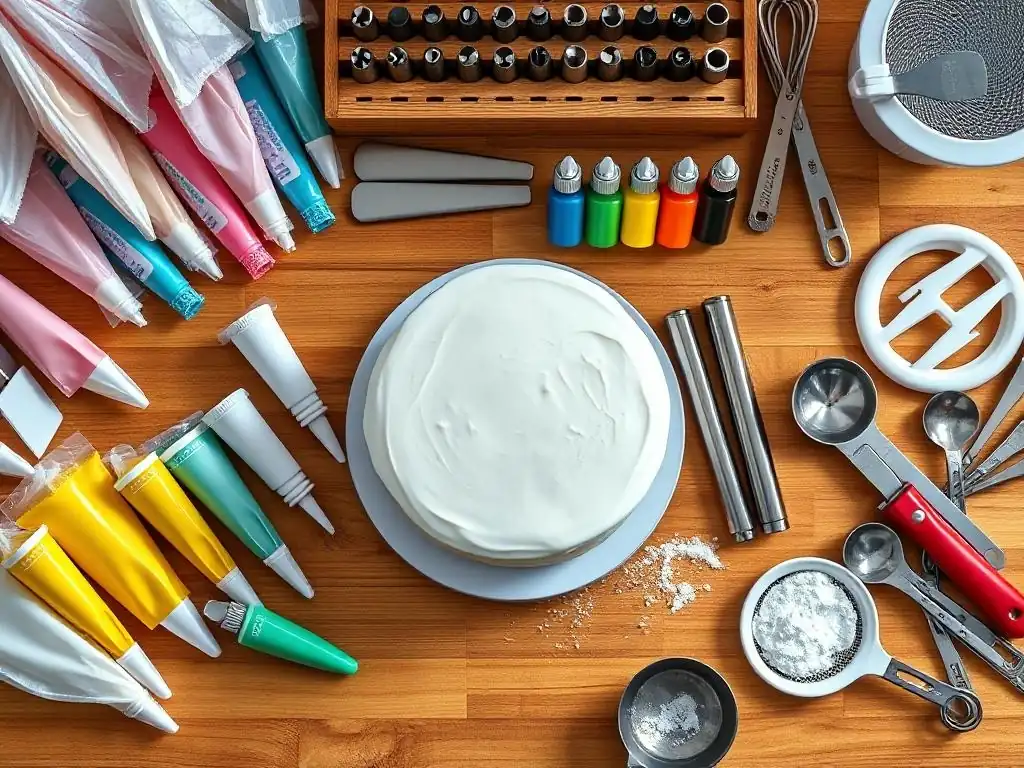
Once you've mastered the fundamental cake decorating essentials, you might find yourself wanting to explore more advanced techniques and styles. Several specialized tools can help you achieve more complex and intricate designs.
These tools represent the next step for bakers looking to expand their creative boundaries and achieve highly professional-looking finishes and details on their cakes.
Airbrush Systems: Adding Depth and Dimension
Airbrush systems allow you to spray edible food coloring onto cakes, creating smooth gradients, shading, and detailed artwork. They consist of an air compressor, a hose, and an airbrush gun with a small reservoir for liquid food color. Airbrushing can add incredible depth, dimension, and realism to cake designs.
Using an airbrush requires practice to control the flow and pressure, but it enables effects that are difficult or impossible to achieve with traditional methods, such as painting realistic skies, creating metallic finishes, or adding subtle shading to fondant figures. A basic hobby airbrush kit suitable for food use can be a significant step up for custom cake designs.
While primarily used for cutting cookie dough, cookie cutters are also incredibly useful for cutting shapes from rolled fondant or gum paste. They come in a vast array of shapes and sizes, from simple circles and stars to intricate seasonal or themed designs.
Using cookie cutters ensures that multiple decorative elements, like fondant hearts for a wedding cake or snowflakes for a winter theme, are perfectly uniform in size and shape. This consistency contributes to a clean, professional look on your finished cake.
Achieving Cake Decorating Success: Practice and Patience
Having the right essential cake decorating tools is a fantastic start, but skill comes from practice and patience. Don't expect perfection on your first try; every baker, including professionals, started somewhere and learned through experimentation and repetition.
Embrace the learning process. Each cake you decorate is an opportunity to refine your techniques, understand your tools better, and discover what works best for you.
Tips for Improving Your Cake Decorating Skills
Consistent practice is the most effective way to improve. Start with simple designs and gradually work your way up to more complex techniques. Watch tutorials (without links here, of course!) and read guides to learn new methods. Don't be afraid to experiment with different frosting consistencies or tool uses.
Practice piping on parchment paper before attempting it on your cake – you can scrape the frosting back into the bag and reuse it. Try frosting a cake dummy (a foam shape) to practice smoothing techniques without the pressure of a real cake. Seek feedback from others and learn from your mistakes.
Common Cake Decorating Mistakes and How to Avoid Them
- Not Crumb Coating: Skipping the thin first layer of frosting (crumb coat) traps loose crumbs, resulting in a messy final coat. Always apply a crumb coat and chill the cake before the final layer.
- Improper Frosting Consistency: Frosting that is too stiff or too soft makes smoothing and piping difficult. Adjust consistency by adding more liquid (milk, cream) or powdered sugar as needed.
- Working with a Warm Cake: Always ensure your cake layers are completely cooled, or even slightly chilled, before attempting to level or frost them. Warm cakes are fragile and prone to tearing.
- Overworking Frosting: Whipping buttercream too much after adding color can incorporate too many air bubbles, making it hard to achieve a smooth finish.
- Using Dirty Tools: Residue on tools can affect the texture and appearance of your frosting and decorations. Clean tools thoroughly between uses and colors.
By understanding and utilizing these essential cake decorating tools, practicing regularly, and learning from each attempt, you are well on your way to creating truly fabulous cakes that taste as good as they look!
Frequently Asked Questions
What are the most essential cake decorating tools for a beginner?
Beginners should start with a turntable for easy cake rotation, a set of offset spatulas for smooth frosting, and a basic piping bag with a few tips for simple decorations.
What type of piping tips are most versatile for cake decorating?
A round tip is great for writing and outlining, a star tip for creating decorative borders, and a petal tip for making realistic flower designs. These are highly versatile tips to start with.
How important is a cake turntable for achieving professional-looking results?
A cake turntable is crucial for achieving smooth frosting and even decorations. It allows for easy rotation of the cake, ensuring consistent coverage all around.
What is the best way to clean and store cake decorating tools to prolong their lifespan?
Wash tools with warm, soapy water immediately after use. Ensure they are completely dry before storing them in an airtight container to prevent rust or damage, keeping them ready for future use.
Can I substitute any of the recommended tools with household items for cake decorating?
While some substitutions are possible, using proper tools will generally yield better results. For example, a zip-lock bag can temporarily replace a piping bag, but it lacks the precision of a dedicated piping bag and tips, impacting the quality of the decoration.
Final Reflection: Mastering the Art of Cake Decorating
The pursuit of the perfect cake is more than just a delicious endeavor; it's a journey of creativity and precision. This article has explored the essential tools that form the bedrock of stunning cake designs, highlighting the importance of quality materials and understanding their unique applications. From the humble offset spatula to the versatile piping bag, each tool plays a crucial role in transforming a simple baked good into a breathtaking masterpiece.
The impact of cake decorating extends far beyond the kitchen; it's a vibrant expression of artistry that continues to captivate and inspire. It's a craft that connects us to traditions, allows for personal expression, and fosters a sense of community among bakers of all skill levels. The best things in life are the simple things, and the simplest things are often the most beautiful.
This sentiment perfectly encapsulates the beauty found in mastering the fundamentals of cake decorating, where even the most basic tools can yield extraordinary results.
Now, it's your turn to embark on this creative journey. Don't be intimidated by the seemingly endless possibilities; start with the essentials, practice your technique, and let your imagination run wild. Each frosted layer, each perfectly piped rose, represents a step forward in your personal growth as a baker. Embrace the process, celebrate your successes, and most importantly, have fun creating cakes that are as delicious as they are beautiful. The world awaits your next masterpiece!
Unleash Your Inner Cake Artist Today!
Thank you for diving into our exploration of essential decorating tools! We hope you’ve discovered the perfect items to enhance your cake-making journey and create stunning edible masterpieces. Now, it’s time to put that knowledge into action!
Here are some engaging ways to boost your cake decorating skills:
- Invest in at least one new tool from our list and practice with it on your next baking project. You'll be amazed at the transformation!
- Join a local baking group or an online community to share your designs and learn from fellow enthusiasts. Collaboration fosters creativity!
- Challenge yourself to create a themed cake using three or more tools you’ve never tried before. Don’t forget to document your process and results!
Which innovative cake decorating tool are you excited to experiment with next? We can’t wait to hear your thoughts and see your creations!