
Starting Cake Decorating? Here Are the Tools You Actually Need

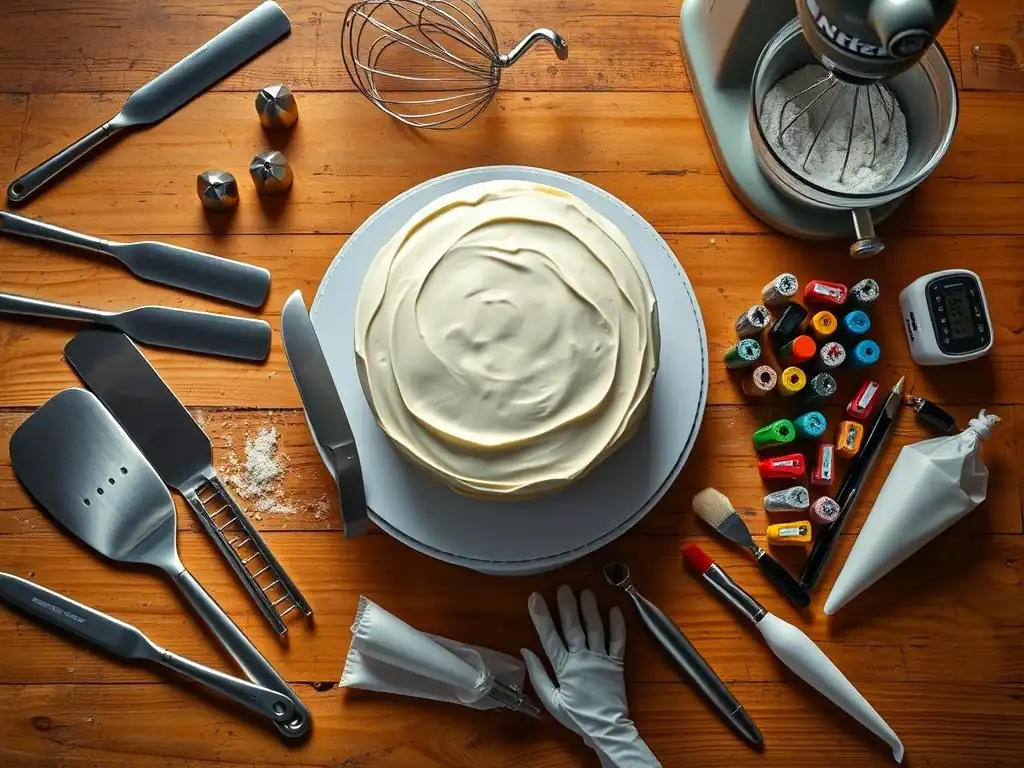
Welcome to BakeWithEase, your haven for unlocking the joy of baking! Ever dreamt of creating show-stopping cakes but felt overwhelmed by the sheer volume of tools? You're not alone. In this guide, we're cutting through the clutter and diving into the essential tools you'll actually need to embark on your cake decorating journey. Prepare to simplify your setup and unleash your inner artist – let's get started!
- Cake Decorating Essential Tools Guide for Beginners
- Core Cake Decorating Tools Explained: What You Really Need
- Beyond the Basics: Useful, but Not Essential (Initially)
- Tips for Choosing Quality Cake Decorating Tools
- Maintaining Your Cake Decorating Tools for Longevity
- Where to Buy Cake Decorating Tools: Recommended Retailers
- Get Started with Cake Decorating: Your First Project
- Conclusion: Your Journey into Cake Decorating Begins Now
-
Frequently Asked Questions
- What are the absolute essential tools for a complete beginner starting out with cake decorating?
- I’m on a tight budget. Which single cake decorating tool should I invest in first?
- What’s the difference between offset spatulas and regular spatulas, and why are they important for cake decorating?
- Beyond frosting tools, what's a good tool for creating textures on cakes?
- How important are piping tips for cake decorating, and what are a few versatile ones to start with?
- Final Reflection: The Sweetest Journey Begins with the Right Tools
- Unleash Your Inner Cake Artist!
Cake Decorating Essential Tools Guide for Beginners
Essential Cake Decorating Tools: The Foundation for Success
Embarking on your cake decorating journey requires a foundational set of tools. Think of these as the building blocks that will enable you to move beyond just baking a delicious cake to making it look stunning. While you don't need every gadget on the market right away, having the right basic supplies will significantly ease the learning process and help you achieve professional-looking results sooner than you might think. These initial tools are surprisingly simple but incredibly effective for tasks like crumb coating, applying base layers of frosting, and getting a smooth finish.
Getting started with cake decorating doesn't have to break the bank. You can build a solid toolkit with relatively inexpensive items. For instance, a sturdy set of mixing bowls, a good whisk, and a basic rubber spatula are prerequisites for making frosting or ganache. Beyond that, the true essential decorating tools focus on application and smoothing. A small investment in these core items will open up a world of creative possibilities, allowing you to practice fundamental techniques before investing in more specialized equipment. This cake decorating essential tools guide focuses on practicality and effectiveness for beginners.
Building Your Cake Decorating Toolkit: A Beginner's Checklist
Building your initial cake decorating toolkit should be a focused effort on acquiring versatile items that serve multiple purposes. Resist the urge to buy single-use gadgets initially. Instead, focus on pieces that are fundamental to most decorating tasks, such as applying frosting, smoothing surfaces, and simple piping. A well-chosen starter set makes learning easier and more enjoyable, allowing you to practice core skills effectively.
Here is a simple checklist to help you gather your first batch of essential cake decorating supplies:
- [ ] Cake Turntable
- [ ] Offset Spatula (medium size, about 8-10 inches blade)
- [ ] Icing Smoother/Bench Scraper
- [ ] Piping Bags (disposable or reusable)
- [ ] Set of basic Piping Tips (Round, Star, Leaf)
- [ ] Couplers for piping bags (optional, but very useful)
- [ ] Cake Scrapers (metal or plastic, for edges)
- [ ] Measuring Cups and Spoons
- [ ] Kitchen Scale (digital is best)
This list covers the most critical items needed for the fundamental steps of cake decorating, from preparing your cake to adding initial frosting layers and simple decorative elements. Having these essential cake decorating tools at hand ensures you're ready for common techniques.
Core Cake Decorating Tools Explained: What You Really Need
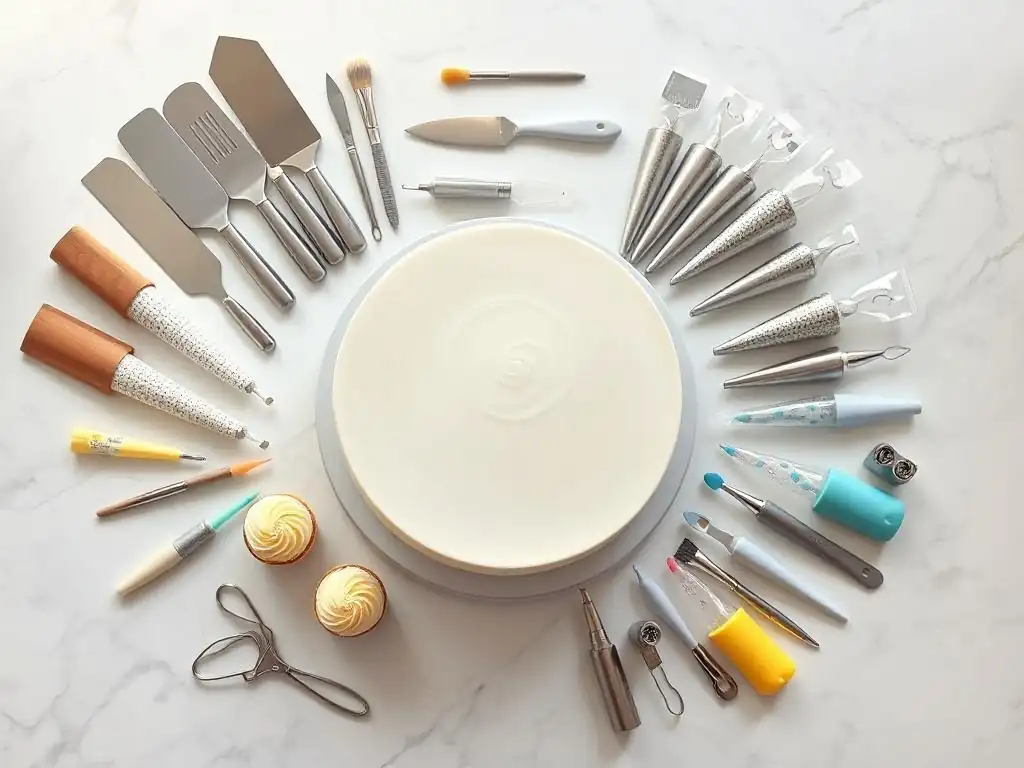
Turntables: The Rotating Cake Decorating Essential
A cake turntable, also known as a revolving cake stand, is arguably one of the most important tools for smooth and even frosting application. It allows you to easily rotate the cake as you work, ensuring consistent pressure and a seamless finish on the sides. Trying to frost a cake without one often results in uneven coverage and a sore back from constantly moving around the cake yourself. Even a basic plastic turntable, often available for around $15-25, provides a significant advantage over working on a stationary surface.
Beyond just frosting, a turntable is invaluable for adding drips, creating piped borders, or applying details around the cake's circumference. It keeps your hands free to focus on the decoration itself, rather than maneuvering the cake. While professional-grade metal turntables can cost $50 or more and offer superior stability and smoothness, a beginner can absolutely start with a sturdy plastic model. Look for one with a non-slip base to prevent it from sliding on your counter. This rotating stand is a key component in any serious cake decorating essential tools guide.
Spatulas: Achieving Smooth Frosting and Finishes
Spatulas are indispensable for applying, spreading, and smoothing frosting. While you might have rubber spatulas for mixing, cake decorating requires metal spatulas with flat, flexible blades. These come in various sizes and shapes, but two are particularly important for beginners: the offset spatula and the icing smoother. Using the right spatula makes a dramatic difference in the final look of your cake, transforming bumpy surfaces into smooth canvases or creating interesting textures.
The flexibility of a good quality metal spatula allows you to apply just the right amount of pressure to spread frosting evenly without digging into the cake. For example, when crumb coating a cake (applying a thin layer of frosting to trap crumbs), a small offset spatula is perfect for getting into tight spots and applying a thin, consistent layer. Mastering the use of spatulas is a fundamental skill in cake decorating.
Offset Spatulas: The Cake Decorator's Best Friend
Offset spatulas are characterized by their angled blade, which keeps your hand elevated and away from the cake's surface. This design is crucial for preventing accidental bumps and smears as you work, especially when smoothing the top or sides of a cake. They come in various sizes, typically ranging from 4 inches (for small details or cupcakes) up to 12 inches or more (for large cakes). A medium-sized offset spatula, around 8-10 inches, is a great starting point as it's versatile enough for most standard cake sizes.
Using an offset spatula allows for precise control when spreading frosting. For instance, when applying the final layer of buttercream to the top of a cake, you can use the flat edge to pull the frosting towards the edges, creating a sharp lip, and then smooth the sides. They are also excellent for lifting and moving delicate items like cookies or small pastries. Many cake decorating essential tools guides highlight the offset spatula as a non-negotiable item.
Icing Smoother: For a Professional-Looking Cake
An icing smoother, also known as a bench scraper or side scraper, is a flat, rigid tool used to achieve perfectly smooth and straight sides on a frosted cake. While an offset spatula can smooth the top, getting truly even sides is difficult without a dedicated smoother. These tools are typically made of metal or rigid plastic and have a straight edge. Holding the smoother against the side of a rotating cake on a turntable allows you to scrape away excess frosting and fill in gaps simultaneously, resulting in a flawless finish.
For example, after applying a generous layer of frosting to the sides of your cake, hold the icing smoother perpendicular to the turntable and at a slight angle to the cake. As you rotate the turntable, keep the smoother stationary, allowing its edge to scrape the frosting smooth. This technique is essential for achieving sharp edges and a professional appearance, a key goal for many following a cake decorating essential tools guide.
Piping Bags and Tips: Creating Beautiful Designs
Piping bags and tips are the tools you'll use to create decorative borders, write messages, pipe rosettes, stars, leaves, and countless other designs onto your cakes and cupcakes. A piping bag holds the frosting, and a tip (a small, shaped nozzle) is inserted into the end to determine the form of the piped frosting. This combination allows for intricate and controlled application of frosting, greatly expanding your decorating possibilities.
You'll need both piping bags and a selection of tips to get started. Piping bag materials vary, and tips come in a vast array of shapes and sizes. Don't feel overwhelmed by the options; a few basic tips can create a surprising variety of designs, making them truly essential cake decorating supplies.
Piping Bag Essentials: Disposable vs. Reusable
Piping bags come in two main types: disposable and reusable. Disposable piping bags are typically made of plastic and are convenient for quick cleanup – you simply use them and throw them away. They are often sold in rolls or packs of 50 or 100, making them cost-effective for frequent use or when using multiple colors of frosting. Their ease of use makes them popular with many home bakers.
Reusable piping bags are usually made of sturdy nylon or silicone. They are more environmentally friendly and can be washed and used repeatedly. While they require cleaning, they tend to be more durable and can handle stiffer frostings better than some disposable bags. A beginner might start with a pack of disposable bags for convenience, but investing in a couple of good reusable bags is a worthwhile long-term choice for your cake decorating toolkit.
Essential Piping Tips for Beginners: Round, Star, and Leaf Tips
For a beginner's cake decorating toolkit, focusing on a few versatile piping tip shapes is key. You don't need dozens of tips to start creating beautiful designs. Three fundamental types will cover a wide range of techniques:
- Round Tips: Used for dots, lines, writing, beads, and filling in areas. A medium round tip (like Wilton #12) is great for dots and lines, while a very small one (like Wilton #3) is perfect for fine writing.
- Star Tips: Used for creating stars, rosettes, shells, and borders. Open star tips (like Wilton 1M or 4B) create defined points, while closed star tips (like Wilton 2D) create more ruffled effects. The Wilton 1M is perhaps the most popular beginner tip due to its versatility for swirls and rosettes.
- Leaf Tips: Used for piping leaves, ruffles, and sometimes flower petals. A basic leaf tip (like Wilton #352) has a V-shaped opening and creates realistic-looking leaves with a little pressure variation.
Starting with just a few sizes of these three types will allow you to practice fundamental piping techniques and create a variety of common cake decorations. These are truly essential cake decorating supplies for adding flair.
Cake Scrapers: Achieving Texture and Definition
Beyond the flat icing smoother used for smooth sides, cake scrapers with textured edges are used to create decorative patterns on the frosting surface. These tools add visual interest and can turn a simple frosted cake into something more dynamic. They are typically held against the side of the cake while it rotates on a turntable, much like a smooth icing smoother, but their notched or patterned edges leave behind ridges or waves in the frosting.
Cake scrapers come in various materials, including metal and plastic, and feature countless different patterns, from simple stripes to intricate waves or zigzags. While not strictly essential for your very first project, they are relatively inexpensive and offer an easy way to add decorative flair once you've mastered basic frosting.
Metal Cake Scrapers: For Sharp Edges
Metal cake scrapers are usually made of stainless steel and offer rigidity and durability. They are excellent for achieving very sharp, defined edges on the top of your cake after the sides have been smoothed. By holding a straight metal scraper at a slight angle over the top edge of the cake and pulling inwards, you can clean up the frosting lip and create a crisp, professional edge.
While some metal scrapers have textured edges for patterns, their primary advantage is their weight and firmness, which makes them ideal for achieving those coveted sharp corners on ganache or firm buttercream. They are easy to clean and built to last, making them a good investment for your cake decorating toolkit as you progress.
Plastic Cake Scrapers: For Decorative Effects
Plastic cake scrapers are often less expensive than metal ones and come in a much wider variety of shapes and decorative patterns. These are specifically designed to create textures on the sides of a frosted cake. Common patterns include stripes (wide or narrow), waves, zigzags, and comb effects. A single set of plastic scrapers might include 3-5 different patterns, offering multiple design options.
Using a plastic scraper is straightforward: after applying your final layer of frosting, hold the scraper against the side of the cake (ensuring it touches both the cake board and the top edge) and rotate the turntable smoothly. The scraper will remove frosting from the high points, leaving behind the pattern. They are lightweight and easy to handle, making them great for adding quick, attractive textures.
Measuring Tools: Precision for Perfect Results
While often overlooked in discussions about cake decorating tools, accurate measuring tools are absolutely critical for consistent baking and for successful frosting, ganache, or royal icing. The best decorating techniques in the world won't save a cake if the foundation (the cake itself and the frosting) isn't made correctly. Precision in measurement ensures that your recipes turn out right every time, which is fundamental to enjoyable decorating.
Using standard measuring cups and spoons for volume, and ideally a kitchen scale for weight, guarantees that your ingredient ratios are correct. This is particularly important for finicky recipes like macarons or certain types of buttercream where the balance of fat, sugar, and liquid is crucial for texture and stability – factors that directly impact how well the frosting pipes or smooths.
Measuring Cups and Spoons: Accurate Ingredient Measurement
Standard dry measuring cups and spoons are essential for ingredients like flour, sugar, cocoa powder, baking powder, and baking soda when recipes call for volume measurements. Liquid measuring cups, typically clear with spouts, are used for milk, water, oil, and other liquids. Using the correct type of measuring tool for the ingredient (dry vs. liquid) is important for accuracy. For example, scooping flour directly with a measuring cup can result in significantly more flour than spooning it lightly into the cup.
While volume measurements are common in many recipes, they can lead to variations. A cup of flour can weigh anywhere from 120g to 150g depending on how it's measured. This variability can affect the texture of your cake or the consistency of your frosting. Always level off dry ingredients with a straight edge for the most consistent volume measurement possible.
Kitchen Scale: Precise Baking for Consistent Outcomes
A digital kitchen scale is a game-changer for baking and frosting making. Measuring ingredients by weight (grams or ounces) is far more accurate and consistent than measuring by volume. Most professional recipes and many modern home baking recipes provide measurements by weight for this very reason. For instance, weighing flour ensures you always use the exact amount specified, leading to predictable results every time you bake that cake or make that batch of buttercream.
Investing in a digital scale, which can cost as little as $20-30, will significantly improve the consistency of your baked goods. This precision is vital for achieving the correct texture in frostings that need to hold their shape for piping or be smooth enough for spreading. Using a scale is a key step towards mastering baking and, consequently, cake decorating.
Beyond the Basics: Useful, but Not Essential (Initially)
As you grow in your cake decorating skills, you might eye more advanced tools. However, for starting out, many items are simply not necessary. Focus your initial investment on the core tools mentioned above. Here are a few examples of tools that are useful for specific techniques or more advanced designs but can definitely wait:
- Airbrush kits
- Fondant tools (rolling pins, cutters, impression mats)
- Edible markers or paints
These tools are fantastic for expanding your repertoire later, but they address specific decorating styles or levels of detail that aren't typically where a beginner starts.
Airbrush: Adding Color and Detail (Later On)
An airbrush system for cake decorating uses food coloring mixed with a liquid (like vodka or clear extract) sprayed through a pen-like tool using compressed air. It allows for smooth color gradients, stenciled designs, and vibrant, even coverage that is difficult to achieve with traditional brushing or dyeing frosting.
While airbrushing can create stunning visual effects, it requires practice to control, can be messy, and a basic kit typically costs upwards of $50-100. It's a specialized tool for adding specific types of color and detail, not a fundamental tool for applying or smoothing frosting or basic piping.
Fondant Tools: For Advanced Cake Decorating (Eventually)
Fondant is a pliable sugar paste used to cover cakes with a smooth, porcelain-like finish or to sculpt figures and decorations. Working with fondant requires a completely different set of tools than buttercream decorating. These include large non-stick rolling pins, fondant smoothers, cutters (plunger cutters, circle cutters), impression mats, and modeling tools.
Covering a cake smoothly with fondant or creating detailed fondant figures is a skill set distinct from mastering buttercream. While beautiful, fondant work is not typically a beginner's first foray into cake decorating. Therefore, the specialized tools associated with it are not part of an initial cake decorating essential tools guide.
Edible Markers: For Fine Detailing (Optional)
Edible markers are like regular markers but filled with food-safe ink. They are used for drawing fine details, writing messages, or coloring small areas on surfaces like dried royal icing, fondant, or gumpaste. They are useful for adding small touches that might be difficult to achieve with piping.
While handy for specific detailed work or lettering on a firm surface, edible markers aren't used for applying or smoothing frosting or basic piping. They are a supplementary tool for adding drawn elements, making them optional for a beginner's basic toolkit.
Tips for Choosing Quality Cake Decorating Tools
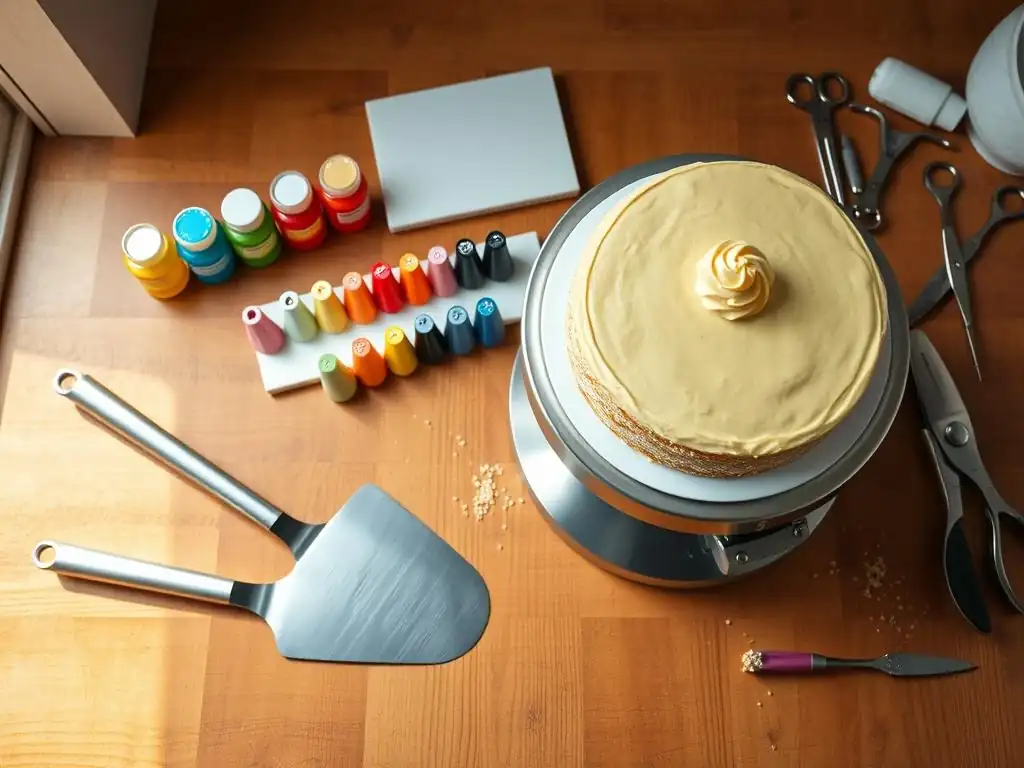
When selecting your essential cake decorating supplies, quality matters. Investing in decent tools from the start can save you frustration and potentially money in the long run, as durable tools perform better and last longer. Don't feel pressured to buy the most expensive items, but also be wary of the cheapest options that might break or not function well.
Consider the materials the tools are made from, especially for spatulas and scrapers where rigidity and smoothness are important. For piping tips, look for seamless stainless steel. For turntables, stability is key. Making informed choices ensures your cake decorating journey is smoother and more enjoyable.
Investing in Durable Materials
Look for tools made from durable, food-grade materials. Stainless steel is excellent for spatulas, scrapers, and piping tips because it's rust-resistant, easy to clean, and provides the necessary rigidity or flexibility. Sturdy, food-safe plastic is acceptable for turntables, measuring tools, and some scrapers, but ensure it feels solid and not flimsy.
For example, a cheap plastic offset spatula might bend too much under the pressure of frosting, making smoothing difficult, whereas a stainless steel one will maintain its shape. Piping tips made from thin, seamed metal can snag or deform easily, unlike seamless stainless steel tips which provide clean, consistent piping. Prioritizing durable materials ensures your essential cake decorating tools stand up to repeated use.
Reading Reviews and Comparisons
Before purchasing, take a few minutes to read reviews from other users. Look for comments specifically mentioning performance, durability, and ease of cleaning. Websites selling baking supplies often have customer review sections. Comparing different brands or models based on user feedback can help you avoid tools that are poorly designed or break quickly.
For instance, when choosing a turntable, check reviews for comments on how smoothly it rotates or if it wobbles. For piping bags, see if users report them tearing easily. This research is a simple but effective way to gauge the quality and usability of the cake decorating supplies before you buy them.
Considering Tool Sets vs. Individual Purchases
Beginner cake decorating tool sets can seem appealing because they offer a variety of items at a bundled price. However, the quality of tools within a set can vary. Sometimes, only a few items in the set are truly useful or high quality, while others are flimsy or unnecessary.
Often, it's better to purchase essential items individually from reputable brands. This allows you to select the best quality version of each specific tool you need, ensuring that your core cake decorating toolkit is reliable. While it might cost slightly more upfront than a cheap set, you'll end up with better-performing tools that you'll actually use and that will last longer.
Maintaining Your Cake Decorating Tools for Longevity
Taking proper care of your cake decorating supplies is crucial for keeping them in good working order and ensuring they last for years. Frosting and food coloring can be stubborn to remove if left to dry, and metal tools are susceptible to rust if not dried properly. Simple maintenance steps after each use will protect your investment.
Proper cleaning also ensures hygiene, which is paramount when working with food. Storing your tools neatly prevents them from getting damaged or lost. A little effort in maintenance goes a long way in preserving the quality and functionality of your essential cake decorating tools.
Proper Cleaning and Storage Techniques
Clean your tools immediately after use, if possible, before frosting or colors have a chance to harden. Most metal and plastic tools can be washed with warm, soapy water. For piping tips, use a small brush (like a bottle brush or a specialized tip brush) to clean out any residual frosting inside the narrow opening. Piping bags, especially reusable ones, need thorough washing and rinsing.
After washing, it's essential to dry metal tools completely to prevent rust. Air drying on a rack is fine, but ensure they are fully dry before putting them away. Store tools neatly to protect them – perhaps in a dedicated drawer organizer, a tool caddy, or containers. Piping tips can be stored in small boxes or specialized tip organizers.
Preventing Rust and Damage
Rust is the enemy of metal cake decorating tools like spatulas, scrapers, and piping tips. The primary way to prevent rust is to ensure they are thoroughly dried after every wash. Avoid leaving metal tools soaking in water for extended periods. If you notice any signs of rust, you can often remove minor spots with a paste of baking soda and water or a commercial rust remover designed for kitchenware.
Preventing damage involves careful handling and storage. Avoid dropping metal spatulas, which can bend the blade. Store piping tips so they aren't banging against each other, which can deform the openings. Keep sharp scrapers in a way that protects their edges and prevents accidental cuts. Treating your essential cake decorating supplies with care will ensure their longevity.
Where to Buy Cake Decorating Tools: Recommended Retailers
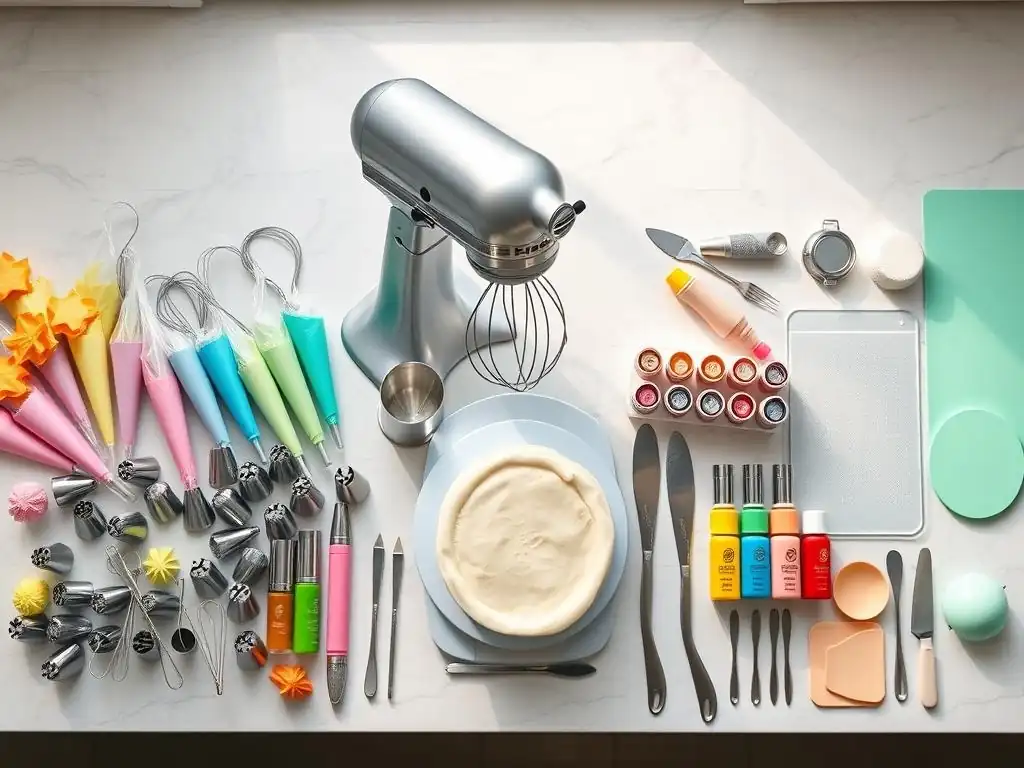
Finding the right place to purchase your cake decorating essential tools guide items is important. You want to find retailers that offer quality products, reasonable prices, and potentially a good selection. While many general stores carry some baking items, specialized baking supply stores often offer a wider range and higher quality tools specifically designed for decorating.
Both online and local options are available, each with its own advantages. Shopping around and comparing prices and product availability between different retailers is always a good idea to build your initial toolkit.
Online Cake Decorating Supply Stores
Numerous online retailers specialize in cake decorating and baking supplies. Websites like Wilton, Ateco, or Fat Daddio's (brands that also make tools) have their own online stores, as do larger craft supply stores or dedicated baking e-commerce sites. Amazon also carries a wide selection from various brands.
Shopping online offers convenience and access to a vast inventory, often including reviews and detailed product descriptions. You can easily compare prices and find specific tools or brands. However, you can't physically inspect the product before buying, and shipping costs need to be considered.
Local Baking Supply Shops
Many towns and cities have local baking supply shops, sometimes called cake and candy supply stores. These stores often cater to both professional and home bakers. They typically carry a good selection of essential cake decorating supplies, including tools, ingredients, and packaging.
Shopping locally allows you to see and feel the tools before purchasing, ask questions to knowledgeable staff, and get immediate gratification by taking your purchases home right away. Prices might be slightly higher than online, but the ability to inspect quality and get expert advice can be invaluable when starting your cake decorating toolkit.
Get Started with Cake Decorating: Your First Project
Once you've assembled your essential cake decorating tools, it's time to put them to use! Don't aim for a multi-tiered masterpiece on your first try. Start with a simple project that allows you to practice fundamental skills like frosting a cake smoothly or basic piping techniques. Cupcakes are often a great starting point as they are smaller and less intimidating than a full-sized cake.
Choosing a simple project helps you get comfortable with your new tools without feeling overwhelmed. It's about building confidence and muscle memory. Remember, every experienced cake decorator started somewhere, and simple projects are the foundation of mastering the craft.
Simple Cake Decorating Ideas for Beginners
Here are a few ideas for your first cake decorating projects using your essential tools:
- Smoothly Frosted Round Cake: Focus solely on applying and smoothing buttercream on a single layer or small two-layer round cake using your offset spatula and icing smoother. Practice getting the sides straight and the top smooth.
- Cupcakes with Swirls: Use your piping bag and a large star tip (like Wilton 1M) to pipe simple, classic swirls onto cupcakes. This is excellent practice for controlling pressure and movement with the piping bag.
- Cake with Piped Dots and Borders: Frost a cake smoothly, then use a round tip to pipe uniform dots around the top or bottom edge. You could also try a simple star border using a star tip.
- Two-Tone Cupcake Swirls: Practice filling your piping bag with two different colors of frosting side-by-side to create a beautiful two-tone swirl using a star tip.
These projects utilize the core tools from your cake decorating essential tools guide and focus on mastering foundational techniques.
Buttercream Rose Cupcakes Tutorial
A classic beginner project is piping buttercream roses onto cupcakes. This uses your piping bag and a star tip, typically a closed star tip like Wilton 2D or a large open star like Wilton 1M.
Here's a simplified overview of the process:
- Fit your piping bag with a coupler and a star tip (e.g., 1M).
- Fill the bag with prepared buttercream frosting.
- Hold the bag perpendicular to the cupcake.
- Starting in the center, pipe a tight swirl outwards, keeping consistent pressure.
- Release pressure as you reach the edge of the cupcake and pull the tip away.
This project is fantastic for practicing consistent pressure and circular motion with the piping bag, resulting in beautiful floral-like swirls that impress. It's a perfect way to get comfortable with your essential cake decorating tools.
Conclusion: Your Journey into Cake Decorating Begins Now
Embarking on the art of cake decorating is an exciting creative adventure. By focusing on acquiring the essential cake decorating tools outlined in this guide – a sturdy turntable, versatile spatulas, piping bags and a few key tips, useful scrapers, and accurate measuring tools – you are setting yourself up for success. Remember that quality over quantity is important when building your initial toolkit.
Don't be intimidated by complex designs you see online. Start simple, practice the fundamental techniques of frosting and basic piping, and gradually expand your skills and tool collection as you go. Every beautiful cake you admire started with these basic steps and tools. Your journey into cake decorating begins now, equipped with the right knowledge and essential supplies to create delicious and visually appealing treats. Happy decorating!
Frequently Asked Questions
What are the absolute essential tools for a complete beginner starting out with cake decorating?
For beginners, focus on a turntable, a set of offset spatulas (various sizes), and a basic set of piping tips and bags. These will cover most fundamental techniques.
I’m on a tight budget. Which single cake decorating tool should I invest in first?
If you can only buy one, invest in a good-quality, rotating turntable. It makes frosting and smoothing cakes significantly easier and more professional-looking.
What’s the difference between offset spatulas and regular spatulas, and why are they important for cake decorating?
Offset spatulas have a bent blade, allowing you to spread frosting smoothly without your hand hitting the cake. They provide better control and a cleaner finish.
Beyond frosting tools, what's a good tool for creating textures on cakes?
A simple cake comb or scraper is excellent for creating textured designs in frosting. You can find various patterns and sizes for different effects.
How important are piping tips for cake decorating, and what are a few versatile ones to start with?
Piping tips are crucial for creating decorative elements. Start with a round tip (for writing), a star tip (for borders), and a leaf tip (for foliage).
Final Reflection: The Sweetest Journey Begins with the Right Tools
So, you're ready to embark on the delicious adventure of cake decorating? This journey, filled with frosting swirls, intricate designs, and the sheer joy of creation, starts with the right tools. Ignoring the essentials can quickly turn a delightful hobby into a frustrating experience, so choosing wisely is paramount to your success.
The impact of accessible, high-quality tools on the creative process cannot be overstated. It's not just about the end product; it's about the confidence and ease with which you create. The right tools empower you to explore your artistic vision without the limitations of inadequate equipment. As the renowned pastry chef, Pierre Hermé, once said: Pastry is a science, but it's also an art. The tools you use are an extension of yourself.
This rings true for cake decorating, too. The right tools allow your creativity to truly flourish.
Now, it's your turn. Consider the tools you already have and the ones you've learned about here. Don't feel pressured to buy everything at once; build your collection gradually, focusing on the essentials that will best serve your current skill level and aspirations. Remember, the most important tool you possess is your passion. Let that passion guide you, and let the joy of creation lead you to ever-more-delicious heights. Happy decorating!
Unleash Your Inner Cake Artist!
Thanks for taking the time to explore the world of cake decorating with us! We hope you now feel confident about which essential tools to gather. Ready to transform your baking game?
- Start decorating today! Grab your favorite cake recipe and those must-have tools, and begin creating your masterpiece. Don't be afraid to experiment and have fun!
- Share your creations: Show us your baking journey on social media using #BakeWithEase – we'd love to see what you bake!
- Explore our community: Dive into our forums to connect with fellow bakers, share tips, and ask questions. You might be surprised at the amazing techniques you'll discover!
What exciting cake design will you tackle first? Let us know in the comments below!