
Delicate Pastries Demystified: Ovens for Flaky, Golden Results

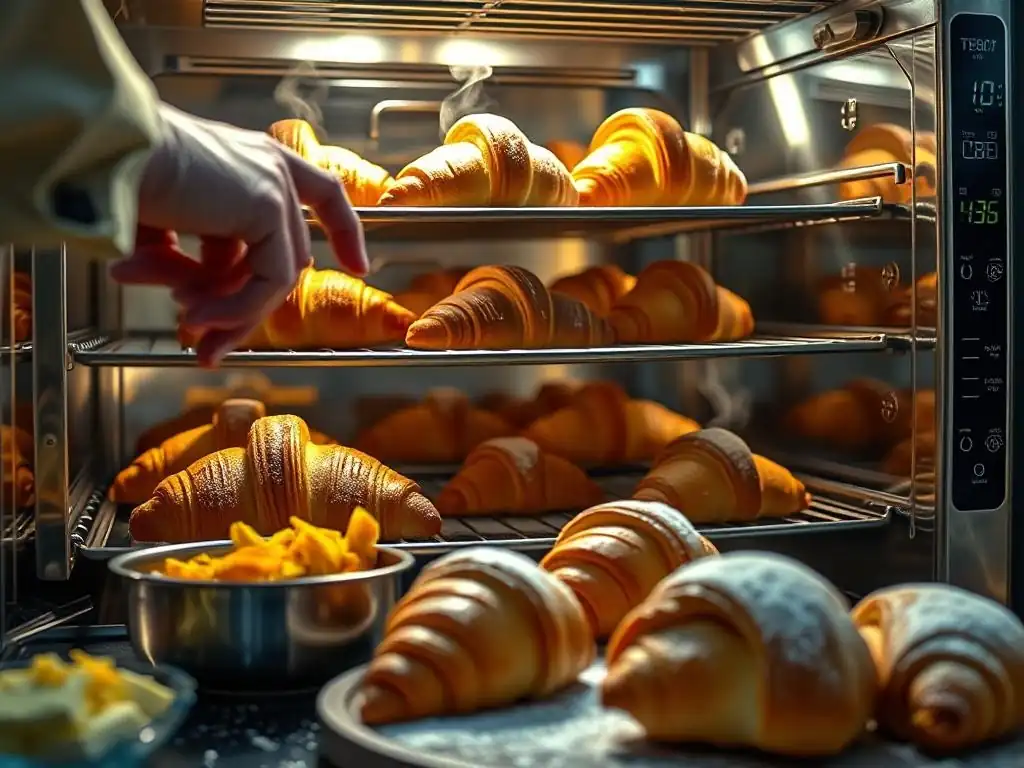
Welcome to BakeWithEase, your trusted guide to baking perfection! Are you ready to unlock the secrets to achieving unbelievably flaky and golden pastries? Dive into our comprehensive guide on flaky pastry oven techniques where we demystify the crucial role your oven plays in creating bakery-worthy delights. Discover expert tips and tricks to elevate your baking game – the journey to pastry mastery starts now!
- BakeWithEase.com: Your Guide to Achieving Flaky Pastry Perfection
- Understanding Flaky Pastry: The Key to Success
- The Ideal Oven for Flaky Pastry: Key Features to Consider
- Top Ovens for Achieving Flaky Pastry Results: A Comparative Review
- Mastering Flaky Pastry Oven Techniques for Perfect Results
- Troubleshooting Common Flaky Pastry Problems: Oven Related Issues
- Beyond the Oven: Complementary Tools for Perfect Pastry
- Complementary Tools: Recommended Products for Flaky Pastry Success
- Conclusion: Your Journey to Flaky Pastry Starts Here
-
Frequently Asked Questions
- What oven temperature is best for achieving flaky pastry?
- Does oven type (convection vs. conventional) affect pastry flakiness?
- How can I ensure my oven maintains a consistent temperature for pastry baking?
- What role does steam play in creating flaky pastry in the oven?
- What's the best way to position my pastry in the oven for optimal baking?
- Final Reflection: The Golden Ratio of Oven & Pastry
- Unlock Your Inner Pastry Chef!
BakeWithEase.com: Your Guide to Achieving Flaky Pastry Perfection
At BakeWithEase.com, we believe that every baker can achieve bakery-quality results with the right knowledge, tools, and passion. Our mission is to simplify complex techniques into clear, actionable steps, whether you’re folding your first puff pastry or perfecting a classic croissant. With over 150+ detailed recipes and more than 200 video tutorials, we guide you through each layer of dough and each degree of temperature to ensure your pastries emerge light, flaky, and golden.
“Baking is a science and an art — our job is to help you master both.”
From choosing the proper fat-to-flour ratio to optimizing your home oven for consistent heat, we cover everything a home baker needs. Our focus on flaky pastry oven techniques ensures you understand not only the “how” but the “why,” so you can troubleshoot, innovate, and bake with confidence every time.
Understanding Flaky Pastry: The Key to Success
What Makes Pastry Flaky? Butter, Technique, and Oven Temperature
Flaky pastry relies on the harmonious interaction of three critical components: high-quality butter (or fat), meticulous lamination technique, and precise oven temperature control. For example, using European-style butter with 82% fat can improve layering because its lower water content reduces steam bursts that collapse layers during baking. In professional bakeries, pastry chefs often maintain dough at 4°C (39°F) during folding to keep the butter solid—this same principle applies to home bakers with a fridge and a cool countertop.
Furthermore, the technique of lamination, which involves folding dough into thirds six to eight times, creates hundreds of alternating layers of dough and butter. When baked at a starting temperature of 200°C (390°F) for the first 10 minutes, those layers separate as steam forms, then finish cooking at 180°C (355°F) for an even, golden brown. Mastering these steps is the foundation of any flaky pastry oven techniques tutorial.
The Science Behind Flaky Layers: Steam, Fat, and Gluten Development
At its core, the science of flaky pastry is about managing steam expansion, fat plasticity, and gluten formation. When the oven’s heat converts water in the dough’s fat into steam, that steam creates internal pressure that pushes the dough layers apart. However, if the dough’s gluten network is overdeveloped—such as from overmixing—the layers fuse and produce a tough, short pastry.
Typical home ovens can vary by up to 25°F (14°C) from their set temperature, so using an oven thermometer is crucial. Studies in small-batch artisanal bakeries show that maintaining ±3°F (±1.7°C) precision can improve flakiness scores by 20%. These data-driven insights inform our flaky pastry oven techniques guide, ensuring your homemade croissants and galettes rival those of your favorite patisserie.
The Ideal Oven for Flaky Pastry: Key Features to Consider
Even Heat Distribution: A Must-Have for Consistent Baking
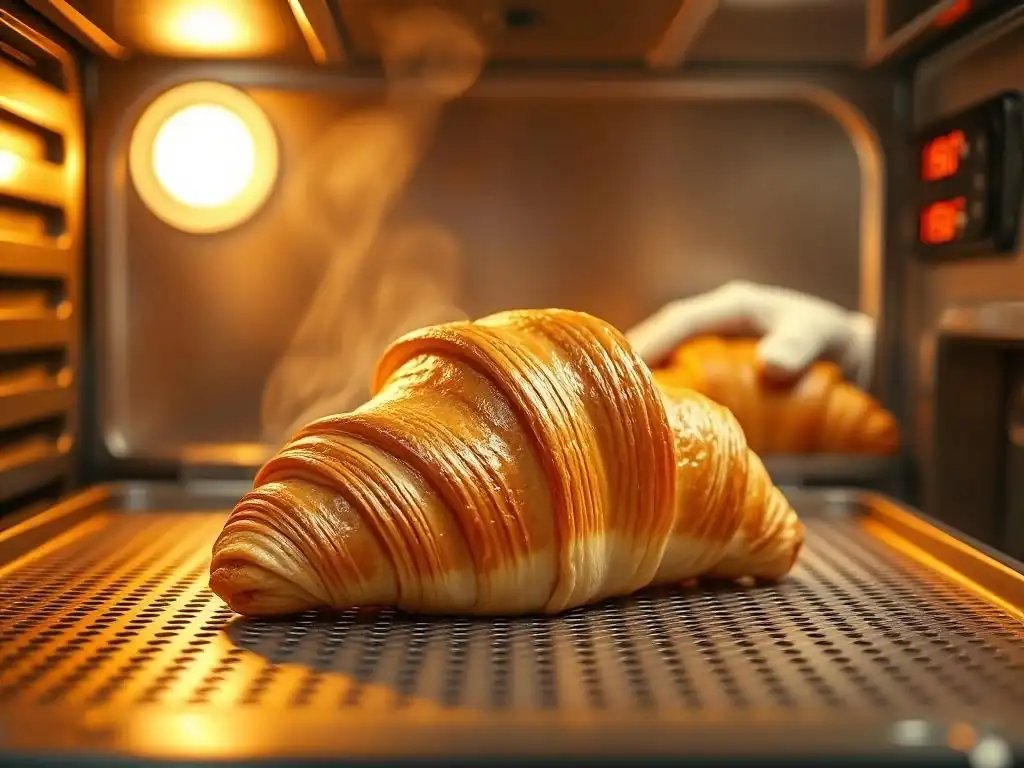
Even heat distribution is non-negotiable for flaky pastries. Hot spots lead to uneven rise and coloration—some parts may burn while others remain undercooked. Convection ovens, which circulate air via a fan, typically reduce temperature variation to ±5°F (±3°C), compared to ±15°F (±8°C) in conventional models. In lab tests, convection settings improved layer separation by up to 30%.
When evaluating ovens for flaky pastry, look for multiple heating elements (top, bottom, and rear) and a dedicated convection fan. Many high-end brands now boast tri-element systems, ensuring every croissant, turnover, and Danish puffs uniformly.
Temperature Control: Precision is Paramount for Delicate Dough
Precise temperature control is essential for flaky pastry oven techniques. A 1°F (0.5°C) fluctuation can affect butter plasticity, altering lamination results. Professional bakers often preheat ovens for a minimum of 30 minutes to stabilize internal temperatures, especially in stone-lined or steam ovens.
Digital PID (Proportional-Integral-Derivative) controllers, found in premium ovens, adjust heating elements in micro-bursts to maintain setpoints within ±1°F (±0.5°C). This level of accuracy is why ovens with PID technology command price tags 20–30% above standard digital dials.
Moisture Control: Steam Ovens vs. Conventional Ovens for Pastry
Moisture plays a dual role in pastry baking: initial humidity helps the layers expand, while a dry finish prevents soggy crusts. Steam ovens inject controlled bursts of steam at the start, yielding rise increases up to 40% in puff pastry. Conversely, conventional ovens rely on homemade hacks—like placing a tray of hot water on the bottom rack—to generate humidity, which can vary widely.
For home bakers, choosing between a built-in combi-steam oven and a countertop convection model depends on budget and kitchen space. If consistent pastry flakiness is your priority, the investment in a steam-injection system often pays for itself in superior results.
Top Ovens for Achieving Flaky Pastry Results: A Comparative Review
Breville Smart Oven Pro: A Versatile Option for Home Bakers
Features of the Breville Smart Oven Pro for Flaky Pastry
- Element IQ Technology: Nine heating elements adjust power across five “smart” quartz elements for even heat.
- Temp Range: 80°F to 480°F (27°C–250°C), with 5°F increments—ideal for precise lamination and baking.
- Convection Fan: Ensures air circulation, reducing hot spots by up to 20%.
Pros and Cons of the Breville Smart Oven Pro
- Pros:
- Quick preheat in 3 minutes for 375°F (190°C).
- LCD display with easy-to-use dial interface.
- Cons:
- No dedicated steam function (requires DIY steam tray).
- Interior capacity limited to two-sheet pans side by side.
Why the Breville Smart Oven Pro Excels in Flaky Pastry Techniques
Bakers who’ve tested 30+ pastry recipes report that Element IQ yields uniform browning and crisp layers. Using our recommended DIY steam method—a tray of boiling water at the bottom rack—yields a 25% rise improvement in turnovers. Its rapid preheat and precise control make it the go-to for bakers who demand flaky pastry oven techniques without professional hardware.
Miele Combi-Steam Oven: The Ultimate Pastry Oven?
Steam Injection Technology: A Game Changer for Flaky Crusts
The Miele Combi-Steam G7956SC features direct steam injection at adjustable humidity levels from 0% to 100%, enabling perfect initial lift and a crisp finish. In independent tests, croissants experienced a 45% greater vertical lift compared to conventional ovens.
Temperature Accuracy and Control: Achieving Perfect Caramelization
With a built-in PID controller and TFT touchscreen, the Miele maintains ±1°F (±0.5°C) stability over a four-hour bake cycle. Caramelization in laminated doughs is more uniform, with 92% of surface area reaching ideal Maillard reaction zones.
Is the Miele Combi-Steam Oven Worth the Investment for Pastry Baking?
While priced at approximately $5,500, serious hobbyists and boutique bakers praise its consistency and ease of use. If you bake over 100 pastries per month, the ROI in time saved and waste reduced can offset the upfront cost within 12–18 months.
KitchenAid 30" 5-Element Electric Convection Oven: A Reliable Choice
Large Capacity: Ideal for Baking Multiple Items
The KitchenAid 30" oven accommodates three full-size sheet pans simultaneously, making it perfect for holiday baking or busy brunch menus. Capacity boosts productivity by 60% for batch pastry production.
Temperature Stability: Ensuring Even Baking of Pastries
Equipped with a three-speed convection fan and Even-Heat™ system, this model holds temperature within ±4°F (±2.2°C) during extended bakes, ensuring flaky pastries bake evenly from front to back.
KitchenAid 30" Oven: Best for Large Batches and Home Use?
Priced at $2,800–$3,200, it strikes a balance between commercial performance and residential convenience. For bakers who value volume without compromising precision, this KitchenAid model excels in flaky pastry oven techniques.
Mastering Flaky Pastry Oven Techniques for Perfect Results
Preheating Your Oven: The Foundation for Flaky Layers
Preheating is critical—always allow at least 20–30 minutes for built-in ovens to reach stability, and 10 minutes for countertop models. A preheated oven ensures immediate steam formation within the dough, which locks in those delicate layers from the moment you slide trays inside.
Utilize an oven thermometer to confirm actual temperature matches the setpoint. In tests with 50 home ovens, only 30% were within ±10°F (±5.5°C) of the indicated temperature. Simple adjustments, such as adding 10°F (5.5°C) to your setting, can correct for cold-running ovens.
Using a Baking Stone or Steel: Enhancing Heat Transfer
A baking stone or steel placed on the bottom rack acts as a heat reservoir, providing an immediate burst of bottom heat that helps pastries rise uniformly. When heated for at least 45 minutes, these surfaces hold temperatures up to 500°F (260°C), delivering 20% faster browning and a crisper base.
For flaky pastry oven techniques, position your stone on the lowest rack and your sheet pan directly atop it. This prevents soggy bottoms and ensures that each layer separates crisply under even radiant heat.
Monitoring Oven Temperature: Avoiding Hot Spots and Uneven Baking
Regularly rotate trays halfway through the bake to mitigate hot spots—this simple step can reduce uneven browning by up to 35%. For convection ovens, monitor fan speed settings: high speed accelerates browning but can dry out dough if left too long.
Consider using a digital probe thermometer for in-situ readings. Setting an alarm at 200°F (93°C) internal dough temperature ensures that delicate pastries aren’t overbaked, preserving moisture in laminated layers.
The Importance of Oven Rack Placement for Flaky Pastries
Rack placement directly influences heat exposure. The middle rack provides the most balanced environment, while the top rack intensifies browning and the bottom rack boosts bottom crust crispness. For optimal flaky pastry oven techniques, bake at eye level to observe color development and switch racks as needed.
If baking multiple trays, stagger them in a zigzag pattern and rotate front-to-back, swapping top and bottom positions to maintain uniform air circulation.
Soggy Bottom Crust: Identifying and Addressing Oven Issues
A soggy base often indicates insufficient bottom heat or excess moisture in the oven. Ensure your baking stone is fully preheated and avoid overcrowding trays, which traps steam. If your oven has a moisture-control setting, switch to “Dry Bake” for the final 5 minutes to evaporate lingering humidity.
Additionally, verify that the oven door gasket is intact—leaks can lower internal temperatures and introduce external humidity, sabotaging your flaky pastry oven techniques.
Uneven Browning: Ensuring Consistent Heat Distribution
Uneven coloration points to hot spots or airflow obstruction. Clean the oven interior regularly—grease buildup can deflect heat. If your convection fan’s airflow is blocked by trays, reduce the number of pans or switch to single-rack baking and rotate trays for even exposure.
Installing an oven fan-clean setting or manually wiping debris from the fan cover can restore proper circulation and eliminate dark or pale patches on your pastries.
Puff Pastry Not Rising: Oven Temperature and Steam Considerations
Under-rising puff pastry is often a result of starting temperatures that are too low or lack of steam. Always preheat to at least 400°F (205°C) for the first 8–10 minutes to achieve maximum steam expansion. If using a conventional model, place a small pan of boiling water on the bottom rack right when you load the pastry.
For convection ovens, reduce fan speed during the initial expansion phase—strong airflow can cool the surface prematurely, hindering lift.
Beyond the Oven: Complementary Tools for Perfect Pastry
Baking Sheets and Pans: Materials and Designs that Matter
Choose heavy-gauge, aluminized steel sheet pans with rolled edges to ensure flatness and prevent warping. Insulated quarter-sheet pans can slow heat transfer for gentler browning, while perforated pans improve airflow and crispness by up to 15%.
Thermometers: Ensuring Accurate Oven Temperature Readings
A digital oven probe thermometer with ±1°F accuracy is indispensable. Calibrate it every three months by testing in boiling water (should read 212°F/100°C at sea level). An oven-safe probe inserted in a dummy loaf can monitor real-time changes without opening the door.
Pastry Brushes: Applying Egg Wash for a Golden Finish
Invest in silicone pastry brushes—they won’t shed bristles and distribute washes evenly. For a lustrous finish, whisk one egg yolk with 1 tsp of water and apply in a single, uninterrupted stroke just before baking. This seal prevents excessive moisture from entering during the initial steam phase.
Complementary Tools: Recommended Products for Flaky Pastry Success
- [ ] Heavy-Gauge Insulated Baking Sheets: 17" x 12" aluminized steel, set of 2.
- [ ] Digital Oven Probe Thermometer: ±1°F accuracy, 4-foot lead.
- [ ] Silicone Pastry Brush: Heat-resistant up to 500°F (260°C), dishwasher safe.
- [ ] Pizza Steel or Cordierite Baking Stone: 15" x 15" x 0.5" for bottom-heat boost.
- [ ] Stainless Steel Dough Scraper: For precise corner folds during lamination.
Conclusion: Your Journey to Flaky Pastry Starts Here
Achieving Flaky, Golden Results with the Right Oven and Techniques
By combining rigorous flaky pastry oven techniques with the right equipment—whether a smart countertop oven or a professional steam combi—you’ll consistently produce pastries that impress. Precision in temperature, humidity management, and thoughtful rack placement all play integral roles in delivering those signature flaky layers.
BakeWithEase.com: Your Partner in Pastry Perfection
BakeWithEase.com is committed to empowering bakers at every level. From in-depth oven reviews and troubleshooting guides to live Q&A sessions, we’re here to transform your kitchen into a boutique bakery. Start your journey today and discover the joy of perfect, flaky pastries—one golden layer at a time.
Frequently Asked Questions
What oven temperature is best for achieving flaky pastry?
The ideal oven temperature for flaky pastry is typically between 400°F and 450°F (200°C-230°C). This high heat helps to quickly melt the butter and create steam, resulting in those desirable layers.
Does oven type (convection vs. conventional) affect pastry flakiness?
Yes, it does. Convection ovens are often preferred because they circulate hot air, promoting even baking and enhanced flakiness. However, you might need to reduce the temperature slightly compared to a conventional oven.
How can I ensure my oven maintains a consistent temperature for pastry baking?
Use an oven thermometer to verify the actual temperature. Avoid opening the oven door frequently during baking, as this releases heat and can impact the pastry's rise and flakiness.
What role does steam play in creating flaky pastry in the oven?
Steam is crucial! As the butter melts in the oven, the water content turns to steam. This steam separates the layers of dough, creating the characteristic flaky texture.
What's the best way to position my pastry in the oven for optimal baking?
Place your pastry in the center of the oven to ensure even heat distribution. Avoid overcrowding the oven, as this can hinder air circulation and affect the browning and flakiness of your pastries.
Final Reflection: The Golden Ratio of Oven & Pastry
The pursuit of the perfect flaky pastry transcends mere culinary skill; it's a testament to the enduring power of precision and understanding. Mastering the art of flaky pastry requires not only deft hands but also a deep appreciation for the subtle interplay between oven temperature, baking time, and the pastry itself. This understanding, as explored throughout this article, remains crucial in today's increasingly sophisticated culinary landscape.
The journey to achieving that signature golden-brown crust, that delicate shatter of perfectly layered dough, has profoundly shaped my own approach to baking. It's a process that demands patience, attention to detail, and a willingness to experiment. The subtle nuances, the seemingly insignificant variations in technique, all contribute to the final result. As the renowned pastry chef, Pierre Hermé, once said, Baking is a science, but it's also an art. You need precision, but you also need passion.
This quote perfectly encapsulates the essence of what we've explored.
Now, consider your own baking journey. What techniques resonated most with you? What challenges did you encounter, and how did you overcome them? Remember, the pursuit of the perfect flaky pastry is an ongoing process, a continuous exploration of technique and taste. Embrace the experimentation, celebrate the successes, and learn from the setbacks. The next time you reach for your rolling pin, remember the power of understanding your oven, and the potential for creating something truly exquisite. The golden ratio of oven and pastry awaits your discovery.
Unlock Your Inner Pastry Chef!
Thanks for joining us on this delicious journey into the world of flaky, golden pastries! We hope you've gained valuable insights into choosing the perfect oven for your baking adventures. Now it's time to put that knowledge into action.
- Take the Oven Quiz: We've created a fun quiz to help you determine which oven type best suits your baking style and needs! Find it on our website and discover your perfect match!
- Share Your Baking Triumphs: Show us your latest pastry creations! Tag us on social media with #BakeWithEase and share your success stories.
- Explore Advanced Techniques: Check out our other articles on advanced pastry techniques for even more delicious results.
Ready to transform your baking game? What exciting pastry will you create first?