
Adding Ingredients Like a Pro: Techniques for Achieving Perfect Emulsification

Welcome to BakeWithEase, your trusted guide to baking brilliance! Are you ready to unlock the secret to flawlessly smooth batters and irresistibly tender cakes? Dive into our Baking Science Deep Dive and discover the perfect emulsion baking techniques tips that will transform your baking forever. Find out how to add ingredients like a pro and achieve emulsification so perfect, you'll wonder why you didn't learn this sooner. What's the magic ingredient that can make or break your bake? Keep reading to find out!
- Mastering Emulsification in Baking: Techniques for Superior Results
- Bake Like a Pro: Understanding Emulsification for Perfect Baked Goods
- The Science of Emulsification in Baking
- Essential Emulsification Techniques for Beginners
- Advanced Emulsification Techniques for Baking Mastery
- Troubleshooting Common Emulsification Problems in Baking
- Using Natural Emulsifiers in Baking
- Recipes That Showcase Perfect Emulsification Techniques
- Maintaining Emulsions: Tips and Tricks for Long-Lasting Stability
- Final Thoughts: Elevate Your Baking with Emulsification
-
Frequently Asked Questions
- What is an emulsion in baking, and why is it important?
- What are some common ingredients that help create a stable emulsion?
- What are some signs that my emulsion has broken or failed?
- What are some techniques for ensuring a perfect emulsion when adding ingredients?
- What role does temperature play in achieving a perfect emulsion?
- Final Reflection: The Art and Science of the Perfect Emulsion
- Unlock Your Emulsification Expertise!
Mastering Emulsification in Baking: Techniques for Superior Results
Bake Like a Pro: Understanding Emulsification for Perfect Baked Goods
Emulsification might sound like a complex scientific term, but it's a fundamental process happening in your kitchen every time you bake. It's the magical way we get oil and water, which naturally repel each other, to come together and stay together in a smooth, stable mixture. Achieving a perfect emulsion is often the secret behind moist cakes, stable buttercreams, and silky sauces. Mastering perfect emulsion baking techniques tips can truly elevate your skills.
Understanding how to create and maintain these delicate mixtures is crucial for consistent results. When you successfully emulsify ingredients, you ensure that fat is evenly dispersed throughout the batter or dough, leading to a tender crumb structure, better texture, and improved shelf life for your baked goods. Let's explore the science and practical perfect emulsion baking techniques tips you need to bake like a true professional.
The Science of Emulsification in Baking
What is Emulsification and Why is it Crucial for Baking?
At its core, emulsification is the process of dispersing one liquid throughout another immiscible liquid (meaning they don't mix naturally), creating a stable mixture called an emulsion. In baking, the most common scenario involves mixing fats (like oil or butter) with water-based liquids (like milk, eggs, or water). Think about trying to mix oil and vinegar for a salad dressing – they quickly separate.
Baking mixtures often have significant amounts of both fat and water, sometimes with fat levels reaching 30-40% or more in rich cakes. Without emulsification, the fat would separate, resulting in greasy, dense, or dry baked goods.
The stability of an emulsion is key. A good emulsion ensures that tiny droplets of one liquid are suspended evenly within the other, prevented from coalescing and separating. This smooth distribution of fat contributes significantly to the texture, moisture, and overall structure of baked goods. A well-emulsified cake batter, for instance, will bake up with a fine, even crumb, whereas a poorly emulsified one might be coarse or greasy. Mastering the perfect emulsion baking techniques tips starts with understanding this basic principle.
The Role of Emulsifiers in Creating Stable Baked Goods
Emulsions require a helping hand to stay stable – this is where emulsifiers come in. Emulsifiers are substances that have a molecular structure with one end that's attracted to water (hydrophilic) and another end that's attracted to fat (lipophilic or hydrophobic). They act as a bridge between the two liquids, surrounding the tiny droplets of one liquid and keeping them dispersed within the other.
Nature provides many excellent emulsifiers commonly used in baking. Egg yolks, for example, contain lecithin, a powerful natural emulsifier. Proteins found in milk and flour also contribute to emulsification and stabilization. When you cream butter and sugar, you're starting an emulsification process, where the sugar crystals help to break up the fat, and the proteins in the butter and later added eggs stabilize the mixture. Using ingredients rich in natural emulsifiers and understanding how they work are vital perfect emulsion baking techniques tips.
Common Baking Emulsions: Mayonnaise, Hollandaise, and Cake Batter
Many familiar foods, including some used in baking, are classic examples of emulsions. Mayonnaise, for instance, is a stable emulsion of oil dispersed in a water-based liquid (like vinegar or lemon juice), stabilized primarily by the lecithin in egg yolks. A typical mayonnaise is an oil-in-water emulsion, meaning oil droplets are suspended in the water phase.
Hollandaise sauce is another well-known emulsion, though it's a butter-in-egg yolk emulsion. Melted butter is slowly whisked into egg yolks, creating a rich, thick sauce stabilized by the egg's emulsifying power. Cake batter is perhaps the most complex common baking emulsion. It's often a fat-in-water emulsion (butter/oil dispersed in the liquid ingredients), but it also involves suspending solid particles (flour, sugar) and incorporating air, which itself becomes part of the complex structure, often referred to as a foam or aerated emulsion.
Essential Emulsification Techniques for Beginners
Room Temperature Ingredients: Achieving Optimal Emulsification
One of the simplest yet most crucial perfect emulsion baking techniques tips is ensuring your ingredients are at room temperature, especially fats like butter and eggs. Cold butter is hard and won't disperse evenly into liquid ingredients. Cold eggs have fats and proteins that are less able to form a stable bridge between oil and water.
When butter is softened to around 65-68°F (18-20°C), it's pliable enough to be creamed effectively with sugar, creating tiny air pockets and beginning the emulsification process. Eggs at room temperature (around 68-72°F or 20-22°C) incorporate more easily and their emulsifying properties are more effective. Attempting to cream cold butter or incorporate cold eggs can lead to a curdled, separated mixture because the fat and liquid aren't integrating properly, hindering the formation of a stable emulsion.
Controlling Mixing Speed: Slow and Steady Wins the Emulsion Race
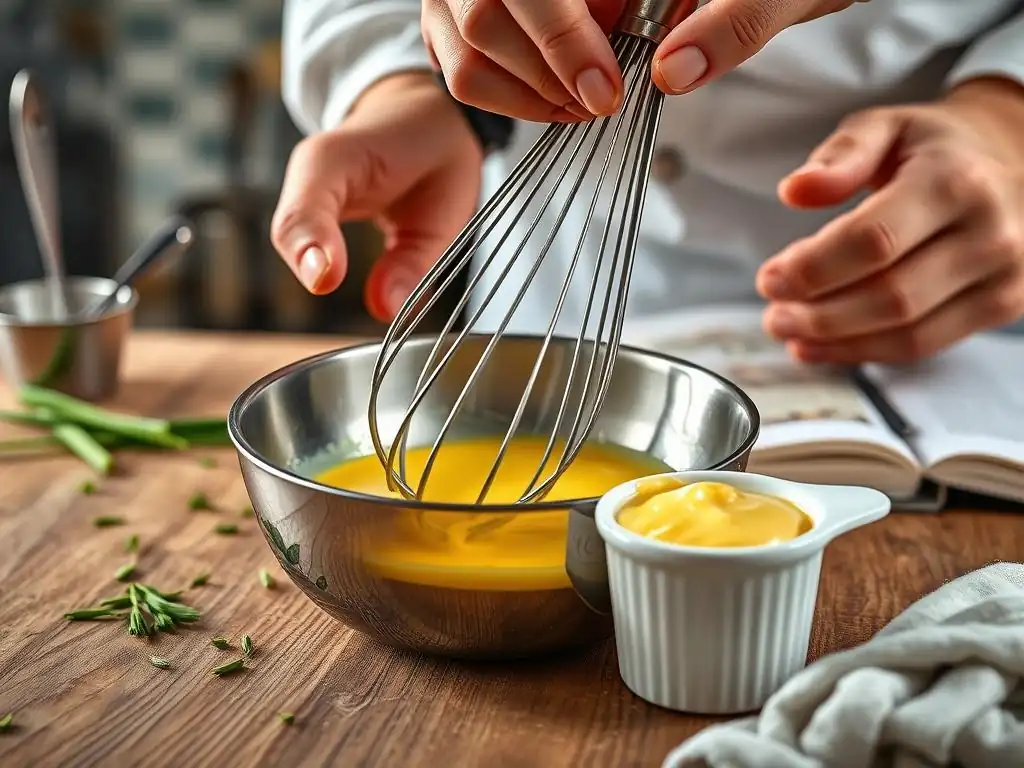
The speed at which you mix ingredients plays a significant role in forming and maintaining emulsions. When starting an emulsion, like adding oil to egg yolks for mayonnaise or adding liquid to creamed butter and sugar, beginning at a slow to medium speed is often best. This allows the emulsifiers time to surround and stabilize the small droplets of the dispersed phase before adding more.
Adding liquid too quickly or mixing too vigorously initially can overwhelm the emulsifier, causing the mixture to break or curdle. Once the emulsion starts to form, you can often increase the speed slightly to fully incorporate ingredients and build structure, such as whipping air into a cake batter. However, overmixing can also be detrimental, potentially damaging the delicate emulsified structure or developing too much gluten in flour-based mixtures, leading to a tough texture. Finding the right speed is a key perfect emulsion baking techniques tip.
Adding Fat Gradually: The Key to a Stable Emulsion
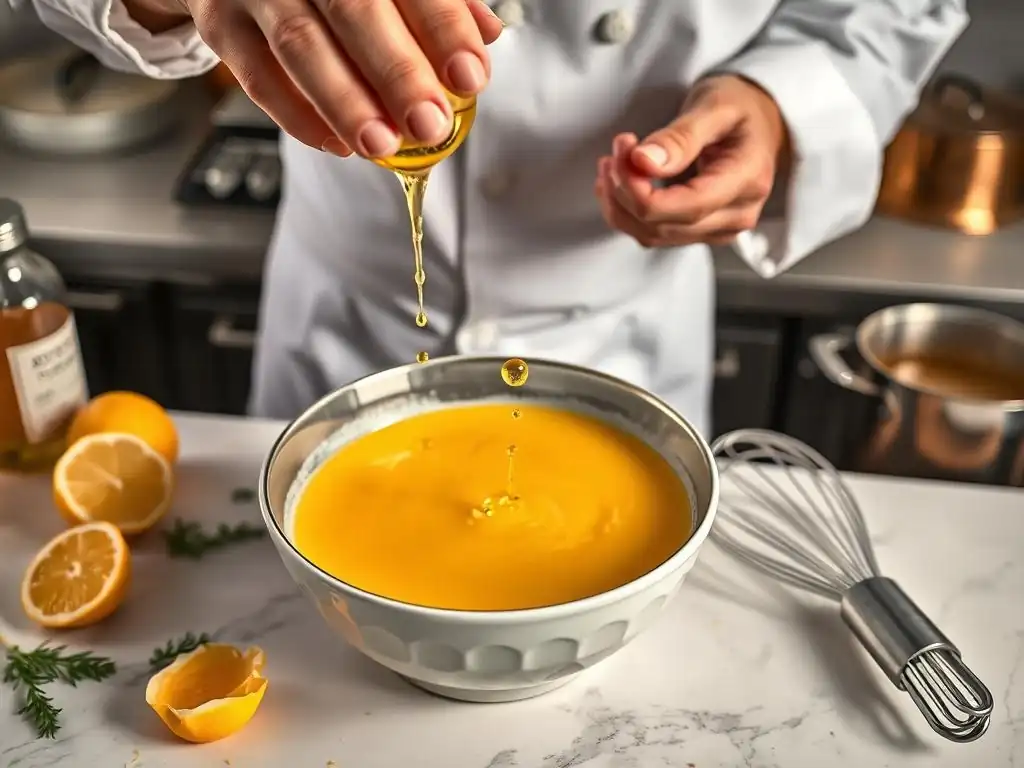
When creating an emulsion where fat is the dispersed phase (like adding oil to a water-based liquid), adding the fat gradually is absolutely critical. Think of making mayonnaise: you start with egg yolks and liquid, then add the oil in a very slow, steady stream, or even drop by drop at first, while continuously whisking or mixing.
This slow addition allows the emulsifiers (like lecithin in the egg yolk) to coat each tiny droplet of fat as it's introduced, preventing the droplets from merging back together. If you pour in too much fat at once, there aren't enough emulsifier molecules available to coat all the droplets, and the mixture will likely separate or "break." This principle applies to adding melted butter to sauces or incorporating oil into batters – a slow, steady hand ensures a stable, smooth result, which is a cornerstone of perfect emulsion baking techniques tips.
Advanced Emulsification Techniques for Baking Mastery
The Ribbon Stage: Recognizing Perfect Emulsification Visually
The "ribbon stage" is a visual cue often sought in recipes involving whipping eggs and sugar, such as sponge cakes, genoise, or some types of mousse bases. It represents a point where the mixture of eggs (and often sugar) has been whipped sufficiently to become thick, pale, and aerated, and the fat from the egg yolks is well-emulsified within the structure.
To test for the ribbon stage, lift the whisk or beater from the mixture. The mixture should fall back into the bowl in a thick "ribbon" that holds its shape on the surface for a few seconds before slowly sinking back in. This indicates that the eggs have been properly emulsified and sufficient air has been incorporated and stabilized by the egg proteins. Achieving this stage is crucial for the lift and texture of delicate cakes and is a prime example of advanced perfect emulsion baking techniques tips.
Using a Stand Mixer for Efficient Emulsification
For larger batches or recipes requiring extended mixing times, a stand mixer is an invaluable tool for achieving perfect emulsification. Its consistent speed and powerful motor can handle thick batters and doughs that would be challenging to emulsify effectively by hand. Using the paddle attachment is ideal for creaming butter and sugar, where the mechanical action helps break down the fat and incorporate air, beginning the emulsification process.
The whisk attachment is perfect for whipping egg whites into meringue or whipping whole eggs for sponge cakes, incorporating vast amounts of air and stabilizing the resulting foam, which is a type of emulsion. The stand mixer allows for controlled, continuous mixing while you gradually add other ingredients, such as liquids or melted chocolate, ensuring they are fully integrated into the base emulsion without separation. This efficiency is key to scaling up perfect emulsion baking techniques tips.
Hand Mixing Techniques for Smaller Batches
While a stand mixer is convenient, mastering hand mixing techniques is essential for smaller batches or when precision is paramount. A balloon whisk is your primary tool for hand emulsification. Vigorous, consistent whisking is needed to break down fat droplets and disperse them throughout the liquid.
When making a vinaigrette or a small amount of ganache by hand, start whisking from the center of the bowl and gradually work outwards. This helps to bring the ingredients together in the middle where the emulsification is starting. Patience is key, especially when gradually adding fat; maintain a steady whisking motion throughout the addition process. Developing your hand-whisking technique is a fundamental perfect emulsion baking techniques tip that builds intuition about the process.
Troubleshooting Common Emulsification Problems in Baking
Broken Emulsion: Identifying and Rectifying the Issue
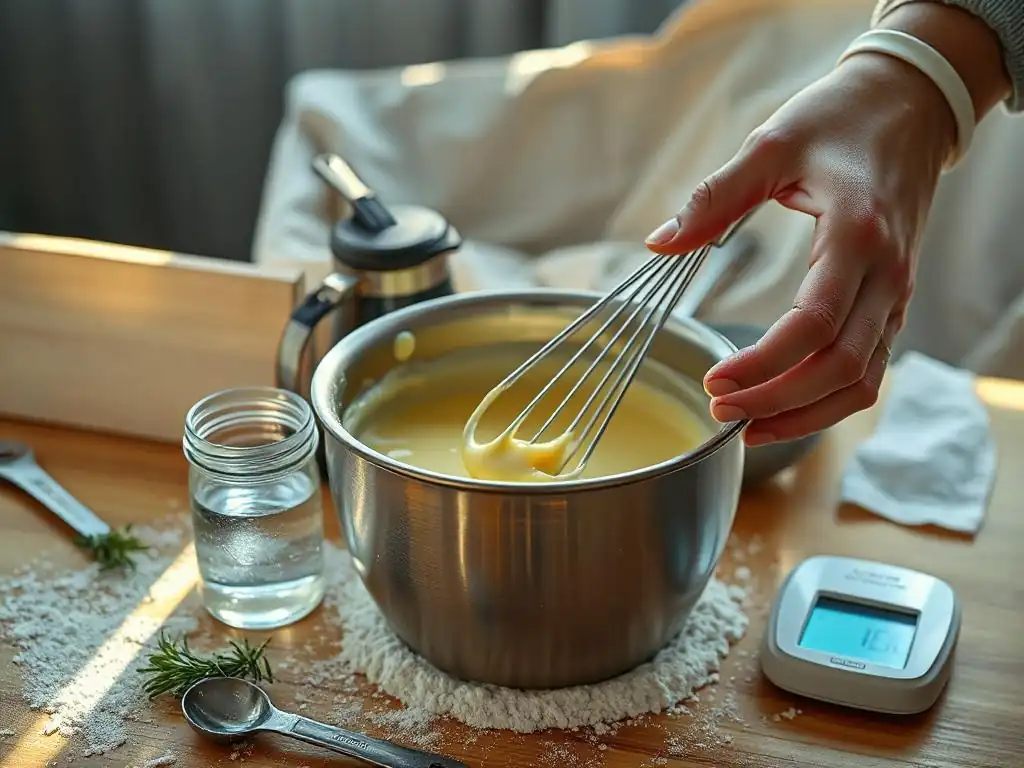
A "broken" or "split" emulsion is disheartening but often fixable. You'll recognize it when the mixture separates into distinct layers of fat and liquid, losing its smooth, homogenous appearance. This can happen if ingredients are added too quickly, are at the wrong temperature, or if the mixture is overmixed or subjected to sudden temperature changes.
To attempt to fix a broken emulsion, try whisking a small amount of the broken mixture into a fresh emulsifier source. For mayonnaise, this might be a tablespoon of hot water or a new egg yolk in a clean bowl, then very slowly whisking the broken mayonnaise into it. For buttercreams, gently warming a small portion over a double boiler until it starts to come together, then whisking it back into the main mixture can sometimes work. Patience and gentle re-incorporation are key perfect emulsion baking techniques tips for recovery.
Preventing Separation: Tips for Maintaining a Stable Mixture
Prevention is always better than cure when it comes to emulsions. The most effective ways to prevent separation are to follow the foundational perfect emulsion baking techniques tips: ensure ingredients are at the correct temperature (usually room temp), add fats or liquids gradually while mixing, and avoid excessive or inconsistent mixing speeds.
Once an emulsion is formed, maintaining its temperature can also be important. Rapid heating or cooling can sometimes destabilize sensitive emulsions like hollandaise. For batters, avoid letting them sit for too long before baking, as this can allow ingredients to settle or separate slightly, especially if the initial emulsification wasn't robust. Storing finished emulsified products properly, often in the refrigerator, helps maintain stability by keeping the fat solidified.
Adjusting Recipes for Different Emulsification Needs
Not all recipes require the same level of emulsification effort. A simple cookie dough with relatively low liquid content might not need as much careful emulsification as a high-ratio cake batter, which contains a higher proportion of sugar and liquid to flour and requires a very stable emulsion to support its structure.
When adapting recipes or developing your own, consider the ratio of fat to liquid and the type of ingredients used. Recipes heavy on egg yolks will naturally have stronger emulsifying power due to lecithin. Recipes using oil instead of solid fat like butter might require different mixing techniques to ensure the oil is fully dispersed. Understanding these differences allows you to apply the appropriate perfect emulsion baking techniques tips for the specific recipe.
Using Natural Emulsifiers in Baking
Lecithin and Other Natural Emulsifiers
As mentioned earlier, egg yolks are a powerhouse of natural emulsifiers, primarily due to lecithin. Lecithin is a phospholipid, a type of fat molecule with both water-attracting and fat-attracting ends. This dual nature allows it to effectively bridge the gap between oil and water. The amount of lecithin in an egg yolk is quite significant, making eggs indispensable in many emulsified baked goods like cakes, custards, and sauces.
Other natural ingredients contribute emulsifying and stabilizing properties. Proteins in milk (like casein and whey) and flour (gluten proteins and others) help form a network that can entrap fat droplets and water, contributing to the stability of batters and doughs. Starches, when they swell with heat and moisture, can also help thicken and stabilize emulsions by increasing the viscosity of the liquid phase. Leveraging these natural components is a smart part of perfect emulsion baking techniques tips.
Incorporating Air for Lighter Textures Through Emulsification
Emulsification isn't just about mixing fat and water; it's often intertwined with incorporating and stabilizing air, which is crucial for light and airy baked goods like sponge cakes, meringues, and whipped cream. When you whip eggs or cream, you're forcing air bubbles into the liquid. The proteins and fats in these ingredients act as emulsifiers, forming a film around these air bubbles that prevents them from collapsing.
In cake batters, the emulsified structure of fat and liquid helps support the network of air bubbles created during mixing and leavening. This stable matrix allows the cake to rise and set with a light, open crumb. Without proper emulsification and air incorporation, the batter would be dense and heavy. Understanding this interplay is vital for achieving delicate textures and is a core concept in perfect emulsion baking techniques tips.
Emulsifying Chocolate: Achieving a Smooth and Glossy Finish
Chocolate, in its melted form, contains cocoa solids dispersed in cocoa butter (fat). When you add a liquid like cream, milk, or water to melted chocolate to make ganache or a sauce, you are creating an emulsion. Cocoa solids themselves contain some natural emulsifiers, but adding liquid requires careful technique to prevent the mixture from "seizing" (becoming stiff, grainy, and separated).
Heating the liquid (often cream) and pouring it over finely chopped chocolate is a common method. The heat melts the chocolate evenly, and then gentle whisking, starting from the center and gradually moving outwards, helps to create a smooth, glossy emulsion where the liquid is dispersed throughout the melted chocolate and cocoa butter. The ratio of chocolate to liquid dictates the final consistency, but proper emulsification ensures a stable, beautiful finish, a key perfect emulsion baking techniques tip for chocolate work.
Recipes That Showcase Perfect Emulsification Techniques
Classic Buttercream: A Demonstration of Emulsification
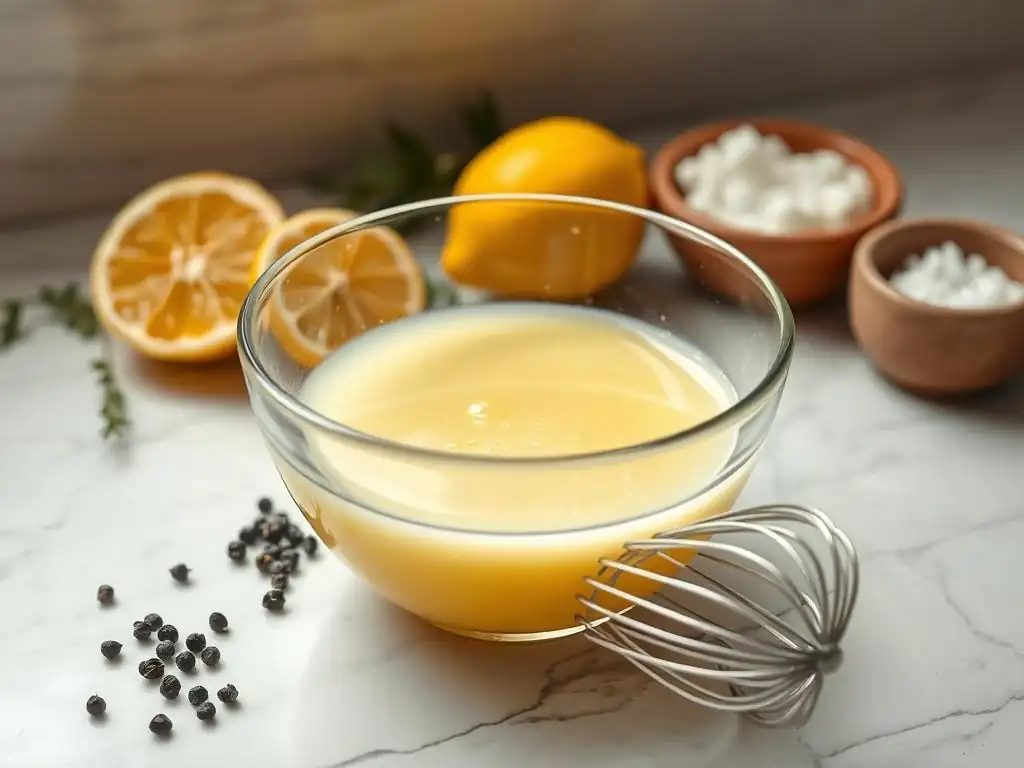
Buttercream is a fantastic way to practice and see emulsification in action. American buttercream involves creaming softened butter (fat) with powdered sugar and a small amount of liquid (milk, cream, or water) and flavoring. The mechanical action of creaming the butter incorporates air and helps disperse the sugar crystals and liquid within the fat, forming a stable, fluffy emulsion.
Meringue-based buttercreams, like Swiss or Italian, are even more complex. They involve making a stable meringue (an emulsion of air in egg whites, stabilized by sugar and protein) and then gradually adding softened butter while mixing. This process incorporates the butter into the meringue structure, creating a incredibly smooth, stable, and less sweet buttercream. Mastering these perfect emulsion baking techniques tips results in frosting perfection.
Mayonnaise Cake: An Unexpected Emulsification Example
While it might sound unusual, mayonnaise cake is a classic example of using a pre-made, stable emulsion in baking. Mayonnaise is essentially an oil-in-water emulsion, stabilized by egg yolk. By using mayonnaise as a primary fat source, the baker bypasses the initial step of emulsifying fat and liquid within the batter.
The existing emulsion in the mayonnaise contributes to a very moist and tender crumb. The vinegar in the mayonnaise also reacts with baking soda, providing leavening. This simple recipe demonstrates how a stable emulsion can effectively distribute fat throughout a batter, contributing desirable qualities to the finished cake. It's a clever shortcut built on perfect emulsion baking techniques tips.
Chocolate Ganache: Mastering Emulsification for a Silky Finish
Chocolate ganache, typically a mixture of melted chocolate and hot cream, is a beautiful demonstration of emulsification. The goal is to disperse the water-based cream evenly throughout the fat-based melted chocolate. As mentioned earlier, heating the cream and pouring it over finely chopped chocolate, letting it sit briefly, and then whisking gently from the center outwards is the standard technique.
The cocoa solids and cocoa butter in the chocolate, along with proteins and fats in the cream, act as emulsifiers. Achieving a smooth, glossy ganache requires patience and the correct technique to ensure the fat and liquid don't separate, resulting in a greasy or grainy texture. The successful creation of ganache is a satisfying application of perfect emulsion baking techniques tips.
Maintaining Emulsions: Tips and Tricks for Long-Lasting Stability
Storing Emulsified Ingredients Properly
Once you've created a beautiful, stable emulsion, proper storage is key to maintaining its integrity. Many baking emulsions, especially those containing dairy or eggs, are perishable and need to be refrigerated. Store them in airtight containers to prevent them from drying out or absorbing odors.
Refrigeration helps solidify the fat within the emulsion, further stabilizing it. However, be aware that chilling can change the consistency; for instance, ganache will firm up considerably in the fridge. Allow refrigerated emulsions like buttercream or ganache to come to a slightly warmer temperature (but not fully melt) before using or re-whipping, as working with them too cold can sometimes cause them to break.
Re-Emulsifying Separated Mixtures
Even with the best perfect emulsion baking techniques tips, sometimes an emulsion might partially separate, especially if stored for a while or subjected to temperature fluctuations. Before discarding a separated mixture, try to re-emulsify it.
For mixtures like ganache or buttercream that have slightly separated (looking a bit greasy or curdled), sometimes gentle warming and re-whisking can bring them back together. For example, scoop out a small amount of separated ganache, warm it gently over a double boiler or in the microwave until just warm, whisk it until smooth, and then gradually whisk this smooth mixture back into the rest of the separated ganache. Adding a small amount of fresh, warm liquid (like a tablespoon of hot cream) while whisking vigorously can also sometimes help.
Understanding the Shelf Life of Emulsified Products
The shelf life of an emulsified product depends heavily on its ingredients, particularly the water activity and the presence of perishable components like eggs and dairy. Mayonnaise, due to its acidity and high fat content, can last several weeks in the refrigerator. Dairy-based ganache typically lasts about 1-2 weeks refrigerated.
Baked goods with emulsified batters, like cakes, have a shelf life determined by moisture content and other ingredients, usually a few days at room temperature or longer refrigerated/frozen. Always rely on visual cues (mold, discoloration) and smell to determine if an emulsified product is still safe to use. Proper emulsification can sometimes improve shelf life by ensuring even moisture distribution, but it doesn't make perishable ingredients last indefinitely.
Final Thoughts: Elevate Your Baking with Emulsification
Quick Recap of Essential Emulsification Techniques
Mastering perfect emulsion baking techniques tips is a game-changer for any baker. Remember the core principles:
- Use room temperature ingredients, especially fats and eggs.
- Add fats or liquids gradually while mixing.
- Control mixing speed – often starting slow and increasing as the emulsion forms.
- Recognize visual cues like the ribbon stage.
- Understand the role of natural emulsifiers like egg yolks and proteins.
- Practice techniques for specific applications like buttercream or ganache.
Further Resources for Mastering Baking Science
Exploring the science behind baking, including concepts like emulsification, gluten development, and leavening, will deepen your understanding and improve your results. Look for resources that explain the "why" behind baking instructions, not just the "how." Many excellent books and online resources delve into baking science.
Understanding the interactions between ingredients – how fats, liquids, sugars, flours, and leavening agents behave and interact – empowers you to troubleshoot problems and even adapt recipes confidently. Continuing to learn about these principles, including perfect emulsion baking techniques tips, is key to evolving as a baker.
Bake Like a Pro: Your Partner in Perfect Baking
At BakeWithEase.com, we're dedicated to helping you understand the fundamentals and master the techniques that lead to perfect baked goods. From explaining the science behind emulsification to providing step-by-step recipes that showcase these principles, we're here to support your baking journey.
Applying these perfect emulsion baking techniques tips will unlock new levels of texture, stability, and deliciousness in your creations. So grab your whisk or turn on your mixer, and start practicing these essential skills today. Happy baking!
Frequently Asked Questions
What is an emulsion in baking, and why is it important?
An emulsion in baking is a mixture of two liquids that don't naturally combine, like oil and water. It's important because a stable emulsion ensures a smooth batter and a better final product in terms of texture and flavor.
What are some common ingredients that help create a stable emulsion?
Ingredients like eggs, mustard, and honey contain emulsifiers that help to bind oil and water-based ingredients together. These emulsifiers prevent the separation of the ingredients and create a stable mixture.
What are some signs that my emulsion has broken or failed?
A broken emulsion often looks separated, curdled, or oily. You might see pools of oil sitting on top or a grainy texture in your batter, indicating the ingredients have not properly combined.
What are some techniques for ensuring a perfect emulsion when adding ingredients?
Slowly adding the oil in a thin, steady stream while whisking vigorously is crucial. Ensuring that ingredients are at similar temperatures also helps to create a stable emulsion.
What role does temperature play in achieving a perfect emulsion?
Temperature is crucial; ingredients at room temperature tend to emulsify more easily than cold ones. This is because the molecules move faster and are more likely to combine effectively.
Final Reflection: The Art and Science of the Perfect Emulsion
The pursuit of the perfect emulsion isn't just about achieving a smooth texture; it's about unlocking the full potential of your baking. A flawlessly emulsified batter or cream translates directly to a superior final product – one with enhanced flavor, texture, and visual appeal that elevates the entire baking experience. This is more relevant than ever in today's culinary landscape, where precision and understanding of fundamental techniques are highly valued.
The journey of mastering emulsion techniques has profoundly impacted my own baking, transforming it from a sometimes frustrating process into a deeply satisfying art. It's about understanding the delicate dance between fats and liquids, the subtle nuances of temperature and timing. As the great Julia Child once said, Find something you're passionate about and keep tremendously interested in it.
For me, that passion lies in the precise control and creative possibilities that perfect emulsification offers. It's a testament to the power of understanding the fundamental principles of food science and applying them with care and precision.
Now, it's your turn to explore the world of perfect emulsions. Don't be afraid to experiment, to adjust techniques based on your ingredients and desired outcome. Embrace the learning process, celebrate the successes, and learn from the occasional setbacks. The journey towards mastering emulsification is a rewarding one, leading to consistently delicious and visually stunning baked goods that will impress you and those you share them with. So, gather your ingredients, embrace the science, and unleash your inner baking artist!
Unlock Your Emulsification Expertise!
Thanks for diving into the world of perfect emulsification with us! You've now got the skills to create smoother, richer sauces, dressings, and more. Ready to put your new knowledge into practice?
- Master your first emulsified masterpiece: Try making aioli or hollandaise sauce using the techniques we outlined – you'll be amazed at the results!
- Experiment with different oils and liquids: See how different combinations affect the final texture and flavor. Share your creations with us in the comments below!
- Challenge a friend to a blind taste test: Compare your newly perfected emulsion to a store-bought version. Who will win?
What incredible culinary creation will you emulsify first?