
Quick & Easy AsianInspired Cookies: A BakeWithEase Guide

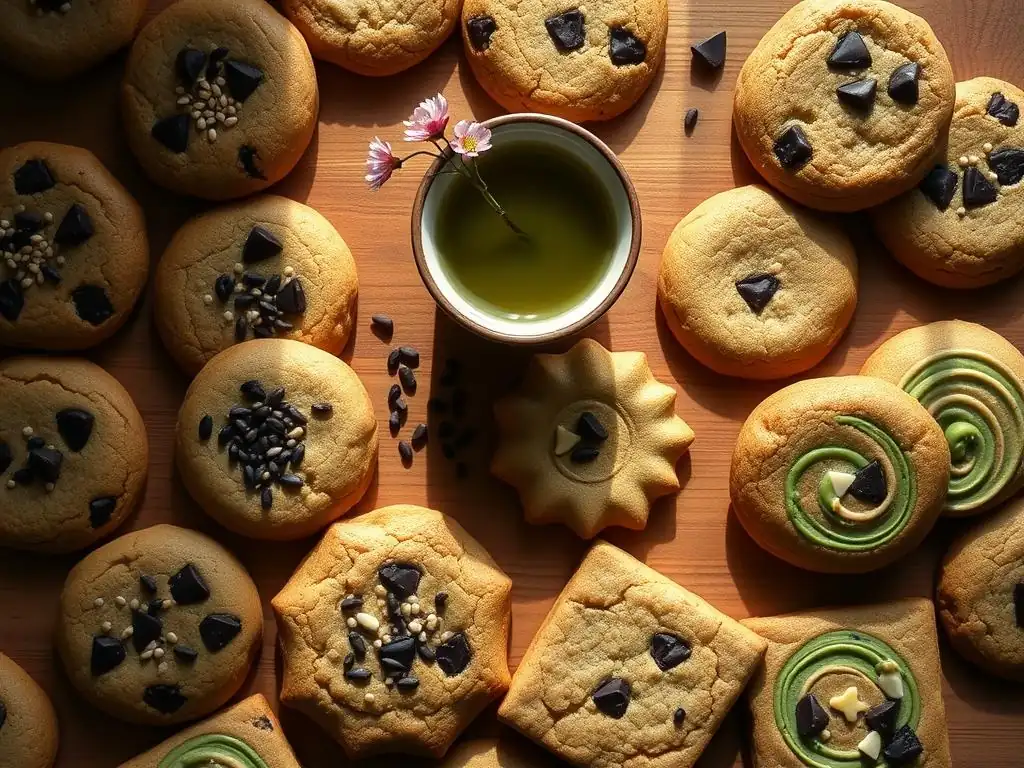
Welcome to BakeWithEase, your trusted companion in the delightful world of baking! Ever wondered how to infuse the familiar comfort of chocolate chip cookies with the captivating flavors of the East? This week, we're diving into the secrets of crafting truly unforgettable Asian-inspired chocolate chip cookies. Prepare to unlock a symphony of tastes and textures that will redefine your cookie game. Curious to know what makes them so special? Let's get baking!
- Mochi Cookies: A Modern Twist on a Classic Treat
- Introduction to Mochi Cookies
- Ube Mochi Cookies: The Recipe
- Step-by-Step Baking Guide: Ube Mochi Cookies
- Exploring Mochi Cookie Flavor Variations
- Tips for Perfect Mochi Cookies
- Variations on Mochi Cookie Recipes
- Storing Your Mochi Cookies
- More Japanese-Inspired Dessert Recipes
- Conclusion: Bake Your Way to Delicious Mochi Cookies
-
Frequently Asked Questions
- What makes these chocolate chip cookies "Asian-inspired"?
- Are these cookies difficult to make for a beginner baker?
- What are some recommended ingredient substitutions if I don't have a specific Asian ingredient?
- Where can I find the full recipe for these Asian-inspired chocolate chip cookies?
- Can I customize the "Asian-inspired" flavors in these cookies?
- Final Reflection: The Enduring Allure of Flavor Fusion
- Unleash Your Inner Baker: Make These Cookies Today!
Mochi cookies represent a delightful culinary bridge between traditional Japanese sweets and classic American baked goods. At its core, this treat combines the unique, chewy texture of mochi – a preparation of glutinous rice pounded into a paste – with the familiar crumb and flavor profile of a standard cookie dough. The result is a fascinating contrast: a soft, yielding center encased in a slightly crisp or chewy cookie shell.
This fusion isn't just about texture; it also opens up a world of flavor possibilities. While a traditional American cookie might rely on chocolate chips or nuts, mochi cookies often incorporate flavors popular in Asian desserts, such as matcha green tea, black sesame, or ube (purple yam). This blend creates a truly Asian inspired dessert experience that is both novel and comforting.
Baking mochi cookies offers a wonderfully creative way to expand your baking repertoire and impress friends and family with something truly unique. The primary draw is undoubtedly the texture – that signature chewiness from the mochi contrasts beautifully with the baked cookie dough, providing a multi-layered sensory experience unlike a typical cookie.
Furthermore, mochi cookies are relatively adaptable and offer a fantastic canvas for exploring various Asian inspired flavors. Whether you're a beginner looking for a fun project or a seasoned baker wanting to experiment, the process is accessible. Plus, they make for excellent conversation starters at gatherings, showcasing a fusion dessert that's gaining popularity.
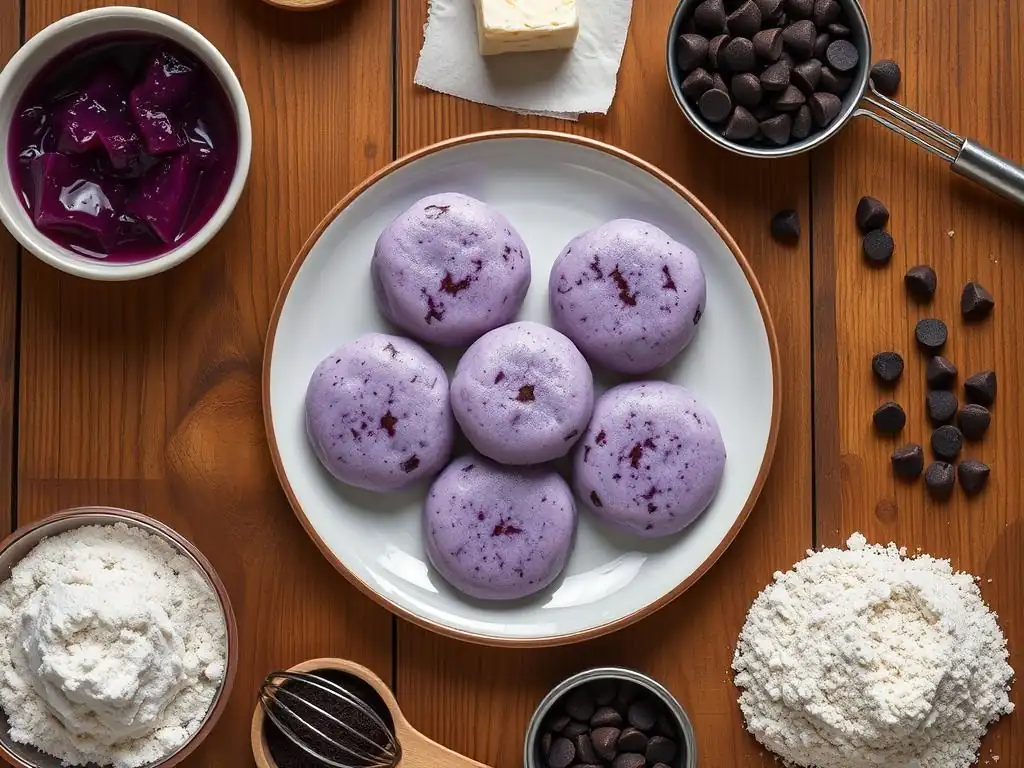
To embark on your Ube Mochi Cookie journey, you'll need a combination of standard baking ingredients and a few specific items for the mochi and ube components. For the cookie dough base, gather about 1 ¼ cups (150g) all-purpose flour, ½ teaspoon baking soda, ¼ teaspoon salt, ½ cup (113g) unsalted butter (softened), ½ cup (100g) granulated sugar, and ¼ cup (50g) packed light brown sugar. You'll also need 1 large egg and 1 teaspoon vanilla extract.
For the Ube mochi portion, you'll need about ½ cup (60g) glutinous rice flour (this is crucial for the chewy texture, do not substitute with regular rice flour), 2 tablespoons granulated sugar, ½ cup (120ml) milk (whole milk works well), and 1-2 teaspoons of ube extract or paste for color and flavor. You might also add about ½ cup of white chocolate chips or macadamia nuts to complement the ube flavor, making these truly distinct Asian inspired chocolate chip cookies, albeit with white chocolate.
Essential Baking Equipment
Having the right tools on hand will make the baking process much smoother. You'll need at least two medium-sized mixing bowls – one for your cookie dough and one for preparing the mochi. Measuring cups and spoons are, of course, indispensable for accuracy in both components.
An electric mixer (either a stand mixer with paddle attachment or a hand mixer) is helpful for creaming the butter and sugars for the cookie dough, ensuring a light and airy base, though you can certainly do this by hand with a whisk and spatula. You'll also require baking sheets, preferably lined with parchment paper or silicone mats to prevent sticking and make cleanup easier, especially when working with the sometimes-sticky mochi dough. A rubber spatula is essential for scraping down bowls and incorporating ingredients.
Step 1: Preparing the Mochi Dough
Begin by making the mochi dough. In a microwave-safe bowl, whisk together the glutinous rice flour, 2 tablespoons of sugar, and milk until smooth and no lumps remain. Stir in the ube extract or paste until the mixture is evenly colored a vibrant purple.
Cover the bowl loosely with plastic wrap or a damp paper towel and microwave on high for about 1.5 to 2 minutes. Stop and stir the mixture thoroughly halfway through the cooking time. The dough should become thick, translucent, and sticky. Be cautious as it will be very hot. Let it cool slightly for about 10-15 minutes until it's cool enough to handle but still pliable.
While the mochi cools, prepare your cookie dough. In a large bowl, cream together the softened butter, granulated sugar, and brown sugar until light and fluffy, typically taking about 2-3 minutes with an electric mixer. Beat in the egg and vanilla extract until well combined. In a separate small bowl, whisk together the flour, baking soda, and salt. Gradually add the dry ingredients to the wet ingredients, mixing on low speed or by hand until just combined; do not overmix. If adding white chocolate chips or nuts, fold them in now.
Once both the mochi and cookie dough are ready and the mochi has cooled slightly, the fun part is combining them. You can do this by either swirling pieces of the mochi into the cookie dough or, for a more distinct texture, folding small pieces of the cooled mochi dough into portions of the cookie dough just before shaping. The mochi will be sticky, so having lightly oiled hands or a spatula can be helpful here. Aim for an even distribution if swirling, or ensure each cookie dough portion gets a piece of mochi if folding.
Using a cookie scoop or your hands, portion the combined dough into balls about 1.5 to 2 inches in diameter. Place the dough balls onto the prepared baking sheets, leaving about 2 inches of space between them to allow for spreading. If the dough is very sticky from the mochi, lightly flouring your hands or scoop can help.
Chilling the shaped cookie dough is a crucial step for preventing excessive spread during baking and helping the mochi solidify slightly for better handling. Place the baking sheets with the shaped dough balls into the refrigerator for at least 30 minutes, or up to 2-3 days. This chilling time allows the fats in the butter to firm up, resulting in a thicker, chewier cookie.
Preheat your oven to 350°F (175°C). Ensure your oven rack is positioned in the center for even baking. Remove one chilled baking sheet from the refrigerator.
Bake the cookies for approximately 10 to 14 minutes. The exact time will vary depending on your oven and the size of your cookies. Look for the edges to be lightly golden brown, while the centers still appear soft and slightly puffed. The mochi inside will become very soft and chewy. Do not overbake, as this can result in a dry cookie and compromise the desirable chewy mochi texture.
Once baked, remove the baking sheets from the oven. The cookies will be very soft and delicate right out of the oven, and the mochi will be extremely hot and gooey. Allow the cookies to cool on the baking sheet for 5 to 10 minutes. This allows them to set up slightly and makes them easier to transfer.
After the initial cooling period on the sheet, carefully transfer the cookies to a wire rack to cool completely. Enjoy them warm for the ultimate gooey mochi experience, or let them cool fully for a firmer, yet still delightfully chewy, texture. These Asian inspired chocolate chip cookies (or rather, white chocolate and ube ones!) are best enjoyed fresh.
Black sesame offers a distinctly nutty and slightly earthy flavor profile that pairs wonderfully with the sweetness of a cookie. To make black sesame mochi cookies, you can incorporate black sesame paste or finely ground toasted black sesame seeds into both the cookie dough and the mochi dough.
Adding about 2-3 tablespoons of black sesame paste to the cookie dough and 1-2 tablespoons to the mochi dough before cooking provides a deep color and intense flavor. This variation results in a sophisticated, less sweet cookie that is popular in many Asian inspired desserts.
Matcha, or finely ground green tea powder, is another popular flavor in Asian inspired baking, known for its vibrant green color and unique, slightly bitter, earthy taste. For matcha mochi cookies, high-quality culinary grade matcha is recommended for the best flavor and color.
Whisk about 1-2 tablespoons of matcha powder into the dry ingredients of your cookie dough and another 1-2 teaspoons into the liquid mixture for the mochi dough before cooking. The amount can be adjusted based on your preference for matcha intensity. This variation yields a beautiful green cookie with a complex flavor that balances sweetness with the characteristic notes of green tea.
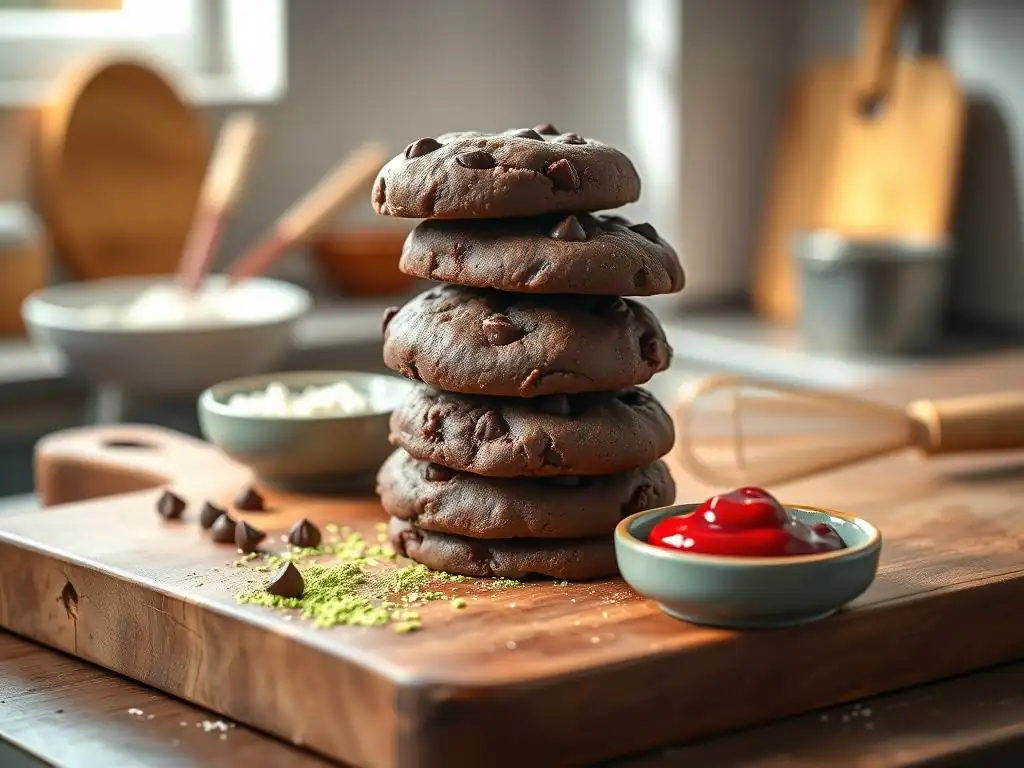
Combining rich chocolate with chewy mochi is a guaranteed crowd-pleaser, especially if you're looking for an Asian inspired chocolate chip cookie. You can achieve this by starting with a standard chocolate chip cookie dough base or a cocoa-based chocolate cookie dough.
Fold in your favorite chocolate chips (milk, dark, or white) into the cookie dough. For the mochi component, you can either keep it plain white mochi to highlight the chocolate, or add a touch of cocoa powder to the mochi mixture before cooking for a double chocolate effect. The contrast between the familiar chocolate flavor and the unexpected mochi texture is incredibly satisfying.

For a fruity and visually appealing option, strawberry mochi cookies are a fantastic choice. These often feature a soft pink hue and a sweet, slightly tangy flavor reminiscent of strawberry mochi found in Japan.
Incorporating freeze-dried strawberry powder into both the cookie dough and the mochi dough is an excellent way to add concentrated strawberry flavor and natural pink color without adding excess moisture. Alternatively, a few drops of strawberry extract can be used, though the color might need a little help from pink food coloring if desired. This variation is particularly popular for its bright flavor and cheerful appearance.
Kinako, or roasted soybean flour, is a traditional Japanese ingredient with a distinctive nutty, slightly smoky flavor. While perhaps less common in Western baking than matcha or black sesame, it offers a unique and delicious profile for Asian inspired cookies.
Add kinako powder to the dry ingredients of your cookie dough and potentially dust the finished cookies with it. You can also experiment with adding a small amount to the mochi dough mixture before cooking. The flavor is subtle but adds a layer of depth that complements the sweet cookie base and chewy mochi center.
Achieving the Chewy Mochi Texture
The signature chewiness of mochi cookies relies heavily on the mochi component. The most critical factor is using glutinous rice flour (also known as sweet rice flour) – regular rice flour or other flours will not yield the correct sticky, elastic texture. Ensure the mochi dough is cooked thoroughly, either by steaming or microwaving, until it becomes translucent and develops that characteristic stretch.
Equally important is not overbaking the cookies. While the cookie dough needs to bake through, excessive time in the oven can dry out the mochi center, making it hard or brittle instead of delightfully chewy. Watch for the cookie edges to set and turn golden, but the center should still look soft.
Preventing your mochi cookies from spreading into flat discs is key to their appealing appearance and texture. This is where chilling the dough becomes essential. Chilling for at least 30 minutes firms up the butter in the cookie dough, which helps the cookies hold their shape better when they hit the hot oven.
Using cold butter that is cut into cubes and then creamed with sugar until light and fluffy can also contribute to less spread. Ensure your oven is preheated accurately to the correct temperature; a too-cool oven can cause excessive spreading before the cookie structure sets.
Working with Mochi Dough
Mochi dough, especially when warm, is notoriously sticky. This can make incorporating it into the cookie dough challenging. A simple trick is to work with lightly oiled hands or use a spatula that has been dipped in oil or water when handling the cooked mochi dough.
When combining the mochi with the cookie dough, you can cut the cooled mochi into small pieces before folding them in. Alternatively, if swirling, work relatively quickly and accept that the texture will be sticky. Using parchment paper on your baking sheets is highly recommended as it prevents the sticky dough from adhering to the pan.
A popular variation is taking a classic Asian inspired chocolate chip cookie dough and stuffing a piece of pre-made or freshly cooked mochi into the center before baking. This creates a delightful surprise inside a familiar cookie.
To make these, prepare your favorite chocolate chip cookie dough. Take a portion of dough, flatten it slightly, place a small piece of cooled mochi in the center, and then wrap the cookie dough around the mochi, sealing it completely. Bake as usual. The result is a standard-looking chocolate chip cookie with a hidden pocket of warm, gooey mochi inside.
For an easier, less hands-on approach, consider making mochi cookie bars. This involves layering or swirling the cookie dough and mochi dough in a baking pan rather than shaping individual cookies.
Spread about half or two-thirds of the cookie dough into the bottom of a greased or parchment-lined square or rectangular baking pan. Then, spread or dollop pieces of the prepared mochi dough over the cookie layer. Top with the remaining cookie dough, swirling it in gently if desired. Bake until the top is golden and the edges are set. Once cooled, cut into bars.
Mochi Ice Cream Sandwiches
Once you've baked your delicious mochi cookies, they make an exceptional base for ice cream sandwiches. The chewy texture of the cookie pairs wonderfully with cold, creamy ice cream.
Allow the mochi cookies to cool completely. Place a scoop of your favorite ice cream (matcha or black sesame ice cream would keep the Asian inspired theme!) between two cookies and gently press them together. You can roll the edges in sprinkles or chopped nuts if desired. Serve immediately or wrap individually and freeze until firm.
Maintaining the Mochi Texture
Proper storage is essential to keep your mochi cookies tasting their best and maintaining that desirable chewy texture. Mochi can change texture when exposed to air, becoming hard. Therefore, it's crucial to store mochi cookies in an airtight container.
Keep the container at room temperature for up to 2-3 days. While refrigeration can extend shelf life, it can sometimes alter the texture of the mochi, making it less soft and pliable. If you do refrigerate or freeze them, gently warming them in a microwave for a few seconds can often help restore some of the chewiness.
More Japanese-Inspired Dessert Recipes
Daifuku Mochi Recipe
If you enjoyed working with mochi in cookies, exploring other traditional Japanese mochi desserts like Daifuku is a natural next step. Daifuku is a small, round mochi stuffed with a sweet filling, most commonly anko (sweetened red bean paste).
Preparing Daifuku involves making a similar glutinous rice flour dough to the one used for cookies, often steamed or microwaved, and then shaping it around a ball of filling. It's often dusted with cornstarch or kinako to prevent sticking. While different from baking, it provides more practice in handling mochi dough and delves deeper into traditional Asian inspired sweets.
Mochi cookies offer a unique and exciting way to blend traditional Japanese ingredients with familiar Western baking techniques. From the classic Ube variation to delightful Asian inspired chocolate chip cookies with a mochi twist, there's a flavor combination for everyone to explore.
With their delightful contrast in textures – a chewy mochi center within a soft or crisp cookie – they are sure to become a favorite treat. Don't be intimidated by working with mochi; with a few simple tips and tricks, you'll be baking these fusion delights with ease. So gather your ingredients, preheat your oven, and get ready to bake some truly special Asian inspired cookies!
Frequently Asked Questions
These cookies incorporate Asian flavors like sesame oil, miso, or matcha to elevate the classic chocolate chip cookie. These ingredients add a unique umami or earthy note.
No, the recipe is designed with simplicity in mind, aligning with BakeWithEase's philosophy. The step-by-step guide ensures even beginner bakers can achieve delicious results.
What are some recommended ingredient substitutions if I don't have a specific Asian ingredient?
While authentic flavors are encouraged, you can substitute ingredients. For example, if you don't have miso, try a pinch of salt for enhanced flavor, or omit it entirely.
The complete recipe with detailed instructions is available on BakeWithEase.com. You can also find helpful tips and variations there.
Absolutely! Experiment with different Asian spices and ingredients to create your own unique flavor profile. Consider ingredients like ginger, five-spice powder, or even black sesame seeds for added texture and taste.
Final Reflection: The Enduring Allure of Flavor Fusion
The simple act of baking can transcend cultural boundaries, and these Asian-inspired chocolate chip cookies are a delicious testament to that. Their ease of preparation belies the rich tapestry of flavors they offer, proving that culinary innovation doesn't require hours in the kitchen. This recipe, designed for accessibility, opens a world of flavor exploration to anyone, regardless of their baking experience.
The influence of global cuisines on our everyday lives is undeniable, and the popularity of fusion foods, like these cookies, reflects a growing appreciation for diverse culinary traditions. These cookies aren't just a recipe; they're a small window into the vibrant world of Asian baking, showcasing the potential for creative combinations and the joy of sharing culinary experiences. Food is symbolic of love when words are inadequate.
- Alan D. Wolfelt. This sentiment rings true as we share these cookies, fostering connection through a shared appreciation for deliciousness.
Now, I invite you to consider the power of simple recipes to bridge cultural divides and spark creativity in your own kitchen. Don't be afraid to experiment with flavors and techniques, to adapt recipes to your own tastes, and to share the joy of baking with those around you. The next time you crave a sweet treat, remember the ease and deliciousness of these Asian-inspired cookies, and let them inspire your own culinary adventures. Let the baking begin!
Thanks for joining us on this delicious baking journey! We hope you gained some new inspiration and confidence in the kitchen. Ready to bring these Asian-inspired cookies to life?
- Bake a batch! Follow the recipe and enjoy the delicious results. Share your baking adventures with us using #BakeWithEaseAsianCookies.
- Explore other Asian-inspired recipes on our website. We have a treasure trove of baking delights waiting for you!
- Share this recipe with a friend who loves to bake — let's spread the baking joy!
What unique twist will you add to these cookies to make them your own? Let us know in the comments below!