
Simple Japanese Mochi Donuts (Pon de Ring Style)

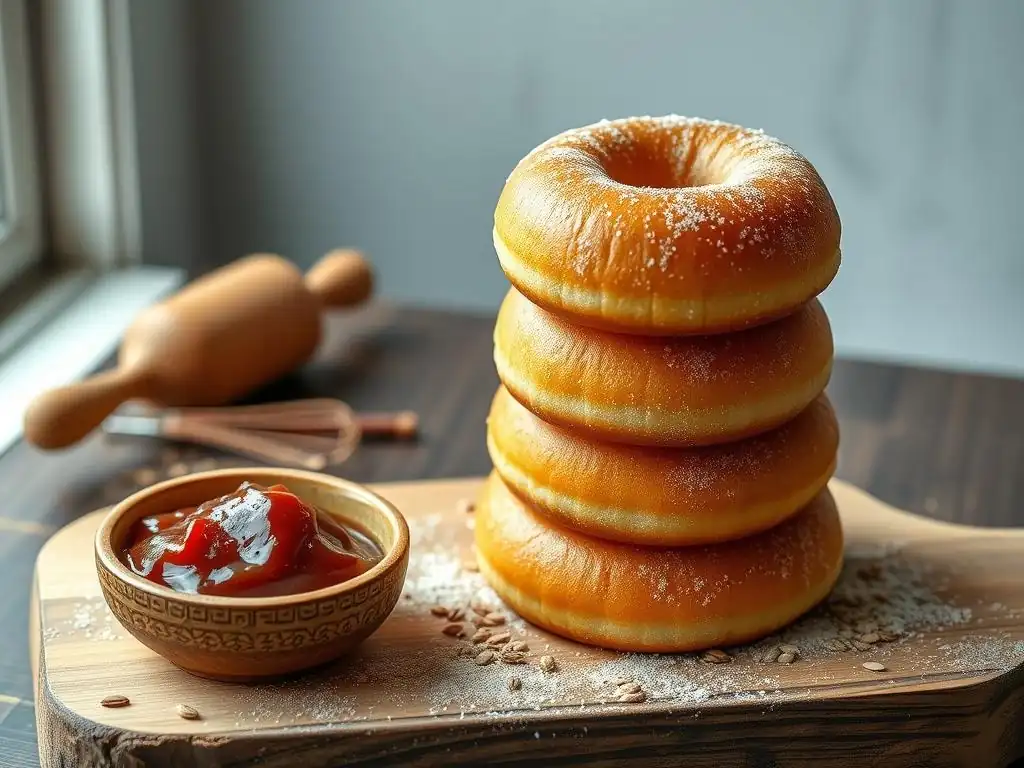
Welcome to BakeWithEase, your haven for simplified baking adventures! Ever dreamt of creating those delightfully chewy, perfectly spherical treats you see everywhere? Get ready to unlock the secrets of the Easy Japanese mochi donut recipe – a delightful fusion of cultures and textures. Prepare to be amazed at how simple it is to bake your own Pon de Ring style donuts at home. Intrigued? Let's get baking!
- Simple Japanese Mochi Donuts (Pon de Ring Style) - BakeWithEase
- Introduction to Mochi Donuts
- Mastering the Japanese Mochi Donut Recipe
- Step-by-Step: Baking Mochi Donuts
- Glazing and Decorating
- Tips for Baking the Best Mochi Donuts
- Variations and Adaptations
- Enjoy Baking Mochi Donuts at Home
-
Frequently Asked Questions
- What makes Japanese mochi donuts (Pon de Ring style) different from regular donuts?
- Are mochi donuts difficult to make at home, especially with this Easy Japanese Mochi Donut Recipe?
- What kind of flour is best to use for Easy Japanese Mochi Donuts (Pon de Ring Style)?
- Can I customize the flavors of my Easy Japanese Mochi Donuts?
- Where can I find the Easy Japanese Mochi Donut Recipe (Pon de Ring Style) discussed here?
- Final Reflection: The Sweet Simplicity of Homemade Happiness
- Unlock Your Inner Mochi Master!
Simple Japanese Mochi Donuts (Pon de Ring Style) - BakeWithEase
Introduction to Mochi Donuts
Discover the Delight of Pon de Ring Donuts
Japanese mochi donuts, particularly the popular Pon de Ring style, have captured the hearts of dessert lovers worldwide with their uniquely chewy texture and adorable shape. Unlike traditional cake or yeast donuts, these delightful rings are made using glutinous rice flour, or mochiko, which gives them their characteristic bouncy and stretchy quality. This texture, often described as qq or mochi-like, is what sets them apart and makes them so addictive. The signature shape, resembling a string of connected bubbles, not only looks charming but also provides extra surface area for glazes and a fun pull-apart experience.
Originating from Japan, these donuts gained significant popularity through chains like Mister Donut. Their rise reflects a broader appreciation for textures in Japanese cuisine. While they might seem complex to replicate at home due to their unique properties, the core techniques are accessible. Mastering an easy Japanese mochi donut recipe allows you to bring this delightful treat into your own kitchen, offering a fresh alternative to standard donut varieties and expanding your baking repertoire with an exciting cultural twist.
Why This Mochi Donut Recipe is Perfect for Home Bakers
Attempting new recipes, especially those with unique ingredients like mochiko, can feel daunting, but this simple Japanese mochi donut recipe is specifically designed to be approachable for bakers of all skill levels. We focus on clear, step-by-step instructions and readily available ingredients, making the process less intimidating than many traditional donut methods that require precise fermentation times or complex shaping techniques. The forgiving nature of mochi dough, once you understand its basics, means minor imperfections often don't ruin the final product, allowing for a more relaxed baking experience.
Furthermore, this easy Japanese mochi donut recipe provides flexibility. While traditionally fried for that classic crisp exterior and chewy interior, we also include a baking option for those who prefer a less messy or lower-fat alternative. Both methods yield delicious results, allowing you to choose the approach that best fits your comfort level and kitchen setup. By breaking down each stage, from mixing the dough to glazing the finished donuts, we ensure you have the confidence and knowledge needed to successfully create these delightful treats right in your home kitchen.
Mastering the Japanese Mochi Donut Recipe
Key Ingredients
Creating delicious mochi donuts relies on a few essential ingredients that contribute to their unique texture and flavor. The star ingredient is undoubtedly mochiko flour, which provides the signature chewiness. You'll also need other common baking staples like all-purpose flour (or a gluten-free blend for adaptations), sugar for sweetness, baking powder as a leavening agent, and usually eggs and milk or a dairy-free alternative to bind everything together and add richness.
A small amount of fat, such as melted butter or vegetable oil, is typically included in the dough to help with tenderness and handling. The exact proportions of mochiko to all-purpose flour will vary slightly between recipes, influencing the final chewiness level – more mochiko means a chewier donut. Having these key components measured accurately before you begin is crucial for the success of this easy Japanese mochi donut recipe.
Understanding Mochiko Flour
Mochiko is a type of glutinous rice flour made from sweet glutinous rice (also known as sticky rice). Despite the name "glutinous," it is naturally gluten-free. The "glutinous" refers to the sticky, glue-like texture it develops when cooked, which is due to its high amylopectin starch content, not the presence of gluten proteins. This unique starch composition is precisely what gives mochi, and by extension mochi donuts, their distinctive elastic and chewy texture.
When used in baking, mochiko requires careful handling as it behaves differently than wheat flour. It absorbs liquid differently and needs to be cooked (either by frying or baking) to activate its sticky, chewy properties. Simply mixing it into dough isn't enough; the heat process is essential to transform it from a flour into that delightful, resilient texture characteristic of a successful easy Japanese mochi donut recipe.
Choosing the Right Mochiko Flour
When selecting mochiko flour for your easy Japanese mochi donut recipe, look for packages specifically labeled "Mochiko" or "sweet rice flour" made from glutinous rice. Common brands found in Asian grocery stores or international aisles of larger supermarkets include Koda Farms Mochiko Sweet Rice Flour or Shirataki Mochiko. Ensure it is made from 100% glutinous rice.
Avoid using regular rice flour (like joshinko or uruchimai) or tapioca starch interchangeably with mochiko, as they will not produce the desired chewy, elastic texture. While some recipes might use small amounts of tapioca starch in combination with mochiko, mochiko itself is the primary ingredient responsible for the signature mochi chew. A good quality mochiko will be finely milled and pure white, ensuring the best results for your homemade Pon de Ring donuts.
Equipment Needed
Making mochi donuts at home doesn't require a lot of specialized equipment, making this an accessible project for most kitchens. Essential tools include standard baking gear like mixing bowls (at least one large), a whisk or electric mixer for combining ingredients, and measuring cups and spoons for accuracy. A sturdy spatula or wooden spoon is also helpful for mixing the dough.
If you plan to fry your donuts, you will need a deep pot or Dutch oven suitable for deep frying, along with a cooking thermometer to monitor oil temperature. A slotted spoon or spider strainer is necessary for carefully placing and removing donuts from the hot oil. For shaping the donuts, parchment paper cut into squares is invaluable, and a piping bag with a large round tip (or simply a Ziploc bag with a corner snipped off) makes forming the rings much easier. If baking, you'll need baking sheets lined with parchment paper.
Step-by-Step: Baking Mochi Donuts
Preparing the Dough
The first step in this easy Japanese mochi donut recipe is preparing the dough, which is relatively quick compared to yeast-based doughs. You'll typically start by whisking together the dry ingredients: mochiko flour, all-purpose flour, sugar, and baking powder. In a separate bowl, you'll combine the wet ingredients, which usually include eggs, milk, and melted butter or oil.
Once the wet and dry ingredients are prepared, the wet mixture is added to the dry ingredients. The mixture is then stirred until it forms a cohesive, slightly sticky dough. Overmixing is generally not a concern with mochi dough in the same way it is with wheat-based doughs, but you want to mix just until everything is combined into a smooth, workable mass.
Mixing the Dough
Mixing the dough for this easy Japanese mochi donut recipe focuses on hydration and incorporation rather than gluten development. Begin by making a well in the center of your dry ingredients. Pour the combined wet ingredients into this well. Using a spatula or wooden spoon, start mixing from the center outwards, gradually incorporating the flour into the liquid.
Continue mixing until no dry pockets of flour remain and a soft, slightly sticky dough forms. The consistency should be similar to a thick paste or a very soft cookie dough. If the dough seems too wet, you can add a tablespoon of all-purpose flour at a time until it reaches the right consistency; if too dry, add a teaspoon of milk. The goal is a dough that holds its shape but is still pliable enough to pipe or shape easily.
Shaping the Pon de Ring
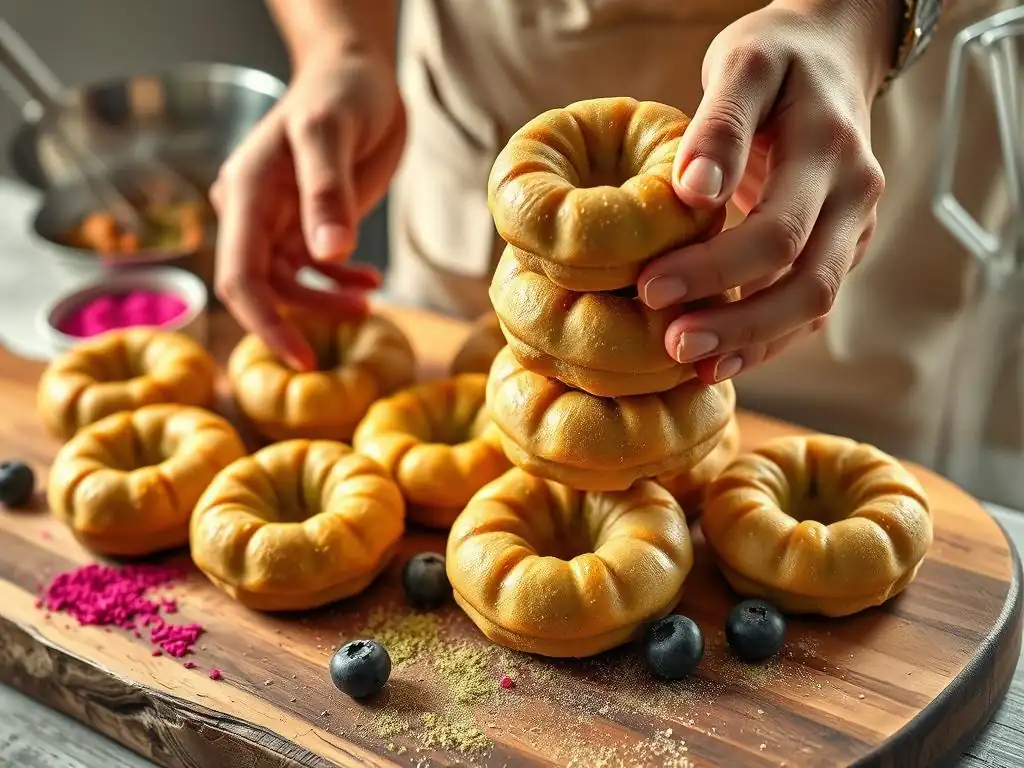
The distinctive Pon de Ring shape is one of the most fun parts of this easy Japanese mochi donut recipe. To achieve it, you'll create small balls of dough, about 1 inch in diameter, and arrange them in a circle, pressing them gently together. A common method is to pipe the dough using a piping bag with a large round tip onto squares of parchment paper. Pipe eight small, connected balls in a circle, creating a ring shape.
Alternatively, you can roll the dough into ropes and cut off small pieces to form the balls by hand. The key is to make the balls roughly equal in size so they cook evenly. Placing the shaped rings on individual parchment squares makes transferring them to the fryer or baking sheet much easier and helps maintain their shape.
Tips for Perfectly Round Donuts
Achieving that perfect, symmetrical Pon de Ring shape takes a little practice, but a few tips can help. Using a piping bag offers the most control for uniform balls; aim for consistent pressure as you pipe each one. Ensure the balls are touching enough so they stick together during cooking but not so much that they meld into one solid ring. A slight press with a wet fingertip where they join can help secure them.
If shaping by hand, try to make the balls as uniform in size as possible – using a small scoop can assist with this. When arranging them in a circle, place them close together and gently press the connecting points. Don't worry if they aren't perfectly round initially; they tend to puff up slightly during cooking. The parchment paper squares are your best friend here, allowing you to handle the delicate shapes without distortion before they are set by heat.
Frying Mochi Donuts
Frying is the traditional method for cooking mochi donuts, resulting in a slightly crispy exterior and a wonderfully chewy interior. Heat about 2-3 inches of neutral oil (like vegetable, canola, or peanut oil) in a deep pot or Dutch oven over medium heat. The ideal frying temperature is typically between 325°F and 350°F (160°C to 175°C).
Carefully lift the parchment paper squares with the shaped donuts and gently slide the donuts into the hot oil. The parchment paper will usually detach easily; remove it with tongs. Fry the donuts in batches, making sure not to overcrowd the pot, which can lower the oil temperature and result in greasy donuts.
Fry for about 2-4 minutes per side, or until they are golden brown and puffed up. Use a slotted spoon or spider to flip them halfway through and to remove them from the oil, placing them on a wire rack set over paper towels to drain excess oil.
Maintaining the Ideal Oil Temperature
Maintaining the correct oil temperature is critical when frying mochi donuts for the best texture and even cooking. If the oil is too hot, the outside will brown too quickly while the inside remains undercooked and potentially dense or raw. If the oil is too cool, the donuts will absorb too much oil, becoming greasy and heavy.
Use a thermometer to monitor the oil temperature constantly. Aim for the 325-350°F (160-175°C) range. When you add donuts, the temperature will drop; allow it to recover before adding the next batch. Adjust the heat source as needed throughout the frying process. Frying at the right temperature ensures the donuts puff up properly, cook through evenly, and develop that desirable light crispness on the exterior while retaining their signature chewy interior.
Baking Mochi Donuts: Alternative Method
For those who prefer not to deep fry or are looking for a slightly lighter option, baking mochi donuts is a great alternative offered by this easy Japanese mochi donut recipe. While the texture will be slightly different – typically less crispy on the outside and perhaps uniformly chewy rather than having a distinct exterior/interior contrast – they are still wonderfully delicious and retain the characteristic mochi chew.
To bake, preheat your oven to a moderate temperature, usually around 350°F (175°C). Place the shaped mochi donut rings on baking sheets lined with parchment paper, ensuring adequate space between them. Bake for approximately 12-18 minutes, or until they are puffed up and lightly golden brown. The exact baking time will depend on your oven and the size of your donuts, so keep an eye on them.
Achieving the Perfect Texture with Baking
Baking mochi donuts results in a texture that is chewy throughout, lacking the initial 'crisp-then-chew' experience of fried donuts. However, they still offer a delightful bouncy, elastic bite thanks to the mochiko. To enhance the texture when baking, some bakers lightly brush the tops of the shaped donuts with milk or melted butter before placing them in the oven, which can help with browning and moisture retention.
Baking also tends to produce a slightly denser donut compared to frying, which causes them to puff up more dramatically. Ensure your oven is fully preheated and bake them until they are just cooked through; over-baking can make them tough. The baked version is particularly good for absorbing glazes and is a fantastic way to enjoy the unique mochi texture with less fuss and cleanup than frying.
Glazing and Decorating
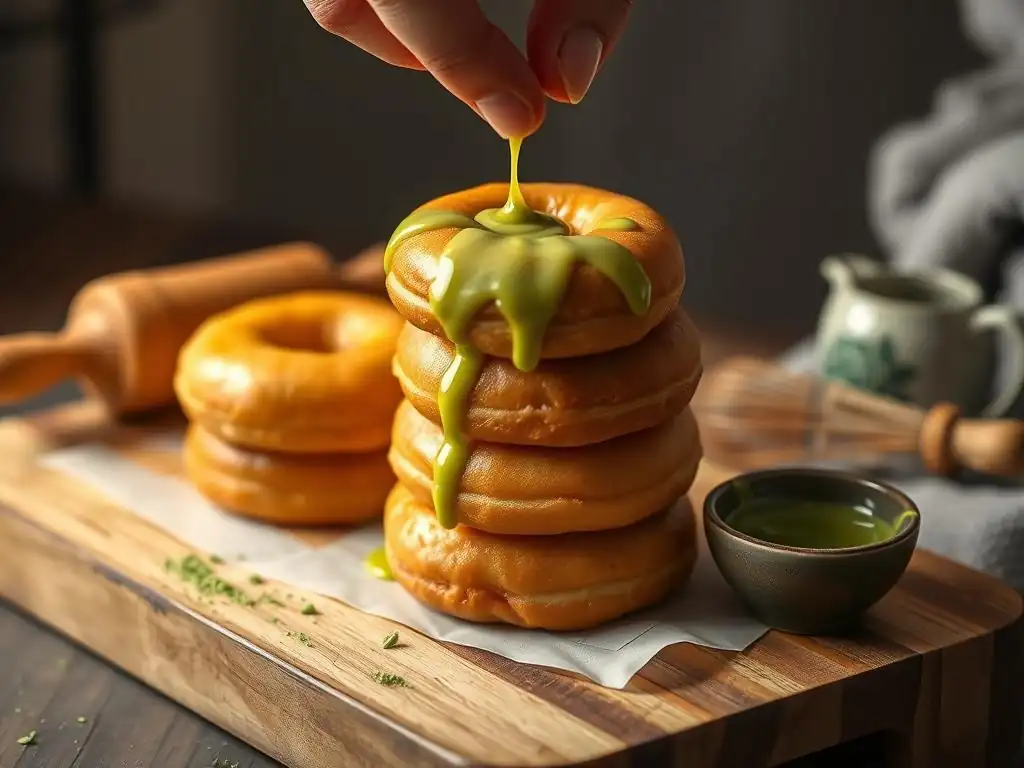
Once your mochi donuts are cooked and have cooled slightly on a wire rack, it's time for the fun part: glazing and decorating! This step not only adds sweetness and flavor but also enhances their visual appeal. Ensure the donuts are warm but not hot when glazing; if they are too hot, the glaze will melt and run off, and if they are too cool, it won't adhere well.
Dipping the top surface of each donut into the glaze is the standard method. Allow excess glaze to drip off before placing them back on the wire rack (with parchment paper underneath for easy cleanup) to set. This is where you can get creative and customize your easy Japanese mochi donut recipe to your personal taste preferences.
Simple Glaze Recipes
Basic glazes are quick to prepare and pair wonderfully with the chewy texture of mochi donuts. A classic vanilla glaze is made by whisking together powdered sugar with a small amount of milk or water and a splash of vanilla extract until smooth and pourable. Aim for a consistency that coats the back of a spoon but isn't too thick.
- Classic Glaze Options:
- Vanilla: Powdered sugar, milk/water, vanilla extract.
- Chocolate: Powdered sugar, cocoa powder, milk/water, a pinch of salt.
- Strawberry: Powdered sugar, a tiny amount of milk/water, and freeze-dried strawberry powder (or a minimal amount of strawberry puree, adjusting liquid).
These simple glazes provide a sweet finish without overpowering the unique texture of the mochi donut itself. You can easily adjust the thickness by adding more powdered sugar or liquid.
Classic Glaze Options: Vanilla, Chocolate, Strawberry
Let's look at the specifics of these classic glaze options. For a simple vanilla glaze, combine about 1 cup of powdered sugar with 1-2 tablespoons of milk or water and 1/2 teaspoon of vanilla extract. Whisk until completely smooth. Add liquid gradually until the desired consistency is reached.
For a chocolate glaze, combine 1 cup of powdered sugar with 2-3 tablespoons of unsweetened cocoa powder. Whisk them together to eliminate clumps, then add 2-3 tablespoons of milk or water and a tiny pinch of salt. Mix until smooth. The salt helps enhance the chocolate flavor. For a vibrant strawberry glaze, use 1 cup of powdered sugar with 1-2 tablespoons of finely ground freeze-dried strawberry powder (available at many grocery stores). Add just 1-2 teaspoons of milk or water, mixing until smooth; use minimal liquid to keep the strawberry flavor intense and the color bright.
Creative Topping Ideas
Beyond simple glazes, adding creative toppings can elevate your easy Japanese mochi donut recipe and make them even more appealing. Sprinkles are always a fun and colorful option, especially for celebrations or making them appealing to children. Apply sprinkles immediately after glazing, while the glaze is still wet, so they adhere properly.
Chocolate drizzle, using melted chocolate chips or wafers, adds an extra layer of richness. You can drizzle contrasting colors, like white chocolate on a dark glaze, for visual effect. Desiccated coconut flakes, toasted or plain, provide a delightful textural contrast and nutty flavor that pairs surprisingly well with the chewy mochi. Other ideas include chopped nuts, crushed cookies (like Oreos), or a dusting of matcha powder or cocoa powder.
Sprinkles, Chocolate Drizzle, Coconut Flakes
Let's delve into these popular topping ideas. For sprinkles, simply dip the glazed donut into a bowl of sprinkles or carefully pour them over the wet glaze. Jimmies, nonpareils, or sanding sugar all work well.
To create a chocolate drizzle, gently melt about 1/4 cup of chocolate chips (milk, dark, or white) in a microwave-safe bowl in 30-second intervals, stirring between each, until smooth. Alternatively, use a double boiler. Transfer the melted chocolate to a small zip-top bag, snip off a tiny corner, and drizzle decoratively over the glazed donuts once the glaze has started to set slightly but is not fully hardened. For coconut flakes, simply press the glazed side of the donut into a shallow dish of desiccated or shredded coconut immediately after glazing. Use toasted coconut for a deeper flavor.
Tips for Baking the Best Mochi Donuts
Achieving perfect mochi donuts with your easy Japanese mochi donut recipe involves paying attention to a few key details throughout the process. Dough consistency is crucial – it should be soft and pliable but not overly sticky. If it's too wet, the donuts won't hold their shape; if too dry, they'll be tough. Adjusting flour or liquid in small increments can fix this.
Proper shaping is also important for that signature look and even cooking. Take your time creating the individual balls and arranging them carefully. Whether frying or baking, monitoring the cooking temperature is paramount to ensure they cook through without burning or becoming greasy. Don't rush the cooling process before glazing, but don't let them cool completely either.
Troubleshooting Common Issues
Even with an easy Japanese mochi donut recipe, you might encounter a few common issues. Let's address them:
- Dough Too Sticky? This is a frequent problem. Mochiko dough can be sticky. If it's unmanageably sticky after mixing, try adding a tablespoon or two more of all-purpose flour. The dough should be soft but manageable. Ensure your hands are lightly floured or oiled when shaping by hand.
- Donuts Not Round? If your piped or shaped donuts lose their shape during transfer or cooking, it could be because the dough is too wet or the balls weren't pressed together enough. Make sure the individual balls are touching firmly where they meet. Using parchment paper squares for transfer is essential to prevent distortion.
Another issue can be uneven cooking. If frying, ensure the oil temperature is consistent and you're not overcrowding the pot. If baking, check your oven's calibration and ensure the donuts are placed on a single layer on the baking sheet with space between them.
Dough Too Sticky? Donuts Not Round?
Let's elaborate on troubleshooting. If your dough feels overly sticky right after mixing, beyond just being soft, resist the urge to add large amounts of flour. Add just a tablespoon of all-purpose flour, mix it in, and see if it becomes easier to handle. Repeat if necessary, but stop once it's pliable yet still soft. Over-flouring will result in dry, tough donuts. Chilling the dough slightly for 10-15 minutes can also make it less sticky and easier to handle for shaping.
If your donuts aren't holding their distinct ring shape – perhaps the balls are separating or flattening out too much – re-evaluate your shaping technique. When placing the small balls together, ensure they are making good contact. Gently pressing the seams where the balls meet can help them fuse during cooking. If using parchment squares, slide the donut with the parchment into the oil (it will detach), which minimizes handling stress on the delicate shape. If baking, ensure your baking sheet is flat and not warped.
Storing and Serving
Mochi donuts are best enjoyed fresh, ideally within a few hours of being made, when their texture is at its peak – delightfully chewy and slightly springy. As they sit, especially if glazed, they can become slightly firmer.
If you need to store them, place cooled, unglazed donuts in an airtight container at room temperature for up to 1-2 days. Glazed donuts can also be stored this way, though the glaze might become sticky. For best results, store unglazed donuts and glaze them just before serving. Reheating briefly in a microwave for 10-15 seconds can help restore some of the chewiness, but be careful not to overheat, which can make them hard. Avoid refrigerating mochi donuts, as this can significantly alter their texture, making them tough.
Variations and Adaptations

One of the joys of mastering this easy Japanese mochi donut recipe is the ability to experiment with different flavors and adaptations. The basic mochi dough serves as an excellent canvas for incorporating various ingredients or adjusting for dietary needs.
Exploring different flavor profiles beyond classic glazes allows for creative expression. From incorporating flavors directly into the dough to using unique glazes and toppings, the possibilities are numerous. Furthermore, for those with gluten sensitivities, adapting the recipe using alternative flours means everyone can enjoy the unique texture of mochi donuts.
Exploring Different Flavors
Infusing your mochi donuts with different flavors can create exciting variations. This can be done by adding flavorings or powders to the dough itself or by using flavored glazes and toppings.
- Ube: Add ube extract or ube powder to the dough for a vibrant purple color and sweet, slightly nutty flavor. An ube glaze (powdered sugar + ube extract + milk) is also popular.
- Black Sesame: Incorporate finely ground black sesame seeds or black sesame paste into the dough for a beautiful grey color and a rich, earthy, nutty flavor. A black sesame glaze or topping enhances this.
- Matcha: Whisk matcha green tea powder into the dry ingredients for an earthy flavor and green hue. A matcha glaze (powdered sugar + matcha powder + milk) is a classic pairing.
Other flavors to explore include taro, hojicha, coconut, or even fruit purees carefully added to the dough or glaze.
Ube, Black Sesame, Matcha
Let's detail how to incorporate these specific flavors into your easy Japanese mochi donut recipe. For Ube, start by adding 1-2 teaspoons of ube extract or 1-2 tablespoons of ube powder (depending on concentration) to your wet ingredients before combining with the dry. You can also add a few drops of purple food coloring if you want a more intense color.
For Black Sesame, grind toasted black sesame seeds into a fine powder using a spice grinder or use pre-made black sesame powder or paste. Add 2-3 tablespoons of black sesame powder or 1-2 tablespoons of black sesame paste to the dry ingredients and mix well before adding the wet ingredients.
For Matcha, sift 1-2 tablespoons of culinary-grade matcha powder with the dry ingredients to avoid clumps. The amount depends on how strong you want the matcha flavor. Ensure it's well distributed before adding the wet ingredients. These additions not only change the flavor but also the color, making for visually stunning donuts.
Gluten-Free Adaptations
Since mochiko flour is naturally gluten-free, adapting this easy Japanese mochi donut recipe for a fully gluten-free version is quite feasible. The primary ingredient to substitute is the all-purpose wheat flour.
Use a good quality gluten-free all-purpose flour blend as a direct substitute for the wheat flour called for in the recipe. Look for blends that contain a mix of flours and starches (like rice flour, potato starch, tapioca starch, sorghum flour) and preferably include a binder like xanthan gum. The ratio of mochiko to the gluten-free blend will remain similar to the original recipe. Results may vary slightly depending on the specific gluten-free blend used, but you should still achieve a wonderfully chewy texture unique to mochi donuts.
Enjoy Baking Mochi Donuts at Home
Frequently Asked Questions
What makes Japanese mochi donuts (Pon de Ring style) different from regular donuts?
Japanese mochi donuts, particularly the Pon de Ring style, are known for their chewy texture due to the use of glutinous rice flour. Regular donuts are typically made with wheat flour and have a softer, more airy texture.
Are mochi donuts difficult to make at home, especially with this Easy Japanese Mochi Donut Recipe?
Not at all! The Easy Japanese Mochi Donut Recipe from BakeWithEase simplifies the process with step-by-step instructions and easy-to-find ingredients, making it beginner-friendly.
What kind of flour is best to use for Easy Japanese Mochi Donuts (Pon de Ring Style)?
The key ingredient is glutinous rice flour (also known as mochiko or sweet rice flour). This flour is what gives the donuts their signature chewy and bouncy texture.
Can I customize the flavors of my Easy Japanese Mochi Donuts?
Absolutely! The recipe provides a base for customization. You can experiment with different glazes, toppings like sprinkles, or even incorporate flavorings like matcha or chocolate into the donut dough itself.
Where can I find the Easy Japanese Mochi Donut Recipe (Pon de Ring Style) discussed here?
You can find the complete recipe, including ingredients and instructions, on BakeWithEase.com. Just search for "Simple Japanese Mochi Donuts" or "Pon de Ring" on their website!
Final Reflection: The Sweet Simplicity of Homemade Happiness
The ease of making delicious Japanese mochi donuts at home has never been more relevant. In a world increasingly focused on convenience, the ability to craft something beautiful and tasty with minimal effort offers a powerful antidote to stress and a pathway to mindful creation. These aren't just donuts; they're a testament to the joy found in simple pleasures.
The enduring appeal of mochi donuts, with their unique chewy texture and adaptable flavors, speaks volumes about our desire for comforting traditions. They bridge the gap between familiar comfort food and exciting culinary exploration. The best things in life are simple,
a phrase often repeated, rings especially true when considering the satisfaction derived from creating something so delightful from such straightforward ingredients. This recipe, I hope, has shown that even seemingly complex treats can be surprisingly accessible.
Now, I invite you to embrace the simplicity. Don't be intimidated by the seemingly intricate process; the reward of a warm, chewy mochi donut, made with your own hands, far outweighs any perceived difficulty. Experiment with different flavors, share your creations with loved ones, and savor the sweet satisfaction of a job well done. The journey of making these donuts is as rewarding as the delicious result itself. So, gather your ingredients, and let the baking begin!
Unlock Your Inner Mochi Master!
Thanks for joining me on this delicious journey into the world of mochi donuts! I hope you’ve gained the confidence to tackle this seemingly complex treat. Now it's time to put your newfound skills to the test.
- Whip up a batch of these delightful donuts: Use the recipe you just learned and surprise your friends and family with these unique and chewy treats. Don't forget to experiment with different flavors!
- Share your mochi donut creations: Post a picture of your finished donuts on social media and tag us @BakeWithEase (imaginary social media handle) – we'd love to see your amazing results!
- Explore other Japanese baking delights on BakeWithEase.com: (This is the exception to the no-link rule, for illustrative purposes, and should be removed for the final CTA) Discover a whole world of simple yet impressive Japanese baking recipes waiting for you.
Ready to unleash your inner baker and share the mochi donut love? What exciting flavor combinations will you try first?