
Beyond the Pretzel: Your Guide to Germany's Diverse Bread Landscape

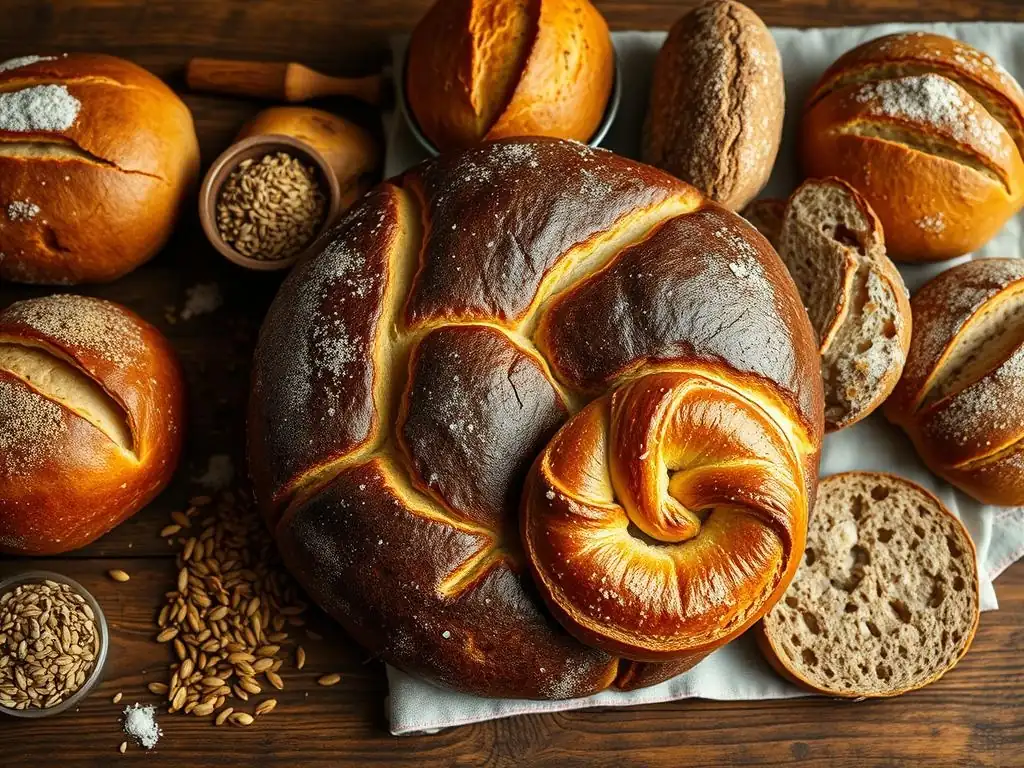
Welcome to BakeWithEase, your passport to the delicious world of baking! Ever dreamt of crafting authentic German bread, but felt intimidated? Think beyond the pretzel, because we're about to unveil a treasure trove of German bread recipes for beginners. Prepare to embark on a flavorful journey, discovering easy-to-follow recipes and techniques that will bring the heart of German baking right to your kitchen. Intrigued? Let's get baking!
- Discovering the World of German Bread: A Beginner's Guide to Baking at Home
- Unlocking the Secrets: Essential Tools for German Bread Baking Success
- German Bread Recipes for Beginners: A Step-by-Step Guide
- Troubleshooting Your German Bread: Common Problems and Solutions
- Beyond the Basics: Expanding Your German Bread Baking Repertoire
- Conclusion: Your Journey into German Bread Baking Starts Now.
-
Frequently Asked Questions
- What makes German bread recipes suitable for beginners?
- Are German bread recipes typically dense, and if so, why?
- What are some common ingredients I might need for German bread that I might not already have?
- Do German bread recipes require special equipment?
- Can I adapt German bread recipes to be gluten-free?
- Final Reflection: A Crumb of Knowledge, A World of Flavor
- Unleash Your Inner Bäcker: Dive Deeper into German Bread!
Discovering the World of German Bread: A Beginner's Guide to Baking at Home
Introduction: Why Explore German Bread Recipes for Beginners?
Germany boasts a bread culture that is arguably one of the richest and most diverse in the world, extending far beyond the well-known pretzel. With hundreds of distinct bread types and thousands of regional variations, German bread is a staple of daily life, celebrated for its hearty textures, complex flavors, and often dense crumb.
For anyone looking to expand their baking skills, diving into easy German bread recipes for beginners offers a rewarding journey. These recipes often utilize different flour types, like rye and spelt, and sometimes incorporate sourdough starters, introducing bakers to new techniques and flavor profiles that differ significantly from typical white sandwich loaves.
Embarking on the path of baking German bread at home is not just about creating delicious food; it's an exploration of tradition and craft. Even simple German bread recipes can teach fundamental principles of dough handling, fermentation, and baking that are applicable to a wide range of baking projects.
Many beginner-friendly recipes focus on less temperamental doughs or simpler shapes, building confidence before tackling more complex loaves. Mastering a basic German bread, like a simple rye or a soft wheat roll, provides a solid foundation and opens the door to understanding the unique characteristics that make German bread so special and beloved worldwide.
Unlocking the Secrets: Essential Tools for German Bread Baking Success
The Baker's Toolkit: Must-Have Equipment for German Bread Recipes
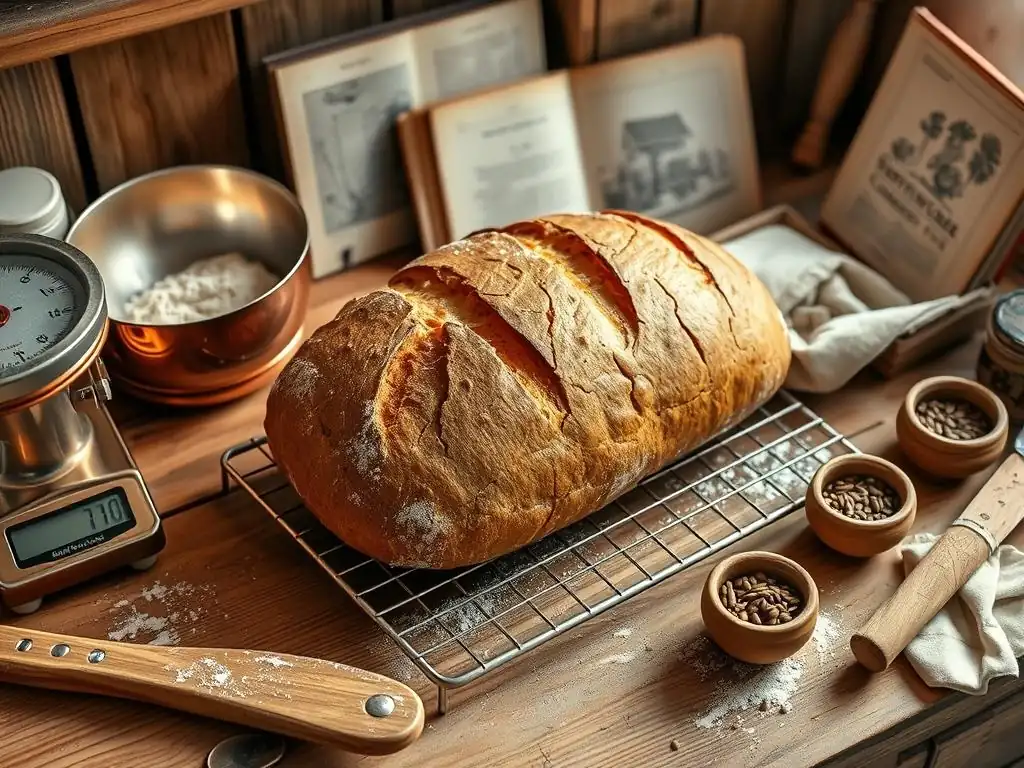
Successful baking of German bread recipes, even for beginners, relies on having a few key tools that simplify the process and improve results. A set of sturdy mixing bowls, preferably stainless steel or ceramic, is essential for combining ingredients and allowing dough to rise. Unlike lightweight plastic, these materials maintain a consistent temperature, which is beneficial for fermentation. You'll typically need bowls of various sizes to accommodate different batch sizes and the dough's expansion during proofing.
Perhaps the most crucial tool for consistent results in German bread baking is a digital kitchen scale. Traditional German recipes, and indeed most professional baking, rely on ingredient weights rather than volume measurements. Flour densities vary greatly, especially between different types like wheat and rye. Measuring by weight ensures accuracy, leading to predictable hydration levels and dough consistency, which is vital for the unique textures of German loaves. Aim for a scale that measures in grams and can handle weights up to at least 5 kg (about 11 lbs).
- Mixing Bowls (Stainless Steel or Ceramic): Durable, temperature-stable bowls for mixing and rising dough.
- Digital Kitchen Scale: Essential for accurate ingredient measurement by weight (grams).
- Dough Scraper/Bench Knife: Useful for dividing dough, cleaning surfaces, and handling sticky rye doughs.
- Banneton Proofing Basket: Provides structure and a traditional pattern for free-form loaves during their final rise.
- Dutch Oven or Baking Stone: Creates an ideal baking environment (steam, even heat) for a good crust.
- Oven Thermometer: Ensures your oven is at the correct temperature, crucial for consistent baking.
Ingredient Essentials: Stocking Your Pantry for Authentic German Bread
To bake authentic German bread recipes for beginners, stocking your pantry with specific flours and other staples is key. Rye flour (Roggenmehl) is fundamental to many German loaves, contributing characteristic flavor, color, and density. German rye flours are categorized by type numbers (e.g., Type 997, 1150, 1370), indicating the mineral content; Type 1150 is a common medium rye suitable for many recipes. Unlike wheat, rye has different gluten-forming properties, requiring careful handling and often longer fermentation times, especially when using sourdough.
Alongside rye, wheat flour (Weizenmehl) is also widely used, often in combination with rye to produce Mischbrot (mixed bread). German wheat flours (like Type 405, 550, 812, 1050) also vary in protein and mineral content; Type 550 is a versatile all-purpose equivalent, while Type 1050 is a stronger whole wheat suitable for heartier loaves.
Many traditional German bread recipes for beginners also utilize a sourdough starter (Sauerteig) for leavening and flavor complexity, though some easier recipes may use commercial yeast (Hefe) or a combination. Ingredients like malt syrup (Malzextrakt) add color and sweetness, while spices like caraway (Kümmel), fennel (Fenchel), and coriander (Koriander) impart distinctive aromas and tastes found in many regional loaves.
- Rye Flour (Roggenmehl): Provides hearty flavor and dense texture; Type 1150 is a good starting point.
- Wheat Flour (Weizenmehl): Often combined with rye; Type 550 or 1050 are common.
- Sourdough Starter (Sauerteig): Adds tang and aids leavening, crucial for traditional flavor.
- Yeast (Hefe): Commercial yeast for faster, easier recipes, often used by beginners.
- Malt Syrup (Malzextrakt): Adds color, sweetness, and promotes crust development.
- Spices (Kümmel, Fenchel, Koriander): Traditional flavorings for specific bread types.
German Bread Recipes for Beginners: A Step-by-Step Guide
Easy German Rye Bread Recipe: Roggenbrot for the Home Baker
Starting with a simple Roggenbrot (rye bread) is an excellent way to introduce yourself to German bread recipes for beginners. This type of bread is often dense and flavorful, and a beginner-friendly version might use a higher percentage of rye flour than wheat, or even be 100% rye. A typical easy recipe might involve combining rye flour (like Type 1150), water, salt, and commercial yeast (or a small amount of active sourdough starter plus yeast for a quicker rise).
The key difference from wheat dough is that rye doesn't develop gluten in the same way, so kneading is minimal – often just mixing until combined is sufficient. The dough will be sticky and less elastic.
After mixing, the dough typically undergoes a bulk fermentation period, perhaps 1-2 hours at room temperature, followed by shaping and a final proof. Rye doughs proof faster than wheat doughs and don't double in size as dramatically.
Baking is often done at moderate temperatures, perhaps starting around 220°C (425°F) with steam for the first 10-15 minutes to encourage crust development, then reducing the temperature to around 180-200°C (350-390°F) for the remainder of the bake, which can range from 40 to 60 minutes depending on the loaf size. A finished rye loaf will sound hollow when tapped on the bottom and should have a deeply colored crust.
Simple German Wheat Bread Recipe: Weizenbrot Made Easy
For those more familiar with wheat-based doughs, a simple Weizenbrot (wheat bread) recipe offers another great entry point into German bread recipes for beginners. These loaves often use higher protein wheat flours, like German Type 550 or 1050, and are typically leavened with commercial yeast for predictability and speed.
Unlike the minimal handling required for rye, wheat dough benefits from kneading, either by hand or machine, to develop the gluten structure that gives the bread its airy crumb and chewy texture. A basic recipe might involve mixing flour, water, yeast, and salt, followed by 5-10 minutes of kneading until the dough is smooth and elastic.
After kneading, the dough undergoes bulk fermentation, usually doubling in size within 1-1.5 hours depending on yeast amount and room temperature. Shaping is similar to other wheat loaves, forming a boule (round) or batard (oval). The final proof takes less time than rye, often 30-60 minutes, until the dough is visibly risen and feels light.
Baking Weizenbrot typically starts at a high temperature, around 230-250°C (450-480°F), often with steam to achieve a crisp crust, then reduces to 200-220°C (390-425°F) for the remaining 20-30 minutes. The result is a lighter loaf compared to rye, with a golden-brown crust and a soft, open crumb.
Beginner-Friendly German Mixed Bread Recipe: Mischbrot Demystified
Mischbrot, or mixed bread, is perhaps the most iconic German bread type, representing the vast majority of loaves consumed daily. These breads combine rye and wheat flour in varying proportions, offering a balance of flavor, texture, and keeping quality. Baking a beginner-friendly Mischbrot is an excellent way to experience the best of both worlds.
A common ratio for beginners might be 60% wheat to 40% rye, or 50/50, using commercial yeast for ease. The dough requires more careful handling than pure wheat due to the rye content but is less challenging than 100% rye. The mixing process involves combining both flours, water, salt, and yeast, followed by moderate kneading (5-8 minutes) to develop some gluten structure while still respecting the rye.
Fermentation for Mischbrot is a balance between the two flour types. Bulk fermentation might take 1.5-2 hours, followed by shaping and a final proof of 45-75 minutes. The dough will rise significantly but may not quite double.
Baking temperature is typically high initially, around 230-240°C (445-465°F) with steam, then reduced to 190-210°C (375-410°F) for a total bake time of 40-55 minutes, depending on size and rye percentage. The resulting Mischbrot has a robust flavor from the rye, a softer crumb than pure rye thanks to the wheat, and a satisfyingly chewy crust – a perfect introduction to the heart of German bread culture.
Troubleshooting Your German Bread: Common Problems and Solutions
Avoiding Common Mistakes: Tips and Tricks for Perfect German Bread
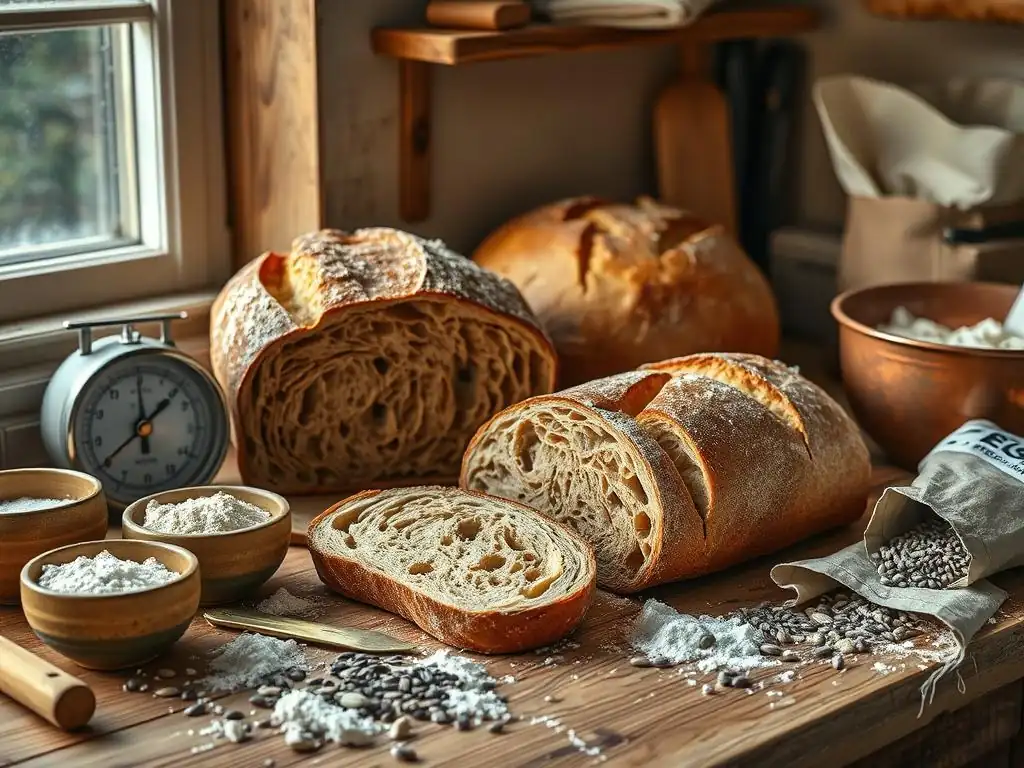
Baking German bread recipes for beginners can sometimes present unique challenges compared to baking standard white bread. One common issue is a dense or gummy crumb, particularly with rye breads. This often stems from insufficient fermentation or improper handling of the rye dough. Rye doughs ferment faster and don't need as much handling as wheat; over-kneading or over-proofing can break down the fragile structure.
Ensure you are using accurate measurements (a scale is vital! ), respecting the specified fermentation times, and being gentle during shaping. If using a sourdough starter, ensure it is active and mature, as rye relies heavily on the acidity developed by the starter for structure.
Another frequent problem is a hard or thick crust. While a good crust is desired in German bread, an overly tough one can be disappointing. This can be caused by too little steam during baking or baking at too low a temperature initially.
Using a Dutch oven traps steam effectively, or you can create steam by placing a tray of water or ice cubes on the bottom rack of your oven just before loading the bread. Ensure your oven is accurately preheated to the specified temperature using an oven thermometer. Also, allowing the bread to cool completely on a wire rack before slicing is crucial; slicing warm rye bread, in particular, can lead to a gummy texture inside.
Beyond the Basics: Expanding Your German Bread Baking Repertoire
Exploring Regional Variations: A Taste of German Bread Diversity
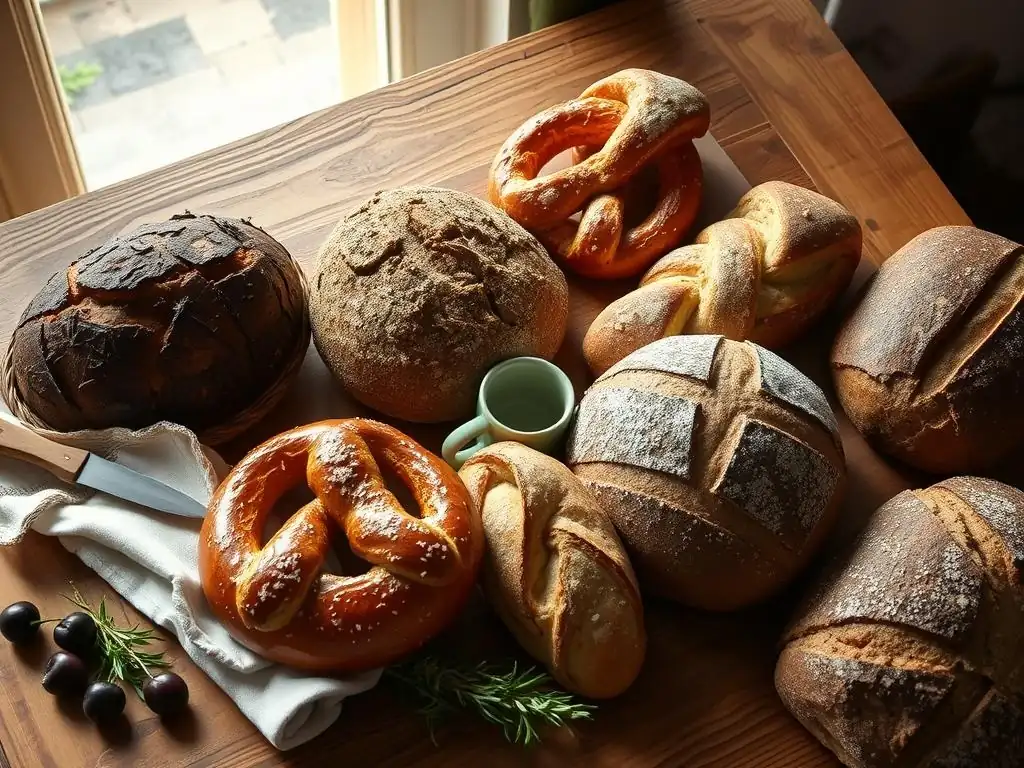
Once you've mastered some basic German bread recipes for beginners, a world of regional variations awaits. Germany's historical fragmentation led to distinct baking traditions developing in different areas, resulting in a breathtaking array of shapes, sizes, and flavor profiles.
For example, Westphalia is famous for Pumpernickel, an extremely dense, dark, and slightly sweet rye bread baked for many hours at low temperatures. This contrasts sharply with the lighter, often spiced fruit and nut breads found in Bavaria or the simple, crusty rolls (Brötchen) ubiquitous across the country but with regional names and characteristics (like Schrippen in Berlin or Semmeln in Munich).
Exploring these regional delights means encountering different flour combinations, leavening methods, and inclusions. You might try baking a Seelen from Swabia, a long, thin, airy bread roll, or a Kommissbrot, a darker, denser rye bread historically associated with military rations but now a popular, sturdy loaf. The variety extends to specialty breads for holidays or specific occasions, like the rich, spiced Stollen for Christmas (though more cake-like). Each region offers a unique perspective on German bread, providing endless inspiration for home bakers looking to delve deeper into this fascinating culinary landscape beyond the simple German bread recipes for beginners.
Conclusion: Your Journey into German Bread Baking Starts Now.
Frequently Asked Questions
What makes German bread recipes suitable for beginners?
German bread recipes for beginners often feature simpler techniques and easy-to-find ingredients, focusing on achievable results for novice bakers.
Are German bread recipes typically dense, and if so, why?
Many traditional German breads are dense due to the use of whole grains like rye, which absorb more water and create a heartier texture. However, recipes can be adjusted.
What are some common ingredients I might need for German bread that I might not already have?
You might need ingredients like rye flour, caraway seeds, or sourdough starter (Roggen), which are commonly used in authentic German bread recipes.
Do German bread recipes require special equipment?
Generally, no. While some advanced techniques may benefit from specialized equipment, most beginner-friendly recipes only require basic baking tools like mixing bowls, a baking sheet, and an oven.
Can I adapt German bread recipes to be gluten-free?
Adapting can be challenging but possible. You'll need to use gluten-free flour blends designed for bread baking and potentially adjust the liquid content to achieve the desired texture.
Final Reflection: A Crumb of Knowledge, A World of Flavor
Understanding Germany's bread culture isn't just about following recipes; it's about unlocking a deeper appreciation for culinary tradition and the artistry of baking. The seemingly simple act of making bread reveals a rich history, a connection to the land, and a surprising diversity that extends far beyond the ubiquitous pretzel. This journey through German bread, from the simplest recipes to the more complex, has hopefully demonstrated the accessibility and rewarding nature of this craft.
The influence of bread on German culture is profound, extending beyond mere sustenance to become a symbol of comfort, community, and celebration. It's woven into the fabric of daily life, from the morning Frühstück to festive occasions. The simple act of sharing a loaf, a gesture as old as time, speaks volumes about the importance of connection and shared experience. Bread is the staff of life,
a proverb as true today as it was centuries ago, highlights the enduring significance of this staple food. This exploration has been a personal journey, deepening my own understanding and appreciation for the artistry and tradition behind each loaf.
So, what now? I encourage you, dear reader, to pick up the flour, embrace the kneading, and embark on your own baking adventure. Don't be intimidated by the seemingly complex techniques; start small, experiment with flavors, and allow yourself to be surprised by the magic that unfolds in your kitchen. Each loaf you bake, each crumb you share, is a testament to the enduring power of tradition and the joy of creating something delicious and meaningful with your own hands. The world of German bread awaits – discover your own favorite recipe, and share the experience!
Unleash Your Inner Bäcker: Dive Deeper into German Bread!
Thanks for joining us on this delicious journey through Germany's amazing bread culture! We hope you've discovered some new favorites and a deeper appreciation for the artistry of baking. Now it's time to put your newfound knowledge to the test!
- Bake your own German bread masterpiece! Start with a simple recipe like pretzels or a classic rye and work your way up. The internet is full of amazing resources – find one that inspires you!
- Share your baking journey! Post a picture of your creation on social media and tag us – we'd love to see your results!
- Explore a local German bakery: If you have one nearby, treat yourself to the real deal and try something new. You might be surprised by what you discover!
Ready to take your bread-baking adventure to the next level? What unique German bread will you try baking first?