
From Boulangerie to Patisserie: Navigating France's Baked Goods Scene

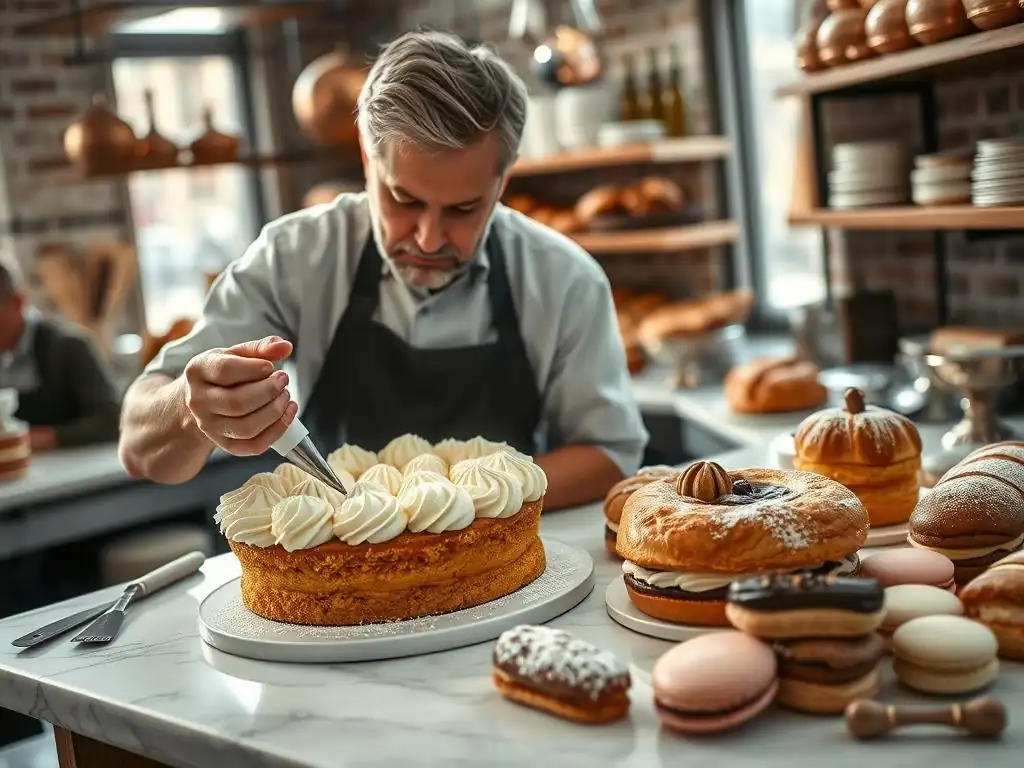
Welcome to BakeWithEase, your guide to unlocking the delicious world of baking! Ever wondered about the secrets behind those flawless French pastries that grace Parisian patisseries? This article delves into essential French pastry baking techniques, offering insights and tips to elevate your skills. Get ready to embark on a baking adventure and discover the art of creating authentic French treats – let's get started!
- Understanding the Landscape: French Baking Traditions and Techniques
- Essential French Pastry Baking Techniques You Need to Know
- Experiencing French Baking Firsthand: Tours, Classes, and Workshops
- Equipping Your Kitchen: Tools and Ingredients for French Pastry Baking at Home
- Beyond the Recipe: Elevating Your French Baking Skills
-
Frequently Asked Questions
- What is the difference between a boulangerie and a patisserie in France?
- What are some essential French pastry baking techniques that beginners should learn first?
- Where can I find easy-to-find ingredients for French pastry baking techniques?
- What are some common French pastries that are relatively simple to make at home?
- What resources does BakeWithEase.com offer to help me learn French pastry baking techniques?
- Final Reflection: The Enduring Allure of French Baking Techniques
- Unlock the Secrets of French Baking!
Understanding the Landscape: French Baking Traditions and Techniques
The Allure of French Baking: A Journey Through Flavors and Textures
French baking holds a revered place in culinary history, celebrated globally for its exquisite balance of flavor, texture, and artistry. From the shattering crispness of a perfectly baked baguette to the delicate layers of a mille-feuille, these creations are more than just food; they are edible art forms. The foundation of this excellence lies in centuries-old traditions and meticulous techniques passed down through generations. Mastering French pastry baking techniques is a pursuit that captivates bakers worldwide, drawing them into a world where butter, flour, sugar, and eggs are transformed into masterpieces.
This rich heritage is evident in the sheer variety found across France. Each region boasts its own specialties, shaped by local ingredients and historical influences. Think of the buttery richness of Brittany's Kouign Amann or the sun-kissed flavors of Provence's Calissons d'Aix. The dedication to quality ingredients and precise execution is paramount, distinguishing French baked goods. Even seemingly simple items like a croissant require a deep understanding of dough lamination and proofing to achieve that signature airy interior and flaky exterior.
Boulangerie vs. Patisserie: Decoding the Differences in French Baking
While often housed under the same roof today, traditionally, a boulangerie and a patisserie represented distinct crafts within the French baking world. A boulangerie is primarily focused on bread – the daily staple of French life. These establishments are dedicated to the art of bread making, utilizing various flours, leavening agents (like natural sourdough starters), and baking methods to produce a wide array of loaves, from the classic baguette to rustic pain de campagne. The aroma of freshly baked bread is the defining characteristic of a true boulangerie.
A patisserie, on the other hand, is the domain of the pastry chef, specializing in cakes, tarts, éclairs, macarons, and other sweet confections. This is where intricate decorations, delicate fillings, and complex flavor combinations take center stage. While a patisserie might sell some viennoiseries (like croissants or pain au chocolat), their core expertise lies in the creation of elaborate desserts. The skills required are often different from those of a baker, involving precise measurements, temperature control for custards and chocolate, and artistic plating.
The Boulangerie: Mastering the Art of French Bread Baking
The heart of a boulangerie beats with the rhythm of fermentation and the heat of the oven. Bakers here dedicate themselves to understanding the science and art of transforming simple ingredients into complex and flavorful loaves. Key French bread baking techniques involve working with high-hydration doughs, developing gluten through kneading or folding, and mastering the use of natural leavens like levain (sourdough starter). The shaping and scoring of loaves are also crucial steps, influencing both the final appearance and the texture of the crust and crumb.
A classic baguette, for instance, requires careful attention to hydration (often 70-75% water to flour), a long, slow fermentation period, and baking in a very hot oven with steam to achieve its characteristic crisp crust and open, airy interior. Other popular breads like pain au levain rely on a mature sourdough starter for their tangy flavor and chewy texture. Boulangeries often bake multiple batches throughout the day, ensuring that customers can always purchase bread that is incredibly fresh and warm, a cornerstone of the French culinary experience.
The Patisserie: Delving into the World of French Pastry
The patisserie is a realm of precision and artistry, where French pastry baking techniques reach their zenith in sweet creations. Patisserie chefs, or pâtissiers, are skilled in crafting everything from delicate macarons with their perfectly crisp shells and creamy fillings to elaborate layered cakes like the Opéra or the Saint-Honoré. Their work involves mastering various doughs (like pâte sablée for tarts or pâte à choux for éclairs), creams ( crème pâtissière, mousseline, ganache), and decorative elements.
Attention to detail is paramount in a patisserie. Achieving the mirror glaze on a modern entremet, piping intricate designs with buttercream, or assembling a complex tart requires patience and a high level of technical skill. The use of high-quality ingredients, particularly French butter with its higher fat content and distinct flavor, is essential for achieving the rich taste and desirable texture characteristic of French pastries. A visit to a patisserie is a feast for both the eyes and the palate, showcasing the pinnacle of sweet French baking.
Essential French Pastry Baking Techniques You Need to Know
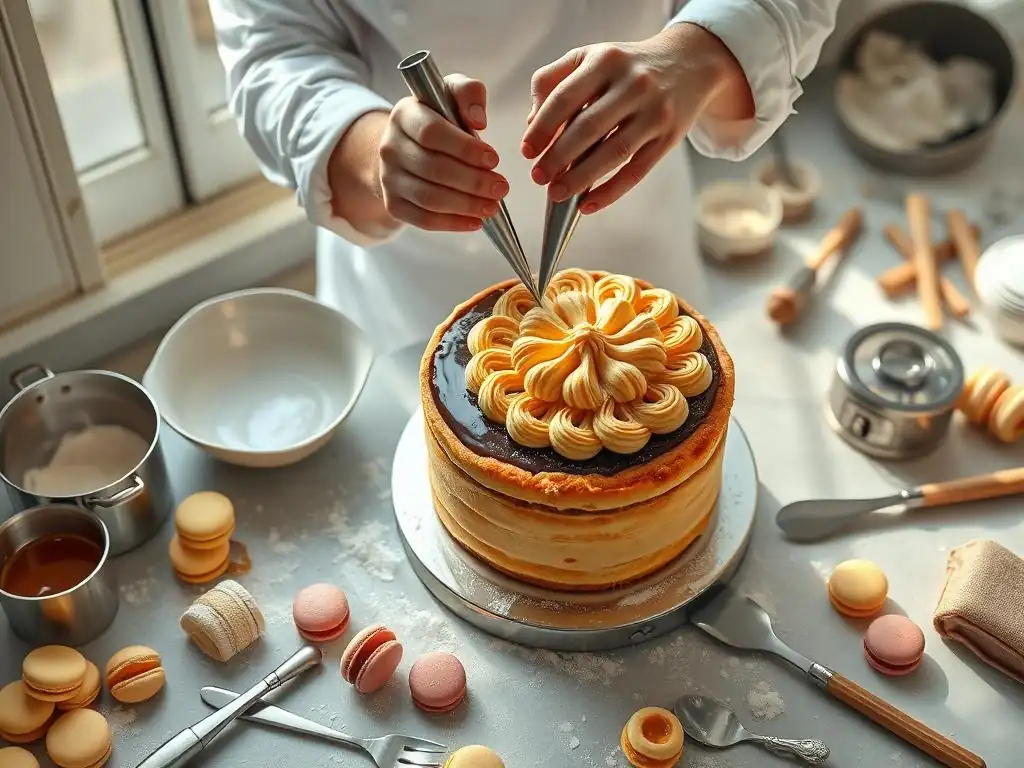
To truly appreciate and recreate French baked goods, understanding certain fundamental French pastry baking techniques is crucial. These methods form the backbone of countless classic recipes.
Laminated Dough Mastery: Achieving Flaky Perfection
Laminated dough is perhaps one of the most iconic elements of French baking, responsible for the ethereal flakiness of croissants, pain au chocolat, and puff pastry. The technique involves repeatedly folding butter into a dough, creating countless thin layers that separate during baking, resulting in a light, airy, and incredibly flaky texture. Mastering the tourage (folding process) is key, requiring precise temperature control for both the dough and the butter to prevent the butter from melting into the dough prematurely.
The process typically involves an initial dough (détrempe) and a block of butter (beurre de tourage). The butter is enclosed in the dough, and the package is then rolled and folded multiple times, often with resting periods in the refrigerator between folds. A typical croissant dough might undergo three or four "turns" (folds), creating hundreds of layers. This specific French pastry baking technique demands patience and practice, but the result – a pastry that shatters into delicate flakes with every bite – is incredibly rewarding.
The Secrets to Perfect Croissants: Professional Dough Sheeting
Creating perfect croissants hinges significantly on the dough sheeting process. After lamination, the dough must be rolled out evenly to a specific thickness before being cut and shaped. Professional bakers often use dough sheeters to achieve consistently thin layers and uniform thickness, which is difficult to replicate perfectly by hand. Manual sheeting requires a light touch, steady pressure, and careful handling to avoid tearing the delicate layers of butter and dough.
The temperature of the dough during sheeting is critical; it must be cold enough to keep the butter solid but pliable, typically between 4°C and 8°C (39°F and 46°F). If the dough is too warm, the butter will melt and integrate into the dough, destroying the layers. If it's too cold, the butter will break and tear the dough. Achieving the ideal balance ensures that when the dough is rolled to approximately 3-4 millimeters thick, the layers remain intact and distinct, ready to puff beautifully in the oven.
Pain au Chocolat Perfection: Elevating Your Baking with Quality Chocolate
Pain au chocolat, often called chocolatines in some regions, is another classic made with laminated dough, essentially a croissant wrapped around one or two pieces of high-quality dark chocolate. The key to a superior pain au chocolat, beyond the flaky dough achieved through careful French pastry baking techniques, lies in the chocolate itself. Using baking sticks ( bâtons de chocolat) specifically designed for this purpose is recommended. These sticks are formulated to melt properly during baking without seizing or burning, providing a luscious, molten chocolate core.
The quality of the chocolate significantly impacts the final flavor. Opting for chocolate with a cocoa content typically between 50% and 70% offers a rich, slightly bitter contrast to the buttery pastry. Placing the chocolate correctly within the cut dough triangles and rolling tightly ensures the chocolate is fully encased and melts into a delicious pocket during baking. A well-made pain au chocolat should have a crisp, flaky exterior, a tender, airy interior, and a perfectly melted chocolate center.
Choux Pastry Prowess: Creating Air-Light Eclairs and Profiteroles
Choux pastry ( pâte à choux) is a versatile French dough used for éclairs, profiteroles, gougères (savory cheese puffs), and the stunning pièce montée (croquembouche). Unlike laminated doughs, choux relies on high moisture content and the power of steam to create its signature hollow interior. The process involves cooking flour, water (or milk), and butter together to form a thick paste, then beating in eggs one by one until the dough reaches a smooth, glossy consistency capable of holding its shape when piped.
When baked at a high initial temperature, the moisture in the dough turns to steam, causing the pastry to puff dramatically. The outer shell sets, while the inside remains moist initially, eventually drying out slightly to form a hollow cavity perfect for filling with creams, mousses, or ice cream. Mastering the consistency of the dough before piping and controlling the oven temperature are crucial French pastry baking techniques for achieving light, airy choux with a crisp shell.
Mastering the Piping Technique: Professional Piping Results
Once the choux pastry dough is ready, proper piping is essential for achieving uniform shapes and sizes, especially for éclairs and profiteroles. A piping bag fitted with a plain or star tip is typically used. For éclairs, the dough is piped into straight, even strips, about 10-12 cm long, ensuring consistent width for even baking. For profiteroles, small mounds are piped. Consistency in piping ensures that all pastries bake at the same rate and look professional.
Holding the piping bag correctly, applying steady pressure, and controlling the speed of piping are techniques that improve with practice. Some bakers lightly dampen their finger to smooth out any ridges or unevenness on the piped shapes before baking. Achieving clean, well-defined shapes not only makes the final product visually appealing but also contributes to better structure and even rising during baking.
Baking Choux to Perfection: Achieving the Ideal Texture
Baking choux pastry involves a two-stage temperature process to ensure it puffs correctly and dries out sufficiently to create a stable shell. Typically, the oven is preheated to a high temperature, around 220°C (425°F), to provide an initial burst of heat that generates maximum steam and lift. After the pastries have puffed and set, the temperature is often reduced to around 180°C (350°F) to allow them to dry out and crisp up without burning.
- Preheat oven to high temperature (e.g., 220°C / 425°F).
- Bake until puffed and golden brown.
- Reduce oven temperature (e.g., 180°C / 350°F).
- Continue baking until thoroughly dried out and crisp.
- Optional: Pierce or cut a small slit in larger choux pastries towards the end of baking to release steam.
It is absolutely critical not to open the oven door during the initial high-heat phase, as this can cause the pastries to collapse. Baking time varies depending on the size of the choux, but typically ranges from 20 to 40 minutes. The pastry should feel light and hollow when tapped on the bottom, indicating it is properly baked and dried.
Crème Pâtissière Perfection: The Foundation of Many French Pastries
Crème pâtissière, or pastry cream, is a fundamental component in countless French desserts, serving as the filling for éclairs, tarts, mille-feuille, and more. This rich, thick custard is made from milk, sugar, egg yolks, and a thickening agent, usually flour or cornstarch, and often flavored with vanilla. Mastering the art of making a smooth, lump-free, and perfectly thickened crème pâtissière is an essential French pastry baking technique for anyone delving into French sweets.
The process involves gently heating the milk (often infused with vanilla bean), whisking together egg yolks and sugar until pale, incorporating the starch, and then gradually whisking the hot milk into the egg mixture to temper the yolks. The mixture is then returned to the heat and cooked, stirring constantly, until it thickens significantly and comes to a boil for a minute or two to ensure the starch is fully cooked out. Proper cooking is key to preventing a raw, starchy taste and achieving the desired consistency.
The Art of Tempering Eggs: Achieving a Silky Smooth Custard
Tempering the egg yolks is a crucial step in making crème pâtissière to prevent them from scrambling when they are added to the hot milk. This French pastry baking technique involves slowly raising the temperature of the egg yolks by gradually whisking a small amount of the hot liquid into them before adding the warmed yolk mixture back to the main pot of milk. This gentle introduction of heat equalizes the temperature between the yolks and the milk, allowing them to cook smoothly without curdling.
Success in tempering requires continuous whisking and adding the hot liquid in a thin, steady stream. Once the egg mixture is warmed, it's poured back into the saucepan through a sieve (to catch any accidental cooked bits) and cooked over medium heat, stirring constantly. The cream will thicken as it heats; it's important to continue cooking it for a minute or two after it reaches a boil to ensure the starch activates fully and the custard achieves its maximum thickness and smooth texture.
Flavoring Your Crème Pâtissière: Vanilla, Citrus, and More
While classic crème pâtissière is famously flavored with vanilla, this versatile base can be adapted with numerous other flavors. Using a high-quality vanilla bean, split and scraped into the milk before heating, imparts the most authentic and intense vanilla flavor. The scraped pod can also be steeped in the milk. Alternatively, pure vanilla extract or vanilla bean paste can be added after the cream has thickened and been removed from the heat.
Beyond vanilla, variations include lemon or orange zest infused into the milk, coffee extract, chocolate (stirred in while hot), or even liqueurs added after cooling. For fruit tarts, a layer of fruit purée can be swirled into the finished cream or placed beneath it. Experimenting with different flavorings allows bakers to create a wide range of desserts using this single foundational French pastry baking technique. After cooking, the crème pâtissière should be immediately transferred to a clean bowl, covered directly with plastic wrap to prevent a skin from forming, and chilled quickly.
Experiencing French Baking Firsthand: Tours, Classes, and Workshops
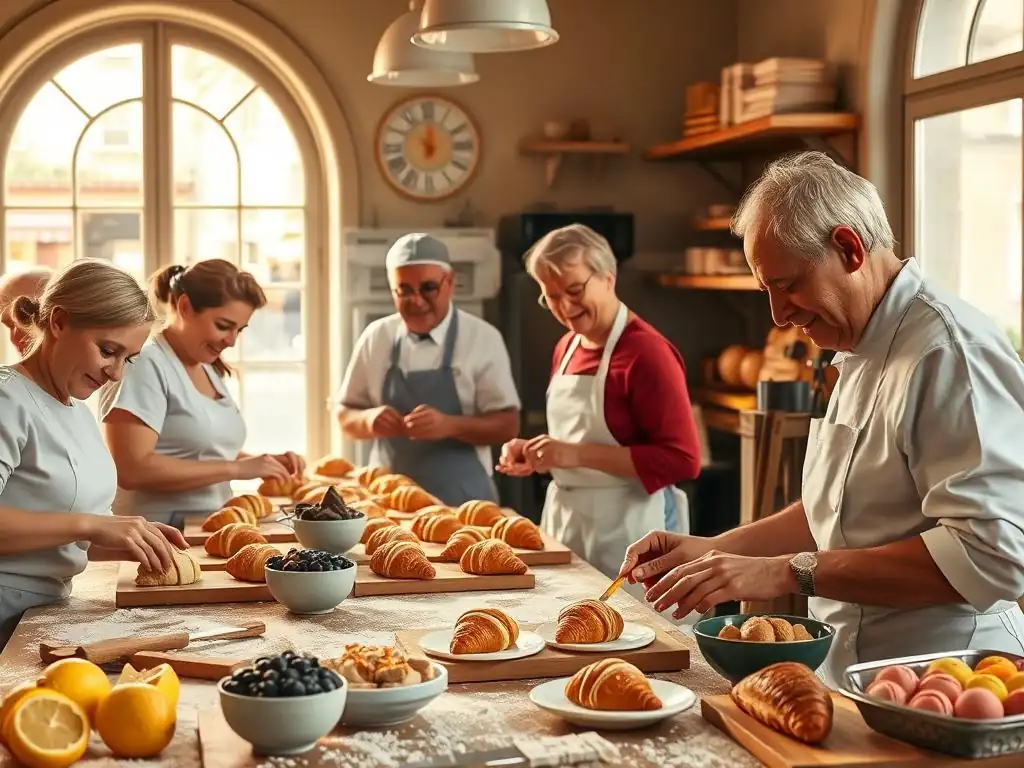
For those truly passionate about French baked goods and mastering French pastry baking techniques, nothing compares to experiencing the craft firsthand in France. Many cities and regions offer opportunities to go beyond tasting and actually learn the secrets behind these iconic treats.
Immersive Baking Experiences: Discovering French Pastry in Paris
Paris, as the capital of gastronomy, offers an abundance of opportunities for immersive baking experiences. From short workshops to multi-day courses, there are options for every skill level. Participating in a hands-on class provides invaluable insight into the precise techniques and attention to detail required in French baking. You can learn directly from experienced chefs in professional kitchens.
These experiences often cover classic pastries like croissants, macarons, éclairs, or tarts. While a single class won't make you a master, it provides a solid foundation in specific French pastry baking techniques and allows you to practice under expert guidance. Many schools provide ingredient kits and detailed recipes, making it easier to recreate the magic back in your own kitchen. The average cost for a half-day class in Paris might range from €80 to €150, depending on the topic and instructor.
Hands-On Croissant Making Class in Montmartre
Imagine spending a morning in a charming Parisian neighborhood like Montmartre, learning the intricate process of making croissants from scratch. Several schools and independent bakers offer workshops specifically focused on this iconic pastry. These classes typically cover making the détrempe, incorporating the butter block, performing the required folds (often 3 or 4 turns), and the delicate shaping and proofing process.
Participants get hands-on experience rolling, folding, and shaping the dough, gaining a tactile understanding of the proper dough consistency and temperature needed for successful lamination. You'll learn the optimal proofing time and temperature required for the croissants to develop their volume and flavor before baking. At the end of the class, you often get to take home the warm croissants you've made, a delicious reward for your efforts in mastering these specific French pastry baking techniques.
Mastering Macarons with a Renowned French Pastry Chef
Macarons, with their delicate shells and creamy fillings, are a true test of a pastry chef's skill. Learning to make them from a renowned French pastry chef in Paris is an unforgettable experience. Macaron classes delve into the nuances of creating the meringue (French, Italian, or Swiss methods), sifting and folding the almond flour and powdered sugar (the tant pour tant), achieving the correct batter consistency ( macaronage), piping perfect circles, and baking them to develop the signature "foot."
Chefs often share their secrets for preventing cracked shells, achieving vibrant colors, and creating stable, flavorful fillings like ganache or buttercream. These workshops emphasize precision in weighing ingredients, temperature control, and careful technique at every step. A class focused on macarons might last 2-3 hours and provide participants with a box of their own handmade creations, showcasing their newly acquired French pastry baking techniques.
Regional Baking Variations: Exploring the Unique Pastries of Provence and Brittany
While Paris is a hub, France's regions offer their own distinct baking traditions and specialties, providing a broader understanding of French baked goods. Traveling to regions like Brittany or Provence offers a chance to taste and potentially learn about pastries unique to those areas, developed from local ingredients and historical practices. These regional variations highlight the diversity within French baking.
Exploring regional bakeries and markets reveals a treasure trove of local delights. Engaging with local bakers can offer insights into traditional methods and ingredients used in their specific pastries. While formal classes might be less common than in Paris, some smaller workshops or bakery visits might be available, offering a glimpse into these specific regional French pastry baking techniques.
Kouign Amann in Brittany: A Buttery Delight You Can Recreate at Home
Brittany is famous for its butter, and the Kouign Amann is a glorious testament to this regional ingredient. Its name translates literally to "butter cake" in Breton, and it lives up to it – the pastry is made from bread dough layered with generous amounts of butter and sugar, then folded and baked until caramelized and crisp on the outside and soft and buttery within. It's a dense, rich, and incredibly satisfying pastry.
Recreating Kouign Amann at home requires working with a similar lamination technique to croissants, but with the added challenge of incorporating sugar into the layers, which caramelizes during baking. The key is using high-quality, high-fat butter and achieving the right balance of dough, butter, and sugar. While specific French pastry baking techniques for Kouign Amann differ slightly from croissant lamination, the principle of creating layers remains central to its unique texture and flavor.
Calissons d'Aix in Provence: The Almond Paste Candy Worth Traveling For
Moving south to Provence, the Calisson d'Aix is a completely different kind of sweet, more akin to confectionery than traditional pastry, but deeply rooted in the region's culinary heritage. These small, diamond-shaped treats have a base of candied melon and ground almonds, topped with a thin layer of royal icing. They have a unique chewy texture and a delicate, floral, and fruity flavor profile.
While not requiring oven baking in the typical sense, making Calissons involves specific techniques for preparing the fruit and almond paste mixture, shaping the diamonds, and applying the icing. The quality of the ingredients – particularly the almonds and candied fruit – is paramount. Experiencing Calissons in Aix-en-Provence, perhaps visiting a traditional calissonier (Calisson maker), offers insight into the historical methods and precise steps involved in crafting these regional delicacies, representing a different facet of French sweet-making.
Equipping Your Kitchen: Tools and Ingredients for French Pastry Baking at Home
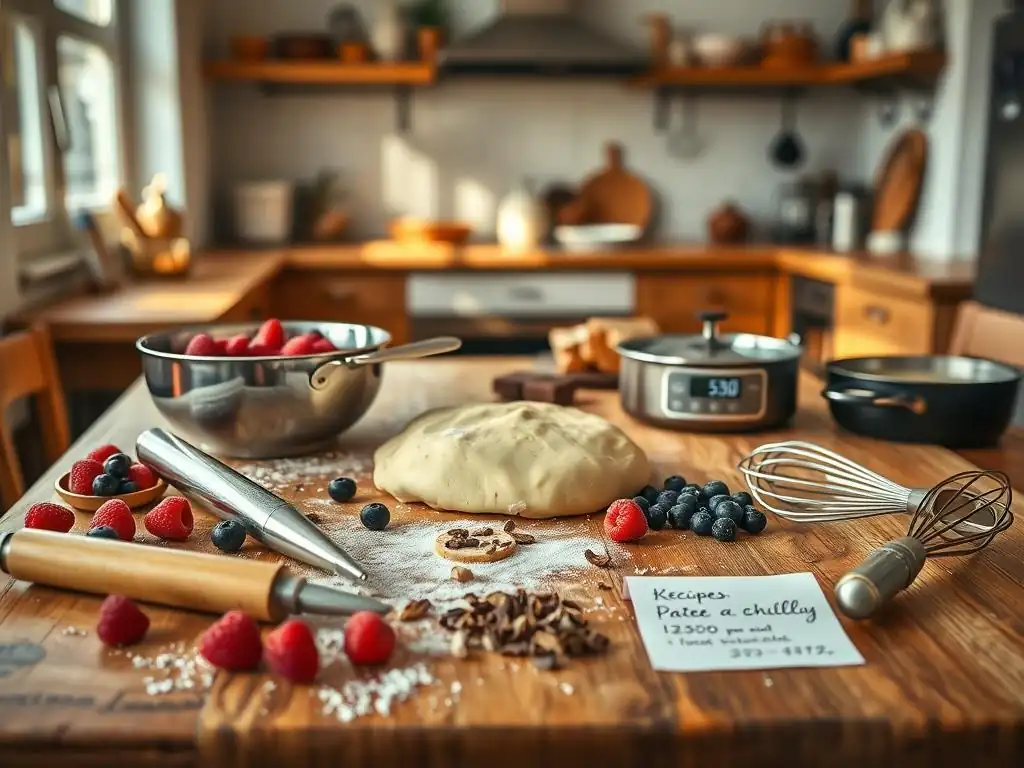
Embarking on the journey of French pastry baking at home requires more than just recipes; having the right tools and sourcing quality ingredients are equally important for success.
Must-Have Tools for French Pastry Baking
Certain tools can significantly improve your ability to execute precise French pastry baking techniques. While you don't need a professional kitchen setup, a few key items make a big difference:
- Digital Scale: French baking relies heavily on precise measurements by weight, not volume. A good digital scale is essential for accuracy, especially for ingredients like flour and sugar.
- Pastry Scraper/Bench Scraper: Useful for handling dough, cleaning surfaces, and portioning.
- Rolling Pin: A sturdy rolling pin is necessary for sheeting dough, particularly laminated doughs. French-style tapered rolling pins are favored by many.
- Pastry Brush: For applying egg wash or simple syrup.
- Piping Bags and Tips: Essential for choux pastry, macarons, and decorating. A basic set of plain and star tips is a good start.
- Fine-Mesh Sieve: For sifting dry ingredients like powdered sugar and almond flour for macarons or straining crème pâtissière.
- Thermometer: An instant-read thermometer is useful for checking the temperature of sugar syrups, milk for custards, and internal temperature of baked goods.
- Silicone Baking Mats (e.g., Silpat): Provides a non-stick surface for baking delicate items like macarons and choux.
- Wire Cooling Racks: Allows air circulation for proper cooling of baked goods.
Having these tools will make practicing French pastry baking techniques much more manageable and lead to better results.
Sourcing the Best Ingredients
The quality of your ingredients directly impacts the outcome of your French baked goods. French bakers emphasize using the finest butter, flour, eggs, and chocolate.
- Butter: Look for high-quality unsalted butter, preferably with a higher fat content (around 82%) than standard American butter (around 80%). European-style butter is often a good substitute. The flavor and texture of butter are crucial in laminated doughs and rich pastries.
- Flour: French recipes often specify different types of flour (e.g., T45, T55). While these specific classifications might be hard to find outside France, using a good quality all-purpose flour or pastry flour with a lower protein content is generally suitable for most pastries. Bread flour (higher protein) is needed for items like baguettes.
- Eggs: Use fresh, large eggs.
- Sugar: Granulated sugar, superfine sugar, and powdered sugar are commonly used. Ensure powdered sugar is lump-free (sift if necessary).
- Chocolate: For pain au chocolat or ganaches, use high-quality dark chocolate (couverture is ideal) with a good cocoa percentage.
- Vanilla: Invest in good quality vanilla extract, paste, or beans for authentic flavor.
Using fresh, high-quality ingredients is a core principle of French baking and makes a noticeable difference in the final taste and texture of your creations.
Beyond the Recipe: Elevating Your French Baking Skills
Mastering French pastry baking techniques goes beyond simply following a recipe. It involves developing an understanding of the processes, honing your skills, and paying attention to presentation and pairing.
Mastering the Art of Plating and Presentation
In France, how a pastry is presented is almost as important as how it tastes. Developing skills in plating and presentation elevates your home baking. This can involve simple techniques like:
- Dusting with powdered sugar or cocoa powder using a sieve.
- Applying a glossy glaze or simple syrup.
- Using fresh fruit, chocolate curls, or edible flowers as garnish.
- Arranging pastries neatly on a serving platter.
Consider the colors, textures, and shapes of your pastries. A beautifully presented dessert is more appealing and shows respect for the craft. Even a simple tart benefits from clean edges and a thoughtful arrangement of fruit.
Pairing French Pastries with Wine and Coffee: Enhancing the Experience
Enjoying French pastries is an experience that can be enhanced by thoughtful pairings. While coffee is a classic companion, certain pastries also pair wonderfully with wine or other beverages.
- Croissants/Pain au Chocolat: Excellent with coffee or tea, perhaps a café au lait.
- Fruit Tarts: Often pair well with a sweet white wine like a Sauternes or a Moscato d'Asti, depending on the fruit.
- Chocolate Pastries (e.g., Opéra, Éclairs): Can be paired with a rich coffee, a dessert wine like a Banyuls, or even a stout beer for adventurous palates.
- Macarons: Pair well with tea or coffee, or certain flavors might complement sparkling wine.
Experimenting with pairings can add another layer of enjoyment to your French baking creations.
Resources for Continued Learning
The journey of mastering French pastry baking techniques is ongoing. Many resources are available for continued learning:
- Cookbooks: Invest in classic and contemporary French pastry cookbooks by renowned chefs.
- Online Courses: Numerous online platforms offer in-depth courses on specific techniques or pastries.
- YouTube Channels: Many talented bakers share free tutorials on French baking techniques.
- Baking Blogs and Websites: Websites like BakeWithEase.com offer recipes, tips, and guides.
- Local Baking Classes: Check for schools or bakeries in your area that offer French baking workshops.
- Practice: The most important resource is consistent practice. Don't be discouraged by failures; learn from them.
By utilizing these resources and dedicating time to practice, you can continue to refine your French pastry baking techniques and create delicious, authentic French baked goods in your own kitchen.
Frequently Asked Questions
What is the difference between a boulangerie and a patisserie in France?
A boulangerie primarily focuses on bread baking, while a patisserie specializes in pastries and desserts. Often, you can find both types of goods in a patisserie, but a boulangerie will mainly sell bread.
What are some essential French pastry baking techniques that beginners should learn first?
Beginners should master the basics like making pâte à choux for éclairs and profiteroles, creating a simple pastry cream, and understanding basic lamination techniques for croissants.
Where can I find easy-to-find ingredients for French pastry baking techniques?
Most common ingredients like flour, butter, sugar, and eggs are available in most grocery stores. For more specialized ingredients, consider specialty baking shops or online retailers.
What are some common French pastries that are relatively simple to make at home?
Macarons are notoriously tricky, but Madeleines and Crème brûlée are surprisingly simple to make. Also, try classic French tarts using pre-made pastry.
What resources does BakeWithEase.com offer to help me learn French pastry baking techniques?
BakeWithEase.com provides step-by-step guides, simple recipes, and helpful tips for mastering French pastry baking. We cater to all skill levels, from beginner to advanced.
Final Reflection: The Enduring Allure of French Baking Techniques
The art of French pastry, far from being a relic of the past, remains a vibrant and evolving culinary landscape, constantly pushing the boundaries of flavor and technique. Its influence is undeniable, shaping baking traditions worldwide and inspiring countless home bakers and professional chefs alike. The precision, artistry, and dedication required to master these techniques are a testament to the enduring power of culinary heritage.
The journey through French baking, from the simple rustic charm of a boulangerie to the refined elegance of a patisserie, reveals a deep connection between culture, history, and the simple act of creating something delicious. This exploration has highlighted not only the technical skills involved but also the passion and dedication that underpin the craft. The secret ingredient is always love,
a common phrase in kitchens worldwide, rings especially true when considering the heart and soul poured into each meticulously crafted pastry. The dedication to sourcing high-quality ingredients and mastering age-old techniques speaks volumes about the enduring respect for tradition within this field.
Now, consider your own baking journey. What techniques have you learned, and how have they enriched your experience in the kitchen? Perhaps this exploration has inspired you to try a new recipe, to experiment with different flours, or to simply appreciate the artistry involved in creating a perfect croissant. Embrace the challenge, experiment with the techniques, and discover the joy of creating something beautiful and delicious – your own testament to the enduring legacy of French pastry.
Unlock the Secrets of French Baking!
Thanks for joining us on this delicious journey through France's amazing world of baked goods! We hope you've gained a newfound appreciation for the artistry and tradition behind each croissant and éclair. Ready to take your baking skills to the next level?
- Dive into our exclusive French Baking Techniques guide: This detailed resource expands on the methods discussed in the article, offering step-by-step instructions and professional tips. It's your passport to mastering authentic French baking.
- Share your favorite French pastry recipe on our social media pages – let's inspire other bakers!
- Try recreating a classic French pastry from the article and share your results (and any baking triumphs or challenges!) in the comments below.
What unique French pastry are you most excited to bake next, and what ingredients are you eager to source?