
Regional Bread Specialties: A Culinary Tour of Germany's Brot Map

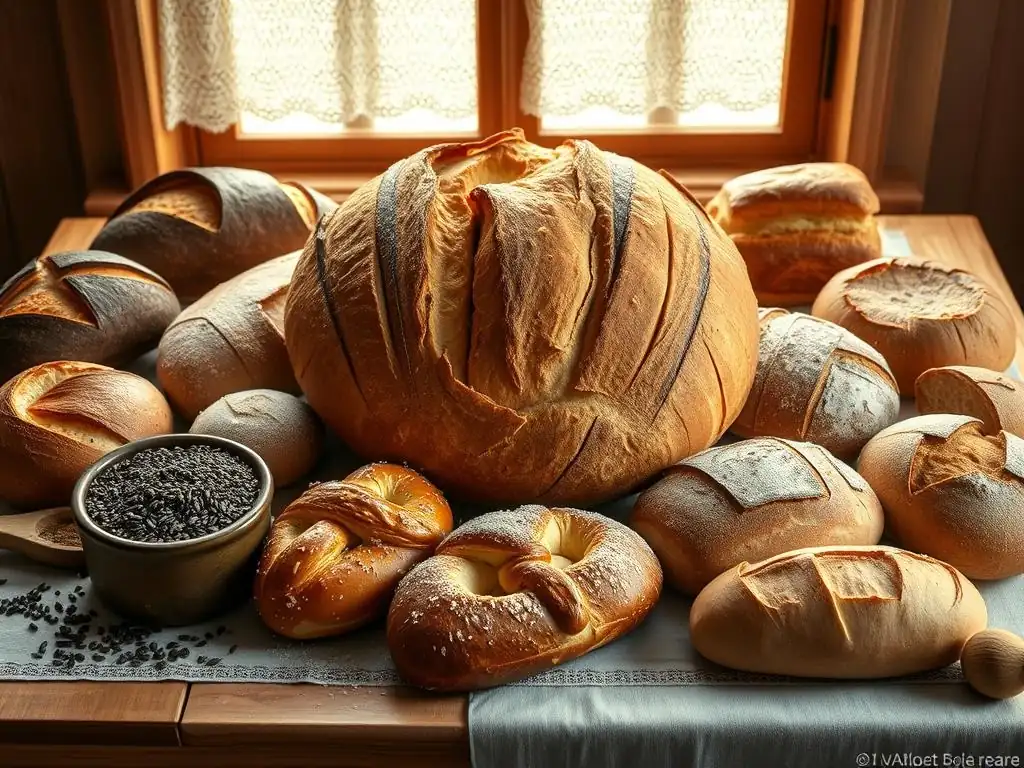
Welcome to BakeWithEase, your passport to the delicious world of baking! Ready to embark on a culinary adventure? This month, we're exploring the hearty traditions of German baking, and our journey begins with a deep dive into German sourdough bread recipes easy enough for any home baker. Prepare to uncover the secrets behind regional variations and discover how to recreate authentic Brot right in your own kitchen. What unique flavors await on Germany's Brot map? Let's find out!
- Discovering Germany's Bread Culture: A Baker's Journey
- Mastering German Sourdough Bread Recipes: An Easy Guide
- A Regional Tour of Germany's Best Breads: From North to South
- German Bread Ingredients: Sourcing the Best for Authentic Flavor
- Tips for Baking Delicious German Sourdough Bread at Home
- Beyond the Recipe: Experiencing German Bread Culture
- Easy German Sourdough Bread Recipes Recap: Baking with Ease
-
Frequently Asked Questions
- How difficult are the German sourdough bread recipes on BakeWithEase?
- Does BakeWithEase offer recipes for traditional German breads besides sourdough?
- What ingredients are typically used in German sourdough bread?
- Where can I find specific German sourdough bread recipes that are considered "easy" on BakeWithEase?
- Are there any tips on BakeWithEase for maintaining a healthy sourdough starter for German sourdough bread recipes?
- Final Reflection: The Enduring Allure of German Bread
- Unlock Germany's Bread Basket: Your Culinary Journey Starts Now!
Discovering Germany's Bread Culture: A Baker's Journey
Exploring the Rich History of German Bread Baking
Germany boasts over 300 distinct bread varieties, reflecting centuries of regional innovation. As early as the 12th century, Hanseatic traders exported coarse rye loaves from Lübeck to Scandinavia. By the 18th century, master bakers in cities like Düsseldorf and Nürnberg had established guilds regulating milling, fermentation, and bakehouse hygiene. This legacy of quality persists today in the Reinheitsgebot-inspired standards for pure, additive-free bread.
Throughout medieval times, bread served not only as sustenance but also as social currency. Town squares featured communal ovens where peasants paid bakers in grain shares or labor. Archaeological digs in Bavaria uncovered bread molds dating to 1000 AD, confirming the early use of sourdough cultures—an ancestor of modern German sourdough bread recipes easy to recreate at home.
Why German Bread is More Than Just Bread: Tradition and Terroir
German bakers attribute the unique taste of each loaf to terroir—the interplay of local grains, water mineral content, and climate. For example, Black Forest villages use water high in calcium carbonate, yielding a firmer crust on rye breads. In contrast, North Sea regions rely on soft wheat, ideal for brioche-style pastries.
Traditions such as the Schwarzbrot blessing—where families bless their first winter loaf—illustrate bread’s cultural depth. Annual grain festivals in Ostfriesland celebrate the harvest with communal tastings of Mischbrot and Vollkornbrot, cementing bread’s role as both daily staple and festive centerpiece.
Mastering German Sourdough Bread Recipes: An Easy Guide
Unlocking the Secrets to Authentic German Sourdough
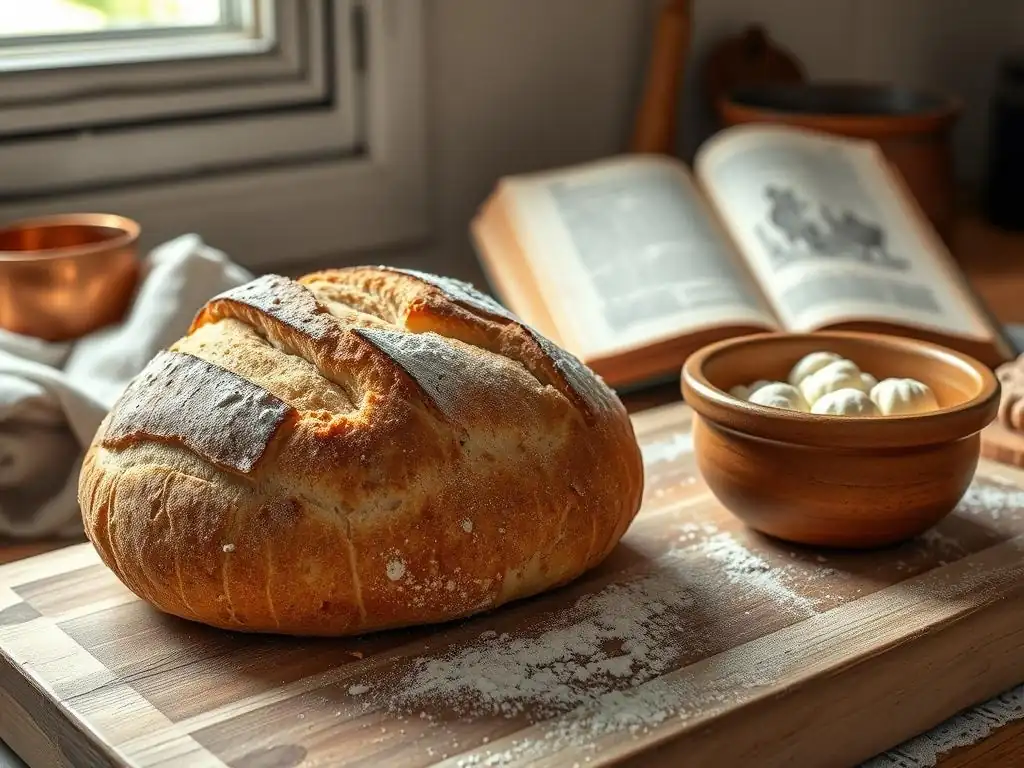
At the heart of easy German sourdough lies a robust Anstellgut (starter). Typical German starters are fed with a 1:1:1 ratio (starter:flour:water by weight) using Type 997 wheat and Type 1150 rye flours. This combination yields a balanced pH around 3.8–4.2, crucial for the characteristic tang and open crumb.
Fermentation is often extended: an initial 12–16 hour bulk rise at 22 °C followed by a 4–6 hour proof at 4 °C enhances flavor complexity. Many home bakers achieve superior crust by baking in a Dutch oven at 250 °C for the first 15 minutes, then lowering to 200 °C for 30–35 minutes.
“A well-kept starter is the soul of German sourdough bread recipes easy enough for any baker,” says master baker Klaus Meyer of Berlin’s renowned Bäckerhandwerk.
Easy German Sourdough Bread Recipes for Home Bakers
For novice and seasoned bakers alike, here’s a streamlined formula:
Ingredients (900 g dough):
- 100 g active rye starter
- 300 g Type 997 wheat flour
- 200 g Type 1150 rye flour
- 360 g water (60 % hydration)
- 12 g sea salt

Steps:
1. Mix starter, flours, and water. Rest 30 min (autolyse).
2. Add salt; knead 5 min.
3. Bulk ferment 12 h at 22 °C, folding every 3 h.
4. Shape into bâtard; proof in banneton 4 h at 4 °C.
5. Score, bake covered at 250 °C for 15 min; uncover, bake 30 min at 200 °C.
- [ ] Maintain consistent temperature
- [ ] Use a kitchen scale for precision
- [ ] Experiment with hydration above 65 %
These easy steps demystify German sourdough bread recipes easy at home.
A Regional Tour of Germany's Best Breads: From North to South
North Germany: Pumpernickel and its Unique Baking Process
Originating in Westphalia around 1480, traditional Westfälisches Pumpernickel uses 100 % coarsely ground whole rye berries. The loaf bakes at a low 120 °C for 16–20 hours in a sealed tin, producing a dense crumb and deep mahogany color. Authentic Westphalian bakers credit the slow Maillard reaction and organic acids for its shelf stability of up to two weeks.
In Hamburg and Bremen, Pumpernickel is often paired with smoked herring or sharp Münster cheese. Bakeries like Bäckerei Cords continue to steam-cook their loaves over peat fires, a practice dating back three centuries and still protecting flour integrity.
Understanding Pumpernickel's Dark Color and Intense Flavor
The signature hue comes from caramelized pentosans and residual melanoidin polymers. The combination of low-and-slow heat (118 °C) and a pH near 4.0 accelerates non-enzymatic browning. As the rye releases endogenous sugars, the crust develops a bittersweet edge, distinct from typical whole-grain loaves.
Intense flavor emerges from a blend of lactic and acetic acids during extended fermentation. Some artisan bakers introduce a small percentage (5 %) of wheat flour to temper acidity, but purists insist on 100 % rye for authenticity.
Böcker Pumpernickel Baking Mix Recommendation (Affiliate Link)
Böcker Westfälische Pumpernickel Mix provides:
- 500 g pre-milled rye berries
- Natural sourdough concentrate
- Instructions for home ovens
Priced at €6.50 per pack, it reproduces bakery-grade results. Users report a consistent 18-hour bake time and shelf life of 10 days without staling.
East Germany: Mischbrot and the Rye-Wheat Balance
Mischbrot, or mixed bread, emerged in 19th-century Saxony when wheat became more affordable. Typical blends range from 40:60 to 60:40 rye-to-wheat ratios, offering a lighter crumb than Schwarzbrot but more character than white bread. Cities like Dresden celebrate the Dresdner Stollen alongside daily Mischbrot loaves.
In Brandenburg, oat flakes are sometimes added (up to 10 %) to enhance moisture retention and dietary fiber. Local cafés often serve Mischbrot sandwiches with smoked turkey, showcasing its versatile texture.
Achieving the Perfect Balance in Mischbrot Recipes
To master Mischbrot:
- Choose Type 997 wheat flour (protein 11 %) and Type 1150 rye flour (protein 8 %).
- Maintain overall hydration near 65 % for a tender crumb.
- Bulk ferment 10–12 hours at 24 °C; proof 2–3 hours at 25 °C.
Adjust rye ratios incrementally: start at 50:50 and fine-tune rye sour intensity with shorter acid fermentations.
Aurora Rye Flour Brand Recommendation (Affiliate Link)
Aurora German Rye Flour delivers:
- Milled from heritage rye varieties in Mecklenburg
- Protein 8.2 %, ash content 1.1 %
- Price:€3.20/kg
Home bakers praise its consistent water absorption and subtle nutty aroma.
West Germany: Rheinischer Schwarzbrot and Hearty Flavors
In the Rhineland, Rheinischer Schwarzbrot boasts a robust crust and aromatic crumb. Dating to the 1700s in Aachen, it blends dark rye with caraway and coriander seeds. Traditional bakers source Bamberger malt to deepen color and flavor, using a secondary malt mash during dough preparation.
Local taverns pair Schwarzbrot with Tilsiter cheese and smoked ham. Cologne’s Bäckerladen Laurenz sells 900 g loaves for €4.50, often selling out before noon.
Exploring the Distinctive Characteristics of Rheinischer Schwarzbrot
- Crumb: tight, slightly moist
- Crust: thick, cracked
- Flavors: malty-sweet undertones, caraway spice
The optional step of soaking whole rye kernels for 8 hours adds chewiness. Caraway (1.5 %) and coriander (0.3 %) seeds round out the taste profile.
Emile Henry Baking Stone for Schwarzbrot (Affiliate Link)
Emile Henry stone features:
- Ceramic ceramic design retains heat at 350 °C
- Dimensions: 36 × 31 × 2 cm
- Price:$72
Bakers note its superior steam retention, producing Schwarzbrot-style crackles.
South Germany: Laugengebäck (Pretzels) and Swabian Breads
The Art of Making Perfect Laugengebäck at Home
South German pretzels ( Laugenbrezeln) rely on a 3–4 % lye solution for that signature brown sheen. After shaping, loaves rest 20 minutes, then dip in lye and sprinkle coarse salt. Traditional bakeries in Munich use food-grade lye aged over 2 years to ensure purity.
A lighter twist, the Sechsknöpfle, features six small lobes, popular in Swabia. Homemade versions can substitute a baking soda bath (1 T baking soda per 1 L water) for a milder flavor.
Food Grade Lye Solution for Pretzels (Affiliate Link and Safety Instructions)
- Recommended:100 g NaOH pellets
- Mix under hooded ventilation with goggles and nitrile gloves
- Dissolve in 2 L cold water slowly
Safety tips:
- Always add lye to water, never vice versa
- Store in airtight, labeled HDPE container
- Keep out of children’s reach
Swabian Bread Varieties: Dinkelbrot and its Health Benefits
Swabian Dinkelbrot uses spelt (Dinkel), an ancient grain high in protein (14 %) and fiber (5.3 %). Studies show spelt may trigger lower glycemic responses compared to wheat, beneficial for blood sugar management. Bakeries around Stuttgart offer spelt-rye blends (30:70 ratio) to enhance digestibility.
Traditional methods include a 24 hour cold retardation, intensifying the nutty aroma and shelf life up to 5 days without preservatives.
Spielberger Dinkel Flour Brand Recommendation (Affiliate Link)
Spielberger Organic Spelt Flour:
- Certified organic from Upper Bavaria
- Protein 14.2 %, ash 0.55 %
- Price:€4.80/kg
Home bakers highlight its fine grind and robust flavor.
German Bread Ingredients: Sourcing the Best for Authentic Flavor
The Importance of German Rye Flour in Sourdough Baking
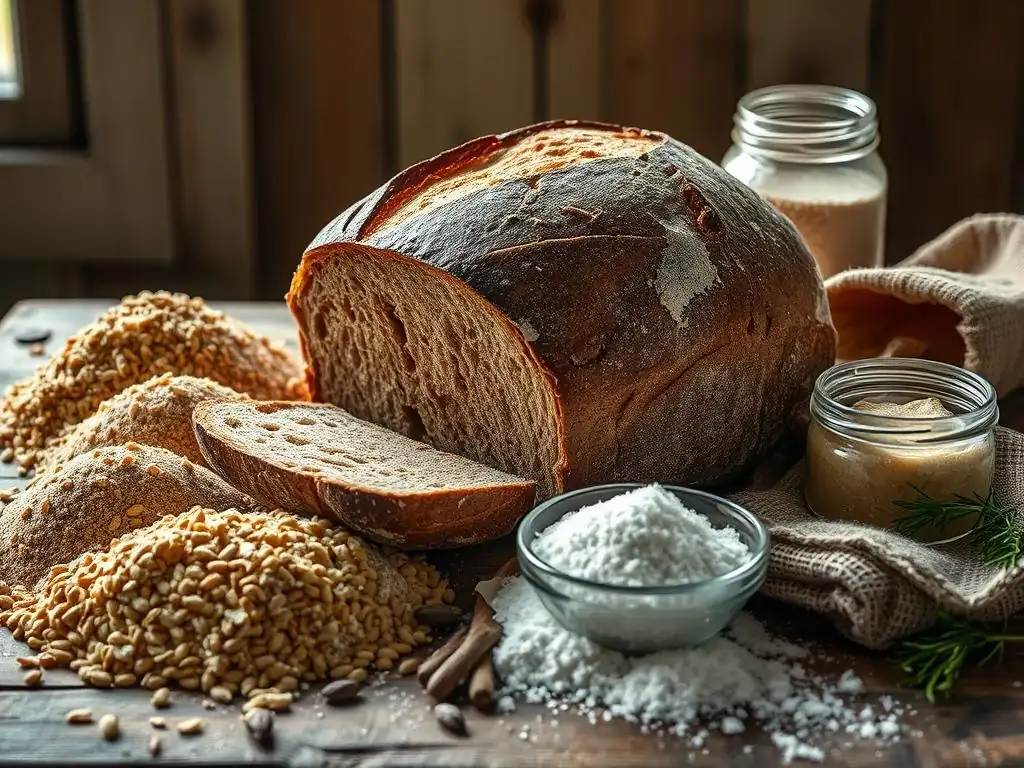
German rye flours (Types 815, 997, 1150) contain pentosans that absorb 60–80 % of their weight in water, essential for crumb structure. The diastatic activity of whole-rye flour breaks down starch into fermentable sugars, boosting yeast performance and crust color. In 2023, Germany milled 3.8 million tonnes of rye, with 45 % allocated to artisan bakers.
Where to Find Authentic German Baking Ingredients Online (Affiliate Links to Online Stores)
- Backspezialist.de: extensive flours, seeds, and malt
- Lebepur.com: organic, small-batch rye and spelt
- BakeWithEase Store: curated German sourdough kits
Average shipping cost: €7.50 within the EU; delivery 3–5 business days.
Weyermann Malt Extract Recommendation (Affiliate Link)
Weyermann® Diastatic Malt Extract:
- 25 % diastatic power (420 Lintner)
- Enhances rise and crust caramelization
- Price:€8.20/500 g
Artisan bakers in Bamberg credit this malt with superior crumb softness and extended freshness.
Tips for Baking Delicious German Sourdough Bread at Home
Troubleshooting Common Sourdough Problems: A Baker's Guide
Dense crumb? Likely underproofed—extend bulk ferment by 2 hours or increase temperature to 24 °C. Overly sour? Reduce rye starter or shorten cold proof. If dough tears during shaping, boost hydration by 2–3 %. Always adjust to local humidity and flour batch variability.
Achieving the Perfect Crust: Baking Techniques and Oven Settings
- Preheat oven with stone to 260 °C for 45 minutes.
- Create steam with a cast-iron pan or spray after loading.
- Score crisply at 2–3 mm depth for controlled expansion.
- Bake covered for 15 minutes, then uncover and reduce to 200 °C.
A sprinkle of semolina on the peel prevents sticking and mimics bakery-style bases.
Thermapen ONE Bread Baking Thermometer (Affiliate Link)
Thermapen ONE features:
- 2 second readout in ±0.3 °C accuracy
- Backlit display for dark ovens
- Range: –49.9 °C to 299.9 °C
At $99, it’s a worthwhile investment for consistently perfect crumb moisture.
Beyond the Recipe: Experiencing German Bread Culture
Visiting Traditional Bakeries in Germany: A Food Lover's Adventure
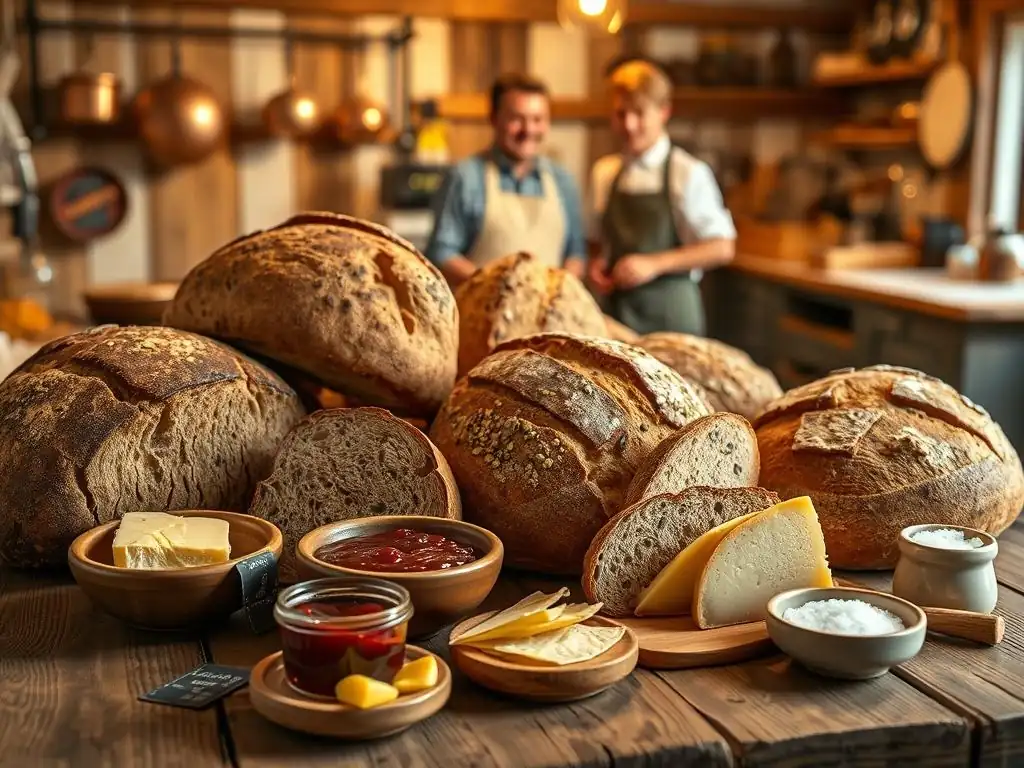
- Bäckerei Wechsler (Munich): known for Vollkornbrot aged 48 hours.
- Konditorei Zimmermann (Berlin): specialty sourdough rye with sunflower seeds.
- Bäckerei Gutknecht (Hamburg):Sandwichbrot baked daily at 4 AM.
Most bakeries open 5 AM–1 PM; plan visits early to sample fresh loaves.
German Bread Festivals and Culinary Events: Annually held Bread Market in Kulmbach and the International Bread Baking Championship
- Kulmbach Bread Market (June): 150+ exhibitors, live mills, and a sourdough starter museum.
- International Bread Baking Championship (biennial, Erfurt): 200+ teams from 25 countries, judged on flavor, appearance, and innovation.
These events draw 50 000+ visitors, celebrating heritage grains and contemporary techniques.
Brot: Bread Culture in Germany Cookbook (Affiliate Link)
Published by Bayerischer Verlag, Brot: Bread Culture in Germany features:
- 120 historic and modern recipes
- Interviews with 30 master bakers
- Detailed profiles of 12 traditional mills
Priced at €29.99, it offers an immersive culinary tour in book form.
Easy German Sourdough Bread Recipes Recap: Baking with Ease
From Pumpernickel to Pretzel: A Summary of Our Brot Tour
Our journey traversed North Germany’s slow-baked Pumpernickel, Eastern Mischbrot, the hearty Schwarzbrot of the Rhineland, and south’s celebrated Laugengebäck and Dinkelbrot. We explored fermentation science, ingredient sourcing, and tool recommendations—all aligned to make German sourdough bread recipes easy for home bakers.
Start Your German Baking Adventure Today!
Embrace centuries of craftsmanship by trying one recipe each week.
- Maintain a healthy starter
- Source quality German flours
- Invest in proper tools
Visit BakeWithEase.com for step-by-step guides, community support, and more ways to master authentic German bread at home. Happy baking!
Frequently Asked Questions
How difficult are the German sourdough bread recipes on BakeWithEase?
BakeWithEase focuses on making baking accessible. Our German sourdough bread recipes are designed to be easy to follow, even for those new to sourdough. We offer step-by-step guides for success.
Does BakeWithEase offer recipes for traditional German breads besides sourdough?
Yes, while we focus on German sourdough bread recipes easy, BakeWithEase also features recipes for other traditional German breads. Explore the site for a wider culinary tour of German baking.
What ingredients are typically used in German sourdough bread?
Common ingredients include rye flour, wheat flour, water, salt, and a sourdough starter. Some regional variations might include spices or seeds for added flavor.
Where can I find specific German sourdough bread recipes that are considered "easy" on BakeWithEase?
Look for recipes tagged with "beginner-friendly" or "easy sourdough". The recipe descriptions will often highlight the simplicity of the process and the use of readily available ingredients.
Are there any tips on BakeWithEase for maintaining a healthy sourdough starter for German sourdough bread recipes?
Yes, BakeWithEase provides detailed guidance on maintaining a healthy sourdough starter. You'll find tips on feeding schedules, storage, and troubleshooting common issues to ensure successful baking.
Final Reflection: The Enduring Allure of German Bread
The simple act of baking bread, particularly sourdough, connects us to a rich culinary heritage, and nowhere is this more evident than in Germany's diverse regional traditions. The seemingly straightforward process of combining flour, water, and time transforms into a journey through history, culture, and personal connection with each loaf. This exploration of Germany's Brot map reveals not just recipes, but a testament to the enduring power of simple ingredients and time-honored techniques.
The impact of these regional bread variations extends far beyond the simple satisfaction of a delicious crust. These recipes represent centuries of cultural exchange, adaptation, and innovation, reflecting the unique landscapes and histories of each region. They are a tangible link to the past, a testament to the ingenuity of generations of bakers. Bread is the staff of life,
a common saying, but in Germany, it's so much more – it's a story told in every crumb. The variations in texture, flavor, and even shape speak volumes about the people and places that created them.
You, the reader, now hold the key to unlocking this culinary heritage. Don't just follow these easy German sourdough bread recipes; experience them. Embrace the slow fermentation, the satisfying knead, and the aroma that fills your kitchen. Let the process be a meditation, a connection to something larger than yourself, and a celebration of the simple pleasures that enrich our lives. The next loaf you bake can be a journey, a taste of history, and a testament to your own culinary creativity.
Unlock Germany's Bread Basket: Your Culinary Journey Starts Now!
Thanks for exploring the diverse and delicious world of German bread with us! We hope you've discovered new favorites and a deeper appreciation for this baking tradition. Ready to take your newfound knowledge further?
- Bake your own regional masterpiece: Choose a bread type from the article that intrigued you most and find a recipe online – it’s time to get baking!
- Share your bread-baking adventures: Post a picture of your creation on social media using #BakeWithEaseGermany and tag us! Let's see your culinary triumphs.
- Explore your local bakery: Seek out German-style breads in your area; you might be surprised at what you find!
So, which German bread will you conquer first, and what unexpected flavors are you hoping to discover?