
Precision Matters: Why a Kitchen Scale is Essential for Artisan Baking

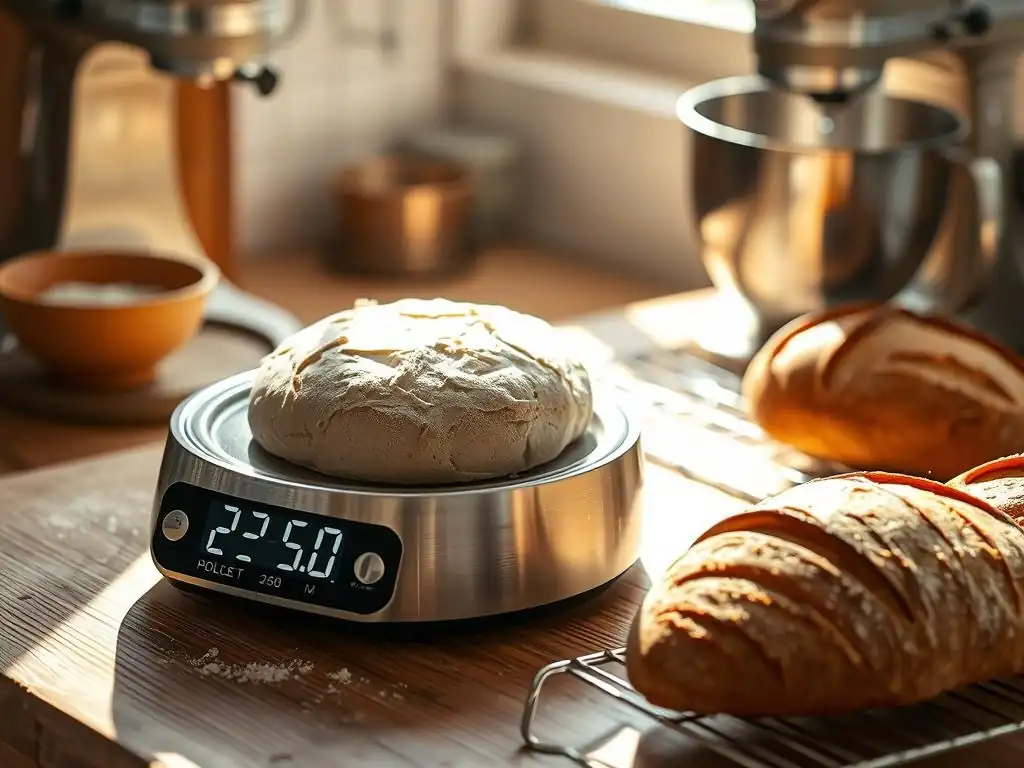
Welcome to BakeWithEase, where we believe everyone can create bakery-worthy treats! Ever wondered how professional bakers achieve consistent, stunning results? The secret often lies in precision. Today, we're diving deep into the world of artisan baking and revealing why a reliable kitchen scale is not just a tool, but an absolute essential. Discover how this seemingly simple device can unlock a new level of accuracy and elevate your baking from good to truly exceptional. Intrigued? Let's weigh in!
- The Foundation of Artisan Baking: Why a Kitchen Scale is Non-Negotiable
- Mastering Artisan Bread: A Step-by-Step Guide Using a Kitchen Scale
- The Pitfalls of Volume Measurement in Artisan Baking: A Kitchen Scale Comparison
- Choosing the Right Kitchen Scale for Your Artisan Baking Needs
- Beyond Bread: Using Your Kitchen Scale for Other Artisan Baking Projects
- Troubleshooting Common Artisan Baking Problems with Accurate Measurements
-
Frequently Asked Questions
- Why is a kitchen scale so important for artisan baking?
- How does using a kitchen scale improve the quality of my sourdough bread?
- Can I really not get the same results with measuring cups as with a kitchen scale?
- What type of kitchen scale is recommended for artisan baking?
- Are there any other benefits to using a kitchen scale besides accuracy?
- Final Reflection: The Weight of Precision in Artisan Baking
- Unlock Your Baking Potential: Level Up Your Creations!
The Foundation of Artisan Baking: Why a Kitchen Scale is Non-Negotiable
Baking, especially artisan baking, is often described as a science as much as an art. While creativity and feel play a role, the foundation rests on precise ratios of ingredients. Unlike cooking, where a pinch of this or a splash of that might work, small variances in baking ingredients can dramatically alter the outcome. This is where the humble kitchen scale becomes an indispensable tool for anyone serious about achieving consistent, high-quality results in kitchen scale artisan baking. It removes the guesswork inherent in volume measurements, providing the accuracy needed for reproducible success.
For the artisan baker focusing on breads, pastries, and other delicate items, understanding the importance of mass over volume is paramount. Flour density varies, humidity affects ingredients, and even how firmly you pack brown sugar can throw off a recipe measured in cups. A kitchen scale measures the actual weight of an ingredient, providing an objective number that remains constant regardless of external factors. This foundational accuracy is the first step towards mastering complex techniques and reliably producing the beautiful, flavorful baked goods characteristic of kitchen scale artisan baking.
Achieving Consistent Results: The Kitchen Scale Advantage in Baking
Consistency is the hallmark of a skilled baker. Whether you're trying to replicate a perfect loaf of sourdough or ensure your cookies spread just right every time, using a kitchen scale is the most reliable path to achieving identical results batch after batch. Measuring ingredients by weight eliminates the significant variability associated with volume measurements.
For instance, a standard cup of all-purpose flour can weigh anywhere from 120 grams if lightly spooned into the cup to over 150 grams if packed down. That's a variance of up to 25%, which can drastically change the hydration level and structure of your dough or batter.
By contrast, a kitchen scale provides a precise measurement, typically accurate to within 1 gram, regardless of how you handle the ingredient. If a recipe calls for 500 grams of flour, you weigh out 500 grams exactly. This level of precision ensures that the fundamental ratios of your recipe – like the crucial flour-to-water ratio in bread making – are consistent every single time you bake. This consistency is vital for troubleshooting recipes, understanding how minor adjustments impact the final product, and ultimately, elevating your kitchen scale artisan baking skills.
Beyond Cups and Spoons: Understanding the Accuracy of Grams in Artisan Bread
In the world of artisan bread, hydration percentage is a critical factor determining the dough's handling characteristics and the final loaf's crumb structure. Hydration is calculated based on the weight of water relative to the weight of flour. For example, a dough with 70% hydration means the water weighs 70% of the flour's weight.
Achieving this specific percentage is nearly impossible to do accurately using volume measurements like cups and milliliters for flour. As mentioned, a cup of flour's weight is inconsistent. While water's density means 1 milliliter is approximately 1 gram, measuring flour by weight is essential to calculate and achieve a target hydration precisely.
Using grams provides a universal standard unaffected by ingredient density or measurement technique. A gram of flour is always a gram of flour, whether it's sifted, packed, or scoop-and-leveled. This accuracy is paramount for artisan bread recipes, which often feature high hydration levels (70-80% or even higher) that require careful management.
Offsetting the hydration by even a few percentage points due to inaccurate flour measurement can turn a manageable dough into a sticky, challenging mess or a stiff, underdeveloped loaf. Mastering the use of grams with a kitchen scale is fundamental to successful kitchen scale artisan baking, particularly in bread making.
Mastering Artisan Bread: A Step-by-Step Guide Using a Kitchen Scale
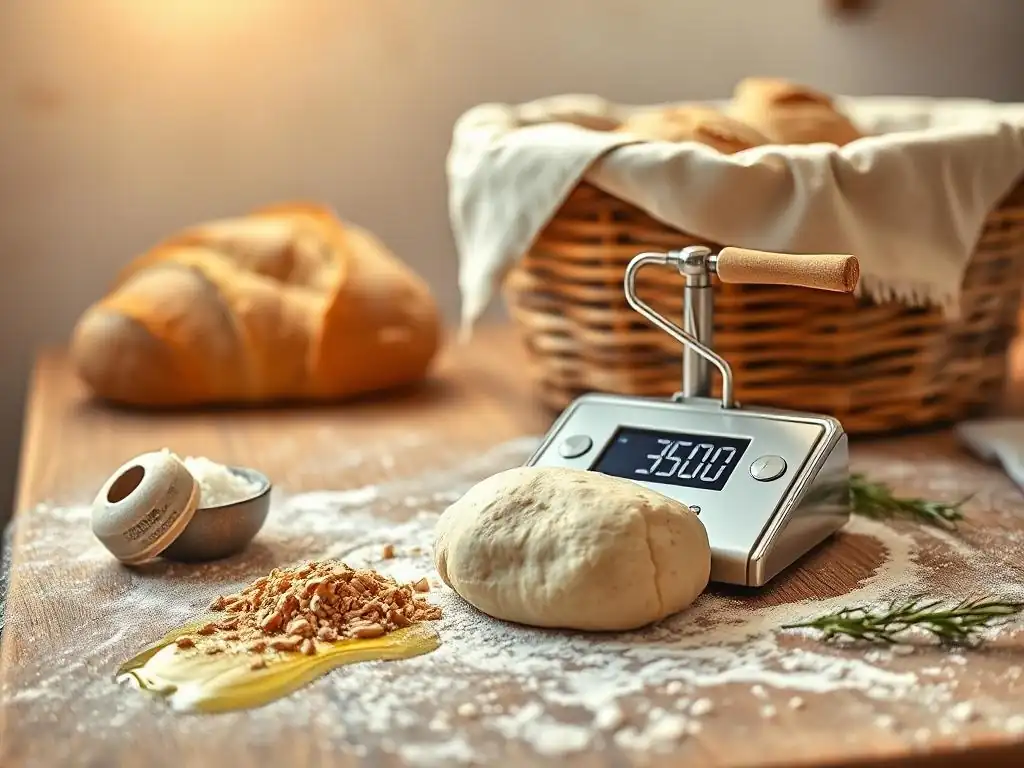
Using a kitchen scale simplifies the artisan bread-making process by adding precision at every critical stage. From nurturing your sourdough starter to mixing and monitoring your dough, accurate measurements ensure you're building a strong foundation for a successful bake. Let's walk through how a scale integrates into the process.
The scale becomes your primary measuring tool, replacing volume measures for most ingredients. You'll typically place your mixing bowl directly on the scale, tare it to zero, and add ingredients one by one, weighing each precisely. This method is faster, cleaner, and significantly more accurate than using multiple measuring cups and spoons. It allows you to work directly from recipes that provide weights, which are increasingly common in professional and serious amateur baking resources, reflecting the importance of precision in kitchen scale artisan baking.
Step 1: Weighing Your Ingredients for Sourdough Starter Perfection
Maintaining a healthy and active sourdough starter is crucial for artisan bread. The starter is a living culture, and feeding it consistently with precise ratios of flour and water is key to its vitality. Most starter feeding schedules call for equal weights of starter, flour, and water (e.g., a 1:1:1 ratio by weight). Using a kitchen scale makes this incredibly easy and accurate.
For example, if you want to feed 50 grams of starter, you simply place your jar on the scale, add 50 grams of starter, tare the scale to zero, add 50 grams of flour, tare again, and add 50 grams of water. This ensures the correct ratio every time, promoting consistent microbial activity and reliable leavening power for your bread. Relying on cup measurements for starter feeding would introduce variability that could weaken the starter or make its behavior unpredictable, hindering your kitchen scale artisan baking efforts before you even mix the dough.
Product Spotlight: Escali Primo Digital Kitchen Scale - Precise and Easy to Use
The Escali Primo Digital Kitchen Scale is a popular choice among home bakers for its balance of accuracy, ease of use, and affordability. It typically measures in 1-gram increments, providing sufficient precision for most baking tasks, including sourdough starter maintenance. Its simple two-button interface makes taring and switching units (grams, ounces) straightforward.
With a capacity usually around 11 pounds (about 5000 grams), it can easily handle weighing ingredients for a large loaf or even a double batch. The compact design and wipe-clean surface make it practical for everyday use in a busy kitchen. For many embarking on kitchen scale artisan baking, the Escali Primo offers a reliable entry point into weight-based measurements.
Step 2: Precisely Measuring Flour, Water, and Salt for the Perfect Dough
Once your starter is ready, mixing the dough requires the highest degree of measurement accuracy. Flour, water, and salt are the fundamental building blocks of most artisan bread, and their precise ratios determine the dough's structure, texture, and flavor development. Recipes designed for kitchen scale artisan baking will list these ingredients in grams.
To measure, place your mixing bowl on the scale and tare it. Add the specified amount of flour (e.g., 500g), tare, add the water (e.g., 375g for 75% hydration), tare, and finally add the salt (e.g., 10g for 2% salt). This method ensures you achieve the exact hydration and salt percentage intended by the recipe developer, which is critical for controlling fermentation, gluten development, and overall dough behavior.
Example: Achieving a 75% Hydration Dough with a Kitchen Scale
Let's say a recipe calls for:
- 500g Strong Bread Flour
- 375g Water
- 10g Salt
- 100g Active Sourdough Starter (at 100% hydration)
To achieve this 75% hydration precisely (calculated as Water Weight / Flour Weight = 375g / 500g = 0.75 or 75%), you would:
- Place your mixing bowl on the scale.
- Tare the scale to 0g.
- Add 500g of flour.
- Tare the scale to 0g.
- Carefully pour in exactly 375g of water.
- Tare the scale to 0g.
- Add 10g of salt.
- Add 100g of sourdough starter.
By weighing each ingredient individually using the tare function, you guarantee that the correct proportions are met, setting you up for success in achieving the desired dough consistency and structure essential for kitchen scale artisan baking.
Step 3: Monitoring Bulk Fermentation with Consistent Measurements
While you don't typically weigh the dough during fermentation to track its rise (visual cues and feel are more common), the initial precise measurement of ingredients is foundational to successful bulk fermentation. When you start with a dough mixed to the exact intended hydration and ratios, its behavior during fermentation will be predictable and consistent with the recipe's guidelines. This makes it easier to judge when the dough has sufficiently increased in volume (often aiming for a 30-50% increase for sourdough) and developed the necessary strength.
Furthermore, some bakers like to weigh their dough before dividing it into loaves to ensure even-sized portions. If you have a total dough weight of, say, 985g (from the example above), and you want two equal loaves, you'd weigh out two portions of approximately 492-493g each. This ensures your loaves bake evenly and have a consistent size and appearance, adding another layer of control to your kitchen scale artisan baking process.
How the Escali Primo Kitchen Scale Helps You Track Dough Volume Accurately
While the Escali Primo (or any kitchen scale) doesn't directly track dough volume, its role in ensuring precise ingredient measurements is crucial for reliable volume tracking during fermentation. When your dough starts with the correct hydration and ingredient ratios, its rate of fermentation and expected volume increase will align with what a recipe or your experience suggests.
If your dough consistently fails to reach the expected volume increase despite proper temperature and time, you can be confident that ingredient measurement wasn't the issue, allowing you to troubleshoot other factors like starter activity or ambient temperature more effectively. The scale provides a consistent baseline, making visual assessment of fermentation more meaningful.
The Pitfalls of Volume Measurement in Artisan Baking: A Kitchen Scale Comparison
Relying solely on volume measurements (cups, spoons) for baking, especially for sensitive recipes like artisan bread, introduces significant variables that can lead to inconsistent or failed results. While convenient for simple recipes, volume measurements are fundamentally less accurate for solid ingredients like flour, sugar, and leavening agents compared to weighing them on a kitchen scale. Understanding these pitfalls highlights why a kitchen scale is a necessary upgrade for serious kitchen scale artisan baking.
The primary issue lies in density. The same volume of an ingredient can have different weights depending on how it's handled. This variability makes it difficult to replicate results and troubleshoot effectively. When a recipe fails, you're left wondering if the issue was your technique, the ingredients, or simply inaccurate measuring. Switching to a kitchen scale eliminates the last variable, allowing you to focus on perfecting your technique.
Why Cups Can Deceive You: Variations in Flour Density and Their Impact
Flour is perhaps the most notorious ingredient for causing measurement errors when using cups. The "scoop and level" method, where you dip the measuring cup into the flour bag and then level it off, can pack significantly more flour into the cup than the "spoon and level" method, where you gently spoon flour into the cup before leveling. This difference can be substantial; a standard cup of all-purpose flour measured by dipping can weigh 140-150 grams, while the same cup spooned and leveled might only weigh 120-130 grams.
In a recipe calling for 4 cups of flour, this variance could mean a difference of 40-80 grams of flour. For a recipe using 300 grams of water, this could change the hydration percentage from a target 75% (300g water / 400g flour) to as low as 60% (300g water / 500g flour). This drastic change in hydration will fundamentally alter the dough's consistency, handling, fermentation time, and the final loaf's texture and rise. Such variation makes consistent kitchen scale artisan baking nearly impossible with volume measures.
The Cost of Inaccuracy: Ruined Batches and Wasted Ingredients
Inaccurate measurements due to relying on volume cups don't just lead to slightly off results; they can result in complete batch failures. A dough that is too wet might be impossible to handle or shape, leading to a flat, dense loaf. A dough that is too dry might not develop gluten properly, resulting in a tough or crumbly texture. These failed attempts mean wasted time, effort, and ingredients.
Consider the cost of ingredients for a typical artisan loaf: perhaps 500g of good quality bread flour (costing maybe $0.75 - $1.50 depending on type and brand), minimal salt and water ( negligible cost), and the cost of feeding your starter over several days (maybe $0.50 - $1.00 in flour/water). A single failed loaf due to inaccurate measurement could easily waste $1.50 - $2.50 in ingredients, plus several hours of your time spent mixing, proofing, and baking.
While this might seem small for one loaf, repeat failures add up quickly. Investing in an accurate kitchen scale, often available for $20-$40, pays for itself rapidly in saved ingredients and reduced frustration, making kitchen scale artisan baking more economical in the long run.
Case Study: Comparing Results with Cup Measurements vs. Kitchen Scale Measurements
Imagine baking the same simple rustic bread recipe twice. Batch 1 (Volume): Using standard measuring cups, you scoop flour directly from the bag. The recipe calls for 3 cups of flour and 1.5 cups of water. Your 3 cups of scooped flour might weigh approximately 450g, and 1.5 cups of water is roughly 355g. This results in a hydration of ~79% (355/450). Batch 2 (Weight): Using a kitchen scale, the recipe specifies 400g of flour and 300g of water. This is a precise 75% hydration (300/400).
The dough from Batch 1 (79% hydration) might be significantly stickier and harder to handle than the dough from Batch 2 (75% hydration), potentially requiring more flour additions during kneading (further altering the ratio) or resulting in a flatter loaf with a less open crumb. The dough from Batch 2, mixed with precise weights, will likely handle as expected, ferment predictably, and yield a loaf with the desired structure and texture, demonstrating the tangible difference precision makes in kitchen scale artisan baking.
Choosing the Right Kitchen Scale for Your Artisan Baking Needs
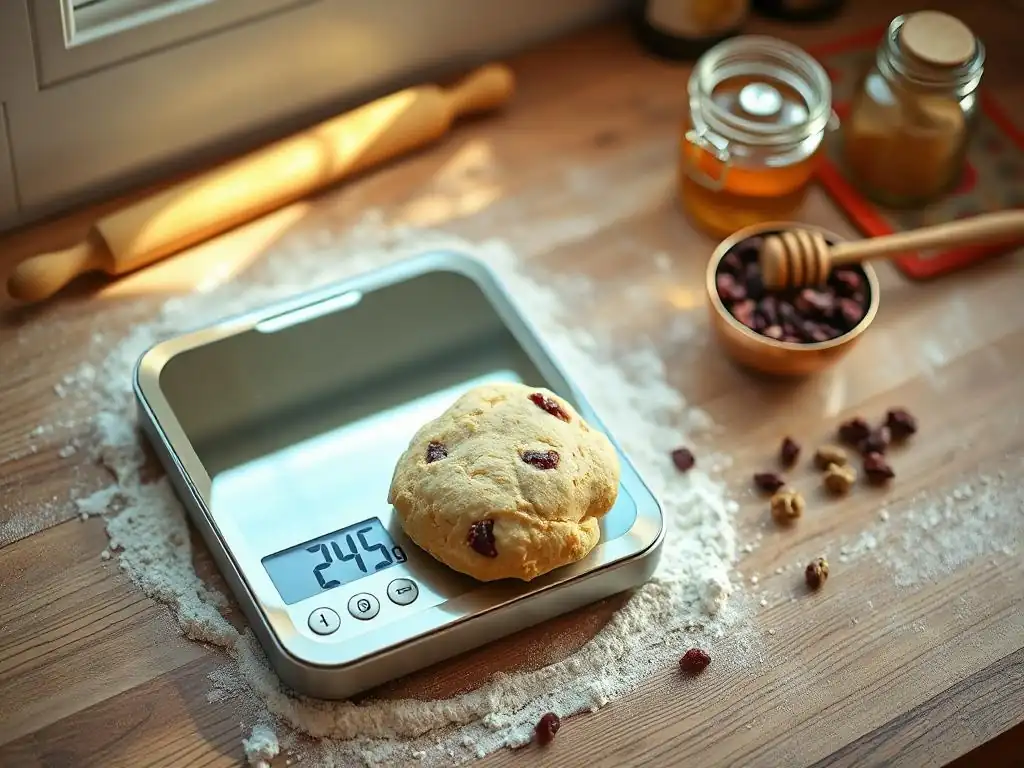
Selecting the right kitchen scale is an important step for anyone committed to accurate kitchen scale artisan baking. With various options available, considering your specific needs, budget, and desired features will help you make the best choice. The key is to find a scale that offers reliable accuracy and is practical for your baking routine.
Key factors to consider include the scale's capacity (how much weight it can measure), its precision (the smallest increment it measures, often 1g or 0.1g), the units it measures in (grams, ounces, pounds, milliliters), and any additional features like a tare function or a hold function. A good scale should also be easy to clean and have a clear, readable display.
Digital vs. Mechanical: Which Kitchen Scale is Best for Precision?
When choosing a kitchen scale, you'll primarily encounter two types: digital and mechanical.
- Mechanical scales use a spring mechanism to measure weight, displaying it on a dial. They are typically inexpensive, durable, and require no batteries. However, they are generally less precise, often only measuring in larger increments (e.g., 10g or 20g), and can be difficult to tare accurately or measure very small amounts.
- Digital scales use electronic sensors to measure weight and display it on an LCD screen. They are powered by batteries or an AC adapter. Digital scales are significantly more precise, commonly measuring in 1g or even 0.1g increments. They almost always include a tare function and can easily switch between different units. While often slightly more expensive initially, their accuracy makes them the superior choice for kitchen scale artisan baking where precision is paramount.
For the detailed work required in artisan baking, a digital kitchen scale is strongly recommended over a mechanical one due to its superior accuracy and useful features like the tare function and unit conversion.
Key Features to Look For: Tare Function, Gram and Ounce Conversion, and Capacity
Several features are particularly beneficial when choosing a kitchen scale for kitchen scale artisan baking:
- Tare Function: This is essential. It allows you to zero out the weight of the container (like a bowl or a jar) or an ingredient you've already added, so you can measure the next ingredient accurately in the same container. This makes building recipes directly in your mixing bowl quick and easy.
- Gram and Ounce Conversion: Most baking recipes, especially those from professional sources or focusing on artisan techniques, use grams. However, some older or American recipes might use ounces or pounds. A scale that can easily switch between these units (particularly grams and ounces) offers versatility.
- Capacity: Consider the maximum weight the scale can handle. For most home baking, a capacity of 5kg (around 11 lbs) is sufficient to weigh even large quantities of flour or a full batch of dough. If you bake very large quantities frequently, you might need a higher capacity scale.
- Precision: Look for a scale that measures in 1-gram increments. For weighing very small amounts like yeast, salt, or leavening agents in small batches, a scale with 0.1-gram precision can be beneficial, though 1g is usually sufficient for main ingredients in standard loaf sizes.
Recommendation: The Ozeri ZK14-S Pronto Digital Multifunction Kitchen and Food Scale - A Budget-Friendly Option
The Ozeri ZK14-S Pronto is a popular and highly-rated digital kitchen scale that offers excellent value for home bakers. It typically measures in 1-gram increments up to a capacity of 5000 grams (11 lbs), making it suitable for most baking tasks. It includes a convenient tare button and can switch between grams, pounds, and ounces.
Its slim profile makes it easy to store, and the large, clear display is easy to read. While not the most robust scale on the market, its accuracy and feature set at a budget-friendly price point make it a solid choice for anyone looking to improve their precision in kitchen scale artisan baking without a significant investment.
Recommendation: The AWS Blade Pro High Precision Digital Kitchen Scale - Ideal for Professional Bakers
For those seeking higher precision, particularly for weighing small amounts of ingredients like yeast, spices, or very precise ratios in smaller test batches, the AWS Blade Pro High Precision Digital Kitchen Scale is an excellent option. Scales like this often measure in 0.1-gram increments, providing exceptional accuracy for sensitive recipes or when scaling small quantities.
While potentially having a lower overall capacity than some standard kitchen scales (check specific models, but often around 1000g or 3000g), their strength lies in measuring small weights with high fidelity. Features like a tare function and multiple units are standard. While perhaps more than necessary for everyday weighing of flour and water for a single loaf, a high-precision scale is a valuable tool for recipe development, very small batches, or for professional bakers needing meticulous accuracy in kitchen scale artisan baking.
Beyond Bread: Using Your Kitchen Scale for Other Artisan Baking Projects
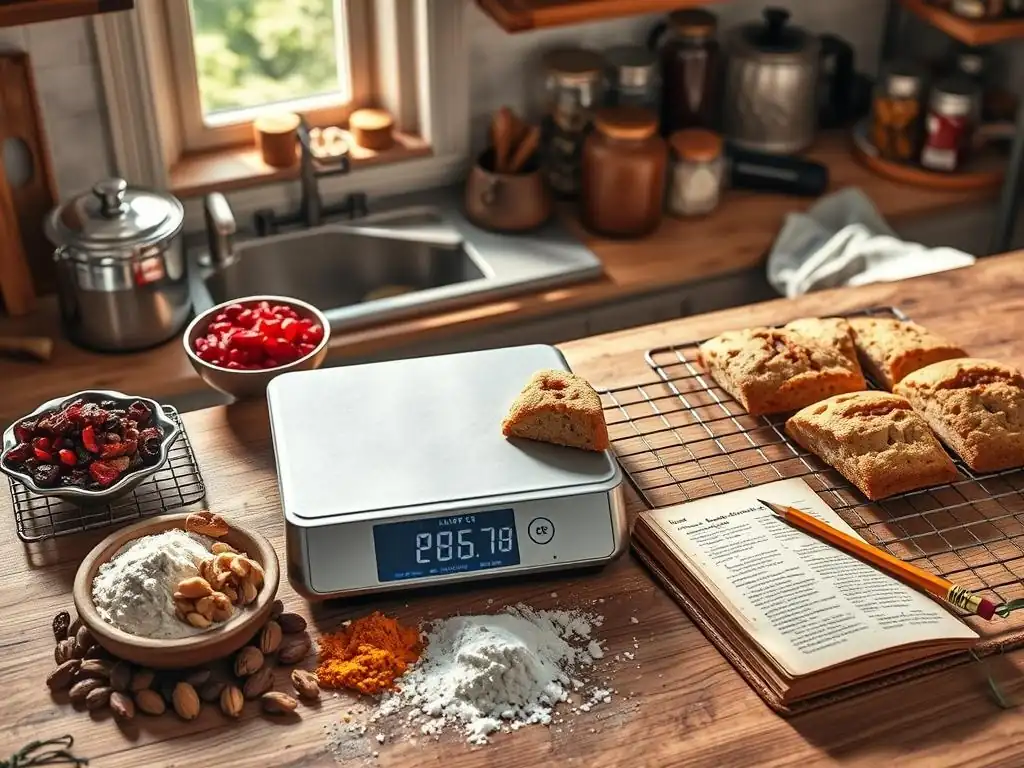
While the focus on precision is perhaps most pronounced in artisan bread making due to the sensitivity of hydration and fermentation, a kitchen scale is a valuable tool for improving accuracy and consistency across all areas of artisan baking. From delicate pastries to consistent cakes and cookies, weighing ingredients ensures reliable results.
Once you get accustomed to using a scale for bread, you'll find it translates seamlessly to other baking endeavors. Many modern recipes for cakes, cookies, and pastries now include weight measurements alongside or instead of volume, recognizing the benefits of precision. Adopting a kitchen scale for all your baking projects will elevate the quality and consistency of your results.
Perfecting Pastry: Achieving Flaky Crusts with Precise Butter Measurements
Creating light and flaky pastry crusts, whether for pies, tarts, or croissants, relies heavily on the precise ratio of flour to fat (typically butter) and the controlled addition of water. The amount and temperature of the butter are particularly critical; it needs to be cut into the flour in specific ways to create layers. Measuring butter by weight ensures you have the exact amount needed for the desired fat-to-flour ratio.
For example, a standard pie crust recipe might call for 250g of flour and 125g of cold butter, a 2:1 ratio by weight. Measuring 125g of cold butter on a scale is quick and accurate. Relying on stick measurements or estimating volume could easily lead to too much or too little fat, impacting the flakiness and tenderness of the final crust. Precise butter measurement with a kitchen scale is key to achieving that coveted layered texture in artisan pastry.
Creating Consistent Cakes: Ensuring Balanced Flavors and Textures
Cakes rely on a delicate balance of ingredients – flour for structure, sugar for sweetness and tenderness, fat for moisture, eggs for binding and richness, and leavening for rise. Altering the ratio of any of these, even slightly, can change the cake's texture (dense, crumbly, tough) or flavor profile. While cup measurements can work for some simple cake recipes, weighing ingredients provides greater control, especially for more complex or finicky recipes like genoise, chiffon, or macarons.
Weighing flour, sugar, and leavening agents ensures you're using the exact amounts specified, leading to a more consistent outcome. For instance, too much flour measured by volume can result in a dry, heavy cake, while too little leavening can prevent it from rising properly. Using a kitchen scale guarantees the intended ratios are met, resulting in cakes with the desired crumb, moisture, and flavor consistency batch after batch – a hallmark of skilled kitchen scale artisan baking beyond just bread.
Scaling Recipes Up or Down: Maintain Quality with a Kitchen Scale
One of the most practical benefits of using a kitchen scale is how easy it makes scaling recipes. If a recipe provides ingredient weights, you can easily double, halve, or scale it to any desired yield by simply multiplying or dividing the weight of each ingredient by the same factor. This preserves the exact ratios of the original recipe.
Scaling a recipe based on volume measurements is much more prone to error. For example, doubling a recipe calling for 1/3 cup of a sticky ingredient can be tricky with volume measures. With weights, if the ingredient weighs 50g, you simply weigh out 100g. This proportional accuracy ensures that the scaled recipe performs identically to the original, whether you're making miniature pastries or a giant celebration cake, making a kitchen scale indispensable for adaptable kitchen scale artisan baking.
Troubleshooting Common Artisan Baking Problems with Accurate Measurements
Many common problems encountered in artisan baking can be traced back, at least in part, to inaccurate ingredient measurements. While technique, temperature, and timing are also critical, starting with precise ingredient ratios eliminates a major variable and makes troubleshooting much more straightforward. If your dough consistently behaves unexpectedly, verifying your measurements with a kitchen scale is a crucial first step in diagnosing the issue.
By using a kitchen scale for every batch, you establish a consistent baseline. If a batch doesn't turn out right, you can be confident that the problem isn't due to accidentally adding too much flour or too little water. This allows you to focus your troubleshooting efforts on other factors like dough handling, fermentation temperature, or baking technique, ultimately accelerating your learning and improvement in kitchen scale artisan baking.
Dough Too Wet or Dry? The Kitchen Scale Can Help You Diagnose the Issue
A common frustration in bread making is ending up with dough that is significantly wetter or drier than expected, making it difficult to handle or develop properly. This is almost always a hydration issue – the ratio of water to flour is off. If you measured your ingredients using cups, the culprit is likely the variable amount of flour in your cups.
By using a kitchen scale to measure flour and water, you can be certain you are hitting the target hydration percentage specified in the recipe. If your dough is still too wet or dry despite accurate weight measurements, it suggests another factor is at play.
Perhaps the flour you used has a different absorption rate than the flour the recipe developer used, or maybe the recipe itself needs adjustment for your specific conditions. But by using a scale, you've ruled out measurement error, allowing you to focus on finding flour with appropriate protein content or slightly adjusting the water percentage in future batches, a process made possible by the precision of kitchen scale artisan baking.
Uneven Texture? Ensure Precise Ingredient Ratios with Your Kitchen Scale
An uneven crumb structure in bread, or inconsistent texture in cakes and pastries, can often result from incorrect ratios of key ingredients. Too much flour can lead to a dense, tight crumb in bread. Too little leavening can cause poor rise and a heavy texture in cakes. Incorrect fat ratios in pastry impact flakiness.
Using a kitchen scale ensures that the proportions of flour, water, salt, yeast/leavening, sugar, and fat are exactly as the recipe intends. This consistency in ratios is fundamental to achieving the desired internal structure and texture in your baked goods. While factors like mixing technique and fermentation play a role, starting with the correct ingredient balance, guaranteed by weight measurement, is the necessary foundation for developing uniform and desirable textures in kitchen scale artisan baking.
Using the Escali Primo Kitchen Scale to Correct Recipe Imbalances
If you've been consistently getting dough that feels too stiff or too slack when following a recipe measured by volume, using an Escali Primo (or similar) kitchen scale to measure the ingredients by weight can help you identify and correct the imbalance. First, weigh the amount of flour that typically fits into your measuring cup using your usual scooping method. You might find your cup holds 140g instead of the assumed 120g. Then, weigh the amount of water your cup holds. Calculate the actual hydration percentage you were achieving.
If, for example, you were aiming for 70% hydration but your measurements resulted in only 60% hydration, you now know why your dough was too stiff. In future batches, you can either adjust the amount of flour or water you measure by weight to hit the 70% target, or switch to a recipe that provides weights. The scale gives you the data needed to understand the discrepancy and make precise adjustments, empowering you to take control of your kitchen scale artisan baking results.
Frequently Asked Questions
Why is a kitchen scale so important for artisan baking?
A kitchen scale ensures precise measurements, a crucial factor in achieving consistent results in artisan baking. Unlike volume measurements, weight is more accurate, especially for dry ingredients, and can lead to better dough hydration.
How does using a kitchen scale improve the quality of my sourdough bread?
Sourdough relies heavily on consistent ratios of flour, water, and starter. A kitchen scale guarantees these ratios are accurate, leading to a more predictable rise and a better crumb structure in your bread.
Can I really not get the same results with measuring cups as with a kitchen scale?
While measuring cups can be used, they are prone to inconsistencies due to variations in how ingredients are packed. A kitchen scale eliminates guesswork and provides a far more reliable method for consistent baking outcomes.
What type of kitchen scale is recommended for artisan baking?
A digital kitchen scale with a clear display and the ability to tare (zero out the weight of the container) is ideal. Look for one that measures in grams and ounces, as many artisan baking recipes use metric measurements.
Are there any other benefits to using a kitchen scale besides accuracy?
Absolutely! Using a kitchen scale reduces the number of dishes needed (no measuring cups!), simplifies cleanup, and can even help you scale recipes up or down more easily for smaller or larger batches.
Final Reflection: The Weight of Precision in Artisan Baking
The pursuit of perfect bread, cake, or pastry hinges on more than just following a recipe; it demands an understanding of the fundamental role precision plays in achieving consistent, high-quality results. Ignoring this crucial element can lead to frustrating inconsistencies, leaving even experienced bakers feeling defeated. The seemingly small act of weighing ingredients transforms the baking process from an art of guesswork into a precise science, unlocking a world of culinary possibilities.
The impact of precise measurement in baking extends far beyond the individual kitchen. It's a testament to the power of understanding fundamental principles, a principle that resonates across various creative fields. The meticulous attention to detail required fosters a deeper appreciation for the ingredients themselves and the delicate balance within each recipe. Baking is a science, but it's also an art. The science gives you the foundation, but the art is in the details.
- Unknown. This quote perfectly encapsulates the transformative power of precision in baking, elevating it from a simple task to a truly rewarding experience.
Now, consider your own baking journey. Are you ready to embrace the transformative power of precision? Take the leap, invest in a kitchen scale, and experience the difference firsthand. Don't just follow recipes; understand them. Weigh your ingredients, observe the subtle changes, and unlock the potential for consistently delicious results. The journey towards mastering artisan baking begins with a single, precise measurement.
Unlock Your Baking Potential: Level Up Your Creations!
Thanks for taking the time to explore the world of precise baking with us! We hope you now understand how a kitchen scale can transform your baking journey from frustrating to fulfilling. Ready to take your skills to the next level?
- Invest in a kitchen scale: This is the most important step you can take toward achieving consistent, delicious results. Think of it as an investment in your baking future—you won't regret it!
- Share your baking triumphs (and challenges!): Join our BakeWithEase community on social media and share your experiences using a scale. Let's learn from each other!
- Try a new recipe: Challenge yourself with a recipe you've always wanted to perfect, but perhaps hesitated to attempt due to measurement concerns. This time, use your scale and see the difference!
So, what amazing creation will you bake next, now that you’ve embraced the power of precision?