
The Ultimate Guide to Thanksgiving Baking Success with BakeWithEase

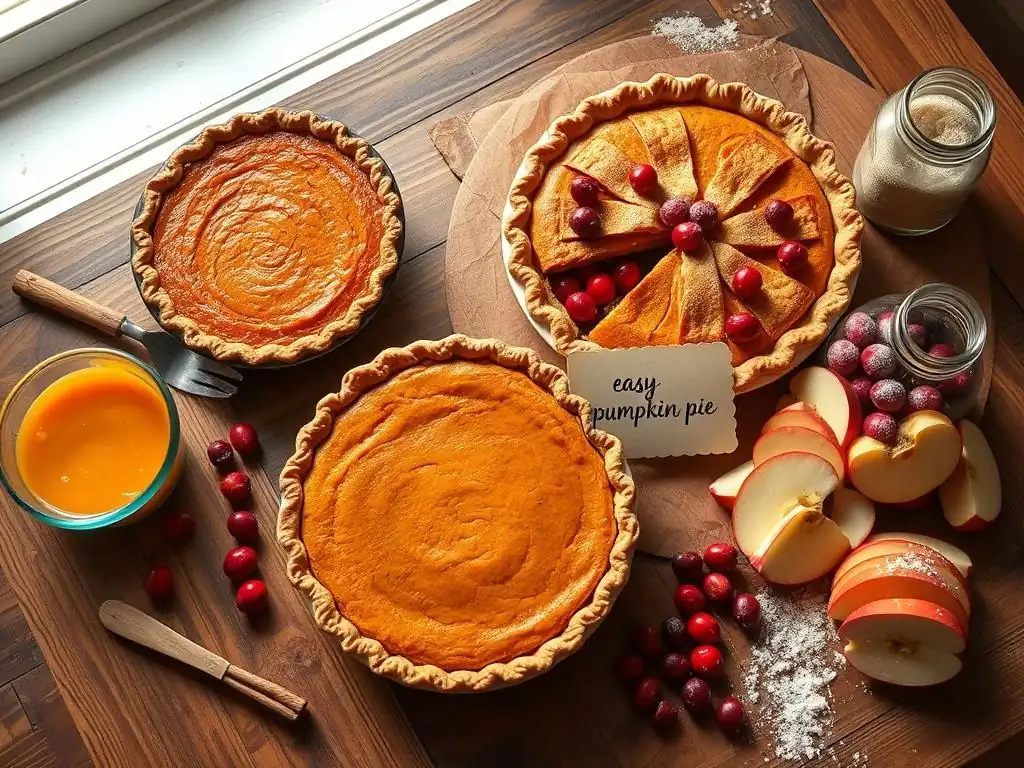
Welcome to BakeWithEase, your companion in the kitchen! Thinking about Thanksgiving pie recipes? We've got you covered. Whether you're a seasoned pro or just starting your baking journey, discover delectable and easy-to-follow recipes that will transform your holiday dessert spread. Intrigued? Let's dive into the secrets of achieving Thanksgiving baking success!
- BakeWithEase Presents: Mastering Thanksgiving Pie Recipes
- Planning Your Thanksgiving Pie Baking: The BakeWithEase Approach
- Easy Thanksgiving Pie Recipes: BakeWithEase's Signature Collection
- Beyond the Basics: Elevating Your Thanksgiving Pies with BakeWithEase
- Troubleshooting Common Thanksgiving Pie Baking Problems
- Serving and Storing Your Thanksgiving Pies: BakeWithEase's Recommendations
- Make This Thanksgiving Your Sweetest Yet with BakeWithEase
-
Frequently Asked Questions
- What kind of Thanksgiving pie recipes easy does BakeWithEase offer for beginners?
- Where can I find the Thanksgiving pie recipes easy on BakeWithEase?
- Does BakeWithEase offer tips for ensuring my Thanksgiving pie recipes easy turn out perfectly?
- Are there gluten-free or vegan Thanksgiving pie recipes easy available on BakeWithEase?
- What makes BakeWithEase the "ultimate guide" for Thanksgiving pie recipes easy?
- Final Reflection: The Sweetness of Tradition, the Joy of Creation
- Unlock Your Inner Baking Whiz!
BakeWithEase Presents: Mastering Thanksgiving Pie Recipes
Your Go-To Resource for Easy Thanksgiving Baking
Thanksgiving is a time for gathering, gratitude, and, of course, delicious food – especially pie! At BakeWithEase, we believe that baking your own Thanksgiving pies should be a joyful and accessible experience, not a stressful one. That's why we've dedicated ourselves to providing straightforward, step-by-step guides that make even complex-sounding recipes approachable for bakers of all skill levels.
Whether you're a complete novice attempting your very first crust or looking to perfect a classic, our resources are designed to help you achieve flaky, flavorful results with confidence. We break down techniques, explain ingredients, and offer tips that simplify the baking process, ensuring your holiday table is adorned with homemade goodness. Our collection focuses on making Thanksgiving pie recipes easy, so you can spend less time worrying and more time celebrating.
Our commitment to making baking easy extends beyond just recipes. We understand that successful holiday baking requires more than just a good formula; it involves planning, preparation, and understanding common pitfalls. This guide is designed to be your comprehensive companion, walking you through everything from choosing the right ingredients to troubleshooting common issues like a soggy bottom crust.
We'll share tried-and-true methods, like chilling your dough for at least 30 minutes before rolling to ensure flakiness, or using a pie shield to prevent crust edges from burning. By focusing on these practical tips and offering easy Thanksgiving pie recipes, BakeWithEase empowers you to create memorable desserts that will impress your family and friends, making this Thanksgiving your most delicious one yet.
Planning Your Thanksgiving Pie Baking: The BakeWithEase Approach
Creating a Thanksgiving Baking Schedule for Stress-Free Pie Preparation
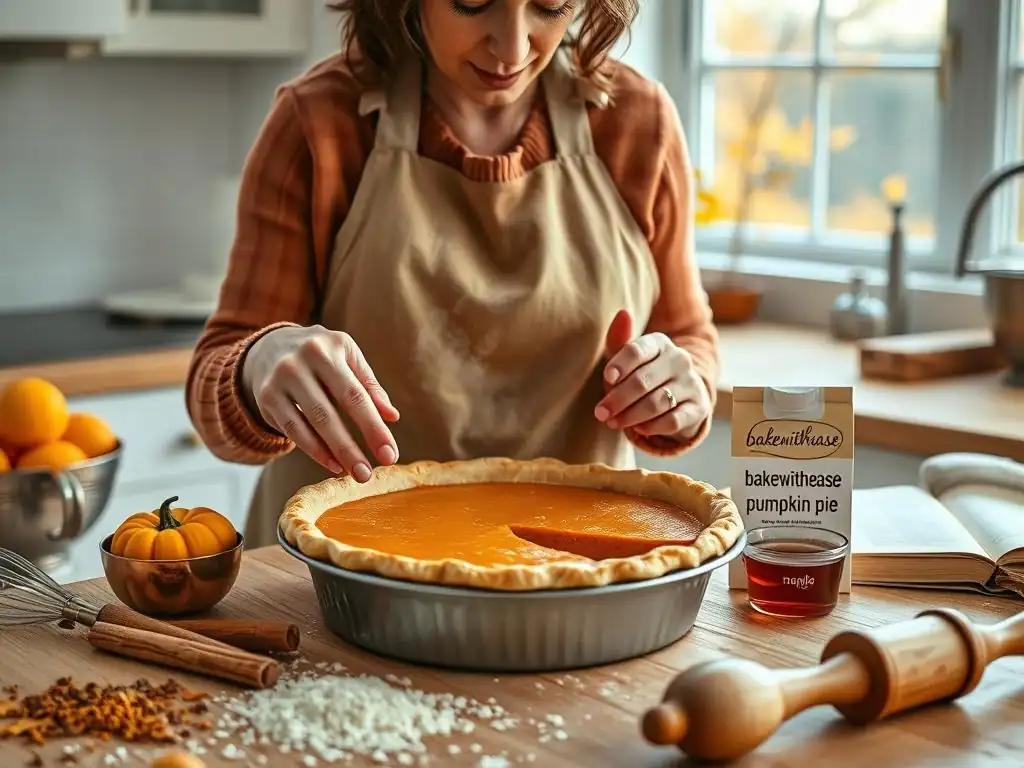
Planning is paramount to a stress-free Thanksgiving baking experience. Trying to bake multiple pies on Thanksgiving morning is a recipe for chaos! Instead, create a schedule that allows you to spread out the tasks over a few days. For instance, pie dough can often be made 2-3 days in advance and stored in the refrigerator or even frozen for longer periods.
Many fruit pie fillings, like apple or cherry, can also be prepared a day ahead and kept chilled. Baking schedules vary depending on the type of pie; pumpkin and pecan pies, which have custard-based fillings, are often best baked the day before serving to allow them to set properly. A sample schedule might look like this: Tuesday: Make and chill pie dough.
Wednesday: Prepare fillings, roll out dough, assemble and bake pumpkin and pecan pies. Thursday (Thanksgiving): Bake fruit pies (or reheat pre-baked ones), make whipped cream or other toppings. This phased approach significantly reduces the last-minute rush.
Breaking down the baking process into smaller, manageable steps makes even ambitious Thanksgiving pie recipes easy to tackle. Think of it like a project: each stage has its own timeline. For example, making enough pie dough for three pies might take about 45-60 minutes, including mixing and dividing, but it requires at least 30 minutes of chilling time per disk before rolling. Preparing an apple filling might take 20 minutes, while a pumpkin filling could take 15 minutes of whisking and simmering.
By allocating specific time slots for each task in the days leading up to Thanksgiving, you avoid feeling overwhelmed. Our step-by-step guides for easy Thanksgiving pie recipes often include suggested timelines, helping you integrate them seamlessly into your holiday preparations. Remember to factor in cooling time for pies – this is crucial for proper setting and slicing.
Essential Baking Tools and Equipment for Thanksgiving Pies
Having the right tools can make all the difference when baking Thanksgiving pies. While you don't need a professional kitchen setup, a few essential items will significantly simplify the process and improve your results. A good quality pie plate is fundamental; ceramic, glass, or metal options all work well, though glass allows you to monitor the bottom crust browning.
A rolling pin is indispensable for achieving an evenly thick crust, and a pastry blender or food processor is highly recommended for cutting cold butter into flour, which is key to a flaky crust. Measuring cups and spoons, mixing bowls of various sizes, and a whisk are standard baking necessities. For custard pies like pumpkin or pecan, a fine-mesh sieve can help achieve a silky-smooth filling.
Beyond the absolute basics, a few specialized tools can elevate your Thanksgiving pie baking. A pie crust shield or aluminum foil strips are invaluable for protecting the edges of your crust from over-browning. A pastry brush is useful for applying egg wash or milk to the crust for a golden finish.
If you're aiming for decorative edges, a pastry wheel or cookie cutters can be helpful. For checking the doneness of custard pies, an instant-read thermometer is highly accurate; pumpkin pie is typically done when the internal temperature reaches 175°F (about 80°C) in the center. While you can certainly manage with minimal equipment, investing in these items makes following easy Thanksgiving pie recipes much smoother and helps ensure consistent, beautiful results every time.
Stocking Your Pantry: Thanksgiving Pie Ingredients Checklist
A well-stocked pantry is the foundation of successful Thanksgiving pie baking. Before you even look at Thanksgiving pie recipes easy, ensure you have the core ingredients on hand. Flour (all-purpose is standard, but check your recipe), granulated sugar, brown sugar, salt, and baking powder are pantry staples. Fats are critical for crusts: unsalted butter (kept very cold!)
and often shortening or lard. For fillings, common items include eggs, milk or cream (heavy cream, evaporated milk, or condensed milk depending on the recipe), and vanilla extract. Spices are key to holiday flavors; ground cinnamon, nutmeg, ginger, cloves, and allspice are essential for pumpkin pie, while cinnamon is standard for apple pie.
Specific pies require specific ingredients. For classic pumpkin pie, you'll need canned pumpkin puree (be sure it's puree, not pie filling). Apple pies obviously require apples; choose varieties that hold their shape when baked, like Granny Smith, Honeycrisp, or Fuji.
Pecan pies necessitate pecans, corn syrup (light or dark), and sometimes molasses or maple syrup for added complexity. Having these specific ingredients ready eliminates last-minute grocery runs. We provide detailed ingredient lists with our easy Thanksgiving pie recipes, often including notes on ingredient quality or recommended types, to ensure you're fully prepared and can focus on the joy of baking.
Easy Thanksgiving Pie Recipes: BakeWithEase's Signature Collection
Classic Pumpkin Pie Recipe: A Thanksgiving Staple
Pumpkin pie is arguably the most iconic Thanksgiving dessert, and our classic recipe makes preparing this staple delightfully easy. The key to a smooth, flavorful filling lies in the balance of spices and proper cooking. Our recipe uses a blend of cinnamon, nutmeg, ginger, and cloves, combined with canned pumpkin puree, eggs, sugar, and evaporated milk or cream. We recommend whisking the ingredients together gently to avoid incorporating too much air, which can cause cracks. The filling is then poured into a prepared pie crust and baked until set.
To ensure success with this classic Thanksgiving pie recipe, follow our specific baking instructions closely. We suggest baking at an initial higher temperature (like 425°F or 220°C) for the first 15 minutes to help set the crust, then reducing the temperature (to 350°F or 175°C) for the remainder of the baking time. This two-stage baking helps prevent the edges from overcooking while the center sets.
The pie is done when the edges are set and slightly puffed, and the center is just slightly wobbly when gently shaken. Using an instant-read thermometer to check for an internal temperature of 175°F (about 80°C) in the center is the most reliable method for perfect doneness.
BakeWithEase's Secret to a Perfect Pumpkin Pie Filling
Our secret to a perfectly smooth and flavorful pumpkin pie filling involves a few simple techniques and ingredient choices. First, using canned pumpkin puree provides consistent texture and moisture content, which is crucial for reliable results. Ensure you're using 100% pumpkin puree, not pumpkin pie mix, which is pre-spiced and sweetened.
Second, bloom your spices. Gently heating the pumpkin puree and spices together in a saucepan for a few minutes before adding the wet ingredients enhances the aroma and depth of the spices. This step, often overlooked in easy Thanksgiving pie recipes, makes a noticeable difference in the final flavor.
Furthermore, the type of dairy you use impacts the richness and texture. While many recipes call for evaporated milk, using heavy cream results in a richer, more luxurious filling. Whisking the eggs and sugars thoroughly before adding the pumpkin mixture ensures the sugar dissolves properly, preventing a grainy texture. Finally, straining the finished filling mixture through a fine-mesh sieve just before pouring it into the crust removes any small lumps or chalaza from the eggs, guaranteeing a silky-smooth consistency. These small details combine to create a pumpkin pie filling that is both easy to make and exceptionally delicious.
Achieving a Flaky Pumpkin Pie Crust: A Step-by-Step Guide
A flaky crust is the hallmark of a great pie, and achieving one for your Thanksgiving pie recipes doesn't have to be daunting. The key is using very cold fat (butter, shortening, or a combination) and handling the dough minimally. Start with cold ingredients – cold butter cut into small cubes, ice water, and cold flour. Cut the fat into the flour using a pastry blender, fork, or food processor until the mixture resembles coarse crumbs with some pea-sized pieces of fat remaining. These pieces of fat are what create flakiness as they melt and create steam during baking.
Gradually add ice water, one tablespoon at a time, mixing just until the dough comes together. Be careful not to add too much water, as this can result in a tough crust. Gather the dough into a disk, wrap it tightly in plastic wrap, and chill it in the refrigerator for at least 30 minutes (or up to 2 days). Chilling allows the gluten to relax and the fat to firm up, making the dough easier to roll and promoting flakiness.
When rolling, work on a lightly floured surface, rolling from the center outwards, rotating the dough frequently to prevent sticking. Carefully transfer the rolled dough to your pie plate, trim and crimp the edges, and chill again before adding the filling and baking. For pumpkin pie, partially blind baking the crust before adding the filling can help prevent a soggy bottom, especially important for custard pies.
Delicious Apple Pie Recipe: A Thanksgiving Favorite
Apple pie is a beloved classic, offering a comforting balance of sweet and tart flavors encased in a golden, flaky crust. Our easy Thanksgiving pie recipe for apple pie focuses on maximizing flavor and achieving the perfect texture. The filling typically involves sliced apples, sugar, flour (or another thickener like cornstarch or tapioca), cinnamon, nutmeg, and a touch of lemon juice to brighten the flavors and prevent browning. The amount of sugar can be adjusted based on the sweetness of the apples you choose.
Baking apple pie requires patience to ensure the apples soften properly without the crust burning. We recommend baking at a moderate temperature, often around 375°F (190°C), for a longer period. Covering the pie loosely with foil partway through baking can prevent the top crust from browning too quickly.
The pie is done when the crust is golden brown and you can easily pierce an apple slice with a knife inserted through a vent in the top crust. Allowing the pie to cool for several hours is crucial; this allows the filling to thicken properly, preventing a runny mess when sliced.
Choosing the Best Apples for Your Thanksgiving Apple Pie
The type of apples you use significantly impacts the outcome of your Thanksgiving apple pie. Using a single variety can be fine, but a blend of different types often provides the best balance of flavor and texture. You want apples that hold their shape when baked, rather than turning into mush. Good choices include Granny Smith (tart, firm), Honeycrisp (sweet-tart, crisp), Fuji (sweet, crisp), Braeburn (sweet-tart, firm), and Gala (sweet, less tart). Using a mix, such as two parts firm-tart apples like Granny Smith and one part sweeter, softer apples like Gala, creates a more complex and interesting filling.
Avoid apples that break down too easily, like McIntosh or Red Delicious, unless you specifically want a very soft, sauce-like filling. The quantity of apples needed typically ranges from 6 to 8 cups of sliced apples for a standard 9-inch pie, which usually translates to about 2 to 2.5 pounds of whole apples. Ensure the slices are relatively uniform in thickness (about 1/4 inch) so they cook evenly. Peeling, coring, and slicing the apples is often the most time-consuming part of this easy Thanksgiving pie recipe, but it's a necessary step for a smooth filling texture.
Spiced Apple Pie Filling: Enhancing Flavor with BakeWithEase
While cinnamon is the quintessential spice for apple pie, incorporating other spices can add depth and complexity to your Thanksgiving pie recipes. A pinch of nutmeg complements cinnamon beautifully. Allspice or a tiny amount of ground cloves can introduce warm, slightly peppery notes. Some bakers also like to add a dash of cardamom for an exotic twist. The amount of spice needed depends on your preference, but a common starting point is 1-2 teaspoons of cinnamon and 1/4 teaspoon of nutmeg per standard pie.
Beyond spices, other ingredients can enhance the apple pie filling flavor. A tablespoon or two of lemon juice brightens the flavor and balances the sweetness of the apples and sugar. A pat of butter dotted over the top of the filling before adding the top crust adds richness and helps create a slightly saucy texture.
For an extra layer of flavor, consider adding a tablespoon of bourbon or apple cider vinegar; the alcohol or acidity evaporates during baking but leaves behind a subtle depth. Our easy Thanksgiving pie recipes often include these flavor-boosting tips to help you create an apple pie that's truly unforgettable.
Pecan Pie Perfection: A Rich and Decadent Thanksgiving Treat
Pecan pie is a rich, sweet indulgence that's a must-have on many Thanksgiving tables. Our recipe aims for that perfect balance: a gooey, sweet filling packed with toasted pecans, all held within a crisp crust. The filling is essentially a custard made with eggs, sugar (often a mix of granulated and brown), corn syrup (light or dark), melted butter, and vanilla extract, with a generous amount of pecans stirred in. The simplicity of the filling ingredients makes this one of the more straightforward Thanksgiving pie recipes easy to execute, provided you pay attention to baking technique.
The key to a successful pecan pie is proper baking to ensure the filling sets without becoming rubbery or the crust burning. We recommend baking at a moderate temperature, around 350°F (175°C). The pie is done when the edges of the filling are set and slightly puffed, but the center is still slightly wobbly. The internal temperature should reach about 200°F (93°C) in the center. Overbaking can result in a hard, candy-like filling, while underbaking leaves it runny. Allowing the pie to cool completely for several hours is essential for the filling to firm up properly before slicing.
BakeWithEase's Tips for Preventing a Soggy Pecan Pie Crust
Preventing a soggy bottom crust is a common challenge with custard-based pies like pecan, but it's easily overcome with a few simple techniques. The most effective method is blind baking the crust partially before adding the filling. This involves lining the unbaked pie shell with parchment paper or foil, filling it with pie weights, dried beans, or rice, and baking it for about 15-20 minutes until the edges are set. Then, remove the weights and parchment/foil and bake for another 5-10 minutes until the bottom crust looks dry and lightly golden.
Another crucial tip is to ensure your pie plate is placed on a preheated baking sheet in the oven. This helps conduct heat quickly and evenly to the bottom crust, promoting browning and preventing sogginess. Using a metal or glass pie plate can also help with heat distribution compared to ceramic.
Finally, pouring the warm filling into the warm blind-baked crust just before baking can also help, as the heat from the crust immediately starts to set the bottom layer of the filling, creating a barrier against moisture. Following these steps makes achieving a crisp crust with your easy Thanksgiving pie recipes much more reliable.
Adding Depth to Your Pecan Pie Filling: Variations and Ideas
While a classic pecan pie filling is delicious on its own, adding variations can introduce new dimensions of flavor. Swapping a portion of the corn syrup for maple syrup or molasses adds a richer, more complex sweetness. Dark corn syrup will also result in a deeper color and slightly different flavor than light corn syrup. Adding a tablespoon or two of bourbon, dark rum, or even coffee liqueur to the filling mixture introduces sophisticated notes that complement the pecans beautifully. Be sure to reduce another liquid ingredient slightly if adding alcohol to maintain the correct consistency.
Chocolate is a natural partner for pecans. Stirring in a half cup of chocolate chips (dark, milk, or semi-sweet) into the filling before pouring it into the crust creates a decadent chocolate pecan pie. Toasted coconut flakes, dried cranberries, or even a pinch of cayenne pepper for a sweet and spicy kick are other exciting additions.
Toasting the pecans briefly in a dry skillet or in the oven before adding them to the filling enhances their nutty flavor significantly. Experimenting with these simple additions can transform a standard pecan pie into a unique and memorable Thanksgiving dessert, expanding your repertoire of easy Thanksgiving pie recipes.
Beyond the Basics: Elevating Your Thanksgiving Pies with BakeWithEase
Creative Crust Designs for Impressing Your Guests
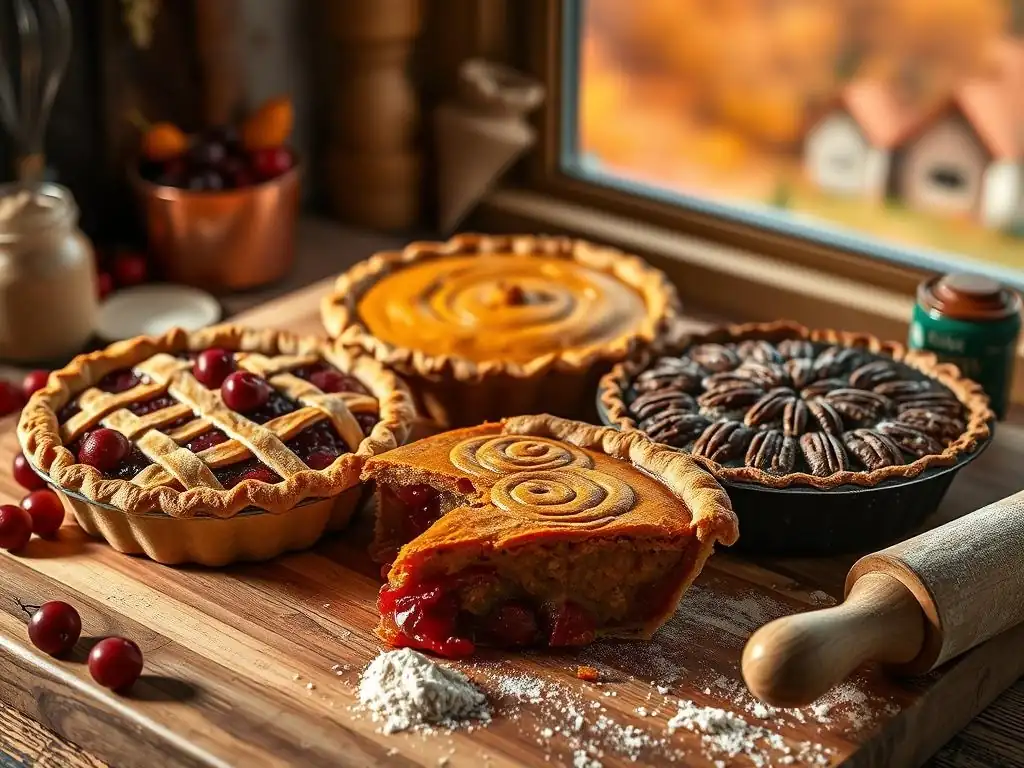
Elevating your Thanksgiving pies goes beyond just the filling; the crust offers a fantastic canvas for creativity. Simple techniques can turn a basic pie into a showstopper. Instead of a plain top crust, consider a lattice top, which not only looks beautiful but also allows steam to escape, preventing the filling from bubbling over excessively.
Creating a lattice is easier than it looks – simply cut the rolled dough into strips and weave them over the filling. For a simpler decorative touch, use cookie cutters to cut out shapes (like leaves, stars, or turkeys) from leftover dough and arrange them on top of the pie or around the edge.
More intricate designs are also achievable with practice. Using a pastry wheel with a fluted edge creates a lovely wavy border. You can also create braided edges by twisting three thin strips of dough together and pressing the braid onto the pie rim.
For a truly impressive look, use leaf cutters with vein stampers to create realistic-looking leaves to adorn the pie. Remember to brush decorative elements with an egg wash (egg mixed with a little water or milk) for a golden shine and to help them adhere to the crust. These decorative touches, while adding a few extra minutes, transform even easy Thanksgiving pie recipes into edible art, making your holiday table truly special.
Exploring Different Pie Fillings: From Sweet Potato to Cranberry
While pumpkin, apple, and pecan pies are Thanksgiving classics, exploring other filling options can add exciting variety to your dessert spread. Sweet potato pie is a Southern staple, offering a creamy, spiced filling similar in texture to pumpkin pie but with a distinct, earthy sweetness. Cranberry pie, often made with fresh or frozen cranberries, sugar, and thickener, provides a wonderful tart counterpoint to the richer pies. Adding orange zest or ginger can enhance the cranberry flavor.
Chess pie, a simple custard pie made primarily from sugar, butter, and eggs, is another easy option with many variations, including lemon, chocolate, or even buttermilk chess pie. For fruit lovers, pear or mixed berry pies are delightful alternatives to apple. Cream pies, like chocolate cream or banana cream, while less traditional for Thanksgiving, can be prepared with pre-baked crusts and offer a cool, smooth contrast to baked fruit or custard pies. Exploring these different fillings expands your options for easy Thanksgiving pie recipes and caters to diverse tastes.
Gluten-Free and Vegan Thanksgiving Pie Options with BakeWithEase
Accommodating dietary restrictions is increasingly common, and BakeWithEase offers solutions for delicious gluten-free and vegan Thanksgiving pies. Gluten-free pie crusts can be made using a blend of gluten-free flours (such as rice flour, almond flour, and tapioca starch) combined with cold fat, similar to traditional crusts. Pre-made gluten-free pie shells are also widely available and convenient. For fillings, many fruit fillings are naturally gluten-free, provided you use a gluten-free thickener like cornstarch or tapioca starch. Custard fillings require substituting traditional flour with a gluten-free alternative if the recipe calls for it.
For vegan pies, the main challenge is replacing butter in the crust and eggs and dairy in the filling. Vegan pie crusts can be made using vegetable shortening, vegan butter, or coconut oil. For fillings, tofu or silken tofu can be used as a base for creamy, custard-like pies like pumpkin or chocolate. Plant-based milks (almond, soy, oat) and creams (coconut cream, cashew cream) replace dairy.
Flax eggs (ground flaxseed mixed with water) or commercial egg replacers can substitute for eggs in many recipes. Sweeteners like maple syrup or agave replace honey. We provide specific easy Thanksgiving pie recipes tailored for gluten-free and vegan diets, ensuring everyone can enjoy a slice of homemade pie.
Troubleshooting Common Thanksgiving Pie Baking Problems
Preventing Soggy Pie Crusts: BakeWithEase's Expert Advice
A soggy bottom crust is a frequent frustration, but there are several effective ways to prevent it, especially when making easy Thanksgiving pie recipes with wet fillings. As mentioned earlier, blind baking the crust is often the most reliable method, creating a barrier before the filling is added. Ensure the blind bake results in a dry, lightly colored bottom crust, not just a set one. Pricking the bottom of the crust with a fork before baking (if not blind baking with weights) allows steam to escape, helping it stay crisp, though this is less effective for very wet fillings.
Ensuring your oven is accurately calibrated and preheated to the correct temperature is also crucial. Baking at the specified temperature ensures the crust cooks through before the filling's moisture has too much time to soak in. Placing the pie on a preheated baking sheet helps transfer heat efficiently to the bottom of the pie.
For fruit pies, tossing the fruit with its sugar and thickener allows the thickener to start absorbing juices before the pie bakes. Using a thickener like tapioca starch, which works well with acidic fruits and creates a clear gel, can also help manage moisture. Finally, letting the pie cool completely allows the filling to set and reduces the moisture transfer to the crust.
Avoiding Cracked Pie Fillings: Tips and Tricks
Cracked surfaces are a common issue with custard pies like pumpkin or pecan, affecting their appearance. The primary cause is often overbaking or rapid cooling. Custard fillings are delicate and continue to cook from residual heat after being removed from the oven. Overcooking dries out the filling, causing it to shrink and crack as it cools. Baking at the correct temperature (usually 325-350°F or 160-175°C) and checking for doneness using the wobble test or internal temperature (175°F/80°C for pumpkin, 200°F/93°C for pecan) is key. The center should still have a slight jiggle.
Cooling the pie gradually helps prevent cracking. Instead of placing the hot pie directly on a cooling rack at room temperature, turn off the oven and prop the door open, allowing the pie to cool inside the gradually cooling oven for 30-60 minutes. Then, transfer it to a wire rack to cool completely.
This gradual cooling minimizes thermal shock. Some recipes recommend baking custard pies in a water bath (bain-marie). Placing the pie plate in a larger pan filled with hot water creates a moist, even cooking environment that prevents the edges from setting too quickly and helps the center cook gently, reducing the risk of cracks.
Achieving the Perfect Pie Doneness: Visual Cues and Temperature Checks
Knowing when your pie is perfectly baked is essential for both texture and safety, especially with easy Thanksgiving pie recipes involving raw ingredients. For fruit pies, look for a golden-brown, flaky crust and bubbling filling visible through vents or around the edges. You should be able to easily pierce a piece of fruit with a knife inserted through a vent. The filling should look thickened, not watery. If the crust is browning too quickly, cover the pie loosely with foil.
For custard pies like pumpkin or pecan, visual cues include a set edge that may be slightly puffed, while the center still has a slight wobble. An instant-read thermometer provides the most accurate measure of doneness. Pumpkin pie is done when the internal temperature reaches 175°F (about 80°C) in the center. Pecan pie is typically done around 200°F (93°C). Don't rely solely on visual cues for custard pies, as they can look set on the surface but still be undercooked in the center. Overbaking custard pies leads to cracking and a less desirable texture.
Serving and Storing Your Thanksgiving Pies: BakeWithEase's Recommendations
Cooling and Slicing Your Pies for Optimal Presentation
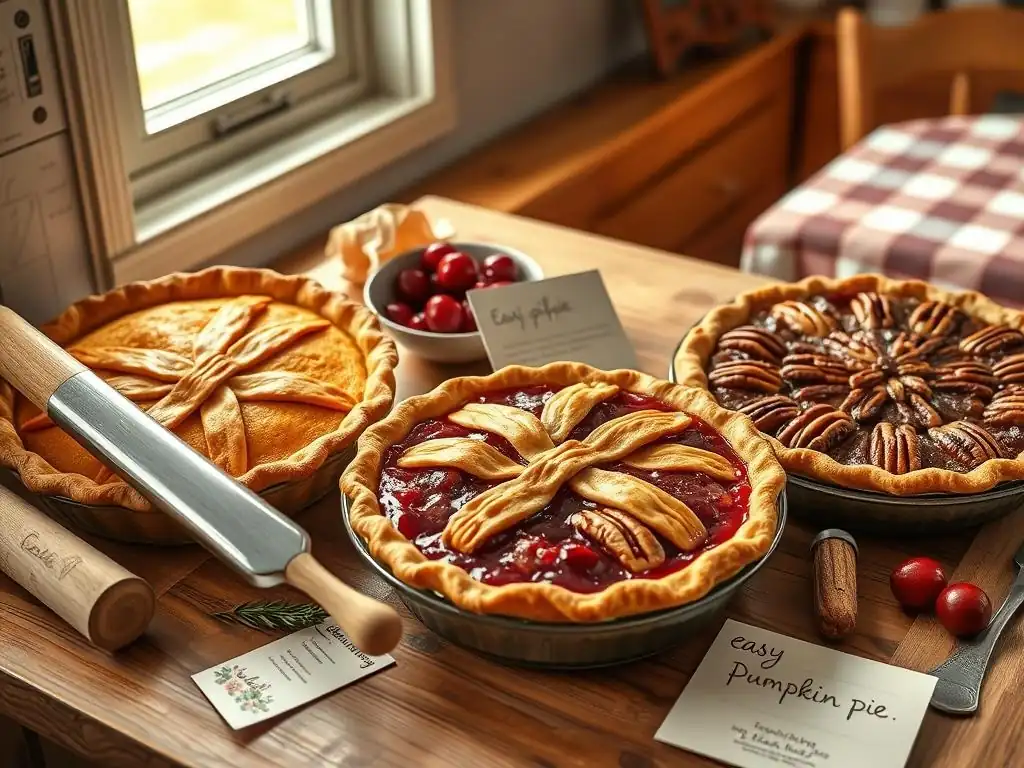
Proper cooling is just as important as baking for achieving optimal texture and ease of slicing, particularly for easy Thanksgiving pie recipes. Fruit pies require cooling for at least 2-4 hours, and often longer, to allow the filling to thicken as it cools. Slicing a hot fruit pie almost always results in a runny mess.
Custard pies like pumpkin and pecan need to cool completely, usually 2-3 hours at room temperature, and benefit from chilling in the refrigerator for at least another 2-4 hours (or overnight) to fully set. Attempting to slice a warm custard pie will result in a gooey, unformed slice.
Once completely cooled and set, use a sharp knife to slice your pies. For clean slices, especially with sticky fillings like pecan, dip the knife in hot water and wipe it clean between each slice. This prevents the filling from sticking to the blade and pulling the slice apart. For fruit pies, a serrated knife can work well on the crust. Serve pies at the recommended temperature – fruit pies are often best served warm, while custard and cream pies are typically served chilled.
Storing Leftover Thanksgiving Pies: Maintaining Freshness
Proper storage is key to keeping your leftover Thanksgiving pies fresh and delicious. Most pies, including fruit pies, pumpkin pie, and pecan pie, should be stored in the refrigerator if they contain eggs or dairy. Wrap the cooled pie tightly in plastic wrap or aluminum foil, or place slices in an airtight container. Stored properly in the refrigerator, most pies will last for 3-4 days.
Cream pies, such as chocolate cream or banana cream, are highly perishable due to their dairy-based fillings and should always be stored in the refrigerator and consumed within 2-3 days. Pies made with a lot of sugar, like some chess pies, may be less prone to spoilage but still benefit from refrigeration for optimal freshness and texture. Always err on the side of caution and refrigerate if unsure.
BakeWithEase's Guide to Reheating Thanksgiving Pies
If you prefer your fruit pie warm, reheating is simple. Place individual slices on a baking sheet and warm them in a preheated oven at 300-325°F (150-160°C) for 10-15 minutes, or until heated through. Alternatively, you can microwave individual slices for 30-60 seconds, though this may soften the crust. Avoid reheating the entire pie at once unless you plan to eat it all, as repeated heating can dry it out.
Custard pies like pumpkin or pecan are typically served chilled or at room temperature and generally do not benefit from reheating, as it can affect their texture. If you must warm them slightly, use a very low oven temperature for a short time. Cream pies should never be reheated. Reheating is mainly applicable to fruit pies, allowing you to enjoy that warm, comforting goodness even days after Thanksgiving dinner.
Make This Thanksgiving Your Sweetest Yet with BakeWithEase
Frequently Asked Questions
What kind of Thanksgiving pie recipes easy does BakeWithEase offer for beginners?
BakeWithEase provides Thanksgiving pie recipes easy suitable for beginners, including classic pumpkin pie and apple crumble pie, with detailed step-by-step instructions. We focus on easy-to-find ingredients and simplified techniques.
Where can I find the Thanksgiving pie recipes easy on BakeWithEase?
You can find our Thanksgiving pie recipes easy in the "Thanksgiving" category on our website, BakeWithEase.com. Look for the section specifically dedicated to pies and desserts.
Does BakeWithEase offer tips for ensuring my Thanksgiving pie recipes easy turn out perfectly?
Yes! BakeWithEase provides baking tips and tricks for Thanksgiving pie recipes easy, including advice on crust preparation, filling consistency, and oven temperature control to avoid common pitfalls.
Are there gluten-free or vegan Thanksgiving pie recipes easy available on BakeWithEase?
BakeWithEase is continuously expanding its recipe collection. While not all Thanksgiving pie recipes easy are gluten-free or vegan, we offer several options with easy substitutions to cater to dietary restrictions.
What makes BakeWithEase the "ultimate guide" for Thanksgiving pie recipes easy?
BakeWithEase offers a comprehensive approach to Thanksgiving pie recipes easy. We provide detailed instructions, helpful visuals, and troubleshooting advice to ensure baking success, regardless of your skill level.
Final Reflection: The Sweetness of Tradition, the Joy of Creation
The art of Thanksgiving baking isn't just about creating delicious pies; it's about fostering connection and celebrating the spirit of the season. This guide, filled with easy-to-follow recipes and helpful tips, aims to empower everyone, regardless of baking experience, to participate in this cherished tradition. The aroma of warm spices and the satisfying crust of a perfectly baked pie are more than just culinary delights; they are the tangible embodiment of warmth, family, and gratitude.
The enduring appeal of Thanksgiving baking lies in its ability to transcend generations, connecting us to our heritage and creating new memories. It's a practice that fosters a sense of community, whether you're sharing your creations with loved ones or simply enjoying the process of making something beautiful and delicious. As the renowned chef Julia Child once said, Find something you're passionate about and keep tremendously interested in it.
For many, that passion is found in the kitchen, particularly during the Thanksgiving season, where the act of baking becomes a powerful expression of love and care.
This Thanksgiving, don't just follow a recipe; feel the recipe. Embrace the imperfections, savor the process, and allow the warmth of the oven to melt away any stress. Let the simple act of baking become a moment of mindful creation, a chance to connect with yourself and those you cherish. This year, let your Thanksgiving baking be a testament to your own unique creativity and a symbol of the abundance and gratitude you feel. Share your creations, share your joy, and let the sweet aroma of Thanksgiving fill your home and your heart.
Unlock Your Inner Baking Whiz!
Thanks for joining us on this Thanksgiving baking journey! We hope you've gained the confidence and delicious recipes you need to create a truly memorable feast. Ready to take your baking skills to the next level?
- Bake your masterpiece! Use the recipes and tips from this guide to create your show-stopping Thanksgiving desserts. Don't be afraid to experiment and make them your own!
- Share your creations! Post pictures of your baking triumphs on social media using #BakeWithEaseThanksgiving – let’s inspire each other!
- Explore more seasonal recipes on our website for even more holiday baking inspiration. Find new favorites and expand your culinary repertoire!
What's your favorite Thanksgiving dessert to bake (or eat!)? Share your thoughts in the comments below!