
Pricing Your Passion: Communicating the Value of Your Homemade Bakes


Welcome to BakeWithEase, your companion in the sweet world of baking! Ever wondered how to truly capture the value of your delicious creations when turning your passion into a business? Dive into our latest article, "Pricing Your Passion: Communicating the Value of Your Homemade Bakes," where we unravel the secrets of a successful homemade bake pricing strategy. Discover how to confidently price your treats and watch your baking business flourish. Intrigued? Let's get started!
- Pricing Your Baked Creations: Communicating Value and Profit
- Understanding Pricing for Your Baking Business
- Calculating the True Cost of Your Baked Goods
- Developing Your Pricing Strategy
- Communicating the Value to Your Customers
- Justifying Your Prices and Addressing Objections
- Advanced Pricing Techniques
- Tools and Resources for Baking Pricing
- Conclusion: Balancing Profit and Customer Satisfaction
-
Frequently Asked Questions
- How do I determine the cost of ingredients for my homemade bakes?
- What other costs should I consider besides ingredients when pricing my bakes?
- How can I justify a higher price for my homemade bakes compared to store-bought options?
- What are some common pricing strategies for homemade bakes, and which is best?
- How important is branding and presentation when pricing my homemade bakes?
- Final Reflection: The Sweet Success of Fair Pricing
- Unlock Your Baking Business's Potential!
Pricing Your Baked Creations: Communicating Value and Profit
Understanding Pricing for Your Baking Business
Why Strategic Pricing is Essential
Pricing your homemade baked goods isn't just about covering costs; it's a fundamental pillar of building a sustainable and profitable home baking business. A well-thought-out pricing strategy ensures you are fairly compensated for your time, skill, and ingredients, while also making your products attractive to your target customers. Without a clear strategy, you risk either overpricing and losing sales or, more commonly, underpricing and working for less than minimum wage after accounting for all expenses.
Implementing a solid homemade bake pricing strategy allows you to understand your market position, set realistic financial goals, and plan for growth. It helps you communicate the inherent value of your handcrafted items compared to mass-produced alternatives. For instance, if you specialize in artisanal bread, your pricing needs to reflect the quality of ingredients like organic flour and long fermentation times, which are significantly different from commercial bread production. Data suggests that consumers are often willing to pay a premium for perceived higher quality and unique products, but you need to justify that premium through your pricing and communication.
The Dangers of Underpricing Your Baked Goods
One of the most common mistakes new home bakers make is underpricing their products. This often stems from a desire to be competitive or a lack of confidence in the value of their work. While low prices might initially attract customers, they quickly lead to burnout and unsustainability. Underpricing means you aren't covering all your costs, including the often-overlooked costs of labor, utilities, and equipment wear-and-tear.
Operating with insufficient margins means you have little to no profit left over after expenses. This prevents reinvestment in your business, such as purchasing better equipment, taking advanced baking courses, or even affording marketing materials. For example, if a dozen cookies costs you $8 in ingredients and takes 2 hours to bake and package, and you only sell them for $10, you're only making $2 for those two hours of work, before considering utilities, packaging, or your time spent planning and shopping. This isn't a viable long-term model for a home baking business.
Achieving Sustainable Profitability Through Pricing
Sustainable profitability is the goal of any business, including a home baking operation. Achieving this requires a homemade bake pricing strategy that accurately reflects your costs, market value, and desired profit margin. This isn't about getting rich quick, but about building a business that can support itself and provide you with a reasonable income for your efforts.
By understanding your true costs and setting prices that include a healthy profit margin, you create a buffer for unexpected expenses, allow for business growth, and ensure you are fairly compensated for your specialized skills. For example, if you determine that your costs for a custom cake are $50 (ingredients, labor, overhead) and you aim for a 50% profit margin, your selling price would be $100.
This allows you to cover costs and reinvest $50 back into your business or take it as income. A clear homemade bake pricing strategy provides the roadmap to financial health and longevity for your passion project.
Calculating the True Cost of Your Baked Goods
Step 1: Accurately Determining Ingredient Costs
Tracking Ingredient Expenses with Precision
The first crucial step in any homemade bake pricing strategy is meticulously tracking your ingredient costs. This goes beyond just knowing the price per bag of flour or carton of eggs. You need to calculate the cost per unit used in a specific recipe. For instance, if a 5lb bag of flour costs $4.00 and contains approximately 18 cups, the cost per cup is about $0.22. If a recipe calls for 3 cups, the flour cost is $0.66. Similarly, if a dozen eggs cost $3.60, each egg costs $0.30.
Maintaining a spreadsheet or using a dedicated app to record ingredient purchases and then break down costs by unit (per cup, per gram, per egg, per teaspoon) is essential. Don't forget smaller items like baking powder, vanilla extract, food coloring, and sprinkles – their costs add up quickly, especially for complex recipes. For example, high-quality vanilla extract can cost upward of $10 per ounce, making even a teaspoon ($0.60-$0.70) a significant ingredient expense in smaller bakes. Accurate tracking prevents you from underestimating the raw material cost of your delicious creations.
Including Packaging Costs in Your Calculations
Often overlooked, packaging is a significant expense that must be factored into your homemade bake pricing strategy. This includes boxes, cake boards, cupcake liners, ribbons, labels, stickers, and any protective wrapping or materials needed for transport. The cost of a cake box might seem small, perhaps $1.50-$3.00 depending on size and quality, but this is a direct cost associated with selling that specific cake.
Consider the total cost of packaging per item or batch. If you sell cookies by the dozen, calculate the cost of the box, tissue paper, and label used for that dozen. If you make individual pastries, factor in the cost of each small box or bag. For instance, a decorative cupcake box for four might cost $1.00. If you sell four cupcakes for $12, the packaging is nearly 10% of your selling price. Including these costs ensures your pricing covers all materials required to get your product safely and attractively into your customer's hands.
Step 2: Factoring in Labor and Expertise
Valuing Your Time and Baking Skills
Your time and expertise are incredibly valuable assets in your home baking business, and they absolutely must be included in your homemade bake pricing strategy. Think about what you would want to earn per hour if you were working for someone else doing a similar skilled job. Even setting a modest hourly rate, say $15-$25 depending on your experience and local market rates, provides a baseline for valuing your labor.
Calculate the time spent on each recipe from start to finish: planning, shopping (or inventory management), mixing, baking, cooling, decorating, packaging, and even cleanup. A seemingly simple batch of brownies might take 30 minutes of active work and 30 minutes of passive cooling/cutting time. A complex tiered cake could require 10-15 hours or even more spread over several days. Don't undervalue the hours you pour into perfecting your craft and creating beautiful, delicious baked goods.
Accounting for All Stages: Prep to Cleanup
When calculating labor costs for your homemade bake pricing strategy, be comprehensive. It's not just the time the oven is on. Include the time spent on:
- Recipe planning and ingredient sourcing: Researching, writing shopping lists, going to the store or managing online orders.
- Preparation: Measuring ingredients, prepping pans, preheating the oven.
- Mixing and Baking: The active time spent mixing doughs, batters, monitoring baking.
- Cooling and Decorating: Crucial time for cakes, cookies, and pastries.
- Packaging: Boxing, labeling, adding finishing touches.
- Cleanup: Washing dishes, wiping down surfaces, putting away equipment.
For a batch of 24 standard cupcakes, you might spend 30 minutes prepping, 20 minutes mixing/baking, 40 minutes cooling/decorating, 15 minutes packaging, and 20 minutes cleaning. That's roughly 2 hours of labor. If you value your time at $20/hour, that's $40 in labor cost for that batch, a significant factor in determining your final price per cupcake.
Step 3: Calculating Overhead Expenses
Allocating Home Baking Space Costs (Rent/Mortgage)
Even though you're baking from home, there are costs associated with using that space for your business. You need to allocate a portion of your monthly rent or mortgage payment to your baking operation. A common method is to calculate the square footage of your dedicated baking area (kitchen, storage space) as a percentage of your total home square footage and apply that percentage to your housing cost.
For example, if your kitchen and baking storage area is 200 sq ft and your home is 1500 sq ft, the baking space is roughly 13.3% of your home. If your monthly rent/mortgage is $1500, you could allocate $1500 * 0.133 = $199.50 per month as a business expense. This figure then needs to be factored into your overall costs when determining your homemade bake pricing strategy. It's a real cost of doing business from home.
Factoring in Utility Usage (Electricity, Gas)
Baking uses significant amounts of electricity and gas, especially when running ovens for extended periods or using stand mixers and other appliances frequently. While precise tracking can be difficult, you can estimate the increased utility costs attributed to your baking business. Look at your utility bills before and after you started baking regularly for business purposes.
Consider allocating a percentage of your monthly electricity and gas bills based on estimated usage. If your utility bills increased by $50-$100 per month after starting your business, that's a direct overhead cost. Alternatively, you could estimate based on appliance usage; for instance, a standard electric oven uses roughly 2-3 kWh per hour. If you bake for 10 hours a week, that's 20-30 kWh weekly, adding to your electricity bill. These costs must be factored into your homemade bake pricing strategy to ensure profitability.
Accounting for Equipment Depreciation and Maintenance
Your mixers, ovens, baking pans, and other tools don't last forever, and they sometimes require maintenance or repair. The cost of these assets and their eventual replacement is an overhead expense known as depreciation. While complex accounting methods exist, a simple approach for a home baker is to estimate the lifespan of major equipment and allocate a portion of its cost over that period.
For example, if you buy a stand mixer for $400 and expect it to last 5 years, you could allocate $80 per year ($400/5) or roughly $6.67 per month as a depreciation expense. Similarly, set aside funds for potential repairs or the eventual need to replace worn-out pans or smaller tools. Factoring in these long-term costs is vital for the sustainability of your homemade bake pricing strategy and ensuring you can continue baking without unexpected financial burdens.
Developing Your Pricing Strategy

Cost-Plus Pricing: Simple and Direct
Cost-plus pricing is one of the most straightforward methods for a home baking business. It involves calculating the total cost of producing an item (ingredients + labor + allocated overhead) and then adding a desired profit margin percentage.
Selling Price = Total Cost + (Desired Profit Margin Percentage * Total Cost)
For instance, if the total cost to bake and package a cake is $40, and you want a 50% profit margin, the calculation would be: Selling Price = $40 + (0.50 * $40) = $40 + $20 = $60. This method ensures that all your expenses are covered and you make a predetermined profit on each sale. It's a transparent way to base your homemade bake pricing strategy on your actual expenditure.
Value-Based Pricing: Highlighting Perceived Value
Value-based pricing focuses on what the customer perceives the product to be worth, rather than solely on the cost of production. This strategy is particularly effective for unique, high-quality, or custom baked goods where craftsmanship, premium ingredients, and personalized service add significant value beyond the raw materials.
Consider a custom-designed wedding cake. Its value is not just the cost of flour, sugar, and butter; it includes the baker's artistic skill, consultation time, intricate decoration work, and the emotional significance of the event. Customers are often willing to pay a premium for something truly special and tailored to their needs.
Researching what customers pay for similar high-value items in your market helps inform this homemade bake pricing strategy. For example, a basic sheet cake might cost $50 using cost-plus, but a custom-decorated version for a special occasion could command $150-$300 or more based on its perceived value and complexity.
Competitive Pricing: Analyzing Market Rates
Competitive pricing involves researching what other home bakers or local bakeries are charging for similar products in your area. This helps you understand the market landscape and position your prices accordingly. You might choose to price slightly below competitors to attract price-sensitive customers, match their prices, or price higher if you offer demonstrably superior quality or unique features.
While important for context, competitive pricing shouldn't be the only factor in your homemade bake pricing strategy. Simply matching competitor prices without knowing their costs could lead to underpricing if their operations are more efficient or their quality standards are lower. Use competitive analysis as a guide, but always ensure your prices also cover your own costs and desired profit margin. For example, if local bakeries sell standard decorated sugar cookies for $3-$4 each, you know the general price range, but your final price should still be based on your specific costs and value proposition.
Psychological Pricing: Utilizing Price Points Effectively
Psychological pricing uses techniques to make prices appear more attractive to customers. Common examples include using prices ending in .99 (e.g., $9.99 instead of $10.00) or offering tiered options that encourage customers to choose a slightly more expensive but seemingly better-value option.
Another technique is anchoring, where you present a higher-priced premium option alongside your standard offerings to make the standard option seem more reasonable. For instance, offering a "Deluxe Custom Cake" at $150 next to your "Standard Decorated Cake" at $100 can make the $100 cake feel like a good deal. While these techniques can influence purchasing decisions, they should be used ethically and still align with your underlying homemade bake pricing strategy that ensures profitability.
Communicating the Value to Your Customers
Customers are often willing to pay more for quality, and highlighting the premium ingredients you use is a key way to communicate the value of your homemade bakes. Do you use organic flour, free-range eggs, real butter, imported chocolate, or seasonal local fruits? Mention these specifically in your product descriptions and marketing materials.
Instead of just saying "chocolate chip cookies," describe them as "Decadent Chocolate Chip Cookies made withCallebaut Belgian Chocolate and real butter." This language elevates the perceived quality and justifies a higher price point compared to cookies made with standard ingredients. Educating your customers about why your ingredients are special reinforces the value inherent in your homemade bake pricing strategy. According to some market studies, consumers prioritize ingredient quality and are often willing to spend 10-20% more for products featuring premium or ethically sourced components.
Emphasizing Craftsmanship and Artistry
Unlike mass-produced baked goods, your creations are the result of skill, practice, and artistic effort. Highlighting your craftsmanship and the artistry that goes into each item is crucial for communicating value and supporting your homemade bake pricing strategy, especially for custom or decorated items.
Talk about the hours spent perfecting a decorating technique, the intricate details on a cake, or the care taken in hand-shaping each loaf of bread. Share photos or videos (where allowed) of your process (without giving away proprietary techniques!). Descriptions like "Hand-piped buttercream flowers," "Slow-fermented sourdough," or "Individually decorated cookies" emphasize the human touch and skill involved, which customers value and are willing to pay a premium for. This positions your bakes as edible art, not just food.
Showcasing Freshness and Unique Qualities
Homemade bakes often have a freshness and unique quality that store-bought items lack. Emphasize that your products are made to order or baked in small batches, ensuring maximum freshness. Highlight unique flavor combinations, seasonal offerings, or recipes passed down through generations.
For instance, stating "Baked fresh this morning" or "Made with peak-season local berries" communicates a level of freshness and quality that resonates with customers. If you offer unique dietary options like gluten-free or vegan bakes, highlight your expertise and the quality of ingredients used for these specialized products, as these often command a higher price due to ingredient costs and technical skill. Your homemade bake pricing strategy should reflect the premium nature of fresh, unique, and specialized items.
Crafting Your Baking Story: Building Brand Loyalty
Connecting with your customers on a personal level by sharing your baking story builds brand loyalty and adds intangible value to your products. Why did you start baking? What inspires you? What is the philosophy behind your ingredients or techniques?
Sharing your passion creates an emotional connection that transcends the transaction. Customers who feel connected to your story are more likely to become repeat buyers and advocates for your business, even if your prices are slightly higher than competitors. Your story is part of your brand identity and contributes to the overall perceived value that supports your homemade bake pricing strategy. For example, a baker might share how they perfected a family cookie recipe over years, making the cookies more than just a treat, but a piece of heritage.
Justifying Your Prices and Addressing Objections
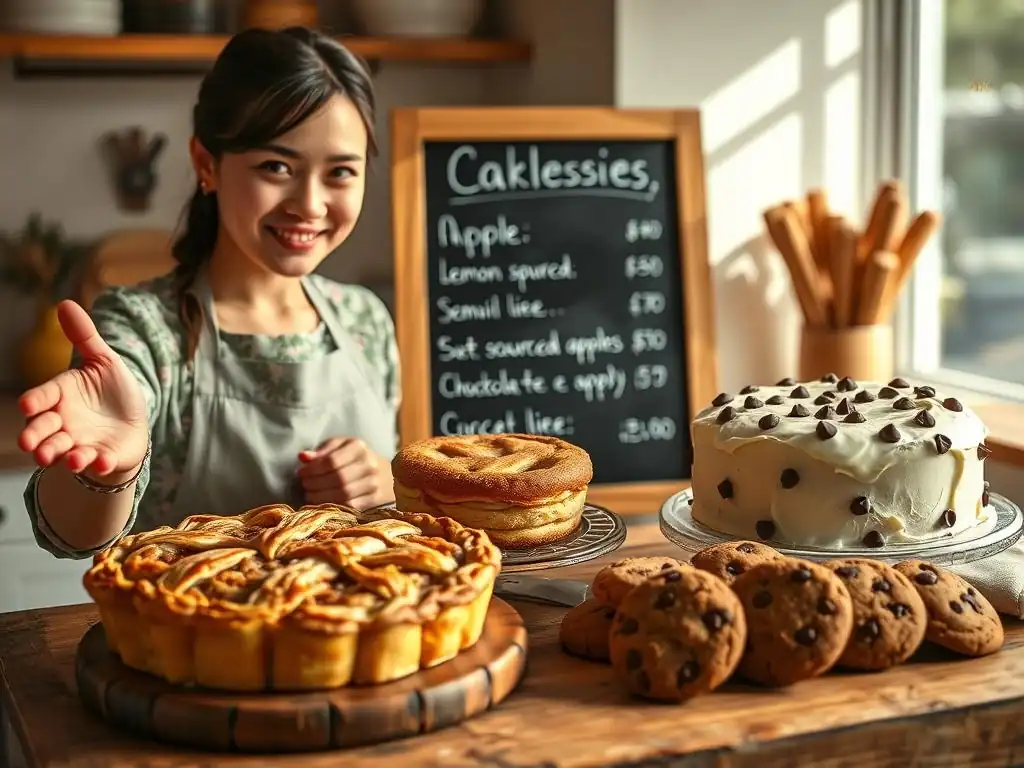
Comparing Homemade vs. Store-Bought Value
Customers might occasionally question why your homemade bakes cost more than supermarket alternatives. Be prepared to explain the difference in value. Store-bought goods are optimized for mass production, long shelf life, and low cost, often using cheaper ingredients, artificial flavors, and preservatives.
Your homemade bakes, conversely, prioritize quality, freshness, flavor, and often use better ingredients and traditional methods. Frame the comparison around value, not just price. "While our cookies cost more per dozen than the grocery store, they are made with real butter, premium chocolate chips, and no artificial preservatives, baked fresh just for you. That's the difference in quality and taste you're paying for." This conversation reinforces the value proposition behind your homemade bake pricing strategy.
Explaining the Difference in Quality and Care
Directly explaining the difference in quality and the care that goes into your products is key to justifying your prices. Point out the visible differences – the vibrant colors from natural food coloring, the intricate details of hand-piped frosting, the perfect crumb of a cake baked in a small batch.
Talk about the time and effort involved: the hours spent decorating a cake, the careful sourcing of ingredients, the attention to detail in packaging. This transparency helps customers understand why your prices reflect a premium product. For instance, "Each of these sugar cookies is hand-decorated, taking about 10-15 minutes per cookie just for the icing work, using high-quality royal icing that requires multiple steps. That's why they are priced differently than a plain cookie." This explanation ties your labor and skill directly to your homemade bake pricing strategy.
Offering Options: Sizes, Bundles, Customization
Providing a range of options can help address price sensitivity while still maintaining profitable pricing. Offer different sizes of cakes or pies, bundle smaller items like cookies or cupcakes at a slight discount, or provide tiers of customization (e.g., simple decoration vs. elaborate design at different price points).
This allows customers with different budgets or needs to find something suitable, rather than being turned away by a single price point. For example, offering a 6-inch cake alongside an 8-inch cake, or selling cookies individually, by the half-dozen, and by the dozen with tiered pricing, gives customers choices. A tiered approach to your homemade bake pricing strategy makes your offerings accessible to a broader audience without compromising the value of your premium products.
Advanced Pricing Techniques
Dynamic Pricing: Adapting to Demand
Dynamic pricing involves adjusting prices based on factors like demand, time of year, or order complexity. While more common in larger businesses, home bakers can apply this concept by having different pricing for rush orders or charging slightly more during peak seasons like holidays when demand is high and your time is at a premium.
For example, you might add a 20% surcharge for orders placed with less than 48 hours' notice, or increase prices slightly for Christmas cookie boxes due to the increased labor and demand during that time. This allows your homemade bake pricing strategy to be flexible and capitalize on periods of high demand while compensating you for the added pressure or limited availability.
Tiered Pricing: Offering Different Product Levels
Tiered pricing involves creating different versions or levels of a product at varying price points. This is very effective for items like cakes or custom cookies. You can offer a "Classic" tier with standard flavors and simple decoration, a "Signature" tier with premium flavors and moderate decoration, and a "Deluxe" tier with gourmet flavors and intricate, custom designs.
Each tier has its own cost structure and profit margin built into its price. This allows you to serve customers with different budgets and preferences. A customer who only needs a simple birthday cake might opt for the Classic tier, while someone celebrating a major milestone might choose the Deluxe. This tiered approach is a sophisticated element of a comprehensive homemade bake pricing strategy.
Subscription Models: Building Recurring Revenue
For certain products like bread, pastries, or cookie boxes, a subscription model can provide predictable, recurring revenue. Customers sign up for weekly or monthly deliveries at a set price, often receiving a slight discount compared to purchasing items individually.
While requiring consistent production and logistics, subscriptions offer stability and build customer loyalty. The pricing for a subscription needs to factor in the cumulative costs over the subscription period and might include a small discount as an incentive for the recurring commitment. Implementing a subscription option adds a layer of complexity but can be a valuable addition to your homemade bake pricing strategy for consistent income flow.
Tools and Resources for Baking Pricing
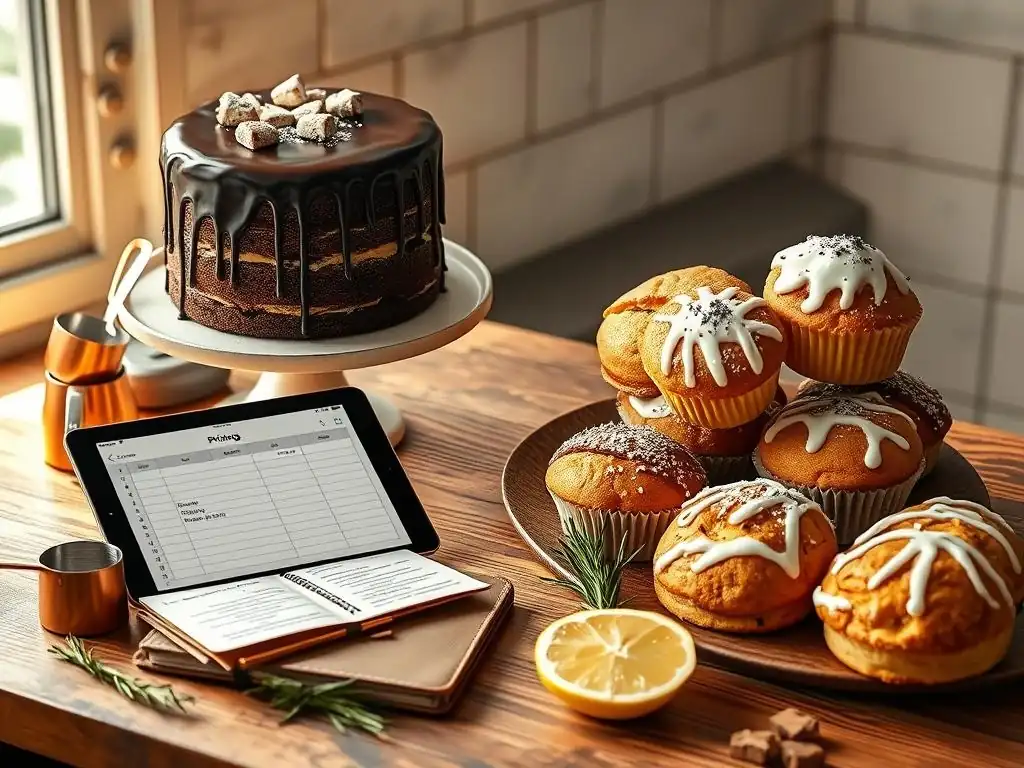
Spreadsheet Templates for Cost Analysis
Simple spreadsheet software (like Excel, Google Sheets, or Numbers) can be incredibly powerful tools for managing your homemade bake pricing strategy. You can create templates to track ingredient costs per unit, list recipes, calculate the cost per batch, and factor in labor and overhead.
A basic template might have columns for: Ingredient, Unit Purchased, Cost per Unit Purchased, Unit Used in Recipe, Amount Used in Recipe, Cost per Recipe Unit. By inputting your purchases and recipes, the spreadsheet can automatically calculate the ingredient cost for any bake. Adding sections for labor time (multiplied by your hourly rate) and allocated overhead helps you arrive at a total cost per item or batch, forming the foundation of your pricing calculations.
Online Pricing Calculators for Bakers
Several websites and apps offer specialized pricing calculators designed for bakers. These tools can simplify the process of determining ingredient costs, adding labor and overhead, and suggesting potential selling prices based on desired profit margins.
While these calculators can be helpful starting points, it's crucial to understand the inputs and ensure they align with your actual costs and local market conditions. They can provide a quick estimate or double-check your manual calculations, but they are not a substitute for understanding the underlying principles of your homemade bake pricing strategy. Look for calculators that allow you to input detailed ingredient costs and labor time.
Accounting Software for Baking Businesses
As your home baking business grows, dedicated accounting software (like QuickBooks, Xero, or even simpler small business programs) can streamline financial management, including tracking expenses, income, and profitability.
While potentially more complex than a simple spreadsheet, accounting software helps you get a clearer picture of your overall financial health. It can make tracking overhead expenses, monitoring sales revenue, and calculating profit margins much easier. Accurate financial records are essential for refining your homemade bake pricing strategy over time and making informed business decisions.
Conclusion: Balancing Profit and Customer Satisfaction
Achieving the Optimal Price Point for Success
Finding the optimal price point for your homemade bakes is a balance between covering your costs, making a profit, and ensuring your prices are acceptable to your target customers. It requires careful calculation, market awareness, and clear communication of your value.
Your homemade bake pricing strategy should be dynamic, reviewed periodically as ingredient costs fluctuate, your skills improve, or market conditions change. Don't be afraid to adjust prices as needed to ensure the sustainability of your passion. Remember, customers are often willing to pay a premium for quality, freshness, and the personal touch that homemade goods offer.
Ultimately, a successful homemade bake pricing strategy is one that allows you to build a thriving business doing what you love. By accurately calculating your costs, valuing your time and skill, and effectively communicating the unique value of your creations, you can set prices that ensure profitability while keeping your customers happy and eager for more of your delicious bakes.
Frequently Asked Questions
How do I determine the cost of ingredients for my homemade bakes?
Carefully track the cost of all ingredients used in each recipe. Factor in not only the price paid, but also the amount of each ingredient actually used, even if it's a small quantity.
What other costs should I consider besides ingredients when pricing my bakes?
Beyond ingredients, factor in overhead costs like utilities (electricity, gas), packaging materials (boxes, bags), and your time spent baking. These often-overlooked expenses significantly impact profitability.
How can I justify a higher price for my homemade bakes compared to store-bought options?
Emphasize the quality of ingredients, the handmade nature of your goods, and the personalized service you offer. Highlighting these unique selling points justifies a premium price.
What are some common pricing strategies for homemade bakes, and which is best?
Common strategies include cost-plus pricing, market-based pricing, and value-based pricing. The best strategy depends on your target market and your unique selling proposition.
How important is branding and presentation when pricing my homemade bakes?
Branding and presentation are crucial. Attractive packaging and a well-defined brand increase perceived value, allowing you to command higher prices and build customer loyalty.
Final Reflection: The Sweet Success of Fair Pricing
The art of baking isn't just about delicious creations; it's a business, and understanding how to price your passion is crucial for sustainable success. Ignoring the true cost of your time, ingredients, and expertise can lead to burnout and financial instability, ultimately hindering your ability to share your talent with the world. This isn't just about making a profit; it's about valuing your craft and ensuring its longevity.
The impact of fairly pricing homemade goods extends beyond individual bakers. It influences the entire landscape of small businesses and artisan crafts. It fosters a culture of appreciation for handmade items, challenging the dominance of mass-produced goods. It allows creators to thrive, not just survive. This resonates deeply with me, as I've witnessed firsthand the struggle of talented individuals undervaluing their work. The price is what you ask. Value is what the customer receives.
This quote highlights the importance of not just setting a price, but communicating the value inherent in your unique creations.
Now, it's your turn. Consider the time, ingredients, and skill that go into your baking. Don't undervalue your passion; instead, embrace the power of fair pricing. Calculate your costs, research your market, and confidently communicate the value of your delicious creations. By doing so, you'll not only ensure your financial well-being but also contribute to a vibrant community of passionate bakers who are fairly compensated for their artistry. Let your passion flourish, and let your pricing reflect its true worth.
Unlock Your Baking Business's Potential!
Thanks for diving into the world of pricing your delicious creations! You've now learned how to confidently communicate the value behind your homemade bakes. Ready to turn your passion into profit?
- Calculate your ideal pricing: Use the formula we discussed to determine a profitable price point for each item, considering your costs and desired profit margin. This is your most important step.
- Share your pricing strategy with others: Discuss your approach with fellow bakers – comparing notes can lead to valuable insights.
- Start accepting orders today! Don't let this knowledge sit idle – put your new pricing into practice and watch your business flourish.
What's the first recipe you'll confidently price and promote today?