
Mastering Vegan Baguettes: A StepbyStep Guide

Welcome to BakeWithEase!
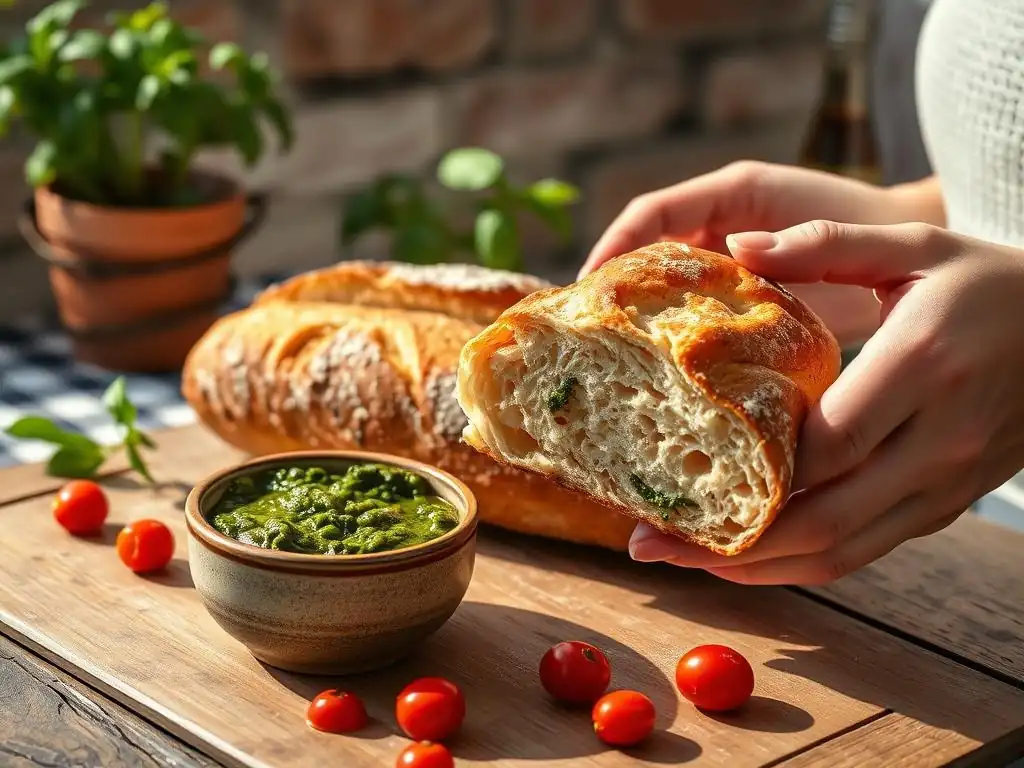
Ever dreamt of effortlessly pulling a warm, crusty baguette from your oven, completely vegan? You're in the right place. Discover the secrets to crafting a perfect vegan baguette recipe easy even for baking novices. Get ready to unlock the magic of simple ingredients and step-by-step instructions, and let's embark on a delicious baking adventure together! Curious how to achieve that perfect crispy crust and airy crumb? Read on to find out!
- Mastering Vegan Baguettes: A Step-by-Step Guide - BakeWithEase
- Introduction: Bake Delicious Vegan Baguettes at Home
- Essential Ingredients for Your Vegan Baguette Recipe
- Step-by-Step Guide: Baking the Perfect Vegan Baguette
- Tips and Tricks for Perfect Vegan Baguettes Every Time
- Variations and Adaptations of the Vegan Baguette Recipe
- Storing Your Homemade Vegan Baguettes
- Conclusion: Your Journey to Vegan Baguette Mastery
- Frequently Asked Questions
- Final Reflection: The Humble Vegan Baguette, A Rising Star
- Unleash Your Inner Boulanger: Bake the Perfect Vegan Baguette!
Mastering Vegan Baguettes: A Step-by-Step Guide - BakeWithEase
Introduction: Bake Delicious Vegan Baguettes at Home
Discover the Joy of Homemade Vegan Baguettes
There's a unique satisfaction that comes from pulling a warm, crusty baguette straight from your oven. The aroma alone is enough to transport you to a Parisian boulangerie. For those following a vegan lifestyle, or simply looking to explore plant-based baking, achieving that perfect baguette might seem challenging. However, with the right guidance and a straightforward approach, baking delicious vegan baguettes at home is not only possible but incredibly rewarding. This guide is designed to demystify the process, proving that a simple vegan baguette recipe can yield results as delightful as any traditional loaf.
Embarking on the journey of baking your own vegan baguettes opens up a world of culinary possibilities. Imagine slicing into a freshly baked loaf, the crackle of the crust giving way to a soft, airy interior. These homemade wonders are perfect for sandwiches, dipping in olive oil, or simply enjoying warm with a spread. Our easy vegan baguette recipe focuses on accessible ingredients and clear steps, ensuring that bakers of all skill levels can achieve impressive results. Get ready to fill your kitchen with the irresistible smell of baking bread!
Why Choose This Easy Vegan Baguette Recipe?
Many people believe that achieving a truly authentic baguette requires complex techniques or specialized equipment. While traditional methods can be intricate, this easy vegan baguette recipe simplifies the process without compromising on quality. We've selected ingredients and steps that are beginner-friendly, focusing on core principles of bread making that are easy to grasp. You won't need a professional steam oven or years of experience to bake beautiful, tasty vegan baguettes right in your home kitchen.
Our approach emphasizes clarity and reliability. We break down each stage, from mixing the dough to the final bake, providing tips to help you succeed. This isn't just about following instructions; it's about understanding the why behind each step, empowering you to become a more confident baker. By choosing this simple vegan baguette recipe, you're choosing a path to delicious, homemade bread that is both satisfying to make and wonderful to eat, proving that plant-based baking can be both easy and exceptional.
Essential Ingredients for Your Vegan Baguette Recipe
Understanding the Key Ingredients for Vegan Bread Baking
Vegan bread baking, like any baking, relies on a careful balance of ingredients working together. In a classic baguette, the list is surprisingly short: flour, water, yeast, and salt. When making a vegan baguette recipe, these core components remain the same, as none are animal-derived. The magic happens in how these simple elements interact during mixing, fermentation, and baking. Understanding the role of each ingredient is crucial for success, allowing you to troubleshoot and even adapt the recipe in the future.
The quality of your ingredients directly impacts the final product. Using fresh, high-quality flour and active yeast is paramount. While the list is minimal, the properties of each ingredient are significant. Water temperature, salt quantity, and flour type all play critical roles in gluten development, yeast activity, and ultimately, the texture and flavor of your finished vegan baguettes. Pay attention to the details of each ingredient as we explore them further.
Bread Flour: The Foundation of Structure
Bread flour is the cornerstone of a great baguette, including an easy vegan baguette recipe. What sets it apart is its higher protein content, typically ranging from 12% to 14%. This higher protein level is essential because it forms gluten when mixed with water and kneaded. Gluten is the network that gives bread dough its structure, elasticity, and ability to trap the gases produced by yeast, resulting in that desirable open crumb structure characteristic of a baguette.
Using a good quality bread flour ensures your dough has the strength needed to develop properly during fermentation and hold its shape during baking. While all-purpose flour can sometimes be used in a pinch (it usually has around 10-12% protein), it won't provide the same robust structure, potentially resulting in flatter, denser baguettes. For the best results with this simple vegan baguette recipe, invest in a reliable bread flour; it truly makes a difference in achieving that classic chew and airy interior.
Instant Yeast: Convenience and Reliability
Yeast is the leavening agent in our vegan baguette recipe, responsible for producing the carbon dioxide gas that makes the dough rise. We recommend using instant yeast for its convenience and reliability. Unlike active dry yeast, instant yeast does not require proofing in warm water before being added to the dry ingredients. It can be mixed directly into the flour, saving a step and reducing the chance of errors. This makes the baking process smoother, aligning perfectly with our goal of an easy vegan baguette recipe.
Instant yeast is also known for its consistent performance, providing a steady and predictable rise. A typical amount used in bread recipes is around 1% to 2% of the flour weight, though this can vary based on desired fermentation time and temperature. For this recipe, a small amount works effectively over a slightly longer fermentation, building flavor. Ensure your yeast is fresh; if the packet is past its expiration date or has been open for a long time, it may not be active, leading to a dough that doesn't rise.
Water: Hydration is Key

Water is more than just a liquid in bread making; it's a crucial component that hydrates the flour, allowing gluten to form, and activates the yeast. The amount of water used, relative to the flour weight, is known as hydration. Baguette dough is typically high hydration, often ranging from 70% to 80% or even higher. This high water content contributes significantly to the open, airy crumb structure that is a hallmark of a great baguette. While it can make the dough a bit stickier to handle initially, it's essential for the desired texture.
The temperature of the water is also important. Lukewarm water, around 95°F to 105°F (35°C to 40°C), is often ideal for activating yeast and encouraging fermentation. Using water that is too hot can kill the yeast, while water that is too cold will slow down fermentation significantly. For this easy vegan baguette recipe, we'll specify a temperature range to help ensure optimal yeast activity and dough development. Remember, even slight variations in water temperature can impact your dough's rise time.
Salt: Enhancing Flavor and Controlling Yeast
Salt plays a dual role in bread making: it significantly enhances the flavor of the bread, making it taste less bland, and it helps control yeast activity. Without salt, yeast can ferment too quickly, leading to an uneven rise and potentially a less desirable texture. Salt slows down fermentation, allowing for a more controlled and predictable rise, which is particularly helpful in achieving the structure needed for a baguette.
The amount of salt used in bread recipes typically falls between 1.8% and 2.2% of the flour weight. Using too little salt results in a bland loaf and potentially over-proofed dough, while too much salt can inhibit yeast activity too much and result in a dense loaf with a harsh flavor. For this simple vegan baguette recipe, we use a percentage within this standard range to ensure both excellent flavor development and proper dough handling and rising.
Step-by-Step Guide: Baking the Perfect Vegan Baguette
Step 1: Preparing the Vegan Baguette Dough
Activating the Yeast: A Quick Start
Although we are using instant yeast which can be mixed directly with flour, some bakers prefer to briefly activate it in warm water with a pinch of sugar (optional, as flour provides food) to ensure it's alive and kicking. This step is quick and provides peace of mind, especially if you are new to using instant yeast or unsure about its freshness. Pour the specified amount of lukewarm water (around 100°F / 38°C) into a bowl, sprinkle the instant yeast over the top, and add a small pinch of sugar if desired.
Give it a gentle stir and let it sit for 5-10 minutes. You should see a light foam or bubbles appear on the surface, indicating the yeast is active.
If you don't see any activity after 10 minutes, your yeast may be expired or the water might have been too hot or too cold. In this case, it's best to start again with fresh yeast and check your water temperature. This simple check at the beginning ensures that your dough will rise properly, setting you up for success with your easy vegan baguette recipe. Once the yeast is bubbly, you're ready to combine it with the other ingredients.
Mixing the Dough: Achieving the Right Consistency
Mixing the dough is where the magic begins. In a large mixing bowl, combine the bread flour and salt. If you activated your yeast separately, pour the water/yeast mixture into the bowl with the dry ingredients. If you're adding instant yeast directly, combine the flour, salt, and yeast, then add the lukewarm water. Stir everything together with a spoon or a dough whisk until a shaggy, sticky dough forms. It won't look smooth or uniform at this stage, and that's perfectly normal, especially for a high-hydration dough like this vegan baguette recipe calls for.
Turn the dough out onto a lightly floured surface or keep it in the bowl if you prefer the no-knead method. Knead the dough for about 5-10 minutes by hand, or use a stand mixer with a dough hook for 6-8 minutes on medium speed. The dough will be quite sticky initially due to the high hydration.
Resist the urge to add too much extra flour, as this will make the baguettes dense. Continue kneading until the dough becomes smoother, more elastic, and pulls away from the sides of the bowl (if using a mixer). A good test is the 'windowpane test': gently stretch a small piece of dough; if it stretches thin enough to see light through it without tearing, the gluten is well-developed.
Step 2: First Rise - Bulk Fermentation
Understanding the Importance of Bulk Fermentation
The first rise, also known as bulk fermentation, is a critical stage in developing the flavor and structure of your vegan baguette dough. During this period, the yeast ferments the sugars in the flour, producing carbon dioxide gas that causes the dough to rise, and alcohol and organic acids that contribute significantly to the bread's flavor profile. This phase also allows the gluten network, developed during mixing, to relax and strengthen further, making the dough more extensible and easier to shape later.
Bulk fermentation typically takes place in a lightly oiled bowl, covered to prevent drying, at room temperature. The exact time can vary greatly depending on the ambient temperature of your kitchen and the amount of yeast used. It could take anywhere from 1.5 hours to 3 hours, or even longer in a cooler environment. The dough should roughly double in size and appear puffy. Over-fermentation can lead to a dense loaf, while under-fermentation results in poor oven spring and less flavor. Paying attention to the dough's appearance and feel, rather than just the clock, is key.
Tips for a Successful First Rise
To ensure a successful bulk fermentation for your easy vegan baguette recipe, find a warm, draft-free spot in your kitchen. An oven with just the light on provides a perfect environment, often reaching around 80°F-85°F (27°C-30°C). Place the dough in a lightly oiled bowl, turning it once to coat, then cover tightly with plastic wrap or a damp tea towel. This prevents a skin from forming on the surface, which can inhibit the rise.
During the first rise, consider performing one or two 'stretch and folds'. After about 30-45 minutes into the rise, gently turn the dough out onto a lightly floured surface or stretch it in the bowl. Grab one edge of the dough, stretch it upwards, and fold it back over the center. Rotate the bowl and repeat this process 3-4 times. This technique helps to strengthen the gluten network and equalize the temperature throughout the dough. After stretching and folding, return the dough to the bowl, cover, and let it continue rising until doubled.
Step 3: Shaping the Vegan Baguettes
Dividing the Dough Evenly
Once your dough has completed its bulk fermentation and roughly doubled in size, it's time to divide it into portions for your baguettes. Gently turn the dough out onto a lightly floured surface. Avoid degassing it too much; you want to preserve some of the air bubbles created during the first rise. Use a bench scraper or knife to divide the dough into equal pieces.
For standard baguettes, this recipe typically yields 2-3 loaves, depending on your desired length and thickness. Weighing the pieces ensures uniformity, which helps them bake evenly. For example, if you have 600g of dough and want 3 baguettes, aim for approximately 200g per piece.
Even division is important not just for aesthetics but for consistent baking. If your baguettes are of different sizes, the smaller ones will likely bake faster and potentially burn before the larger ones are fully cooked. Use your bench scraper to gently nudge the dough pieces apart. Handle the dough gently throughout this process to maintain the airy structure developed during the first rise.
Pre-Shaping the Dough
After dividing, we pre-shape the dough. This step helps to build surface tension and makes the final shaping much easier. For baguettes, the typical pre-shape is a rough cylinder or log. Take one piece of dough and gently pat it into a rough rectangle. Then, fold the top edge down towards the center, and the bottom edge up to meet it, creating a seam. Pinch the seam closed, then gently roll the dough under the palms of your hands to create a taut log shape. The goal is to create a smooth, taut surface on the outside.
Repeat this pre-shaping process for all the dough pieces. Once shaped, cover the dough pieces with a damp tea towel or plastic wrap and let them rest for 15-20 minutes. This resting period, called 'bench rest', allows the gluten to relax after the handling, making the dough pliable enough for the final shaping without tearing or resisting. It's a short but essential pause before forming the final baguette shape.
Final Shaping: Creating the Classic Baguette Form
Now comes the exciting part: transforming the pre-shaped logs into classic baguette forms. Take one rested dough piece. Gently flatten it into a rectangle again, about 6-8 inches long. Fold the top third of the dough down towards the center, pressing gently to seal. Then, fold the bottom third up over the folded edge, pressing to seal again. Finally, fold the dough in half lengthwise, sealing the seam firmly with the heel of your hand.
Roll the dough back and forth gently with your palms, starting from the center and working outwards, applying even pressure to lengthen the baguette to your desired size (usually 12-16 inches). The seam should be on the bottom. The goal is to create a taut, even cylinder with slightly tapered ends.
Place the shaped baguettes on a couche (a piece of linen or heavy canvas) or a baking sheet lined with parchment paper and floured liberally with rice flour or cornmeal (these prevent sticking better than wheat flour). Use folds in the couche or crumpled parchment paper to support the baguettes and prevent them from spreading during the second rise.
Step 4: Second Rise - Proofing
Proofing Techniques for Vegan Baguettes
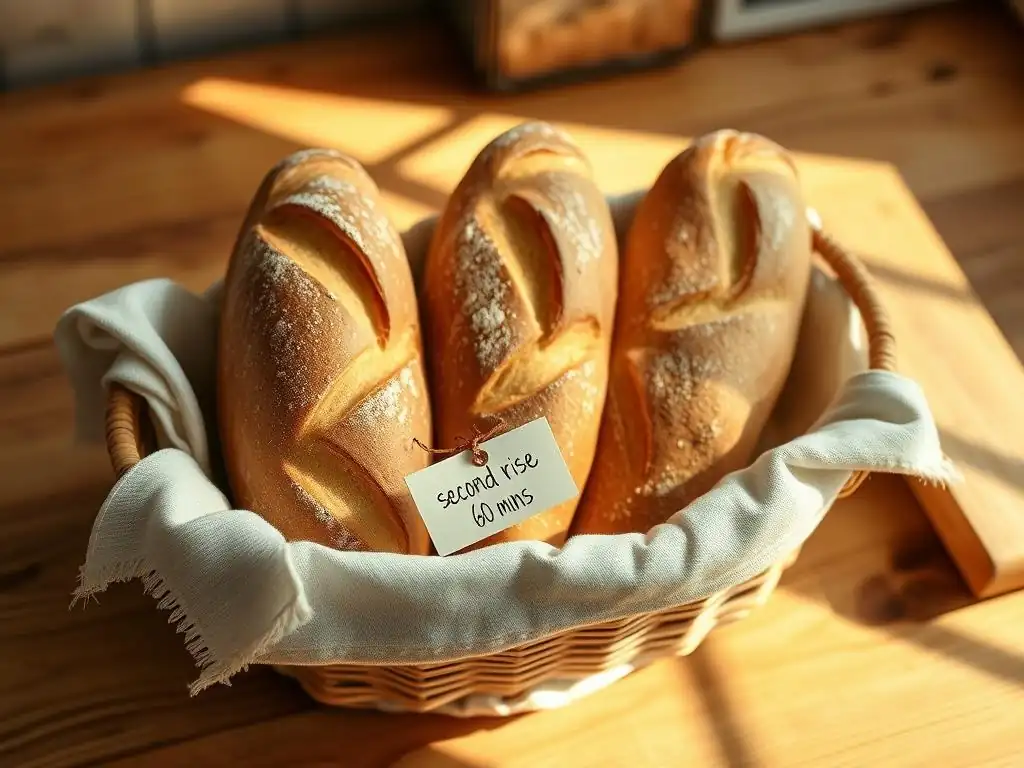
The second rise, or proofing, is the final fermentation stage before baking. During proofing, the shaped baguettes continue to rise gently, becoming light and airy. Proper proofing is crucial for achieving good oven spring and a light crumb. The goal is for the dough to expand significantly but not so much that the gluten structure collapses. Proofing typically takes place in a warm, humid environment.
If using a couche, arrange the baguettes between the folds, seam-side down. Cover the couche and baguettes with plastic wrap or a large plastic bag to maintain humidity. If using a baking sheet, place the baguettes seam-side down on floured parchment paper, leaving space between them, and cover the entire sheet loosely with plastic wrap. Another technique is to proof in a baguette pan, which helps maintain the shape. Proofing time varies depending on temperature, but often takes 45-75 minutes at room temperature (around 70°F/21°C).
Judging When the Dough is Ready to Bake
Knowing when your vegan baguettes are perfectly proofed is perhaps the trickiest part for beginners. An under-proofed baguette won't expand much in the oven (poor oven spring), resulting in a dense loaf. An over-proofed baguette will spread out and may collapse when scored or placed in the oven, also leading to a poor shape and dense spots. The best way to tell is with the "poke test."
Gently poke the side of a baguette with a floured finger. If the indentation springs back immediately, the dough is under-proofed. If the indentation stays completely, the dough is likely over-proofed. The ideal stage is when the indentation springs back slowly, but not completely, leaving a slight mark. The baguettes should look visibly puffy and feel light for their size. Err slightly on the side of under-proofing if unsure, as some oven spring is desirable.
Step 5: Baking Your Vegan Baguettes
Preheating the Oven & Creating Steam
Achieving a crispy crust on your vegan baguettes requires a very hot oven and steam during the initial baking phase. Preheat your oven to a high temperature, typically between 450°F and 475°F (230°C to 245°C). If you are using a baking stone or steel, place it in the oven before preheating and allow it to heat up for at least 30-60 minutes after the oven reaches temperature. This thermal mass provides a burst of heat to the bottom of the loaves, promoting oven spring.
Steam is essential for a crispy crust. It keeps the surface of the dough moist, allowing it to expand fully before the crust sets. There are several ways to create steam:
- Place a cast iron pan or tray on the bottom rack of your oven while preheating. Just before loading the bread, carefully pour a cup of hot water into the hot pan.
- Spray the walls of the oven with water using a spray bottle (avoid spraying the light or glass door).
- Place ice cubes in the hot pan at the bottom of the oven.
- Use a Dutch oven or cloche (though this is less common for multiple baguettes).
Be cautious when creating steam, as it can be dangerous. Close the oven door quickly after adding steam.
Scoring the Baguettes for Optimal Oven Spring
Just before transferring the baguettes to the hot oven, they need to be scored. Scoring involves making shallow cuts on the surface of the dough using a sharp knife or razor blade (called a lame). These cuts serve two primary purposes: they allow the dough to expand in a controlled manner during oven spring, preventing it from bursting randomly, and they create beautiful patterns on the crust.
For baguettes, the traditional scoring pattern is a series of diagonal cuts along the length of the loaf. Hold the blade at about a 30-degree angle to the surface of the dough and make overlapping cuts that are about 1/4 to 1/2 inch deep. Aim for smooth, swift cuts. Practice makes perfect! The angle of the blade helps create the characteristic 'ear' or flap of crust that peels back during baking. Score quickly and confidently just before loading the baguettes into the steamy oven.
Baking Time & Temperature for Golden Crusts
Transfer the scored baguettes onto your preheated baking stone/steel or hot baking sheet. If using a couche, gently roll or flip the baguettes onto the hot surface. Be quick to avoid losing steam. Bake the baguettes in the steamy oven for the first 10-15 minutes. This initial phase is where most of the oven spring occurs. After this time, carefully open the oven door to vent the steam (be careful of the hot steam!) and reduce the oven temperature slightly, perhaps to 425°F (220°C).
Continue baking for another 15-20 minutes, or until the baguettes are deep golden brown and sound hollow when tapped on the bottom. The total baking time is typically between 25 and 35 minutes, depending on their size and your oven. Keep an eye on them during the final minutes to prevent burning. A rich, dark crust is desirable for both flavor and texture.
Step 6: Cooling and Enjoying Your Vegan Baguettes
Proper Cooling Techniques
Once your beautiful vegan baguettes are baked to a perfect golden brown, resist the urge to slice into them immediately! Proper cooling is just as important as the baking itself. Transfer the hot baguettes from the oven to a wire cooling rack. This allows air to circulate around the entire loaf, preventing the bottom crust from becoming soggy from trapped steam.
Cooling bread allows the internal structure to set and moisture to redistribute evenly throughout the loaf. Cutting into a hot baguette will result in a gummy, steamy interior. Let the baguettes cool completely on the rack, which can take at least 30-60 minutes, depending on their size. This patience is rewarded with the perfect texture – a crisp crust and a tender, open crumb.
Serving Suggestions for Freshly Baked Baguettes
There's nothing quite like enjoying a freshly baked vegan baguette. The possibilities for serving are endless! Slice it horizontally for classic sandwiches filled with your favorite vegan ingredients like grilled vegetables, hummus, or plant-based deli slices. Cut it into diagonal slices for dipping into high-quality olive oil, balsamic vinegar, or a flavorful vegan soup or stew.
Warm slices are also wonderful simply spread with vegan butter or garlic spread. Consider serving them alongside a fresh salad or as part of a mezze platter with dips like baba ghanoush and muhammara. The simple, clean flavor of a well-made vegan baguette makes it a versatile companion to countless dishes. Enjoy the fruits of your labor!
Tips and Tricks for Perfect Vegan Baguettes Every Time
Troubleshooting Common Vegan Baguette Baking Problems
Even with an easy vegan baguette recipe, you might encounter a few common issues. Don't be discouraged! Baking is a learning process. If your baguettes are dense, it could be due to under-kneading (poor gluten development), inactive yeast, under-proofing, or adding too much flour during mixing or shaping. If they spread out flat instead of rising upwards, they might be over-proofed, or not shaped tightly enough to create sufficient surface tension.
Lack of a crispy crust is often related to insufficient steam during the initial bake or not baking at a high enough temperature. If the crust sets too early before the dough has fully expanded, you'll get less oven spring and a thinner crust. Uneven browning can be caused by hot spots in your oven; try rotating the baking sheet halfway through the bake. By understanding the potential causes, you can adjust your technique for your next batch.
Achieving a Crispy Crust and Soft Interior
The hallmark of a great baguette is the contrast between its shatteringly crispy crust and its soft, airy interior. To achieve this with your easy vegan baguette recipe, focus on a few key areas. First, ensure you are using a high-protein bread flour for good gluten development, which supports the open crumb. Second, proof the dough correctly – not too little, not too much – to ensure good oven spring.
Crucially, create plenty of steam in your oven during the first 10-15 minutes of baking at a high temperature (450°F-475°F). This allows the crust to remain pliable while the dough expands rapidly. After the initial steamy phase, vent the oven and continue baking at a slightly lower temperature until the crust is deep golden brown. A well-developed crust contributes significantly to the overall texture and flavor. Baking on a preheated stone or steel also helps achieve a crisp bottom crust.
Enhancing Flavor with Different Toppings and Seeds
While a classic vegan baguette recipe is delicious on its own, you can easily enhance its flavor and texture by adding toppings or seeds. Just before scoring and baking, you can brush the surface of the baguettes lightly with water and sprinkle them with various seeds. Poppy seeds, sesame seeds, nigella seeds, or a mix like 'everything bagel' seasoning are popular choices that add both visual appeal and a nutty flavor dimension.
Alternatively, you can incorporate seeds directly into the dough during the mixing stage. Add a few tablespoons of seeds per baguette to the dry ingredients. Sunflower seeds, pumpkin seeds, or flax seeds work well. Be aware that adding seeds can slightly alter the dough's hydration and handling, but the added crunch and flavor are often well worth it. For a savory twist, finely chopped fresh herbs like rosemary or thyme can also be kneaded into the dough.
Variations and Adaptations of the Vegan Baguette Recipe
Spelt Flour Vegan Baguette Variation
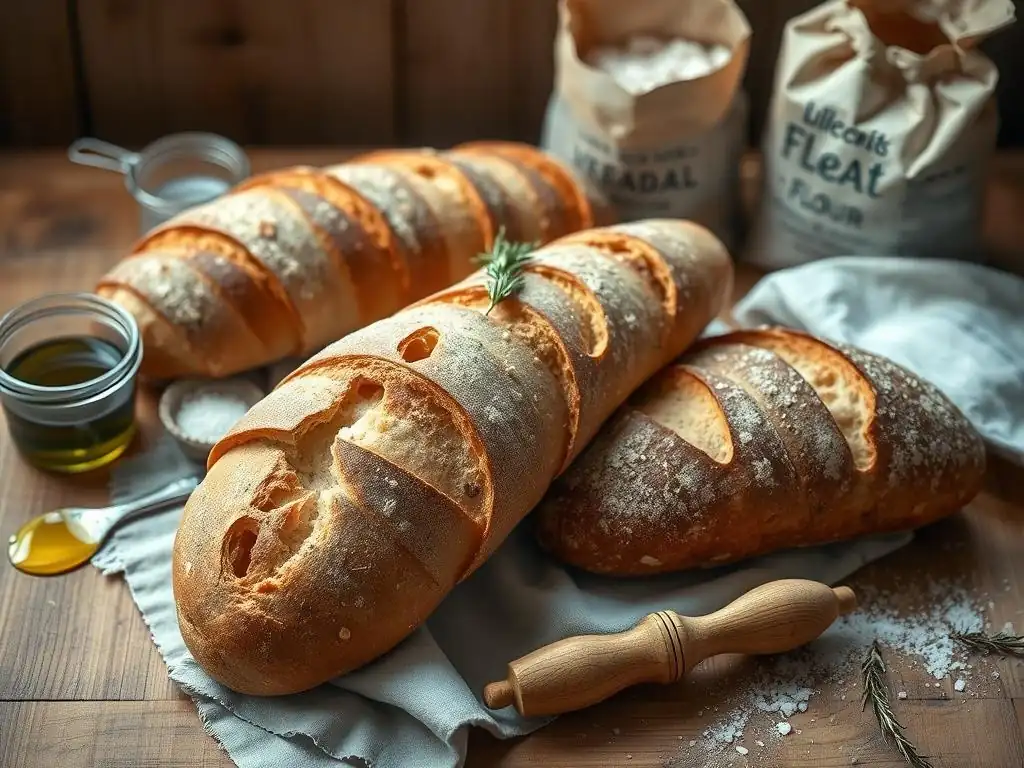
While bread flour provides the classic structure, you can adapt this easy vegan baguette recipe by incorporating other flours for different flavors and textures. A popular variation is using spelt flour. Spelt is an ancient grain that offers a slightly nuttier, sweeter flavor compared to modern wheat. You can substitute a portion of the bread flour with whole or light spelt flour. Starting with a 50/50 blend of bread flour and spelt flour is a good way to experiment.
Spelt flour behaves differently than wheat flour; its gluten is more fragile. This means spelt dough requires gentler handling and less kneading to avoid tearing the gluten network. It also tends to absorb water differently, so you might need to slightly adjust the hydration. A spelt variation will likely result in a slightly denser crumb and a distinct, pleasant flavor profile, offering a healthy and delicious alternative to the classic version.
Adding Seeds for Flavor and Texture
As mentioned in the tips section, adding seeds is a fantastic way to introduce new dimensions to your easy vegan baguette recipe. Beyond simply sprinkling them on top, incorporating seeds directly into the dough creates a more integrated flavor and texture throughout the loaf. Consider adding about 10-15% of the total flour weight in seeds. For example, in a recipe using 500g of flour, you could add 50-75g of seeds like a mix of sunflower, pumpkin, and flax seeds.
Add the seeds during the initial mixing stage along with the flour, yeast, and salt. They will hydrate as the dough mixes and ferments. Baguettes with added seeds are particularly good for sandwiches or served with salads, as the seeds provide a satisfying bite and extra nutritional value. This simple adaptation allows you to customize your homemade vegan baguettes to your personal taste.
Storing Your Homemade Vegan Baguettes
Best Practices for Keeping Your Baguettes Fresh
Homemade vegan baguettes are best enjoyed the day they are baked, ideally within a few hours of cooling, when the crust is at its peak crispness. However, if you have leftovers, proper storage can help maintain their quality for a day or two. The main challenge is preserving the crust while keeping the interior from drying out. Avoid storing baguettes in airtight plastic bags at room temperature, as this traps moisture and turns the crispy crust soft and chewy.
The best way to store a baguette for short-term use (up to 24 hours) is to simply leave it cut-side down on a cutting board or wrap it loosely in a paper bag. This allows the crust to breathe. For slightly longer storage (up to 2 days), you can wrap the cooled baguette loosely in a linen or cotton bread bag. If the crust has softened, you can often revive it by briefly reheating the baguette in a hot oven (around 350°F/175°C) for 5-10 minutes.
Freezing and Reheating Vegan Baguettes
If you won't eat your vegan baguettes within a couple of days, freezing is the best option for long-term storage. Freeze them as soon as they are completely cool. To freeze, wrap each baguette tightly in plastic wrap, then wrap again in aluminum foil or place in a freezer-safe bag. Properly wrapped, they can be stored in the freezer for up to 2-3 months.
To reheat a frozen baguette, remove it from the freezer and unwrap it. You can either let it thaw at room temperature for a few hours or reheat it directly from frozen. For best results, sprinkle the frozen baguette lightly with water or wrap it loosely in foil, and bake it in a preheated oven at 350°F (175°C) for 20-30 minutes, or until heated through and the crust is revived. If thawed, a shorter reheating time of 10-15 minutes might suffice. This method allows you to enjoy that 'freshly baked' experience whenever you like!
Conclusion: Your Journey to Vegan Baguette Mastery
Celebrate Your Baking Success!
Congratulations! You've taken the steps to master baking delicious vegan baguettes at home using our easy vegan baguette recipe. From understanding the foundational ingredients to navigating the nuances of fermentation, shaping, and baking, you've gained valuable skills. Each loaf you bake will teach you something new, and soon, pulling those golden, crusty baguettes from your oven will become second nature. Celebrate your achievement – whether it's your first slightly imperfect loaf or a batch of picture-perfect baguettes.
Baking bread is a journey, and mastering a simple vegan baguette recipe is a significant milestone. Don't worry about minor imperfections; the taste and satisfaction of homemade bread are unparalleled. Share your creations with friends and family, or simply savor them yourself. This easy recipe is a wonderful starting point, and you can now feel confident exploring further variations and techniques in your vegan bread baking adventures.
We love seeing what our community is baking! Your success with this easy vegan baguette recipe is an inspiration to others. We encourage you to share photos and stories of your homemade vegan baguettes. Let us know what worked well for you, any challenges you overcame, and how you enjoyed your delicious loaves.
Sharing your experiences helps build our community and provides valuable insights for fellow bakers. Tag us on social media or leave a comment on our website. Your journey to vegan baguette mastery is part of a larger passion for making delicious, wholesome bread accessible to everyone. Keep baking, keep experimenting, and keep sharing the joy of homemade bread!
Frequently Asked Questions
What makes this baguette recipe easy for vegan bakers?
This vegan baguette recipe is considered easy because it uses simple, readily available ingredients and provides clear, step-by-step instructions, ideal for beginners. It also avoids complex techniques.
Can I substitute ingredients in this vegan baguette recipe?
While some substitutions are possible, it's important to understand their impact. For example, swapping flours may affect the texture and rise of the baguette. It's best to follow the recipe closely for optimal results.
How do I achieve a crispy crust on my vegan baguette?
A high baking temperature and creating steam in the oven are crucial. You can achieve steam by placing a pan of hot water on the bottom rack of the oven during the initial baking phase.
What's the best way to store leftover vegan baguette?
To keep your baguette fresh, store it in a paper bag at room temperature. For longer storage, you can freeze slices and reheat them as needed.
How can I tell if my vegan baguette dough has risen enough?
The dough should have approximately doubled in size and feel light and airy. A good way to test is the poke test; if a gentle poke leaves a slight indentation, it's ready to bake.
Final Reflection: The Humble Vegan Baguette, A Rising Star
Mastering the vegan baguette isn't just about baking; it's about accessibility and deliciousness for everyone. The seemingly simple act of creating a perfect, airy vegan baguette challenges preconceived notions about vegan baking and opens up a world of culinary possibilities for those following a plant-based lifestyle. This recipe, designed for ease and success, aims to empower home bakers to create something truly special.
The journey of perfecting this vegan baguette recipe has been a personal one, highlighting the power of simple ingredients and precise technique. It's a testament to how much can be achieved with a little patience and the right knowledge. The positive feedback I've received from readers underscores the growing demand for accessible, delicious vegan recipes. The best vegan baguette I've ever made! Thank you for making this so easy to follow.
– A reader comment. This highlights the importance of making complex culinary creations approachable for everyone, regardless of dietary restrictions.
Now, it's your turn. Don't be intimidated by the seemingly complex world of bread making. Take the leap, gather your ingredients, and experience the joy of crafting your own perfect vegan baguette. The aroma alone is worth the effort, and the satisfaction of sharing this delicious creation with friends and family is immeasurable. Embrace the challenge, and discover the rewarding experience of baking your own slice of vegan heaven.
Unleash Your Inner Boulanger: Bake the Perfect Vegan Baguette!
Thanks for joining us on this delicious journey into the world of vegan baking! We hope you gained valuable tips and tricks to create truly amazing baguettes. Ready to put your new skills to the test?
- Bake your own masterpiece! Use the recipe from this article to create a stunning vegan baguette. Share your results with us – we’d love to see your creations!
- Experiment with different flours or herbs to personalize your baguette. What unique flavors will you discover?
- Challenge a friend to a baguette-baking competition! See who can create the crispiest crust and fluffiest crumb.
Ready to take your baking skills to the next level? What unique ingredient will you add to your next vegan baguette?