
Baking Stone vs. Dutch Oven: Unlocking the Secret to Perfect Crusts

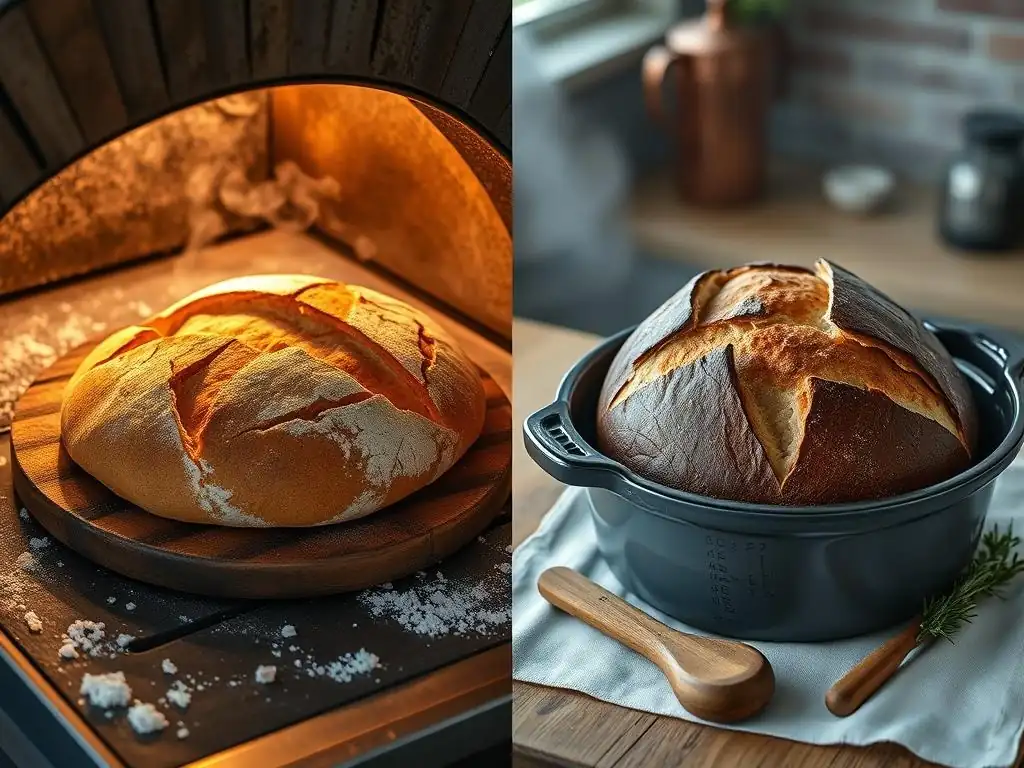
Welcome to BakeWithEase, your guide to confident baking! Ever wondered how to achieve that coveted, perfectly crisp crust on your sourdough? This article delves into the age-old debate: baking stone vs. Dutch oven. Discover which method reigns supreme for creating the perfect sourdough crust baking stone experience and unlock the secrets to artisan-quality bread in your own kitchen. Prepare to be amazed by the difference the right equipment can make – let's get baking!
- Baking Stone vs. Dutch Oven: A Detailed Comparison for Sourdough Crusts
-
Frequently Asked Questions
- What are the key differences between using a baking stone and a Dutch oven for sourdough crust?
- How does a baking stone help achieve a perfect sourdough crust?
- Can I use any type of baking stone for sourdough, or are there specific recommendations?
- Is a Dutch oven only suitable for sourdough, or can it be used for other types of bread?
- How does preheating the baking stone or Dutch oven impact the final sourdough crust?
- Final Reflection: The Quest for the Perfect Sourdough Crust
- Unleash Your Inner Baker: Craft the Perfect Crust!
Baking Stone vs. Dutch Oven: A Detailed Comparison for Sourdough Crusts
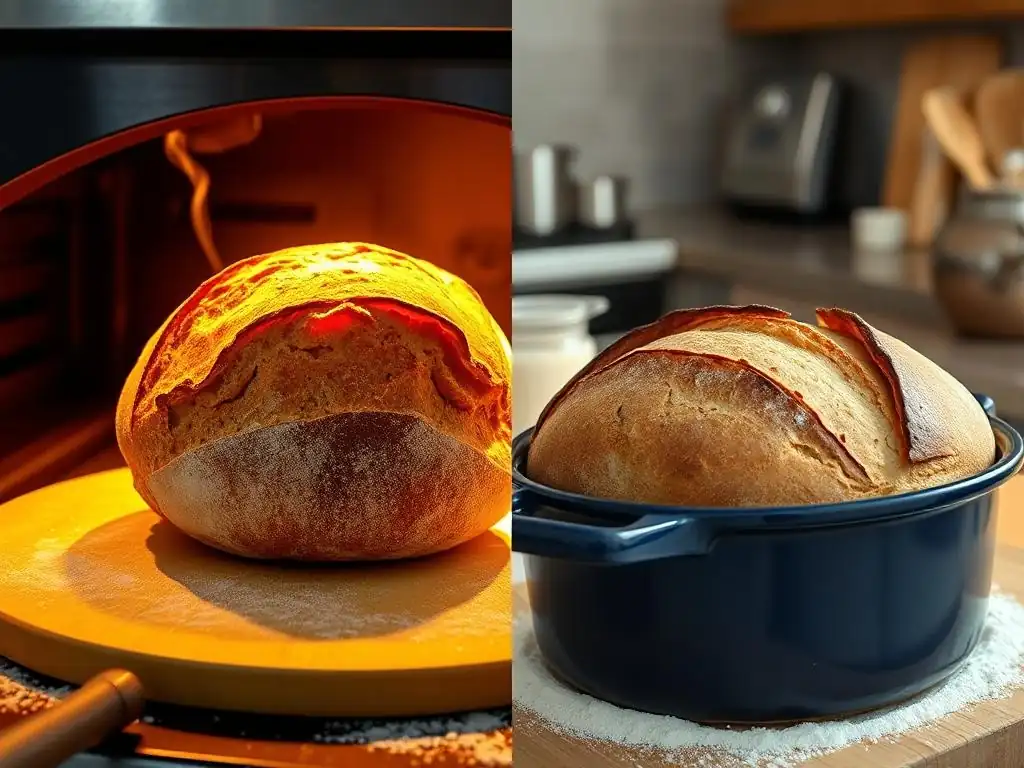
Comparing the baking stone and the Dutch oven for sourdough baking reveals distinct differences in how they interact with the dough and the oven environment. While both can produce excellent results, they each have strengths and weaknesses that influence the final perfect sourdough crust. Understanding these nuances is key to choosing the right tool for your baking style and desired outcome. Let's break down the critical aspects of this comparison.
The choice between a perfect sourdough crust baking stone setup and a Dutch oven often comes down to balancing desired crust characteristics, ease of use, and oven dynamics. Each method leverages heat transfer and steam management differently, leading to variations in crust thickness, crispness, and overall oven spring. Evaluating these differences helps bakers make an informed decision based on their specific goals for their homemade sourdough.
Crust Texture: Baking Stone vs. Dutch Oven
When aiming for a specific crust texture, the baking stone and Dutch oven offer different advantages. A baking stone, preheated to a high temperature (often 500°F or higher), provides intense radiant heat directly to the bottom of the loaf. This direct contact ensures a very crispy, well-developed bottom crust, which is a hallmark of artisan bread baked on a hearth. The top crust develops from the ambient heat in the oven and any steam introduced manually. For a baker seeking a pronounced, crackly bottom crust that holds up well, a perfect sourdough crust baking stone setup excels.
Conversely, the Dutch oven creates a contained, steamy environment around the loaf during the initial phase of baking. This steam keeps the surface of the dough moist, allowing it to expand fully before a hard crust forms. This promotes a thinner, more delicate top crust that blisters nicely.
While the bottom of the loaf eventually rests on the hot surface of the Dutch oven, the initial steam delays intense direct heat transfer to the bottom compared to a stone. This often results in a less aggressively crisped bottom crust than achieved with a perfect sourdough crust baking stone, but contributes significantly to the overall evenness and blistered appearance of the top crust.
Oven Spring and Rise: Which Method Wins?
Oven spring, the rapid expansion of the dough during the first few minutes of baking, is heavily influenced by the presence of steam. The high heat causes water in the dough to turn into steam, which expands and pushes the dough outwards. A Dutch oven is inherently designed to trap the moisture released by the dough itself, creating a superheated, steamy micro-environment inside the pot.
This trapped steam keeps the crust pliable for longer, allowing the loaf to achieve maximum volume and a beautiful, open crumb structure. Many bakers find that they achieve significantly more reliable and impressive oven spring when baking sourdough in a Dutch oven, especially loaves with hydration levels around 75% or higher.
While it is possible to generate steam in a standard oven with a baking stone (using steam pans, lava rocks, or spraying water), it is often less effective or consistent than the contained environment of a Dutch oven. The steam tends to dissipate quickly in a larger oven cavity.
Achieving comparable oven spring with a perfect sourdough crust baking stone setup requires diligent steam generation techniques, which can be cumbersome and less predictable than simply placing the lid on a Dutch oven. For bakers prioritizing maximum, consistent oven spring without complex steaming methods, the Dutch oven generally has the edge.
Ease of Use and Handling: A Practical Comparison
Considering the practicalities of baking sourdough, the Dutch oven is often cited as being more user-friendly, particularly for beginner to intermediate bakers. The process typically involves preheating the empty Dutch oven, carefully lowering the dough into the hot pot (often using parchment paper), placing the lid on, baking for a set time, removing the lid, and finishing the bake. Transferring dough into a hot Dutch oven can be tricky, but using parchment paper or carefully flipping from a proofing basket simplifies this.
Using a perfect sourdough crust baking stone requires preheating the stone in the oven, which can take 45 minutes to an hour or more to ensure the stone is uniformly hot. The most challenging part is transferring the proofed dough onto the screaming hot stone. This usually requires a peel dusted with flour or cornmeal, and precision is needed to avoid deflating the loaf or burning yourself. Managing external steam sources alongside this adds another layer of complexity. While experienced bakers master the peel technique, many find the contained environment and handling of a Dutch oven less intimidating initially.
Versatility: Beyond Sourdough, What Else Can You Bake?
A baking stone is incredibly versatile for many types of baking that benefit from direct, intense heat and a crispy bottom. Beyond achieving a perfect sourdough crust baking stone, they are excellent for baking pizzas, flatbreads, and even certain types of cookies or pastries that need a strong bottom heat. The stone absorbs and radiates heat, helping to brown and crisp the base of baked goods effectively. Its primary function is as a heat sink and transfer surface, making it ideal for anything placed directly upon it in a hot oven.
A Dutch oven, while superb for sourdough and other rustic breads, is also a highly versatile piece of kitchen equipment. Its ability to retain and distribute heat evenly makes it perfect for braising meats, cooking stews, making soups, and even frying. While you can bake cakes or casseroles in a Dutch oven, its primary baking advantage lies in creating a steamy, high-heat environment, which is less crucial for items like cookies or delicate pastries that might benefit more from the direct heat of a perfect sourdough crust baking stone or a standard baking sheet.
Frequently Asked Questions
What are the key differences between using a baking stone and a Dutch oven for sourdough crust?
A baking stone provides a consistent, dry heat from below, while a Dutch oven traps steam inside, creating a crispy crust. Both aim to mimic the environment of a professional bread oven.
How does a baking stone help achieve a perfect sourdough crust?
The baking stone's porous surface absorbs moisture, promoting a crisper, chewier crust. It also ensures even heat distribution, preventing hot spots.
Can I use any type of baking stone for sourdough, or are there specific recommendations?
While most baking stones work, cordierite and ceramic stones are generally preferred for their durability and heat retention. Avoid stones that are too thin, as they may crack.
Is a Dutch oven only suitable for sourdough, or can it be used for other types of bread?
A Dutch oven is excellent for various breads, including no-knead recipes and crusty boules. Its ability to trap steam benefits many types of loaves.
How does preheating the baking stone or Dutch oven impact the final sourdough crust?
Preheating is crucial for both methods. A hot baking stone or Dutch oven provides the initial burst of heat necessary for optimal oven spring and a crisp, well-developed crust.
Final Reflection: The Quest for the Perfect Sourdough Crust
The pursuit of the perfect sourdough crust is more than just a culinary quest; it's a journey into the heart of baking itself. The subtle interplay between heat, moisture, and time, as explored in this article comparing baking stones and Dutch ovens, reveals a deeper understanding of how seemingly small choices can dramatically impact the final product. This isn't just about achieving a visually stunning crust; it's about unlocking the full potential of your sourdough starter and creating bread that truly sings.
The enduring appeal of sourdough, with its complex flavors and satisfying chew, reflects a growing appreciation for artisanal techniques and the connection to traditional foodways. This fascination isn't simply a fleeting trend; it's a testament to our desire for authenticity and the satisfaction derived from mastering a craft. As the renowned baker, Chad Robertson, once said, Bread baking is a journey of discovery, a constant learning process.
This journey, whether you choose a baking stone or a Dutch oven as your primary tool, is one of continuous experimentation and refinement.
Now, consider your own baking journey. Which method resonates most with your style and available resources? Don't be afraid to experiment, to push boundaries, and to embrace the inevitable imperfections along the way. The true reward lies not just in the perfect crust, but in the process itself – the kneading, the proofing, the anticipation, and the ultimate satisfaction of sharing your creation with others. Embrace the challenge, and discover the joy of baking your own perfect sourdough loaf.
Unleash Your Inner Baker: Craft the Perfect Crust!
Thanks for diving deep into the world of crusts with us! We hope you now feel confident in choosing the right tool – baking stone or Dutch oven – for your next baking adventure. Ready to put your newfound knowledge to the test?
- Bake a masterpiece! Try out the technique you're most excited about – whether it's achieving that crispy bottom with a baking stone or the wonderfully even rise of a Dutch oven loaf – and share your results!
- Experiment with different flours and recipes. See how your chosen baking method impacts various doughs and recipes.
- Join our BakeWithEase community and share your crust creations! Let's inspire each other with baking tips and delicious photos.
What unique crust creations will you bake now that you understand the power of baking stones and Dutch ovens?