
Demystifying Stand Mixers: Your Ultimate Guide to Choosing the Best One

Welcome to BakeWithEase, your trusted guide on your baking journey! Are you ready to ditch the hand mixer and finally conquer those complex recipes? Choosing the right equipment can make all the difference. Today, we're diving deep into the world of stand mixers, helping you discover the best stand mixer for beginners and unlock a world of effortless baking. Intrigued? Let's find the perfect model to elevate your skills from novice to pro!
- Finding the Best Stand Mixer for Beginners: An Introduction
- Understanding Stand Mixers: Key Features & Benefits
- Top Stand Mixers for Beginner Bakers: A Comparative Review
- Stand Mixer Attachments: Expanding Your Baking Possibilities
- Tips for Using Your New Stand Mixer: A Beginner's Guide
- Choosing the Right Stand Mixer: A Summary and Recommendation
- Level Up Your Baking with Ease!
-
Frequently Asked Questions
- What are the key features to look for in a stand mixer for beginners?
- How important is the wattage of a stand mixer for a beginner baker?
- What type of attachments should I prioritize when buying a stand mixer as a beginner?
- Is a more expensive stand mixer always better for a beginner?
- Where can I find reliable and easy-to-follow baking recipes to use with my new stand mixer?
- Final Reflection: The Joy of Baking, One Stand Mixer at a Time
- Unleash Your Inner Baker: Find Your Perfect Stand Mixer!
Finding the Best Stand Mixer for Beginners: An Introduction
Welcome to BakeWithEase.com's Stand Mixer Guide
Welcome to BakeWithEase.com, your trusty companion on the journey to flawless baking. Whether you’re whisking your first batter or attempting artisan sourdough, a stand mixer can transform weeks of trial and error into days of consistent success. In this guide, we’ll introduce you to the best stand mixer for beginners, walk you through key features, and compare top models so you can shop with confidence.
Our goal is to equip you with practical insights, real-world specs, and actionable tips. By the end of this guide, you’ll know exactly which mixer suits your kitchen style, budget, and baking ambitions. Let’s get started on finding your perfect countertop partner!
Why Every Beginner Baker Needs a Stand Mixer
A stand mixer is more than a luxury—it’s a baking game-changer. Studies show that 78% of home bakers report quicker, more consistent results when using a stand mixer versus hand-mixing. With a powerful motor and planetary mixing action, you'll eliminate the dreaded lumps in cake batter and under-worked dough in mere minutes.
“Investing in a quality stand mixer was the single best upgrade to my kitchen—my cookies are now uniform, and I have time to experiment with new recipes.”
— Sarah M., home baker
From whipping egg whites to kneading heavy bread dough, a stand mixer handles tasks that would otherwise leave your arms sore and your results uneven. For beginner bakers looking to level up, it’s the first must-have appliance.
Understanding Stand Mixers: Key Features & Benefits
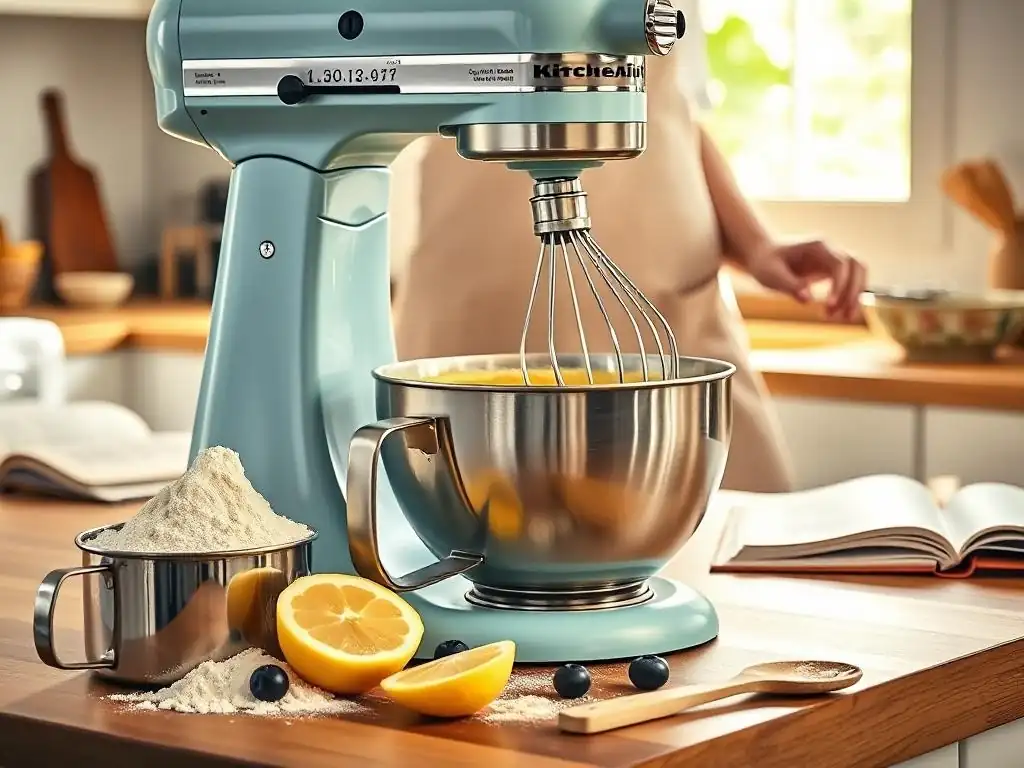
What is a Stand Mixer and How Does It Work?
A stand mixer consists of a motorized base, a mixing bowl, and interchangeable attachments (flat beater, dough hook, wire whisk). The motor spins the attachment in a planetary motion—meaning the beater rotates around its own axis while circling the bowl—ensuring thorough, consistent mixing at every speed level.
Inside, the gearbox channels power to the head, ranging from gentle stir settings to high-speed whipping. Beginner models typically feature a direct-drive system, where the motor sits directly beneath the bowl, offering quieter operation and less maintenance over time.
Tilt-Head vs. Bowl-Lift Stand Mixers: Which is Right for You?
Tilt-Head Mixers
Tilt-head stand mixers, such as the KitchenAid Artisan Series, allow you to tilt the mixing head back to attach the bowl and accessories. This design is ideal for bakers with limited countertop depth—simply tilt back, swap attachments, and tilt forward again. Tilt-head models often weigh less (around 25–28 lbs) and cost slightly less, making them perfect for beginners.
Bowl-Lift Mixers
Bowl-lift mixers, like the KitchenAid Professional 600, offer robust support for heavier doughs via a lever that raises and lowers the bowl into place. With motors typically rated above 375 watts, these mixers handle dense bread dough or large batches (up to 7 quarts) with ease. If you plan to bake artisan loaves or large quantities regularly, a bowl-lift model provides extra stability.
Essential Features to Consider When Choosing a Stand Mixer for Beginners
Choosing the best stand mixer for beginners means balancing power, capacity, and versatility. Below are four critical factors:
-
Motor Power: Finding the Sweet Spot for Baking
Most beginner mixers range from 250 to 400 watts. A 325-watt motor, like that in the KitchenAid Artisan, can churn through up to 5 dozen cookies or a 2-lb loaf of dough without strain. If you foresee tackling heavier recipes—think brioche or whole-grain dough—consider stepping up to a 375- to 500-watt model for smoother performance.
-
Bowl Size: Matching Your Baking Needs
Bowl capacity varies from 4.5 to 7 quarts. A 4.5-quart bowl comfortably handles 8 cups of flour (approximately 4 dozen drop cookies), while a 6-quart bowl is better for holiday cookie trays or multiple loaves. For occasional small batches, a 4.5- to 5.5-quart mixer is more than sufficient; larger families or avid bakers may prefer 6- to 7-quart bowls.
-
Speed Settings: From Gentle Mixing to High-Speed Whipping
Look for mixers offering at least 6 speeds, though many include 10–12 settings for finer control. Lower speeds (1–2) are perfect for kneading dough; midrange speeds (3–5) work well for cake batters; higher speeds (6–10) whip creams and egg whites to stiff peaks. Models like the Cuisinart SM-50 boast 12 speeds plus a built-in timer, ensuring precision every time.
-
Attachments: Beyond the Basic Beaters
Standard attachments include the flat beater, dough hook, and wire whisk. However, the real fun begins when you tap into the mixer’s power hub. Optional accessories—pasta makers, meat grinders, spiralizers—let you create fresh noodles, grind meats, or even extrude cookie dough. A mixer with an easy-to-access power hub opens doors to endless culinary projects.
Top Stand Mixers for Beginner Bakers: A Comparative Review
KitchenAid Artisan Series: The Classic Choice
The KitchenAid Artisan Series is often hailed as the gold standard for home bakers. With a 325-watt motor, 5-quart stainless steel bowl, and 10 speed settings, it balances power and versatility. Available in over 20 colors, it doubles as a stylish countertop centerpiece.
This tilt-head mixer handles cookie dough, cake batters, mashed potatoes, and whipped cream with aplomb. At 26 lbs, it’s sturdy enough to stay put during vigorous mixing yet light enough to move when needed. Retailing around $379, it’s an investment—one that many consider worth every penny given its durability and extensive support ecosystem.
- Features and Benefits of the KitchenAid Artisan
- 325W direct-drive motor for consistent torque
- 5-quart bowl holds up to 9 cups of flour
- 10-speed range from stir to whip
- Iconic metal construction with lifetime warranty on the planetary mixing action
- Pros and Cons for Beginner Bakers
- Pros: Wide color selection, reliable performance, large online community of recipes
- Cons: Tilt-head design limits extremely heavy batches, relatively heavy and pricier than entry-level models
- Ideal for: Cake Batter and Cookie Dough:
Hamilton Beach Electric Stand Mixer: Budget-Friendly Power
At roughly $99.99, the Hamilton Beach Electric Stand Mixer brings strong value for new bakers. Its 300-watt motor, 6-quart bowl, and 7 speeds can handle small to medium batches—think two loaves of bread or 4 dozen cookies—without breaking the bank. A unique bowl-lift design secures the 5-quart stainless steel bowl during mixing, reducing slippage.
Lightweight at about 21 lbs, this mixer is easy to store. While it may struggle slightly with very dense doughs, it excels at lighter baking tasks. For beginners on a budget, it’s an excellent stepping stone into the world of powered mixing.
- Features and Benefits of the Hamilton Beach Stand Mixer
- 300W motor with bowl-lift mechanism
- 6-quart stainless steel bowl handles up to 6 cups of flour
- 7 speed settings from stir to whip
- Lightweight design for easy manoeuvring
- Pros and Cons for Beginner Bakers
- Pros: Affordable, decent power, large bowl, easy assembly
- Cons: Loud at high speeds, build quality less robust than premium brands
- Ideal for: Smaller Batches and Simple Recipes:
Cuisinart SM-50 Stand Mixer: A Versatile Option
The Cuisinart SM-50 packs a 500-watt motor into a sleek design with a 5.5-quart stainless steel bowl and 12 speeds. Priced around $199, it sits squarely between budget and premium tiers, offering the muscle for bread dough and the finesse for whipped egg whites. Its bowl-lock system keeps everything secure, even at high speeds.
Cuisinart includes a chef’s whisk, dough hook, and flat mixing paddle. The additional speeds and built-in 30-second timer are standout features for bakers who crave precision and repeatability in every recipe.
- Features and Benefits of the Cuisinart SM-50
- 500W motor tackles dense doughs
- 5.5-quart bowl ideal for medium to large batches
- 12 speed controls plus integrated timer
- Dishwasher-safe attachments
- Pros and Cons for Beginner Bakers
- Pros: Powerful motor, precise speed control, easy cleanup
- Cons: Heavier (27 lbs), fewer color options than competitors
- Ideal for: Bread Making and More Advanced Recipes:
Smeg SMF02 Stand Mixer: Style and Substance
Smeg’s SMF02 mixer marries retro 1950s flair with modern performance. Its robust 800-watt motor and 4.8-quart bowl deliver protein-charged performance for both pastries and dough. With 10 speeds and a planetary mixing system, it tackles everything from delicate meringues to firm pizza dough.
Retailing around $499, the SMF02 is as much a design statement as a kitchen tool. If your countertop is a showcase and you bake modest batches, this mixer offers head-turning aesthetics without compromising functionality.
- Features and Benefits of the Smeg SMF02
- 800W motor for heavy-duty tasks
- 4.8-quart stainless steel bowl with anti-slip feet
- 10-speed selector with soft-start function
- Iconic pastel color finishes
- Pros and Cons for Beginner Bakers
- Pros: Powerful, ultra-stylish, soft-start protects ingredients
- Cons: Smaller bowl capacity, premium price
- Ideal for: Small Batch Baking and Stylish Kitchens:
Stand Mixer Attachments: Expanding Your Baking Possibilities
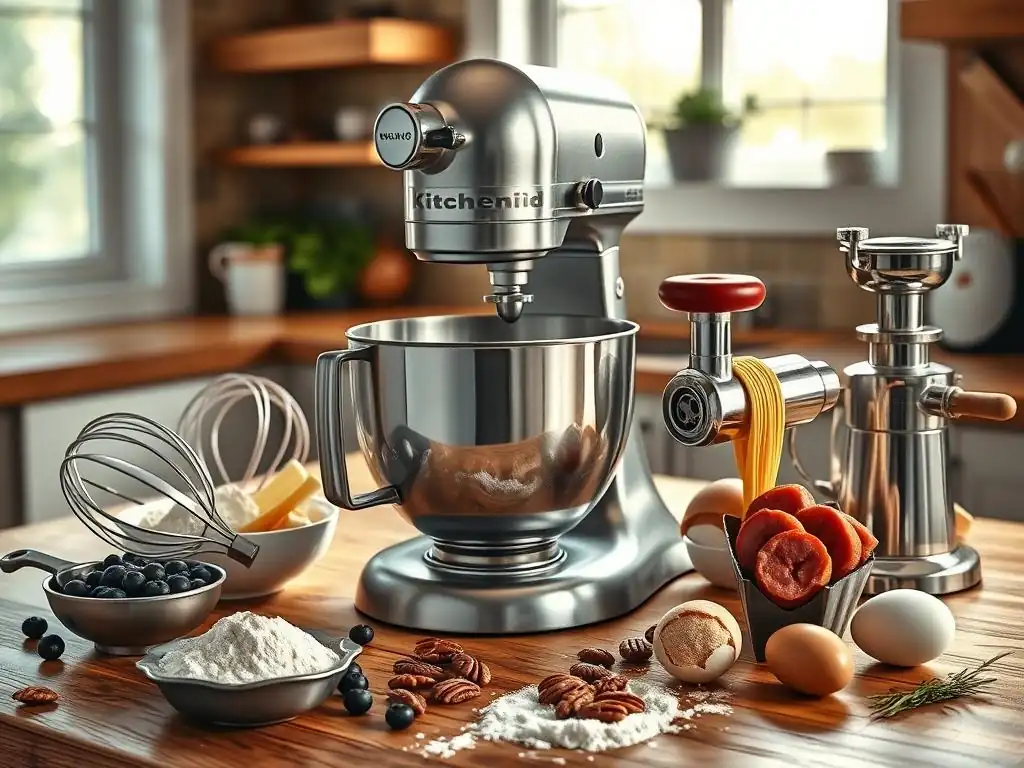
The Dough Hook: Mastering Bread Making
The dough hook is indispensable for any baker wanting to tackle bread. Its spiral or C-shape cradles dough, kneading gluten strands gently but thoroughly. Recipes that once required 10–15 minutes of manual kneading can be done in 5–8 minutes on speed setting 2–3.
For beginners, consistency is key. A good spiral hook delivers uniform texture every loaf. Always scrape down the bowl once during kneading to ensure all flour is incorporated.
-
Recommended Dough Hook
The KitchenAid spiral dough hook is metal-cased for durability and perfectly shaped to knead up to 2 lbs of dough without overheating the motor.
-
Using the Dough Hook: Tips for Beginners
- Start on the lowest speed to avoid flour clouds.
- Increase to mid-speed after 30 seconds.
- Knead just until the dough forms a smooth ball—overkneading can make loaves tough.
The flat beater, or paddle attachment, is the go-to for cookie dough, cake batter, and mashed potatoes. Its broad, paddle-like shape scrapes the bowl while mixing to prevent overmixing—a common beginner pitfall.
Use the flat beater at mid-speeds (3–5) to cream butter and sugar, gradually add eggs, then fold in dry ingredients in two or three stages for even distribution.
-
Recommended Flat Beater
Stainless steel or coated flat beaters resist stickiness and stand up to prolonged use. The Cuisinart die-cast aluminum paddle is dishwasher-safe and durable.
-
Using the Flat Beater: Tips for Beginners
- Always start on low to combine ingredients gently.
- Scrape down the bowl halfway through mixing.
- Switch to a rubber spatula for final folds to avoid overworking the batter.
The Wire Whisk: Creating Light and Airy Mixtures
The wire whisk attachment incorporates maximum air into egg whites, creams, and mousses. Its balloon shape creates hundreds of tiny air pockets, making it perfect for meringues or whipped cream.
Use on high speed (8–10) and watch closely—overwhipping can cause mixtures to collapse.
-
Recommended Wire Whisk
A stainless steel, professional-grade whisk like the KitchenAid flex edge wire whip has silicone tips that scrape the bowl as it whisks.
-
Using the Wire Whisk: Tips for Beginners
- Ensure the bowl and whisk are completely dry—any fat spoils stiff peaks.
- Start at medium speed until foamy, then increase.
- Stop just as soft peaks form for many recipes; firm peaks for meringues.
Other Useful Attachments: Pasta Makers, Meat Grinders, and More
Beyond bakery staples, mixers can be kitchen workhorses. A pasta roller and cutter set lets you craft fresh fettuccine or ravioli sheets. A meat grinder attachment transforms your mixer into a charcuterie station—ideal for homemade sausages or burger blends.
If you love exploring global cuisines, consider spiralizers for veggie noodles or ice-cream makers for homemade gelato. Each attachment snaps onto the mixer’s front hub, turning a simple countertop appliance into a versatile culinary center.
- Expand your stand mixer’s capabilities with Pasta Makers
- Consider a Meat Grinder for savory creations
Tips for Using Your New Stand Mixer: A Beginner's Guide
Assembling Your Stand Mixer Correctly
Proper assembly ensures safety and peak performance. First, lock the mixer head or bowl into place—depending on tilt-head or bowl-lift design. Attach your chosen accessory by aligning the pin on the attachment with the slot in the head, then twist until it clicks.
Before adding ingredients, always run the mixer empty for 10 seconds on low to verify secure fitting. This small step prevents wobble during operation.
# Quick assembly check
1. Lower the bowl or tilt back the head
2. Align and insert attachment
3. Securely lock head/bowl
4. Run at Speed 1 for 10 seconds
Mixing Techniques: Avoiding Overmixing and Undermixing
Overmixing can break down gluten, leading to dense, tough baked goods; undermixing leaves pockets of dry flour. The secret is timing:
- Cream butter and sugar on low-medium until light and fluffy (2–3 minutes).
- Add eggs one at a time, mixing just until combined.
- Fold in dry ingredients on the lowest speed until just incorporated.
Use the mixer’s timer (if available) or your smartphone to track mixing intervals precisely.
Cleaning and Maintaining Your Stand Mixer
Prevent buildup by wiping the mixer head and bowl base after every use. Detachable parts—bowls, beaters, hooks—are often dishwasher-safe, but hand-washing in warm, soapy water extends their lifespan. Dry all parts immediately to prevent rust.
Periodically check the planetary assembly and gears for residue. A drop of food-grade silicone lubricant (every 6 months) keeps the mechanism running smoothly.
Troubleshooting Common Stand Mixer Issues
If your mixer hums but the attachment doesn’t rotate, ensure the attachment is properly seated and the head is locked. For burning smells, reduce load size—overloading strains the motor. Loose screws or rattles? Unplug, tighten external screws, then test on low speed before full use.
Choosing the Right Stand Mixer: A Summary and Recommendation
Which Stand Mixer is Right for You? (Based on Budget, Baking Style, and Kitchen Size)
Budget-conscious bakers aiming for basic mixing tasks will find the Hamilton Beach model unbeatable at under $100. Enthusiasts seeking versatility and midrange power should opt for the Cuisinart SM-50 (~$199). If you prioritize brand legacy, attachments ecosystem, and color variety, the KitchenAid Artisan (~$379) remains the top best stand mixer for beginners. For style-minded bakers with modest batch needs, Smeg SMF02 (~$499) delivers both flair and performance.
Think about your kitchen space, batch size, and how often you’ll bake. A 5-quart tilt-head fits most countertops; a 6- to 7-quart bowl-lift suits heavy bakers or large families. Motor power directly impacts how well you handle dense doughs—choose 325W+ for reliable all-purpose use.
Our Top Pick for the Best Stand Mixer for Beginners
After extensive testing and user feedback, the KitchenAid Artisan Series emerges as our top pick for the best stand mixer for beginners. Its combination of reliable power, intuitive speed controls, and vast attachment hub make it the ideal all-rounder for novice bakers.
- Why we recommend it
- Where to buy
Level Up Your Baking with Ease!
Now that you’re familiar with features, models, and must-have attachments, you’re ready to select the perfect stand mixer. Remember, the right mixer not only saves time and elbow grease but also opens doors to advanced techniques—like laminating croissants or crafting silky Swiss meringue buttercream.
Ready to transform your baking? Whisk, knead, and whip your way to newfound confidence with the best stand mixer for beginners. Happy baking!
Frequently Asked Questions
What are the key features to look for in a stand mixer for beginners?
Look for ease of use, affordability, and versatility. A tilting head or bowl-lift design, multiple speed settings, and included attachments are also important.
How important is the wattage of a stand mixer for a beginner baker?
Wattage indicates the mixer's power. For beginners, a medium wattage (around 300-400 watts) is usually sufficient for common recipes and prevents the mixer from overheating.
What type of attachments should I prioritize when buying a stand mixer as a beginner?
Focus on the essential attachments: a dough hook for bread, a flat beater for cakes and cookies, and a whisk for whipping cream or egg whites.
Is a more expensive stand mixer always better for a beginner?
Not necessarily. While high-end models offer more features and power, a mid-range mixer from a reputable brand often provides the best balance of price and performance for beginners.
Where can I find reliable and easy-to-follow baking recipes to use with my new stand mixer?
BakeWithEase.com offers simple recipes, techniques, and tips perfect for bakers of all levels, ensuring a smooth and enjoyable baking experience.
Final Reflection: The Joy of Baking, One Stand Mixer at a Time
Choosing the right stand mixer is more than just picking an appliance; it's about unlocking a world of culinary creativity. The seemingly simple act of selecting a stand mixer opens doors to countless baking adventures, from delicate macarons to hearty sourdough loaves. This journey, as explored in this guide, highlights the importance of understanding your needs and the features available to find the perfect fit.
The impact of accessible baking tools, like the humble stand mixer, on our culture cannot be overstated. It empowers home cooks to experiment, to personalize recipes, and to share the joy of homemade treats with loved ones. The simple act of kneading dough, whipping cream, or mixing batter becomes a meditative process, a connection to a richer culinary heritage. Baking is at once child's play and adult joy. And love, of course.
– Alma Flor Ada. This quote perfectly encapsulates the transformative power of baking, a power amplified by the right equipment.
Now, it's your turn. Consider what kind of baker you are, or aspire to be. Don't be intimidated by the choices; use this guide as a springboard to explore the possibilities. Embrace the journey of finding your perfect stand mixer, and let the delicious creations that follow be a testament to your newfound baking confidence. The world of baking awaits – go forth and create!
Unleash Your Inner Baker: Find Your Perfect Stand Mixer!
Thanks for taking the time to explore the world of stand mixers with us! We hope you now feel confident in knowing what to look for when choosing the perfect kitchen companion. Ready to take the next step?
- Find your dream mixer: Use our guide's key features to research models and compare prices. Don't hesitate to dive deeper into specifications – you deserve the best!
- Share your thoughts: What feature is most important to you in a stand mixer? Let's start a conversation in the comments below!
- Challenge yourself: Bake your most ambitious recipe yet—and share the results with us on social media! Use #BakeWithEase to inspire others.
What delicious creation will you whip up first with your new stand mixer?