
Ready to Upgrade? Signs It's Time for a Better Baking Oven


Welcome to BakeWithEase, your kitchen companion on the journey to baking brilliance! Are you tired of unevenly baked goods and unpredictable results? This article dives into better baking oven troubleshooting tips and the telltale signs that it might be time for an upgrade. Discover how to identify common oven issues and whether a new appliance could be the key to unlocking your baking potential. Ready to elevate your creations? Let's explore!
- Is Your Baking Oven Holding You Back? Identifying Key Problems
- Uneven Baking: A Major Sign of Baking Oven Deterioration
- Inconsistent Temperatures: A Recipe for Baking Disaster
- Extended Preheating Times: Wasting Time and Energy
- Faulty Oven Door Seals: Losing Heat and Efficiency
- Outdated Features: Missing Out on Modern Baking Technology
- Rust and Corrosion: A Sign of Advanced Oven Aging
- Best Baking Oven Upgrades: Choosing the Right Replacement
- Maximizing Your New Baking Oven Investment: Tips and Tricks
-
Frequently Asked Questions
- What are some common signs that my current oven isn't performing well for baking?
- How does an upgraded oven contribute to better baking results according to BakeWithEase?
- What features should I look for in a new oven to improve my baking experience?
- My current oven struggles with specific recipes, like sourdough. How can a new oven help with this?
- Can upgrading my oven save me time and money in the long run, based on BakeWithEase's advice?
- Final Reflection: The Sweetness of the Perfect Bake
- Unleash Your Inner Baker: Take the Next Step!
Is Your Baking Oven Holding You Back? Identifying Key Problems
Let's be honest, your oven is the heart of your baking journey. While many recipes are forgiving, achieving consistently excellent results often hinges on reliable equipment. Sometimes, a few better baking oven troubleshooting tips can solve minor issues, like recalibrating a thermostat or cleaning a dirty sensor. However, there comes a point when troubleshooting reveals deeper problems, signaling that your current oven might be the primary obstacle between you and baking perfection.
Recognizing these critical signs early can save you frustration, wasted ingredients, and countless disappointing bakes. It's not about throwing away a perfectly good appliance prematurely, but understanding when the cost in time, energy, and failed attempts outweighs the benefit of keeping an aging unit. Identifying these key problems is the first step towards considering an upgrade that will truly enhance your baking capabilities.
Recognizing the Signs: When to Consider a New Baking Oven
Deciding when to replace a major appliance like an oven can feel daunting. Often, bakers wait until their oven completely breaks down, but many signs appear long before total failure. These subtle (or not-so-subtle) cues indicate that your oven is losing efficiency, consistency, and potentially even becoming a safety hazard. Think of it as your oven giving you better baking oven troubleshooting tips in reverse – instead of telling you how to fix it, it's telling you it's time for a change.
Common indicators range from visible issues like rust or a damaged door seal to performance problems such as wildly fluctuating temperatures or incredibly long preheating times. These issues don't just make baking frustrating; they can significantly impact the quality of your baked goods, leading to burnt edges, raw centers, or loaves that fail to rise properly. Paying attention to these symptoms is crucial for any serious home baker.
Common Baking Oven Troubleshooting Tips That Signal an Upgrade is Needed
While many online resources offer helpful baking oven troubleshooting tips for simple fixes, certain problems are persistent and point towards fundamental wear and tear that's beyond basic repair. For instance, if you consistently find one side of your cookies browning faster than the other, you might first try rotating the pan halfway through baking – a standard troubleshooting tip. But if this doesn't fully compensate, or if different racks yield vastly different results, it suggests a deeper, unfixable issue with heat distribution.
Similarly, if your oven takes an excessively long time to reach the set temperature, or if an external oven thermometer shows significant discrepancies (say, a 50°F or more difference from the set temperature), you might initially try recalibrating the thermostat if your model allows. However, if these issues persist or worsen, they are strong indicators that the heating elements or controls are failing, and no amount of troubleshooting will restore accurate, efficient performance. These persistent failures are the most compelling better baking oven troubleshooting tips that tell you it's time to explore new options.
Uneven Baking: A Major Sign of Baking Oven Deterioration
Have you ever pulled out a batch of cookies where the ones on the left are perfectly golden, but the ones on the right are still pale? Or perhaps a cake that's domed and browned on one side but sunken and undercooked on the other? This frustrating phenomenon is known as uneven baking, and it's one of the most common complaints about aging ovens. It directly impacts the texture, appearance, and overall success of your baked goods, making consistent results nearly impossible.
Uneven baking occurs when different areas within the oven cavity maintain significantly different temperatures. This can be caused by a variety of factors in an older oven, including failing heating elements that don't distribute heat uniformly, poor insulation allowing heat to escape unevenly, or even design flaws that become more pronounced with age. Regardless of the cause, it means you can't trust your oven to bake things predictably from corner to corner or rack to rack.
Hot Spots and Cold Zones: Understanding Uneven Heating in Your Current Oven
Every oven has some degree of temperature variation, but in a deteriorating oven, these differences become extreme, creating pronounced hot spots and cold zones. Imagine setting your oven to 350°F (175°C), but an oven thermometer placed in one corner reads 375°F (190°C), while another in the opposite corner reads only 325°F (160°C). This 50°F temperature swing within the same cavity guarantees inconsistent results.
These temperature variances mean that items placed in hot spots will cook and brown faster, potentially burning before items in cold zones are even properly set. This is particularly problematic for delicate items like macarons, layered cakes, or large sheets of cookies. While rotating pans can help mitigate the issue, it's a workaround, not a fix, and it requires constant vigilance and interruption of the baking process. Significant hot and cold spots are strong better baking oven troubleshooting tips indicating a fundamental problem.
The consequences of uneven baking are evident across various types of baked goods. For cakes, it often leads to lopsided layers, cracks, or a combination of burnt edges and raw centers. Cookies can end up with inconsistent textures, some crisp and others soft, depending on their position on the baking sheet. Bread might develop an uneven crust or bake unevenly inside, affecting its crumb structure.
Consider a batch of delicate sugar cookies. Those in a hot spot might burn on the bottom before the tops are set, while those in a cold zone remain pale and underbaked, even if they are from the same dough and baked for the same amount of time. This variability makes it difficult to follow recipes precisely or achieve the desired outcome, turning baking from a joyful activity into a frustrating guessing game.
Case Study: How a Breville Convection Oven Solved Uneven Baking for Stella Parks
Precision baker Stella Parks, known for her meticulous recipes and emphasis on technique, relies heavily on her equipment's performance. While specific models might vary, a high-quality convection oven, such as those offered by brands like Breville (often in countertop form) or integrated into professional-style ranges, is crucial for her work. Uneven heat is simply not an option when developing recipes that require exact temperatures and consistent results.
For a baker like Stella, upgrading from a standard, potentially older, home oven with uneven heating to a convection model significantly improves consistency. Convection technology uses a fan to circulate hot air evenly throughout the oven cavity, drastically reducing hot spots and cold zones. This results in more uniform browning, faster cooking times, and reliable results batch after batch, allowing her to focus on recipe development rather than battling her oven's inconsistencies. This type of upgrade provides better baking oven troubleshooting tips by inherently solving many common issues.
Inconsistent Temperatures: A Recipe for Baking Disaster

Beyond just uneven heating, another critical sign of an aging oven is inconsistent temperature control. This means the oven struggles to maintain the set temperature, swinging significantly above and below the target throughout the baking cycle. While all ovens have some temperature cycling, excessive fluctuations can completely derail a bake, leading to unpredictable results that are frustrating and wasteful.
Imagine setting your oven for 350°F (175°C) for a delicate custard or a soufflé, only for the actual temperature to swing between 320°F (160°C) and 380°F (195°C). Such wild variations make precise baking nearly impossible. This issue is often caused by a faulty thermostat or problems with the oven's heating elements and control system, which become less reliable over time.
Temperature Fluctuations: Pinpointing Problems with Your Oven's Thermostat
The thermostat is the brain of your oven's temperature control system. It reads the internal temperature and signals the heating elements to turn on or off to maintain the set point. When the thermostat begins to fail or becomes inaccurate, it can lead to significant temperature swings. The oven might overshoot the target temperature, stay too hot for too long, then drop too low before the heating element kicks back in.
These fluctuations are particularly damaging to recipes that require stable temperatures, such as cheesecakes, meringues, or delicate pastries. A sudden spike in temperature can cause cracking or toughening, while a drop can lead to underbaking or a failure to set. Persistent, wide temperature swings are definitive better baking oven troubleshooting tips indicating a core problem with your oven's ability to regulate heat.
The Importance of Accurate Temperature Control for Baking Success
Accurate and stable temperature control is non-negotiable for successful baking. Chemical reactions like leavening (how cakes and breads rise) and protein coagulation (how eggs and gluten set) are highly dependent on specific temperature ranges. Baking is often described as a science, and precise temperature is a key variable in the experiment.
For instance, baking bread at a consistent high temperature is crucial for oven spring and crust development. A dropping temperature can lead to dense loaves with pale crusts. Similarly, baking a delicate sponge cake requires a steady temperature to ensure it rises evenly and sets properly without collapsing. When your oven can't provide this stability, even the best recipe and technique won't save your bake.
How ThermoWorks DOT Can Help You Diagnose Temperature Issues
Before deciding to upgrade, it's wise to confirm your oven's temperature accuracy. A reliable oven thermometer is essential for this. Devices like the ThermoWorks DOT, while primarily known as probe thermometers for cooking, can be equipped with an air probe accessory and placed inside the oven to monitor the actual temperature over time.
By using a high-quality thermometer like the ThermoWorks DOT, you can track exactly how much your oven's temperature fluctuates around the set point. If you observe consistent, wide swings (e.g., more than 20-30°F) or a significant, persistent difference between the set temperature and the actual average temperature, it provides concrete data. This data serves as powerful better baking oven troubleshooting tips, confirming that your oven's temperature control is indeed faulty and likely beyond simple calibration.
Extended Preheating Times: Wasting Time and Energy
Do you feel like you can bake a whole pie in the time it takes your oven to preheat? Increasingly long preheating times are not just inconvenient; they are a strong indicator that your oven is losing efficiency. A healthy oven should reach standard baking temperatures like 350°F (175°C) or 400°F (200°C) within a reasonable timeframe, typically 10 to 20 minutes depending on the temperature and oven type.
If your oven consistently takes 30, 40, or even more minutes to signal it's ready, it suggests that the heating elements are struggling to generate enough heat, the insulation is poor, or there's an issue with the thermostat or control system. This delay impacts your baking schedule and can affect results if you're tempted to put items in before the oven is truly up to temperature.
Slow Preheating: A Sign of an Aging or Malfunctioning Oven
Slow preheating is often a symptom of inefficient heating elements that are no longer operating at peak capacity. It could also point to deteriorating insulation around the oven cavity or door, allowing heat to escape as quickly as it's generated. In some cases, it might be related to issues with the oven's power supply or control board, which prevent the heating elements from receiving the necessary power.
Regardless of the exact cause, prolonged preheating means your oven is working harder and longer to reach temperature. This isn't just a time drain; it signifies a decline in performance that will likely affect its ability to maintain temperature during the actual baking process. It's one of those subtle better baking oven troubleshooting tips that many bakers initially overlook.
An oven that takes significantly longer to preheat and struggles to maintain temperature is also consuming more energy. It has to stay on for extended periods just to get ready and then might cycle on and off more frequently or stay on longer during baking to compensate for heat loss or inefficient elements. Over time, this translates directly into higher electricity or gas bills.
While the cost savings of a new, energy-efficient oven might not immediately offset the purchase price, the cumulative effect over the oven's lifespan can be substantial. An older, inefficient oven is constantly bleeding energy, adding a hidden cost to every batch of cookies or loaf of bread you bake. Considering energy efficiency is an important part of evaluating if it's time for a better baking oven.
Compare Preheating Times: Old Oven vs. New KitchenAid Model
Let's consider a hypothetical comparison. Your old oven, perhaps 15-20 years old, now takes about 25 minutes to preheat to 350°F (175°C). A modern, energy-efficient oven, like a current KitchenAid single wall oven model, might typically reach the same temperature in 10-12 minutes. That's more than double the preheating time for the older unit.
If you bake several times a week, those extra 13-15 minutes of high-energy consumption per session add up quickly. Furthermore, a new oven often holds temperature more accurately, potentially reducing overall baking time or cycling frequency. This comparison highlights how slow preheating isn't just an annoyance; it's a quantifiable loss in efficiency and a clear better baking oven troubleshooting tip suggesting an upgrade is warranted.
Faulty Oven Door Seals: Losing Heat and Efficiency
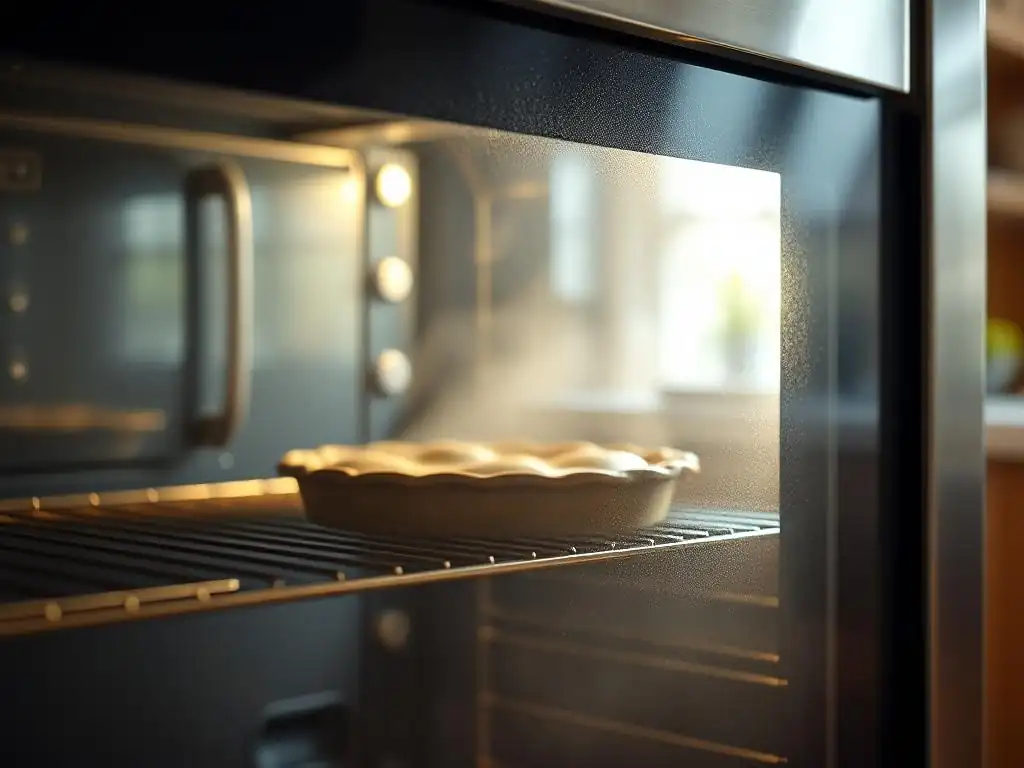
Take a look at the rubber or silicone gasket running around the perimeter of your oven door. This seal is critical for trapping hot air inside the oven cavity during baking. Over time, these seals can become brittle, cracked, torn, or simply lose their elasticity. A damaged seal is like leaving a window open on a cold day – heat escapes, and your oven has to work much harder to maintain temperature.
A faulty oven door seal is a significant contributor to uneven baking and inconsistent temperatures, as hot air leaks out, often disproportionately from one area of the door. It also dramatically increases energy consumption. Checking the condition of your door seal is one of the simplest yet most important better baking oven troubleshooting tips you can perform.
Identifying Damaged Oven Door Seals: A Simple Visual Inspection
Inspecting your oven door seal is straightforward. Open the oven door and examine the gasket running around the frame or the door itself. Look for any visible signs of damage: cracks, tears, hardening, or sections that appear loose or compressed and no longer spring back.
You can also perform a simple test: close the oven door on a piece of paper or a dollar bill. If you can easily pull the paper out without resistance around the entire perimeter of the door, the seal is likely compromised. A good seal should grip the paper firmly, indicating a tight closure. Any gaps or areas where the paper slides freely are potential points of heat escape.
The Impact of Heat Loss on Baking Time and Results
Heat loss through a faulty seal directly impacts your baking. When hot air leaks out, the oven struggles to maintain the set temperature, leading to longer baking times as the oven constantly tries to compensate. This also exacerbates uneven heating, as the area near the leak will be cooler than the rest of the oven.
For example, if the seal is damaged along the bottom of the door, the bottom element might stay on longer, potentially burning the bottom of your bakes while the tops remain undercooked. Or, if heat is escaping from the top, soufflés or cakes might fail to rise properly. The constant struggle to maintain heat puts extra strain on the heating elements and thermostat, potentially shortening their lifespan as well.
Replacing Oven Door Seals: A Temporary Fix or Time for an Upgrade?
Replacing a damaged oven door seal is often possible and relatively inexpensive compared to buying a new oven. For many models, you can purchase a replacement gasket and install it yourself or hire a technician. This can be a very effective better baking oven troubleshooting tip for addressing heat loss if the seal is the only problem.
However, a damaged seal in an older oven can sometimes be a sign of overall wear and tear. If your oven also suffers from slow preheating, uneven temperatures, or other issues mentioned here, replacing the seal might only offer a marginal improvement. Consider the age of your oven and the presence of multiple problems. If you're facing several significant issues, replacing the seal might just be a temporary patch on a system that's fundamentally failing, making an upgrade a more sensible long-term investment.
Outdated Features: Missing Out on Modern Baking Technology
While your grandmother's oven might have baked perfectly fine cakes, modern ovens offer features that can significantly enhance convenience, efficiency, and the quality of your bakes. If your current oven lacks basic modern functionalities, you might be missing out on easier, more consistent, and more versatile baking experiences. This isn't just about bells and whistles; many newer features directly address common baking challenges.
Features like convection baking, self-cleaning cycles, or even smart technology can transform your time in the kitchen. Evaluating whether your oven's lack of these features is hindering your baking is another form of better baking oven troubleshooting tips – identifying what's missing that could improve your results and experience.
Lack of Convection: The Benefits of Convection Baking
One of the most impactful features missing from many older ovens is convection. A convection oven uses a fan to circulate hot air around the cavity. This constant movement of air ensures more even heat distribution, reducing hot spots and leading to more uniform browning and cooking.
The benefits for baking are numerous: baked goods cook faster (often requiring a temperature reduction of about 25°F or a shorter baking time), cookies and pastries brown more evenly, and multiple racks of items can be baked simultaneously with consistent results. If you're tired of rotating pans or dealing with unevenly baked goods, the lack of convection is a strong argument for a better baking oven upgrade.
Self-Cleaning Features: Saving Time and Effort in the Kitchen
Let's face it, cleaning the oven is nobody's favorite task. Older ovens often require manual scrubbing with harsh chemicals. Modern ovens frequently include a self-cleaning cycle, which uses extremely high temperatures to burn away grease and food residue, turning it into easily wiped-away ash.
While self-cleaning cycles do consume energy and can generate heat and odors, they save significant time and effort compared to manual cleaning. For busy bakers, this convenience feature alone can justify an upgrade. A clean oven also functions more efficiently, as burnt-on residue can absorb heat and contribute to odors.
Smart Oven Technology: Remote Control and Precision Baking with June Oven
At the forefront of modern oven technology are smart ovens, like the June Oven (often a countertop model, but representing the capabilities emerging in full-size ovens). These ovens combine precision heating elements, internal cameras, and smart sensors with app control and pre-programmed cooking algorithms.
A June Oven, for example, can recognize certain foods and automatically suggest cooking settings. It offers incredibly precise temperature control and even cooking zones within the oven. While perhaps not necessary for every baker, features like remote preheating, monitoring bake progress via a smartphone app, and access to a library of recipes with optimized settings represent the peak of convenience and precision available in modern better baking oven technology. This level of control goes far beyond basic troubleshooting.
Rust and Corrosion: A Sign of Advanced Oven Aging

Visible rust or corrosion inside your oven is more than just an aesthetic issue; it can indicate significant aging and potential functional problems. Rust typically appears on the oven racks, the oven cavity walls, or the bottom of the oven. While surface rust on racks might be treatable or mean it's time for new racks, extensive rust within the cavity itself is a serious concern.
Rust is a sign that the protective enamel coating inside the oven is compromised, often due to age, exposure to moisture (like steam), or harsh cleaning chemicals. This deterioration can lead to further problems and may even pose health risks if rust particles flake off onto your food.
Assessing Rust Damage: Is it Just Cosmetic, or is it Compromising Functionality?
When you spot rust, the first step is to assess its extent. Minor surface rust on racks might be cleaned off or the racks replaced. However, if you see rust on the oven walls, floor, or ceiling, especially if it's bubbling, flaking, or widespread, it's a more serious issue.
Rust on the cavity surfaces can compromise the oven's insulation and structural integrity over time. It can also make cleaning much more difficult, as residue can get trapped in the rough, rusted surfaces. More importantly, flaking rust can settle on your food during baking, which is unhygienic and potentially harmful. Extensive rust is a clear better baking oven troubleshooting tip that signifies the oven's internal structure is deteriorating.
The Health Risks of Baking in a Rusty Oven
While small amounts of rust might not pose an immediate severe threat, consistently baking in an oven with flaking rust is not advisable. Rust is primarily iron oxide, and while iron is an essential mineral, consuming rust particles is not a intended source and can potentially cause digestive upset.
More concerning is what might be embedded within the rust, such as remnants of old food residue, cleaning chemicals, or even lead if the oven is very old and used materials containing lead. A rusty interior is also much harder to keep truly clean and sanitized, potentially harboring bacteria. For peace of mind and food safety, a heavily rusted oven should be considered for replacement.
Long-Term Investment: Replacing a Rusty Oven with a New Bosch Stainless Steel Oven
Facing extensive rust damage means the oven's interior coating has failed, a problem that cannot be easily or affordably repaired. At this point, continued use becomes questionable from both a performance and safety standpoint. It signals that the oven has reached the end of its practical lifespan.
Upgrading to a new oven, such as a Bosch stainless steel oven with a durable enamel interior, eliminates the rust problem entirely. Modern ovens are built with materials and coatings designed to withstand high temperatures and cleaning, preventing rust formation under normal use. While an investment, replacing a rusty oven ensures you are baking in a safe, clean environment and avoids the potential health risks associated with deteriorating internal surfaces. It's a long-term solution that provides a truly better baking oven experience.
Best Baking Oven Upgrades: Choosing the Right Replacement
Once you've identified the signs that your current oven is holding you back, the next step is considering what kind of better baking oven will meet your needs. The market offers a wide range of options, each with features designed to improve specific aspects of baking. Choosing the right replacement depends on your baking habits, the types of goods you frequently make, and your budget.
Understanding the benefits of different oven types – from convection to steam to smart ovens – will help you make an informed decision. It's not just about finding an oven that works, but finding one that empowers you to bake better and more efficiently. Think about which of the better baking oven troubleshooting tips you faced with your old oven will be solved by the new one.
Convection Ovens: For Even Baking and Faster Cooking
As discussed earlier, convection is a game-changer for even baking. By circulating hot air, convection ovens ensure that heat reaches every corner of the cavity, eliminating most hot spots and cold zones. This results in more uniform browning on cookies, pastries, and roasted items.
Convection also speeds up cooking times, typically by 15-20%, and often allows you to bake multiple trays of items simultaneously without needing to rotate them. If your primary frustration is uneven results and long baking times, a convection oven is likely the most impactful upgrade you can make towards a better baking oven.
Steam Ovens: For Crusty Breads and Moist Cakes
Steam ovens, or ovens with steam assist functions, are increasingly popular among bread bakers and those who value moist baked goods. Introducing steam into the baking environment is crucial for developing a beautiful, crisp crust on artisan breads, as it keeps the surface moist longer, allowing for maximum oven spring before the crust sets.
Beyond bread, steam can also help keep cakes, muffins, and other baked goods incredibly moist and tender. Some high-end ovens offer full steam capabilities, while others have specific steam-assist modes. If achieving bakery-quality bread crusts or preventing cakes from drying out is a priority, a steam-capable oven is a significant upgrade for a truly better baking oven.
Smart Ovens: For Precision Baking and Remote Control
Smart ovens integrate technology to offer enhanced control, convenience, and precision. Features can include Wi-Fi connectivity for remote preheating and monitoring via a smartphone app, internal cameras to check on your bake without opening the door, and sophisticated sensors for precise temperature and even humidity control.
Some smart ovens offer guided cooking programs or algorithms that adjust settings automatically based on the food being baked. While potentially a larger investment, the precision, convenience, and advanced features of a smart oven appeal to tech-savvy bakers looking for the ultimate in control and consistency from their better baking oven.
Recommendation: The Wolf M Series Oven for Serious Bakers
For serious baking enthusiasts looking for a top-tier upgrade, the Wolf M Series oven is often highlighted. Known for its robust construction, precise temperature control, and advanced features, Wolf ovens represent a significant investment but are built for performance and longevity.
The Wolf M Series typically features dual convection fans for exceptional heat distribution, multiple heating elements for precise control, and gourmet cooking modes that automate settings for various dishes, including baked goods. While high-end, an oven like the Wolf M Series embodies what a better baking oven can offer in terms of reliability, precision, and features designed to elevate baking results consistently.
Maximizing Your New Baking Oven Investment: Tips and Tricks
Acquiring a better baking oven is a significant step, but simply installing it isn't the end of the journey. To truly maximize your investment and enjoy the full benefits of your new appliance, it's essential to understand its capabilities, ensure its accuracy, and maintain it properly. Treating your new oven with care will ensure it performs optimally for years to come.
Think of this as the ongoing better baking oven troubleshooting tips for your new, high-performing unit. Learning its nuances and keeping it in top shape will prevent future issues and ensure consistent, excellent baking results every time you turn it on.
Understanding Your New Oven's Features and Settings
Modern ovens, especially convection, steam, or smart models, come with a variety of features and settings that might be different from your old unit. Take the time to read the owner's manual thoroughly. Understand how the convection fan works, when to use different modes (like bake, roast, convection bake, proof), and how any smart features or programming options function.
Experiment with the different settings using simple recipes you're familiar with to see how your new oven performs. Knowing how to leverage its specific capabilities, such as adjusting time or temperature for convection, is key to getting the best results from your better baking oven.
Calibrating Your Oven for Accurate Temperature
Even brand-new ovens can have slight temperature variances. While hopefully minimal compared to your old oven, it's still good practice to verify your new oven's accuracy. Use a reliable oven thermometer (like the ThermoWorks DOT with an air probe mentioned earlier) to check the actual temperature at the center of the oven cavity at a standard baking temperature like 350°F (175°C) after it has fully preheated.
If there's a consistent discrepancy (e.g., it consistently reads 10°F low), most modern ovens have a thermostat calibration setting that allows you to adjust the reported temperature. Calibrating your oven ensures that when you set it to a specific temperature, it's truly holding that temperature, providing the accurate foundation needed for successful baking and preventing the need for future better baking oven troubleshooting tips related to temperature.
Regular Cleaning and Maintenance for Long-Term Performance
Keeping your new better baking oven clean is crucial for maintaining its performance and lifespan. Spills and residues inside the oven can cause odors, smoke, and even impact heating efficiency. Follow the manufacturer's recommendations for cleaning, whether it involves a self-cleaning cycle or manual cleaning methods.
Beyond cleaning, periodically inspect the door seal for any signs of damage and ensure it's clean. Check that heating elements are free from debris. Addressing minor issues promptly and keeping the oven clean will prevent the buildup of problems that led you to replace your old oven in the first place, ensuring your new better baking oven remains a reliable tool for years of delicious bakes.
Frequently Asked Questions
What are some common signs that my current oven isn't performing well for baking?
Common signs include uneven baking, inconsistent temperatures, and excessively long preheating times. These issues can significantly impact the quality of your baked goods.
How does an upgraded oven contribute to better baking results according to BakeWithEase?
An upgraded oven often provides better temperature control, more even heat distribution, and advanced features like convection, leading to more consistent and professional-looking results.
What features should I look for in a new oven to improve my baking experience?
Consider features like convection baking, accurate temperature settings, and a self-cleaning function for convenience. These features address common baking frustrations.
My current oven struggles with specific recipes, like sourdough. How can a new oven help with this?
A newer oven with precise temperature control and consistent heat is crucial for the success of delicate recipes like sourdough. This ensures proper rise and crust formation.
Can upgrading my oven save me time and money in the long run, based on BakeWithEase's advice?
Yes, a more efficient oven can reduce cooking times and minimize energy consumption. Plus, consistent results mean less wasted ingredients and fewer baking failures.
Final Reflection: The Sweetness of the Perfect Bake
The pursuit of the perfect bake is a timeless endeavor, and the oven, often overlooked, plays a pivotal role in achieving culinary excellence. A malfunctioning oven isn't just an inconvenience; it's a barrier to creativity and the joy of sharing delicious homemade treats. This article explored the subtle signs that your oven might be hindering your baking journey, offering troubleshooting tips to help you identify and address potential issues.
The impact of a reliable oven extends far beyond the kitchen. It's a symbol of empowerment, allowing us to create cherished memories and connect with loved ones through the shared experience of food. The best things in life are homemade.
This simple statement encapsulates the heart of home baking, and a well-functioning oven is the key that unlocks this potential. From perfecting a delicate soufflé to achieving that perfectly golden-brown crust on a pie, the right equipment empowers us to reach our culinary aspirations.
So, consider this your call to action. Take a moment to assess your current oven. Is it consistently delivering the results you desire? Are you constantly battling uneven baking or inconsistent temperatures? If so, don't let a faulty appliance stand between you and your baking dreams. Investing in a better baking oven isn't just about upgrading equipment; it's about investing in yourself, your creativity, and the joy of creating delicious memories in your kitchen. Embrace the opportunity to elevate your baking experience – the rewards are truly sweet.
Unleash Your Inner Baker: Take the Next Step!
Thanks for taking the time to explore the world of baking ovens with us! We hope you now feel more confident in identifying when it's time to upgrade your equipment. Ready to transform your baking experience?
- Find your perfect oven: Use our handy guide (linked in the article) to compare models and features, focusing on what matters most to your baking style. This is your chance to really personalize your baking journey!
- Share your upgrade story: Tell us about your favorite feature in your new oven—or even the model you're eyeing! We’d love to hear from you in the comments below.
- Explore our recipe collection: Once you have your new oven, put it to the test! We've compiled some delicious recipes perfectly suited to showcase its capabilities.
So, what delicious creation will you bake first with your new oven?