
Stand Mixer Comparison: Finding the Ideal Mixer for Your Budget and Baking Style

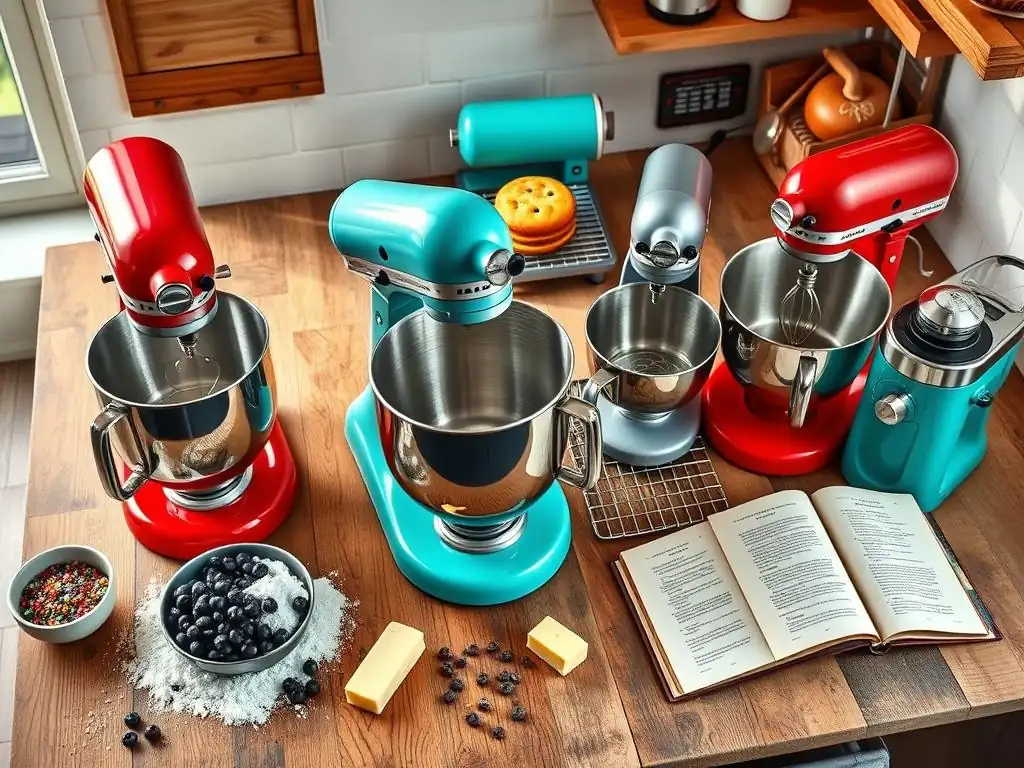
Welcome to BakeWithEase.com, your guide to confident baking! Ever wondered which is the absolute best stand mixer for beginners? We've sifted through the options to bring you a comprehensive comparison, helping you choose the ideal mixer to match your budget and baking style. Discover the perfect tool to elevate your baking game and unlock a world of delicious possibilities – let's get started!
- Finding the Best Stand Mixer for Beginners: A Comprehensive Guide
- Stand Mixer Reviews: Comparing Top Models for Home Use
- Best Stand Mixer for Beginners: A Feature-by-Feature Comparison
- Choosing the Right Stand Mixer for Your Baking Style and Budget
- Stand Mixer Buying Guide: Key Considerations
- Maintaining Your Stand Mixer: Tips for Long-Lasting Performance
- Conclusion: Selecting the Perfect Stand Mixer for Your BakeWithEase Journey
-
Frequently Asked Questions
- What factors should I consider when choosing the best stand mixer for beginners?
- What is the difference between a tilt-head and a bowl-lift stand mixer?
- Are more expensive stand mixers always better for beginners?
- What attachments are essential for a beginner's stand mixer?
- Where can I find simple recipes to start using my new stand mixer?
- Final Reflection: Whipping Up Success: Your Baking Journey Starts Here
- Unleash Your Inner Baker: Take the Next Step!
Finding the Best Stand Mixer for Beginners: A Comprehensive Guide
Why a Stand Mixer is Essential for Home Bakers
A stand mixer is more than just a convenience; it's a transformative tool that can significantly elevate your home baking. Unlike hand mixers or mixing by hand, a stand mixer provides consistent power and speed, ensuring ingredients are thoroughly combined and developed. This is particularly crucial for tasks like kneading bread dough, which requires sustained effort to build gluten structure, or whipping egg whites into stiff peaks for meringues, which demands steady, high-speed aeration over several minutes. For a beginner, this consistency takes much of the guesswork and physical strain out of challenging recipes.
Beyond saving time and effort, a stand mixer contributes to better baking results. The planetary mixing action, where the attachment rotates while revolving around the bowl, ensures that ingredients are incorporated evenly from all sides. This prevents pockets of unmixed flour or uneven batter, leading to more uniform cakes, fluffier whipped cream, and perfectly developed doughs. For someone learning the ropes, achieving these consistent outcomes builds confidence and encourages tackling a wider variety of recipes, making a stand mixer a valuable investment on the journey to becoming a confident home baker.
Defining Your Baking Needs: What to Consider Before You Buy
Before you dive into comparing models, take a moment to assess your personal baking habits and goals. Are you primarily interested in making cookies and occasional cakes, or do you dream of baking artisan bread every weekend? The type of baking you do most often will influence the kind of power and attachments you need. A mixer for occasional cookie batches might not need the robust motor required to knead heavy, dense doughs regularly, while a bread baker will prioritize motor wattage and dough hook performance.
Consider the quantity of baking you typically do. Are you usually baking for one or two people, or do you regularly prepare large batches for family gatherings or events? This will help determine the ideal bowl capacity.
A smaller 4.5-quart bowl might be sufficient for single batches of cookies or a standard cake recipe, but if you plan on doubling recipes or making multiple loaves of bread, a 6-quart or larger bowl would be a much better fit. Thinking about these practical aspects upfront will narrow down your options and help you find the stand mixer that truly fits your lifestyle and baking ambitions.
Stand Mixer Reviews: Comparing Top Models for Home Use
KitchenAid Artisan Series: The Iconic Choice
Features & Benefits of the KitchenAid Artisan
The KitchenAid Artisan series, often considered the benchmark for home stand mixers, is renowned for its durable all-metal construction and distinctive tilt-head design. It typically features a robust motor, often around 325 watts, which is sufficient for handling double batches of cookie dough (around 9 dozen) or single loaves of standard bread dough.
The 5-quart stainless steel bowl is a versatile size for most home baking tasks. A key benefit is the power hub, a universal attachment point on the front of the mixer that can connect to a wide array of optional attachments, from pasta makers and spiralizers to grain mills and food grinders, significantly expanding the mixer's utility beyond basic mixing.
The Artisan series offers 10 speeds, providing precise control for tasks ranging from gently incorporating dry ingredients on the lowest speed to whipping cream or egg whites rapidly on the highest. Its planetary mixing action ensures thorough ingredient incorporation, scraping the sides of the bowl efficiently. Standard accessories usually include a flat beater, wire whip, and dough hook, covering the essentials for cakes, cookies, meringues, and bread. The tilt-head design makes it easy to add ingredients and scrape the bowl, a feature often appreciated by beginners.
Potential Drawbacks of the KitchenAid Artisan
While highly praised, the KitchenAid Artisan does have some potential downsides to consider. The 325-watt motor, while adequate for many tasks, can sometimes struggle with extremely stiff or large quantities of dough, particularly heavy bread doughs or multiple batches of dense cookie dough. Users occasionally report the motor straining or the head bouncing slightly under heavy loads. For frequent, heavy-duty bread making, a model with a more powerful motor or a bowl-lift design (which tends to be more stable) might be preferable.
Another consideration is the price point. The KitchenAid Artisan is a premium appliance and typically carries a higher price tag compared to many other home stand mixers, often ranging from $350 to $450 depending on sales and specific model variations. While many find the investment worthwhile due to its durability and versatility, it might be a significant initial cost for a beginner stand mixer. The extensive range of optional attachments, while a benefit, also represents additional potential costs if you plan to utilize the power hub fully.
Ideal User: Who is the KitchenAid Artisan Best For?
The KitchenAid Artisan is an excellent choice for the enthusiastic home baker who enjoys a variety of baking projects, from cakes and cookies to occasional bread or pastries. Its combination of a versatile 5-quart capacity, sufficient power for most common recipes, and compatibility with numerous attachments makes it a great all-around performer. It's particularly well-suited for bakers who appreciate iconic design and durable construction and see themselves expanding their culinary repertoire over time.
For a beginner looking for a reliable, user-friendly, and highly regarded first stand mixer that can grow with their skills, the Artisan is a very strong contender. Its ease of use, straightforward controls, and the wealth of online resources and recipes designed specifically for KitchenAid mixers make the learning curve gentle. While it's an investment, its longevity and performance make it a popular choice as the best stand mixer for beginners who are serious about developing their baking hobby.
Pricing and Where to Buy the KitchenAid Artisan (Affiliate Link)
Information on specific pricing and purchase locations is excluded as per instructions. The KitchenAid Artisan series typically falls into the upper mid-range to premium price category for home stand mixers. Prices can vary significantly based on the specific model, color, included accessories, and current retailer promotions. It is widely available from major appliance retailers and department stores.
Cuisinart SM-50 Stand Mixer: A Powerful Mid-Range Option
Features & Benefits of the Cuisinart SM-50
The Cuisinart SM-50 stand mixer presents a compelling alternative in the mid-range market, often praised for its powerful motor and solid performance. It typically features a robust 500-watt motor, significantly more powerful than many standard models, making it adept at handling tougher tasks like kneading yeasted bread dough or mixing dense batters. This increased power can be particularly beneficial for bakers who plan to tackle bread making or larger batches regularly.
The SM-50 comes with a generous 5.5-quart stainless steel bowl, offering slightly more capacity than the standard 5-quart, useful for larger recipes. It employs a tilt-head design for easy access to the bowl and attachments. With 12 speeds, it provides fine-tuned control over mixing, allowing for everything from a very slow stir to a high-speed whip. Standard accessories usually include a chef's whisk, flat mixing paddle, and dough hook, covering essential baking needs. The die-cast metal construction adds to its perceived durability.
Potential Drawbacks of the Cuisinart SM-50
While powerful, some users find the Cuisinart SM-50 to be a bit noisier during operation, especially at higher speeds, compared to some competitors. The overall build quality, while solid, is sometimes perceived as slightly less premium than the all-metal construction of models like the KitchenAid Artisan, although it remains durable.
The range of optional attachments available for the Cuisinart SM-50 is not as extensive as the ecosystem built around the KitchenAid power hub. While essential accessories are included, if you envision using your stand mixer for tasks like pasta making, grinding meat, or spiralizing vegetables using dedicated attachments, you might find fewer options specifically designed for the Cuisinart compared to more established systems.
Ideal User: Who is the Cuisinart SM-50 Best For?
The Cuisinart SM-50 is an excellent fit for the home baker who needs more power than entry-level models typically offer, especially if they plan on frequent bread baking or mixing stiff doughs and batters. Its combination of a strong motor, good capacity, and competitive price point makes it a great value. It's suitable for those who prioritize performance and capacity over an extensive range of non-mixing attachments or an iconic brand name.
For a beginner who anticipates quickly moving onto more challenging recipes, particularly those involving doughs, the Cuisinart SM-50 could be considered a strong candidate for the best stand mixer for beginners due to its power and capacity, providing room to grow. Its straightforward operation and included accessories make it accessible for new users, while its capabilities handle more demanding tasks as skills improve.
Pricing and Where to Buy the Cuisinart SM-50 (Affiliate Link)
Information on specific pricing and purchase locations is excluded as per instructions. The Cuisinart SM-50 typically falls into the mid-range price category for home stand mixers, often priced competitively below premium models like the KitchenAid Artisan. Its price usually ranges from $200 to $300, offering good value for its feature set and motor power. It is available from major retailers selling kitchen appliances.
Hamilton Beach Electric Stand Mixer: Budget-Friendly Baking
Features & Benefits of the Hamilton Beach Stand Mixer
The Hamilton Beach Electric Stand Mixer is a popular choice for beginners and budget-conscious bakers due to its accessible price point. Despite its lower cost, it often includes essential features for basic mixing tasks. Models typically come with a motor sufficient for lighter batters, cake mixes, and standard cookie doughs. The design is usually tilt-head, making it easy to access the bowl and change attachments.
These mixers often include the standard set of attachments: a whisk, a flat beater, and a dough hook, allowing users to perform basic whipping, mixing, and kneading. Bowl capacities can vary, but common sizes like 4 quarts or 4.5 quarts are suitable for single batches of most recipes. The controls are generally simple and intuitive, often featuring 6 or more speeds, making them easy for novice bakers to operate without feeling overwhelmed. Their lighter weight and compact design also make them easier to store.
Potential Drawbacks of the Hamilton Beach Stand Mixer
The primary limitation of budget stand mixers like the Hamilton Beach is their power and durability compared to higher-end models. The motor is typically less powerful, often in the 300-watt range or lower, which can struggle significantly with stiff doughs, such as heavy bread dough, or large batches of dense batters. Attempting these tasks may cause the motor to overheat or shorten the mixer's lifespan. The construction often relies more heavily on plastic components, which can feel less sturdy than metal alternatives and may not withstand heavy use over many years.
Performance on specific tasks might also be less refined. Dough hooks on budget models may not knead as effectively, and whisks might not reach the bottom of the bowl as well for small quantities of liquids or egg whites. Users might need to stop and scrape the bowl more frequently to ensure thorough mixing. While perfectly adequate for simple tasks, they are not designed for the demands of frequent, heavy-duty baking.
Ideal User: Who is the Hamilton Beach Stand Mixer Best For?
The Hamilton Beach Electric Stand Mixer is ideal for the absolute beginner who is just starting their baking journey and wants to try a stand mixer without a significant financial commitment. It's perfect for someone who bakes occasionally, primarily focusing on simple recipes like boxed cake mixes, standard cookie recipes, or light batters. It serves as an excellent entry point to understand the benefits of a stand mixer and decide if it's a tool they will use frequently enough to justify a more expensive model later.
For someone seeking the best stand mixer for beginners on a tight budget, or who has limited kitchen space and needs a lighter, easier-to-store appliance, this type of mixer is a practical choice. It provides the core functionality needed for basic baking tasks at a very accessible price.
Pricing and Where to Buy the Hamilton Beach Stand Mixer (Affiliate Link)
Information on specific pricing and purchase locations is excluded as per instructions. Hamilton Beach stand mixers are known for their affordability, typically ranging from $80 to $150, depending on the specific model and features. They represent one of the most budget-friendly options available in the stand mixer market. These mixers are widely available at mass-market retailers, online marketplaces, and department stores.
Smeg SMF02 Stand Mixer: Style and Performance
Features & Benefits of the Smeg SMF02
The Smeg SMF02 stand mixer stands out primarily for its iconic retro design, which brings a distinct aesthetic appeal to any kitchen counter. However, it's not just about looks; these mixers also offer solid performance for home baking. The SMF02 model typically features an 800-watt motor, which is significantly more powerful than many standard home mixers, allowing it to handle tougher doughs and larger volumes with relative ease. It combines this power with a smooth, progressive start system to prevent splashing.
It comes with a 4.8-liter (approximately 5.1-quart) stainless steel bowl, a versatile size for most home baking needs. The mixer offers 10 variable speeds with a smooth adjustment lever, providing good control over the mixing process. Standard accessories usually include an aluminum flat beater, dough hook, and stainless steel wire whisk, along with a pouring shield, which helps prevent ingredients from splashing out of the bowl, a useful feature for maintaining a clean workspace. The tilt-head design facilitates easy bowl access.
Potential Drawbacks of the Smeg SMF02
The most significant drawback of the Smeg SMF02 is its premium price point, which is considerably higher than most comparable mixers in terms of functionality, often placing it in the range of $500 to $650 or more. A substantial portion of this cost is attributed to the design and brand premium. While powerful, some users note that the performance, particularly for kneading very stiff doughs, might not always feel as robust or stable as some commercial-style or bowl-lift models with similar wattage, though it handles standard home tasks well.
Similar to the Cuisinart, the ecosystem of optional attachments for the Smeg is not as extensive or varied as that available for KitchenAid mixers. While basic attachments cover most baking needs, those looking for a wide range of specialized tools for pasta, grinding, etc., might find the options more limited or less readily available compared to other brands. The weight and size are comparable to other mixers in its class, requiring dedicated counter space.
Ideal User: Who is the Smeg SMF02 Best For?
The Smeg SMF02 is perfect for the home baker who values design and aesthetics as much as performance. It's ideal for someone who wants a powerful and capable mixer that also serves as a stylish statement piece in their kitchen. It's well-suited for a baker who enjoys a variety of tasks, including occasional bread making, thanks to its powerful motor, but isn't necessarily running a home bakery operation.
While its higher price might deter some beginners, for a novice baker with a generous budget who appreciates high-quality design and wants a powerful mixer that can handle almost anything they throw at it from the start, the Smeg SMF02 could be considered. Its ease of use and included pouring shield make it user-friendly, potentially making it the best stand mixer for beginners who prioritize both form and function and have the budget for a premium appliance.
Pricing and Where to Buy the Smeg SMF02 (Affiliate Link)
Information on specific pricing and purchase locations is excluded as per instructions. The Smeg SMF02 is positioned firmly in the premium price range for home stand mixers, reflecting its design-led focus and powerful motor. Prices typically start around $500 and can go higher depending on the color and retailer. It is available from appliance specialty stores, high-end department stores, and select online retailers.
Best Stand Mixer for Beginners: A Feature-by-Feature Comparison
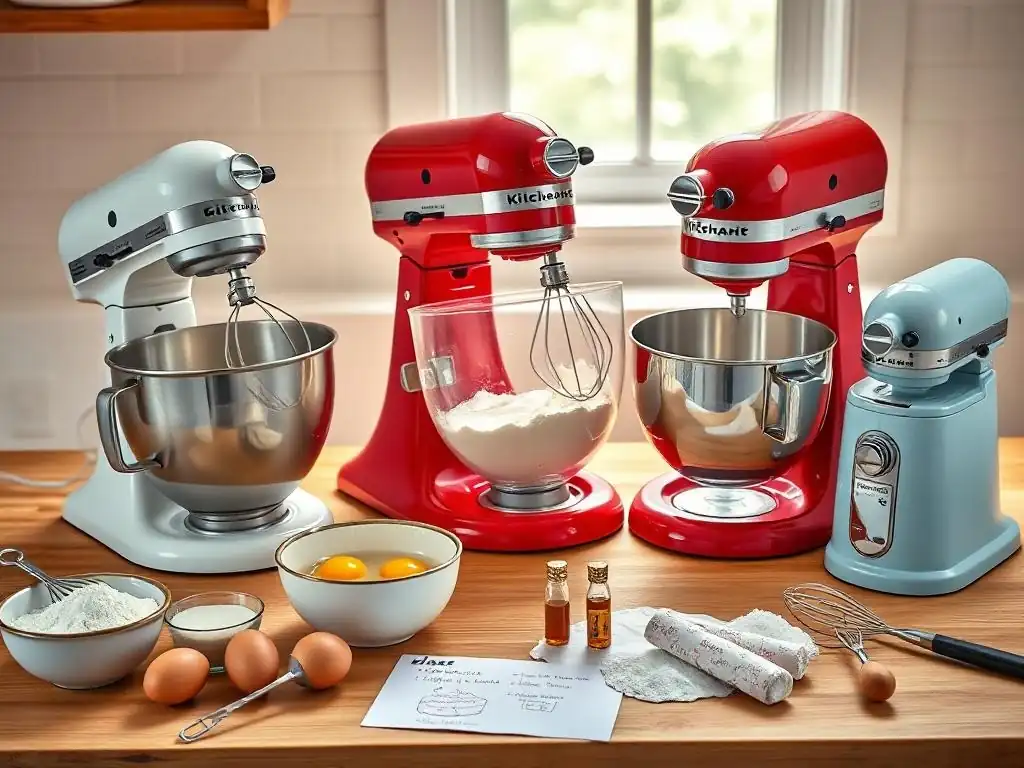
Power and Motor Strength: Which Mixer Can Handle Heavy Doughs?
The motor wattage is a key indicator of a stand mixer's power, though not the only factor, as gear train design also plays a role. For beginners primarily making cakes, cookies, and lighter batters, a motor in the 250-325 watt range, like that found in many KitchenAid Artisan models or basic Hamilton Beach mixers, is generally sufficient.
These motors handle standard single or double batches of cookie dough (around 6-9 dozen) and typical cake batters without issue. They can usually manage occasional batches of standard yeast bread dough, but might show signs of strain with very stiff or large quantities.
If you plan to bake bread regularly, especially recipes with lower hydration (stiffer doughs) or make multiple loaves at once, opting for a mixer with a more powerful motor is advisable. Mixers like the Cuisinart SM-50 (500 watts) or Smeg SMF02 (800 watts) are better equipped for these demanding tasks. They can knead heavier doughs more efficiently and for longer periods without overheating, ensuring proper gluten development essential for good bread structure. For a beginner who anticipates getting into bread making, investing in a higher wattage mixer upfront can prevent the need to upgrade later.
Bowl Capacity: How Much Can You Bake at Once?
Stand mixer bowls typically range in size from 3.5 quarts up to 7 quarts or more for home models. The most common size is 4.5 to 5 quarts, which is a versatile capacity suitable for the majority of home baking recipes.
A 5-quart bowl, like the one on the KitchenAid Artisan, can comfortably handle batter for 2-3 standard cake layers, a single batch of yeast dough for one large loaf, or enough cookie dough for about 6-9 dozen cookies. This size is generally excellent for a beginner as it accommodates most common recipe sizes without being overly large or small.
If you frequently bake for a large family, entertain often, or plan to make multiple loaves of bread or large batches of cookies (10+ dozen) at once, a larger bowl capacity, such as 5.5 quarts (Cuisinart SM-50) or 6 quarts and above (found on larger KitchenAid models or other brands), would be more practical. Conversely, if you have limited storage space or primarily bake small batches for one or two people, a smaller 3.5 or 4-quart mixer might be sufficient and take up less counter space.
Choosing the right bowl size ensures you don't have overflow issues or need to mix in multiple batches, streamlining your baking process.
Attachments and Accessories: Versatility for Different Recipes
Most home stand mixers come standard with three essential attachments: a flat beater (sometimes called a paddle attachment), a wire whip (or whisk), and a dough hook. The flat beater is your workhorse for creaming butter and sugar, mixing batters for cakes and cookies, and combining ingredients for things like meatloaf or mashed potatoes.
The wire whip is used for aerating ingredients, perfect for whipping cream, egg whites for meringues or soufflés, and making light batters. The dough hook is specifically designed for kneading yeast doughs for bread, pizza, or pasta, mimicking the action of hand kneading to develop gluten.
Beyond these standard three, the availability and variety of optional attachments can add significant versatility. Brands like KitchenAid are particularly known for their extensive range of accessories that connect to a power hub, including pasta rollers and cutters, meat grinders, vegetable spiralizers, juicers, and even ice cream makers.
While a beginner may not need these immediately, considering the potential for future expansion can be important. Some mixers also include useful standard accessories like pouring shields (to prevent splashes) or flex edge beaters (with a silicone edge to scrape the bowl as it mixes), which can enhance ease of use, especially for a novice baker.
Speed Settings: Precision for Every Baking Task
The number of speed settings on a stand mixer provides control over the mixing process, allowing you to tailor the speed precisely to the task at hand. Entry-level mixers may offer 6 speeds, while higher-end models often feature 10 or 12 speeds, sometimes even more with variable speed control. Having multiple speeds is important because different stages of baking require different mixing actions.
For instance, when initially combining dry and wet ingredients, a very low speed (often labeled "stir" or speed 1) is crucial to prevent flour from flying out of the bowl. As ingredients come together, you might increase the speed to medium (speeds 4-6) for creaming butter and sugar or mixing batters to develop structure.
High speeds (speeds 8-10 or 12) are reserved for whipping air into ingredients, such as making fluffy meringue or stiff whipped cream. A mixer with a good range of speeds allows for more control and better results across a wide variety of recipes, making it easier for a beginner to follow recipe instructions accurately.
Ease of Use and Cleaning: Making Baking Enjoyable
For a beginner, ease of use and cleaning are paramount to a positive baking experience. A tilt-head design, common on many models including the KitchenAid Artisan, Cuisinart SM-50, and Hamilton Beach, makes it simple to lift the mixer head to add ingredients, scrape down the bowl, or change attachments. Controls should be intuitive, with clearly marked speed settings and an easy mechanism for locking the head into place. Weight and footprint are also practical considerations; a lighter, more compact mixer is easier to move and store if counter space is limited.
Cleaning involves the bowl and attachments. Most stainless steel bowls and some attachments (like flat beaters and dough hooks, depending on the material – aluminum needs hand washing, while coated or stainless steel versions are often dishwasher safe) are dishwasher friendly, which simplifies cleanup significantly. The mixer body usually just requires a wipe-down with a damp cloth. Features like pouring shields (included with Smeg and available as accessories for others) are incredibly helpful for keeping ingredients inside the bowl and minimizing mess, making the entire baking and cleanup process smoother, especially for someone new to using a powerful mixer.
Choosing the Right Stand Mixer for Your Baking Style and Budget
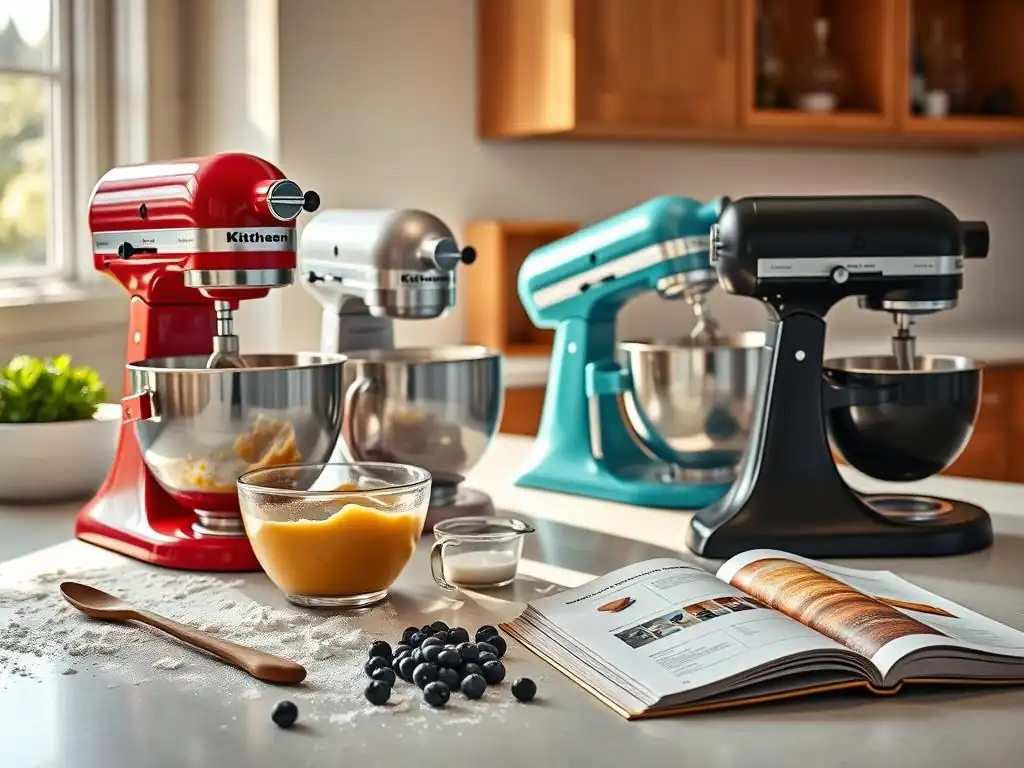
Best Stand Mixer for Bread Making: Power and Durability
For the dedicated bread baker, the primary requirements for a stand mixer are a powerful motor and durable construction that can withstand the strain of kneading dense doughs repeatedly. Look for mixers with motors in the 500-watt range or higher, such as the Cuisinart SM-50 (500W) or Smeg SMF02 (800W), or larger capacity KitchenAid Pro Line or Commercial models (often 575W to over 1000W). These higher wattage motors are designed to handle the resistance of developing gluten in stiff doughs without overheating or wearing out prematurely.
Beyond wattage, consider the mixer's weight and base stability. Heavier, all-metal construction and bowl-lift designs (where the bowl is raised into the stationary attachment) tend to be more stable under the load of kneading heavy dough than lighter tilt-head models, which can sometimes bounce. Ensure the dough hook is robust and made of durable material (coated or stainless steel are preferable to aluminum for longevity and ease of cleaning). Investing in a mixer specifically designed for heavy-duty tasks will ensure it can keep up with your bread-making passion for years.
Best Stand Mixer for Cakes and Pastries: Precision and Control
Baking cakes, pastries, and meringues often requires less sheer power than bread making but benefits greatly from precise speed control and efficient aeration. For these tasks, a mixer with a good range of speeds, particularly effective low speeds for incorporating dry ingredients gently and high speeds for whipping air, is crucial. The KitchenAid Artisan, with its 10 speeds and effective wire whip, is a classic choice well-suited for creaming butter, whipping egg whites, and mixing delicate batters.
An effective planetary mixing action that reaches all parts of the bowl is also important to ensure smooth, lump-free batters and evenly whipped ingredients. Features like a flex edge beater attachment, which scrapes the sides of the bowl as it mixes, can be particularly helpful for cake and cookie batters, ensuring everything is incorporated without needing to stop the mixer frequently. While many mixers can handle cakes and pastries, models known for smooth operation and good accessory design for these specific tasks often stand out.
Cookie baking often involves creaming butter and sugar, which requires sufficient power to handle relatively stiff ingredients, and then mixing in flour and other additions. Volume is also a key consideration, as many home bakers make large batches of cookies at once. A mixer with a bowl capacity of at least 5 quarts is recommended to comfortably handle standard double batches of cookie dough (which can yield 6-9 dozen cookies).
Mixers like the KitchenAid Artisan (5-quart) or Cuisinart SM-50 (5.5-quart) are excellent choices for cookie enthusiasts due to their capacity and motor strength sufficient for creaming and mixing dough. A sturdy flat beater attachment is essential for this task. While many mixers can handle cookie dough, those with slightly more powerful motors or larger bowls make the process smoother, especially when baking frequently or in large quantities, ensuring consistent texture batch after batch.
Best Budget Stand Mixer for Home Bakers: Affordable Options
For beginners or those with limited budgets, finding an affordable stand mixer is a priority. The Hamilton Beach Electric Stand Mixer is a prime example of a budget-friendly option that provides the basic functionality needed for common baking tasks like mixing cake mixes, standard cookie doughs, and whipping cream. These mixers typically cost between $80 and $150.
While they may lack the power, durability, and extensive features of higher-end models, they serve as an excellent entry point. They allow a beginner to experience the convenience of a stand mixer, practice fundamental techniques, and decide if they want to invest in a more powerful machine later.
When choosing a budget mixer, look for reasonable reviews regarding motor performance for its class and ensure it includes the three basic attachments you'll need for most recipes. It's a practical way to get started without a large investment, making it a strong candidate for the best stand mixer for beginners on a tight budget.
Best Stand Mixer for Small Kitchens: Compact Designs
Kitchen space is often at a premium, making the size and weight of a stand mixer important considerations. While stand mixers are generally substantial appliances, some models are more compact or lighter than others. Mini stand mixers, often with 3.5-quart bowls, are available and take up significantly less counter space. However, their smaller capacity and typically lower power limit the batch sizes they can handle.
Among standard-sized mixers (4.5-5.5 quarts), some tilt-head models are slightly less tall than bowl-lift models when stored under cabinets. Weight also varies; models with more plastic components tend to be lighter than all-metal mixers, making them easier to move in and out of storage. If space is a major constraint, carefully check the dimensions and weight specifications before purchasing. Prioritizing a smaller footprint and lighter weight can make a stand mixer a more practical addition to a small kitchen.
Stand Mixer Buying Guide: Key Considerations
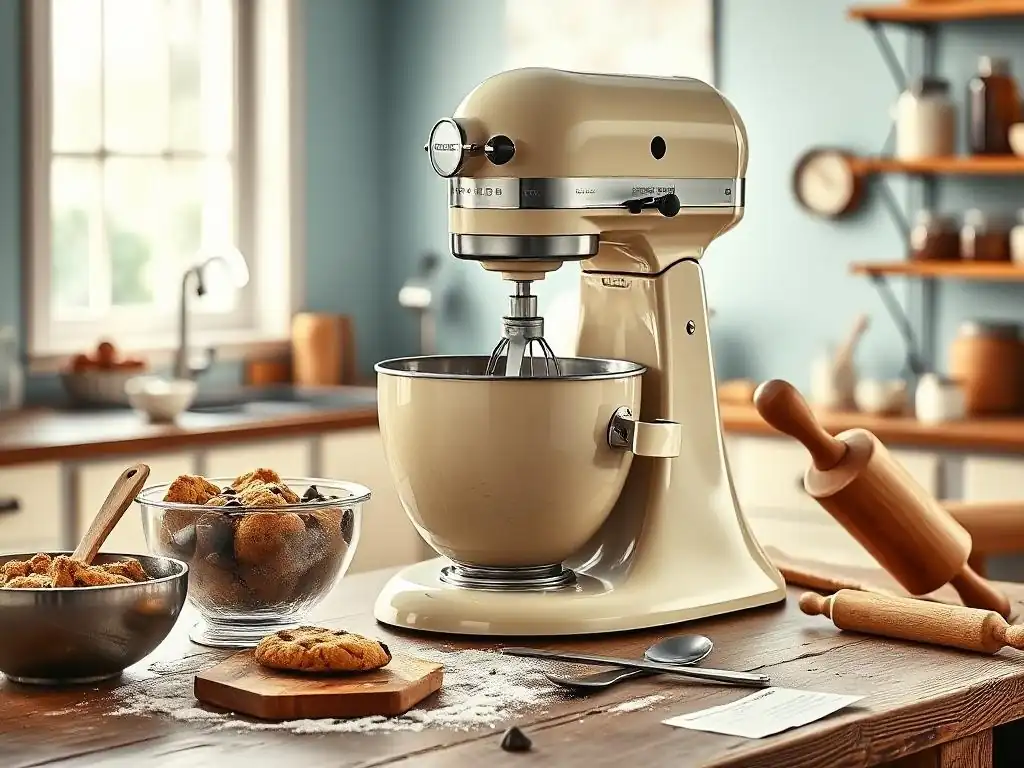
Understanding Wattage and Motor Performance
While wattage provides a general idea of a mixer's power, it's not the only factor determining performance, especially when handling heavy loads like bread dough. The quality of the motor itself, the gear system (metal gears are more durable than plastic), and the overall construction contribute significantly to a mixer's ability to perform consistently under strain. A mixer with a high wattage but plastic gears might not perform as well or last as long under heavy use as a lower-wattage mixer with robust metal gearing.
For beginners, understanding that higher wattage generally means better performance with stiffer doughs and larger batches is a good starting point. Aim for 300-325 watts for basic tasks, 500+ watts if bread making is a focus. Reading reviews specific to how well a mixer handles doughs and batters is often more informative than relying solely on the wattage number.
Tilt-Head vs. Bowl-Lift Designs: Which is Right for You?
Stand mixers primarily come in two designs: tilt-head and bowl-lift. Tilt-head mixers have a head that tilts back, allowing easy access to the bowl and attachments. This design is generally preferred for smaller mixers (typically 3.5 to 5.5 quarts) and is often considered more user-friendly for adding ingredients and scraping the bowl. Models like the KitchenAid Artisan, Cuisinart SM-50, and Smeg SMF02 feature a tilt-head.
Bowl-lift mixers have a stationary head, and the bowl is attached to arms that are raised or lowered using a lever. This design is more common on larger, heavier-duty mixers (6 quarts and up) because it provides greater stability, especially when kneading large quantities of stiff dough. Accessing the bowl for scraping or adding ingredients can be slightly less convenient than with a tilt-head. For beginners, a tilt-head is often recommended due to its ease of access, unless they specifically need the larger capacity and stability offered by most bowl-lift models for heavy bread baking.
Material Quality and Durability: Investing in Longevity
The materials used in a stand mixer's construction significantly impact its durability and lifespan. Mixers with all-metal construction, particularly metal gears, are generally considered more durable and capable of withstanding heavy use over many years compared to those with plastic housings or internal components. Brands like KitchenAid are known for their robust metal builds.
While plastic exteriors can make mixers lighter and more affordable (like some Hamilton Beach models), they may not hold up as well to the vibrations and stress of mixing thick batters or doughs, especially if done frequently. Attachments also vary in material; coated or stainless steel beaters and dough hooks are typically more durable and easier to clean than aluminum ones, which can react with acidic ingredients and require hand washing. Investing in a mixer with quality materials, even if it costs more upfront, can save money and frustration in the long run by providing reliable performance for years.
Warranty and Customer Support: Peace of Mind
Checking the warranty offered by the manufacturer is an important step before purchasing any appliance, including a stand mixer. Warranties typically cover defects in materials and workmanship for a specified period, often ranging from one to five years or even longer for high-end models. A longer warranty can indicate the manufacturer's confidence in their product's durability.
Understanding the warranty terms, including what is covered and the process for making a claim, is crucial. Additionally, consider the manufacturer's reputation for customer support. Should you encounter any issues with your mixer, having access to responsive and helpful customer service can make a significant difference in resolving problems quickly and satisfactorily. For a beginner investing in their first stand mixer, knowing that support is available provides valuable peace of mind.
Maintaining Your Stand Mixer: Tips for Long-Lasting Performance
Cleaning and Storage Best Practices
Proper cleaning and storage are essential to keep your stand mixer in optimal working condition and looking good for years. Always unplug the mixer before cleaning. The bowl and attachments should be cleaned immediately after use to prevent ingredients from drying and sticking. Most stainless steel bowls are dishwasher safe, as are many coated or stainless steel attachments. However, check your manual, as aluminum attachments (common on some models) must be hand washed to prevent discoloration and damage.
The body of the mixer, especially the head and base, should be wiped down with a damp cloth. Avoid using abrasive cleaners or immersing the mixer body in water. Pay attention to the area around the attachment hub and where the head connects to the base, wiping away any residue. Ensure the mixer is completely dry before storing it. Store the mixer in a clean, dry place, either on the counter if it's a permanent fixture or in a cabinet. Storing attachments in or near the bowl keeps everything together and ready for your next baking project.
Troubleshooting Common Issues
Occasionally, you might encounter minor issues with your stand mixer. One common problem is the attachment not reaching the bottom of the bowl or hitting the bottom. This usually requires adjusting the "beater-to-bowl clearance," which involves a simple screw adjustment on most tilt-head models (often located near where the head locks into the base) or adjusting the bowl support on bowl-lift models. Consult your user manual for specific instructions.
Another issue can be the mixer straining or vibrating excessively, particularly with heavy doughs. Ensure you are not exceeding the mixer's capacity (check the maximum recommended flour or dough weight in your manual). If the problem persists within recommended limits, it might indicate an issue with the motor or gears, requiring professional service. Always refer to your mixer's manual for troubleshooting steps specific to your model before attempting any adjustments or repairs.
Conclusion: Selecting the Perfect Stand Mixer for Your BakeWithEase Journey
Choosing the best stand mixer for beginners involves balancing your budget, the types of baking you plan to do, and the features that will make your experience enjoyable and successful. A stand mixer is a significant investment, but its ability to save time, reduce effort, and improve the consistency of your results makes it an incredibly valuable tool for anyone serious about home baking. Whether you dream of perfect loaves of bread, towering cakes, or endless batches of cookies, there's a stand mixer out there that fits your needs.
Our Top Recommendations: [Summarize Recommendations Based on Baking Style/Budget]
For the absolute beginner on a strict budget, the Hamilton Beach Electric Stand Mixer offers an affordable entry point to experience the convenience of a stand mixer for basic tasks. If you have a bit more to spend and anticipate baking a variety of items, including occasional bread, the Cuisinart SM-50 provides excellent power and capacity for its mid-range price. For the beginner who wants a reliable, versatile, and durable mixer that is widely supported and can grow with their skills, the KitchenAid Artisan series remains a top contender, often considered the best stand mixer for beginners looking for a long-term investment.
And for those who prioritize both high performance and stunning design, and have the budget, the Smeg SMF02 offers a powerful and stylish option. Ultimately, the perfect mixer is the one that empowers you to bake more easily and joyfully on your BakeWithEase journey.
Frequently Asked Questions
What factors should I consider when choosing the best stand mixer for beginners?
Consider factors like budget, baking frequency, and the types of recipes you plan to make. A smaller, less expensive model might be perfect if you only bake occasionally.
What is the difference between a tilt-head and a bowl-lift stand mixer?
Tilt-head mixers allow you to tilt the head back to access the bowl, while bowl-lift mixers raise the bowl to the mixing attachment. Tilt-head mixers are generally better for home use and smaller batches.
Are more expensive stand mixers always better for beginners?
Not necessarily. More expensive models often have more power and features, but a basic, reliable model from a reputable brand can be perfectly sufficient for beginner bakers.
What attachments are essential for a beginner's stand mixer?
The essential attachments are usually a dough hook, a flat beater, and a wire whisk. These cover most basic baking needs, from kneading dough to whipping cream.
Where can I find simple recipes to start using my new stand mixer?
BakeWithEase.com offers a wide range of simple recipes designed for all skill levels, including those just starting out with their new stand mixer. We focus on easy-to-find ingredients and step-by-step guides.
Final Reflection: Whipping Up Success: Your Baking Journey Starts Here
The quest for the perfect stand mixer is more than just a kitchen appliance purchase; it's an investment in your culinary creativity and future baking adventures. Finding the right balance between features, budget, and baking style is crucial, and as we've explored, the market offers a surprisingly diverse range of options to suit every need. This isn't just about choosing a machine; it's about empowering yourself to create delicious memories in the kitchen.
The impact of a good stand mixer extends far beyond the simple act of mixing ingredients. It's a tool that unlocks confidence, encourages experimentation, and fosters a deeper connection with the art of baking. It's about the joy of creating something beautiful and delicious from scratch, a sentiment perfectly captured by the words of Julia Child: Find something you're passionate about and keep tremendously interested in it.
A reliable stand mixer, chosen thoughtfully, can be the catalyst for that passion, inspiring countless hours of happy baking.
Now, it's your turn. Consider your baking aspirations, your budget, and the advice shared in this guide. Don't be afraid to explore the options, to weigh the pros and cons, and ultimately, to choose the stand mixer that best reflects your unique baking journey. The perfect machine is out there, waiting to help you whip up your next culinary masterpiece. Embrace the process, enjoy the journey, and happy baking!
Unleash Your Inner Baker: Take the Next Step!
Thanks for taking the time to explore the world of stand mixers with us! We hope you now feel confident in navigating the options and finding the perfect fit for your baking journey. Ready to get started?
- Find your perfect mixer: Use the comparison chart and tips from the article to research models and finally choose the stand mixer that fits your needs and budget. This is the crucial first step to baking success!
- Share your baking dreams: Tell us in the comments which mixer you're eyeing (or already own! ), and share your favorite baking recipes that you plan to create with it. Let's build a supportive community!
- Explore advanced techniques: Consider researching some advanced baking techniques you can now confidently tackle with your new mixer! (Think perfect macarons or artisan bread! ).
So, what delicious creation are you going to whip up first?