
Stand Mixers for Large Batches: Mix Dough for a Crowd with Ease

Welcome to BakeWithEase, your partner in baking perfection! Are you ready to tackle ambitious recipes and bake for a crowd? Perhaps you're tired of your current mixer struggling with those extra-large batches. Dive into our guide and discover the secrets to choosing the perfect large batch stand mixer that will transform your baking experience. We've got the inside scoop on power, capacity, and features that matter most. Intrigued? Let's get mixing!
- Finding the Best Large Batch Stand Mixer for Your Baking Needs
- Top Stand Mixer Options for Handling Large Dough Batches
- KitchenAid Stand Mixers for Large Batches: A Detailed Review
- Bosch Universal Plus Mixer: A Dough-Making Powerhouse
- Cuisinart Stand Mixers for Extra Large Batches: A Budget-Friendly Alternative
- Key Features to Consider When Buying a Large Capacity Stand Mixer
- Mixing Large Batches of Dough: Tips and Tricks for Success
- Making the Right Choice: Which Large Batch Stand Mixer is Best for You?
-
Frequently Asked Questions
- What is a large batch stand mixer and why would I need one?
- What features should I look for when choosing a large batch stand mixer?
- How does a large batch stand mixer differ from a regular stand mixer?
- Are large batch stand mixers only for professional bakers?
- Can I use a large batch stand mixer for smaller recipes too?
- Final Reflection: The Joy of Baking on a Grand Scale
- Unleash Your Inner Baker: Mix Bigger, Bake Better!
Finding the Best Large Batch Stand Mixer for Your Baking Needs
When you're baking for a party, a large family gathering, or even just stocking up your freezer, mixing dough by hand for multiple loaves of bread or dozens of cookies can be incredibly time-consuming and physically demanding. This is where a high-capacity stand mixer, specifically a large batch stand mixer, becomes an invaluable tool. It takes the heavy lifting out of kneading dense doughs and mixing vast quantities of batter, allowing you to scale up your baking projects significantly.
Investing in a stand mixer designed for larger volumes means you can tackle ambitious recipes with confidence. Imagine preparing enough dough for four loaves of sourdough bread simultaneously, or whipping up enough batter for 10 dozen cookies in one go. A powerful large batch stand mixer ensures consistent results across the entire batch, something that's hard to achieve with smaller mixers or manual methods. It frees up your hands and time, letting you focus on other aspects of your baking or even enjoy a moment while the machine does the hard work.
Why You Need a High-Capacity Stand Mixer for Big Baking Projects
Baking for a crowd or tackling large-scale recipes like multiple challah loaves or a huge batch of dinner rolls presents unique challenges. The sheer volume of ingredients, especially flour and liquid, creates a heavy, dense mass that standard hand mixers or even smaller capacity stand mixers struggle to handle. Trying to force too much dough into a machine not built for it can strain the motor, leading to overheating, premature wear, and inconsistent mixing results where some parts of the dough are properly kneaded while others are not.
A high-capacity stand mixer is specifically engineered with a larger bowl and a more robust motor to manage these heavy loads effectively. These mixers are built to withstand the significant torque required to knead large quantities of stiff bread dough or mix dense cookie batter without bogging down. This means you can confidently double or triple your favorite recipes, knowing your large batch stand mixer is up to the task, ensuring thorough mixing and proper dough development every time, which is crucial for achieving the right texture and rise in your baked goods.
Understanding the Importance of Bowl Size and Motor Power
When selecting a large batch stand mixer, two specifications stand out as critical: bowl size and motor power. The bowl size dictates the maximum volume of ingredients you can comfortably mix. A standard home mixer might have a 4.5 or 5-quart bowl, suitable for single batches of cookies or one loaf of bread.
A large capacity stand mixer typically features a 6-quart, 7-quart, or even larger bowl, allowing you to mix significantly more dough or batter in a single operation. For instance, a 6-quart bowl can often handle dough made with up to 8-10 cups of flour, sufficient for 2-3 standard loaves, whereas an 8-quart bowl might manage dough from 14-16 cups of flour, enough for 4 or more loaves.
Equally important is the motor power, often measured in watts. Mixing heavy dough requires substantial power. A mixer with a low-wattage motor will struggle and potentially burn out when faced with a large, stiff dough.
Large batch stand mixers designed for heavy use usually boast motors ranging from 500 watts up to 1000 watts or more. This higher wattage provides the necessary torque and sustained power to knead dense bread dough for the required time without overheating, ensuring consistent performance even under heavy loads. While wattage isn't the only factor (motor design and gearing also play a huge role), it's a strong indicator of a stand mixer's ability to handle large, demanding tasks.
Top Stand Mixer Options for Handling Large Dough Batches
Choosing the right large batch stand mixer depends on your specific baking habits and how often you need to mix large quantities. Several brands offer models specifically designed for higher capacities and more demanding tasks than standard home mixers. These models typically feature larger bowls, more powerful motors, and sturdier construction to handle the weight and resistance of big dough loads.
When comparing options, look beyond just the capacity. Consider the motor type (AC vs. DC), the drive system (direct drive is often preferred for heavy loads), the build materials (metal components are more durable for demanding tasks), and the included attachments. A good large batch stand mixer should come with robust dough hooks and mixing paddles capable of handling thick mixtures without bending or breaking. The stability of the mixer base is also crucial to prevent it from walking across the counter when kneading heavy dough.
Comparing Large Batch Stand Mixers: Capacity, Power, and Features
When evaluating different large batch stand mixer options, a direct comparison of their core specifications is essential. Bowl capacity is often the first consideration, with popular large models offering 6 quarts, 7 quarts, or 8 quarts. For example, the KitchenAid Professional 600 series typically has a 6-quart bowl, while some Bosch Universal Plus models feature a 6.5-quart capacity, and certain Cuisinart models might reach 7 or 8 quarts. This range covers everything from doubling a large cookie recipe to making enough bread dough for a small bakery's daily bake.
Motor power is another key differentiator. KitchenAid's Professional series often features powerful DC motors, like the 575-watt motor in the Pro 600, known for its torque and efficiency under load. The Bosch Universal Plus boasts a unique bottom-drive motor system, often around 800 watts, specifically praised for its dough-kneading prowess.
Cuisinart offers models like the SM-55 with around 800-1000 watts, providing ample power for larger batches. Beyond capacity and power, features like bowl-lift versus tilt-head design (bowl-lift is generally more stable for large batches), electronic speed control, and included accessories like whisk, dough hook, and paddle attachments should be weighed based on your primary baking needs.
KitchenAid Stand Mixers for Large Batches: A Detailed Review
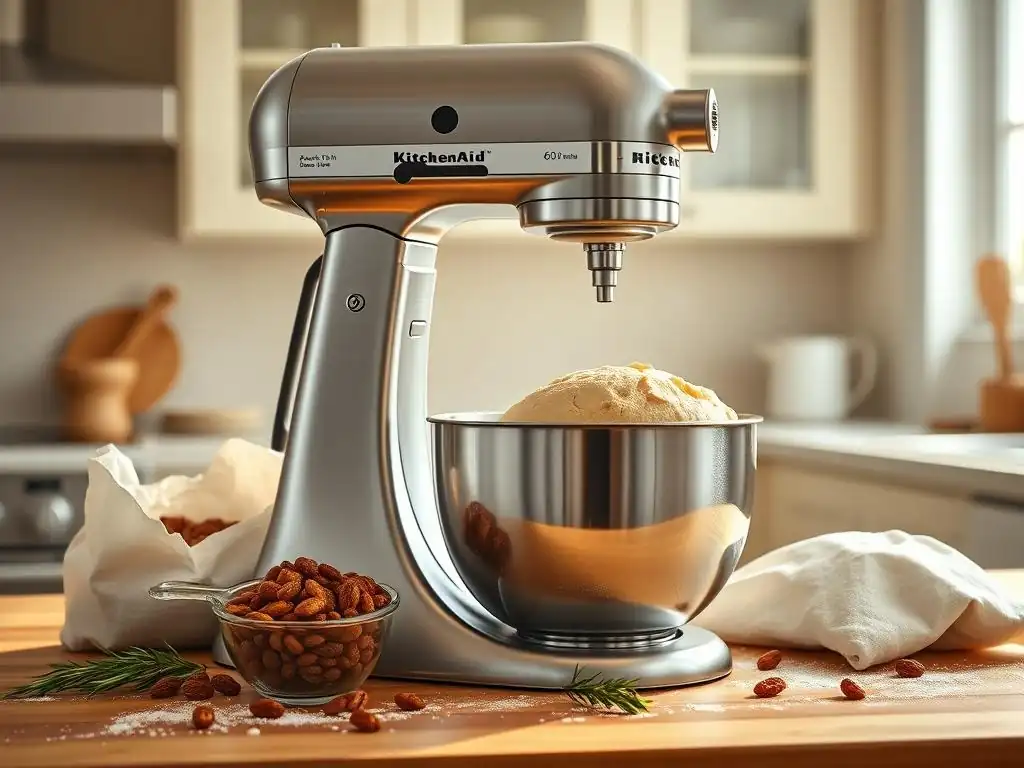
KitchenAid is a household name in stand mixers, and they offer several models designed to handle larger capacities and more demanding tasks than their classic tilt-head Artisan series. For bakers needing a large batch stand mixer, KitchenAid's bowl-lift models, particularly the Professional series, are often the go-to choice. These mixers are built with more powerful motors and a design that provides greater stability when mixing heavy doughs.
While the iconic KitchenAid Artisan tilt-head mixer is fantastic for many home baking tasks, its standard 4.5 or 5-quart bowl and less powerful motor (often around 325 watts) can struggle with large quantities of stiff dough. The bowl-lift design, where the bowl locks into place and is raised to meet the beater, is inherently more stable for larger bowls and heavier loads than the tilt-head mechanism. This makes KitchenAid's bowl-lift models significantly better suited for kneading multiple loaves of bread or mixing very large batches of dense cookie dough compared to their tilt-head counterparts.
KitchenAid Professional 600 Series: Power and Durability for Serious Bakers
The KitchenAid Professional 600 series is a popular choice for home bakers who frequently tackle large or demanding recipes. It's a significant step up from the standard Artisan series, specifically engineered to handle heavier loads with its robust construction and powerful motor. This model is often recommended for those who bake bread regularly, make large batches of cookies for events, or venture into more challenging doughs like bagel or pizza dough in quantity.
With its 6-quart stainless steel bowl and a powerful 575-watt DC motor, the Professional 600 is designed to mix dough made with up to about 14 cups of all-purpose flour. The DC motor is known for providing high torque, which is essential for kneading stiff dough without stalling. The bowl-lift design provides excellent stability, preventing the mixer from moving around the counter, even when working with heavy, dense mixtures. Its all-metal gears contribute to its reputation for durability, making it a reliable large batch stand mixer for serious home baking.
Features of the KitchenAid Professional 600 for Large Batches
The KitchenAid Professional 600 series comes equipped with features specifically beneficial for large batch baking. Its primary feature is the substantial 6-quart capacity bowl, allowing for much larger recipes than standard mixers. The bowl-lift mechanism provides secure support for the heavy bowl and its contents during mixing, ensuring stability. It includes the standard set of attachments: a spiral dough hook, a flat beater, and a wire whip, all sized appropriately for the 6-quart bowl.
Beyond the capacity and design, the Professional 600 features 10 distinct speeds, controlled by a slide lever. This range allows for everything from a gentle stir to a fast whip. The powerful 575-watt DC motor is specifically noted for its ability to handle dense doughs efficiently. The mixer also includes a power hub for attaching optional accessories like pasta makers or meat grinders, although its core strength lies in its mixing capabilities for large volumes. The sturdy all-metal construction ensures longevity and reliability under heavy use.
Pros and Cons: KitchenAid Professional 600
The KitchenAid Professional 600 series offers significant advantages for large batch baking.
- Pros:
- Large 6-quart bowl capacity.
- Powerful 575-watt DC motor with high torque for heavy dough.
- Stable bowl-lift design.
- Durable all-metal construction and gears.
- Handles dough for multiple loaves or large cookie batches effectively.
However, it also has some potential drawbacks.
- Cons:
- Can be quite noisy, especially at higher speeds or under heavy load.
- Heavier and larger footprint than tilt-head models.
- Attachments can sometimes struggle to reach ingredients at the very bottom of the bowl, occasionally requiring scraping.
- Price point is higher than smaller capacity models.
Why the KitchenAid Professional 600 is Great for Pizza Dough
Making pizza dough, especially in large quantities for a party, requires a mixer that can handle a relatively stiff, elastic dough. The KitchenAid Professional 600 is particularly well-suited for this task due to its powerful DC motor and sturdy spiral dough hook. A typical batch of pizza dough for four large pizzas might use 6-8 cups of flour, well within the Pro 600's 6-quart capacity and kneading capabilities.
The spiral dough hook is designed to push the dough down and around the bowl, mimicking hand-kneading motions efficiently. The 575-watt motor provides the necessary power to work the gluten development required for a chewy pizza crust without overheating or stalling. The stable bowl-lift design means you can leave the mixer running for the recommended 8-10 minutes of kneading time without worrying about it vibrating excessively or moving on the counter, making it a reliable large batch stand mixer for your pizza nights.
KitchenAid Artisan Series with Bowl-Lift Design: A Versatile Option
While the tilt-head Artisan series is the most recognizable KitchenAid mixer, they also offer Artisan models with a bowl-lift design, providing a bridge between the classic Artisan and the more heavy-duty Professional series. These models often feature slightly larger bowls and more powerful motors than the standard tilt-head versions, making them capable of handling moderately large batches, though typically not quite as demanding as the Professional line.
The KitchenAid Artisan bowl-lift models usually come with 5 or 6-quart bowls and motors ranging from 325 to 450 watts. While the wattage is lower than the Professional 600, the bowl-lift design still offers better stability for larger loads compared to a tilt-head. This makes them a good option for bakers who need more capacity than a standard 4.5-quart Artisan but don't require the extreme power or durability of the Professional series for very dense, large-scale doughs. They offer increased versatility for a wider range of large-ish baking projects.
Features of the KitchenAid Artisan Series with Bowl-Lift for Large Batches
KitchenAid Artisan bowl-lift mixers share some features with the Professional series but are generally aimed at a slightly less demanding workload. They typically have a 5 or 6-quart stainless steel bowl and the stable bowl-lift mechanism. Motor power is often in the 325 to 450-watt range, which is sufficient for mixing batter for large cake recipes, multiple batches of standard cookie dough, or dough for 1-2 loaves of bread, depending on the stiffness.
Like other KitchenAid mixers, they feature 10 speeds and include a flat beater, dough hook, and wire whip. They also have the power hub for attachments. The construction is still sturdy, often a mix of metal and durable plastic components. While not as robust as the Professional models for very heavy kneading tasks, the Artisan bowl-lift provides a good balance of capacity and power for home bakers who occasionally need to mix larger volumes than a standard tilt-head can comfortably handle, positioning it as a capable large batch stand mixer for many home uses.
Pros and Cons: KitchenAid Artisan Series with Bowl-Lift
The KitchenAid Artisan bowl-lift offers a good balance for many home bakers needing more capacity.
- Pros:
- Larger bowl capacity (5 or 6 quarts) than standard tilt-head Artisan.
- More stable bowl-lift design than tilt-head.
- More powerful motor than standard tilt-head (typically 325-450 watts).
- Handles moderately large batches well (cake batter, standard cookie dough, medium bread dough).
- Access to KitchenAid's wide range of hub attachments.
However, it has limitations compared to more powerful large batch mixers.
- Cons:
- Motor may struggle with very stiff doughs or extremely large bread batches compared to the Professional series or Bosch.
- Not as durable or powerful as the Professional 600 for constant heavy use.
- Can still be noisy under load.
- Price is higher than the standard tilt-head Artisan.
Great for Cookies in Bulk
If your primary need for a large batch stand mixer is whipping up dozens upon dozens of cookies, a KitchenAid Artisan series with a bowl-lift design can be an excellent fit. A 5 or 6-quart bowl can easily handle a double or even triple batch of most standard cookie dough recipes, which often contain butter, sugar, flour, and eggs – a mixture that is thick but less dense than bread dough.
The motor power, typically 325-450 watts, is usually sufficient to cream butter and sugar effectively and incorporate the dry ingredients without stalling, even in larger quantities. The flat beater attachment, standard with these models, is perfect for cookie dough. Being able to mix 6-8 dozen cookies in one go saves significant time compared to mixing multiple smaller batches, making the Artisan bowl-lift a capable large batch stand mixer for cookie enthusiasts.
Bosch Universal Plus Mixer: A Dough-Making Powerhouse
The Bosch Universal Plus mixer stands out in the world of stand mixers, particularly for its exceptional dough-kneading abilities. Unlike most stand mixers with an overhead motor and planetary action, the Bosch Universal Plus features a motor located underneath the bowl and uses a unique central column and whips/dough hook that spin around it. This design is specifically engineered to handle very large volumes of dough efficiently and effectively.
Often recommended by serious bread bakers, the Bosch Universal Plus is known for its ability to knead dough made with up to 14-15 cups of flour in its 6.5-quart bowl. Its powerful motor and unique bottom-drive design prevent the "walking" often seen with other mixers under heavy load and ensure that ingredients are thoroughly incorporated from the bottom up. If your primary goal for a large batch stand mixer is making multiple loaves of bread at once, the Bosch Universal Plus is a strong contender.
The Bosch Universal Plus: Designed for Large Dough Loads
The design of the Bosch Universal Plus mixer is fundamentally different from traditional stand mixers, and this difference is key to its performance with large dough loads. The 6.5-quart bowl sits on the motor base, and the attachments connect to a central column. This configuration, combined with a powerful 800-watt motor, allows the mixer to handle exceptionally large and heavy doughs without straining or overheating.
The unique dough hook, which includes a scraper arm, is particularly effective at developing gluten in large quantities of bread dough. It mimics hand kneading very well, pulling the dough up and over the central column. The open-top bowl design also makes it easy to add ingredients while the mixer is running, which is convenient when working with large volumes. This innovative design cements the Bosch Universal Plus's reputation as a true large batch stand mixer built with serious dough production in mind.
Features of the Bosch Universal Plus for Large Batches
The Bosch Universal Plus mixer is packed with features tailored for handling large dough batches. Its defining feature is the 6.5-quart plastic bowl with a central column and bottom-drive motor. The powerful 800-watt motor provides ample power for kneading even the stiffest doughs. It comes with a dual wire whip assembly for whipping and aerating, and a unique dough hook with a dough scraper for efficient kneading.
The mixer offers four speeds plus a momentary pulse function. The open-top bowl design is convenient for adding ingredients. It also features a range of optional attachments that connect to different power outlets on the mixer, expanding its versatility beyond mixing. The plastic bowl is lightweight and easy to handle, and the overall design is stable, resisting movement even when kneading heavy doughs, making it a highly effective large batch stand mixer.
Pros and Cons: Bosch Universal Plus
The Bosch Universal Plus excels in certain areas, especially dough.
- Pros:
- Excellent dough kneading performance for very large batches (up to 14-15 cups flour).
- Powerful 800-watt motor.
- Unique bottom-drive design provides exceptional stability.
- Lightweight, easy-to-handle 6.5-quart plastic bowl.
- Open-top design for easy ingredient addition.
- Relatively quiet operation compared to some other powerful mixers.
However, its unique design also presents some considerations.
- Cons:
- Plastic bowl might not be preferred by everyone (stainless steel bowls are available separately).
- Unique attachment system means standard attachments from other brands won't fit.
- Can sometimes struggle with very small batches or whipping tiny amounts of egg whites.
- Requires specific techniques for scraping down the central column.
- Higher price point.
Perfect for Bread Baking
For avid bread bakers who regularly make multiple loaves, the Bosch Universal Plus is often considered the gold standard large batch stand mixer. Its ability to handle dough made from 14-15 cups of flour means you can easily prepare enough dough for four large loaves or six to eight smaller ones in a single batch. This is a significant time saver compared to mixing multiple batches in a smaller mixer.
The unique dough hook and powerful 800-watt motor work together to develop gluten efficiently and thoroughly, which is critical for well-structured bread. The bottom-drive system ensures stability throughout the long kneading times often required for bread doughs. If your primary motivation for buying a large capacity stand mixer is to effortlessly produce large quantities of high-quality bread, the Bosch Universal Plus is arguably the best tool for the job.
Cuisinart Stand Mixers for Extra Large Batches: A Budget-Friendly Alternative
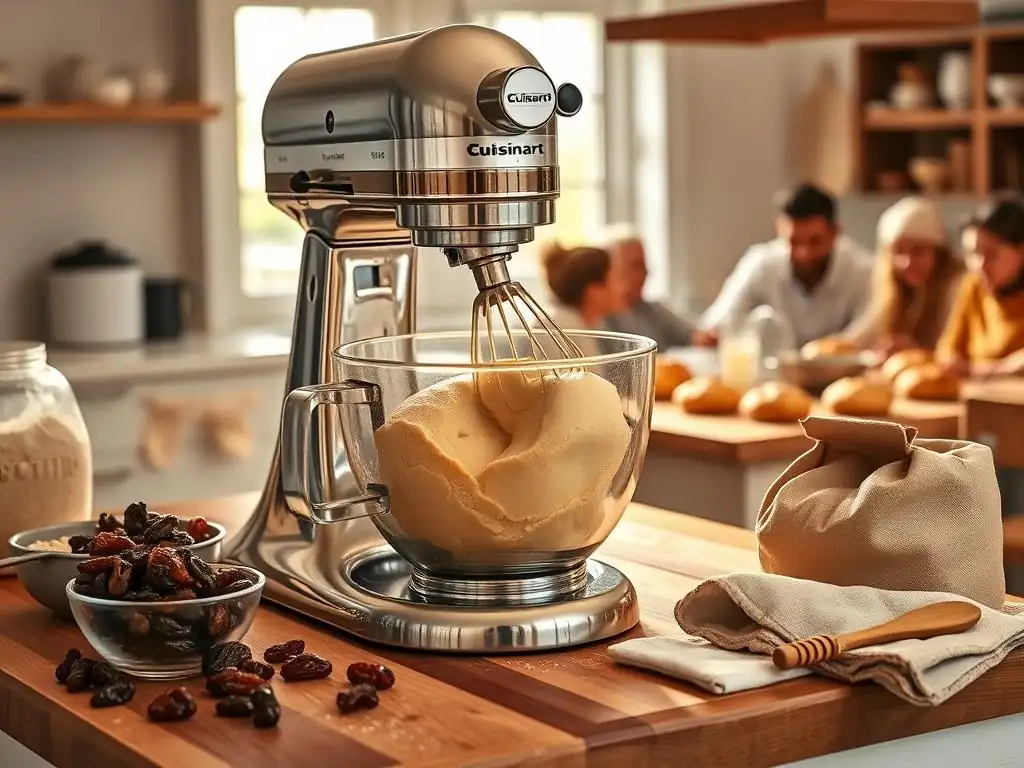
While KitchenAid and Bosch dominate the high-end large batch stand mixer market, Cuisinart offers models that provide larger capacities at a potentially more accessible price point. These mixers are designed for home bakers who need more capacity than a standard 5-quart mixer but may not require the extreme power or specific features of the premium brands for very heavy, frequent use.
Cuisinart's higher-capacity stand mixers typically feature larger bowls, often 7 or 8 quarts, and powerful motors, sometimes reaching 1000 watts. While the motor power and bowl size are impressive on paper, the overall construction and performance under extremely heavy, prolonged loads might differ from the premium models. However, for mixing large quantities of batter, lighter doughs, or even moderately heavy doughs for occasional large batches, a Cuisinart large capacity stand mixer can be a cost-effective solution.
Exploring Cuisinart's Large Capacity Stand Mixers
Cuisinart offers stand mixer models that cater to the need for larger capacity, expanding beyond their standard 5.5-quart options. Models like the Cuisinart SM-55 or similar higher-end versions often come with 7 or 8-quart bowls, providing ample space for significant quantities of ingredients. These mixers typically feature a tilt-head design, although some larger models might use a bowl-lift.
These models aim to provide the convenience of a large batch stand mixer without the premium price tag of brands like KitchenAid Professional or Bosch. They are equipped with powerful motors, often listed at 800 to 1000 watts, and come with standard attachments like a chef's whisk, flat mixing paddle, and dough hook. While they may not have the same reputation for heavy-duty dough kneading as the specialized mixers, they can be quite capable for mixing large batters, icings, and doughs that aren't excessively stiff.
Features of the Cuisinart SM-55 for Large Batches
The Cuisinart SM-55, a notable model in their larger capacity lineup (though specific models and specs can vary), typically features a substantial 7-quart stainless steel bowl. It is often equipped with a powerful motor, sometimes rated around 800 watts. The SM-55 uses a tilt-head design, which provides easy access to the bowl and attachments, though it's generally less stable than a bowl-lift design when dealing with very heavy dough.
It offers multiple speed options, often 12 speeds, providing precise control from slow stirring to fast whipping. The mixer includes a chef's whisk, flat mixing paddle, and dough hook. A splash guard is also commonly included, which is particularly useful when mixing large volumes to keep ingredients contained. The large bowl and powerful motor make it suitable for mixing batter for multiple cakes or batches of cookies, or dough for a couple of loaves of bread, positioning it as a viable large batch stand mixer option.
Pros and Cons: Cuisinart SM-55
The Cuisinart SM-55 offers a compelling package for its price point.
- Pros:
- Very large 7-quart bowl capacity.
- Powerful motor (often around 800 watts).
- More budget-friendly than comparable large capacity models from premium brands.
- Good for mixing large batters and less dense doughs.
- Wide range of speed options (e.g., 12 speeds).
However, it has limitations, particularly with very heavy doughs.
- Cons:
- Tilt-head design is less stable than bowl-lift for heavy dough loads.
- May struggle or vibrate significantly with very stiff or extremely large bread dough batches.
- Durability under constant, heavy dough kneading may not match premium models.
- Attachments might not always reach the very bottom or sides as effectively as planetary action in some other mixers.
When to Choose a Cuisinart for Your Baking Needs
A Cuisinart large capacity stand mixer, like the SM-55, is a great choice if you frequently make large batches of things like cake batter, cupcake batter, standard cookie dough, or icing. Its large bowl and powerful motor handle these tasks with ease, significantly reducing the number of batches you need to mix. If you occasionally make dough for 1-2 loaves of bread or moderately stiff doughs but don't plan to knead multiple heavy bread doughs several times a week, a Cuisinart can also perform adequately.
It's particularly suitable for home bakers who need more volume than a standard 5-quart mixer offers but have a budget constraint or don't anticipate needing the extreme power and robustness required for constant, heavy-duty bread production. If your large batch baking leans more towards volume mixing of batters and lighter doughs rather than intensive kneading of very stiff bread doughs, a Cuisinart large batch stand mixer provides excellent value.
Key Features to Consider When Buying a Large Capacity Stand Mixer
Choosing the right large batch stand mixer involves looking beyond just the brand name. Several key features directly impact the mixer's ability to handle large volumes and heavy doughs effectively and reliably. Understanding these specifications will help you match the mixer's capabilities to your specific baking needs, ensuring you invest in a machine that won't struggle when you need it most.
Consider how often you plan to use the mixer for large batches, the types of recipes you'll be making (light batters vs. heavy doughs), and the maximum quantity you anticipate mixing at once. Evaluating features like motor power, bowl size, attachment quality, and overall stability will help you narrow down the options and select a large batch stand mixer that provides the best performance and durability for your home kitchen.
Motor Power: Ensuring Your Mixer Can Handle Heavy Doughs
The motor is the heart of any stand mixer, and its power is paramount when dealing with large, heavy doughs. As mentioned earlier, wattage is a common metric, but it's not the whole story. Look for mixers with high wattage (500W+ is a good starting point for serious large batch mixing) and ideally, information about motor type (DC motors often provide better torque at lower speeds, which is crucial for kneading) and whether the mixer uses direct drive.
A powerful motor prevents the mixer from bogging down or overheating when kneading stiff doughs, which is a common issue with underpowered machines. Without sufficient power, the motor strains, leading to potential damage over time and inconsistent dough development. When evaluating a large batch stand mixer, inquire about its recommended flour capacity – this is often a better indicator of its real-world capability with heavy loads than wattage alone. For instance, a mixer rated to handle dough made with 8-10 cups of flour will likely have a motor sufficient for moderate large batch kneading.
Bowl Size and Material: Choosing the Right Capacity and Durability
The bowl is where all the magic happens, and its size dictates the maximum amount you can mix. For a large batch stand mixer, you'll want a minimum of 6 quarts, with 7 or 8 quarts being even better for very large recipes. Consider the types of recipes you make most often; a 6-quart bowl is ample for doubling most standard recipes or making dough for 2-3 loaves of bread, while an 8-quart bowl can handle enough dough for 4+ loaves or truly massive batches of cookies.
Bowl material is also a factor. Stainless steel is the most common and durable option, easy to clean and non-reactive. Some mixers, like the Bosch Universal Plus, use sturdy plastic bowls, which are lightweight and easy to handle, though some bakers prefer the feel and look of stainless steel. Ensure the bowl locks securely into the mixer base, especially on bowl-lift models, to maintain stability during operation. The capacity of the bowl is the most obvious indicator of a mixer's potential as a large batch stand mixer.
Attachments and Versatility: Expanding Your Baking Possibilities
While the primary attachments for a large batch stand mixer are typically a dough hook, flat beater, and whisk, their quality and design are important. For large batches, look for sturdy, well-made attachments that are appropriately sized for the bowl and won't bend or chip under the stress of heavy mixtures. A good dough hook, like the spiral design often found on KitchenAid Professional models or the unique Bosch design, is crucial for efficient kneading.
Beyond the standard attachments, consider the mixer's overall versatility. Many stand mixers offer a power hub or other connection points for a wide range of optional attachments, from pasta makers and meat grinders to ice cream makers and vegetable slicers. If you plan to use your large batch stand mixer for more than just mixing, check the availability and cost of these accessories. While not directly related to large batch mixing performance, the ecosystem of attachments can add significant value to your investment over time.
Stability and Design: Preventing Wobbling and Ensuring Ease of Use
Mixing large, heavy doughs creates significant torque and can cause less stable mixers to vibrate excessively or "walk" across the countertop – a potentially dangerous situation. A good large batch stand mixer should have a heavy, sturdy base and a design that minimizes movement during operation. Bowl-lift designs, where the bowl is locked into place and raised, are generally more stable for heavy loads than tilt-head designs, where the motor head pivots up.
Look for mixers with non-slip feet that grip the counter surface firmly. The overall weight and construction materials also play a role in stability; heavier mixers with metal components tend to be more stable than lighter ones with plastic bodies. Ease of use is also important – consider how easy it is to attach and remove the bowl and attachments, clean the mixer, and operate the controls. A well-designed large batch stand mixer should feel solid and reliable, even when working at full capacity.
Mixing Large Batches of Dough: Tips and Tricks for Success
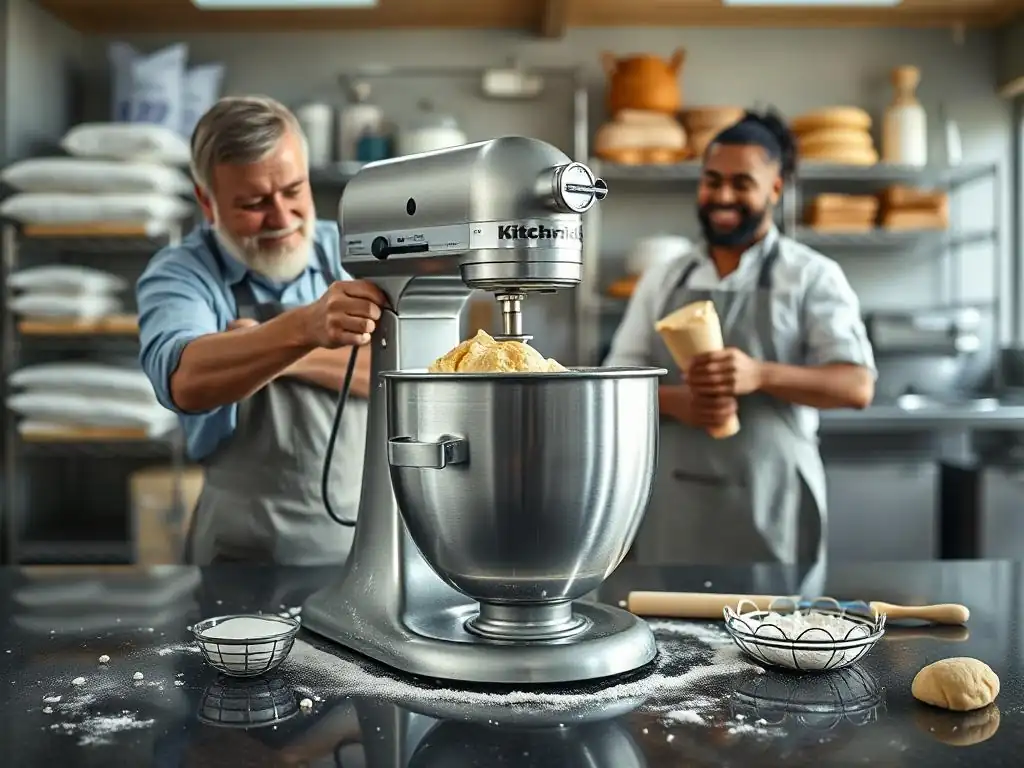
Even with the best large batch stand mixer, successfully mixing substantial quantities of dough requires attention to detail and proper technique. Working with large volumes can introduce new challenges compared to mixing smaller batches. Understanding how to prepare your ingredients, use the mixer effectively, and troubleshoot common issues will help you achieve consistent, high-quality results every time you bake for a crowd.
Approaching large batch mixing systematically ensures that your powerful stand mixer can perform optimally. From accurately weighing ingredients to recognizing the signs of perfectly kneaded dough, mastering these tips will elevate your large-scale baking and make the process smoother and more enjoyable, allowing you to truly mix dough for a crowd with ease.
Preparing Your Ingredients: Measuring Accurately for Optimal Results
When working with large batches, the importance of accurate ingredient measurement is magnified. Small errors in a single batch recipe can become significant issues when scaled up five or ten times. For dry ingredients like flour, sugar, and salt, using a kitchen scale for precise weight measurements is highly recommended over volume measurements (cups), as volume can vary significantly depending on how ingredients are scooped and packed.
For liquids, use liquid measuring cups and ensure you're reading at eye level. Have all your ingredients pre-measured and ready to go before you start mixing. For doughs, ensure your yeast is fresh and properly proofed if the recipe requires it. Using ingredients at the correct temperature (e.g., softened butter, lukewarm liquid for yeast) is also critical, as large volumes can take longer to reach the desired temperature during mixing if they start too cold or too hot. Proper ingredient preparation is the foundation for successful large batch mixing in your large batch stand mixer.
Mixing Techniques: Avoiding Overmixing and Achieving the Right Consistency
With a powerful large batch stand mixer, it's crucial to use the correct mixing speed and duration to avoid overmixing, especially for doughs. Start at a low speed to incorporate dry and wet ingredients, preventing flour from flying out of the bowl. Once the dough or batter comes together, increase the speed gradually as required by the recipe, but avoid running the mixer on high speeds for extended periods, particularly for dough.
For bread dough, knead just until the dough passes the windowpane test (a small piece can be stretched thinly without tearing). Overkneading can result in tough bread. For batters, mix only until ingredients are combined to avoid developing too much gluten, which can make cakes or muffins tough. Pay attention to the sound and feel of the mixer; a straining motor or dough climbing excessively up the hook can indicate the mixture is too stiff or you're trying to mix too much. Learn to recognize the visual cues of properly mixed dough or batter for your specific recipes.
Troubleshooting Common Issues: Dealing with Sticky Dough and Overheated Motors
Even with a capable large batch stand mixer, you might encounter issues. If your dough is too sticky and climbing the dough hook excessively, resist the urge to add large amounts of extra flour directly into the mixer. Stop the mixer, scrape down the hook and sides of the bowl, and add flour a tablespoon at a time, allowing it to incorporate fully before adding more. Sometimes, simply letting the dough rest for 10-15 minutes can help it become less sticky and easier to handle.
An overheated motor is a sign that the mixer is being pushed beyond its limits. If the mixer feels hot to the touch or smells burnt, turn it off immediately and let it cool down completely before using it again. This often happens when trying to knead a dough that is too stiff or too large for the mixer's capacity, or by running it on too high a speed for kneading.
Refer to your mixer's manual for its maximum recommended flour capacity and avoid exceeding it. Using a large batch stand mixer within its designed parameters is key to its longevity.
Making the Right Choice: Which Large Batch Stand Mixer is Best for You?
Deciding on the best large batch stand mixer comes down to aligning the mixer's capabilities with your personal baking habits, needs, and budget. There isn't a single "best" mixer for everyone; the ideal choice depends on what you plan to bake and how often. By considering your typical batch sizes and the types of dough or batter you work with most frequently, you can make an informed decision.
Think about the scale of your largest baking projects. Are you making dough for two loaves of bread weekly, or enough cookies for a school bake sale? Do you frequently tackle very stiff doughs like bagels or dense rye bread? Your answers to these questions will guide you towards the capacity and power level you truly need in a large batch stand mixer.
Consider Your Baking Needs and Budget
Your budget is a practical constraint, but within that budget, prioritize features that matter most for your large batch baking. If you bake large quantities of bread frequently, investing in a mixer known for its dough-kneading prowess and durability under heavy load, like the Bosch Universal Plus or KitchenAid Professional series, might be worthwhile despite the higher cost. These machines are built to handle that specific task exceptionally well over many years.
If your large batch needs are more about volume mixing of batters and less demanding doughs, or if you only occasionally make large bread batches, a high-capacity Cuisinart or a KitchenAid Artisan bowl-lift model might offer sufficient performance at a lower price point. Consider the long-term value: a more expensive, robust large batch stand mixer that perfectly meets your needs and lasts for decades can be a better investment than a cheaper one that struggles or breaks down under the strain of your typical baking projects.
Recommendations Based on Specific Baking Projects
Here are some general recommendations for choosing a large batch stand mixer based on common baking projects:
- Frequent Large Bread Batches (3+ loaves): Bosch Universal Plus is often the top choice for its superior dough kneading capacity and efficiency. KitchenAid Professional 600 series is also an excellent, durable option.
- Large Cookie/Cake Batches & Moderate Bread (1-2 loaves): KitchenAid Professional 600 series or KitchenAid Artisan bowl-lift (5 or 6-quart) offer good capacity and power for a mix of tasks. Cuisinart 7 or 8-quart models are a more budget-friendly alternative.
- Occasional Large Batches (any type) on a Budget: Cuisinart large capacity models provide significant bowl size and good power for less frequent heavy use.
- Very Stiff Doughs (Bagels, Dense Rye) in Quantity: Bosch Universal Plus or KitchenAid Professional series are generally recommended due to their powerful motors and robust construction designed for high torque.
Ultimately, research specific models within these series, read reviews focusing on performance with large doughs, and compare specifications like motor wattage and recommended flour capacity to find the best large batch stand mixer for your kitchen.
Where to Buy Your New Large Batch Stand Mixer (Affiliate Links)
(As per instructions, this section must be empty and contain no links or additional content beyond the header.)
Frequently Asked Questions
What is a large batch stand mixer and why would I need one?
A large batch stand mixer is a powerful kitchen appliance designed to handle larger quantities of ingredients than standard mixers. You need one if you frequently bake for crowds or prefer making big batches of dough or batter for freezing.
What features should I look for when choosing a large batch stand mixer?
Consider features like bowl capacity (measured in quarts), motor power (in watts), and the available speed settings. Also, pay attention to the materials used in construction for durability.
How does a large batch stand mixer differ from a regular stand mixer?
The primary difference is the bowl size and motor power. Large batch mixers have larger bowls and more powerful motors to handle the increased load of ingredients, making them suitable for heavy-duty mixing.
Are large batch stand mixers only for professional bakers?
No, large batch stand mixers are beneficial for anyone who frequently bakes large quantities. While professional bakers may use them extensively, home bakers who enjoy baking for family gatherings or events can also benefit from the increased capacity and power.
Can I use a large batch stand mixer for smaller recipes too?
Yes, you can use a large batch stand mixer for smaller recipes. However, ensure the ingredients reach the mixing attachments properly. Some mixers come with attachments specifically designed for smaller quantities to improve mixing efficiency.
Final Reflection: The Joy of Baking on a Grand Scale
The ability to effortlessly handle large baking projects is no longer a dream, but a delicious reality. The right stand mixer can transform the experience of baking for crowds, from a daunting task into a joyful celebration of culinary creativity. This article explored the best stand mixers for tackling large batches, highlighting their power, versatility, and the sheer satisfaction of producing amazing results with ease.
The impact of reliable kitchen equipment on our ability to share our passion for baking is profound. It's more than just mixing ingredients; it's about creating connections, fostering community, and celebrating life's special moments through the simple act of sharing homemade treats. As Julia Child wisely said, Find something you're passionate about and keep tremendously interested in it.
For many, that passion is baking, and the right tools empower us to pursue it with confidence and joy, regardless of the scale.
Now, consider your own baking aspirations. Do you dream of hosting gatherings where the aroma of freshly baked goods fills the air? Do you envision sharing your culinary skills with friends and family, creating memories around a table laden with homemade delights? The journey begins with the right equipment. Invest in a stand mixer capable of handling large batches, and unlock a world of possibilities. Embrace the challenge, embrace the joy, and let your passion for baking flourish.
Unleash Your Inner Baker: Mix Bigger, Bake Better!
Thanks for taking the time to explore the world of large-batch baking! We hope you're feeling inspired and ready to tackle those ambitious recipes. Now it's time to put that knowledge into action.
- Find your perfect stand mixer: Browse our comprehensive guide to stand mixers (available on bakewithease.com) and choose the model that will best meet your large-batch needs. This is your first step to baking success!
- Share your baking triumphs: Tag us on social media with photos of your creations! Let's build a community of bakers who aren't afraid to go big.
- Explore new recipes: Try scaling up one of your favorite cookie or bread recipes. See how effortlessly your new stand mixer handles the increased volume.
What delicious large-batch creation will you tackle first?