
The Beginner's Guide to Understanding Emulsification in Baking

Welcome to BakeWithEase, where baking becomes a joy, not a chore! Ever wondered how to achieve that perfect, velvety texture in your cakes and cookies? We're diving deep into the science behind baking, starting with a crucial technique that separates the pros from the novices: emulsification. Our Beginner's Guide to Understanding Emulsification in Baking unlocks the secrets to creating consistently delicious results. Intrigued? Prepare to elevate your baking game, one emulsion at a time!
- Mastering Emulsification in Baking: A Comprehensive Guide
- Understanding Emulsification in Baking
- The Science of Emulsification in Baking
- Key Emulsifying Ingredients in Baking
- Techniques for Successful Emulsification
- Troubleshooting Emulsification Issues
- Emulsification in Various Baking Applications
- Tips and Best Practices for Emulsification
- Emulsification in Baking: Key Considerations
- Frequently Asked Questions
- Final Reflection: The Magic of Emulsions, Baked In
- Unlock Your Baking Potential: Master Emulsification Today!
Mastering Emulsification in Baking: A Comprehensive Guide
Understanding Emulsification in Baking
Emulsification Explained: Creating Stable Mixtures
At its core, emulsification in baking is the process of combining two ingredients that don't naturally mix – typically, fat and water – into a stable, smooth mixture. Think about salad dressing made with oil and vinegar; if you let it sit, the oil and vinegar separate. Shaking it mixes them temporarily, but they'll separate again because oil and water are immiscible. In baking, we need mixtures like cake batter or cookie dough to remain combined and uniform throughout the process, from mixing to baking. This is where emulsification comes in.
An emulsifier acts as a bridge between the fat and water molecules. It has parts that are attracted to water (hydrophilic) and parts that are attracted to fat (lipophilic). These molecules surround tiny droplets of one ingredient (say, fat) and suspend them evenly throughout the other ingredient (water), preventing them from clumping together and separating. This creates a stable emulsion, where the fat and water phases are finely dispersed and stay that way, crucial for achieving the desired texture and structure in your baked goods. Understanding emulsification is a fundamental step for any beginner's guide to baking science.
Importance of Emulsification: Impact on Texture and Structure
The stability of an emulsion has a profound impact on the final texture and structure of baked goods. In cakes, for instance, a well-emulsified batter results in a finer, more tender crumb and helps prevent issues like tunneling or a greasy layer at the bottom. The even distribution of fat and moisture contributes significantly to the cake's moistness and overall mouthfeel. Without proper emulsification, the fat might separate, leading to dense, dry areas and greasy pockets.
Beyond texture, emulsification also plays a vital role in the structure of baked items. It helps to create a stable framework that can hold air incorporated during mixing (like in creaming butter and sugar), which is essential for leavening. In cookies, emulsification helps control spread during baking and contributes to a consistent texture, whether you're aiming for chewy or crisp. For sauces and custards used in baking, like pastry cream or lemon curd, emulsification (often via egg yolks) ensures a smooth, glossy consistency free from curdling. Mastering emulsification is key to consistent, high-quality results in your baking adventures.
The Science of Emulsification in Baking
Understanding Emulsifiers: Stabilizing Agents in Baking
Emulsifiers are the heroes behind stable mixtures in baking. These molecules possess a unique dual nature: one end is attracted to water (hydrophilic), and the other end is attracted to oil or fat (lipophilic). This structure allows them to position themselves at the interface between fat droplets and water, effectively creating a barrier that prevents the fat droplets from coalescing. By coating the dispersed phase (usually fat) and keeping the droplets small and evenly distributed within the continuous phase (usually water), emulsifiers stabilize the mixture, creating a smooth, homogeneous batter or dough.
Common natural emulsifiers found in baking ingredients include lecithin (abundant in egg yolks), proteins (found in eggs and milk), and certain gums. Commercial emulsifiers like mono- and diglycerides are also often added to processed baking ingredients like shortening or cake mixes to enhance stability and improve texture. For a beginner's guide to understanding emulsification in baking, recognizing these agents and their function is essential for successful recipe execution. They allow ingredients that would otherwise repel each other to coexist harmoniously within your batter.
The Role of Water and Fat: Creating Emulsions
In the context of an emulsification baking beginner's guide, understanding the roles of water and fat is fundamental. These are the two primary immiscible phases that we are trying to combine. The 'water' phase in baking can come from various liquid ingredients like milk, water, eggs (which are mostly water), yogurt, or buttermilk. The 'fat' phase comes from butter, oil, shortening, or even fats present in nuts or chocolate. The goal of emulsification is to disperse one of these phases throughout the other in a stable manner.
Depending on the ratio and the type of emulsifier, you can create different types of emulsions, but in baking batters, we are typically creating an oil-in-water emulsion. This means tiny droplets of fat are dispersed throughout a larger, continuous water phase. The mechanical action of mixing or whisking helps to break the fat into smaller droplets, and the emulsifier then works to keep these droplets suspended, preventing them from rejoining. The proper balance and incorporation of these two phases, facilitated by emulsifiers, are what build the foundation of many successful baked goods.
Types of Emulsions: Oil-in-Water and Water-in-Oil
There are two primary types of emulsions relevant to understanding emulsification in baking: oil-in-water (O/W) and water-in-oil (W/O). In an oil-in-water emulsion, tiny droplets of oil or fat are dispersed throughout a continuous phase of water. Examples common in baking or related culinary fields include milk (fat dispersed in water), cake batter, and mayonnaise (oil dispersed in water, stabilized by egg yolk lecithin). This type of emulsion is characterized by being pourable and having a non-greasy feel because the outer phase is water-based.
Conversely, a water-in-oil emulsion consists of tiny droplets of water dispersed throughout a continuous phase of oil or fat. Butter and margarine are classic examples of water-in-oil emulsions, containing dispersed water droplets within a continuous fat matrix. While cake batters are typically O/W, the butter or margarine used to make them starts as a W/O emulsion.
As you cream butter with sugar and then add eggs and liquids, you are essentially transitioning and incorporating the fat from the butter (along with its small water content) into a new, larger O/W emulsion that forms the cake batter. Understanding this distinction helps illuminate the processes happening as you mix ingredients.
Key Emulsifying Ingredients in Baking
Eggs: Natural Emulsifiers in Baking
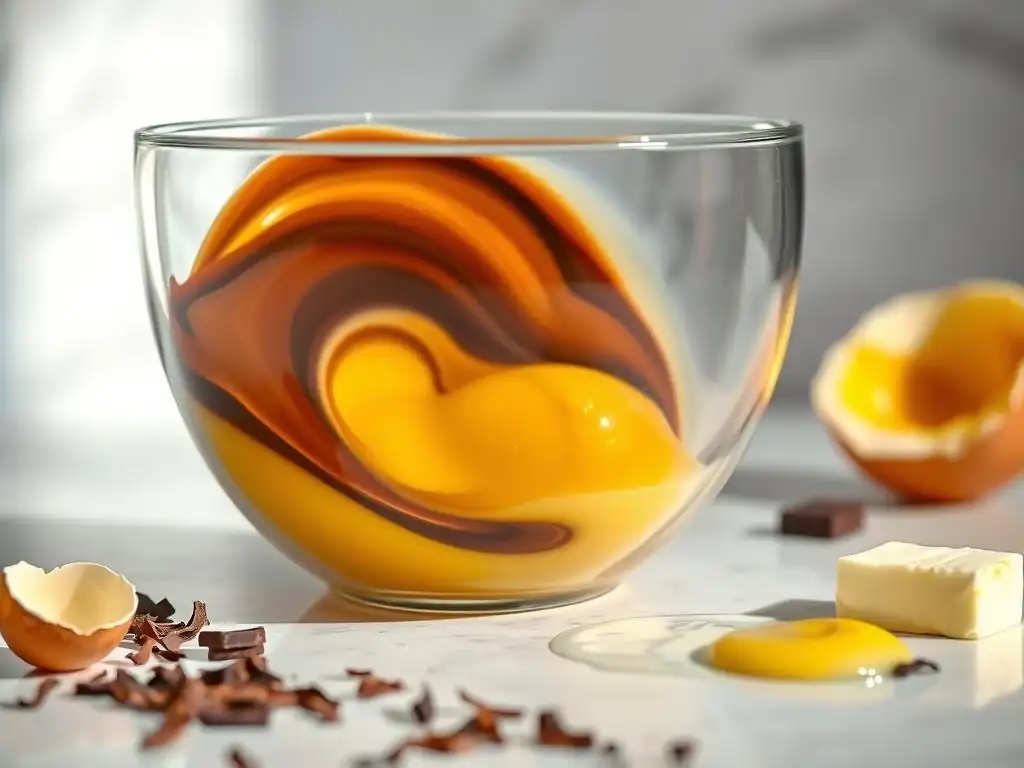
Eggs are one of the most powerful and commonly used natural emulsifiers in baking, particularly the yolks. Egg yolks are rich in lecithin, a phospholipid that is an excellent emulsifier. Lecithin molecules have a hydrophilic (water-attracting) head and a lipophilic (fat-attracting) tail. This structure allows them to surround fat droplets and disperse them evenly throughout a water-based liquid, creating a stable emulsion. A single egg yolk contains roughly 10% lecithin by weight, making it highly effective.
When you add eggs to a mixture of fat and sugar (as in the creaming method for cakes), the lecithin in the yolks helps to bridge the gap between the fatty butter/sugar mixture and the other liquid ingredients you'll add later, like milk or water. This integration creates a smooth, cohesive batter that holds air well and bakes up with a fine, even texture. Eggs also contribute protein and moisture, but their emulsifying power is a key reason they are indispensable in many baking recipes, providing stability and richness to everything from cakes and cookies to custards and sauces.
Fats (Butter, Shortening, Oil): Contributing to Emulsion Stability
While often the dispersed phase in an emulsion (especially oils), fats like butter and shortening also play a role in emulsion stability, though not primarily as emulsifiers themselves. Butter, being a water-in-oil emulsion, contains about 15-18% water and some milk solids, which include proteins that can have minor emulsifying properties. When butter is creamed with sugar, the mechanical action helps to break down the butter's structure, and the presence of its water content and milk solids interacts with other ingredients.
Shortenings, particularly commercial varieties, often contain added emulsifiers (like mono- and diglycerides) to enhance their performance in baking. These added emulsifiers help create more stable batters, improve volume, and contribute to a softer crumb texture in cakes and bread. Oils, being 100% fat, rely almost entirely on other ingredients in the recipe (like eggs or flour proteins) to achieve emulsification. While fats are essential for flavor, moisture, and texture, their contribution to emulsion stability is often secondary to dedicated emulsifiers like eggs or added additives, making them a critical component to manage in any emulsification baking beginner's guide.
Lecithin and Other Additives: Enhancing Emulsification
Beyond the natural emulsifying power of egg yolks, specific additives are sometimes used, especially in commercial baking or when seeking particular results. Lecithin, often sourced from soy or sunflower, is available commercially as a powder or liquid and can be added to recipes to boost emulsification power. It works the same way as egg yolk lecithin, helping to create a stable bridge between fat and water. A small amount, perhaps 0.5% to 1% of the flour weight, can significantly impact batter stability and product texture.
Other common emulsifiers found in commercial baked goods include mono- and diglycerides. These are derived from fats and are highly effective at stabilizing oil-in-water emulsions. They are often used in packaged cake mixes, bread, and icings to improve crumb softness, increase volume, and extend shelf life by preventing staling. While a beginner's guide to understanding emulsification in baking might focus on basic ingredients like eggs and butter, being aware of these additives helps understand why some store-bought items have certain textures or characteristics. They provide enhanced stability and performance beyond what is typically achieved with natural ingredients alone.
Techniques for Successful Emulsification
Creaming Method: Achieving Light and Airy Textures
The creaming method is a classic technique in baking that heavily relies on achieving a good emulsion to build structure and incorporate air. It typically starts by beating softened butter (the fat phase) with sugar. This process not only dissolves some sugar crystals but, more importantly, incorporates air into the pliable fat, creating tiny air pockets. The mixture becomes lighter in color and fluffier in texture. Next, eggs (the primary emulsifier) are added gradually, often one at a time.
Adding the eggs slowly allows the lecithin in the yolks to form a stable emulsion with the creamed butter and sugar. This step is crucial; the eggs help to distribute the fat and sugar evenly and stabilize the incorporated air bubbles. If the eggs are added too quickly, the emulsion can 'break,' resulting in a curdled appearance. After the eggs are incorporated, dry and liquid ingredients are usually added alternately. The stable emulsion created in the creaming step helps the batter accept these additions smoothly without separating, leading to a fine crumb and good volume in cakes and cookies.
Temperature Control: Optimizing Emulsion Formation
Temperature plays a critical role in the success of emulsification in baking. Ingredients that are too cold or too warm can prevent the formation of a stable mixture. For methods like creaming butter and sugar, softened butter at room temperature (around 65-70°F or 18-21°C) is ideal.
If the butter is too cold, it won't cream properly with the sugar to incorporate air, and it will be difficult for the emulsifiers to integrate it smoothly. If the butter is too warm or melted, the fat and water phases can separate, making it hard for the emulsifiers to do their job effectively.
Similarly, eggs should ideally be at room temperature when added to batters. Cold eggs can cause the fat in a creamed mixture to seize up, leading to a curdled appearance and potentially breaking the emulsion. Room temperature ingredients combine more readily and smoothly, allowing emulsifiers like lecithin to work efficiently at the interface of the fat and water phases. Paying attention to the temperature of your ingredients is a simple yet vital step in ensuring a stable emulsion and achieving the desired texture in your baked goods, a key takeaway from any emulsification baking beginner's guide.
Incorporating Liquids: Preventing Separation
Successfully incorporating liquids into a batter or dough is another point where emulsification is tested and techniques matter. Once the initial emulsion (like creamed butter, sugar, and eggs) is formed, you typically add the remaining dry and liquid ingredients. Adding the liquid all at once can shock the system and overwhelm the emulsifiers, causing the fat and liquid phases to separate.
A common technique to prevent this is to add liquids gradually, often alternating with portions of the dry ingredients. For example, you might add one-third of the flour mixture, mix until just combined, then add half of the milk, mix, then another third of the flour, the remaining milk, and finally the last third of the flour.
Adding dry ingredients helps absorb some of the liquid and provides structure, while adding liquid slowly allows the emulsifiers to continuously integrate the new liquid phase into the existing emulsion without breaking it. This gradual approach ensures a smooth, homogeneous batter that will bake evenly.
Troubleshooting Emulsification Issues
Identifying a Broken Emulsion: Recognizing Separation
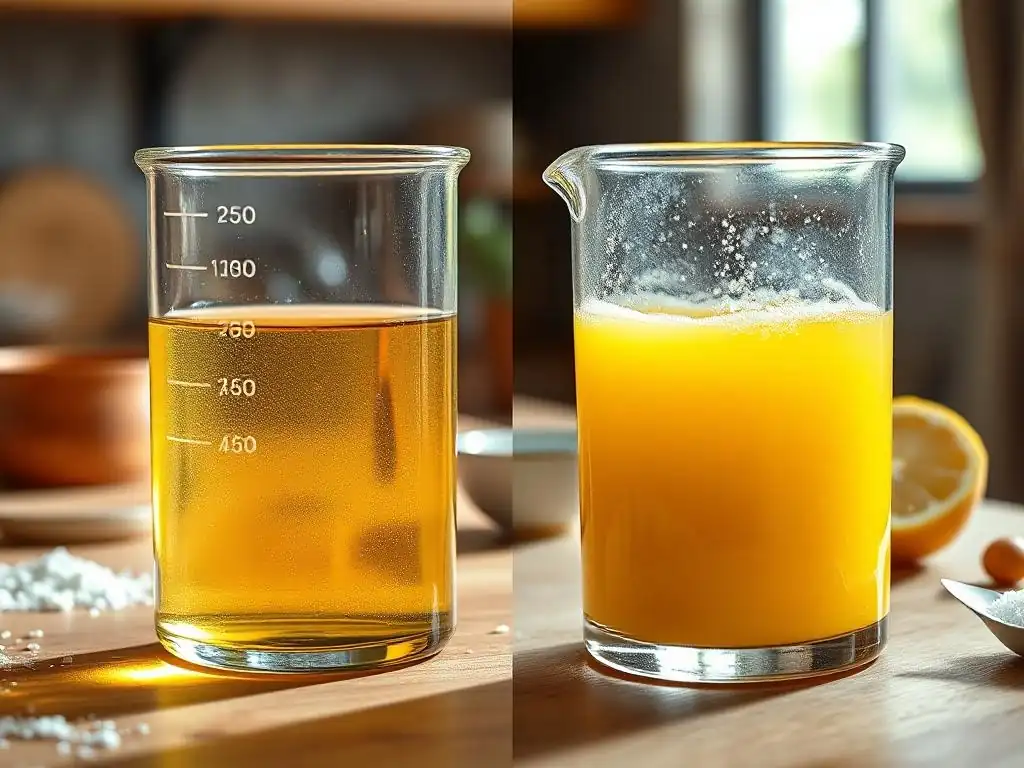
Even with careful technique, emulsions can sometimes break. Recognizing a broken emulsion is the first step to fixing it. In a batter, a broken emulsion typically looks curdled or separated. You might see distinct pockets of fat (looking greasy or clumpy) and liquid (often watery or milky) that refuse to combine into a smooth, homogeneous mixture. The texture will be uneven and lumpy rather than smooth and cohesive.
For example, when adding eggs to creamed butter and sugar, if the mixture starts to look like cottage cheese, with small clumps of fat suspended in a watery liquid, you have a broken emulsion. Similarly, if you're making a sauce or custard and it looks grainy or watery instead of smooth and creamy, the emulsion has likely failed. Learning to identify this visual cue is crucial for any beginner's guide to understanding emulsification in baking, as it tells you that the fat and water phases have separated and need to be brought back together.
Preventing Separation: Best Practices
Preventing a broken emulsion is always easier than fixing one. Several best practices can significantly reduce the risk of separation. As previously mentioned, using ingredients at the correct temperature is paramount. Ensure butter is softened but not melted, and eggs and other liquids are at room temperature (around 65-70°F).
Another key practice is adding ingredients gradually, especially liquids after an initial emulsion has formed. When incorporating eggs into creamed butter, add them one at a time, mixing well after each addition until fully incorporated and the mixture is smooth before adding the next. When adding dry and wet ingredients, alternate them in small portions. Avoid overmixing once all ingredients are just combined, as excessive mixing can sometimes disrupt a delicate emulsion. Finally, ensure your ingredient ratios are correct; too much fat or liquid relative to the amount of emulsifier can make the emulsion unstable.
Fixing a Broken Emulsion: Recovery Strategies
If you find yourself with a broken emulsion, don't despair! There are often ways to rescue it. For a broken butter-based mixture (like creamed butter/sugar/eggs), sometimes gently warming the sides of the bowl with a blow dryer or over a warm water bath for just a few seconds while whisking can help the fat re-soften and reintegrate.
Another effective technique is to add a small amount of the dry ingredient mixture (perhaps a tablespoon or two) to the broken batter while whisking vigorously. The flour or other dry ingredients can help absorb some of the excess liquid and provide structure, allowing the emulsion to reform.
Alternatively, you can try adding a tablespoon of the liquid ingredient (like milk or water) very slowly while continuously whisking; sometimes, adding a little more of the continuous phase helps re-disperse the broken particles. In severe cases, you might need to start with a fresh, small amount of an emulsifier (like a tablespoon of room temperature egg or just an egg yolk) in a clean bowl and gradually whisk the broken mixture into it, essentially rebuilding the emulsion from scratch.
Emulsification in Various Baking Applications
Cakes: Achieving Desired Texture and Crumb
Emulsification is arguably most critical in cake baking. A well-emulsified cake batter is smooth, homogeneous, and has a slightly glossy appearance. This stability ensures that the fat is evenly distributed throughout the batter, coating the flour particles and preventing them from forming too much gluten, which would result in a tough cake. The even distribution of fat also contributes significantly to the cake's moistness and tenderness.
Furthermore, the stable emulsion helps to support the air bubbles incorporated during creaming and mixing. As the cake bakes, these air pockets expand, contributing to the cake's rise and creating a fine, even crumb structure. If the emulsion breaks, the fat and liquid separate, leading to a greasy, dense cake with a coarse or uneven crumb, potentially even sinking in the middle. Understanding emulsification is foundational for any emulsification baking beginner's guide focused on achieving consistently light and tender cakes.
In cookie baking, emulsification also plays a vital role, particularly in controlling spread and influencing texture. The ratio of fat, sugar, liquid (like eggs), and flour, combined with mixing technique, determines how much the cookies spread and whether they are crisp, chewy, or soft. Emulsification helps ensure that the fat is properly integrated with the other ingredients.
When butter is creamed with sugar and then combined with eggs and flour, the emulsification process helps manage the fat's behavior during baking. A stable emulsion prevents the fat from separating and spreading too quickly in the oven before the structure of the cookie is set by the coagulation of proteins and starch gelatinization. This control over fat distribution influences the degree of spread and contributes to a more consistent texture. For instance, recipes relying heavily on egg yolk emulsification tend to yield chewier cookies due to the combined effect of lecithin and egg proteins.
Sauces and Custards: Ensuring Smooth Consistency
While not always considered 'baking' in the strictest sense (unless used as fillings or toppings), sauces and custards like pastry cream, hollandaise, or lemon curd are classic examples of emulsions where stability is paramount. In pastry cream, egg yolks are used to thicken the milk/sugar mixture, and their lecithin content helps emulsify the fat from the milk or any added butter, preventing a curdled texture.
Hollandaise and mayonnaise are perhaps the most direct examples of culinary emulsions, where egg yolks are used to emulsify large amounts of fat (melted butter or oil) into a small amount of liquid (lemon juice/vinegar or water). Achieving a stable, smooth, and glossy consistency in these requires careful technique, gradual addition of fat, and the potent emulsifying power of the egg yolk lecithin.
While these might seem distant from cake batter, the underlying principles of fat-in-water or water-in-fat dispersion stabilized by emulsifiers are the same, reinforcing the importance of understanding emulsification across various culinary applications, including those used in baking.
Tips and Best Practices for Emulsification
Equipment Selection: Choosing the Right Tools
The right equipment can significantly aid in achieving stable emulsions. Mechanical energy is needed to break down the dispersed phase (like fat) into tiny droplets and distribute them evenly throughout the continuous phase (like liquid). Tools that provide vigorous mixing are best.
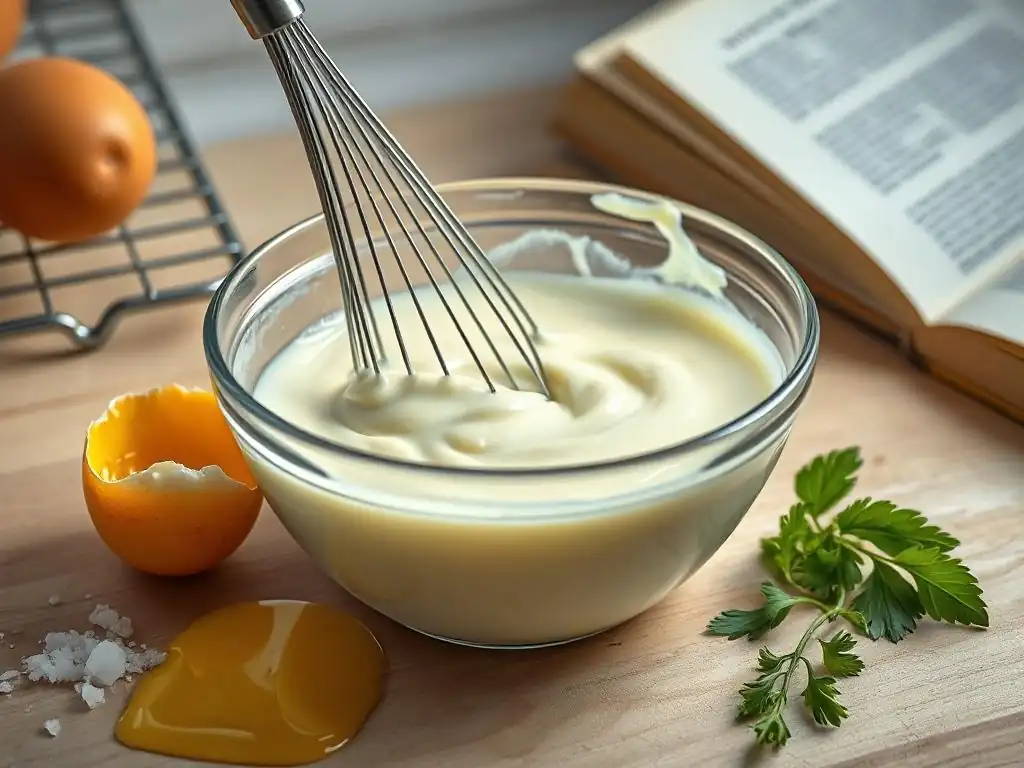
For batters and doughs, a stand mixer or a hand mixer is highly effective, especially during the creaming step and when incorporating eggs. The paddles or whisks provide the necessary shear force to disperse the fat and incorporate air. For smaller quantities or lighter mixtures like custards or sauces, a whisk or even an immersion blender can be used to create and stabilize emulsions.
Ensure your mixing bowl is clean and dry, as residual grease or water can sometimes interfere with emulsion formation. Using the appropriate speed on your mixer – often medium speed for creaming and incorporating eggs – allows the emulsifiers time to work effectively.
Ingredient Measurement: Accuracy is Key
Accurate measurement of ingredients is fundamental to successful emulsification in baking. Recipes are formulated with specific ratios of fat, liquid, flour, sugar, and emulsifying ingredients (like eggs) to create a stable system. Deviating significantly from these ratios can make it difficult or impossible for a stable emulsion to form.
For example, if a recipe calls for a specific amount of eggs, reducing that amount might mean there isn't enough lecithin to properly emulsify the fat and liquid, leading to separation. Conversely, too much liquid relative to the fat and emulsifier can also destabilize the mixture. Using a kitchen scale for dry ingredients and fats provides the most accurate measurements, especially for flour, which can compact differently in measuring cups.
For liquids, liquid measuring cups on a level surface are best. Precision in measuring ensures the intended balance between the phases and the emulsifier is maintained, setting the stage for a successful emulsion.
Adding Ingredients Gradually: Promoting Stability
As highlighted in techniques, adding ingredients gradually is a crucial best practice for promoting stable emulsions. This is particularly true when incorporating liquids into a fat-based mixture or adding fats to a liquid base. For instance, when making mayonnaise or hollandaise, the oil or melted butter is added in a thin, steady stream very slowly while continuously whisking. This allows the egg yolk emulsifiers to bind with the tiny droplets of fat as they are introduced, preventing the fat from overwhelming the system and separating.
In cake batters following the creaming method, adding eggs one at a time and incorporating them fully before adding the next is vital. Similarly, alternating dry and wet ingredients in portions allows the mixture to handle the addition of different phases more smoothly. This gradual process gives the emulsifiers time to work effectively at the interface of the fat and water, building a strong, stable emulsion layer by layer. Patience and a steady hand during this step can make the difference between a smooth batter and a curdled mess, a key lesson in any emulsification baking beginner's guide.
Emulsification in Baking: Key Considerations
Mastering Emulsification: Essential Techniques
Mastering emulsification in baking for beginners boils down to understanding a few essential techniques. First, pay close attention to ingredient temperatures; room temperature is often your best friend. Second, learn the signs of a broken emulsion so you can react quickly. Third, practice adding ingredients gradually, especially fats into liquids or liquids into fat-based mixtures. Techniques like the creaming method and alternating dry/wet additions are fundamental applications of emulsification principles.
Developing a feel for the mixture's texture and appearance as you mix is also important. A well-emulsified batter feels smooth and looks homogeneous, while a broken one will show signs of separation. Don't be afraid to troubleshoot; knowing how to potentially fix a broken emulsion can save your bake. Consistent application of these basic techniques, combined with accurate ingredient measurement, will significantly improve your success rate in recipes relying on stable emulsions, forming a solid foundation for your emulsification baking beginner's guide journey.
Advanced Techniques: Exploring Specialty Emulsifiers
Once you've mastered the basics of emulsification using common ingredients like eggs and butter, you might encounter or choose to explore more advanced techniques or specialty emulsifiers, especially if venturing into professional patisserie or molecular gastronomy applications. Beyond lecithin, ingredients like polysorbates, sucrose esters, or specific hydrocolloids (gums like xanthan or guar) can be used to create highly stable or unusual emulsions.
These ingredients often allow for different textures, stability under various conditions (like freezing or high heat), or the creation of emulsions with very high percentages of one phase (e.g., a very high-fat ganache or a stable foam). While these are typically beyond the scope of a beginner's guide to understanding emulsification in baking, being aware of their existence shows the depth of application for emulsification principles. Professionals might use specific ratios or combinations of emulsifiers to achieve precise textures or extended shelf life not easily attainable with traditional ingredients alone.
Resources for Further Learning: Expanding Your Knowledge
Embarking on an emulsification baking beginner's guide journey opens the door to a deeper understanding of baking science. To further expand your knowledge, consider exploring resources that delve into the chemistry of ingredients. Cookbooks or websites that explain the 'why' behind techniques, not just the 'how,' can be incredibly valuable. Look for sections on ingredient function or baking science principles.
Scientific cooking resources, food science blogs, and online courses specifically focused on the chemistry of baking can provide more detailed explanations of how emulsifiers work at a molecular level, the impact of different fats and liquids, and how factors like pH or salt concentration can affect emulsion stability. Experimenting with recipes, deliberately trying to create and fix broken emulsions (perhaps with small test batches), can also be a hands-on way to solidify your understanding. The more you learn about the science, the more control you'll have over your baking results.
Frequently Asked Questions
What exactly is emulsification in baking?
Emulsification in baking refers to the process of combining two liquids that don't naturally mix, such as oil and water. It creates a stable mixture where one liquid is dispersed evenly throughout the other.
Why is emulsification important for beginner bakers?
Understanding emulsification is crucial because it directly affects the texture and structure of baked goods. Proper emulsification results in a smoother batter and a more tender, evenly baked product.
What are some common examples of emulsification in baking recipes?
Many recipes, like cakes and mayonnaise, rely on emulsification. The most common example is creaming butter and sugar together, which incorporates air and creates a light and fluffy base.
What can happen if emulsification fails in a baking recipe?
If emulsification fails, the mixture can separate or curdle. This can lead to a dense, greasy, or unevenly textured final product.
What are some tips for a beginner baker to ensure successful emulsification?
Ensure all ingredients are at room temperature, add liquids slowly while mixing, and use an emulsifier like egg yolks or mustard to help stabilize the mixture.
Final Reflection: The Magic of Emulsions, Baked In
Understanding emulsification is no longer a niche skill for professional bakers; it's the key to unlocking consistent, delicious results in your own kitchen. Mastering this fundamental process transforms baking from a hit-or-miss affair into a predictable and rewarding experience, allowing you to confidently create everything from light and airy cakes to rich and creamy custards.
The impact of understanding emulsion extends far beyond the immediate outcome of a perfectly textured cake or smooth sauce. It fosters a deeper appreciation for the science behind baking, revealing the intricate interplay of ingredients and their behavior. The most beautiful thing we can experience is the mysterious. It is the source of all true art and science.
- Albert Einstein. This quote, while not directly about baking, perfectly encapsulates the wonder of discovering the hidden mechanisms that create such delicious results. The journey of understanding emulsification is a journey into the heart of culinary creativity.
Now, it's your turn. Don't just passively consume this information; actively experiment! Try different emulsifiers, observe the changes in texture, and don't be afraid to fail. Each failed attempt is a lesson learned, bringing you closer to mastering the art of emulsification. Embrace the process, celebrate your successes, and remember the joy of creating something delicious with your own two hands. The world of baking awaits your exploration – go forth and emulsify!
Unlock Your Baking Potential: Master Emulsification Today!
Thanks for taking the time to explore the world of emulsification in baking! You've now got the foundational knowledge to create smoother, richer, and more delicious baked goods. Ready to put your new skills to the test?
- Whip up your favorite recipe, focusing on the emulsification steps. Pay close attention to the techniques you've learned and notice the difference! This is your chance to experiment and really own the process.
- Share your baking triumphs (and even your baking mishaps!) on social media using #BakeWithEaseEmulsification. Let's build a supportive community of bakers exploring this vital technique together.
- Consider experimenting with a new recipe that heavily relies on emulsification. Challenge yourself to apply your newfound expertise to a more complex recipe, like a decadent mousse or a creamy custard.
So, what delicious creation will you emulsify today?