
What is Sugar Crystallization? The Science Behind Grainy Sweets

Welcome to BakeWithEase, your trusted guide to unlocking baking brilliance! Ever wondered why your caramel sometimes turns gritty, or your fudge develops an unwelcome grainy texture? This week, we're diving deep into the science behind sugar crystallization, uncovering the secrets to smooth, delicious sweets. Prepare to transform your baking know-how and banish those unwanted crystals forever! Intrigued? Let's get started!
- What is Sugar Crystallization? Achieving Smooth Textures in Baking
- Understanding Sugar Crystallization: The Basics
- Factors Influencing Sugar Crystallization: Avoiding Grainy Texture
- Common Baking Problems Caused by Sugar Crystallization
- Techniques to Prevent Unwanted Sugar Crystallization
- Troubleshooting Sugar Crystallization Issues
- Sugar Crystallization in Different Baking Applications
- Advanced Techniques for Sugar Work and Crystal Control
- Conclusion: Achieving Smooth, Crystal-Free Baking
-
Frequently Asked Questions
- What exactly is sugar crystallization and why does it happen in baking?
- How does sugar crystallization result in a "grainy texture" in my desserts?
- What are some common baking mistakes that contribute to sugar crystallization?
- Can sugar crystallization be reversed once it has occurred in a recipe?
- What steps can I take to prevent sugar crystallization and achieve a smooth texture in my baked goods?
- Final Reflection: The Sweet Science of Texture and Beyond
- Unlock Your Sweetest Baking Secrets!
What is Sugar Crystallization? Achieving Smooth Textures in Baking
Understanding Sugar Crystallization: The Basics
Defining Sugar Crystallization in Baking
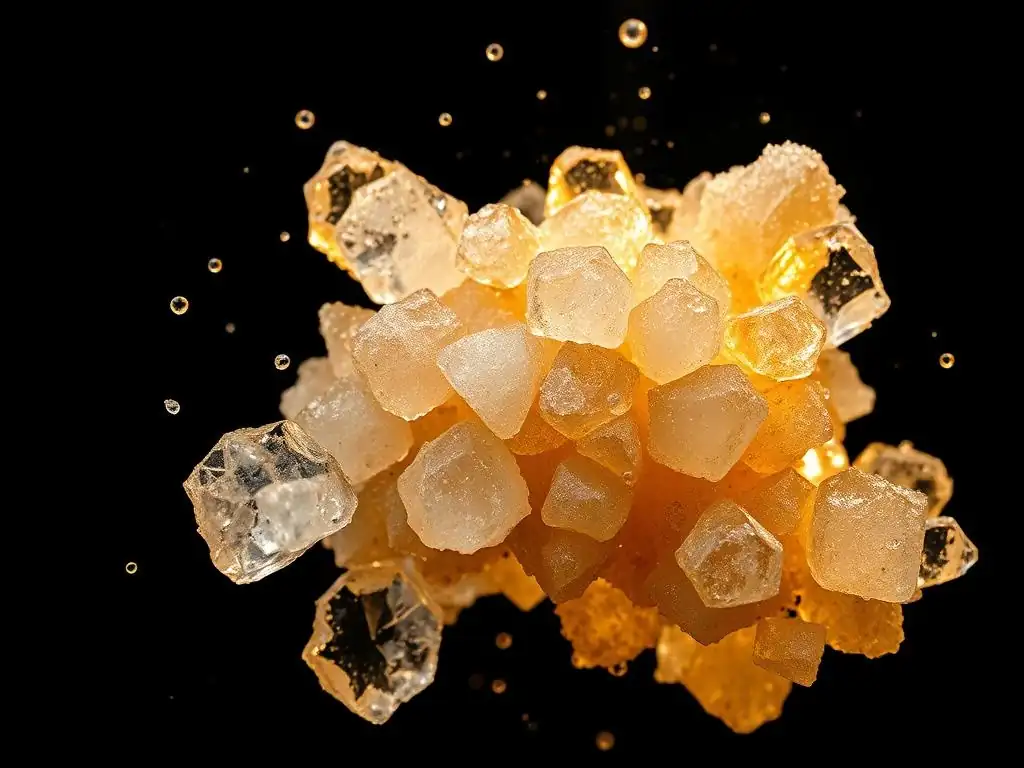
Sugar crystallization, in simple terms, is the process where sugar molecules, typically sucrose, come out of a liquid solution and form solid crystals. Imagine dissolving sugar in hot water; it disappears, right? That's a sugar solution. As this solution cools or water evaporates, the sugar molecules get closer together. When they reach a certain concentration, they start to link up and form structured solid shapes – crystals. This is the same process that creates beautiful rock candy, but it's also the culprit behind that frustrating sugar crystallization grainy texture in many baked goods and confections.
In baking and candy making, we often work with highly concentrated sugar solutions, like syrups or melted sugar. The goal in many applications, such as making smooth caramel, glossy glazes, or creamy fudge, is to avoid this crystallization process or control it very carefully. Uncontrolled crystallization results in a texture that feels gritty or sandy on the tongue, a far cry from the desired smooth, melt-in-your-mouth consistency. Understanding how and why sugar crystallizes is the first step to preventing that unwanted sugar crystallization grainy texture and achieving perfect results every time.
The Science of Sucrose and Crystal Formation
At a molecular level, sugar crystallization involves sucrose molecules arranging themselves into a highly ordered lattice structure. When sugar is heated in water, the sucrose molecules spread out and are surrounded by water molecules. As the water evaporates or the solution cools, the concentration of sucrose increases. Eventually, the solution becomes supersaturated, meaning it holds more dissolved sugar than it normally could at that temperature. This is a highly unstable state.
Any disturbance – a stray sugar crystal, a dust particle, or even just agitation – can provide a nucleation site, a tiny point where sucrose molecules can begin to attach and build the crystal lattice. Once a few molecules start this process, others quickly join, and the crystal grows. The rate of cooling significantly impacts crystal size; rapid cooling often leads to smaller crystals, while slow cooling can allow larger crystals to form. Preventing sugar crystallization grainy texture often relies on preventing these initial nucleation sites from forming or interfering with the molecules' ability to link up.
Why Sugar Crystallization Matters
Sugar crystallization matters profoundly in baking and confectionery because it directly impacts the final texture and appearance of your creations. While controlled crystallization is desired for things like fondant icing (which is essentially a mass of tiny, controlled sugar crystals) or sanding sugar, uncontrolled crystallization leads to serious textural flaws. A batch of fudge that should be smooth and creamy can become unpleasantly gritty due to unwanted crystal formation.
Think about making caramel sauce. You heat sugar until it melts and caramelizes. If even one tiny sugar crystal remains on the side of the pan and falls in, it can seed the entire batch, causing the liquid caramel to seize up or develop a gritty texture as it cools. Similarly, a perfectly smooth glaze can turn cloudy and grainy if crystallization occurs. Mastering techniques to prevent sugar crystallization grainy texture is a fundamental skill for achieving professional-quality results in a wide range of sweet treats, from simple syrups to complex candies.
Factors Influencing Sugar Crystallization: Avoiding Grainy Texture
Temperature's Role in Sugar Crystal Development
Temperature plays a critical role in sugar crystallization. As a sugar solution heats up, its capacity to dissolve sugar increases significantly. This is why you can dissolve much more sugar in hot water than in cold. As the solution cools, it holds less dissolved sugar, becoming supersaturated. This supersaturated state is prime territory for crystallization if not handled carefully.
The rate of cooling is also vital. Rapid cooling tends to create a highly unstable supersaturated solution, but it also gives less time for crystals to form and grow, potentially leading to smaller, less noticeable crystals or even an amorphous (non-crystalline) solid like glass candy.
However, disturbances during rapid cooling can still trigger crystallization. Slow cooling, on the other hand, provides ample time for crystal growth if nucleation occurs, often resulting in larger, more prominent crystals and a distinctly grainy texture.
For many confections aiming for smoothness, controlling the cooling process – often by cooling without disturbance to a specific temperature before stirring – is a key strategy to prevent unwanted sugar crystallization grainy texture. For example, when making fudge, the mixture is typically cooled undisturbed to around 110°F (43°C) before beating, allowing a specific type of crystallization to occur that yields a smooth texture, whereas stirring while too hot causes large, grainy crystals.
Sugar Concentration and Its Impact on Crystallization
The concentration of sugar in a solution is perhaps the most fundamental factor influencing crystallization. The higher the sugar concentration, the more likely crystallization is to occur. When you boil a sugar syrup, water evaporates, increasing the sugar-to-water ratio and thus the concentration. As the syrup reaches higher temperatures (e.g., thread, soft ball, hard ball stages), the sugar concentration becomes extremely high.
A solution must be supersaturated for crystallization to happen readily. A solution that is merely saturated (holding the maximum amount of sugar it can dissolve at that temperature) is stable. It's when the solution contains more sugar than it can normally hold that the sugar molecules are eager to link up and form crystals.
Candy recipes rely on reaching specific high concentrations (measured by temperature) to achieve different textures. However, these high concentrations also make the mixture highly susceptible to unwanted crystallization. Preventing sugar crystallization grainy texture often involves ensuring the sugar is fully dissolved initially and avoiding conditions that promote rapid or uncontrolled crystal growth in these concentrated solutions.
Agitation and Seed Crystals: Controlling Crystal Size
Agitation, or movement, is a major trigger for sugar crystallization, especially in supersaturated solutions. Stirring, scraping the sides of the pan, or even bumping the pot can introduce air bubbles or dislodge tiny, unseen sugar crystals from the sides, which then act as "seed" crystals. These seed crystals provide a surface for other sugar molecules to attach to, initiating rapid crystal growth throughout the mixture.
Once seeded, crystallization can happen very quickly, turning a smooth syrup into a grainy mass. This is why many candy recipes instruct you not to stir the sugar syrup once it starts boiling, or to wipe down the sides of the pan with a wet pastry brush to dissolve any stray sugar crystals.
For example, when making clear hard candy, the syrup is boiled without stirring to prevent seeding and ensure a smooth, glassy texture. In contrast, making creamy fudge does involve stirring, but only after the mixture has cooled significantly, allowing controlled formation of very small crystals needed for the desired texture, thereby avoiding a sugar crystallization grainy texture from large crystals.
Impurities and Their Effect on Grainy Sugar
Impurities, even tiny ones, can act as nucleation sites for sugar crystallization. These impurities can be dust particles from the air, stray sugar crystals left on utensils or the sides of the pan, or even microscopic debris. Just like seed crystals, these particles provide a surface for sugar molecules to start forming a crystal lattice.
Ensuring all equipment is scrupulously clean and free of any sugar residue is crucial when working with concentrated sugar solutions where smoothness is desired. Wiping down the sides of the saucepan with a wet pastry brush during cooking is a common technique to dissolve any sugar crystals that might splash onto the sides and later fall back into the syrup, potentially seeding it and causing a sugar crystallization grainy texture.
Using clean, filtered water can also help, although tap water is usually fine for most baking purposes. The key is minimizing any foreign particles that could initiate unwanted crystal growth.
Common Baking Problems Caused by Sugar Crystallization
Grainy Texture in Candy and Caramel
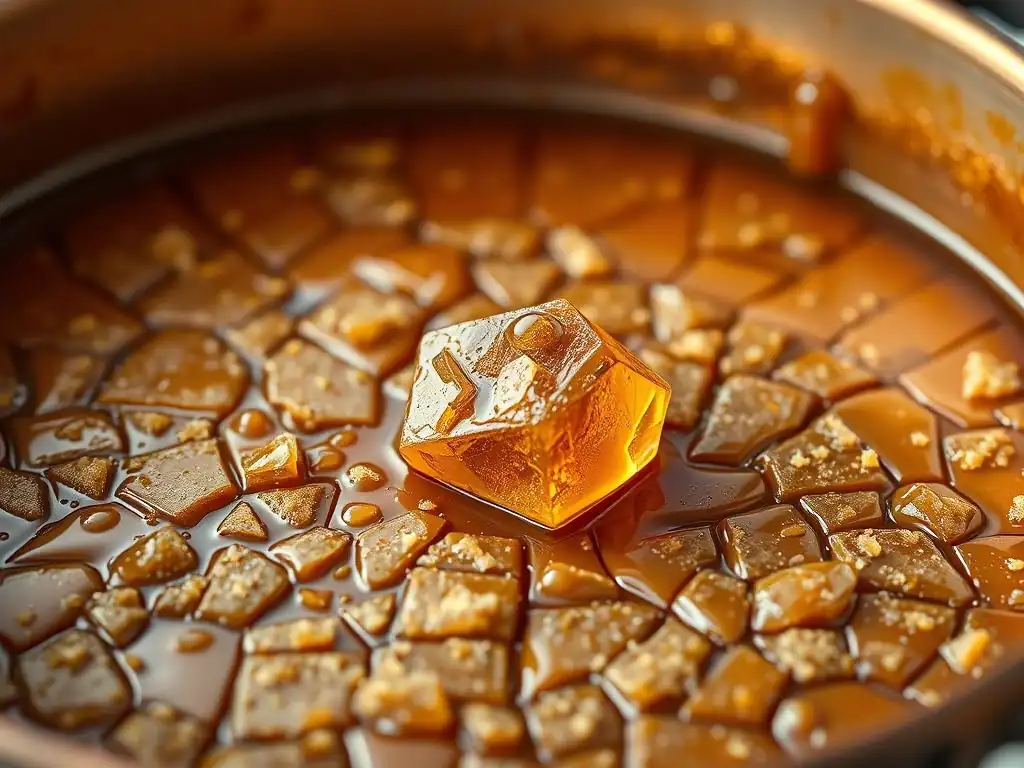
One of the most common and frustrating issues caused by unwanted sugar crystallization is a grainy texture in homemade candy and caramel. This happens when large, uncontrolled sugar crystals form within the confection that should be smooth and amorphous (like hard candy or taffy) or composed of very fine, uniform crystals (like creamy caramel or fudge).
For example, if you boil sugar syrup for hard candy and stir it while it's hot, or if tiny sugar crystals are left on the spoon and introduced, the syrup can become seeded. As it cools, instead of hardening into a clear, smooth glass, it will turn cloudy and gritty. Similarly, making caramel involves melting sugar.
If not melted completely or if stirred too much before it reaches the desired color, it can seize up into a grainy, solid mass rather than a smooth liquid. Preventing this sugar crystallization grainy texture requires careful technique, often involving minimal stirring, clean equipment, and sometimes the addition of interfering agents.
Crystal Formation in Jams and Preserves
While not as common as in candies, sugar crystallization can also occur in jams, jellies, and preserves, resulting in an undesirable gritty texture. This usually happens when the jam is overcooked, leading to excessive water evaporation and thus a very high sugar concentration, or if it's not sealed properly, allowing moisture to evaporate over time.
When the sugar concentration becomes too high relative to the water content, the sugar molecules are more likely to link up and form crystals during storage. This is particularly true for jams made with very high sugar-to-fruit ratios. While the fruit pectin and acids in jams help inhibit crystallization to some extent, they aren't always sufficient if the sugar concentration is excessively high. The resulting sugar crystallization grainy texture makes the jam less appealing. Proper cooking times, correct sugar ratios, and airtight sealing are important steps to minimize this risk.
Chalky Surfaces on Chocolate and Confections
A chalky or dull surface on chocolate and some confections is often referred to as "sugar bloom." While it looks similar to fat bloom (where cocoa butter separates), sugar bloom is caused by sugar crystallization on the surface. This occurs when moisture condenses on the surface of the chocolate (e.g., moving cold chocolate into a warm, humid room).
The condensed moisture dissolves tiny amounts of sugar on the surface. When the moisture then evaporates, the dissolved sugar is left behind, but it doesn't redissolve smoothly into the chocolate. Instead, it crystallizes into a fine, powdery layer of visible sugar crystals. This creates a rough, chalky appearance and a slightly gritty mouthfeel, a type of sugar crystallization grainy texture on the surface. While sugar bloom doesn't affect the safety of the chocolate, it significantly detracts from its visual appeal and texture. Proper storage in a cool, dry environment is key to preventing sugar bloom.
Techniques to Prevent Unwanted Sugar Crystallization
Using Invert Sugar to Inhibit Crystal Growth
One of the most effective ways to prevent unwanted sugar crystallization is by introducing invert sugar into your recipe. Invert sugar is a mixture of glucose and fructose, which are the simple sugars that make up sucrose. When sucrose is heated in the presence of an acid or an enzyme, it breaks down into these two simpler sugars.
Glucose and fructose molecules are smaller and have different shapes than sucrose molecules. When present in a sugar solution, they get in the way of the sucrose molecules trying to link up and form their regular crystal lattice. Think of them as tiny obstacles preventing the sucrose molecules from stacking neatly.
Common sources of invert sugar in baking include honey, maple syrup, and corn syrup (which contains glucose). Adding a small amount of one of these ingredients to a sugar syrup can dramatically reduce the likelihood of developing a sugar crystallization grainy texture. For example, adding a tablespoon of corn syrup to a batch of hard candy syrup helps keep it smooth and clear.
Adding Acids (Like Lemon Juice) to Control Crystallization
Adding an acid to a sugar solution while it's being heated is another classic technique to prevent crystallization. Acids, such as lemon juice, cream of tartar, or vinegar, catalyze the inversion of sucrose into glucose and fructose when heated. This process is called hydrolysis.
As discussed, the resulting glucose and fructose act as "interfering agents" that disrupt the formation of sucrose crystals. The amount of acid needed is typically quite small – often just a squeeze of lemon juice or a pinch of cream of tartar for a large batch of syrup. The key is to add the acid early in the cooking process while the syrup is heating up.
The heat accelerates the inversion process. This technique is commonly used in recipes for glazes, some candies, and even simple syrups to ensure they remain smooth and liquid, preventing the dreaded sugar crystallization grainy texture.
Employing Corn Syrup or Glucose Syrup
Corn syrup (in the US) or glucose syrup (elsewhere) are widely used in confectionery specifically for their ability to prevent sugar crystallization. These syrups are primarily composed of glucose (dextrose) or a mixture of glucose, maltose, and other saccharides, depending on the type. Since they already contain glucose, they act as effective interfering agents right from the start.
Adding corn syrup to a sugar syrup recipe significantly increases the proportion of non-sucrose sugars in the mixture. This makes it much harder for the sucrose molecules to find each other and form crystals. It essentially gums up the works for crystal formation. This is why corn syrup is a staple ingredient in many recipes for fudge, caramels, marshmallows, and hard candies – it helps ensure a smooth, non-grainy texture and prevents the development of sugar crystallization grainy texture. A typical addition might be 10-20% of the sugar weight in corn syrup.
The Importance of Controlled Cooling
How a sugar solution is cooled is just as important as how it's cooked when trying to prevent unwanted crystallization. Rapid cooling can sometimes help by quickly moving the solution past the temperature range where crystal growth is most active. However, rapid cooling combined with any disturbance is a recipe for disaster, leading to immediate seeding and crystallization.
For many confections, particularly those requiring a smooth, amorphous texture (like caramels or taffy) or a specific, controlled fine crystal structure (like fudge), controlled cooling without disturbance is crucial. For example, when making traditional fudge, the mixture is brought to temperature, then poured onto a cooling surface or left in the pan to cool undisturbed to a specific temperature (often around 110°F or 43°C).
This allows the supersaturated solution to stabilize slightly. Only after reaching this temperature is it agitated (beaten) to encourage the formation of very small, numerous crystals that create a creamy texture, specifically avoiding the large crystals that cause a sugar crystallization grainy texture.
Stirring Techniques for Smooth Textures
The way you stir (or don't stir) a sugar solution can make the difference between a smooth confection and a grainy mess. As mentioned earlier, stirring a hot, concentrated sugar syrup is generally discouraged because it can introduce air bubbles and dislodge sugar crystals from the sides of the pan, both acting as seeds.
When cooking sugar syrups, it's best to stir only until the sugar is completely dissolved before the syrup comes to a boil. Once boiling, avoid stirring. If necessary, gently swirl the pan or brush down the sides with a wet pastry brush to dissolve any sugar crystals that splash up.
For recipes like fudge, where controlled crystallization is desired for texture, stirring is delayed until the mixture has cooled significantly. Stirring too early or too vigorously while the mixture is still very hot and highly supersaturated will almost guarantee a sugar crystallization grainy texture because it promotes the rapid formation of large, uneven crystals. Follow recipe instructions carefully regarding when and how to stir.
Troubleshooting Sugar Crystallization Issues
Identifying the Cause of Grainy Texture
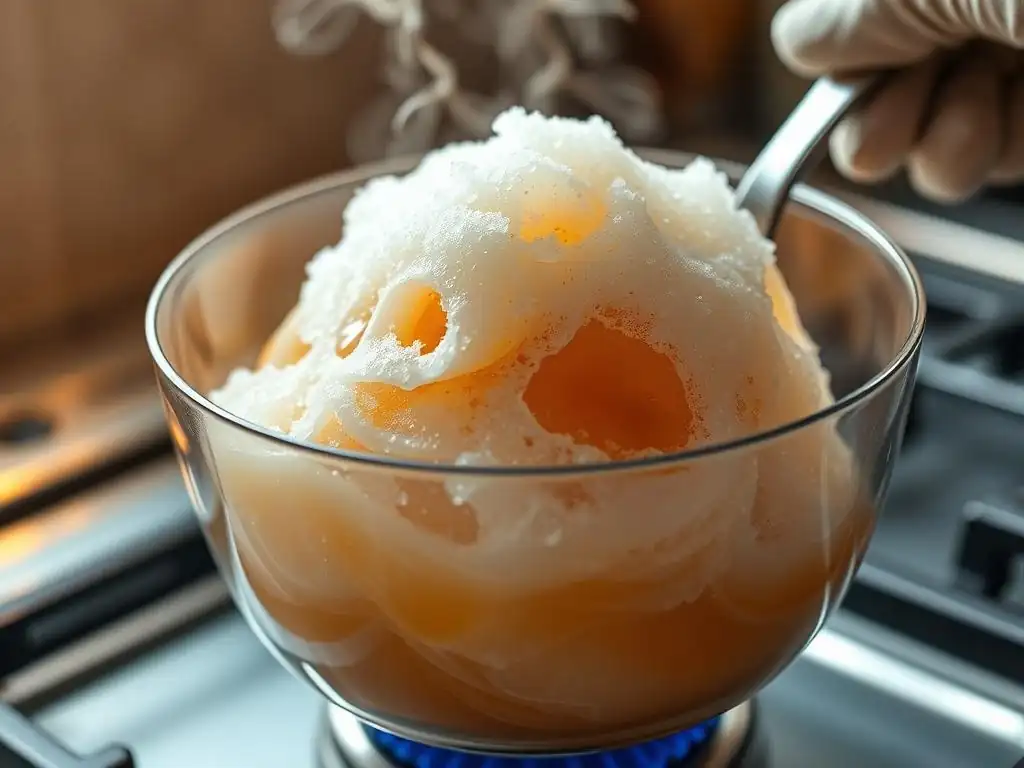
If you end up with a sugar crystallization grainy texture in your confection, the first step is to try and identify what went wrong to avoid repeating the mistake. Common causes include:
- Undissolved sugar: Not ensuring all sugar crystals were dissolved before boiling began.
- Seeding: Introducing stray sugar crystals or other impurities into the hot syrup (e.g., stirring while boiling, sugar crystals on the pan sides or utensils).
- Too much agitation: Stirring the hot syrup excessively.
- Improper cooling: Cooling too slowly, or disturbing the syrup while it's cooling and highly supersaturated, especially before it's reached the target temperature for controlled crystallization (if applicable).
- Incorrect ingredient ratios: Too much sugar compared to liquid or interfering agents.
- Environmental factors: High humidity can sometimes contribute to problems, especially with finished products.
Reviewing the steps you took and comparing them to best practices for preventing sugar crystallization grainy texture will help pinpoint the likely culprit.
Remelting and Re-cooking Sugary Mixtures
In many cases, a sugar mixture that has become grainy due to unwanted crystallization can be salvaged by gently remelting it. The heat will dissolve the sugar crystals back into the solution. Once the mixture is smooth and completely liquid again, you can attempt to re-cook it, taking extra precautions to prevent crystallization this time.
To remelt, place the grainy mixture in a clean saucepan over very low heat. Add a small amount of liquid (water, milk, or cream, depending on the recipe) to help dissolve the crystals – often just a tablespoon or two is sufficient for a typical batch of fudge or caramel. Heat gently, stirring constantly, until all the crystals have dissolved and the mixture is smooth.
Then, bring it back up to the required temperature according to the original recipe, being meticulous about avoiding stirring while boiling and ensuring clean equipment. While this can often fix the texture, some delicate flavors might be affected by the second cooking. This technique is particularly useful for salvaging grainy fudge or caramel sauce.
Adjusting Recipes to Prevent Future Crystallization
Once you've identified the likely cause of your sugar crystallization grainy texture issue, you can adjust your technique or the recipe slightly to prevent it from happening again.
Consider these adjustments:
- Ensure all sugar is dissolved: Before the syrup boils, heat and stir until you can no longer feel any grit when rubbing a drop between your fingers (be very careful, it's hot! ).
- Use interfering agents: If the recipe doesn't include one, consider adding a small amount of corn syrup, honey, or an acid (like a pinch of cream of tartar) as discussed earlier. A general guideline might be adding 10-15% of the sugar weight in corn syrup for increased insurance against crystallization.
- Cleanliness is key: Be extra vigilant about having spotless pans and utensils. Wipe down the sides of the pan with a wet pastry brush during cooking.
- Control cooling: Follow cooling instructions precisely. Avoid disturbing the mixture while it cools, especially if the recipe calls for cooling to a specific temperature before stirring.
- Use a thermometer: For candy making, reaching the exact temperature is crucial for concentration. An accurate candy thermometer is invaluable.
By implementing these preventative measures, you significantly reduce the risk of encountering that frustrating sugar crystallization grainy texture in the future.
Sugar Crystallization in Different Baking Applications
Crystallization in Fudge Making: Achieving the Right Texture
Fudge is a classic example of a confection where sugar crystallization is not prevented, but rather controlled to achieve the desired texture. The goal is a creamy, smooth consistency, which comes from having a large number of very small, uniform sugar crystals. Uncontrolled crystallization, leading to large crystals, results in a grainy texture.
To achieve creamy fudge, the sugar syrup is cooked to a specific temperature (typically the soft-ball stage, around 235-245°F or 113-118°C). It's then cooled without stirring to a lower temperature (around 110°F or 43°C). Cooling undisturbed allows the supersaturated solution to stabilize. Then, the mixture is beaten vigorously.
This agitation at the cooler temperature triggers rapid crystallization, but because there are many nucleation sites created by the beating, numerous small crystals form simultaneously, resulting in a smooth texture. Stirring while the mixture is too hot or failing to cool properly leads to fewer, larger crystals and a sugar crystallization grainy texture. Interfering agents like butter, milk solids, and sometimes corn syrup also help control crystal size in fudge.
Crystallization in Caramel Sauce: Preventing Graininess
Unlike fudge, a smooth caramel sauce should ideally be amorphous, meaning it has no crystalline structure. The rich, liquid consistency relies on preventing sugar crystallization. However, caramel is made from cooked sugar, making it highly susceptible to developing a grainy texture if not handled correctly.
Preventing crystallization in caramel sauce involves several key steps: starting with a clean pan, ensuring all sugar is dissolved before boiling, avoiding stirring once boiling (swirling the pan is okay), and carefully managing the temperature. Adding a small amount of an interfering agent like corn syrup or glucose syrup is also a common practice to provide insurance against crystallization.
If making a wet caramel (where water is added to the sugar), wiping down the sides of the pan with a wet brush is essential to prevent sugar crystals from seeding the mixture. If a caramel sauce does become grainy, it can often be salvaged by gently reheating it with a little extra liquid until smooth, then cooling carefully.
Crystallization in Candied Fruits: Creating a Perfect Coating
Candied fruits involve replacing the fruit's water content with sugar syrup, resulting in a preserved, sweet product. The ideal candied fruit has a translucent, slightly chewy texture with a smooth, non-grainy sugar coating. However, if the sugar syrup used is too concentrated or if the fruit is allowed to dry improperly, sugar can crystallize on the surface, leading to a sugar crystallization grainy texture.
The process typically involves simmering the fruit in progressively more concentrated sugar syrups over several days or hours. The high sugar concentration acts as a preservative. To prevent unwanted crystallization on the surface, recipes often incorporate glucose syrup or corn syrup into the syrup mixture. Ensuring the fruit is fully saturated with sugar and dried evenly also helps. If a candied fruit develops a grainy exterior, it might be possible to gently warm it slightly to redissolve the surface crystals, or if severe, a light brushing with a warm, smooth sugar syrup containing an interfering agent might help.
Crystallization in Fondant: Tips and Tricks
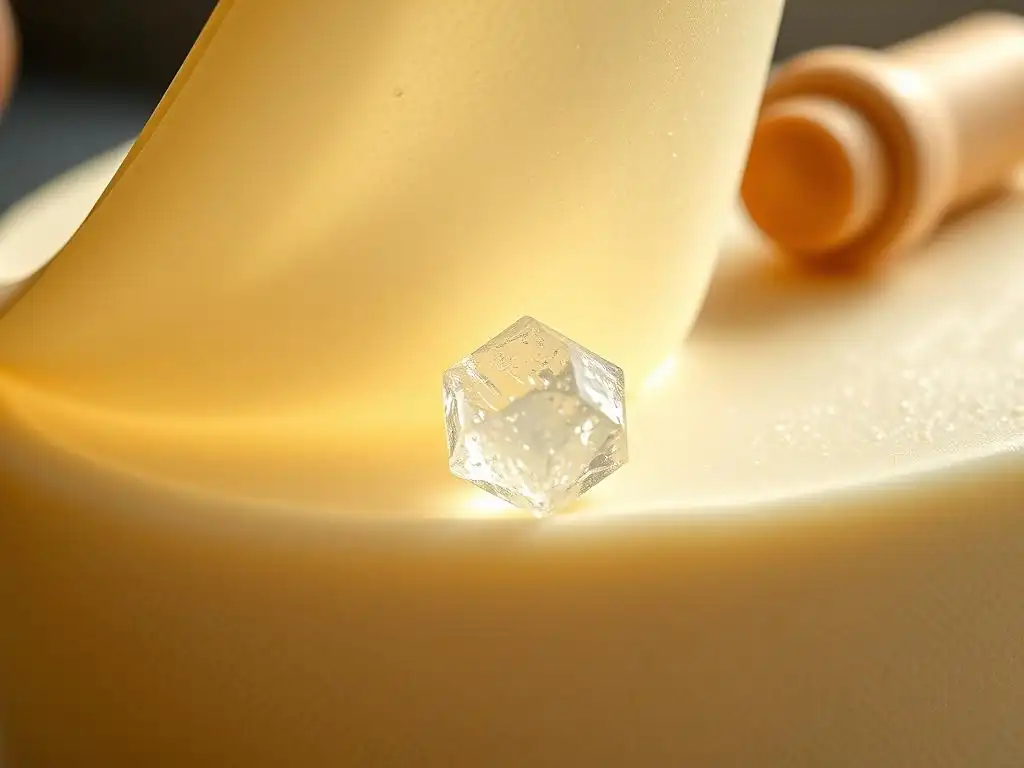
Fondant icing, particularly the poured variety used for petit fours or candies, is another example where controlled crystallization is key. Like fudge, it is a mass of very fine sugar crystals suspended in a saturated sugar syrup. The goal is an extremely smooth, melt-on-your-tongue texture, which requires the crystals to be microscopic. Uncontrolled crystallization results in a sugar crystallization grainy texture.
Making smooth poured fondant involves cooking a sugar syrup (often with corn syrup or an acid added as an interfering agent) to the soft-ball stage (around 238-240°F or 114-116°C). The syrup is then cooled, traditionally by pouring it onto a marble slab and allowing it to cool undisturbed to a specific temperature (around 110°F or 43°C). Once cooled, it is agitated (traditionally by scraping and folding with a spatula or using a stand mixer) until it turns opaque and creamy.
This agitation at the correct temperature promotes the formation of numerous tiny crystals. Overcooking the syrup, insufficient cooling, or improper agitation will lead to larger crystals and a sugar crystallization grainy texture.
Crystallization in Hard Candy: Techniques for Success
Hard candy is a prime example of a confection that should be completely amorphous – essentially, sugar glass. Any crystallization results in a cloudy, brittle, and sugar crystallization grainy texture that ruins the desired clear, smooth snap.
To achieve a glassy texture, hard candy syrup (sugar, water, and often corn syrup) is cooked to a very high temperature (hard-crack stage, around 300-310°F or 149-154°C). At this temperature, the sugar concentration is extremely high, and most of the water has evaporated. Preventing crystallization relies on several factors: starting with a clean pan, ensuring all sugar is dissolved before boiling, adding an interfering agent like corn syrup (which is almost always included in hard candy recipes, typically 20-30% of the sugar weight), and absolutely avoiding stirring once the syrup boils.
The syrup is then poured or molded and allowed to cool undisturbed. Any agitation or introduction of seed crystals during cooling will cause the candy to turn cloudy and grainy.
Advanced Techniques for Sugar Work and Crystal Control
Seeding for Controlled Crystal Formation
While preventing unwanted crystallization is often the goal, sometimes you want to induce crystallization, but in a controlled manner, to achieve a specific texture or effect. This is where "seeding" comes in as an advanced technique. Instead of trying to avoid all nucleation sites, you deliberately introduce a small amount of pre-formed sugar crystals (the "seed") into a supersaturated solution.
This technique is used in making rock candy (where a string or stick is suspended in a supersaturated solution, and sugar crystals grow onto it) or in some types of fondant or confectionery glazes where a specific, fine crystalline structure is desired. By adding a controlled amount of very fine sugar crystals to a properly cooled supersaturated solution, you initiate crystallization uniformly throughout the batch.
The key is to use very fine seed crystals and manage the cooling and agitation precisely to ensure the resulting crystals are the desired size and distribution, avoiding a coarse sugar crystallization grainy texture when a smooth one is intended.
Using Thermometers for Precise Temperature Management
Accuracy is paramount in sugar work, and an accurate candy thermometer is an indispensable tool, especially when dealing with crystallization. Different stages of sugar cooking (thread, soft ball, firm ball, hard ball, soft crack, hard crack) correspond to specific temperature ranges, which in turn correlate directly to the sugar concentration in the syrup.
Reaching the correct temperature ensures you have the right concentration for your desired outcome. More importantly, for preventing or controlling crystallization, knowing the exact temperature allows you to cool the mixture to the precise point where agitation should begin (for fudge or fondant) or where it should be left undisturbed (for caramel or hard candy).
Relying solely on visual cues or the cold-water test is less reliable and increases the risk of hitting the wrong concentration or starting crystal formation at the wrong temperature, which can easily lead to a sugar crystallization grainy texture. Investing in a good digital or analog candy thermometer is highly recommended for serious sugar work.
Exploring Different Types of Sugar and Their Crystallization Properties
While sucrose (common granulated sugar) is the most common sugar used in baking and confectionery, understanding how other types of sugars behave can provide more tools for controlling texture and crystallization.
- Glucose/Dextrose: As a monosaccharide, glucose is less prone to crystallization than sucrose. It's a key component of corn syrup and honey, which are used to prevent sucrose crystallization.
- Fructose: Another monosaccharide, fructose is even less likely to crystallize than glucose or sucrose. It's the primary sugar in honey and fruits. High-fructose corn syrup is used commercially to prevent crystallization in many products.
- Lactose: Found in milk, lactose can crystallize in dairy-based confections like dulce de leche or condensed milk if cooked too long, leading to a grainy texture.
- Invert Sugar: As a mixture of glucose and fructose, invert sugar is highly resistant to crystallization and is specifically used to keep things smooth and prevent sugar crystallization grainy texture.
Using recipes that incorporate different sugar types, or understanding how substituting them might affect crystallization, adds another layer of control in achieving desired textures in your baking and confectionery projects.
Conclusion: Achieving Smooth, Crystal-Free Baking
Recap of Key Sugar Crystallization Principles
Understanding sugar crystallization is fundamental to mastering many baking and confectionery techniques. It's the process where dissolved sugar molecules form solid crystals, which can lead to an undesirable sugar crystallization grainy texture in many sweets that are meant to be smooth. This phenomenon is influenced by several key factors: sugar concentration, temperature (both cooking and cooling), agitation, and the presence of impurities or seed crystals.
To prevent unwanted crystallization and achieve smooth textures, remember these core principles: ensure all sugar is dissolved before boiling, avoid stirring hot sugar syrups, keep equipment meticulously clean, use interfering agents like corn syrup or acid, and control the cooling process carefully, often by cooling undisturbed to a specific temperature before any necessary agitation. For confections like fudge or fondant, crystallization is controlled rather than prevented, relying on precise temperature and timed agitation to create desirable small crystals.
Further Resources for Mastering Baking Science
Preventing sugar crystallization grainy texture and controlling sugar's behavior is just one fascinating aspect of baking science. The interactions between ingredients, the effects of temperature, and the chemical reactions that occur in your oven all play a role in successful baking.
To deepen your understanding and improve your results, continue exploring resources on baking science. Look for information on the role of fats, proteins (like gluten and eggs), leavening agents, and moisture. Many excellent books and online resources delve into these topics, providing the "why" behind baking techniques. By combining a solid understanding of baking science principles, including how to manage sugar crystallization, with practice and attention to detail, you'll be well on your way to consistently achieving delicious, perfectly textured baked goods and confections. Happy baking!
Frequently Asked Questions
What exactly is sugar crystallization and why does it happen in baking?
Sugar crystallization is the process where dissolved sugar in a solution reforms into solid crystals. It happens when the solution becomes oversaturated or improperly cooled, leading to a grainy texture in baked goods.
How does sugar crystallization result in a "grainy texture" in my desserts?
When sugar crystallizes, large, uneven crystals form instead of remaining dissolved. These crystals create a noticeably gritty or sandy feel on the tongue, resulting in the undesirable grainy texture.
What are some common baking mistakes that contribute to sugar crystallization?
Common mistakes include insufficient stirring, using too much sugar relative to liquid (oversaturation), and incorrect temperature control during cooking or cooling, all of which promote crystal formation.
Can sugar crystallization be reversed once it has occurred in a recipe?
Sometimes, but it's difficult. Gently heating the mixture may redissolve the crystals, but it's crucial to avoid overcooking and introduce ingredients like acid or glucose to prevent recurrence.
What steps can I take to prevent sugar crystallization and achieve a smooth texture in my baked goods?
Use the correct sugar-to-liquid ratio in your recipe, stir frequently to ensure even distribution, control cooking temperatures carefully, and consider adding ingredients like lemon juice or corn syrup to inhibit crystal formation.
Final Reflection: The Sweet Science of Texture and Beyond
Understanding sugar crystallization isn't just about avoiding grainy sweets; it's about understanding the fundamental principles of chemistry and their impact on our everyday experiences. The seemingly simple process of sugar dissolving and recrystallizing holds a surprising depth, influencing not only the texture of our favorite candies but also impacting larger-scale industrial processes and even scientific advancements.
The exploration of sugar crystallization has revealed to me the intricate beauty hidden within seemingly mundane processes. It's a reminder that even the smallest details, like the size and shape of sugar crystals, can drastically alter our perception of a product. The details are not the details. They make the design.
- Charles Eames. This quote perfectly encapsulates the importance of understanding the nuances of sugar crystallization, highlighting how seemingly minor factors can have a profound impact on the final outcome.
Now, consider the implications of this knowledge. You've learned about supersaturation, nucleation, and crystal growth – concepts that extend far beyond the kitchen. Think about how this understanding could be applied to your own creative endeavors, whether it's baking the perfect batch of cookies or approaching a complex problem with a more nuanced perspective.
I challenge you to look at the world around you with a newfound appreciation for the intricate processes that shape our experiences, from the texture of your candy to the complexities of the natural world. Let the sweetness of this knowledge inspire you to explore further.
Unlock Your Sweetest Baking Secrets!
Thanks for exploring the fascinating world of sugar crystallization with us! We hope you now feel more confident understanding and preventing those pesky grainy sweets. Ready to put your newfound knowledge into practice?
- Master the art of perfectly smooth candies: Try our advanced recipe for creamy fudge, focusing on the techniques discussed earlier—you'll be amazed by the difference!
- Share your baking triumphs (or challenges!): Join our BakeWithEase community on social media and share your experiences with sugar crystallization. Let's learn from each other!
- Experiment with different sugar types: Explore the unique properties of various sugars like turbinado and caster sugar to see how they affect crystal formation. Which sugar gives you the best results?
What's your go-to tip for avoiding sugar crystallization in your favorite sweets? Let us know in the comments below!