
Temperature Tactics: How Heat and Cold Influence Gluten

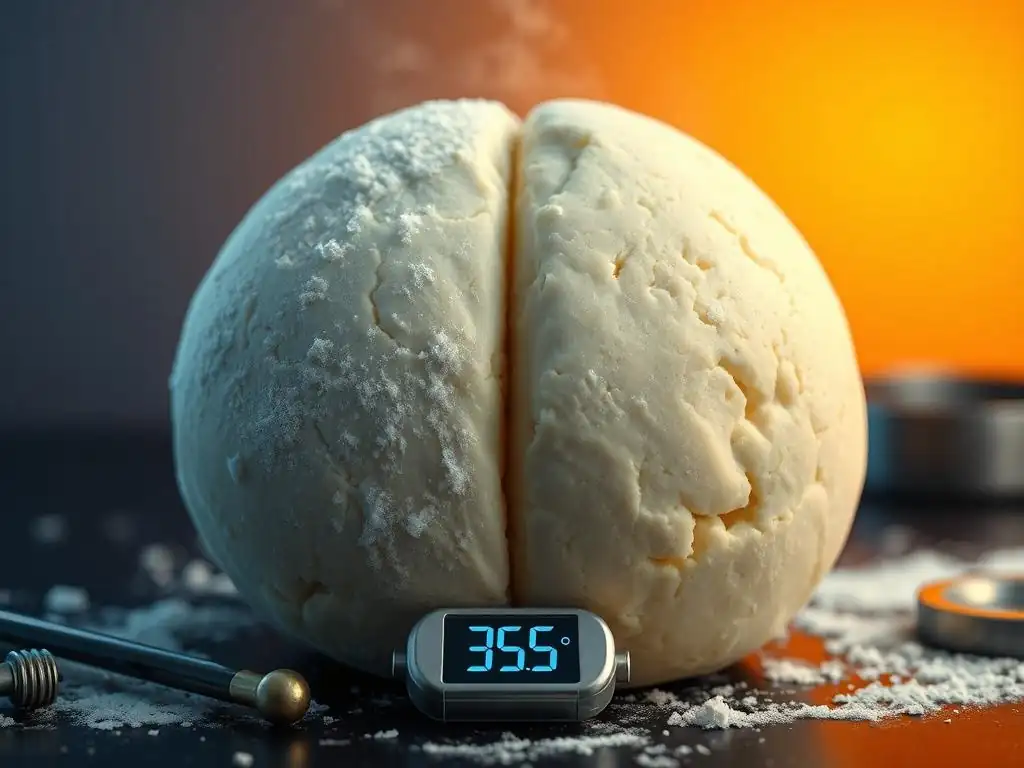
Welcome to BakeWithEase, where we unravel the secrets behind perfect baking! Ever wondered how something as simple as temperature can dramatically impact the texture and structure of your baked goods? This week, we're diving deep into the crucial role of gluten development temperature control. Discover how precisely managing heat and cold can transform your dough and elevate your baking from good to extraordinary. Ready to unlock the secrets? Let's get started!
- Bake With Ease: Mastering Gluten Development Through Temperature
- The Impact of Heat on Gluten Development
- The Role of Cold in Gluten Development
- Gluten Development Temperature Control: A Side-by-Side Comparison
- Practical Tips for Gluten Development Temperature Control
- Advanced Techniques: Mastering Gluten Development Temperature
- Conclusion: Achieving Baking Success Through Temperature Management of Gluten
-
Frequently Asked Questions
- What is gluten development, and why is temperature control important?
- How does heat affect gluten development in bread baking?
- How does cold temperature influence gluten development, particularly in pastry?
- What is the ideal gluten development temperature control range for different types of dough?
- Can temperature control be used to correct over-developed gluten in a dough?
- Final Reflection: Mastering the Thermal Dance of Gluten
- Unlock Your Gluten Potential: Master the Heat & Cold
Bake With Ease: Mastering Gluten Development Through Temperature
Understanding Gluten: The Foundation of Baking
Gluten is the fundamental protein structure in many baked goods, providing the necessary framework that allows dough and batters to rise and hold their shape. It forms when two proteins found in wheat flour, glutenin and gliadin, come into contact with water and are then manipulated through mixing or kneading. Glutenin provides elasticity, allowing the dough to stretch, while gliadin provides extensibility, allowing it to extend without breaking. Together, they create a visco-elastic network that is the backbone of everything from chewy bread to tender cakes.
This developed gluten network is crucial because it creates tiny pockets capable of trapping gases produced by leavening agents, such as yeast or baking powder. As these gases expand during fermentation and baking, the elastic gluten network stretches, causing the dough or batter to rise. Without sufficient gluten development (or a suitable alternative in gluten-free baking), baked goods would be flat and dense. Understanding how this network forms and, critically, how temperature influences its formation and behavior is key to mastering the art of baking.
Why Gluten Development Temperature Control Matters
Temperature is not just a factor; it's a critical variable that profoundly impacts gluten development. The temperature of your ingredients, your dough, and your baking environment directly affects the rate at which gluten forms, hydrates, and sets. It also influences the activity of enzymes naturally present in flour, some of which can break down the gluten structure if given the right conditions and time. Precise gluten development temperature control allows bakers to manipulate the dough's characteristics to achieve specific textures and volumes.
Ignoring the impact of temperature can lead to unpredictable results. Dough that is too cold will develop gluten slowly and unevenly, resulting in a tight, underdeveloped structure. Dough that is too warm can become overly sticky and difficult to handle, and rapid fermentation can outpace gluten development, leading to collapse.
By understanding and controlling the temperature throughout the baking process – from mixing to fermentation to baking – you gain mastery over the gluten network, ensuring your bread has a perfect crumb and your cakes are wonderfully tender. Effective gluten development temperature control is the mark of a skilled baker.
The Impact of Heat on Gluten Development
Heat's Effect on Gluten Strength and Elasticity
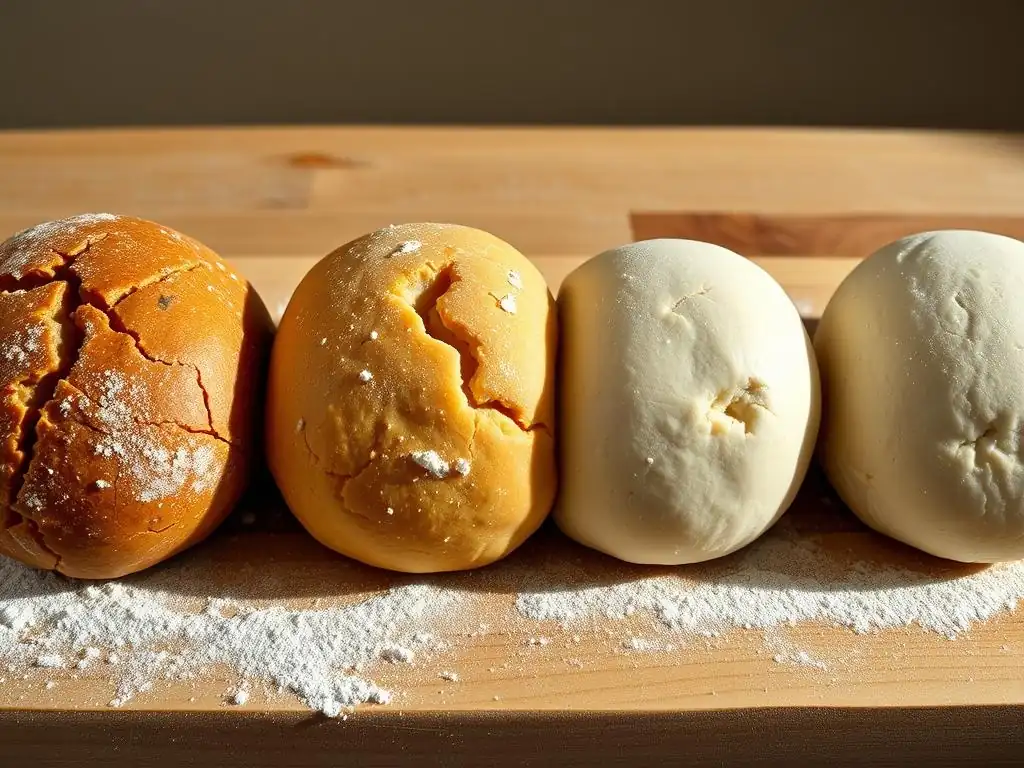
Moderate heat, typically in the range of 75-85°F (24-30°C), significantly accelerates the rate of gluten development during mixing and fermentation. Warm water hydrates the flour proteins more quickly than cold water, facilitating the initial linking of glutenin and gliadin. The increased kinetic energy at higher temperatures also helps the proteins align and form a stronger, more cohesive network faster. This is why dough kneaded with warm water and left to rise in a warm spot develops gluten and ferments more rapidly than dough handled at cooler temperatures.
However, while warmth speeds things up, the setting of the gluten structure happens at much higher temperatures, specifically during baking in the oven. As the internal temperature of the dough or batter rises, the gluten proteins coagulate and solidify, transforming the elastic network into the rigid structure of the finished baked good. This setting occurs around 140-160°F (60-70°C). This heat-induced coagulation is irreversible and provides the final shape and texture, locking in the volume achieved during rising.
Optimizing Oven Temperature for Gluten Structure
The oven temperature is paramount for the final transformation and setting of the gluten structure. For items requiring a strong, airy structure, like crusty bread, high initial oven temperatures are often used, typically 400-450°F (200-230°C). This intense heat causes rapid expansion of gases (oven spring) before the crust fully hardens. A well-developed gluten network is needed to stretch and accommodate this expansion. The heat then quickly sets this expanded structure.
Conversely, for baked goods where tenderness is key, such as cakes, lower oven temperatures are preferred, often ranging from 325-375°F (160-190°C). This gentler heat allows chemical leaveners to work effectively and the structure to set more gradually. Baking cakes at too high a temperature can cause the exterior to set too quickly, potentially leading to cracks or a dense layer beneath the crust, as the interior struggles to keep up. Careful gluten development temperature control in the oven ensures the structure sets correctly for the desired outcome.
Baking Bread: Ideal Temperatures for Gluten Development
For many bread doughs, the ideal dough temperature after mixing and kneading falls within the range of 75-80°F (24-27°C). This temperature balances optimal yeast activity with a manageable rate of gluten development and fermentation. Dough that is too cold will ferment sluggishly, while dough that is too warm can ferment too rapidly, potentially leading to off-flavors and a weakened gluten structure if over-fermented. Achieving this target dough temperature often involves adjusting the water temperature used in the recipe.
During the actual baking of bread, high temperatures are crucial for maximum oven spring and crust development. Many recipes call for preheating the oven to 450-500°F (230-260°C). The loaf is often placed in the hot oven, and the temperature may be reduced slightly (to 400-425°F / 200-220°C) after the initial oven spring (around 10-15 minutes) to ensure the interior bakes through without the crust burning. This two-stage temperature approach in the oven is a vital part of gluten development temperature control for achieving a loaf with excellent volume and texture.
Baking Cakes: Temperature Considerations for Tender Gluten
In cake baking, the focus of gluten development temperature control shifts from building strength to ensuring tenderness. While some minimal gluten development is necessary for structure, excessive gluten makes cakes tough. Ingredients like fats and sugars interfere with gluten formation, and the mixing methods used (like creaming butter and sugar) minimize liquid contact with flour until late in the process. Batter temperature isn't actively managed for gluten development, but ingredients are often brought to room temperature (~70-75°F / 21-24°C) for optimal emulsification and mixing.
The oven temperature for cakes is typically lower than for bread, commonly 350°F (175°C). This moderate heat allows the cake to rise evenly from chemical leavening and the delicate structure to set gradually. Baking at too high a temperature can cause the cake to dome excessively and crack, or set the outside too quickly, resulting in a tough crust while the inside remains underbaked. Maintaining a consistent, correct oven temperature is essential for a tender, fine-crumbed cake, a direct result of carefully managed gluten development temperature control during the bake.
Overbaking: How Excessive Heat Damages Gluten
While heat sets the gluten structure, excessive heat or prolonged exposure to heat can degrade it. Overbaking causes excessive moisture loss, making the gluten network brittle and rigid. The proteins become overly coagulated, leading to a hard, dry texture that is often described as tough or crumbly depending on the original item. This is the opposite of the desired outcome and a common consequence of poor gluten development temperature control in the final stages.
Consider a cookie baked for too long or at too high a temperature. Instead of being chewy or crisp as intended, it becomes hard and dry, easily snapping rather than bending. Similarly, overbaked bread will have an excessively thick, hard crust and a dry, sometimes dense interior crumb because the gluten structure has been pushed beyond its optimal state. Once the gluten network is damaged by excessive heat and moisture loss, it cannot be repaired.
The Role of Cold in Gluten Development
The Benefits of Cold Fermentation for Gluten
Cold temperatures, specifically those found in a refrigerator (typically 35-40°F / 2-4°C), dramatically slow down the biological activity of yeast and bacteria, as well as enzymatic activity within the dough. While fermentation slows, the gluten proteins continue to hydrate and align over extended periods, often 12 to 72 hours or even longer. This slow, prolonged hydration allows for a more thorough and even development of the gluten network.
The result of cold fermentation is often a stronger, more extensible gluten structure. The slow pace allows the gluten proteins to form more complex and stable bonds. This leads to dough that is easier to handle and shape, has improved oven spring, and results in a bread with a more open crumb structure. Furthermore, the slow fermentation develops more complex flavors as yeast and bacteria produce beneficial metabolic byproducts. This is a prime example of how cold can be used for strategic gluten development temperature control to enhance both texture and flavor.
Cold Proofing: Slowing Down Gluten Development for Enhanced Flavor
Cold proofing refers to placing the shaped dough in the refrigerator for its final rise. Similar to cold bulk fermentation, this slows down yeast activity, extending the proofing time significantly compared to room temperature proofing. This extended cool environment allows volatile flavor compounds to develop more fully, contributing to a more nuanced taste in the final baked good.
From a gluten perspective, cold proofing helps maintain the integrity of the gluten network during the final expansion. At room temperature, dough can overproof quickly, leading to a weakened structure that may collapse in the oven. Cold proofing keeps the gluten network strong and taut, preventing it from becoming overstretched before it hits the heat of the oven. This results in better shape retention and improved oven spring, demonstrating effective gluten development temperature control in the final stages before baking.
Chilling Dough: Managing Gluten Strength and Dough Handling
Chilling dough in the refrigerator serves multiple purposes beyond just fermentation control. For doughs high in fat, like pie crust or certain cookies, chilling solidifies the fat, making the dough firmer and much easier to roll, cut, or shape without becoming sticky or greasy. This is a mechanical benefit, but it also impacts gluten.
For all doughs, chilling slows down further gluten development during handling. This is particularly important for doughs where minimal gluten is desired (like pie dough) or where you want to manage the elasticity of an already-developed network (like pasta or bread dough before shaping). A chilled bread dough, for example, is less sticky and snaps back less than a warm dough, making intricate shaping or scoring much easier. Using cold is a practical application of gluten development temperature control for improved dough handling and specific textural outcomes.
Working with Pie Dough: The Importance of Cold Gluten
Achieving a flaky, tender pie crust hinges on minimizing gluten development. The goal is to keep the fat (butter, shortening) in distinct pieces within the flour. When the pie bakes, these fat pieces melt, creating steam that pushes apart the layers of dough, resulting in flakiness. If too much gluten develops, the crust becomes tough and dense, lacking those desirable layers.
Keeping the ingredients and the dough cold throughout the process is crucial for controlling gluten development temperature in pie crust. Cold solidifies the fat, making it easy to cut into the flour and preventing it from melting and coating the flour proteins prematurely. More importantly, cold temperatures significantly slow down the hydration of flour proteins and thus gluten formation. Minimal mixing and chilling the dough before rolling and baking ensure the gluten network remains weak, leading to a tender, flaky crust.
Pasta Making: Chilling for Perfect Gluten Texture
Pasta dough requires a strong, elastic gluten network to be rolled out thinly and hold its shape when cooked. After mixing and kneading, pasta dough is typically rested, often in the refrigerator for 30 minutes to an hour. While the bulk of gluten development occurs during kneading, this chilling step is vital for managing the gluten's properties.
The cold temperature allows the already developed gluten network to relax. Kneading makes the gluten elastic and springy; resting, especially chilling (around 35-40°F / 2-4°C), helps this elasticity subside, making the dough more extensible. This means it can be rolled out thinly through a pasta machine or by hand without tearing or snapping back excessively. The controlled cold rest is a key step in gluten development temperature control that ensures the dough handles beautifully and results in perfectly textured, al dente pasta.
Gluten Development Temperature Control: A Side-by-Side Comparison
Hot vs. Cold: Which is Better for Pizza Dough?
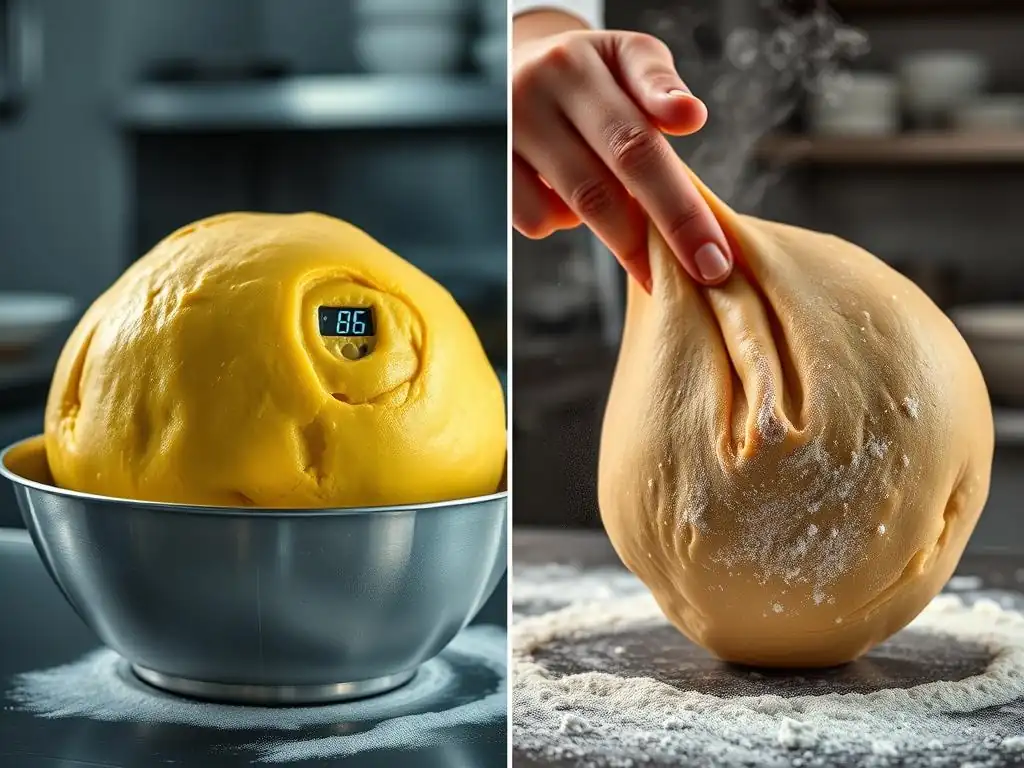
Pizza dough is a fantastic case study for gluten development temperature control, as both hot (room temperature/warm) and cold methods are used, leading to different results. A quick pizza dough can be made using warm water (around 90-100°F / 32-38°C) and fermenting at room temperature (70-75°F / 21-24°C) for just a couple of hours. This yields a functional dough that bakes up adequately, but the gluten network might be less complex, and the flavor profile simpler.
For many aficionados, cold fermentation is superior for pizza dough. Resting the dough in the refrigerator (35-40°F / 2-4°C) for 24-72 hours allows for slow, extensive hydration and alignment of the gluten proteins, resulting in a highly extensible dough that stretches beautifully thin without tearing. The slow fermentation also develops deep, complex flavors. When this cold-proofed dough hits a very hot oven (500-550°F / 260-290°C), the strong, pliable gluten network provides excellent oven spring and a desirable crust texture. For optimal flavor and handling, cold wins for pizza dough gluten development temperature control.
When to Use Heat for Gluten Development
Use moderate heat (warm water, warm ambient temperature 75-85°F / 24-30°C) when you need to accelerate gluten development and fermentation. This is useful for recipes with short timelines, such as a same-day sandwich loaf or quick dinner rolls. The warmth speeds up hydration and enzymatic activity, getting you to a developed dough and a risen state much faster than cold temperatures.
High heat is indispensable during the baking phase to set the gluten structure. Oven temperatures typically range from 325°F (160°C) for delicate items like cakes to over 500°F (260°C) for items like Neapolitan pizza or artisan bread. This heat causes the gluten proteins to coagulate, providing the rigid structure that holds the shape and volume of the baked good. Without sufficient heat in the oven, the gluten won't set properly, resulting in a dense, gummy interior. Heat's primary role in gluten development temperature control is setting the final structure.
When to Use Cold for Gluten Development
Employ cold temperatures (refrigerator 35-40°F / 2-4°C) when time allows and you desire a stronger, more extensible gluten network, as well as enhanced flavor development. Cold fermentation is ideal for artisan breads, pizza doughs, and enriched doughs like brioche or challah, allowing for slow hydration and complex flavor compounds to form over hours or days.
Cold is also essential for managing dough handling and texture in specific applications. For flaky pastries like pie crust or croissants, cold solidifies fat and minimizes unwanted gluten development. For pasta or cookie dough, chilling makes the dough easier to roll, cut, or shape. Cold proofing prevents over-proofing and maintains dough tension before baking. Strategic use of cold is a powerful aspect of gluten development temperature control for achieving superior texture and flavor.
Practical Tips for Gluten Development Temperature Control
Measuring Dough Temperature Accurately
Knowing the actual temperature of your dough is crucial for consistent results, especially in yeast baking. A simple digital probe thermometer is the best tool for this. After mixing, insert the probe into the thickest part of the dough mass, avoiding contact with the mixing bowl. Wait a few seconds for the reading to stabilize.
Aiming for a specific target dough temperature, often 75-80°F (24-27°C) for many bread doughs, allows you to predict fermentation times more accurately and ensure optimal gluten development speed. If your dough is consistently too cold or too warm, you can adjust the temperature of the water you use in subsequent batches. Using ice water or very warm water can help you hit your target temperature, providing better control over the entire process, a core principle of effective gluten development temperature control.
Adjusting Recipes for Temperature Variations
Most baking recipes are written assuming a standard room temperature, typically around 70-75°F (21-24°C). However, kitchen temperatures can vary significantly depending on the season, climate, or even just whether your oven is on. These variations directly impact the rate of gluten development and fermentation.
If your kitchen is warm (80°F+ / 27°C+), your dough will develop gluten and ferment faster. You might need to reduce fermentation times or use cooler water. If your kitchen is cold (under 65°F / 18°C), the process will be much slower. You'll need to allow more time for rises, use warmer water, or find a warmer spot for the dough (like an oven with just the light on, which often reaches 75-80°F). Being adaptable and using temperature as a variable is key to consistent gluten development temperature control regardless of your environment.
Temperature issues can manifest in dough in several ways. Dough that is too cold will feel stiff and resistant, knead slowly, and rise sluggishly, often resulting in a dense crumb due to insufficient gluten development and fermentation. Dough that is too warm can feel overly soft, sticky, and slack; it will ferment very rapidly and may overproof easily, leading to a collapsed structure or a gummy texture where the gluten network has been degraded by enzymes given too much time at a favorable temperature.
If your dough is too cold, you can carefully warm it by placing the bowl in a larger bowl of warm water (ensure no water enters the dough) or by putting it in a proofing box or warm oven (light on only). If it's too warm, a brief stint in the refrigerator can cool it down and make it easier to handle. Learning to recognize the feel of dough at different temperatures and making adjustments is part of mastering gluten development temperature control.
Tough Crust and Temperature Solutions
A tough or overly thick crust on bread can sometimes be linked to temperature issues, particularly in the oven environment. One common cause is insufficient steam during the initial phase of baking. Steam keeps the surface of the dough moist and extensible, allowing the gluten network to stretch fully during oven spring before the crust sets. Without steam, the crust sets too early at high temperatures, restricting expansion and becoming thick and hard.
Another temperature factor for a tough crust can be baking at too low a temperature for too long, which effectively dries out the exterior excessively. Solutions include baking in a preheated Dutch oven (which traps the dough's own steam), adding a tray of hot water or ice cubes to the bottom of your oven, or spraying the oven walls with water at the start of the bake. Ensuring your oven reaches and maintains the correct high temperature is also vital for achieving the desired crust texture through proper gluten development temperature control.
Advanced Techniques: Mastering Gluten Development Temperature
Autolyse: Using Temperature to Enhance Gluten Hydration
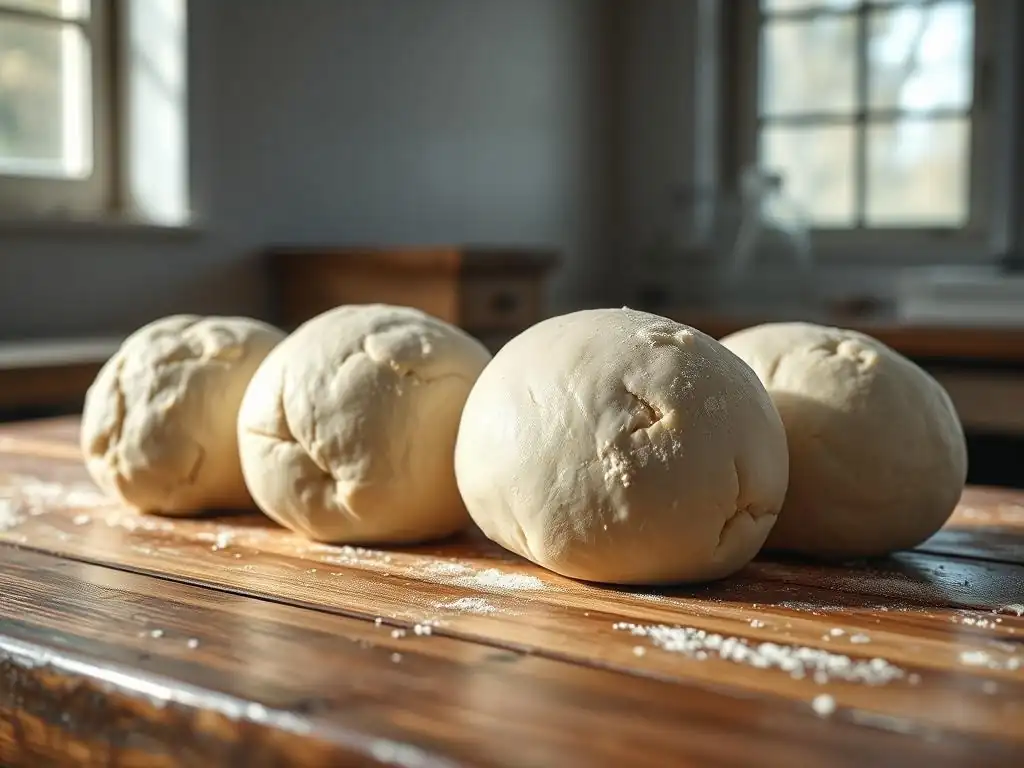
The autolyse technique involves mixing just the flour and water (and sometimes sourdough starter) from a recipe and letting this mixture rest for a period, typically 20 minutes to an hour, usually at room temperature (around 70-75°F / 21-24°C). Salt and yeast (if using commercial yeast) are added after the rest period. This temperature-controlled rest is a powerful tool for managing gluten development.
During the autolyse phase, the flour fully hydrates without the presence of salt (which tightens gluten) or the mechanical stress of kneading. Enzymatic activity (specifically amylase and protease) begins; amylase starts breaking down starches into sugars for yeast, and protease starts snipping some protein bonds. Crucially, the gluten-forming proteins begin to link and align themselves passively. This initial hydration and relaxation, guided by temperature and time, makes the dough incredibly easy to knead later and results in a smoother, more extensible gluten network with less effort.
Tangzhong Method: Incorporating Temperature for Softer Gluten
The Tangzhong method (or Yudane in Japanese baking) is a technique that uses temperature to alter the properties of flour before it's incorporated into the main dough. A small portion of the recipe's flour and liquid (often milk or water) is heated together, typically to around 150°F (65°C), to form a thick, gelatinous paste. This paste is then cooled and added to the rest of the ingredients.
Heating the flour in the presence of liquid causes the starches to gelatinize. In this state, the starches can absorb and retain significantly more moisture – up to several times their weight in water. When this Tangzhong is added to the dough, it introduces this bound moisture. This extra available moisture keeps the gluten network more supple and hydrated during kneading, fermentation, and baking, resulting in baked goods (like milk bread) with an exceptionally soft, tender crumb and extended shelf life. This is a unique form of gluten development temperature control applied to the flour itself.
Sourdough Starters: Temperature's Role in Gluten Development and Flavor
Sourdough baking is inherently tied to gluten development temperature control because the activity of the wild yeast and lactic acid bacteria in the starter and dough is highly temperature-dependent. A warmer starter (75-80°F / 24-27°C) will be more active, leading to faster rises and a tangier flavor profile dominated by acetic acid. A cooler starter (65-70°F / 18-21°C) will be less active, resulting in slower rises and a milder, more lactic acid-driven flavor.
The acidity produced by the bacteria in sourdough also impacts the gluten network. A more acidic dough can become more extensible (stretchy) but potentially weaker if the acidity is too high or the fermentation is too long. Managing the temperature of your starter and your sourdough dough throughout the process – from feeding the starter to bulk fermentation and proofing – is essential for controlling both the rate and type of fermentation and how the gluten develops and behaves. It's a complex interplay where temperature is the maestro.
Conclusion: Achieving Baking Success Through Temperature Management of Gluten
Mastering baking is often about understanding and controlling variables, and few are as influential on texture as gluten development temperature control. We've seen how heat accelerates initial gluten formation and is crucial for setting the final structure during baking, while cold slows the process, allowing for enhanced flavor and a stronger, more extensible network. From the subtle adjustments in water temperature for a perfect bread dough to the critical chilling of pie crust or the precise oven heat for a tender cake, temperature guides the behavior of gluten.
By paying attention to dough temperature, adjusting for ambient conditions, utilizing techniques like autolyse or tangzhong, and understanding the impact of hot and cold fermentation and baking, you gain immense control over the final outcome of your baked goods. Embracing gluten development temperature control allows you to move from simply following recipes to truly understanding the science behind successful baking, leading to more consistent, delicious results every time you bake.
Frequently Asked Questions
What is gluten development, and why is temperature control important?
Gluten development is the process of forming a network of proteins that gives dough its elasticity and structure. Temperature control is essential because it directly impacts the rate of gluten development, affecting the final texture of baked goods.
How does heat affect gluten development in bread baking?
Heat can accelerate gluten development, but excessive heat can also degrade it. Optimal warmth encourages yeast activity, which indirectly aids gluten development, but high temperatures can denature the proteins, leading to a weaker structure.
How does cold temperature influence gluten development, particularly in pastry?
Cold temperatures slow down gluten development, which is crucial in pastry making. This prevents the formation of a tough crust and results in a flakier, more tender texture. Chilling dough also helps keep butter solid, creating layers.
What is the ideal gluten development temperature control range for different types of dough?
There isn't one single ideal temperature. It depends on the recipe and desired outcome. Generally, bread dough prefers warmer temperatures (70-80°F) for proofing, while pastry dough benefits from cold temperatures (below 60°F) during handling.
Can temperature control be used to correct over-developed gluten in a dough?
Yes, to some extent. Chilling over-developed dough can help relax the gluten and make it more manageable. However, it's often better to adjust the mixing time and temperature during the initial dough preparation to prevent over-development in the first place.
Final Reflection: Mastering the Thermal Dance of Gluten
Understanding the precise interplay between temperature and gluten development is not merely a culinary curiosity; it's the key to unlocking consistently superior baked goods. The impact of even minor temperature fluctuations on gluten formation, as explored throughout this article, highlights the critical need for precise control in baking processes, from dough mixing to oven spring. This isn't just about achieving a perfect loaf; it's about understanding the fundamental science behind a craft that has sustained us for millennia.
The journey of exploring gluten's thermal sensitivities has been a fascinating one, revealing the delicate balance between structure and texture. It's a journey that continues to unfold, with ongoing research pushing the boundaries of our understanding. The subtle shifts in gluten's behavior under varying temperatures underscore the importance of mindful observation and adaptation in the kitchen. As the renowned chef Julia Child once said, Always remember that you're not just cooking for yourself, but for the people you love.
And understanding the nuances of gluten development is a crucial part of showing that love through the art of baking.
Now, consider your own baking experiences. Have you noticed inconsistencies in your results? Perhaps a slightly warmer kitchen on one day led to a tougher loaf, while a cooler environment resulted in a softer texture. Take this knowledge and apply it to your next baking project. Experiment with temperature control, observe the changes, and refine your technique. Embrace the precision, the science, and the artistry of baking, and you will unlock a world of delicious possibilities, transforming your baking from a simple process into a mindful and rewarding experience.
Unlock Your Gluten Potential: Master the Heat & Cold
Thanks for taking the time to explore the fascinating world of gluten and temperature! You've now gained valuable insights into how heat and cold impact gluten development and the texture of your baked goods. Ready to put this knowledge into practice?
- Experiment with your next loaf: Try adjusting your dough's resting temperature – perhaps a slightly colder fridge rest for a chewier crumb, or a warmer fermentation for a more open texture. Note the results!
- Share your baking triumphs (and challenges!): Let the BakeWithEase community know how you're incorporating these temperature tactics. We'd love to hear about your experiences!
- Dive deeper into gluten-focused recipes: Explore our recipe archives for further inspiration on harnessing the power of temperature in your baking.
What surprising temperature adjustments will you try in your next baking adventure?