
Troubleshooting Baking Fails: Is Poor Emulsification the Culprit?

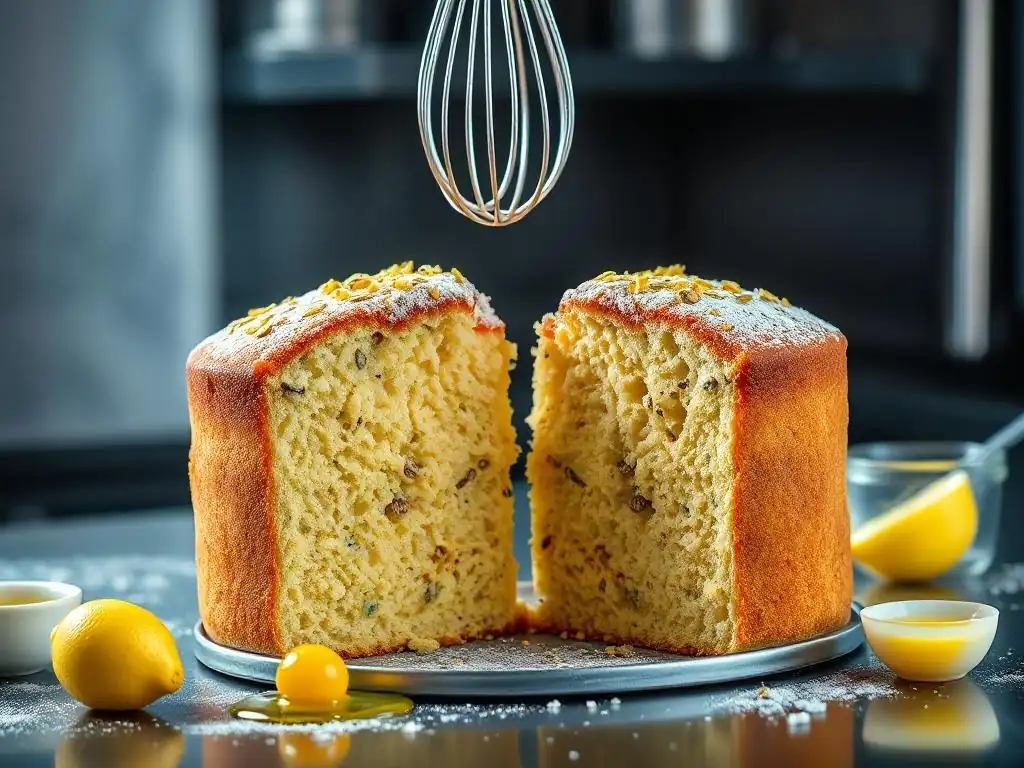
Welcome to BakeWithEase, where we transform baking challenges into delicious triumphs! Ever wondered why your baking emulsion failed? You're not alone! Join us as we dive into the science behind perfect textures and uncover the secrets to avoiding common pitfalls. Get ready to unravel the mysteries of emulsification and elevate your baking game with our in-depth troubleshooting guide. Ready to bake with confidence? Let's get started!
-
Why Baking Emulsion Failed: Common Causes and Solutions
- Incorrect Ingredient Temperatures: Impact on Emulsification
- Overmixing or Undermixing: The Emulsification Sweet Spot
- Improper Ingredient Ratios: Balancing Fat and Water
- Using the Wrong Type of Fat: Impact of different fats on emulsion stability
- Insufficient Emulsifiers: Impact of using insufficient emulsifiers
-
Frequently Asked Questions
- Why is emulsification important in baking, and how does it relate to the success of a recipe?
- What are some common signs that my baking emulsion has failed during the mixing process?
- What ingredients are most likely to cause emulsification problems, and how can I mitigate these issues?
- What are the best techniques for creating a stable emulsion in baking, especially when using a lot of fat?
- If my baking emulsion fails, can I salvage the batter, or do I need to start over?
- Final Reflection: The Unsung Hero of Baking Success: Emulsification
- Unlock Baking Bliss: Master Your Emulsions!
Why Baking Emulsion Failed: Common Causes and Solutions
Even when following a recipe diligently, bakers sometimes encounter frustrating issues like separated batter or greasy textures. Often, the root cause isn't a mysterious force, but rather a breakdown in emulsification – the process of keeping fats and liquids happily blended. Understanding why baking emulsion failed is the first step to preventing these common problems. Several factors can contribute to this delicate balance going awry, from the temperature of your ingredients to the mixing technique you employ. Let's delve into the most frequent culprits behind poor emulsification and explore practical solutions to ensure your batters remain smooth and stable.
Poor emulsification can manifest in many ways, from a cake batter that looks curdled to cookies that spread too much and feel greasy. Identifying the specific issue is crucial for troubleshooting. Factors like inadequate mixing time, incorrect ingredient temperatures, or even slight variations in ingredient ratios can all destabilize an emulsion. Addressing these points directly is key to achieving consistently successful baked goods and avoiding the disappointment of a failed bake.
Incorrect Ingredient Temperatures: Impact on Emulsification
Temperature plays a surprisingly critical role in the success of your baking emulsions. Fats and liquids interact differently depending on whether they are warm or cold. When ingredients are too cold, especially fats like butter or cream cheese, they resist dispersing evenly into liquid components like milk or eggs. This creates larger fat globules that struggle to stay suspended, leading to separation and a curdled appearance in batters. Think of trying to mix cold, hard butter directly into cold milk – it simply won't combine smoothly.
Conversely, if fats are too warm (e.g., melted butter when softened is required), they can also cause issues. Melted fat can't trap air as effectively during creaming, and it tends to separate from the liquid more readily once other ingredients are added. Eggs, when cold, are less fluid and their emulsifying lecithin is less effective at bridging the gap between fat and water molecules. Using ingredients at the temperature specified in the recipe – often room temperature for eggs and softened for butter – is a fundamental step in preventing why baking emulsion failed.
Solution: Achieving Ideal Ingredient Temperatures for Emulsification
Achieving the correct temperature for your ingredients is one of the simplest yet most impactful steps you can take to ensure successful emulsification. For most cake batters, eggs should be at room temperature. A quick way to warm them is to place them in a bowl of warm (not hot) water for 5-10 minutes. Butter, unless specified otherwise, should be softened – cool enough to hold its shape but soft enough to indent easily with your finger. Avoid melting butter unless the recipe explicitly calls for it.
Plan ahead by taking refrigerated ingredients out 30-60 minutes before you plan to bake. This allows them to come to room temperature naturally, promoting smoother incorporation and a stable emulsion. If a recipe requires cold ingredients, like for flaky pie crusts where cold butter is essential, ensure they are properly chilled. Consistency in temperature management significantly reduces the risk of a broken emulsion and contributes to a finer, more even crumb structure in your final product.
Overmixing or Undermixing: The Emulsification Sweet Spot
The duration and intensity of mixing are critical for establishing and maintaining a stable emulsion. Undermixing fails to provide enough mechanical energy to break down fat globules and disperse them evenly throughout the liquid phase. This leaves large pockets of fat that can easily separate, resulting in a greasy or uneven texture. Imagine trying to make mayonnaise by only stirring a few times – the oil and egg won't combine properly.
On the other hand, overmixing, particularly after flour has been added, can also disrupt a fragile emulsion. While initial mixing helps form the emulsion, excessive agitation can overdevelop gluten in flour-based recipes (leading to toughness) and can sometimes physically break the delicate network that holds the fat and liquid together. This is often seen in batters that appear smooth initially but curdle as they are mixed too long after the eggs or liquids are fully incorporated, demonstrating another reason why baking emulsion failed.
Solution: Mastering Mixing Techniques for Perfect Emulsions
Mastering mixing techniques involves understanding the purpose of each mixing stage. When creaming butter and sugar, mix until the mixture is visibly lighter in color and fluffy, indicating that air has been incorporated and the sugar crystals have helped to break down the fat. This stage is crucial for establishing the initial emulsion base. Add eggs gradually, mixing only until each one is just incorporated before adding the next. This slow addition allows the batter to absorb the liquid and emulsifiers from the egg without breaking the existing emulsion.
When adding dry ingredients, mix on low speed only until no streaks of flour are visible. This typically takes less than 60 seconds. Any further mixing primarily develops gluten and risks collapsing the delicate air structure created during creaming and potentially breaking the emulsion. Using a rubber spatula to finish mixing by hand ensures you don't overmix. Paying close attention to visual cues – the texture and appearance of the batter – is often more reliable than strictly adhering to arbitrary mixing times.
Improper Ingredient Ratios: Balancing Fat and Water
The success of an emulsion hinges on a specific balance between fat and water, mediated by emulsifying agents. Recipes are carefully formulated to achieve this balance. If the ratio of fat to liquid is too high without sufficient emulsifiers, the liquid struggles to surround and stabilize the large volume of fat particles. Conversely, too much liquid or too little fat can also lead to instability, as there isn't enough dispersed phase (fat) to create a stable network within the continuous phase (liquid).
Deviating from the recipe's specified ratios – whether by inaccurate measurement or intentional alteration without understanding the implications – is a common reason why baking emulsion failed. For example, adding significantly more fat to a cake recipe might result in a greasy batter that separates easily because the existing amount of egg and other emulsifiers isn't enough to handle the extra fat load. Similarly, reducing fat or increasing liquid too much can lead to a weak structure prone to collapse.
Solution: Adjusting Recipes for Emulsification Success
Precision in measuring ingredients, particularly fats and liquids, is paramount. Using a kitchen scale for accuracy is highly recommended, as volume measurements can vary significantly. If you need to scale a recipe up or down, ensure all ingredients are scaled proportionally to maintain the critical fat-to-liquid-to-emulsifier ratios.
If you suspect a recipe might be prone to emulsification issues (perhaps it's very high in fat), or if you're trying to adapt a recipe, consider slightly bolstering the emulsifying agents if the recipe can structurally handle the addition. Adding an extra egg yolk (rich in lecithin) or a small amount of buttermilk or sour cream (which contain natural emulsifiers like casein) can sometimes help stabilize a borderline emulsion. However, significant alterations should be approached with caution and understanding of how each ingredient functions.
Using the Wrong Type of Fat: Impact of different fats on emulsion stability
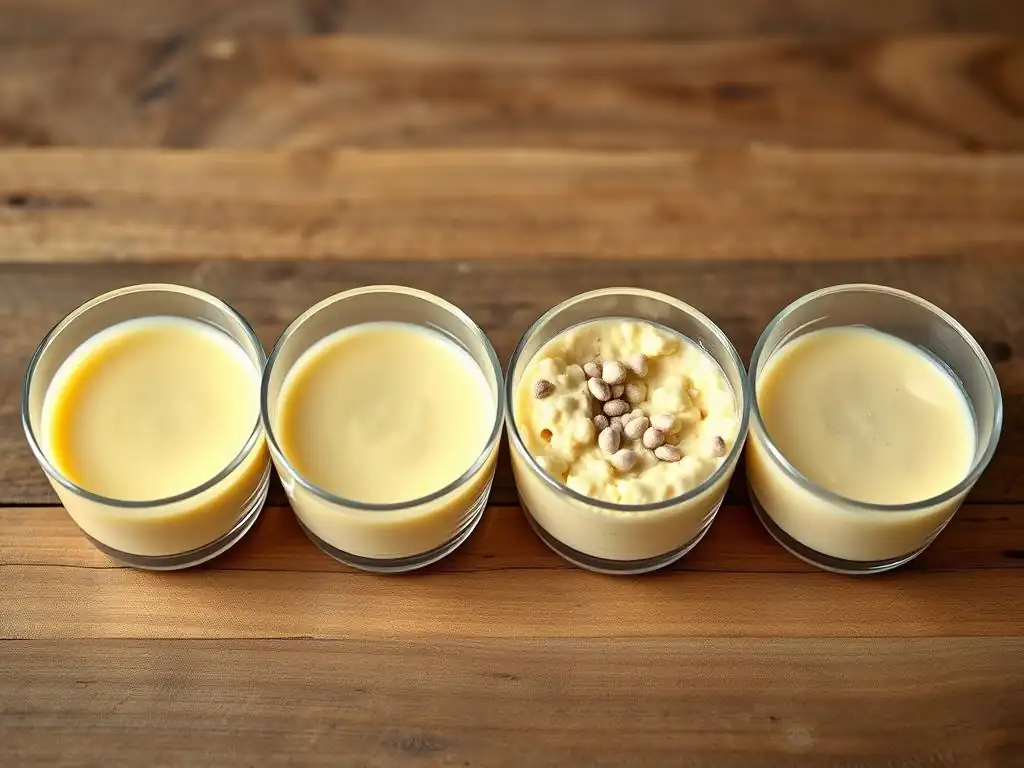
Not all fats behave identically in baking, and the type of fat used significantly impacts the emulsification process and the final texture. Solid fats like butter and shortening have different compositions and melting points compared to liquid oils. Butter, for instance, contains about 16-18% water and some natural emulsifiers, which aids in creating stable emulsions and contributes flavor and structure through creaming. Shortening is nearly 100% fat and often contains added emulsifiers (mono- and diglycerides) to enhance creaming and stability.
Using a fat that isn't suited for the recipe's method or desired outcome can easily lead to emulsification issues. Substituting liquid oil for solid butter in a creaming method cake, for example, will prevent proper air incorporation and can result in a dense, greasy batter that separates because oil doesn't emulsify in the same way or incorporate air like solid fat does. Understanding the properties of different fats is key to avoiding a situation where the fat choice explains why baking emulsion failed.
Solution: Selecting the Right Fat for Your Baking Needs
Unless you are an experienced baker knowledgeable in ingredient substitutions and their scientific implications, it is best to stick to the type of fat specified in the recipe. Recipes are developed with specific fats in mind because of their unique contributions to texture, flavor, and structure, including their role in emulsification. If a recipe calls for butter, use butter. If it calls for vegetable shortening, use that.
If you are developing your own recipe or attempting a substitution, consider the fat's composition and melting point. Fats with added emulsifiers (like many commercial shortenings and margarines designed for baking) are often more forgiving and can help stabilize emulsions, especially in high-ratio cakes. For recipes relying heavily on the creaming method for leavening and emulsion, a solid fat like butter or shortening is typically essential. Liquid oils are better suited for recipes where they are mixed directly with wet ingredients or folded into dry, as they don't require creaming for aeration or emulsification in the same way.
Insufficient Emulsifiers: Impact of using insufficient emulsifiers
Even if you've managed ingredient temperatures, mixing times, ratios, and fat types correctly, a recipe might still struggle with emulsification if it simply doesn't contain enough natural or added emulsifying agents to bridge the gap between the fat and water phases. Emulsifiers are molecules with both water-attracting (hydrophilic) and fat-attracting (lipophilic) ends, allowing them to surround fat droplets and keep them suspended in liquid, or vice versa.
Recipes that are very high in fat or contain challenging combinations of ingredients might require a higher concentration of emulsifiers to remain stable. If a recipe relies heavily on fat for richness but is low in ingredients known for their emulsifying properties, the emulsion can be inherently weak and prone to breaking during mixing, resting, or even baking. This lack of sufficient "bridges" is a direct cause of why baking emulsion failed in many complex baking applications.
Solution: Strengthening Emulsifiers or Using Alternatives
To combat insufficient emulsifiers, you can strategically incorporate ingredients naturally rich in these compounds where appropriate for your recipe. Egg yolks are excellent natural emulsifiers due to their high lecithin content. Dairy products like buttermilk, yogurt, and sour cream contain casein proteins that act as emulsifiers and stabilizers. Even ingredients like honey and mustard (though less common in sweet baking) have emulsifying properties. Consider if adding a small amount of one of these ingredients would complement your recipe and boost its emulsification power.
For more demanding recipes or professional results, adding specific, food-grade emulsifiers can be a powerful solution. Ingredients like lecithin (available in liquid or powder form) or baking emulsifier pastes (containing mono- and diglycerides) are designed to significantly improve emulsion stability, batter consistency, and even final product texture and shelf life. Using these can provide the necessary support when natural emulsifiers are insufficient to prevent why baking emulsion failed in challenging formulations.
Frequently Asked Questions
Why is emulsification important in baking, and how does it relate to the success of a recipe?
Emulsification is crucial because it helps combine oil and water-based ingredients into a stable mixture. Without it, your batter can separate, leading to a poor texture and uneven baking. This can drastically affect the final taste and appearance of your baked goods.
What are some common signs that my baking emulsion has failed during the mixing process?
Signs of a failed emulsion include a batter that appears separated, curdled, or oily. You might also notice a lack of volume or a greasy residue after baking. The final product might have a dense and unpleasant texture.
What ingredients are most likely to cause emulsification problems, and how can I mitigate these issues?
Ingredients like cold eggs, too much fat, or adding liquid too quickly can disrupt the emulsion. To prevent this, ensure ingredients are at room temperature and add liquids slowly while mixing. Using a high-speed mixer can also help.
What are the best techniques for creating a stable emulsion in baking, especially when using a lot of fat?
Gradually add fat to the liquid, mixing continuously at a medium speed. Ensure the ingredients are at room temperature. Using an emulsifier like egg yolks or lecithin can also significantly improve stability.
If my baking emulsion fails, can I salvage the batter, or do I need to start over?
Sometimes, you can salvage a broken emulsion by gently warming the batter over a double boiler and whisking vigorously. Alternatively, adding a small amount of flour or cornstarch slurry can help re-emulsify the mixture. However, if severely separated, it's often best to restart the recipe.
Final Reflection: The Unsung Hero of Baking Success: Emulsification
Understanding emulsion is not just about avoiding a collapsed cake; it's about unlocking the potential for consistently perfect bakes. A seemingly small detail, proper emulsification forms the very foundation of successful baking, impacting texture, rise, and overall flavor. Ignoring this crucial step can lead to a cascade of baking failures, leaving even experienced bakers frustrated.
The journey of mastering emulsification is a testament to the delicate balance required in baking. It's a process that highlights the interconnectedness of ingredients and techniques, reminding us that even the smallest deviation can have significant consequences. Baking is a science, but it's also an art. The more you understand the science, the better you can express your art.
This quote perfectly encapsulates the importance of understanding the fundamental principles, like emulsification, to achieve truly exceptional results. My own baking improved dramatically once I truly grasped the nuances of fat and water interaction.
Now, I challenge you to consider your own baking experiences. Have you encountered mysterious failures that might have been attributed to poor emulsification? Take a moment to reflect on your techniques. By carefully observing the stages of your mixing process, paying close attention to the incorporation of fats and liquids, you can refine your skills and unlock a new level of baking mastery. Don't let another cake fall flat – embrace the power of emulsion and watch your baking transform.
Unlock Baking Bliss: Master Your Emulsions!
Thanks for diving into the world of baking with us! We hope you gained valuable insights into the crucial role of emulsification in achieving perfectly baked goods. Ready to put your newfound knowledge into practice?
- Try a recipe featuring a classic emulsion, like mayonnaise or hollandaise, to practice your technique. This will help you build confidence before tackling complex baked goods.
- Share your baking triumphs (and even your flops!) in the comments below. Let's build a supportive community of bakers together!
- Consider experimenting with different emulsifiers to see how they affect the texture and flavor of your creations – perhaps try swapping lecithin for egg yolks in your next batch of cookies!
So, what baking challenge are you ready to tackle with your newly honed emulsification skills?