
The Beginner Baker's Essential Tool Handbook

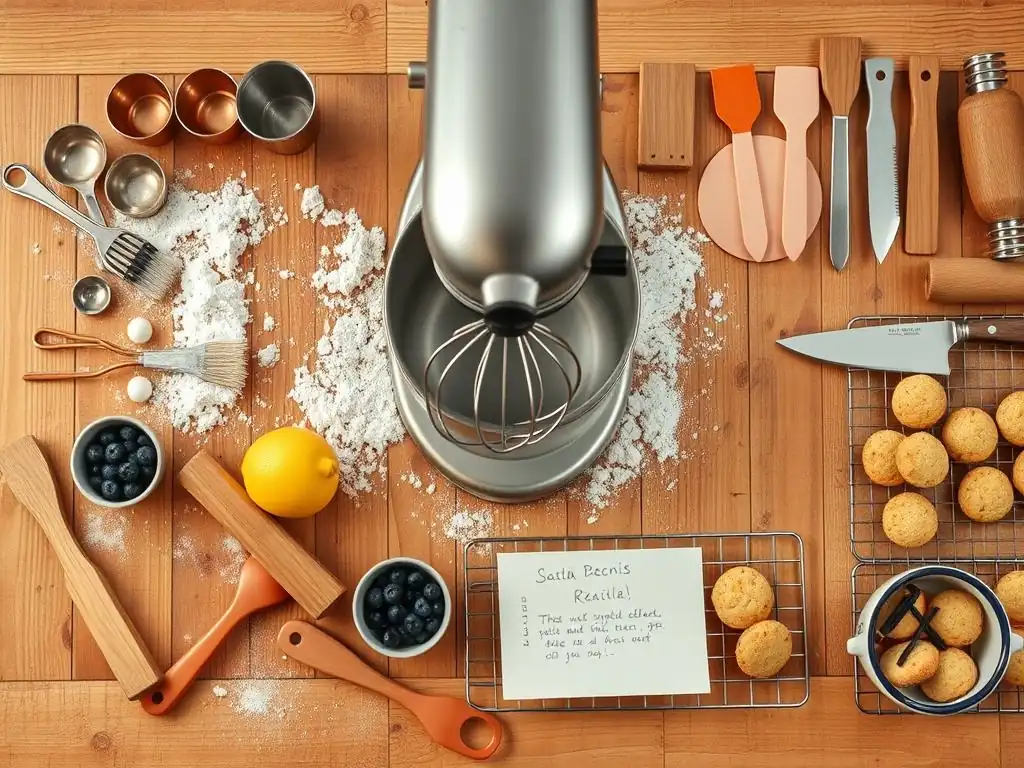
Welcome to BakeWithEase, your passport to pastry perfection! Are you ready to transform your kitchen into a haven of delicious aromas? This week, we're diving into the world of essential baking tools for beginners. But what exactly do you really need to get started, and what can wait? Discover the must-have implements that will empower you to create delectable treats, and perhaps, ignite a lifelong passion for baking. Intrigued? Let's explore the tools that will make your baking journey a piece of cake (pun intended! ).
- The Home Baker's Essential Tool Handbook: Bake With Confidence
- Introduction to Essential Baking Tools for Home Bakers
- Must-Have Measuring Tools for Baking Success
- Mixing Bowls: A Baker's Best Friend
- Spatulas and Scrapers: Essential for Combining Ingredients
- Baking Pans: The Foundation of Your Baked Goods
- Whisking Wonders: Air Incorporation for Light and Fluffy Results
- Rolling Pins: Creating Even Doughs and Crusts
- Optional but Helpful Baking Tools
- Cleaning and Maintaining Your Baking Tools
- Conclusion: Building Your Essential Baking Tool Collection
-
Frequently Asked Questions
- What are the absolute essential baking tools a beginner should invest in first?
- How can I choose the right type of mixing bowls for my baking needs?
- Is a stand mixer truly necessary for a beginner baker, or can I manage with hand tools?
- What kind of baking pans are recommended for starting a baking journey?
- Where can I find affordable, yet reliable, baking tools without breaking the bank?
- Final Reflection: The Sweetness of Skill: Mastering the Art of Baking
- Unleash Your Inner Baker!
The Home Baker's Essential Tool Handbook: Bake With Confidence
Introduction to Essential Baking Tools for Home Bakers
Baking is a rewarding journey, a delightful mix of science and art that transforms simple ingredients into delicious treats. For anyone starting out, diving into the world of flour, sugar, and butter can feel a little daunting. But with the right guidance and, importantly, the right equipment, you can unlock your baking potential and create wonderful baked goods right in your own kitchen. This guide focuses on the fundamental gear you'll need to start your baking adventures with confidence.
Understanding which tools are truly essential for beginners is the first step. You don't need a kitchen overflowing with gadgets to bake successfully. Focusing on a few key pieces of equipment will make the process smoother, more enjoyable, and significantly increase your chances of consistent results. Think of these essential baking tools for beginners as your foundational toolkit, equipping you to tackle everything from simple cookies to your first loaf of bread.
Why Having the Right Baking Tools Matters
Having the correct tools isn't just about convenience; it's crucial for the success of your baked goods. Baking relies heavily on precise measurements and specific techniques, and using the wrong tool can lead to inconsistencies, uneven baking, or outright failures. For example, trying to measure flour accurately with a drinking cup instead of a proper measuring cup can easily result in adding too much flour, leading to dense, dry cookies instead of light, chewy ones.
Furthermore, the right tools can make the process itself much easier and more efficient, which is especially encouraging for beginner bakers. Imagine trying to cream butter and sugar by hand for ten minutes versus using a sturdy whisk for a fraction of the time. Tools designed for specific baking tasks simplify complex steps, allowing you to focus on technique and enjoy the creative process. Investing in these essential baking tools for beginners is investing in your baking success and enjoyment.
Bake With Confidence: Your Guide to Essential Baking Equipment
Embarking on your baking journey with the right equipment sets you up for success. This guide will walk you through the absolute must-haves, explaining why each tool is important and what to look for when choosing yours. We'll cover everything from the basics of measurement to the pans that shape your creations. Our goal is to help you build a practical collection of essential baking tools for beginners without overwhelming you.
By the end of this handbook, you'll have a clear understanding of the fundamental items needed to bake a wide variety of recipes. You'll learn how these tools contribute to successful outcomes and gain the knowledge to select quality pieces that will last. Get ready to equip your kitchen and start baking with confidence, knowing you have the essential baking tools for beginners at your fingertips.
Must-Have Measuring Tools for Baking Success
The Importance of Accurate Measurement in Baking
Baking is often described as a science because the ratios of ingredients are critical to the final outcome. Unlike cooking, where you can often adjust ingredients by taste, baking requires precision. A recipe calls for a specific amount of flour, sugar, leavening agents, and liquids for a reason – these quantities interact chemically to create the desired texture, rise, and flavor. Using inaccurate measurements is one of the most common reasons why baking attempts fall short.
For instance, adding just a couple of tablespoons too much flour to a standard cookie recipe can dramatically change the texture from soft and chewy to hard and crumbly. Similarly, using too little baking powder can result in flat cakes or muffins. Accurate measurement ensures that the chemical reactions happen as intended, leading to consistent and predictable results every time you bake. This is why having reliable measuring tools is paramount for any beginner baker mastering the essential baking tools for beginners.
Essential Measuring Cups and Spoons
To achieve the accuracy needed in baking, you'll need two primary types of measuring tools: dry measuring cups and measuring spoons. Dry measuring cups, typically sold in sets (e.g., 1/4 cup, 1/3 cup, 1/2 cup, 1 cup), are designed to be filled to the brim and leveled off with a straight edge, like a knife or spatula. This method ensures you get an exact volume of dry ingredients like flour, sugar, oats, and cocoa powder.
Measuring spoons, usually sold in sets (e.g., 1/4 tsp, 1/2 tsp, 1 tsp, 1 tbsp), are used for smaller quantities, particularly leavening agents (baking powder, baking soda), spices, extracts, and salt. Accuracy with these small amounts is especially critical as they often pack a powerful punch in terms of flavor or chemical reaction. Look for sets made from sturdy material like stainless steel, as plastic ones can sometimes lose their shape over time. These sets are truly essential baking tools for beginners.
Digital Kitchen Scale: Achieving Baking Precision
While measuring cups and spoons are fundamental, a digital kitchen scale offers the highest level of accuracy, especially for recipes that provide measurements by weight (grams or ounces). Measuring by weight is often preferred by professional bakers because it's more consistent than volume measurement. For example, a cup of flour can weigh differently depending on how it's scooped (packed vs. lightly spooned), whereas 120 grams of flour is always 120 grams.
A digital scale is particularly useful for measuring flour, sugar, and fats. It eliminates the variability inherent in volume measurements and makes cleanup easier as you can often measure ingredients directly into your mixing bowl. Most basic digital scales are affordable, compact, and easy to use. While not strictly essential for your very first baking attempts if you stick to volume-based recipes, a scale is a highly recommended addition to your collection of essential baking tools for beginners as you become more comfortable and want greater precision.
Mixing Bowls: A Baker's Best Friend
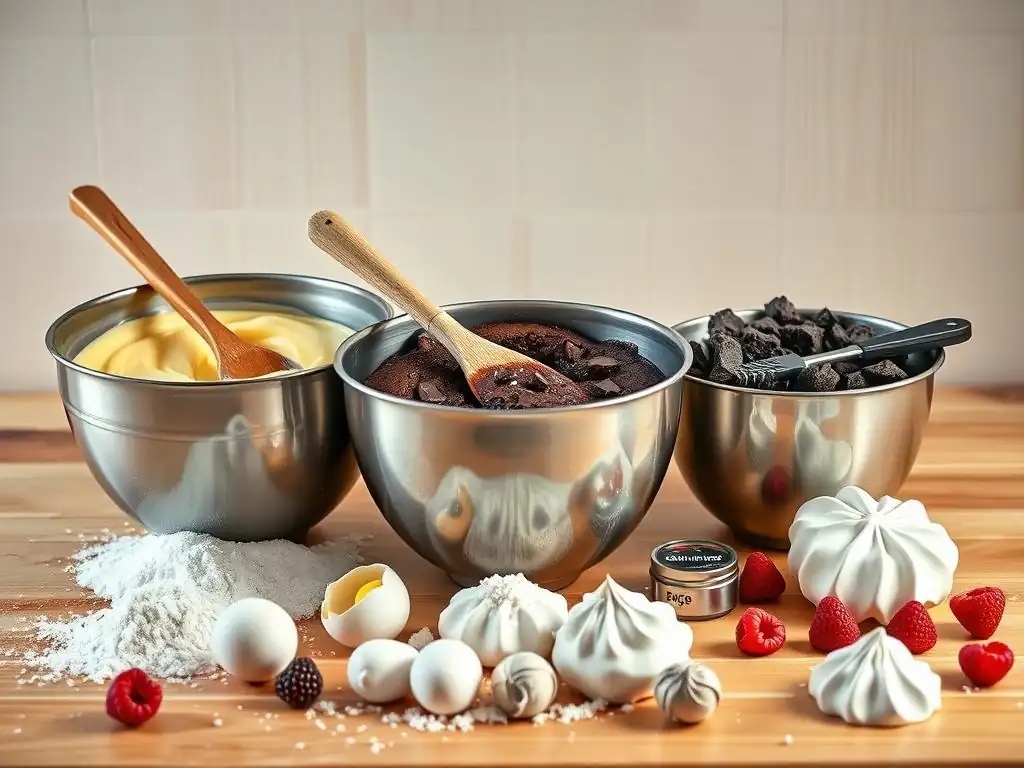
Choosing the Right Mixing Bowls for Different Baking Tasks
Mixing bowls are perhaps the most frequently used items in a baker's kitchen. You'll need them for everything from whisking eggs and combining dry ingredients to mixing batters and doughs. Having a variety of sizes is key, as different tasks require different bowl capacities. A small bowl is perfect for whisking a couple of eggs or melting butter, while a large bowl is necessary for mixing cake batter or kneading bread dough.
A good starting point is a set of three bowls in small (around 1.5-2 quarts), medium (around 3-4 quarts), and large (around 5-6 quarts) sizes. Consider bowls with non-slip bottoms for stability while mixing. Wide, shallow bowls are great for whisking, while deeper bowls help contain splatter when mixing with electric mixers. These versatile vessels are foundational essential baking tools for beginners.
Stainless Steel vs. Glass vs. Plastic: Which Mixing Bowl Material is Best?
Mixing bowls come in various materials, each with its own advantages.
- Stainless Steel: Lightweight, durable, non-reactive (won't interact with acidic ingredients), easy to clean, and can be safely used over a double boiler. They are generally the most popular choice for professional and home bakers alike due to their versatility and longevity.
- Glass: Heavy and stable, non-reactive, and transparent, allowing you to see the mixing process. They can also be used in a microwave (if specified) and for serving. However, they can break and are heavier to handle, especially when full.
- Plastic: Lightweight, affordable, and often come with non-slip features. However, some plastics can retain odors or stains, scratch easily, and may not be suitable for hot ingredients or microwave use. Over time, plastic bowls can also develop tiny scratches where bacteria can hide.
For essential baking tools for beginners, a set of stainless steel bowls is often the most practical and durable choice, offering excellent value and performance for a wide range of baking tasks.
Spatulas and Scrapers: Essential for Combining Ingredients
Rubber Spatulas: Versatile Tools for Mixing and Folding
Rubber or silicone spatulas are indispensable in baking due to their flexibility and heat resistance. They are perfect for scraping down the sides of mixing bowls to ensure all ingredients are incorporated, folding delicate ingredients like whipped cream or egg whites into batters, and transferring batters from bowls to pans. Their soft, flexible heads allow them to conform to the shape of the bowl, leaving very little batter behind.
Look for spatulas with a sturdy handle and a heat-resistant silicone head (often heat-resistant up to 400-500°F or 200-260°C). Silicone is more durable and less prone to staining and retaining odors than traditional rubber. Having a couple of different sizes – a smaller one for scraping jars and a larger one for mixing – is beneficial. These are truly versatile essential baking tools for beginners.
Offset Spatulas: Achieving Smooth Frosting and Even Spreading
An offset spatula, with its angled blade, is a specialist tool that excels at spreading batters and frostings smoothly and evenly. The offset handle keeps your knuckles clear of the surface you're working on, allowing for a flat, consistent spread. They come in various sizes, from small ones perfect for spreading frosting on cupcakes to larger ones ideal for icing cakes or spreading batter in a pan.
While you might initially use a knife or standard spatula for spreading, an offset spatula makes the job significantly easier and results in a much more professional finish. It's particularly useful for leveling batter in a cake pan before baking or creating swirls and smooth surfaces on frosted treats. Adding a medium-sized offset spatula to your collection elevates your presentation skills and is a valuable addition to your essential baking tools for beginners.
Bench Scrapers: Dividing Dough and Cleaning Surfaces
A bench scraper, also known as a dough scraper, is a simple yet incredibly useful tool, particularly for bread bakers but also handy for pastry. It typically consists of a flat, rectangular metal or plastic blade with a handle along the top edge. Its primary uses include dividing dough into portions, transferring chopped ingredients from a cutting board, and scraping up stubborn bits of dough or flour from your work surface.
For kneading dough, a bench scraper is invaluable for gathering sticky dough from the counter. It's also essential for portioning dough for rolls, loaves, or pastries, allowing you to create uniform sizes. Beyond dough, it's excellent for cleaning up dried batter or dough scraps from countertops quickly and efficiently. A sturdy bench scraper is a practical addition to your essential baking tools for beginners, especially if you plan on making bread or pastries.
Baking Pans: The Foundation of Your Baked Goods
Essential Cake Pans
If you plan on baking cakes, having reliable cake pans is non-negotiable. The most common type is the round cake pan, typically 8 or 9 inches in diameter and about 2 inches deep. These are perfect for single-layer cakes or for baking multiple layers to stack. Look for pans made from aluminum or non-stick coated metal for even heat distribution and easy release.
Many recipes call for specific pan sizes, so starting with one or two 8-inch or 9-inch round pans is a great beginning. Square pans (8x8 or 9x9 inches) are also versatile for brownies, bar cookies, and some cakes. Investing in good quality pans ensures your cakes bake evenly and release cleanly, making them truly essential baking tools for beginners.
Muffin tins and cookie sheets (also called baking sheets or sheet pans) are workhorses in the baking world. A standard muffin tin has 12 cups and is used for muffins, cupcakes, and sometimes individual quiches or mini-tarts. Look for non-stick versions for easier cleanup and release.
Cookie sheets are flat or have one raised edge and are used for baking cookies, scones, sheet pan cakes, and even roasting nuts. They come in various sizes; a half-sheet pan (approximately 13x18 inches) is a standard and versatile size that fits most ovens. For best results with cookies, use a light-colored, heavy-gauge aluminum sheet pan, possibly lined with parchment paper or a silicone baking mat, for even browning. These are fundamental essential baking tools for beginners.
Loaf Pans: For Breads and Cakes
A loaf pan is a rectangular pan specifically designed for baking quick breads (like banana bread or zucchini bread), yeast breads, and pound cakes. Standard sizes are typically 9x5 inches or 8.5x4.5 inches. The size of the pan affects the baking time and the shape of your loaf, so pay attention to the size specified in recipes.
As with other pans, look for durable materials like aluminized steel or non-stick coatings for even heat distribution and easy release. A good loaf pan ensures your bread or cake rises properly and cooks through without burning the crust. If you plan on baking homemade bread or delicious quick loaves, a loaf pan is an essential addition to your collection of essential baking tools for beginners.
Whisking Wonders: Air Incorporation for Light and Fluffy Results
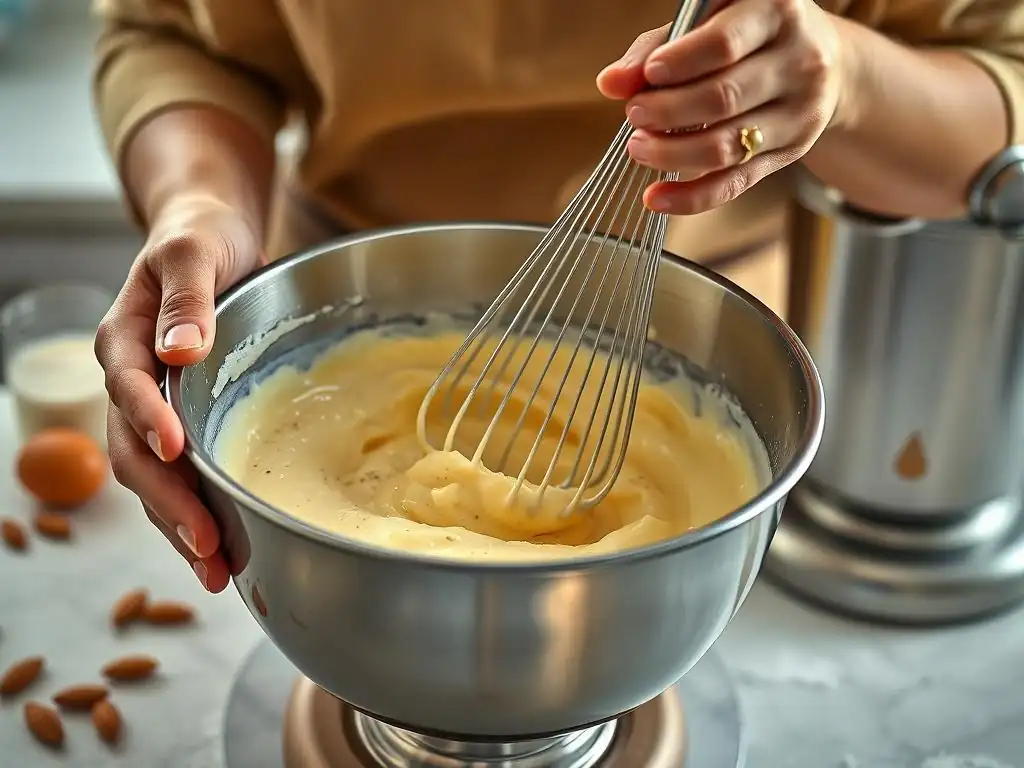
Balloon Whisk: Creating Volume in Egg Whites and Cream
The balloon whisk, characterized by its many thin wires forming a wide, balloon-like shape, is specifically designed to incorporate air into ingredients. This is crucial for tasks like whisking egg whites to stiff peaks for meringues or soufflés, or whipping heavy cream into fluffy peaks for toppings and fillings. The wide shape covers a large surface area in the bowl, maximizing the amount of air introduced with each stroke.
Using a balloon whisk effectively requires energy, but it's an essential skill for many classic baking techniques. While electric mixers can perform these tasks faster, mastering the manual whisk allows for greater control, especially when you need just soft peaks or don't want to over-whip. A medium-sized balloon whisk is a key piece among essential baking tools for beginners aiming for light and airy results.
Flat Whisk: Perfect for Sauces and Smooth Batters
A flat whisk, also known as a roux whisk or a high-heat whisk, has wires that are arranged in a flatter, more elongated shape. While less effective at incorporating significant air compared to a balloon whisk, it excels at scraping the bottom of pans and bowls to prevent lumps and ensure smooth mixtures.
This type of whisk is ideal for making smooth sauces, gravies, or whisking together liquid ingredients in a shallow pan or bowl. It can also be useful for combining dry ingredients briefly or breaking up clumps in batters. While perhaps less critical than a balloon whisk for basic aeration, a flat whisk offers utility for specific tasks and can be a helpful addition to your essential baking tools for beginners as you explore different types of recipes.
Rolling Pins: Creating Even Doughs and Crusts
Standard Rolling Pin
A standard rolling pin, often called an American rolling pin, typically has a large, central cylinder with handles on either end. This design allows you to grasp the handles and apply even pressure across the dough as you roll it out. They come in various materials, including wood, marble, and silicone-coated options.
Wooden rolling pins are traditional and work well, though they require proper conditioning and cleaning. Marble pins are heavy and can help keep dough cool, which is beneficial for pastry. Non-stick silicone coatings are easy to clean. A medium-weight, smooth-surfaced standard rolling pin is perfect for rolling out cookie dough, pie crusts, or biscuit dough evenly. It's a fundamental tool for any recipe requiring rolled dough, making it one of the essential baking tools for beginners.
French Rolling Pin: Enhancing Dough Control
The French rolling pin is a handleless, tapered cylinder, usually made of wood. The tapered ends allow for more control over the dough thickness and shape as you roll. You use the palms of your hands directly on the pin, which some bakers find offers a better feel for the dough.
French rolling pins are excellent for rolling out delicate pastry doughs or achieving specific shapes. The lack of handles means they are often easier to store. While a standard rolling pin is perfectly adequate for most beginner tasks, a French rolling pin offers an alternative style that many bakers prefer for its tactile control. Considering both styles can help you decide which best fits your rolling needs as you build your collection of essential baking tools for beginners.
Optional but Helpful Baking Tools
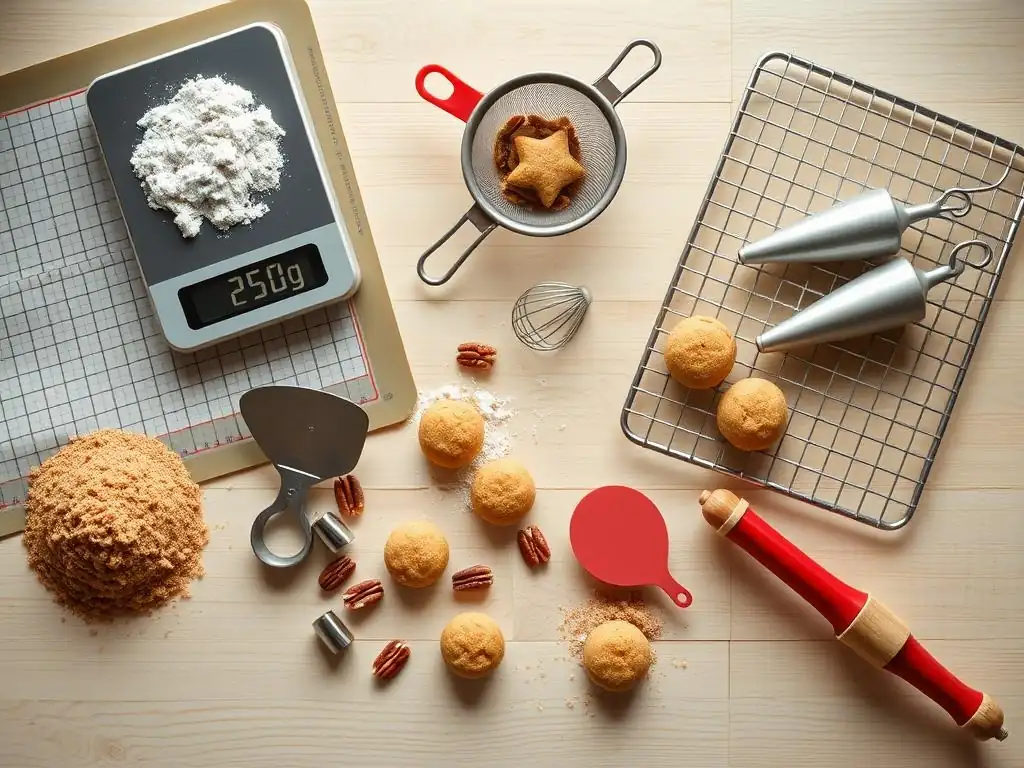
Pastry Brush: Adding Glazes and Egg Washes
A pastry brush is a small brush used for applying liquids to the surface of baked goods. This includes brushing melted butter onto bread rolls, applying egg washes for a golden crust on pastries, or glazing cakes and tarts with simple syrup or jams. They are typically made with natural bristles or silicone.
Silicone brushes are easy to clean and don't shed bristles, while natural bristle brushes hold liquid well. Having a pastry brush ensures an even application of washes and glazes, which can significantly improve the appearance and sometimes the texture of your baked goods. It's not strictly essential for your very first bakes, but it's a helpful tool to have in your collection of essential baking tools for beginners for adding those finishing touches.
Sifter: Ensuring Light and Airy Flour
A sifter or fine-mesh sieve is used to aerate dry ingredients like flour and cocoa powder, remove any lumps, and combine ingredients like flour, baking powder, and salt evenly before adding them to wet ingredients. Sifting makes flour lighter and helps leavening agents distribute more uniformly throughout the mixture, contributing to a finer, more tender crumb in cakes and pastries.
While many modern flours are pre-sifted, sifting is still a valuable step for certain recipes, particularly delicate cakes, or when working with cocoa powder which can be clumpy. A large fine-mesh sieve can double as a sifter and a strainer, making it a versatile addition to your essential baking tools for beginners.
Cooling Rack: Preventing Soggy Bottoms
A cooling rack is a wire rack that allows air to circulate around baked goods as they cool. Placing hot cakes, cookies, or breads directly on a solid surface traps steam, which can lead to soggy bottoms. Transferring items to a cooling rack immediately after they come out of the oven allows the steam to escape, ensuring a proper texture and preventing condensation.
Cooling racks come in various sizes and shapes. Look for one that is sturdy and large enough to hold a batch of cookies or a cake. Some racks have feet to lift them off the counter, enhancing air circulation. A cooling rack is a simple but effective tool for achieving the best possible texture in your finished baked goods and is a recommended item among essential baking tools for beginners.
Cleaning and Maintaining Your Baking Tools
Proper Cleaning Techniques for Different Baking Tools
Keeping your essential baking tools clean is vital for hygiene and longevity. Most tools like stainless steel bowls, measuring cups and spoons, and spatulas can be washed with warm, soapy water. Ensure you wash them promptly after use, especially after working with sticky doughs or batters, to prevent residue from hardening.
For baking pans, follow the manufacturer's instructions. Non-stick pans should not be scrubbed with abrasive pads, which can damage the coating. Soaking can help loosen baked-on bits. Wooden rolling pins should be wiped clean with a damp cloth and dried thoroughly; avoid soaking them, which can cause cracking. Silicone tools are generally dishwasher safe and resistant to stains and odors. Proper cleaning ensures your essential baking tools for beginners remain in good condition.
Storage Tips to Extend the Life of Your Baking Equipment
Storing your baking tools correctly protects them from damage and keeps them organized. Store measuring cups and spoons together, perhaps on a ring or in a dedicated drawer. Stack mixing bowls by size to save space. Hang spatulas and whisks on hooks or keep them in a utensil crock.
Baking pans should be stored carefully to avoid scratching non-stick surfaces. Placing paper towels or soft cloths between stacked pans can help. Rolling pins can be stored in a drawer or upright in a utensil holder. Proper storage not only keeps your kitchen tidy but also helps extend the life of your essential baking tools for beginners, ensuring they are ready for your next baking adventure.
Conclusion: Building Your Essential Baking Tool Collection
Investing in Quality Baking Tools for Long-Term Baking Success
Starting your baking journey with a few quality essential baking tools for beginners is a smart investment. While it might be tempting to buy the cheapest options available, well-made tools perform better, are more durable, and will save you frustration in the long run. A sturdy measuring cup set will provide accurate measurements for years, and a good quality baking pan will bake evenly and consistently.
Focus on acquiring the core items discussed – accurate measuring tools, a set of mixing bowls, versatile spatulas, a few key baking pans, and a good whisk. As you gain experience and explore new recipes, you can gradually add specialized tools like a digital scale or a pastry brush to your collection. Building your set of essential baking tools for beginners thoughtfully ensures you have reliable equipment to support your growing skills.
Bake With Confidence: Enjoy Your Baking Journey!
Equipped with the right essential baking tools for beginners and a basic understanding of how to use them, you are well on your way to baking success. Don't be afraid to start simple, follow recipes carefully, and learn from any mistakes along the way. Baking is a skill that improves with practice.
The most important tool you have is your enthusiasm! Enjoy the process of mixing, shaping, and watching your creations transform in the oven. With your foundational set of essential baking tools for beginners, you have everything you need to start creating delicious treats and sharing them with friends and family. Happy baking!
Frequently Asked Questions
What are the absolute essential baking tools a beginner should invest in first?
The most crucial tools are a measuring cup set, a measuring spoon set, and a reliable mixing bowl. These allow for accurate ingredient proportions, vital for successful baking.
How can I choose the right type of mixing bowls for my baking needs?
Consider bowls of varying sizes. Stainless steel is durable and versatile, while glass bowls are great for melting ingredients in the microwave. Look for non-slip bases for stability.
Is a stand mixer truly necessary for a beginner baker, or can I manage with hand tools?
While a stand mixer is helpful, it's not essential to start. A whisk and a spatula are perfectly adequate for many recipes and allow you to develop your technique.
What kind of baking pans are recommended for starting a baking journey?
A 9x13 inch baking pan, a round cake pan (8 or 9 inch), and a cookie sheet are versatile choices. These will cover most basic baking recipes.
Where can I find affordable, yet reliable, baking tools without breaking the bank?
Look for sales at department stores or online retailers. Consider starter sets which often offer discounted prices on a collection of essential tools.
Final Reflection: The Sweetness of Skill: Mastering the Art of Baking
The humble kitchen tool, often overlooked, is the unsung hero of countless delicious creations. From the perfectly risen loaf to the delicate, melt-in-your-mouth cookie, the right tools empower even the most novice baker to achieve extraordinary results. This handbook has explored the essential arsenal, demystifying the process and making the world of baking accessible to everyone.
The impact of accessible baking knowledge is profound. It's more than just creating delicious treats; it's about fostering creativity, connection, and a sense of accomplishment. Baking, in its simplicity, offers a meditative practice, a chance to slow down and appreciate the process. Baking is at once child's play and adult joy. And love, of course.
This quote perfectly encapsulates the joy and satisfaction derived from mastering the craft, a sentiment echoed in countless kitchens worldwide. The tools discussed here are not just inanimate objects; they are the instruments of this joy, facilitating the creation of memories and shared experiences.
Now, it's your turn. Take this knowledge and embark on your own baking journey. Don't be afraid to experiment, to embrace the occasional mishap, and to savor the sweet rewards of your efforts. Remember the tools discussed here as your guides, your partners in this delicious adventure. The world awaits your perfectly baked creations – go forth and create!
Unleash Your Inner Baker!
Thanks for taking the time to explore the world of baking with us! We hope you've discovered some essential tools that will elevate your baking game. Now it's time to put that knowledge to use.
- Start baking your favorite recipe today! Dust off that mixing bowl and let's get creative. Even a simple cookie recipe will feel rewarding with the right tools.
- Share your baking journey – Post a picture of your creation on social media and tag us @BakeWithEase! We'd love to see your results.
- Explore our website for more baking tips and tricks – discover even more tools and techniques to enhance your baking skills!
What's the first delicious treat you plan to bake with your newfound knowledge? Let us know in the comments!