
The Beginner's Guide to Simple Cake Baking Times

Welcome to BakeWithEase, where baking becomes a joy, not a chore! Ever wondered if you're really getting your easy cake baking times right? Dive into our guide and unlock the secrets to perfectly baked cakes every single time. Discover the foolproof techniques and insider tips that will transform your baking from good to unforgettable. Ready to say goodbye to underbaked centers and burnt edges? Let's get started!
- Introduction to Easy Cake Baking Times for Beginners
- Understanding Factors Affecting Cake Baking Times
- Simple Cake Baking Times Chart: A Quick Reference Guide
- Step-by-Step Guide to Checking Cake Doneness
- Troubleshooting Common Cake Baking Problems
- Tips for Achieving Consistent Baking Results
- Mastering Easy Cake Baking Times: Practice Makes Perfect
- Conclusion: Confidently Baking Cakes with Ease
-
Frequently Asked Questions
- What is the most important factor in determining easy cake baking times?
- How can I tell if my easy cake is done baking?
- What is a common mistake that leads to incorrect easy cake baking times?
- How do different types of cake pans affect easy cake baking times?
- What should I do if my easy cake is browning too quickly on top before it's cooked through?
- Final Reflection: The Sweetness of Simplicity in Baking
- Unlock Your Inner Baker: Master Cake Timing Today!
Introduction to Easy Cake Baking Times for Beginners
Welcome to BakeWithEase: Your Simple Cake Baking Journey Starts Here
Welcome to BakeWithEase, your friendly corner of the internet dedicated to making baking accessible and enjoyable for everyone. We believe that baking a delicious cake shouldn't feel like a daunting task reserved for experts. Our goal is to guide you through the process with simple recipes, clear instructions, and helpful tips that build your confidence in the kitchen. Whether you're attempting your very first cake or looking to refine your skills, understanding the fundamentals is key, and mastering easy cake baking times is one of the most crucial steps towards consistent success.
Embarking on your baking adventure with simple cakes is a fantastic way to learn the basics. These recipes are designed to be forgiving and straightforward, allowing you to focus on foundational techniques like mixing, preparing pans, and, critically, achieving the perfect bake. Knowing how long to bake your cake is paramount; too short and it's gooey inside, too long and it's dry and dense. Let's demystify the process and ensure your first (and future) simple cakes turn out beautifully every time.
Why Baking Time Matters for a Perfect Cake
Baking time is not just a suggestion; it's a critical component of a cake recipe that dictates its texture, structure, and overall deliciousness. Think of it as the final transformation stage where your batter transitions from a liquid mixture into a solid, airy, and flavorful treat. Underbaking can lead to a collapsed center, a gummy texture, and even food safety issues, as the internal temperature may not reach a safe level. A cake that is underbaked around the edges but raw in the middle is a common frustration for beginners trying to achieve easy cake baking times.
Conversely, overbaking a cake is equally detrimental. It can result in a dry, crumbly texture that lacks moisture and tenderness. The edges might become tough or even burnt, while the interior loses its soft, delicate crumb. Achieving the correct baking time ensures that the cake is cooked through evenly, develops a pleasant golden-brown crust, and retains its moisture, leading to that delightful melt-in-your-mouth experience we all crave from a perfect slice of cake. Getting easy cake baking times right is the difference between a good cake and a truly great one.
Understanding Factors Affecting Cake Baking Times
Oven Temperature and Its Impact on Baking
The temperature inside your oven is perhaps the most significant factor influencing how long your cake needs to bake. Most simple cake recipes call for a standard baking temperature, often around 350°F (175°C). However, ovens can be notoriously inaccurate, with actual temperatures varying by as much as 25-50°F from the setting. A difference of just 25°F (about 14°C) can alter baking time by 10-15 minutes, potentially turning an anticipated easy cake baking time into a guessing game.
If your oven runs hot, your cake will bake faster, risking a burnt exterior before the interior is fully cooked. If it runs cool, the baking time will increase, and the cake might not rise properly or could end up with a dense crumb. Using an oven thermometer is highly recommended to verify the actual temperature inside your oven. Calibrating your oven or simply adjusting the temperature setting based on the thermometer reading can dramatically improve the consistency of your easy cake baking times and the quality of your results.
Cake Pan Material and Size: How They Influence Baking
The material and size of your cake pan also play a crucial role in determining how quickly and evenly your cake bakes. Dark metal pans absorb heat more quickly than light-colored metal or glass pans.
This means a cake baked in a dark metal pan might require a slightly shorter baking time, potentially 5-10 minutes less, compared to the same recipe baked in a shiny aluminum pan. Glass pans heat slowly but retain heat for a long time, which can sometimes lead to overbaking the edges and bottom; reducing the oven temperature by about 25°F (14°C) is often recommended when using glass.
The size and shape of the pan directly affect the volume and thickness of the batter. A larger pan with a thinner layer of batter will bake faster than a smaller pan holding the same volume of batter at a greater depth.
For example, a standard 9x13 inch sheet cake might bake in 30-35 minutes, while the same batter divided between two 8-inch round pans might take 30-35 minutes per pan, and cupcakes from the same batch could be ready in just 18-22 minutes. Understanding these relationships helps you estimate easy cake baking times more accurately regardless of the pan you choose.
Altitude Adjustments for Baking: Ensuring Even Cooking
Baking at high altitudes (typically 3,000 feet or about 900 meters above sea level or higher) introduces unique challenges that affect baking time and results. At higher elevations, atmospheric pressure is lower, which causes leavening gases (from baking powder or soda) to expand more rapidly. Liquids also evaporate faster, and water boils at a lower temperature (around 203°F or 95°C at 5,000 feet, compared to 212°F or 100°C at sea level). These factors can lead to cakes rising too quickly and then collapsing, becoming dry, or requiring longer baking times.
Adjusting for altitude often involves reducing leavening agents, increasing liquid, increasing flour slightly, and sometimes increasing the oven temperature by 15-25°F (8-14°C) to help the cake structure set faster before the gases over-expand. These adjustments can influence the total baking time. While specific high-altitude baking times aren't universally charted, be prepared for your easy cake baking times to potentially increase by 5-10 minutes or more compared to sea-level instructions, and always rely on doneness tests rather than just the clock.
Ingredient Temperature: Room Temperature vs. Cold Ingredients
The temperature of your ingredients, particularly fats (like butter) and eggs, significantly impacts how they emulsify and interact with other components in the batter. Most simple cake recipes specify using room temperature butter and eggs. Room temperature butter (around 68-70°F or 20-21°C) creams easily with sugar, incorporating air that contributes to the cake's rise and tender texture. Cold butter doesn't cream properly, resulting in a denser cake. Similarly, room temperature eggs emulsify better into the batter, creating a smoother mixture.
Using cold ingredients when a recipe calls for room temperature can affect the batter consistency and potentially influence how heat distributes through the mixture during baking. While the total baking time might not change drastically, uneven heat distribution caused by cold clumps of butter or a less emulsified batter could lead to uneven baking, where the edges are done before the center.
For consistent and predictable easy cake baking times and results, always follow the recipe's guidance on ingredient temperature. Allowing butter and eggs to sit out for 30-60 minutes before starting is a simple step that makes a big difference.
Simple Cake Baking Times Chart: A Quick Reference Guide
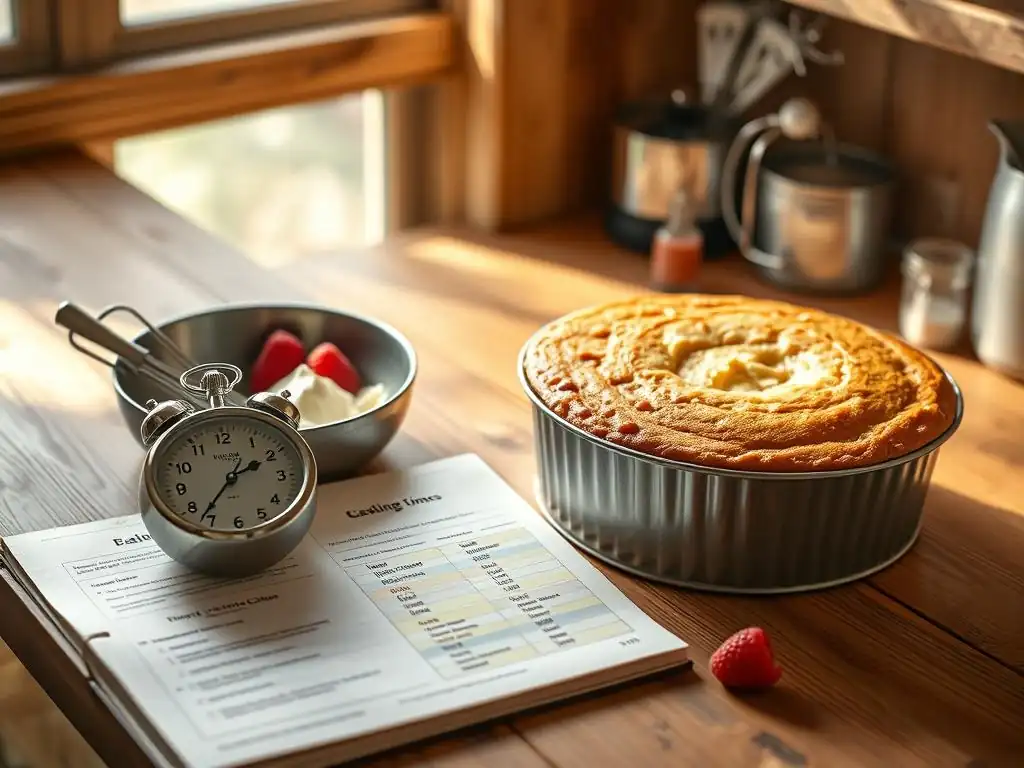
Achieving perfect easy cake baking times often starts with a good estimate based on the recipe and pan size. This chart provides general ranges for common simple cake types and pan sizes baked at a standard temperature (usually 350°F or 175°C). Remember, these are estimates and should always be verified with doneness tests.
Common Cake Types and Their Recommended Baking Times
These times are typical for a single 8-inch or 9-inch round cake layer or a standard loaf pan, baked at 350°F (175°C) in a light-colored metal pan.
Vanilla Cake Baking Time
A classic vanilla cake batter, when baked in a single 8-inch round pan, typically requires about 30-35 minutes. If baking two 8-inch layers simultaneously, the time might remain similar, but ensure good air circulation in the oven. For a 9x13 inch sheet cake, the time is often closer to 30-35 minutes as well due to the thinner layer.
Chocolate Cake Baking Time
Chocolate cakes often contain cocoa powder, which can affect moisture absorption. A standard chocolate cake recipe for an 8-inch round pan usually bakes in approximately 30-35 minutes. Richer chocolate cakes with more liquid or fat might take a few minutes longer, potentially up to 40 minutes for a thicker batter in a standard pan size.
Lemon Cake Baking Time
Lemon cakes, often lighter in texture, have similar baking times to vanilla. An 8-inch lemon cake layer typically bakes in 30-35 minutes. Recipes incorporating fresh lemon juice or zest don't significantly alter the baking time compared to a standard cake of the same volume, assuming the batter consistency is similar.
Red Velvet Cake Baking Time
Red velvet cake, known for its moist crumb and touch of cocoa, usually bakes within the 30-35 minute range for an 8-inch round pan. The buttermilk and vinegar in the recipe contribute to its tender texture, and monitoring closely towards the end of the estimated easy cake baking time is crucial to prevent overbaking.
Baking Time Ranges for Different Cake Pan Sizes
These are general ranges for a typical simple cake batter baked at 350°F (175°C) in light metal pans.
- Cupcakes (standard size): 18-22 minutes
- Muffins (standard size): 20-25 minutes
- 8-inch Round (single layer): 30-35 minutes
- 9-inch Round (single layer): 30-35 minutes
- 6-inch Round (single layer): 25-30 minutes
- 8x8 inch Square: 35-40 minutes
- 9x13 inch Rectangular: 30-35 minutes
- Loaf Pan (standard 9x5 inch): 50-60 minutes
- Bundt Pan (standard 10-12 cup): 45-60 minutes
Remember to start checking for doneness at the lower end of the time range. Factors like oven calibration, pan material, and specific recipe variations can cause your actual easy cake baking time to differ.
Step-by-Step Guide to Checking Cake Doneness
Relying solely on the clock for easy cake baking times is a common beginner mistake. The most reliable way to know if your cake is done is by using simple doneness tests. Always check your cake at the minimum recommended baking time for the recipe and pan size.
The Toothpick Test: A Classic Method
The toothpick test is the most widely used method for checking cake doneness. It's simple, requires minimal equipment, and is very effective for most cake types.
- Open the oven door carefully and pull the cake rack out slightly.
- Insert a clean toothpick, wooden skewer, or even a thin knife into the very center of the cake.
- Gently remove the toothpick.
- If the toothpick comes out clean with no wet batter attached, the cake is likely done.
- If it comes out with wet batter or streaks, the cake needs more time.
- A few moist crumbs clinging to the toothpick are usually acceptable, especially for richer cakes like chocolate or those with added fruit, as this indicates a moist crumb without being underbaked.
If the test shows wet batter, return the cake to the oven for another 3-5 minutes before testing again. Repeat until the toothpick comes out clean or with only moist crumbs.
The Spring-Back Test: Knowing When Your Cake is Ready
Another simple test, particularly useful for sponge or butter-based cakes, is the spring-back test. This method checks the cake's structure and elasticity.
- Once the cake has baked for the minimum recommended time, gently touch the top center of the cake with a fingertip. Be cautious as the cake and pan will be hot.
- The surface of the cake should feel set and slightly firm.
- If you gently press the surface, it should spring back quickly.
- If the indentation remains or the cake feels wobbly in the center, it needs more baking time.
- If it springs back readily and feels firm, it is likely done.
This test is best used in conjunction with the toothpick test for confirming easy cake baking times, especially for larger cakes like sheet cakes or Bundt cakes.
Internal Temperature Check: Using a Thermometer for Accuracy
For the most accurate measure of doneness, especially for larger or denser cakes, an instant-read thermometer is invaluable. This takes the guesswork out of achieving perfect easy cake baking times.
- Insert the thermometer probe into the center of the cake, avoiding the bottom of the pan.
- Wait a few seconds for the temperature reading to stabilize.
- Most cakes are considered done when the internal temperature reaches between 200°F and 210°F (93°C and 99°C).
- Some recipes, particularly those for lighter sponge cakes, might be done at the lower end of this range, around 190°F (88°C).
Using a thermometer is particularly helpful when troubleshooting or adapting recipes, providing an objective measure alongside visual cues and other doneness tests. It helps ensure the cake is cooked through without drying it out.
Troubleshooting Common Cake Baking Problems
Even with attention to easy cake baking times and doneness tests, beginners can encounter issues. Here are some common problems and their likely causes related to baking time and technique.
Cake is Burning on Top But Still Raw Inside
This often indicates that the oven temperature is too high, or the cake is positioned too close to the top heating element. The exterior is cooking much faster than the interior.
- Possible Causes:
- Oven temperature is too high (check with an oven thermometer! ).
- Cake pan is too large or too small for the amount of batter.
- Cake is placed on the top rack of the oven.
- Pan material (dark metal) is absorbing heat too quickly.
- Solutions:
- Verify oven temperature and adjust.
- Move the cake to a lower oven rack.
- Tent the top of the cake loosely with aluminum foil for the remaining baking time to shield it from direct heat.
- Consider using a lighter-colored pan or reducing oven temperature slightly if using dark metal.
Cake is Sinking in the Middle
A sunken cake center is a classic sign of being underbaked, meaning your easy cake baking time was not long enough. It can also be caused by factors that weaken the cake's structure before it's set.
- Possible Causes:
- Cake was removed from the oven before it was fully cooked through (underbaked).
- Oven door was opened too early during baking, causing a sudden temperature drop.
- Too much leavening agent was used.
- Excessive mixing developed too much gluten.
- Ingredients were not at the correct temperature (e.g., cold butter).
- Solutions:
- Always perform a doneness test (toothpick or temperature) in the center before removing the cake.
- Avoid opening the oven door in the first 2/3 of the baking time.
- Ensure you're measuring ingredients accurately, especially leavening.
- Mix batter only until just combined after adding dry ingredients.
Cake is Dry and Crumbly
If your cake comes out dry and falls apart easily, it's almost certainly overbaked. This means your easy cake baking time was too long for the conditions.
- Possible Causes:
- Cake was baked for too long.
- Oven temperature was too high.
- Too much flour or not enough liquid/fat in the recipe.
- Pan was too large for the batter volume, resulting in a thin layer that overcooked quickly.
- Solutions:
- Start checking for doneness at the lower end of the recommended easy cake baking time range.
- Use an oven thermometer to ensure accurate temperature.
- Measure ingredients precisely, especially flour (using a scale is best).
- Ensure you are using the correct size pan specified in the recipe.
Cake is Dense and Rubbery
A dense, heavy, or rubbery texture can result from several issues related to mixing and baking time.
- Possible Causes:
- Overmixing the batter after adding flour, developing too much gluten.
- Not enough leavening agent.
- Ingredients were too cold.
- Oven temperature was too low, preventing proper rise and setting of the structure.
- Underbaking can sometimes lead to a dense, gummy layer at the bottom.
- Solutions:
- Mix gently and only until dry ingredients are just combined.
- Ensure leavening agents are fresh and measured correctly.
- Use room temperature ingredients as specified.
- Verify oven temperature is accurate and not too low.
- Confirm doneness in the center with a toothpick or thermometer.
Tips for Achieving Consistent Baking Results
Consistency is key to mastering easy cake baking times and producing beautiful cakes every time. Here are some practices that will help you get reliable results.
Calibrating Your Oven for Accurate Temperature
As mentioned earlier, oven temperature accuracy is critical. An oven thermometer is the first step to understanding if your oven runs hot or cold. Place an oven thermometer on the center rack and check the temperature after the oven has preheated for at least 15-20 minutes. Note the difference between the set temperature and the actual temperature.
If the difference is significant (more than 15-20°F or 8-11°C), you can often adjust your oven's internal calibration (check your oven's manual for instructions). Alternatively, you can simply adjust the temperature you set – if your oven runs 25°F hot, set it 25°F lower than the recipe calls for. This simple step is foundational for achieving predictable easy cake baking times.
Rotating Your Cake During Baking for Even Cooking
Ovens often have hot spots, areas where the temperature is slightly higher or lower than others. This can lead to one side of your cake baking faster than the other, resulting in an uneven rise or browning.
To combat this, gently rotate your cake pan halfway through the estimated easy cake baking time. For example, if your cake is expected to bake for 30-35 minutes, rotate it at the 15-18 minute mark. This ensures that all sides of the cake receive equal exposure to heat, promoting more even cooking and a symmetrical rise. Be quick when opening and closing the oven door to minimize heat loss.
Using Baking Strips to Prevent Doming
Doming, where the center of the cake rises higher than the edges, is a common issue, especially with thicker cakes. This happens because the edges of the cake cook and set faster than the center. While not directly about easy cake baking times, doming can affect overall doneness and appearance.
Baking strips, often made of fabric that you soak in water and wrap around the outside of the cake pan, help insulate the edges of the pan. This slows down the cooking of the edges, allowing the center to catch up, resulting in a flatter top and a more even bake. Using baking strips can lead to a more uniform texture throughout the cake and can indirectly help ensure the center and edges are done at roughly the same time.
Mastering Easy Cake Baking Times: Practice Makes Perfect
Like any skill, baking improves with practice. Don't be discouraged if your first few attempts aren't absolutely perfect. Each bake is a learning opportunity that brings you closer to understanding how your oven, ingredients, and techniques interact to produce delicious results.
Start with Simple Cake Recipes on BakeWithEase.com
Our website, BakeWithEase.com, is filled with recipes specifically designed for beginners. These simple cake recipes use common ingredients and straightforward instructions, making them ideal for practicing your baking skills, including monitoring and adjusting easy cake baking times.
- Choose a recipe that appeals to you.
- Read the recipe thoroughly before you start.
- Gather all your ingredients and equipment.
- Follow the instructions step-by-step, paying close attention to oven temperature and suggested baking times.
- Use the doneness tests described above to check if your cake is ready.
Starting with these easy recipes helps you build confidence and learn the feel of a properly baked cake.
Document Your Baking Experiments: Keep a Baking Journal
A baking journal can be an incredibly useful tool for mastering easy cake baking times and improving your results. After each bake, take a few minutes to jot down notes.
- What recipe did you use?
- What pan size and material?
- What temperature did you set your oven to, and what was the actual temperature (if you used a thermometer)?
- How long did the cake bake before passing the doneness test?
- What were the results? (e.g., perfect, slightly dry, sank in the middle, took longer than expected).
- Any adjustments you made or would make next time.
Reviewing your journal entries over time will reveal patterns and help you understand how variables affect your easy cake baking times and outcomes. This personalized data is invaluable.
Embrace the Baking Process and Enjoy the Results!
Baking is a journey, not just a destination. Embrace the process, from measuring ingredients to the wonderful aroma filling your kitchen as the cake bakes. Even if a cake isn't absolutely perfect, it's still likely to be delicious, especially when made with care.
Focus on learning from each experience. Did it take longer than expected? Maybe your oven runs cool. Was it a bit dry? Try checking for doneness a few minutes earlier next time. The more you bake, the better you'll become at judging easy cake baking times and recognizing the signs of a perfectly baked cake. The joy of sharing a homemade cake, regardless of minor imperfections, is immense.
Conclusion: Confidently Baking Cakes with Ease
Mastering easy cake baking times is a fundamental skill that unlocks the door to successful and enjoyable cake baking. While recipes provide a crucial starting point, understanding the factors that influence baking time – your oven's accuracy, pan type, and even altitude – allows you to adapt and ensure your cakes bake perfectly every time.
Recap of Key Baking Time Considerations
To recap, always:
- Preheat your oven fully and consider using an oven thermometer.
- Use the correct pan size and material specified in the recipe, or adjust times accordingly.
- Start checking for doneness using the toothpick or spring-back test at the lower end of the recipe's suggested baking time.
- Use an internal thermometer for added accuracy, aiming for 200-210°F (93-99°C) for most cakes.
- Be aware that altitude requires adjustments to recipes and potentially baking times.
- Practice patience and test for doneness rather than relying solely on the clock for easy cake baking times.
Further Resources for Beginner Bakers on BakeWithEase
Ready to put your knowledge of easy cake baking times into practice? Head over to BakeWithEase.com for a wide variety of beginner-friendly cake recipes. Explore our collection of simple vanilla, chocolate, and lemon cakes, perfect for honing your skills.
We also offer detailed guides on basic techniques, ingredient substitutions, and troubleshooting common baking issues. Our goal is to provide you with all the resources you need to bake with confidence and ease. Keep practicing, keep learning, and most importantly, keep baking delicious cakes!
Frequently Asked Questions
What is the most important factor in determining easy cake baking times?
The most important factor is the cake's size and shape. A thinner cake will bake much faster than a thicker one. Also, the oven temperature must be accurate.
How can I tell if my easy cake is done baking?
Insert a cake tester or toothpick into the center of the cake. If it comes out clean or with a few moist crumbs attached, it's done. Also, look for the cake to pull away slightly from the sides of the pan.
What is a common mistake that leads to incorrect easy cake baking times?
Opening the oven door too frequently is a common mistake. This causes the oven temperature to drop, extending the baking time and potentially causing the cake to sink.
How do different types of cake pans affect easy cake baking times?
Dark metal pans tend to bake cakes faster than light metal or glass pans. You might need to reduce the oven temperature slightly when using dark pans to prevent over-browning.
What should I do if my easy cake is browning too quickly on top before it's cooked through?
Cover the cake loosely with aluminum foil. This will help to prevent further browning while allowing the cake to continue baking through the center.
Final Reflection: The Sweetness of Simplicity in Baking
Mastering simple cake baking times isn't just about achieving a perfectly golden-brown crust; it's about unlocking a world of culinary confidence. The precise timing detailed in this guide offers a foundational understanding, empowering even the most hesitant baker to create delicious, consistent results. This isn't just about following recipes; it's about developing a deeper intuition for the baking process.
The joy of baking, particularly simple cakes, transcends the mere act of creating a dessert. It's a connection to tradition, a celebration of shared moments, and a testament to the power of basic ingredients transformed by time and heat. Baking is at once child's play and adult joy. And love, of course.
This quote perfectly encapsulates the feeling of accomplishment and the simple pleasure derived from successfully baking a cake, regardless of its complexity. The ease of mastering these baking times opens up a world of creative possibilities, encouraging experimentation and the development of personal baking styles.
Now, it's your turn. Don't be intimidated by the seemingly complex world of baking. Take the knowledge gained from this guide, experiment with different flavors and frostings, and most importantly, enjoy the process. The next time you're craving a sweet treat, remember the simplicity and satisfaction of a perfectly baked cake, made entirely by you. Embrace the journey, and let the sweet aroma of success fill your kitchen.
Unlock Your Inner Baker: Master Cake Timing Today!
Thanks for joining us on this baking adventure! We hope you now feel confident tackling any cake recipe with the right timing knowledge. Ready to put your new skills to the test?
- Bake your dream cake! Grab your favorite recipe (or try a new one!) and confidently bake knowing you've got the timing down pat.
- Share your baking triumph! Post a picture of your perfectly baked cake on social media and tag us – we’d love to see your creations!
- Leave a comment below and share your favorite cake baking tip – let's build a supportive baking community together!
What delicious cake masterpiece will you create first?