
Can You Use StoreBought Dough as a Beginner? (And How to Improve It)


Welcome to BakeWithEase, your kitchen companion for all things baking! Ever wondered if you, as a beginner, can conquer the kitchen with storebought dough? The answer might surprise you! Join us as we unlock the secrets to using readily available dough and transforming it into something truly spectacular. Get ready to bake with confidence, even if you're just starting your baking journey. Intrigued? Let's get started!
- Store-Bought Dough: A Beginner Baker's Best Friend?
- Understanding Different Types of Store-Bought Dough
- Store-Bought Dough Beginner Tips: Essential Guidelines
- Improving Store-Bought Dough: Elevating Your Baking
- Troubleshooting Common Store-Bought Dough Problems
- Beginner Baking Recipes with Store-Bought Dough: Inspiration
- Store-Bought Dough vs. Homemade Dough: A Comparison for Beginners
- Mastering Baking with Ease: Store-Bought Dough as a Stepping Stone
-
Frequently Asked Questions
- Can beginners successfully use store-bought dough for baking?
- What are some common issues beginners face when using store-bought dough?
- How can I improve the flavor of store-bought dough?
- What types of recipes are best suited for beginners using store-bought dough?
- How can I ensure my store-bought dough bakes evenly?
- Final Reflection: Unlocking Baking Potential with Store-Bought Dough
- Unlock Your Inner Baker: Level Up Your Store-Bought Dough!
Store-Bought Dough: A Beginner Baker's Best Friend?
The Appeal of Premade Dough for New Bakers
For many embarking on their baking journey, the thought of measuring flour, cutting in butter, and waiting for dough to rise can feel overwhelming. This is where store-bought dough shines as a fantastic starting point. It removes many of the initial hurdles, like getting the right dough consistency or achieving the perfect rise. Think of it as a shortcut that lets you bypass the most finicky steps and jump straight to the fun part: shaping, decorating, and baking! It significantly reduces the time commitment and potential for early frustration, making baking accessible and enjoyable from the very first attempt.
Using store-bought dough allows beginners to focus on fundamental baking concepts like oven temperature, baking time, and how ingredients react in the heat. Instead of stressing about whether their yeast is active or if their pie crust is flaky enough, they can learn to recognize when a cookie is perfectly golden brown or a loaf of bread has baked through. This hands-on experience, even with pre-made components, builds confidence and familiarity with the baking process, setting a solid foundation for tackling more complex recipes down the line. It’s a low-pressure way to get your hands doughy!
Is Store-Bought Dough "Cheating" in Baking?
This is a common question, and the short answer is: absolutely not! Baking is a creative and enjoyable process, and using store-bought dough is simply utilizing a convenient ingredient, much like using pre-shredded cheese or canned tomatoes in cooking. It's a tool designed to save time and effort, allowing more people to experience the joy of baking and sharing homemade treats. The goal is to bake, and if store-bought dough helps you achieve that goal, then it's a valid and smart choice, especially for beginners.
Focusing on whether using store-bought dough is "cheating" misses the point of baking for enjoyment and learning. Many experienced bakers even use it when they're short on time or need a reliable base. The real value lies in the act of baking itself – the transformation of dough in the oven, the aroma filling your kitchen, and the satisfaction of creating something delicious. For those just starting out, these storebought dough beginner tips are about making baking approachable, not about adhering to some strict, gatekeeping definition of "true" baking. Embrace the convenience and have fun!
Understanding Different Types of Store-Bought Dough
Refrigerated cookie dough is perhaps the most popular entry point for beginner bakers using store-bought options. It typically comes in a tube or block and is ready to slice and bake or scoop. The primary advantage is its incredible speed and simplicity. You can often have cookies ready to eat in under 20 minutes from the moment you open the package. Common types include chocolate chip, peanut butter, sugar cookie, and even seasonal flavors. These doughs are formulated for consistency, meaning they usually spread and bake reliably according to package instructions, which is a huge plus for beginners.
When using refrigerated dough, paying attention to the listed oven temperature (often around 350°F or 175°C) and baking time is crucial. A typical batch of 12-24 cookies might bake for 8-12 minutes. While convenient, these doughs can sometimes result in cookies that are uniformly shaped and perhaps less complex in flavor than homemade. However, they serve as an excellent canvas for practicing basic baking skills like portioning, spacing cookies on a baking sheet, and recognizing doneness cues like slightly golden edges.
Frozen Bread Dough: Versatility and Convenience
Frozen bread dough offers a step up in complexity compared to cookie dough but still provides significant convenience. It usually comes as a loaf or rolls that require thawing and proofing (allowing the yeast to activate and the dough to rise) before baking. This type of dough introduces beginners to the concept of yeast activation and rising, without the need to measure yeast, flour, and water precisely. Common varieties include white bread, whole wheat, and sometimes rolls or pizza dough.
Working with frozen bread dough involves thawing (often overnight in the refrigerator or a few hours at room temperature) and then proofing in a warm place until doubled in size, which can take 1-2 hours depending on the environment. Baking temperatures typically range from 375°F to 400°F (190°C to 200°C). While it requires more steps than cookie dough, it allows beginners to practice handling yeast dough, shaping loaves or rolls, and understanding the importance of proofing for a light, airy texture. It's a great way to get a feel for yeast baking with less risk.
Pie Crust Dough: A Time-Saving Option
Making a flaky, tender pie crust from scratch can be notoriously tricky for beginners, often requiring specific techniques like cutting in cold butter and not overworking the dough. Store-bought pie crust dough, available refrigerated (often rolled up) or frozen (in shells or flat discs), eliminates this challenge entirely. It provides a ready-to-use base for sweet and savory pies, quiches, and tarts. This convenience allows beginner bakers to focus on mastering fillings and understanding baking times for pies.
Refrigerated pie crust typically needs to be unrolled and fitted into a pie plate, while frozen shells just need to be placed in the oven (sometimes blind-baked first, depending on the recipe). Baking temperatures and times vary greatly depending on the pie filling, but the crust itself is usually baked at temperatures between 350°F and 425°F (175°C and 220°C). Using store-bought crust is a fantastic way for beginners to confidently tackle pie recipes, learn about baking fillings thoroughly, and practice decorative techniques for the edges without the stress of making the crust from scratch.
Store-Bought Dough Beginner Tips: Essential Guidelines

Checking the Expiration Date: A Must-Do
One of the most crucial storebought dough beginner tips is to always check the expiration date on the packaging. Store-bought dough, especially refrigerated and frozen types, relies on specific formulations for performance. If the dough is past its prime, the leavening agents (like baking soda, baking powder, or yeast) may no longer be active, or the fats could be rancid. Baking with expired dough can lead to poor results, such as cookies that don't spread, bread that doesn't rise, or a crust with an off-flavor.
Even if the dough looks okay, its chemical structure can degrade over time. For yeast doughs, inactive yeast means no rise, resulting in a dense, brick-like texture. For cookie or pie doughs, expired dough might not brown correctly or could have an unpleasant, stale taste. A quick check of the date before you buy and before you bake takes only seconds but can save you from disappointment and wasted ingredients. Don't skip this simple yet essential step in your baking process!
Proper Thawing Techniques for Frozen Dough
If you're using frozen store-bought dough, proper thawing is absolutely critical for success. Impatiently trying to rush the thawing process can lead to uneven results – parts of the dough might be warm and sticky while the center remains frozen solid. This unevenness makes the dough difficult to handle and can negatively impact its structure and rise during baking. The most recommended method is slow thawing in the refrigerator, often taking 8-12 hours or even overnight for a loaf of bread dough.
Alternatively, some packages offer instructions for thawing at room temperature, which is faster (perhaps 2-4 hours for a loaf) but requires more careful monitoring to ensure the dough doesn't get too warm or start proofing before you're ready. Never use a microwave to thaw frozen dough unless the package specifically instructs you to, as this can kill the yeast (in bread dough) or melt the fats unevenly, ruining the dough's texture. Follow the package instructions precisely for the best thawing results – it's a key part of successful storebought dough beginner tips.
Understanding the Dough's Consistency: Knowing What to Expect
Another helpful tip for beginners is to get familiar with what the dough should feel and look like before baking. Refrigerated cookie dough should be firm but pliable, easily sliced or scooped. If it's too hard, let it sit at room temperature for a few minutes; if it's too soft and sticky, chill it slightly. Frozen bread dough, once thawed and proofed, should be soft, elastic, and significantly increased in volume, feeling airy and slightly sticky to the touch.
Pie crust dough should be cold and firm but capable of being unrolled without cracking excessively. If it's too cold, it will crack; if too warm, it will be sticky and hard to handle. Knowing these expected consistencies helps you identify if the dough has been properly handled (like thawed correctly) or if there might be an issue before it even goes into the oven. These observations are valuable storebought dough beginner tips that build your intuition about dough behavior.
Improving Store-Bought Dough: Elevating Your Baking
Adding Extracts and Flavorings for a Boost
Store-bought dough provides a convenient base, but its flavor profile can sometimes be a bit plain compared to homemade. A simple way to elevate it is by adding extracts or flavorings. For cookie dough, a splash of vanilla extract (beyond what's already in the dough), almond extract, or even a citrus zest can dramatically enhance the taste. Just a teaspoon or two is usually enough for a standard tube or block of dough.
When working with bread dough, consider adding a pinch of garlic powder and dried herbs like rosemary or oregano for a savory loaf, or a touch of cinnamon and nutmeg for a slightly sweet bread. For pie crust, a dash of cinnamon, ginger, or even a tiny amount of black pepper can add an interesting depth of flavor, especially for fruit pies. These small additions are easy storebought dough beginner tips that yield noticeable improvements in the final product's taste.
Incorporating Mix-Ins for Texture and Taste
Another excellent way to customize and improve store-bought dough is by folding in mix-ins. This adds texture, flavor, and visual appeal. For cookie dough, beyond the standard chocolate chips, try adding:
- Chopped nuts (walnuts, pecans) - adds crunch
- Dried fruit (cranberries, raisins) - adds chewiness and sweetness
- Sprinkles - for color and fun
- Different types of chocolate (white chocolate chips, chunks) - varies the flavor
- Oats - adds chewiness and a rustic feel
For bread dough, consider kneading in:
- Cheese (cheddar, Parmesan)
- Olives
- Roasted garlic
- Seeds (sesame, poppy, sunflower)
For pie crust, while less common, you could gently fold in finely chopped herbs (like chives for a savory quiche) or a sprinkle of coarse sugar for a sparkling edge. Start with small amounts, like 1/2 cup to 1 cup of mix-ins per standard package of dough, to avoid overwhelming the base dough. This is a fun and easy way to personalize your baked goods using storebought dough beginner tips.
Adjusting Moisture Levels for the Perfect Bake
Sometimes, store-bought dough might seem a little dry or a little too sticky depending on how it was stored or handled. While you can't drastically change the formulation, you can make minor adjustments. If cookie dough feels too dry and crumbly, you can try kneading in a teaspoon of milk or softened butter very gently until it comes together. Be careful not to overwork it.
If bread dough seems a bit dry after thawing and proofing, you can brush the top with a little milk, melted butter, or an egg wash before baking for a softer crust and better browning. Conversely, if it's too sticky, lightly flour your hands and surface, but avoid adding excessive flour to the dough itself, as this can make the final bread tough.
For pie crust that cracks easily (often a sign of being too cold or slightly dry), you can very lightly moisten the edges with a tiny bit of water to help seal them, but avoid adding moisture to the main dough body. These subtle adjustments are valuable storebought dough beginner tips for achieving better texture.
Troubleshooting Common Store-Bought Dough Problems

Dough That's Too Sticky: How to Fix It
Dealing with sticky dough is a common issue, especially with bread dough that hasn't been handled correctly or is slightly too warm. If your store-bought bread dough is overly sticky after thawing and proofing, the first step is to lightly flour your work surface and your hands. Gently turn the dough out onto the floured surface. Avoid the temptation to add large amounts of flour directly into the dough, as this can make the finished product tough.
Instead, use a bench scraper or spatula to help you handle the dough. If you need to shape it, keep your hands and the surface lightly floured. For cookie dough that's too soft and sticky to handle or slice, the best solution is to chill it. Wrap the dough tightly in plastic wrap and place it in the refrigerator for 30-60 minutes, or even the freezer for 15-20 minutes, until it's firm enough to work with. Proper chilling is a key component of successful storebought dough beginner tips for cookies.
Dough That's Too Dry: Adding Moisture Back In
Occasionally, store-bought dough, particularly cookie or pie dough, can seem too dry or crumbly, making it hard to shape or handle. This might happen if the package was slightly damaged or if it lost moisture in storage. For cookie dough, you can try kneading in a very small amount (start with 1/2 teaspoon) of milk, softened butter, or even a neutral oil. Do this gently with clean hands or in a mixer on low speed until the dough just comes together.
For pie crust dough that's cracking excessively when unrolling, you can sometimes press the cracks back together with slightly moistened fingers. If the dough is just generally too dry and brittle to work with, it's challenging to salvage completely without negatively impacting the texture. However, for minor dryness, adding minimal moisture can help. This requires a delicate touch, so add liquids sparingly – another useful piece of storebought dough beginner tips.
Dough That Doesn't Rise: What to Do
If you're using frozen store-bought bread dough and it's not rising after thawing and sitting in a warm place, the most likely culprit is inactive yeast. This could be due to:
- The dough being past its expiration date.
- Improper thawing (e.g., microwaving killed the yeast).
- The proofing environment not being warm enough (yeast is most active between 75°F and 95°F / 24°C and 35°C).
If the dough shows no signs of rising after the recommended proofing time (usually 1-2 hours), unfortunately, there's not much you can do to make it rise like a standard loaf. You can still bake it, but the result will be a dense, heavy bread. In this case, it might be better repurposed – perhaps sliced thinly and toasted, or used as croutons.
To prevent this, always check the date, thaw properly, and ensure your proofing spot is genuinely warm (like a slightly warm oven that's been turned off, or near a sunny window). These precautions are vital storebought dough beginner tips for working with yeast dough.
Beginner Baking Recipes with Store-Bought Dough: Inspiration
Store-bought refrigerated cookie dough is perfect for simple, delicious recipes.
- Basic Slice-and-Bake: Simply preheat your oven to 350°F (175°C), slice the dough into 1/2-inch rounds, place them 2 inches apart on a baking sheet lined with parchment paper, and bake for 8-12 minutes until edges are golden.
- Thumbprint Cookies: Roll portions of sugar cookie dough into 1-inch balls, place on a baking sheet, press an indentation in the center of each with your thumb, and fill with jam or chocolate before baking according to package directions.
- Cookie Bars: Press softened cookie dough evenly into an 8x8 inch or 9x13 inch baking pan. Bake at 350°F (175°C) for 20-30 minutes, or until golden brown and set in the center. Cool and cut into bars. Add mix-ins like chocolate chips or nuts before baking.
These simple applications of storebought dough beginner tips make baking cookies quick and fun.
Quick Bread Recipes with Premade Dough
Frozen bread dough can be transformed into various easy bread and roll recipes.
- Simple Loaf: Thaw the dough, shape it into a loaf, proof until doubled in size (approx. 1.5 hours), and bake according to package instructions (often around 375°F / 190°C for 25-35 minutes).
- Garlic Knots: Thaw dough, cut into strips, tie into knots, brush with melted garlic butter, proof briefly (30-45 mins), and bake at 375°F (190°C) until golden (approx. 15-20 mins).
- Easy Pizza Crust: Thaw loaf dough, flatten or stretch into a pizza shape, let rest for 10 minutes, add sauce and toppings, and bake on a preheated pizza stone or baking sheet at 400°F-425°F (200°C-220°C) for 12-20 minutes.
Using frozen dough simplifies the yeast process, focusing on shaping and baking – essential storebought dough beginner tips for bread making.
Simple Pie Recipes with Store-Bought Crust
Store-bought pie crust is ideal for tackling various pie and tart recipes with ease.
- Classic Apple Pie: Use two store-bought crusts. Fit one into a 9-inch pie plate, fill with sliced apples mixed with sugar, cinnamon, and a little flour. Top with the second crust (cut into vents or strips for a lattice). Bake at 425°F (220°C) for 15 minutes, then reduce to 375°F (190°C) and bake for another 30-40 minutes until crust is golden and filling is bubbly.
- Easy Quiche: Fit one crust into a pie plate. Whisk together eggs, milk or cream, salt, pepper, cheese, and desired fillings (like cooked spinach, mushrooms, or bacon). Pour into the crust and bake at 375°F (190°C) for 35-45 minutes until the center is set.
- Mini Tarts: Cut rounds from a flat pie crust sheet using a cookie cutter. Press rounds into muffin tin cups. Fill with small amounts of jam, fruit, or custard. Bake according to crust instructions (e.g., 375°F / 190°C for 15-20 minutes).
These recipes demonstrate how store-bought crust allows beginners to explore fillings and baking techniques without the initial challenge of dough preparation.
Store-Bought Dough vs. Homemade Dough: A Comparison for Beginners
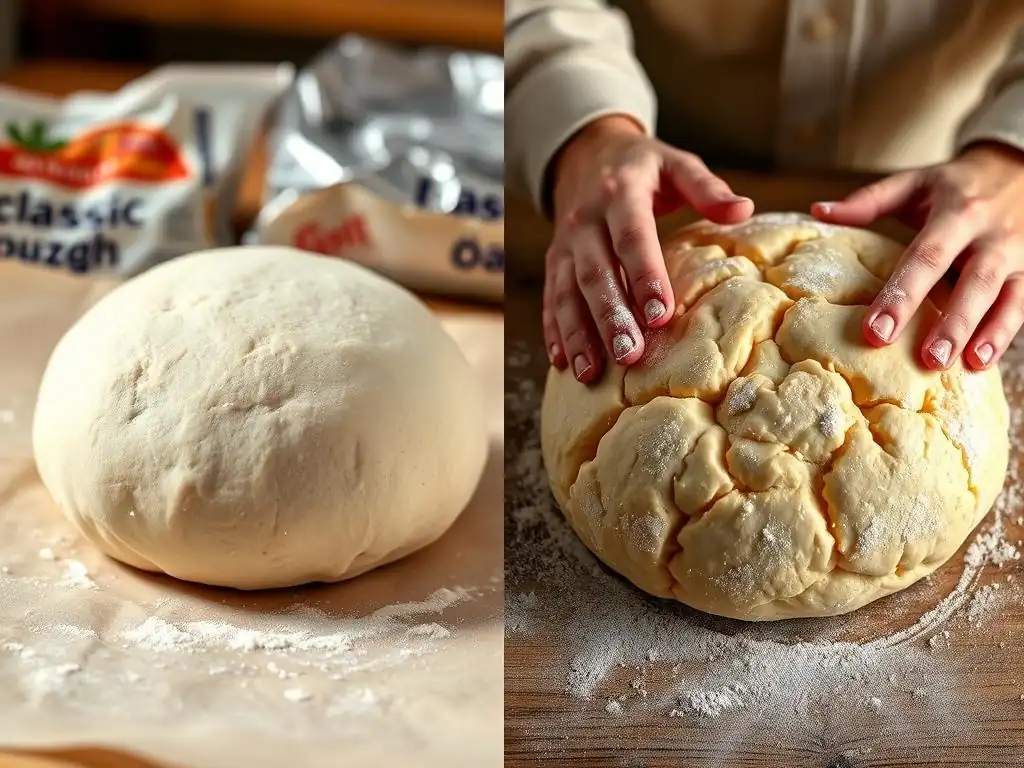
Time Commitment: Store-Bought Dough's Advantage
The most significant advantage of store-bought dough, especially for beginners, is the drastic reduction in time commitment. Making dough from scratch involves measuring multiple ingredients, mixing, kneading (often for 5-15 minutes), and often requires resting or chilling time (30 minutes to several hours). Yeast doughs add proofing time, which can be 1-3 hours or even longer for cold fermentation.
Store-bought dough bypasses most or all of these steps. Refrigerated cookie dough is ready to bake immediately or after a brief chill. Frozen dough requires thawing and proofing, but this is still less active time than making it from scratch. Pie crust is ready to fit into a pan. This time-saving aspect is key for busy beginners who want to bake but can't dedicate hours to the process. It makes baking achievable on a weeknight or when you have limited free time.
Cost Considerations: Is Store-Bought Always Cheaper?
While often perceived as cheaper due to the lower upfront price per package, the cost comparison between store-bought and homemade dough isn't always straightforward. The raw ingredients for homemade dough (flour, sugar, butter, yeast, salt) are generally inexpensive, especially when bought in larger quantities. A large bag of flour might cost $4-$6 but can make many batches of dough, whereas a tube of cookie dough might cost $3-$5 for just one batch.
However, homemade dough requires not only the ingredient cost but also the cost of your time and the energy used for mixing and kneading (if using a stand mixer). For beginners, the potential for wasted ingredients due to mistakes when making dough from scratch is also a factor. So, while the per-batch ingredient cost of homemade is often lower, the convenience and reduced risk of failure with store-bought dough can make it a more cost-effective option for someone just starting out, especially considering these storebought dough beginner tips help ensure success.
Flavor and Texture: The Trade-Offs
Homemade dough, when made correctly, generally offers superior flavor and texture compared to store-bought versions. This is because you have control over the quality and type of ingredients (like using high-quality butter for a flaky pie crust or specific flour blends for bread) and the development of gluten and flavors during mixing and rising processes. Homemade cookies often have a more complex flavor and varied texture (chewy center, crisp edge) than uniformly soft store-bought ones. Homemade bread has a more developed flavor from longer fermentation and a better crust and crumb structure.
Store-bought doughs are formulated for consistency, shelf-stability, and ease of use, which can sometimes mean sacrificing peak flavor and ideal texture. They may contain preservatives or stabilizers that aren't in homemade dough. However, for beginners, the trade-off is often worthwhile. A slightly less flavorful but successful bake using store-bought dough is far more encouraging than a failed attempt at homemade dough. Plus, as highlighted in the storebought dough beginner tips section, you can significantly improve the flavor and texture with simple additions.
Mastering Baking with Ease: Store-Bought Dough as a Stepping Stone
Building Confidence with Simplified Recipes
Store-bought dough is an excellent tool for building confidence in the kitchen. By removing the complexities of dough preparation, beginners can focus on crucial baking mechanics like accurate measurement (for added ingredients), proper mixing (of fillings or mix-ins), understanding oven hot spots, and judging when baked goods are perfectly done. Successfully baking a batch of cookies or a simple loaf of bread using store-bought dough provides a tangible win, encouraging further exploration.
Each successful bake reinforces the beginner's ability and makes the next step feel less daunting. Learning to recognize the look and feel of baked goods – the golden edges of a cookie, the hollow sound of a baked loaf, the bubbling of a pie filling – are fundamental skills gained even when using premade dough. These positive experiences, facilitated by using convenient store-bought options and applying simple storebought dough beginner tips, are invaluable for fostering a love for baking.
Experimenting with Flavors and Techniques
Using store-bought dough frees up mental energy and time for experimentation. Once you're comfortable with the basic baking process using a premade base, you can start playing with variations. Try adding different extracts or spices to cookie dough, incorporating savory mix-ins into bread dough, or creating unique fillings for a store-bought pie crust. This experimentation phase is crucial for developing your baking palate and creativity.
You can also practice techniques that aren't related to dough making, such as decorating cookies with icing and sprinkles, learning to crimp pie crust edges decoratively, or practicing egg washes for a shiny bread crust. Store-bought dough acts as a reliable foundation that allows you to explore these other facets of baking without the added pressure of also getting the dough right. These are practical storebought dough beginner tips for expanding your skills.
From Store-Bought to Homemade: Your Baking Journey Begins
Think of store-bought dough not as an endpoint, but as the first chapter in your baking story. As you gain confidence and experience using premade options, the mysteries of dough making will seem less intimidating. You'll have a better understanding of how ingredients behave during baking and what the desired final texture should be. This foundation makes the leap to homemade dough feel natural and achievable.
Many bakers start with store-bought dough and gradually introduce scratch components – perhaps first trying a simple muffin batter, then moving to a basic cookie dough, and eventually tackling yeast breads or flaky pastry. The skills learned and confidence gained using store-bought dough, combined with practical storebought dough beginner tips, provide the perfect springboard for exploring the wonderful world of baking from scratch. Enjoy the process, learn at your own pace, and celebrate every delicious creation, no matter how it started!
Frequently Asked Questions
Can beginners successfully use store-bought dough for baking?
Yes, absolutely! Using store-bought dough is a fantastic way for beginners to start baking. It eliminates the complexity of making dough from scratch, allowing you to focus on other aspects of the baking process.
What are some common issues beginners face when using store-bought dough?
Beginners often encounter issues like dough being too sticky or not rising properly. This can be due to temperature fluctuations or the dough being past its expiration date.
How can I improve the flavor of store-bought dough?
You can significantly improve the flavor by adding ingredients like fresh herbs, garlic powder, or a touch of olive oil. Allowing the dough to rise slowly in the refrigerator overnight can also enhance the flavor.
What types of recipes are best suited for beginners using store-bought dough?
Simple recipes like pizza, breadsticks, and easy dinner rolls are ideal for beginners. These require minimal shaping and allow you to practice basic baking skills without overwhelming complexity.
How can I ensure my store-bought dough bakes evenly?
Make sure your oven is properly preheated and use an oven thermometer to verify the temperature. Rotating the baking sheet halfway through baking can also promote even browning and cooking.
Final Reflection: Unlocking Baking Potential with Store-Bought Dough
The accessibility of store-bought dough opens a world of baking possibilities, even for complete beginners, proving that delicious results aren't always contingent on starting from scratch. This isn't just about convenience; it's about demystifying the baking process and empowering individuals to explore their culinary creativity without feeling intimidated. The ease of access to pre-made dough lowers the barrier to entry for many, fostering a love for baking that might otherwise remain dormant.
The impact of readily available dough extends beyond individual kitchens; it's a quiet revolution in home cooking. It allows for spontaneous baking sessions, encourages experimentation with different flavors and techniques, and fosters a sense of accomplishment that builds confidence. This accessibility democratizes baking, making it a more inclusive hobby for people of all skill levels. The joy of baking is not just in the finished product, but in the process of creation itself.
This sentiment rings truer than ever when considering the ease with which store-bought dough allows us to participate in that creative process.
Now, it's your turn. Consider the simple act of transforming store-bought dough into something delicious. What new recipes will you try? What flavors will you explore? Don't be afraid to experiment, to adapt, to make it your own. Embrace the imperfections, learn from each bake, and remember that even the simplest beginnings can lead to extraordinary results. The journey of a thousand loaves begins with a single, store-bought ball of dough.
Unlock Your Inner Baker: Level Up Your Store-Bought Dough!
Thanks for joining us on this baking adventure! We hope you now feel confident tackling even the most intimidating recipes with store-bought dough. Ready to take your baking to the next level?
- Master a new recipe: Try that challenging bread or pastry you've always wanted to bake. Use the tips from the article to transform that store-bought dough into something truly special!
- Share your creations: Post a picture of your delicious results on social media and tag us @BakeWithEase – we’d love to see your baking triumphs!
- Experiment with flavor enhancements: Try adding different herbs, spices, or even fruits to your dough – let your creativity shine!
What surprising flavor combination will you try with your next store-bought dough masterpiece?