
Getting Started in Baking: Your Essential Tool Guide

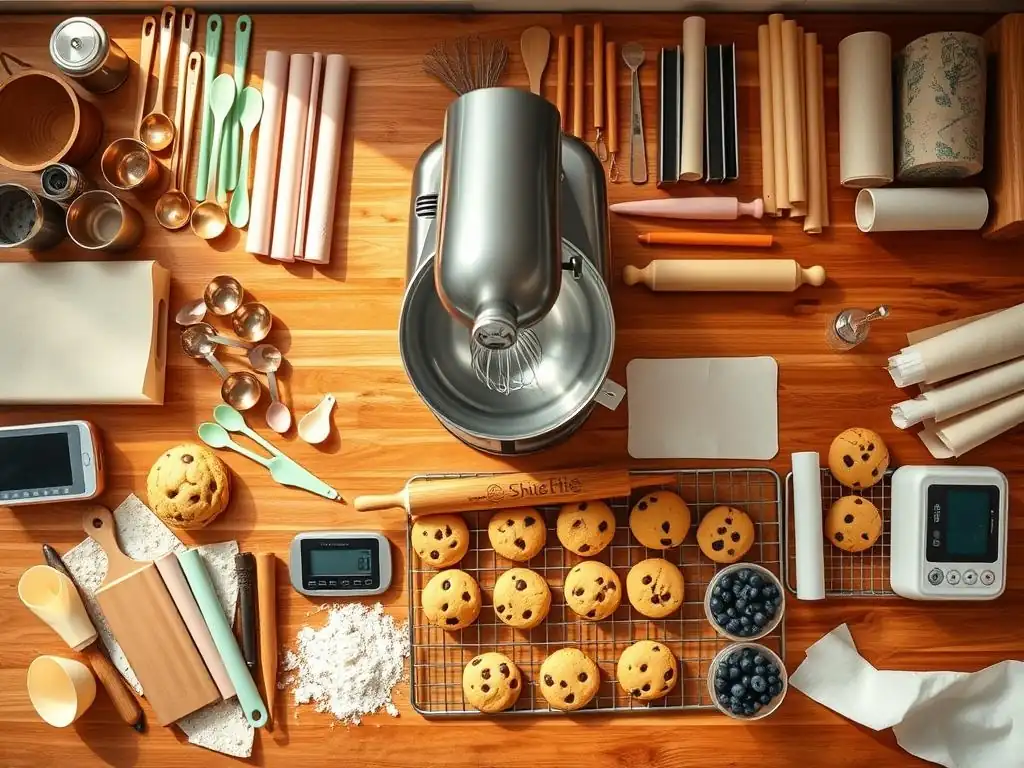
Welcome to BakeWithEase, where the joy of baking is just a whisk away! Whether you're a complete novice or looking to refine your skills, our site is designed to guide you through the delightful world of baking with simplicity and flair. In our featured article, “Getting Started in Baking: Your Essential Tool Guide,” we unveil the must-have tools that will transform your kitchen into a baking haven. Discover how the right equipment can elevate your creations, and ignite your passion for pastries, breads, cakes, and cookies! Ready to dive into the essentials? Let’s embark on this sweet journey together!
- BakeWithEase: Mastering Baking with the Right Tools
- Essential Baking Tools Beginner Guide: A Comprehensive Overview
-
Must-Have Baking Tools for Beginners: Your Starter Kit
- Mixing Bowls: Choosing the Right Size and Material
- Measuring Cups and Spoons: Accurate Measurements for Perfect Results
- Spatulas and Scrapers: Essential for Mixing and Folding
- Baking Sheets and Pans: Selecting the Right Type for Different Recipes
- Whisks: Achieving Light and Airy Mixtures
- Rolling Pin: Essential for Doughs and Pastries
- Investing in Quality: Best Essential Baking Tools for Beginners
- Beyond the Basics: Helpful Baking Tools for Expanding Your Skills
- Essential Baking Tools Checklist for Beginners: A Quick Reference
- Caring for Your Essential Baking Tools: Maintenance Tips
-
Frequently Asked Questions
- What are the absolute must-have tools for a complete beginner baker?
- Can I use substitutes for specialized baking tools, like a stand mixer?
- How important is it to have accurate measuring tools when baking?
- What kind of baking sheet is best for even heat distribution?
- Are there any tools that might be helpful but not essential for a beginner?
- Final Reflection: The Sweetness of Beginnings: Mastering the Art of Baking
- Unlock Your Inner Baker: Take the First Step Today!
BakeWithEase: Mastering Baking with the Right Tools
Welcome to BakeWithEase, your starting point for delicious baking adventures! Embarking on your baking journey is exciting, and having the right tools by your side makes all the difference between frustration and fantastic results. Think of your tools as your co-pilots in the kitchen; they help you navigate recipes with precision and ease. From accurately measuring ingredients to achieving that perfect golden-brown crust, the right equipment is fundamental.
We believe that baking should be accessible and enjoyable for everyone, regardless of experience level. That's why we've put together this essential baking tools beginner guide. We'll walk you through the foundational equipment that will set you up for success, helping you build confidence with every whisk, stir, and bake. Getting started with the basics is key, and we're here to guide you every step of the way.
Essential Baking Tools Beginner Guide: A Comprehensive Overview
This comprehensive essential baking tools beginner guide is designed to demystify the equipment needed for your first steps in baking. We'll cover everything from the absolute must-haves to a few items that are incredibly helpful as you grow your skills. You don't need a professional kitchen setup to start baking delightful treats; a few key items will suffice.
Understanding what each tool does and why it's important will empower you in the kitchen. We'll break down the purposes of various items, explaining how they contribute to successful outcomes. This guide aims to equip you with the knowledge to choose wisely and feel prepared for any beginner baking recipe you decide to tackle.
Why Having the Right Baking Tools Matters for Beginners
Having the correct essential baking tools is paramount for beginners because baking is often a science as much as an art. Precise measurements and proper technique, both enabled by the right tools, are critical for chemical reactions to occur correctly. Using a standard eating spoon instead of a measuring spoon, for example, can lead to wildly different results, causing cakes to sink or cookies to spread too much. Research suggests that inaccurate measurements are a leading cause of baking failures for novices, potentially contributing to over 50% of issues like incorrect texture or structure in baked goods.
Furthermore, the right tools make the process smoother and more enjoyable, reducing common frustrations. Imagine trying to mix a stiff dough with a flimsy spoon instead of a sturdy spatula, or attempting to scrape down a bowl effectively without a flexible scraper. Quality tools designed for specific tasks simplify these actions, allowing beginners to focus on learning the techniques rather than struggling with inadequate equipment. This positive experience encourages continued practice and skill development, which is crucial when you're just starting out.
Understanding Basic Baking Equipment for Successful Recipes
Basic baking equipment forms the foundation of any successful baking endeavor. These are the items you'll reach for repeatedly, regardless of whether you're making simple muffins or slightly more complex bread. This fundamental equipment includes items for measuring, mixing, and providing a surface for baking. Mastering the use of these core tools is more important initially than acquiring every gadget on the market.
For instance, accurate measuring tools are non-negotiable. Without properly portioned ingredients, even the best recipe can fail. Similarly, appropriate mixing bowls and utensils are needed to combine ingredients correctly, whether you're gently folding delicate batter or vigorously whisking egg whites. Lastly, having the right baking sheets and pans ensures even heat distribution and prevents sticking, crucial for items like cookies, cakes, and roasted goods. These basic tools are the building blocks upon which all baking skills are built.
Must-Have Baking Tools for Beginners: Your Starter Kit
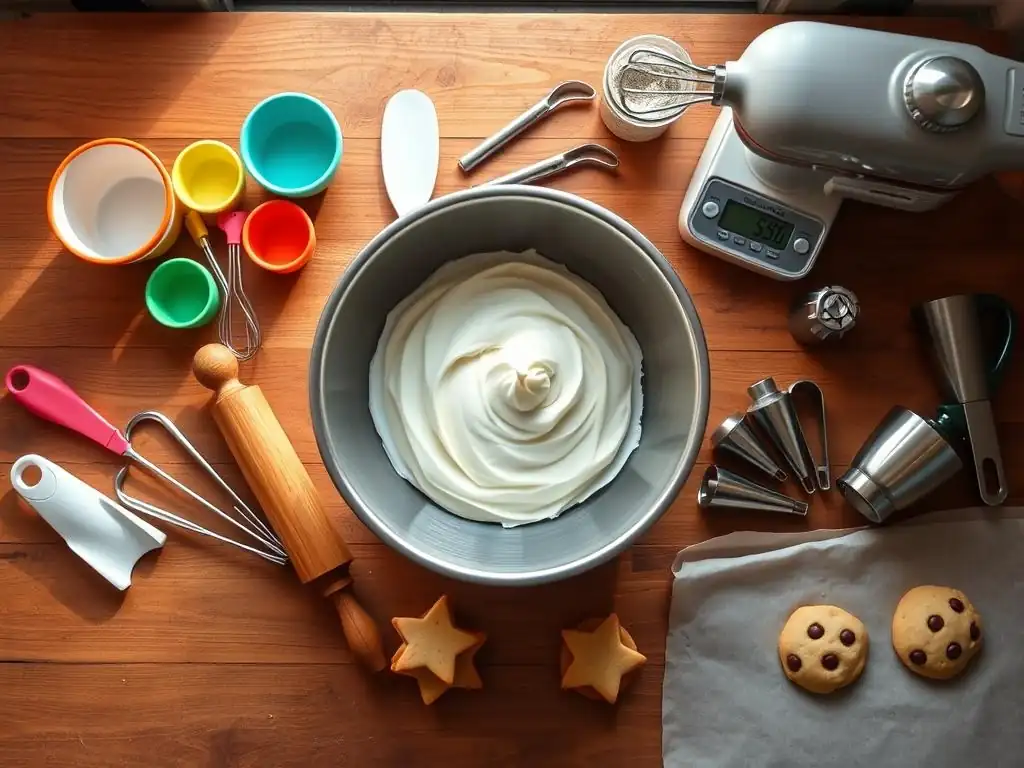
Ready to build your essential baking tools beginner kit? Let's dive into the absolute necessities that will allow you to bake a wide variety of recipes right from the start. These items are versatile, relatively inexpensive (for the basic versions), and fundamental to almost every baking project you undertake.
Starting with these core pieces of equipment ensures you have the capability to measure, mix, and bake most beginner-level recipes. You don't need to purchase the most expensive versions immediately, but focusing on functionality and reliability for these key tools is a wise investment in your baking journey.
Mixing Bowls: Choosing the Right Size and Material
Mixing bowls are fundamental for combining ingredients. It's beneficial to have a set with a few different sizes, typically ranging from 2 quarts up to 6 quarts. Smaller bowls are perfect for whisking a couple of eggs or melting butter, while larger bowls are essential for mixing cake batters, cookie doughs, or kneading small batches of bread. Having multiple bowls also allows you to have different components ready simultaneously, like dry ingredients in one and wet in another.
When choosing material, common options include glass, metal (stainless steel), and plastic. Stainless steel is lightweight, durable, and non-reactive, making it versatile, though it can be slippery. Glass is stable and non-reactive, great for melting ingredients in the microwave, but it's heavier and can break. Plastic is affordable and lightweight but can scratch, absorb odors, and may not be suitable for hot ingredients. A mix, perhaps a sturdy metal set and a glass bowl, offers good flexibility for various tasks in your beginner baking tools collection.
Measuring Cups and Spoons: Accurate Measurements for Perfect Results
Accuracy in measurement is arguably the most critical aspect of successful baking, especially for beginners. You'll need two types of measuring cups: dry measuring cups (designed to be leveled off) and liquid measuring cups (with a spout and measurements marked on the side, meant to be read at eye level). Using a dry cup for liquids or vice versa can lead to significant errors. A standard set of dry cups usually includes 1/4, 1/3, 1/2, and 1 cup, while liquid cups typically come in 1-cup, 2-cup, or 4-cup sizes.
Measuring spoons are used for smaller quantities, particularly leavening agents like baking soda and baking powder, spices, and extracts. A standard set includes 1/4 teaspoon, 1/2 teaspoon, 1 teaspoon, and 1 tablespoon. Leveling off both dry ingredients in cups and spoons is vital for consistency. Even a slight excess or deficit in potent ingredients like baking powder can drastically alter the rise and texture of your baked goods, making precise measuring tools a cornerstone of any essential baking tools beginner guide.
Spatulas and Scrapers: Essential for Mixing and Folding
Spatulas and scrapers are indispensable for mixing ingredients, scraping down the sides of bowls, and folding delicate mixtures. A flexible rubber or silicone spatula is a workhorse, perfect for ensuring you get every bit of batter or dough out of the bowl and for gently folding ingredients like whipped cream or egg whites into a base. Silicone spatulas are often heat-resistant, allowing them to be used for stirring hot custards or sauces.
An offset spatula, with its blade offset from the handle, is particularly useful for leveling batters in pans and, later, for frosting cakes and cupcakes smoothly. Having at least one or two good quality flexible spatulas is a must-have in your initial set of basic baking equipment. They allow for efficient mixing and ensure minimal waste, scraping bowls clean with ease.
Baking Sheets and Pans: Selecting the Right Type for Different Recipes
Baking sheets and pans provide the surface where your creations are baked. The type and size you use can significantly impact the final product, affecting everything from how cookies spread to how cakes rise. Starting with a versatile selection is key for a beginner baker.
Types of Baking Sheets: Aluminum vs. Nonstick
Aluminum baking sheets are a popular choice and a great addition to your essential baking tools beginner collection. They conduct heat evenly, promoting consistent baking and browning. Look for heavy-gauge aluminum which is less likely to warp at high temperatures. A standard half-sheet size, approximately 18x13 inches, is incredibly versatile for cookies, roasted vegetables, and more. Nonstick baking sheets offer easy release, which is convenient, but they can sometimes lead to faster or uneven browning, and their nonstick coating can degrade over time, often requiring lower baking temperatures.
Baking Pan Sizes: Understanding Standard Dimensions
Understanding standard pan sizes is vital for following recipes accurately. Common cake pan sizes include 8-inch or 9-inch rounds and the versatile 9x13 inch rectangular pan. Muffin tins typically hold 12 standard-sized muffins or cupcakes. A standard loaf pan measures about 9x5 inches, perfect for bread or pound cake. Using a pan size different from the recipe's specification will alter the baking time and potentially the texture, so having these basic sizes is crucial for reliable results in your basic baking equipment setup.
Whisks: Achieving Light and Airy Mixtures
A whisk is essential for incorporating air into ingredients, smoothing lumps, and combining mixtures quickly. A standard balloon whisk, with its many wires, is excellent for aerating egg whites for meringues or soufflés, whipping cream, or making smooth sauces and batters. The shape helps maximize contact with the mixture in the bowl.
Using a whisk is key to achieving light and airy textures in many baked goods. For instance, properly whisking eggs and sugar is the first step for many sponge cakes, creating a stable base by incorporating air. Having at least one sturdy whisk is a necessary part of your essential baking tools beginner kit.
Rolling Pin: Essential for Doughs and Pastries
If you plan to make cookies, pies, tarts, or biscuits, a rolling pin is a must-have tool. It's used to flatten and evenly thickness doughs before cutting or shaping. Rolling dough to the correct thickness is important for consistent baking time and texture across batches of cookies or for creating flaky pie crusts.
Rolling pins come in various styles, like the American style with handles and a central barrel, or the French style, which is a simple tapered cylinder. Both work well; it often comes down to personal preference. Having a rolling pin allows you to expand your baking repertoire into the world of pastries and rolled cookies.
Investing in Quality: Best Essential Baking Tools for Beginners
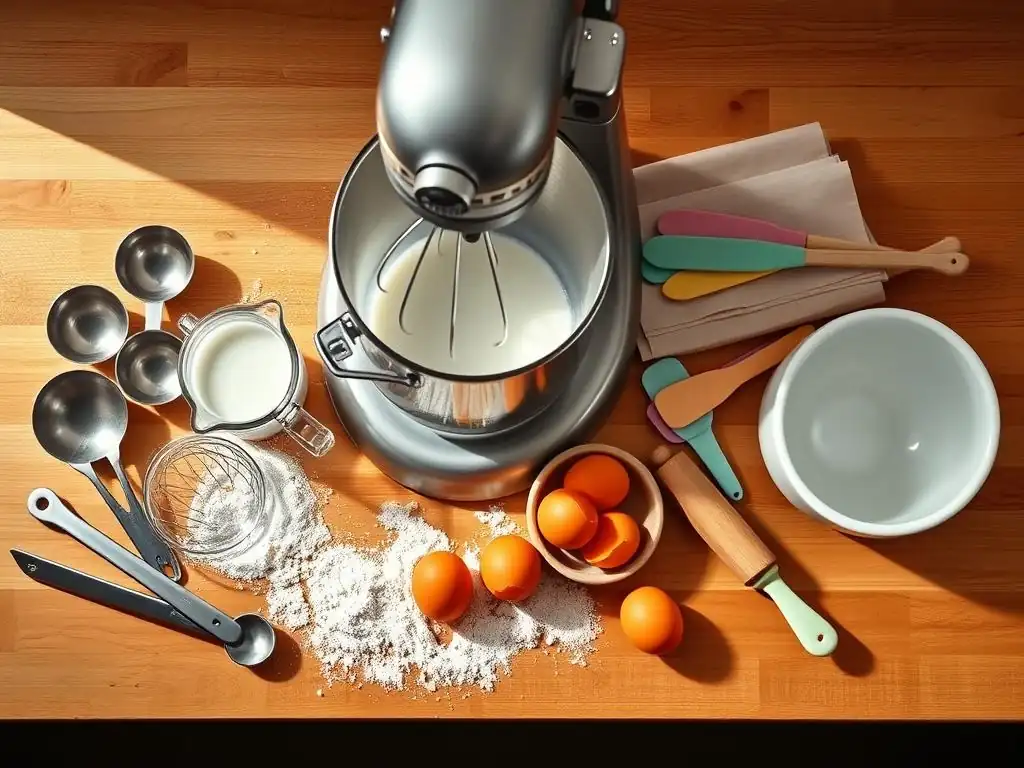
While you don't need top-of-the-line professional equipment when starting, considering the quality of your essential baking tools for beginners can save you money and frustration in the long run. Better quality tools tend to be more durable and perform their specific tasks more effectively, leading to better baking outcomes and a more positive experience.
Think of it as building a reliable toolkit. A cheap, flimsy whisk might bend under resistance, or a poor-quality nonstick pan might lose its coating quickly. Investing slightly more in foundational pieces ensures they last longer and function as intended, making your baking journey smoother and more successful from the get-go.
Prioritizing Durability and Functionality
When selecting your essential baking tools beginner set, prioritize items known for their durability and functionality. Look for sturdy construction – a whisk where the wires are firmly attached, measuring cups and spoons made from robust material that won't bend or break easily, and baking pans that are heavy enough not to warp in the oven. Stainless steel and heavy-gauge aluminum are often good indicators of durability for metal tools.
Functionality means the tool does its job well. A well-designed spatula scrapes effectively, a good whisk incorporates air efficiently, and accurate measuring tools provide consistent results. Reading reviews and choosing reputable brands (without mentioning specific names due to constraints) can help guide your purchasing decisions, ensuring your basic baking equipment stands up to regular use.
Where to Buy Your Essential Baking Tools
Essential baking tools for beginners are widely available, both in physical stores and online. Department stores, kitchen supply shops, and even large supermarkets often carry a good selection of basic baking equipment. Online retailers offer a vast range of options, often at competitive prices, allowing you to compare different brands and models easily.
When shopping, especially online, take advantage of customer reviews. They can provide insights into the durability and performance of specific tools from others who have already used them. While it's tempting to buy the cheapest options, remember the importance of prioritizing durability and functionality for your core essential baking tools beginner kit.
Beyond the Basics: Helpful Baking Tools for Expanding Your Skills
Once you've mastered the basics with your initial essential baking tools beginner kit, you might consider adding a few items that offer greater convenience or enable more advanced techniques. These tools aren't strictly necessary when you start but can significantly enhance your baking capabilities and efficiency as you grow more confident.
Adding these pieces to your collection allows you to tackle a wider range of recipes and often makes repetitive tasks much easier. Consider these investments as you become more serious about baking and look to expand your skills beyond the foundational recipes.
Stand Mixer: A Long-Term Investment
A stand mixer is a significant investment but a game-changer for many bakers, especially when dealing with larger batches or heavier doughs. Its powerful motor and hands-free operation make tasks like kneading bread dough (which can take 8-10 minutes by hand) or whipping large quantities of egg whites or cream much faster and less physically demanding.
Common capacities range from 4.5 to 6 quarts, suitable for most home baking needs. While a stand mixer isn't part of the initial essential baking tools beginner guide, it's often the first major appliance bakers aspire to own due to its versatility and ability to handle tasks that are difficult or time-consuming manually.
Hand Mixer: A Versatile Alternative
For beginners not ready to invest in a stand mixer or who have limited counter space, a hand mixer is a fantastic, more affordable alternative. Hand mixers are excellent for lighter tasks such as creaming butter and sugar, mixing cake batters, whipping small amounts of cream, or making frosting.
They are portable and easier to store than stand mixers. While they may not have the power for very stiff doughs, a good quality hand mixer is a versatile piece of basic baking equipment that handles many common mixing needs efficiently and is a valuable addition after you've acquired your absolute essential baking tools.
Cooling Rack: Preventing Soggy Bottoms
Often overlooked in an essential baking tools beginner guide, a cooling rack is surprisingly important. Baked goods continue to cook slightly from residual heat after they are removed from the oven. Placing them directly on a solid surface traps steam underneath, which can lead to soggy bottoms, especially for items like cookies, cakes, and bread.
A cooling rack allows air to circulate freely around the item, enabling it to cool down properly and stop the cooking process. This ensures a crisp bottom on cookies and prevents cakes from becoming dense or wet on the underside. Having one or two cooling racks is a simple addition that improves the quality of your finished products.
Parchment Paper and Baking Mats: Ensuring Easy Release
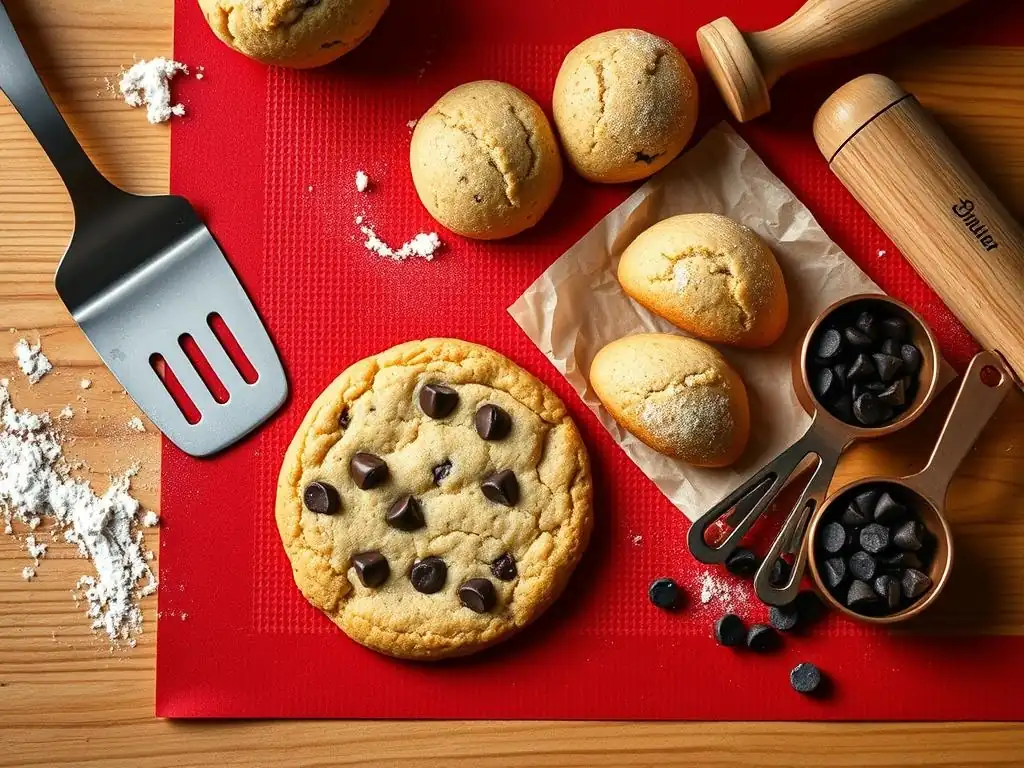
Parchment paper and silicone baking mats are invaluable for preventing baked goods from sticking to baking sheets and pans, making cleanup significantly easier. Parchment paper is disposable and can be cut to fit various pan shapes; it's particularly useful for lining cake pans or baking delicate items.
Silicone baking mats, often sized to fit standard half-sheet pans (approx 16.5x11.5 inches, slightly smaller than the pan itself), are reusable and excellent for sticky doughs like cookies or for making candies. They provide a nonstick surface without needing grease. While not strictly part of the absolute essential baking tools beginner kit, they are highly recommended for their convenience and consistent results.
Kitchen Scale: For Precise Measurements and Consistent Results
As you become more serious about baking, you'll discover that many professional recipes call for ingredients by weight (grams or ounces) rather than volume (cups or tablespoons). A digital kitchen scale is a fantastic tool for achieving ultimate precision and consistency, especially with ingredients like flour, which can vary in volume measurement depending on how it's scooped (a cup of flour can weigh anywhere from 120g to 150g).
Weighing ingredients eliminates this variability, leading to more reliable and repeatable results, crucial for sensitive recipes like bread, pastries, or macarons. While not essential for every beginner recipe, adding a kitchen scale to your essential baking tools collection is a step towards more advanced and consistent baking.
Essential Baking Tools Checklist for Beginners: A Quick Reference
To help you keep track, here is a quick reference checklist of the essential baking tools beginner items discussed. Having this list handy can make shopping for your first set of tools straightforward and ensure you don't miss any crucial pieces.
- Mixing Bowls (various sizes)
- Dry Measuring Cups
- Liquid Measuring Cups
- Measuring Spoons
- Flexible Spatula/Scraper
- Baking Sheets (Half-sheet size recommended)
- Baking Pans (e.g., 8-inch round, 9x13 inch, 12-cup muffin, 9x5 inch loaf)
- Whisk
- Rolling Pin
This list covers the core basic baking equipment that will allow you to confidently approach most beginner recipes. As you gain experience, you can consider adding items from the "Beyond the Basics" section to expand your capabilities.
Caring for Your Essential Baking Tools: Maintenance Tips
Proper care and maintenance of your essential baking tools will ensure they last longer and perform optimally for years to come. Simple steps can prevent rust, warping, and damage to nonstick surfaces, protecting your investment in your basic baking equipment.
Taking a few moments to clean and store your tools correctly after each use pays off by extending their lifespan and keeping them ready for your next baking adventure.
Cleaning and Storage Recommendations
Most essential baking tools beginner items, like stainless steel mixing bowls, measuring cups, and spoons, can be washed by hand in warm, soapy water or placed in the dishwasher (check manufacturer instructions). Avoid using abrasive scrubbers on nonstick surfaces or delicate materials. Wooden rolling pins or handles should be hand-washed and dried immediately to prevent cracking or warping.
Baking sheets and pans should be cleaned after each use, removing any baked-on residue. For stubborn spots, soaking can help. Ensure all metal tools are thoroughly dried before storing to prevent rust. Store items neatly – stack bowls carefully, hang measuring cups and spoons, and store pans vertically or with protective layers to avoid scratches.
Extending the Lifespan of Your Baking Tools
Extending the lifespan of your essential baking tools involves both proper cleaning and mindful usage. Avoid cutting directly on baking sheets or nonstick pans, as this can scratch the surface. Don't expose plastic tools to high heat unless they are specifically rated as heat-resistant silicone.
For nonstick pans, avoid using metal utensils that can damage the coating. Calibrating your oven periodically can also prevent overheating which can warp pans or degrade tool materials. By treating your basic baking equipment with care, you ensure they remain reliable partners in your kitchen for many batches to come.
Frequently Asked Questions
What are the absolute must-have tools for a complete beginner baker?
You'll need a good mixing bowl, a measuring cup set, and a reliable baking sheet. These form the foundation for most basic recipes and are relatively inexpensive.
Can I use substitutes for specialized baking tools, like a stand mixer?
Yes, many substitutes exist! A hand mixer or even vigorous whisking can often replace a stand mixer, though it might require more effort.
How important is it to have accurate measuring tools when baking?
Accuracy is crucial in baking. Using precise measurements with measuring cups and spoons ensures the correct chemical reactions and desired results in your baked goods.
What kind of baking sheet is best for even heat distribution?
Look for baking sheets made of light-colored aluminum with a flat surface. These promote even heat distribution, preventing hot spots and ensuring consistent baking.
Are there any tools that might be helpful but not essential for a beginner?
While not essential, a kitchen scale can significantly improve accuracy. A pastry blender can also be useful for cutting butter into flour for pastries.
Final Reflection: The Sweetness of Beginnings: Mastering the Art of Baking
The humble kitchen tool, often overlooked, is the unsung hero of countless culinary triumphs. From the perfectly risen loaf to the delicate, melt-in-your-mouth cookie, the right equipment empowers even the most novice baker to achieve delicious results. This guide has explored the essential tools that form the foundation of a successful baking journey, highlighting the importance of quality and functionality in creating delectable treats.
The impact of accessible baking knowledge extends far beyond the kitchen. It fosters creativity, encourages experimentation, and provides a tangible connection to tradition and family. Baking, at its core, is an act of sharing, of nurturing, and of creating joy. Baking is at once child's play and adult joy. And love, of course.
– This sentiment perfectly captures the essence of what we've explored: the transformative power of baking, fueled by the right tools and a willingness to learn.
Now, it's your turn. Don't let the seemingly daunting world of baking intimidate you. Take a deep breath, gather a few essential tools from this guide, and embrace the journey. Start small, experiment with simple recipes, and most importantly, have fun! The satisfaction of creating something delicious with your own hands is a reward unlike any other. The world of baking awaits – go forth and create your own sweet masterpieces!
Unlock Your Inner Baker: Take the First Step Today!
Thanks for joining us on this baking journey! We hope you now feel equipped with the essential tools to create delicious treats. Ready to roll up your sleeves and get baking?
- Begin your baking adventure by choosing one tool from the list to purchase this week. This will be your first step towards mastering a new skill and discovering your baking passion. Consider what excites you most – maybe it's that stand mixer you've been eyeing, or a set of high-quality measuring cups.
- Share this article with a fellow baking enthusiast! Let's inspire others to embrace the joy of baking.
- Try out a simple recipe this weekend using one of your existing tools (or that new one!). Document your experience and share your results!
What's the first recipe you'll tackle with your newfound baking knowledge?