
Simple Cakes: How to Test for Doneness Perfectly

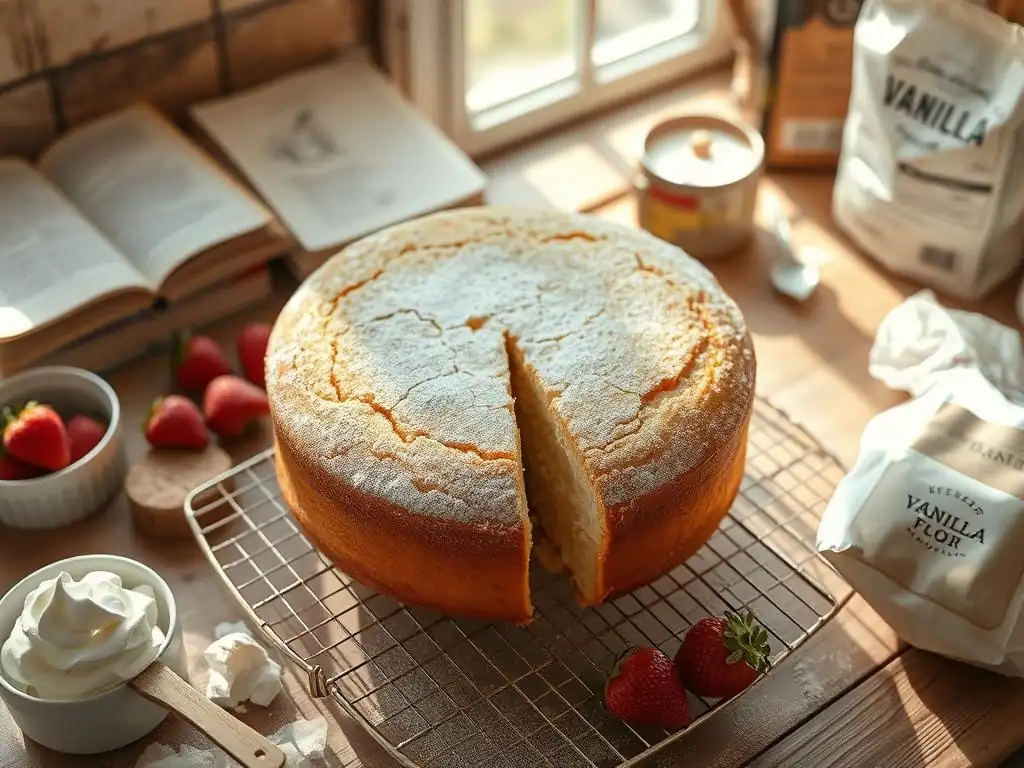
Welcome to BakeWithEase, your ultimate baking companion! If you've ever wondered how to create the perfect dessert that will impress friends and family, you're in the right place. Our featured article on the Perfectly Baked Simple Cake Recipe will guide you through the essential techniques to achieve that golden, moist cake every time. Whether you're a novice baker or looking to refine your skills, our step-by-step instructions ensure that baking is not just easy, but also a delightful journey. Ready to unlock the secrets of cake perfection? Keep reading to discover how to test for doneness like a pro!
- Simple Cakes: How to Test for Doneness Perfectly - BakeWithEase
- Introduction: Achieving Baking Perfection with Simple Cakes
- The Importance of Accurate Doneness Testing for Simple Cakes
- Mastering the Skewer Test: The Classic Method for Doneness
- Beyond the Skewer: Alternative Methods for Testing Cake Doneness
- Visual Cues for Perfectly Baked Simple Cakes
- Troubleshooting Common Doneness Testing Issues
- Tips and Tricks for Ensuring Even Baking in Simple Cake Recipes
- Common Mistakes to Avoid When Testing Simple Cake Doneness
- Achieving the Perfectly Baked Simple Cake: A Summary
- Final Thoughts: Enjoying Your Perfectly Baked Simple Cake
-
Frequently Asked Questions
- What are the most common signs that a simple cake is not fully baked?
- BakeWithEase.com recommends using what to test for doneness in a simple cake?
- Can oven temperature affect how accurately I can test for doneness in a simple cake recipe?
- What if the toothpick comes out clean, but the simple cake still seems too soft when I gently press on the top?
- Are there any specific ingredients in a simple cake recipe that might affect how long it takes to bake?
- Final Reflection: The Sweet Science of a Perfectly Baked Cake
- Unlock Your Inner Cake Boss: Perfect Cakes Every Time!
Simple Cakes: How to Test for Doneness Perfectly - BakeWithEase
Introduction: Achieving Baking Perfection with Simple Cakes
Why Perfectly Baked Simple Cakes Matter
Achieving a perfectly baked simple cake is the ultimate goal for any home baker, whether you're just starting out or refining your skills. A cake that is baked just right boasts a tender crumb, a moist interior, and a beautiful golden-brown exterior. This perfect texture and flavor are what elevate a simple cake recipe from ordinary to extraordinary, making every bite a delightful experience. Understanding how to consistently reach this level of doneness is a fundamental skill that unlocks success in countless easy cake recipes, ensuring your efforts in measuring, mixing, and preparing are rewarded with delicious results.
Furthermore, a perfectly baked simple cake isn't just about taste and texture; it's also about presentation and reliability. When a cake is baked properly, it's less likely to collapse, sink in the middle, or have gummy layers. This makes it easier to handle, frost, and decorate, resulting in a more professional-looking final product. For those learning a new perfectly baked simple cake recipe, mastering the doneness test provides confidence and consistency, turning potential baking frustrations into satisfying achievements and building a solid foundation for tackling more complex baking projects in the future.
Common Baking Challenges with Simple Cake Recipes
Even with straightforward simple cake recipes, bakers often encounter hurdles that prevent achieving that ideal perfectly baked texture. One frequent issue is uneven baking, where the edges might be done or even overcooked while the center remains underdone. This can be caused by hot spots in the oven, incorrect pan placement, or variations in batter consistency. Another common challenge is the dreaded gummy or dense texture, often a result of overmixing the batter or, crucially, incorrect baking time leading to an underbaked center.
Conversely, many bakers struggle with cakes that turn out dry and crumbly. This is typically a sign of overbaking, where the cake has been left in the oven for too long, causing too much moisture to evaporate.
Factors like oven temperature inaccuracies, using the wrong size pan, or simply misjudging the baking time based on visual cues alone can lead to this outcome. Successfully navigating these challenges requires not just a good simple cake recipe but also an understanding of how to accurately determine when your cake has reached peak doneness, ensuring a moist, tender, and perfectly baked simple cake every time.
The Importance of Accurate Doneness Testing for Simple Cakes
Avoiding Undercooked Simple Cakes: Risks and Consequences
An undercooked simple cake is perhaps one of the most disappointing baking outcomes. Beyond the obvious issue of a wet, raw center, underbaking presents several problems. The texture will be gummy, dense, and unpleasant, often sinking significantly as it cools. The flavor may also be compromised, tasting doughy rather than fully developed. Furthermore, undercooked cakes can be structurally weak, making them difficult or impossible to slice, layer, or decorate.
From a safety perspective, while less common in standard cake recipes made with flour, sugar, eggs, and fat that are baked at high temperatures, ensuring ingredients like eggs are fully cooked is part of best practice. More importantly for the baker, the frustration of an underbaked cake means wasted ingredients, time, and effort. Learning precise doneness testing is the critical step to avoid this common pitfall and consistently produce a perfectly baked simple cake from any easy recipe.
Preventing Overbaked Simple Cakes: Dryness and Texture Issues
While underbaking leads to a gummy mess, overbaking results in a dry, tough, and often crumbly cake. When a cake bakes for too long, the moisture within the crumb evaporates excessively. This loss of moisture causes the cake's texture to become dense or even hard, losing that desirable tenderness and moistness that characterizes a perfectly baked simple cake. The flavor can also be affected, tasting less rich and sometimes even slightly burnt around the edges.
Overbaking is a frequent error, especially when bakers rely solely on estimated baking times provided in recipes without verifying doneness. Oven temperatures can vary significantly, often running hotter or cooler than the dial indicates. A cake that needs 30 minutes in one oven might be perfectly done in 25 minutes in another, or require 35 minutes. Mastering accurate doneness testing techniques helps you pull your simple cake from the oven at the exact moment it is done, preserving its moisture and ensuring a tender, delicious, and perfectly baked result every time.
Mastering the Skewer Test: The Classic Method for Doneness
The Right Type of Skewer for Testing Simple Cakes
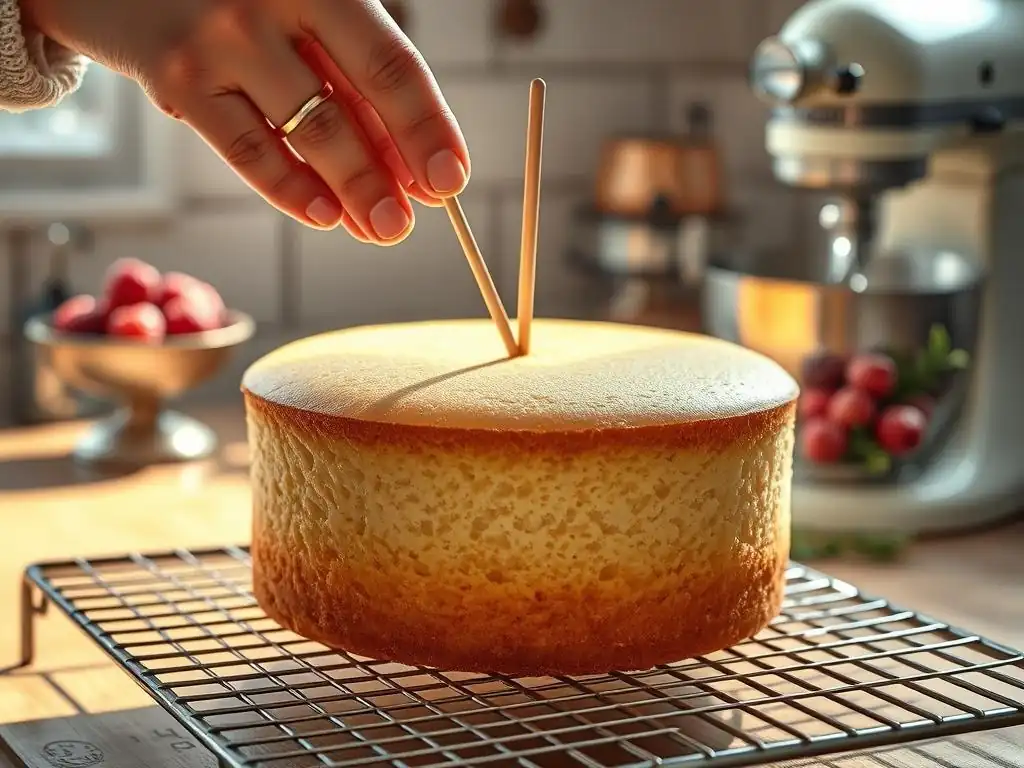
The skewer test is a time-honored technique for checking if a cake is done, and using the right tool makes a difference. A long, thin wooden skewer (like those used for kebabs) or a metal cake tester are ideal.
The key is thinness – a thick skewer or knife can create a large hole that might cause the cake to sink slightly and can also pick up more crumbs or wet batter, making interpretation harder. Metal skewers heat up quickly, which can sometimes cause batter to cook onto them instantly, potentially giving a false clean reading if not used carefully.
Wooden skewers, especially bamboo ones, are often preferred for their ability to show moist crumbs more clearly. They are also disposable, which is convenient. Ensure the skewer is long enough to reach the center of your cake pan, even for deep cakes. Having several skewers on hand is useful, as you might want to test in multiple spots, especially if you suspect uneven baking. Using a clean, dry skewer for each test is crucial for accurate results when testing for a perfectly baked simple cake.
Step-by-Step Guide: Performing the Skewer Test Correctly
Performing the skewer test correctly is simple but requires attention to detail.
- Locate the center: The center of the cake is the last part to cook. Aim for the very middle or slightly off-center in a round cake. For rectangular or square cakes, test near the middle but away from the edges.
- Insert the skewer: Gently and steadily insert the skewer deep into the cake, going almost all the way to the bottom of the pan.
- Withdraw the skewer: Pull the skewer out slowly and carefully.
- Examine the skewer: Immediately look at the skewer to see what, if anything, is clinging to it.
- Interpret the results: This is the crucial step, detailed below.
Task List: Performing the Skewer Test
- [ ] Prepare a clean, dry skewer.
- [ ] Position yourself to access the center of the cake.
- [ ] Gently insert the skewer deep into the cake.
- [ ] Slowly withdraw the skewer.
- [ ] Carefully examine the skewer for crumbs or wet batter.
- [ ] Interpret the findings to determine doneness.
Interpreting the Results: What a Clean Skewer Really Means
Interpreting the skewer test results correctly is key to achieving a perfectly baked simple cake.
- Clean Skewer: If the skewer comes out clean with no wet batter clinging to it, the cake is done. You might see a few dry crumbs attached, which is perfectly fine and indicates a moist, tender crumb. A completely bare skewer can sometimes indicate slight overbaking, but generally, clean means done.
- Wet Batter: If the skewer has wet, gooey batter sticking to it, the cake is not done. It needs more time in the oven.
- Moist Crumbs: If the skewer has moist crumbs attached but no wet batter, the cake is usually done or very close to it. This is often the ideal stage for a perfectly baked simple cake – moist but not raw.
Block Quote:
A clean skewer with a few moist crumbs is often the sweet spot for a perfectly baked simple cake – indicating a fully cooked cake that retains its moisture.
It's important to test in the center, as edges cook faster. If the center is done, the rest of the cake likely is too. However, if you suspect uneven baking, testing in a couple of spots towards the center might be helpful.
Beyond the Skewer: Alternative Methods for Testing Cake Doneness
The Toothpick Test: A Reliable Substitute for Skewers
The toothpick test is essentially the same principle as the skewer test but uses a common kitchen item: a toothpick. A standard wooden toothpick is thin and readily available, making it a convenient alternative when a skewer isn't handy. Like skewers, toothpicks are excellent at picking up traces of wet batter or moist crumbs. The process is identical: insert a clean toothpick into the center of the cake, withdraw it, and examine the results.
A toothpick that comes out clean or with just a few moist crumbs indicates that your simple cake is likely done. If it comes out coated in wet batter, the cake needs more baking time. Because toothpicks are shorter than skewers, ensure you have one long enough to reach the deepest part of your cake pan if you're baking a tall cake. Using a fresh toothpick for each test, if testing multiple spots, is also recommended for accuracy in determining if your simple cake recipe has resulted in a perfectly baked outcome.
The Spring-Back Test: Assessing Cake Texture for Doneness
Another useful technique, often used in conjunction with the skewer or toothpick test, is the spring-back test. This method relies on the cake's texture changing as it bakes and sets. Gently and lightly press the top surface of the cake near the center with your fingertip. If the indentation you make springs back immediately and completely, the cake is generally done. If the indentation remains or springs back very slowly, the cake likely needs more time.
This test is particularly helpful for certain types of cakes, like sponges, which develop a characteristic springy texture when perfectly baked. However, it's less reliable for very dense cakes or cakes with sticky toppings. Always use a very light touch to avoid damaging the cake's structure or burning your finger. The spring-back test provides a tactile cue that complements the visual and skewer/toothpick tests, offering another layer of confirmation for your perfectly baked simple cake.
Internal Temperature Testing: Using a Thermometer for Precise Baking
For the most accurate and scientific approach to testing doneness, especially for a perfectly baked simple cake recipe, an instant-read thermometer is invaluable. As a cake bakes, its internal temperature rises. Once it reaches a certain temperature range, the structure is set, and it is considered done. This method removes some of the guesswork involved in interpreting visual cues or crumb textures.
To use this method, insert the thermometer probe into the center of the cake, avoiding touching the bottom or sides of the pan, which can give a false high reading. Wait a few seconds for the temperature to stabilize. Comparing the reading to recommended doneness temperatures provides a precise indication of whether your cake is ready to be removed from the oven. This method is particularly useful for ensuring consistency when baking the same perfectly baked simple cake recipe repeatedly.
Recommended Internal Temperatures for Different Simple Cake Recipes
While specific temperatures can vary slightly depending on the recipe's ingredients (e.g., high sugar content can raise the target temperature), a general guideline exists for testing the doneness of most simple cakes using an instant-read thermometer.
Common Cake Doneness Temperature Range:
195°F - 210°F (90°C - 99°C)
Most standard butter cakes, sponge cakes, and loaf cakes are considered done when the internal temperature in the center reaches between 195°F and 210°F (approximately 90°C to 99°C). For richer cakes, like those with a higher fat content or added fruits, the upper end of this range might be more appropriate. Lighter sponge cakes might be done closer to the lower end. Always verify the temperature in the absolute center, as this is the last part to reach the target temperature. Relying on this precise measurement significantly increases your chances of achieving a perfectly baked simple cake.
Visual Cues for Perfectly Baked Simple Cakes
Observing the Cake's Color and Appearance
Visual cues are often the first indication that a simple cake might be nearing doneness, though they should rarely be used as the sole test. As a cake bakes, the surface undergoes the Maillard reaction and caramelization, processes that create flavor and color. A perfectly baked simple cake typically develops a beautiful golden-brown crust across the top and around the edges. The color should be even, though slight variations near the edges are normal.
The surface should also appear set and firm, not wet or jiggly. Cracks might form on top depending on the recipe, but the overall appearance should be stable. If the top looks pale and uncooked, the cake definitely needs more time. If the edges are dark brown or black, the cake is likely overbaking or your oven is too hot. Paying attention to these visual changes helps you estimate when to start performing more definitive tests like the skewer or thermometer test for your perfectly baked simple cake.
Checking for Edge Separation from the Pan
Another helpful visual cue is observing whether the cake's edges have started to pull away from the sides of the baking pan. As a cake bakes and sets, it slightly contracts. This contraction causes the cake to detach slightly from the edges of the pan. For many simple cake recipes, this separation is a good sign that the cake is nearing or has reached doneness.
This cue is most noticeable in cakes baked in metal pans. The degree of separation can vary depending on the recipe, the type of pan, and whether the pan was greased and floured. However, if you see a clear gap forming between the cake and the pan edges, it's a strong indicator that it's time to perform a skewer or thermometer test in the center to confirm if your simple cake is perfectly baked.
The Importance of a Golden-Brown Crust
The development of a rich, golden-brown crust is a significant visual indicator of a perfectly baked simple cake. This color is not just for aesthetics; it's a result of sugars caramelizing and proteins browning on the cake's surface due to the heat of the oven. This process contributes significantly to the cake's overall flavor profile. A crust that is too pale suggests the cake is underbaked, while a dark brown or burnt crust means it's overbaked.
The depth of the golden-brown color will vary depending on the ingredients in your simple cake recipe – cakes with more sugar or butter tend to brown more deeply. However, aiming for that inviting, even golden hue is a reliable sign that the exterior is properly cooked and the interior is likely following suit. Use this visual cue as your initial prompt to begin checking doneness using more precise methods, helping you achieve a perfectly baked simple cake with a delicious crust.
Troubleshooting Common Doneness Testing Issues
Dealing with Wet Batter Clinging to the Skewer
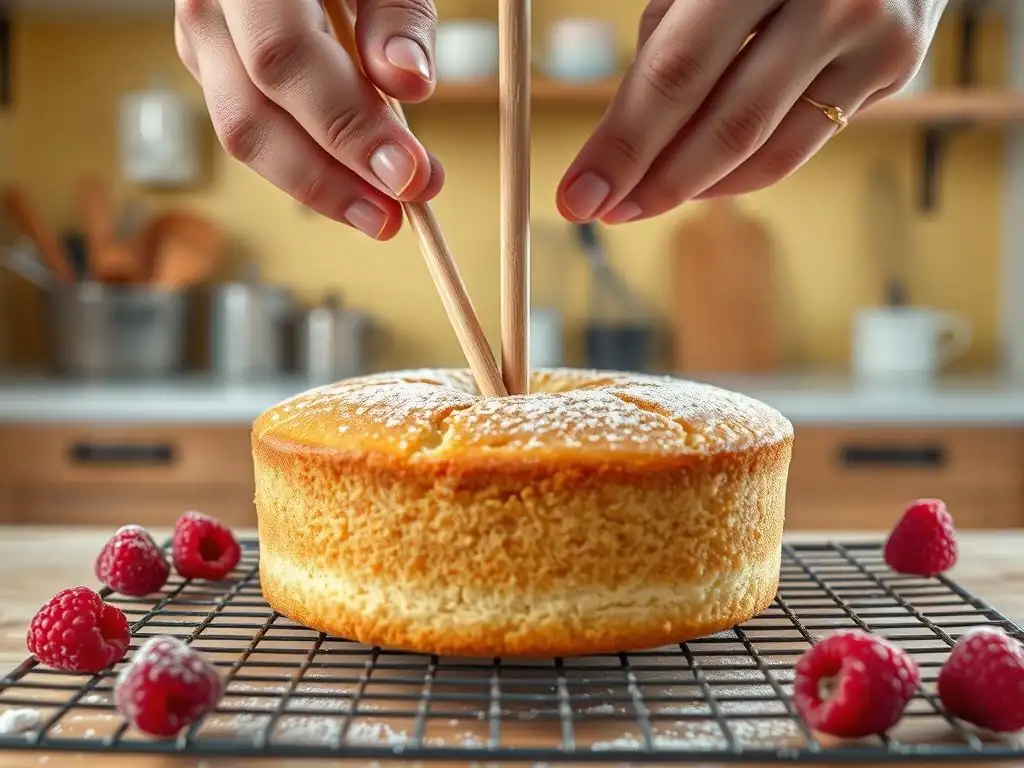
If your skewer or toothpick comes out with wet batter clinging to it, the most straightforward action is to return the cake to the oven for a few more minutes. Typically, an undercooked simple cake will need an additional 5-10 minutes of baking time, especially in the center. After the added time, test again with a clean skewer. Repeat this process in short increments until the skewer comes out clean or with only moist crumbs.
It's crucial not to increase the oven temperature in an attempt to speed things up, as this can cause the outside to burn before the inside cooks. Also, avoid testing in the same exact spot repeatedly; choose a slightly different point near the center. Patience is key here; adding time in small increments prevents accidentally overbaking your simple cake while ensuring the center gets perfectly baked.
Addressing Uneven Baking and Doneness
Uneven baking is a common frustration, where one part of the cake is done while another (usually the center or a specific side) is not. If your doneness test indicates uneven cooking, you can try a few strategies. If the edges are browning too quickly while the center is raw, loosely tenting the top of the cake with aluminum foil can help shield it from direct heat, allowing the center to catch up without the top or edges burning.
If one side of the cake consistently bakes faster, it might indicate a hot spot in your oven. Rotating the cake halfway through the total estimated baking time can help promote more even cooking. For instance, if a simple cake recipe suggests 30-35 minutes, rotate the pan 180 degrees around the 15-minute mark. This helps ensure that all parts of the cake receive equal heat exposure, leading to a more uniformly perfectly baked simple cake.
Adjusting Baking Time Based on Oven Performance
Oven temperatures are notoriously inaccurate; the temperature displayed on the dial is often different from the actual temperature inside. This is a primary reason why relying solely on recipe baking times can lead to under or overbaked simple cakes. If you notice your cakes consistently bake faster or slower than the recipe suggests, or if they brown unevenly, your oven temperature is likely off.
Using an inexpensive oven thermometer placed inside the oven can help you verify the actual temperature. If it reads significantly higher or lower than your setting, you'll need to adjust your baking time accordingly for future bakes. For example, if your oven runs hot, you might need to reduce the baking time stated in a simple cake recipe. Conversely, if it runs cool, you'll need to add time. Making these adjustments based on your oven's quirks is vital for consistently achieving a perfectly baked simple cake.
Tips and Tricks for Ensuring Even Baking in Simple Cake Recipes
Preheating Your Oven Properly
Proper oven preheating is a non-negotiable step for achieving a perfectly baked simple cake. Placing a cake into an oven that hasn't reached the correct temperature will drastically affect the baking time and can lead to uneven cooking and poor texture. The cake won't rise properly in the initial stages, and the outside might set too slowly, resulting in a dense layer at the bottom.
Always allow your oven ample time to preheat, usually at least 15-20 minutes after the preheat light or indicator suggests it's ready. This ensures the oven cavity and, importantly, the heating elements and walls have reached the target temperature, creating a stable environment for the cake to bake evenly. For a perfectly baked simple cake recipe outcome, don't rush the preheating process.
Using Oven Thermometers for Accurate Temperature Readings
As mentioned earlier, oven thermometers are invaluable tools for any baker aiming for precision. They provide an accurate reading of the temperature inside your oven, allowing you to calibrate your baking process. Place a reliable oven thermometer on the middle rack of your oven and check its reading once the oven has fully preheated.
If your oven thermometer shows a consistent difference from your oven's setting (e.g., it reads 325°F when set to 350°F), you can adjust your oven dial accordingly for future baking (set it higher to reach the desired temperature) or simply know to expect longer baking times for your simple cake recipes. Using an oven thermometer is one of the simplest and most effective ways to troubleshoot inconsistent baking results and move towards consistently producing perfectly baked simple cakes.
Rotating Cakes During Baking for Uniform Doneness
Rotating your cake pan halfway through the baking time is a simple yet effective technique to combat potential hot spots and ensure uniform doneness, especially for a perfectly baked simple cake. Ovens often have areas that are slightly hotter or cooler than others, leading to one side of the cake baking faster than the other.
To rotate, carefully open the oven door, use oven mitts to grasp the cake pan, and turn it 180 degrees. Do this gently to avoid deflating the cake, especially in the early stages of baking. Closing the oven door quickly minimizes heat loss. This simple action helps expose all sides of the cake to similar heat levels for approximately equal amounts of time, promoting even rising and browning, and significantly increasing your chances of a uniformly perfectly baked simple cake.
Common Mistakes to Avoid When Testing Simple Cake Doneness
Opening the Oven Door Too Frequently
One of the most common mistakes home bakers make is opening the oven door repeatedly to check on the cake. Every time the oven door is opened, the internal temperature can drop significantly, sometimes by 50°F or more. This temperature fluctuation disrupts the baking process, particularly during the critical early stages when the cake is setting its structure.
Frequent peeking can lead to cakes that sink in the middle, bake unevenly, or take much longer to bake than anticipated. Resist the urge to open the oven door until the cake is close to the minimum baking time stated in the simple cake recipe or until visual cues (like browning edges) strongly suggest it's nearing completion. Trust the process and use the oven light to observe without opening the door whenever possible. This patience is vital for a perfectly baked simple cake.
Testing Doneness Too Early in the Baking Process
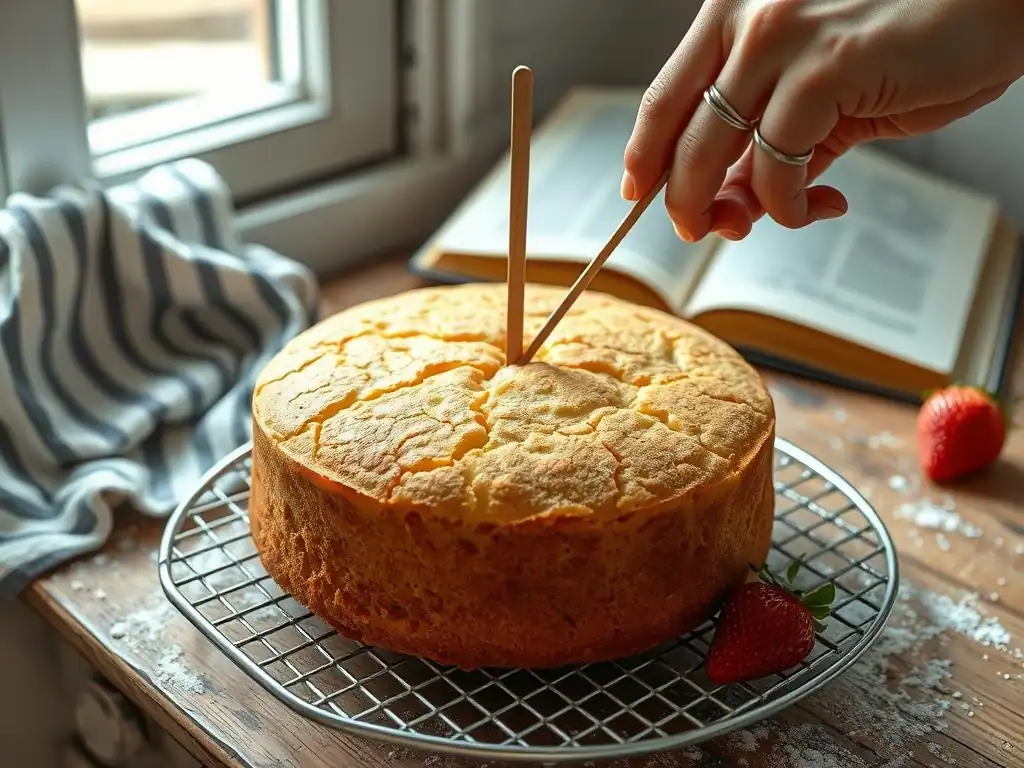
Testing for doneness too early is another pitfall. If you insert a skewer or thermometer when the cake is significantly underbaked, you're just letting heat escape and disturbing the cake unnecessarily. Most simple cake recipes provide an estimated baking time range (e.g., 30-35 minutes). Avoid testing until you are close to the minimum time suggested, or until visual cues indicate the cake is nearing completion.
Starting your tests too soon provides little useful information and increases the risk of temperature drops affecting the bake. Wait until the cake looks mostly set around the edges and the top has begun to brown before performing your first skewer or thermometer test. This timing ensures that when you do test, you are likely to get a meaningful result that helps you gauge the remaining baking time needed for your perfectly baked simple cake.
Ignoring Visual Cues and Relying Solely on One Method
While precise methods like the thermometer test are highly reliable, ignoring visual cues entirely can be detrimental. A perfectly baked simple cake often presents a combination of indicators: a golden-brown crust, edges pulling away, and a set, springy top. Relying only on a clean skewer, for example, without considering if the cake looks done, might lead you to pull a cake too early if the skewer test is misinterpreted (e.g., testing too close to the edge).
Conversely, solely relying on visual cues like color can be misleading, as different ovens or pan types can affect browning rates. The best approach is to use a combination of methods. Let the visual cues tell you when to start testing, then use the skewer, toothpick, or thermometer test to confirm doneness in the center. This multi-faceted approach provides the most reliable way to ensure your simple cake recipe yields a perfectly baked result every time.
Achieving the Perfectly Baked Simple Cake: A Summary
Key Takeaways for Accurate Doneness Testing
Mastering doneness testing is fundamental to baking a perfectly baked simple cake. Remember these key takeaways:
- The center of the cake is the last part to cook. Test there.
- The skewer/toothpick test: Clean (or with moist crumbs) means done. Wet batter means needs more time.
- The spring-back test: Gentle pressure; if it springs back, it's likely done.
- Internal temperature: Aim for 195°F - 210°F (90°C - 99°C) in the center for most cakes.
- Visual cues (golden-brown crust, edge separation) indicate when to start testing.
- Don't open the oven door frequently.
- Don't test too early.
- Use an oven thermometer to verify your oven's temperature.
- Consider rotating the cake for even baking.
- Combine methods for the most reliable results.
Applying these techniques with patience and observation will significantly improve your baking consistency and help you achieve that coveted perfectly baked simple cake every time you follow an easy cake recipe.
Resources for Further Baking Education
For those eager to deepen their understanding of baking science and techniques, there are many excellent resources available. Cookbooks from reputable authors and test kitchens often include detailed sections on baking fundamentals, including how ingredients work and the science behind doneness. Many culinary websites and online baking courses offer in-depth tutorials, videos, and articles that delve into specific challenges like uneven baking, moisture control, and accurate temperature management.
Exploring resources focused on baking basics or beginner simple cake recipes can provide valuable context and tips. Look for content that explains why certain steps are important, not just how to do them. Understanding the "why" behind doneness testing, for instance, makes the process intuitive rather than just a rule to follow. Continuously learning and practicing are the surest paths to becoming a confident baker capable of producing a perfectly baked simple cake consistently.
Final Thoughts: Enjoying Your Perfectly Baked Simple Cake
Baking a simple cake should be a rewarding and enjoyable experience. The goal is to create something delicious to share or savor yourself. By focusing on accurate doneness testing, you take control of one of the most critical factors in baking success. Moving beyond just following a recipe's time estimate and learning to truly read your cake ensures you'll pull it from the oven at its peak moment of perfection.
So, the next time you bake a simple cake, approach the final minutes with confidence and your chosen testing methods. Whether it's the classic skewer test or the precision of a thermometer, knowing how to verify doneness correctly means saying goodbye to dry, crumbly mistakes and undercooked centers. Embrace the process, trust your tests, and get ready to enjoy the tender, moist, and truly perfectly baked simple cake you've created!
Frequently Asked Questions
What are the most common signs that a simple cake is not fully baked?
The most common signs include a wobbly center, a soggy texture, and the cake appearing pale or undercooked. You might also notice the top starting to sink slightly.
BakeWithEase.com recommends using what to test for doneness in a simple cake?
BakeWithEase.com suggests using a toothpick or a thin skewer. Insert it into the center of the cake; if it comes out clean or with only a few moist crumbs clinging to it, the cake is done.
Can oven temperature affect how accurately I can test for doneness in a simple cake recipe?
Yes! An inaccurate oven temperature can lead to uneven baking. If the oven is too hot, the outside might brown quickly while the inside remains undercooked. If it's too cool, the cake may take much longer to bake.
What if the toothpick comes out clean, but the simple cake still seems too soft when I gently press on the top?
Even with a clean toothpick, a slightly soft top can indicate that the cake needs a few more minutes. Check every 1-2 minutes and continue baking until the top springs back lightly when touched.
Are there any specific ingredients in a simple cake recipe that might affect how long it takes to bake?
Yes, ingredients like fruit purees or chocolate chips can increase the baking time. These additions add moisture, requiring a longer bake to achieve a perfectly set texture.
Final Reflection: The Sweet Science of a Perfectly Baked Cake
The quest for the perfectly baked simple cake transcends mere culinary skill; it's a journey into precision, patience, and the undeniable joy of a flawlessly risen, moist, and tender crumb. This article explored the often-overlooked art of testing for doneness, emphasizing that a perfectly baked cake isn't just about following a recipe, but understanding the subtle cues your batter offers. Mastering this skill elevates baking from a potentially frustrating experience to a consistently rewarding one.
The impact of a perfectly baked cake extends far beyond the individual enjoyment of a delicious treat. It's a symbol of comfort, celebration, and connection; a simple act of baking can bring immense satisfaction and joy to both the baker and those who share in the delicious result. A cake is a celebration of life, a moment of pure joy, and a testament to the power of simple ingredients transformed into something extraordinary.
This sentiment, though not directly quoted from a specific source, encapsulates the emotional resonance of baking and the pride in achieving a perfectly baked cake. It's a feeling I believe everyone deserves to experience.
Now, I invite you to take what you've learned and apply it to your next baking adventure. Don't be afraid to experiment, to trust your instincts, and to embrace the subtle nuances of your batter. The journey to the perfect cake is a personal one, filled with learning and delicious discoveries. Remember the techniques discussed – the toothpick test, the gentle jiggle, the visual cues – and let them guide you towards creating cakes that are not only perfectly baked, but also perfectly yours.
Unlock Your Inner Cake Boss: Perfect Cakes Every Time!
Thanks for taking the time to learn how to bake perfectly done cakes! We hope you gained valuable insights into achieving that ideal texture and avoiding those common baking pitfalls. Now it's time to put your new skills to the test!
- Bake your dream cake today! Use your newfound doneness-testing knowledge to create a masterpiece. Don't be afraid to experiment with different recipes and flavors.
- Share your baking triumph! Post a picture of your perfectly baked cake on social media and tag us – we'd love to see your results!
- Challenge a friend to a baking showdown! See who can create the most perfectly baked cake using these techniques.
Ready to experience the joy of perfectly baked cakes every single time? What flavor will you conquer first?