
Achieving That Ideal Crumb in Sourdough Rye

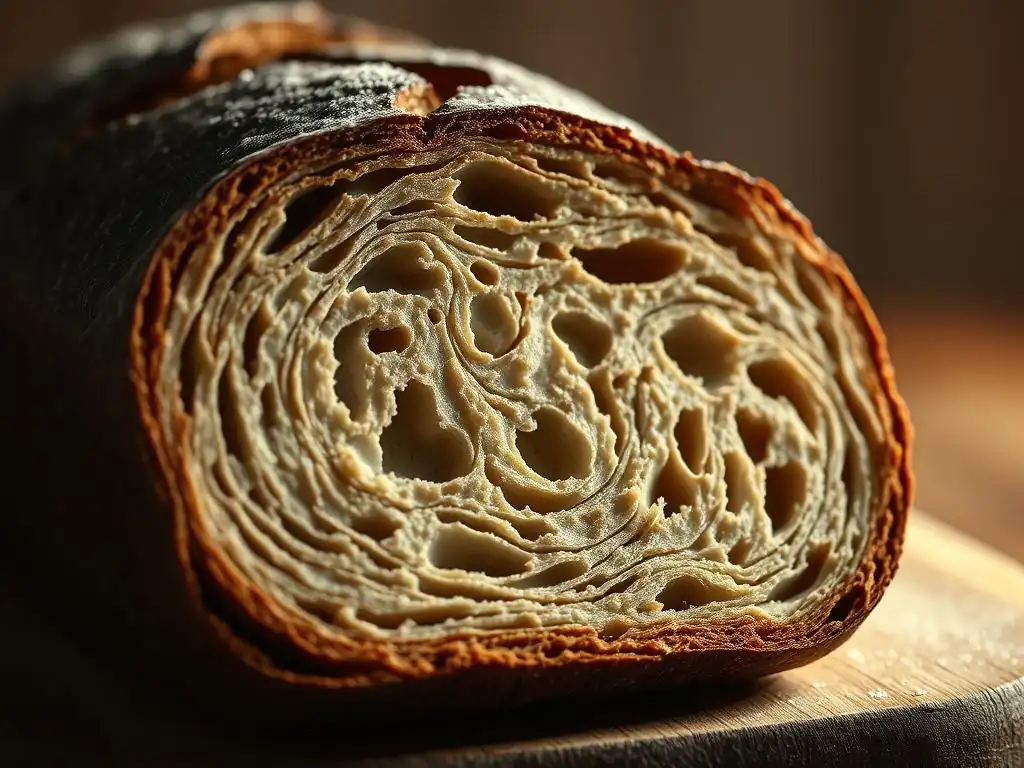
Welcome to BakeWithEase, where baking becomes a joy, not a chore! Ever wondered how to achieve that perfectly airy, yet subtly chewy sourdough rye crumb texture? Unlock the secrets within this guide, and discover the techniques that will transform your loaves from dense to divine. Get ready to elevate your bread baking game and create sourdough rye that's truly unforgettable!
- Achieving the Perfect Crumb in Sourdough Rye Bread: A Guide to Open and Airy Texture
- Understanding the Importance of Sourdough Rye Crumb Texture
- Key Ingredients for Optimal Sourdough Rye Crumb Texture
- Mastering the Sourdough Rye Fermentation Process for Ideal Crumb
- Baking Techniques for a Superior Sourdough Rye Crumb
- Troubleshooting Common Sourdough Rye Crumb Problems
- Advanced Techniques for Enhancing Sourdough Rye Crumb Texture
- Light Rye Sourdough with Caraway Seeds: A Recipe for Open Crumb
- Enjoying Your Perfectly Crumbed Sourdough Rye
- Frequently Asked Questions
- Final Reflection: The Enduring Quest for the Perfect Sourdough Rye Crumb
- Unlock Your Perfect Rye Crumb!
Achieving the Perfect Crumb in Sourdough Rye Bread: A Guide to Open and Airy Texture
Understanding the Importance of Sourdough Rye Crumb Texture
Why Crumb Structure Matters in Sourdough Rye
The internal structure of your sourdough rye bread, known as the crumb, is a defining characteristic that speaks volumes about the loaf's quality and the baker's skill. A well-developed sourdough rye crumb texture contributes significantly to the overall eating experience. It affects how the bread feels in your mouth, how it holds spreads, and how it interacts with other foods.
Beyond just aesthetics, the crumb structure influences flavor perception. An open, airy crumb allows volatile compounds created during fermentation to be released, enhancing the complex tangy notes characteristic of sourdough rye. A dense or gummy sourdough rye crumb, on the other hand, can trap moisture and flavors, leading to an unpleasant chewiness and a less vibrant taste. Achieving the ideal sourdough rye crumb texture is a key goal for any baker aiming for exceptional rye bread.
Factors Influencing Sourdough Rye Crumb Development
Developing the perfect sourdough rye crumb texture is a multi-faceted process influenced by several critical factors throughout the baking journey. These factors are interconnected and each plays a vital role in building the internal network of gas pockets that form the crumb. Understanding their impact is essential for consistent results.
The primary influences include the type and quality of your ingredients (especially the flour and water), the health and activity of your sourdough starter, the duration and temperature of your fermentation process (both bulk and proofing), and the techniques used during baking, such as oven temperature and the introduction of steam. Mastering the interplay of these elements is the path to achieving that coveted open and airy sourdough rye crumb texture.
Key Ingredients for Optimal Sourdough Rye Crumb Texture
The Role of Rye Flour in Crumb Structure
Rye flour is the star ingredient in sourdough rye, but it behaves quite differently from wheat flour, significantly impacting the final sourdough rye crumb texture. Rye contains less of the gluten-forming proteins, glutenin and gliadin, compared to wheat. While it does have these proteins, they don't form a strong, elastic network in the same way wheat gluten does. This inherent difference means that rye doughs tend to be stickier, less elastic, and more prone to producing a denser crumb structure if not handled correctly.
Furthermore, rye flour contains high levels of pentosans, which are complex carbohydrates. These pentosans absorb a substantial amount of water, sometimes up to 10 times their weight, much more than wheat starch. They also form a viscous, gel-like matrix. This matrix contributes to the structure of rye bread, particularly in loaves with high rye percentages, acting somewhat like gluten but resulting in a different, often tighter, sourdough rye crumb texture. Managing hydration and fermentation to work with these characteristics is key.
Understanding Different Types of Rye Flour (Light, Medium, Dark)
Rye flour comes in various grades, primarily categorized by how much of the bran and germ are included during milling. Light rye flour contains mostly the endosperm, resulting in a milder flavor and slightly better potential for a more open sourdough rye crumb texture compared to darker grades. Medium rye flour includes more of the bran and germ, offering a richer flavor and denser texture potential.
Dark rye flour is milled from the whole rye grain, including a significant portion of the bran and germ. This results in the strongest flavor, darkest color, and highest pentosan content. Breads made with a high percentage of dark rye typically have a tighter, more compact sourdough rye crumb texture due to the reduced amount of endosperm and increased presence of bran and pentosans which interfere with structure development. The choice of rye flour significantly dictates the achievable crumb.
How Rye Flour Impacts Gluten Development
As mentioned, rye flour's protein structure is different from wheat. While rye does contain proteins analogous to glutenin and gliadin, the resulting network is much weaker and less elastic. This is partly due to the presence of certain enzymes (specifically proteases) in rye that are very active, even in sourdough conditions, and can break down the limited protein network that does form.
The high pentosan content in rye also plays a major role in crumb development, often overshadowing the impact of the weak protein network. Pentosans compete for water and create a viscous environment that can impede the formation and expansion of gas cells, leading to a tighter sourdough rye crumb texture than typically seen in wheat loaves. Bakers often blend rye with wheat flour to leverage wheat's gluten-forming ability and achieve a more open crumb structure in their sourdough rye.
The Importance of Wheat Flour in Sourdough Rye Bread
For many sourdough rye recipes, especially those aiming for a more open sourdough rye crumb texture than a pure rye loaf, wheat flour is a crucial addition. Wheat flour, particularly bread flour with its higher protein content (often around 12-14%), provides the necessary gluten-forming capability that rye largely lacks. This gluten network acts as the primary scaffolding for trapping the carbon dioxide gas produced by the sourdough starter.
By blending wheat and rye flours, bakers can create a dough that combines the unique flavor and characteristics of rye with the structural integrity provided by wheat gluten. A common starting point for many recipes might be a 60% wheat to 40% rye ratio, offering a balance between the distinct rye flavor and the ability to achieve a more developed, airy sourdough rye crumb texture. The percentage of wheat flour used directly impacts the potential for an open crumb.
Water's Influence on Sourdough Rye Crumb
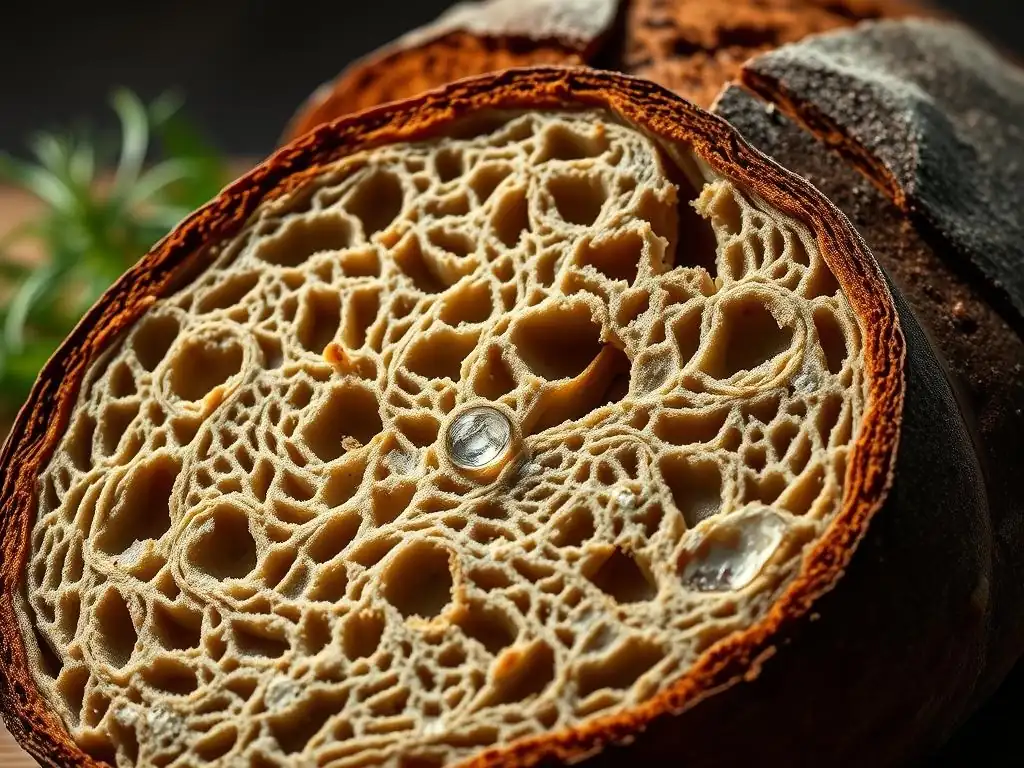
Hydration, the ratio of water to flour by weight, is profoundly important for developing the desired sourdough rye crumb texture. Rye flour is notoriously thirsty due to its high pentosan content, often requiring higher hydration levels than pure wheat doughs. Proper hydration is essential for allowing the flour to fully absorb water, enabling enzyme activity, and creating a dough consistency that allows for gas expansion.
Too little water can result in a stiff dough that is difficult to work with and will invariably produce a dense, dry, and crumbly sourdough rye crumb texture. Conversely, too much water, while potentially leading to a more open crumb if managed perfectly, can make the dough excessively sticky and challenging to handle, increasing the risk of a gummy crumb, especially with higher rye percentages. Hydration levels often range from 75% to 85% of the total flour weight in many sourdough rye recipes, depending on the type of rye used and the desired outcome.
Salt: A Crucial Ingredient for Crumb Formation and Flavor
Salt, while primarily known for enhancing flavor, plays a significant structural role that impacts the sourdough rye crumb texture. In wheat-based doughs, salt strengthens the gluten network by tightening it, which helps the dough hold its shape and trap gas more effectively. While rye's gluten network is weaker, salt still provides some structural benefit in wheat/rye blends.
Furthermore, salt helps regulate the rate of fermentation. It slows down the activity of both yeast and bacteria in the sourdough starter. This controlled fermentation allows for longer, more deliberate development of the dough's structure and flavor compounds, indirectly contributing to a better-formed sourdough rye crumb texture. Too little salt can lead to a pale crust, bland flavor, and a potentially weaker structure, while too much can inhibit fermentation excessively and result in a dense loaf. A typical salt percentage is around 1.8% to 2.2% of the total flour weight.
Mastering the Sourdough Rye Fermentation Process for Ideal Crumb
Sourdough Starter Activity and its Impact on Crumb
The vitality of your sourdough starter is arguably the most critical factor in achieving an open sourdough rye crumb texture. A healthy, active starter is a powerhouse of yeast and lactic acid bacteria. The yeast consume sugars in the flour and produce carbon dioxide gas, which is what creates the bubbles and open structure within the dough.
If your starter is sluggish or inactive, it won't produce enough gas to leaven the dough effectively. This will inevitably result in a dense, heavy loaf with a very tight sourdough rye crumb texture. Ensuring your starter is robust and ready before mixing your dough is a fundamental step towards a successful bake and a desirable crumb.
Recognizing a Healthy and Active Rye Sourdough Starter
A healthy and active rye sourdough starter exhibits several clear signs. After being fed, it should show significant growth, typically doubling or even tripling in volume within a predictable timeframe, often within 4 to 8 hours when kept at room temperature (around 22°C-25°C). The surface should be covered in bubbles, and the texture throughout should become light and airy.
Another indicator is a pleasant, tangy aroma, not overwhelmingly acetic or yeasty. While the float test (dropping a small piece in water to see if it floats) can be an indicator, it's not foolproof, especially with stickier rye starters. Consistent, predictable growth and bubbling after feeding are the most reliable signs that your rye starter is active enough to produce a good sourdough rye crumb texture.
Bulk Fermentation: The Key to Developing Flavor and Crumb
Bulk fermentation, the initial rise of the dough after mixing and before shaping, is a crucial stage for developing both the flavor and the structure that supports an open sourdough rye crumb texture. During this time, the yeast in the starter continue to produce gas, expanding the dough, while the bacteria produce organic acids that contribute to the characteristic sourdough tang and help strengthen the dough's protein network (even the weaker one in rye).
Regular folds or stretches and folds performed during bulk fermentation help to build structure and strength in the dough, aligning the protein network and creating tension. This process allows the dough to better capture and hold the gases produced, leading to a more uniform and open sourdough rye crumb texture. Insufficient bulk fermentation results in a dense crumb, while excessive bulk fermentation can lead to dough collapse.
Optimizing Bulk Fermentation Time and Temperature for Rye Sourdough
Optimizing bulk fermentation involves finding the right balance of time and temperature. Temperature significantly impacts the speed of fermentation; warmer temperatures (e.g., 24°C-26°C) accelerate activity, while cooler temperatures (e.g., 18°C-20°C) slow it down, allowing for longer flavor development. Rye doughs often ferment faster than pure wheat doughs due to higher enzymatic activity and sugar content, so monitoring is key.
Visual cues are the most reliable indicators for knowing when bulk fermentation is complete. The dough should have increased in volume, typically by about 30% to 50% depending on the rye percentage and temperature. The surface should appear slightly domed and bubbly, and the dough should feel lighter and airy. It should also pass the "windowpane test" to some degree (though less so with high rye percentages) or feel strong and extensible during folds.
Proofing Techniques for Achieving the Perfect Rye Crumb
Proofing, or the final rise after shaping and before baking, is the last chance for the dough to build volume and relax before hitting the hot oven. This stage is vital for achieving the final size and contributing to the desired sourdough rye crumb texture. Proper proofing allows the gas cells to expand further within the structure established during bulk fermentation.
Proofing can be done at room temperature or in a refrigerator (cold proofing). Cold proofing (e.g., 4°C for 12-24 hours) slows fermentation dramatically, allowing for deeper flavor development and making the dough easier to handle and score. Room temperature proofing is faster but requires careful monitoring to prevent over-proofing. The goal is to achieve sufficient rise without letting the dough over-ferment and lose its structure.
How Over-Proofing Affects Sourdough Rye Crumb
Over-proofing is a common pitfall that severely compromises the sourdough rye crumb texture. When dough over-proofs, the yeast exhaust their food supply or the gluten structure (and pentosan matrix in rye) becomes too weak to hold the gas being produced. The dough's internal structure begins to break down, and the gas cells coalesce into larger, unstable pockets or the dough simply starts to deflate.
Baking an over-proofed loaf often results in poor oven spring – the dough doesn't rise much in the oven because its structure is already compromised. The resulting sourdough rye crumb texture is typically dense, gummy, and may have large, uneven holes or a completely collapsed center. Identifying the signs of readiness (poke test, visual volume increase) is crucial to avoid this.
The Importance of Shaping for Even Crumb Distribution
Effective shaping is not just about making a loaf look pretty; it's fundamental to achieving an even and desirable sourdough rye crumb texture. Shaping creates tension on the surface of the dough, forming a 'skin' that holds the dough's structure together during proofing and provides the necessary tension for a strong oven spring.
Proper shaping also helps to distribute the gas evenly throughout the dough and eliminates large air pockets that could lead to irregular holes in the crumb. Gently degassing the dough slightly during shaping (while still preserving some gas) and creating a tight surface tension ensures that the loaf expands uniformly in the oven, promoting a consistent and appealing sourdough rye crumb texture throughout the loaf.
Baking Techniques for a Superior Sourdough Rye Crumb
Oven Temperature and its Effect on Sourdough Rye
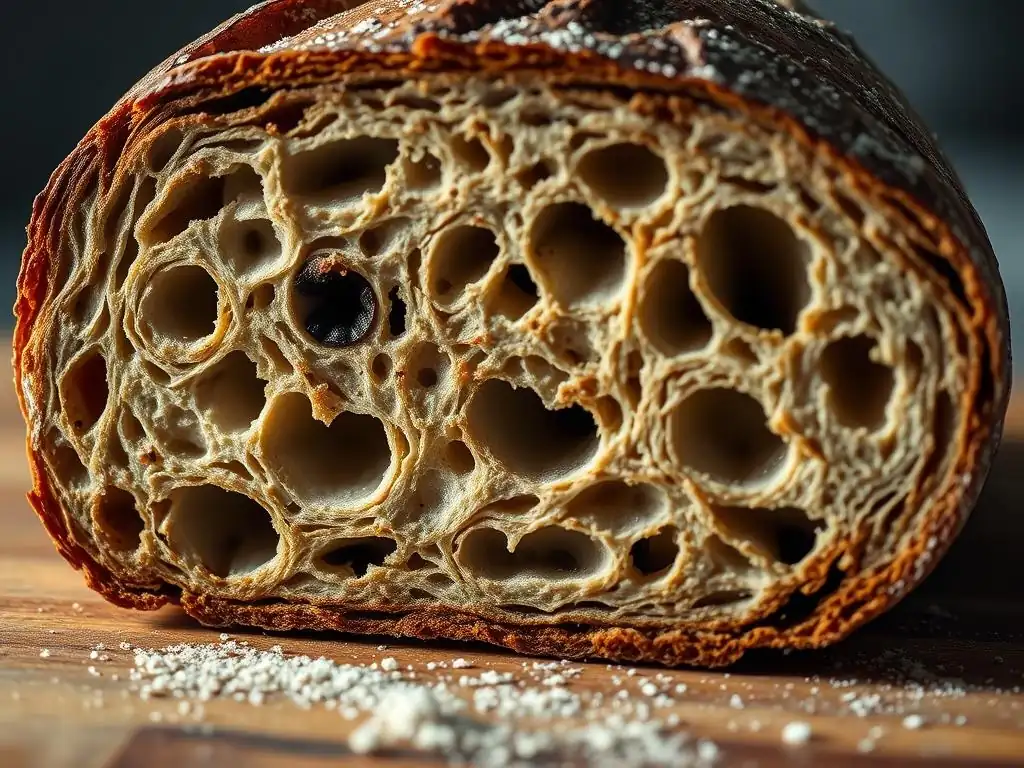
Baking temperature is a critical factor in setting the final sourdough rye crumb texture. Starting with a high initial temperature is essential for achieving good oven spring. A hot environment (often 230°C to 250°C) causes rapid expansion of gases within the dough and the quick formation of a crust. This initial burst of heat, sometimes called the "thermal shock," helps the dough reach its maximum volume before the crust hardens.
After the initial oven spring (typically the first 15-20 minutes), the temperature is often reduced (e.g., to 200°C - 210°C) to allow the inside of the loaf to cook through without the crust burning. Baking at too low a temperature initially can lead to poor oven spring and a denser sourdough rye crumb texture, while insufficient overall baking time will result in an undercooked, potentially gummy interior.
The Importance of Steam in Sourdough Rye Baking
Steam is indispensable for achieving an excellent sourdough rye crumb texture and a beautiful crust. When bread bakes in a steamy environment, the moisture in the air keeps the surface of the dough pliable for the first part of the bake. This prevents the crust from setting too quickly, allowing the loaf to expand fully during oven spring.
Without sufficient steam, the crust hardens prematurely, restricting the dough's expansion. This results in a loaf with less volume and a tighter, denser sourdough rye crumb texture. Steam also contributes to a thinner, crispier crust later in the bake once the steam is released.
Creating Steam in a Home Oven for Optimal Crumb
Achieving a steamy environment in a standard home oven can be done in several ways. Using a Dutch oven or a cloche is one of the most effective methods; the lid traps the moisture released by the dough itself, creating a perfect mini-steam environment. The loaf is typically baked with the lid on for the first 15-20 minutes, then the lid is removed to allow the crust to brown.
Another common method is to place a tray filled with hot water or lava rocks on the bottom rack of the oven when you preheat it. When you load the bread, the water evaporates rapidly, filling the oven with steam. Some bakers also spray the oven walls with water just before loading the bread, though this method provides less sustained steam and can be less effective for achieving the ideal sourdough rye crumb texture.
Scoring Your Sourdough Rye for Controlled Expansion
Scoring, the act of cutting the surface of the dough just before baking, is a functional technique that profoundly impacts the sourdough rye crumb texture and the final shape of the loaf. The cuts act as vents, providing weak points where the dough can expand in a controlled manner during oven spring. Without scoring, the crust would likely tear randomly as the loaf expands, leading to an unpredictable shape and potentially an uneven crumb.
Proper scoring allows the baker to direct the expansion, promoting a more open and consistent sourdough rye crumb texture. The depth and pattern of the score affect how the loaf opens up. For a large, single 'ear' or flap, a deep angled score is used. For a more uniform expansion, multiple shallower scores might be preferred.
Cooling Your Sourdough Rye Bread: A Critical Step
Once your sourdough rye bread comes out of the oven, the baking process isn't quite finished. The loaf needs to cool completely on a wire rack. This seemingly simple step is crucial for the final sourdough rye crumb texture and overall quality. As the bread cools, residual heat continues to cook the interior gently, and moisture trapped inside equalizes throughout the loaf.
Cutting into a loaf of sourdough rye before it has fully cooled traps steam, which condenses and can lead to a gummy, unpleasant sourdough rye crumb texture, especially in the center. While the aroma of fresh bread is tempting, patience is rewarded. Allowing the bread to cool for at least 2-4 hours, or even longer for very large or high-rye loaves, ensures that the crumb sets properly and achieves its intended structure and texture.
Troubleshooting Common Sourdough Rye Crumb Problems
Dense or Gummy Crumb: Causes and Solutions
A dense or gummy sourdough rye crumb texture is a common frustration, often stemming from issues during fermentation or baking. Possible causes include using an inactive starter that didn't produce enough gas, under-fermenting the dough during bulk fermentation (not enough rise or strength developed), or critically, over-proofing, where the dough structure collapsed before baking. Insufficient steam during baking can also restrict oven spring, leading to density.
To remedy this, ensure your starter is vigorous before baking. Pay close attention to bulk fermentation cues (volume increase, texture). Learn to judge proofing precisely – it's better to slightly under-proof than significantly over-proof. Always use adequate steam in the oven for the first part of the bake. And remember the cooling step: cutting into a hot loaf will guarantee a gummy sourdough rye crumb texture.
- Check starter activity: Feed and wait for peak before using.
- Monitor bulk ferment: Aim for 30-50% volume increase depending on recipe/rye percentage.
- Avoid over-proofing: Use the poke test or visual cues; cold proofing helps manage timing.
- Ensure sufficient steam: Use a Dutch oven or steam tray method.
- Cool completely: Always cool bread on a rack for several hours.
Large, Uneven Holes in the Crumb: Troubleshooting Guide
While some open structure is desired in sourdough rye, very large, irregular holes concentrated in certain areas alongside dense spots usually indicate specific handling or fermentation issues. Uneven shaping is a primary culprit; large air pockets can be trapped if the dough isn't handled consistently or if folds aren't executed properly during bulk fermentation.
Inconsistent fermentation temperature across the dough mass or not adequately degassing during pre-shaping or shaping can also contribute to large, sporadic voids. Sometimes, overly aggressive or rough handling can create isolated pockets. Ensuring uniform temperature during bulk fermentation, gentle but effective shaping techniques, and consistent folding can help achieve a more even sourdough rye crumb texture.
*   Improve shaping technique: Focus on creating even tension and gently removing large air pockets.
*   Ensure even temperature: Ferment dough in a consistent temperature environment.
*   Be consistent with folds: Perform folds uniformly throughout the bulk fermentation.
Dry and Crumbly Sourdough Rye: Preventing a Dry Crumb
A dry and crumbly sourdough rye crumb texture often results from too little moisture in the dough or excessive drying during baking. The most common cause is simply too low a hydration level for the amount and type of rye flour used. Rye's thirstiness means it needs ample water to hydrate fully and create a moist crumb.
Over-baking is another frequent reason; leaving the bread in the oven for too long or at too high a temperature for the duration of the bake can dry out the interior. Insufficient fermentation can also play a role, as proper fermentation contributes to a moister crumb structure. Using a high percentage of dark rye flour without adjusting hydration sufficiently can also lead to a drier loaf.
Ensure adequate hydration based on the flour blend. A starting point might be 75% hydration for light rye blends, adjusting upwards for darker or higher rye percentages.
Monitor baking time and temperature. Use an internal thermometer (around 93-98°C) to check for doneness rather than relying solely on crust color.
Allow sufficient bulk fermentation and proofing to develop structure and moisture retention.
Advanced Techniques for Enhancing Sourdough Rye Crumb Texture
Using a Tangzhong or Water Roux in Sourdough Rye
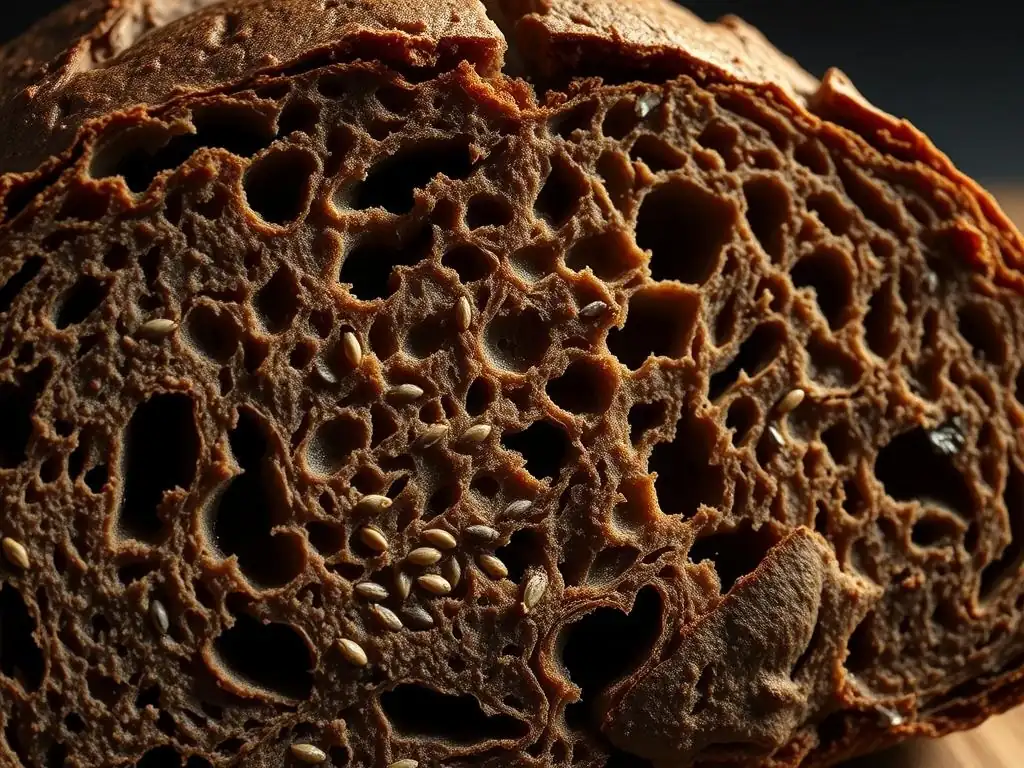
Incorporating a tangzhong or similar cooked flour paste (like a water roux) is an advanced technique that can dramatically improve the moisture retention and softness of the sourdough rye crumb texture, particularly in loaves with higher rye percentages. A tangzhong is made by cooking a small portion of the recipe's flour and liquid (typically water or milk) into a thick paste, heating it to around 65°C (149°F).
At this temperature, the starches in the flour gelatinize, binding a significant amount of water. When this cooled paste is added to the main dough, it introduces this bound water, which doesn't evaporate as readily during baking. This results in a loaf that stays moist longer and often has a softer, more tender sourdough rye crumb texture, counteracting the tendency of high-rye breads to be dense or dry. A common ratio for a tangzhong might be 1 part flour to 5 or 10 parts water, using about 5-10% of the total flour weight in the tangzhong.
Autolyse: Improving Hydration and Crumb Development
Autolyse is a simple technique involving mixing just the flour and water from a recipe and letting the mixture rest for a period, usually 30 minutes to 1 hour, before adding the starter and salt. This rest period allows the flour to fully hydrate without the presence of salt (which tightens gluten) or starter (whose acids can affect protein breakdown).
During the autolyse, enzymes naturally present in the flour, particularly proteases, begin to break down proteins, making the dough more extensible and easier to handle. While the effect on gluten development is less pronounced in high-rye doughs compared to pure wheat due to rye's different protein structure, autolyse still aids in thorough hydration and can contribute to a slightly more relaxed dough, potentially leading to a more uniform sourdough rye crumb texture.
Light Rye Sourdough with Caraway Seeds: A Recipe for Open Crumb
Ingredients List for Optimal Crumb Structure
Creating a light rye sourdough with a good crumb starts with a balanced selection of ingredients aimed at managing rye's unique properties while leveraging wheat's structure. For a loaf designed to showcase an open sourdough rye crumb texture, a higher percentage of strong bread flour paired with light rye flour is ideal. Sufficient hydration is also key, along with a robust starter.
Here is an example ingredient list focusing on ratios conducive to a good crumb structure:
- Bread Flour: 60% of total flour weight
- Light Rye Flour: 40% of total flour weight
- Water: 80% of total flour weight (adjust based on flour absorption)
- Active Rye Sourdough Starter: 20% of total flour weight
- Fine Sea Salt: 2% of total flour weight
- Caraway Seeds: 1-2% of total flour weight (optional, but classic)
For example, using 500g total flour would mean 300g Bread Flour, 200g Light Rye Flour, 400g Water, 100g Starter, 10g Salt, and 5-10g Caraway Seeds.
Step-by-Step Instructions for Baking the Perfect Loaf
Achieving a perfect sourdough rye crumb texture involves careful execution of each stage. After mixing your ingredients (perhaps doing an autolyse first with just flour and water), incorporate your starter and salt, then perform a series of gentle stretch and folds during bulk fermentation to build strength without tearing the delicate rye network. Monitor the dough's volume and texture to gauge fermentation progress (aiming for roughly 40-50% increase).
Shape the dough gently but firmly to create surface tension, then proof it. Cold proofing in the refrigerator for 12-18 hours is often recommended for better flavor and easier handling. Preheat your oven with a Dutch oven or steam setup to a high temperature (e.g., 240°C).
Score the loaf, load it into the hot oven with steam, and bake initially with steam (e.g., 20 minutes), then remove steam and reduce temperature (e.g., to 210°C) to finish baking until the crust is deep golden brown and the internal temperature reaches 95°C or higher. Finally, cool completely on a wire rack for several hours to allow the sourdough rye crumb texture to set properly.
Enjoying Your Perfectly Crumbed Sourdough Rye
Serving Suggestions and Storage Tips
Once your sourdough rye bread has cooled and developed its ideal sourdough rye crumb texture, it's ready to be enjoyed! Sourdough rye pairs wonderfully with a variety of foods. Slice it thickly and serve with good quality butter, cream cheese, or your favorite jam. Its robust flavor stands up well to strong cheeses, smoked salmon, pickled herring, or sliced charcuterie. A classic open-faced sandwich on sourdough rye is a delightful way to appreciate its texture and taste.
To maintain the quality of your beautifully crumbed sourdough rye, proper storage is important. Store it at room temperature, ideally cut-side down on a clean surface or in a bread box to prevent the cut surface from drying out. For longer storage, the bread can be wrapped tightly and frozen for up to a few months. Slice the loaf before freezing for easy access to individual portions. Avoid refrigerating sourdough rye, as this can actually accelerate staling and negatively impact the sourdough rye crumb texture.
Frequently Asked Questions
What is the ideal crumb texture for sourdough rye?
The ideal crumb texture for sourdough rye is often described as moist, open, and slightly chewy. This texture enhances the flavor and enjoyment of the bread.
How can I improve my sourdough rye crumb texture?
To improve the crumb texture, focus on hydration levels and ensure proper fermentation. Experimenting with different flour types and hydration percentages can yield better results.
What role does hydration play in sourdough rye?
Hydration is crucial in determining the crumb structure. Higher hydration levels can create a more open crumb, while lower levels may result in a denser texture.
Are there specific techniques for achieving a better crumb in sourdough rye?
Yes, techniques such as stretch and fold, maintaining proper bulk fermentation, and using the right starter can significantly enhance your sourdough rye's crumb texture.
Can I use different flours for sourdough rye?
Absolutely! Mixing rye flour with other types, like bread flour or whole wheat, can improve both the flavor and texture of your sourdough rye, leading to a more desirable crumb.
Final Reflection: The Enduring Quest for the Perfect Sourdough Rye Crumb
The pursuit of the ideal sourdough rye crumb is more than just baking; it's a journey into the heart of fermentation, a testament to patience, and a celebration of the unexpected. The subtle nuances in texture – from the open, airy holes to the tight, chewy matrix – reflect not only the baker's skill but also the unique interplay of flour, water, time, and the wild yeasts and bacteria at work. This quest for the perfect crumb remains incredibly relevant today, as more and more people discover the joys and complexities of sourdough baking.
The influence of sourdough, and specifically the obsession with crumb structure, on the culinary landscape is undeniable. It's moved beyond a niche hobby and become a significant part of the artisanal food movement, a symbol of slow food and mindful creation. The pursuit of that perfect crumb reflects a deeper yearning for connection to our food, a desire to understand the process from grain to table. Bread is the staff of life,
they say, and the quality of that staff, the texture of that crumb, speaks volumes about the care and dedication poured into its creation.
Now, consider your own baking journey. What have you learned about patience, precision, and the unpredictable nature of fermentation? Don't be discouraged by imperfect loaves; each one is a lesson learned, a step closer to mastering the art of sourdough rye. Embrace the experimentation, the failures, and the triumphs. The journey itself, with all its delightful imperfections, is as rewarding as the final, perfectly textured crumb. So, gather your ingredients, embrace the process, and begin your own quest for that ideal crumb – you might surprise yourself with what you discover along the way.
Unlock Your Perfect Rye Crumb!
Thanks for diving deep into the world of sourdough rye with us! We hope you now feel confident in your ability to achieve that elusive, open crumb. Ready to put your new knowledge into practice?
- Bake your dream loaf: Use what you’ve learned to create your perfect sourdough rye—experiment with different hydration levels and fermentation times to find your ideal crumb. Don't be afraid to tweak the recipe!
- Share your success: Show off your beautiful rye loaf on social media using #BakeWithEaseRyeCrumb. We'd love to see your baking journey!
- Join the conversation: What unique techniques or tips do you use to achieve the perfect crumb? Share your insights in the comments below!
What unexpected ingredient or technique will you try next to elevate your sourdough rye game?