
Secrets to an Airy, Open Crumb in Vegan Bread

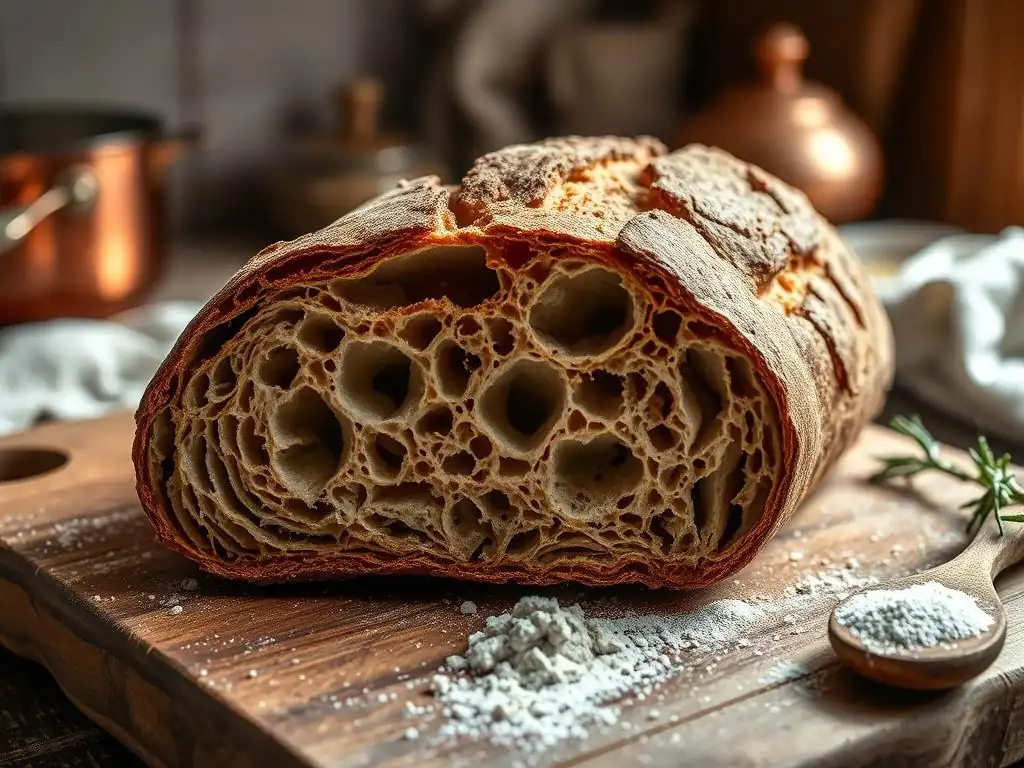
Welcome to BakeWithEase, your kitchen companion for all things baking! Ever dreamt of achieving that perfect, airy crumb in your vegan bread? You're in the right place. Discover the secrets behind crafting plant-based loaves that are light, fluffy, and bursting with flavor. Curious how it's done? Let's dive in and unlock the secrets to creating vegan bread with an irresistibly open texture...
- Secrets to an Airy, Open Crumb in Vegan Bread - BakeWithEase
- Introduction: Achieving the Perfect Vegan Bread Crumb
- Understanding the Challenges of Vegan Bread Baking for an Open Crumb
- Key Ingredients for an Airy Vegan Bread
- Techniques for Achieving an Open Crumb in Vegan Bread
- Baking Secrets for an Airy Vegan Bread Crumb
- Troubleshooting Common Vegan Bread Crumb Issues
- Vegan Bread Recipe Examples: Showcasing Open Crumb Techniques
- Conclusion: Mastering the Art of Vegan Bread Baking for an Airy Crumb
-
Frequently Asked Questions
- How can I achieve an airy crumb in vegan bread, given the absence of eggs?
- What are some key ingredients to use in vegan bread for a light and airy texture?
- What techniques are essential for creating an airy crumb in vegan bread dough?
- How does the baking temperature affect the airiness of vegan bread?
- What role does kneading play in achieving an open crumb in vegan bread?
- Final Reflection: The Unexpected Joy of a Perfect Vegan Loaf
- Unleash Your Inner Baker: Craft the Perfect Vegan Loaf!
Secrets to an Airy, Open Crumb in Vegan Bread - BakeWithEase
Introduction: Achieving the Perfect Vegan Bread Crumb
Baking a loaf of bread with a beautiful, open crumb is a goal for many home bakers, and achieving this in vegan bread presents unique challenges. Without dairy or eggs, which can contribute to richness and structure in traditional recipes, vegan dough relies heavily on the interaction of other ingredients and precise techniques. The good news is that mastering an airy vegan bread crumb is absolutely possible with the right knowledge and approach.
This article will guide you through the essential elements needed to bake vegan bread that boasts that desirable light, holey structure. We'll explore the specific hurdles vegan dough faces, the key ingredients that make a difference, and the techniques that unlock significant oven spring and a wonderfully open crumb. Get ready to elevate your vegan bread baking game and consistently produce loaves that are not just delicious, but also visually stunning with their perfect vegan bread airy crumb.
Understanding the Challenges of Vegan Bread Baking for an Open Crumb
Why Vegan Bread Dough Can Be Denser
Traditional bread recipes often benefit from the inclusion of ingredients like milk or eggs, which can add fat and protein. While fat can tenderize the crumb, certain proteins (like those in eggs) can also contribute to structure. Without these, vegan dough can sometimes lack the inherent richness and elasticity that helps trap gases produced during fermentation, potentially leading to a denser loaf. The absence of these ingredients means we must pay extra attention to flour choice, hydration, and gluten development to compensate and build a robust yet extensible dough capable of achieving an airy vegan bread.
Furthermore, some common vegan substitutes, like certain plant milks or fats, might interact differently with yeast and flour compared to their dairy counterparts. For instance, some plant milks contain enzymes that can affect gluten structure. Understanding these potential differences and selecting ingredients carefully is crucial for developing a dough that ferments effectively and expands properly to create an open internal structure, contributing significantly to the vegan bread airy crumb.
The Role of Gluten Development in Vegan Bread
Gluten, the protein network formed when water interacts with proteins in wheat flour (glutenin and gliadin), is the scaffolding of your bread. It's what gives dough its elasticity and extensibility, allowing it to stretch and hold the carbon dioxide gas produced by yeast during fermentation. In vegan bread, achieving optimal gluten development is paramount because we don't have animal proteins to assist with structure. Proper kneading and handling techniques are essential to build a strong gluten network capable of trapping gas efficiently, which is fundamental for an open crumb vegan bread.
Insufficient gluten development results in a weak dough that cannot hold its shape or trap gas effectively, leading to a dense, tight crumb. Conversely, over-developing gluten can make the dough tough and difficult to work with, sometimes also hindering optimal expansion. Finding the right balance through techniques like autolyse and careful kneading ensures the gluten is strong enough to support the structure but flexible enough to stretch around the gas bubbles, forming those characteristic large holes in the vegan bread airy crumb.
Importance of Hydration in Vegan Bread Recipes
Hydration refers to the ratio of water to flour in a dough, typically expressed as a percentage (e.g., 75% hydration means 750g water per 1000g flour). Higher hydration doughs are generally wetter and stickier, but they are also key to achieving a more open crumb. More water allows the flour to hydrate more fully, which aids in gluten development and creates a more extensible dough. This extensibility is vital because it lets the dough stretch further as gases expand during fermentation and baking, resulting in larger, more irregular holes characteristic of an airy vegan bread.
Working with high-hydration vegan dough can be challenging as it is less structured and harder to handle than drier doughs. However, with practice and techniques like stretch and folds, you can manage these wet doughs effectively. Aiming for a hydration level often between 70% and 85% (depending on the flour type) is a common strategy for bakers seeking an open crumb vegan bread. The extra water also contributes to a moister crumb, which can enhance the overall texture.
Key Ingredients for an Airy Vegan Bread
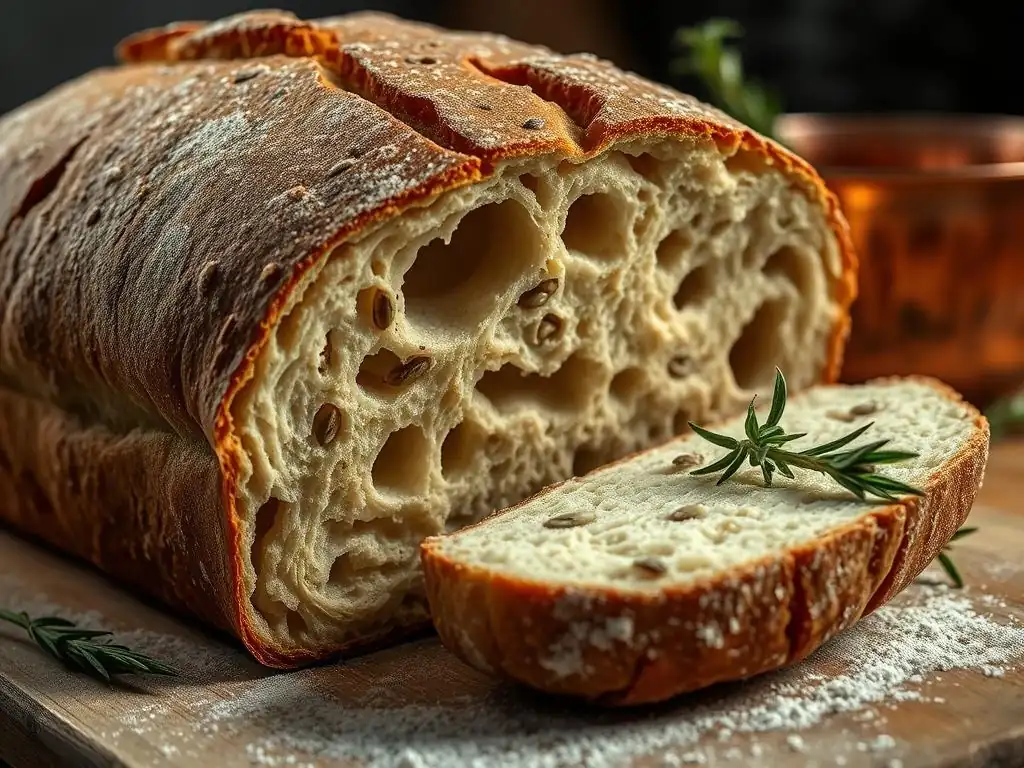
High-Protein Flour for Vegan Bread: Bread Flour, Spelt Flour
The type of flour you use is perhaps the most critical ingredient for achieving an airy vegan bread crumb. High-protein flours, specifically bread flour (typically containing 12-14% protein), are ideal. The higher protein content means there's more glutenin and gliadin available to form that crucial gluten network. This strong network is capable of trapping a significant amount of gas, leading to excellent oven spring and a more pronounced open structure compared to using lower-protein all-purpose flour (around 10-11.5% protein). While other flours can be used, bread flour provides the best foundation for structure.
Spelt flour, an ancient grain, is another excellent option, particularly whole spelt flour, which often has a protein content comparable to or slightly lower than bread flour (around 11-14%). While its gluten structure is slightly different and more extensible (sometimes breaking down if over-kneaded), it can still produce lovely, open-crumbed vegan loaves. Experimenting with a blend of bread flour and spelt can offer a good balance of strength and flavor, contributing to a fantastic vegan bread airy crumb. Always check the protein content on the flour package if possible.
The Magic of Vital Wheat Gluten in Vegan Baking: Enhancing Dough Structure
Vital wheat gluten is a concentrated protein derived from wheat, typically containing 75-80% protein. Adding just a small amount (often 1-2% of the total flour weight) to your vegan bread dough, especially when using lower-protein flours or a significant amount of whole wheat/alternative flours, can dramatically improve structure. It boosts the overall protein content, leading to a stronger, more elastic gluten network. This increased strength helps the dough trap more gas and achieve a better rise and a more open internal structure.
Using vital wheat gluten can be particularly beneficial in recipes aiming for a very high hydration or those incorporating ingredients that might weaken gluten, like large amounts of seeds or whole grains. It acts as an insurance policy, ensuring the dough has enough structural integrity to support a significant vegan bread airy crumb. Be cautious not to add too much, as it can make the dough tough. A little goes a long way in providing that extra lift and openness.
Using Starches to Improve Vegan Bread Texture: Potato Starch, Tapioca Starch
While protein builds the framework, starches play a role in the texture of the crumb itself. In vegan baking, incorporating small amounts of starches like potato starch or tapioca starch can contribute to a softer, lighter crumb texture. These starches absorb moisture during baking and gelatinize, helping to create a tender interior. They don't form gluten, so they primarily affect the mouthfeel rather than the structural network, but a softer texture can enhance the perception of an airy vegan bread.
Adding about 3-5% of the total flour weight in potato or tapioca starch can improve the tenderness and moisture retention of the crumb. This is particularly useful in vegan sandwich breads where a soft, even crumb is desired. While not directly responsible for large holes like gluten is, a tender crumb structure allows the air pockets to be more distinct and pleasant, contributing to the overall success of the vegan bread airy crumb.
The Role of Sugar and Sweeteners in Vegan Bread Crumb
Sugar and sweeteners serve multiple purposes in bread baking, even in savory loaves. A small amount of sugar (often 1-2% of flour weight) provides readily available food for the yeast, stimulating fermentation and gas production, which is essential for rise. Beyond feeding the yeast, sugar also contributes to crust browning through the Maillard reaction, adding flavor and visual appeal.
Importantly for crumb structure, sugar can also slightly tenderize the crumb by interfering with gluten development to a small extent. This results in a softer interior texture. While large amounts of sugar can inhibit yeast activity, a modest addition helps ensure vigorous fermentation and contributes to a tender, more pleasant vegan bread airy crumb. Common vegan sweeteners include granulated sugar, maple syrup, agave nectar, or date syrup, used in moderation.
Techniques for Achieving an Open Crumb in Vegan Bread
Mastering the Autolyse Technique for Vegan Bread Dough
Autolyse is a simple yet powerful technique that involves mixing just the flour and water from your recipe and letting it rest for 20 to 60 minutes before adding the salt and yeast/starter. This resting period allows the flour to fully hydrate and gives enzymes naturally present in the flour time to start breaking down proteins. This process kickstarts gluten development without any mechanical work (kneading).
The benefits for achieving an airy vegan bread crumb are significant. Autolyse makes the dough more extensible and easier to knead later, requiring less effort to develop a strong gluten network. It also helps produce a dough that can expand more readily during fermentation and baking, contributing directly to a more open internal structure. For vegan doughs which can sometimes be tougher, autolyse is an excellent way to encourage extensibility from the start.
Optimizing Kneading for Gluten Development in Vegan Bread
Kneading is the process of working the dough to align and strengthen the gluten strands, creating that elastic network. For an open crumb vegan bread, sufficient, but not excessive, kneading is crucial. Whether you knead by hand or with a stand mixer, the goal is to develop a dough that is smooth, elastic, and passes the "windowpane test" – you should be able to gently stretch a small piece of dough into a thin membrane without it tearing immediately.
Proper kneading ensures the gluten network is strong enough to trap the gases produced by yeast. Techniques like stretch and folds during bulk fermentation (discussed below) are often used in conjunction with initial kneading to further strengthen the gluten without the need for prolonged, intense kneading upfront, which can sometimes oxidize the dough and affect flavor. Aim for a dough that feels alive and resilient.
Bulk Fermentation: The Key to Vegan Bread's Open Structure
Bulk fermentation, also known as the first rise, is the period after mixing and initial kneading where the dough rests as a single mass. This is arguably the most critical phase for developing an airy vegan bread crumb. During this time, yeast produces carbon dioxide gas, which expands the dough, and enzymes continue to work, developing flavor and conditioning the gluten. The dough should roughly double in size, becoming noticeably lighter and more aerated.
-
Understanding Bulk Fermentation Time and Temperature
The duration of bulk fermentation is heavily influenced by temperature and the amount/activity of your leavening agent (yeast or starter). Warmer temperatures (around 24-26°C or 75-79°F) speed up fermentation, while cooler temperatures slow it down, allowing for longer flavor development. A typical bulk fermentation might last anywhere from 2 to 5 hours, or even longer in a cold environment.
It's essential to watch the dough, not just the clock; it should look visibly expanded, domed, and potentially show small bubbles on the surface. Under-fermenting won't produce enough gas for a good rise and open crumb, while over-fermenting can cause the structure to collapse.
Monitoring the dough's activity is key. A good indicator is the "poke test" – gently poke the dough; if the indentation springs back slowly but not completely, it's likely ready. The goal is to build strength and gas while the dough is still one mass. This phase lays the foundation for the final rise and oven spring needed for that desirable vegan bread airy crumb.
-
The Importance of Folding the Dough During Bulk Fermentation
Folding the dough during bulk fermentation is a technique used to strengthen the gluten network, equalize the dough's temperature, and redistribute yeast and food sources. Typically, a series of stretch and folds are performed every 30-60 minutes during the first half or two-thirds of the bulk fermentation period. To perform a stretch and fold, wet your hands, grab one edge of the dough, stretch it upwards gently without tearing, and fold it over the center. Rotate the bowl and repeat 3-4 times.
These folds build tension and structure, helping the dough develop the strength needed to hold the expanding gases. This is especially beneficial for high-hydration vegan doughs which can be slack. The folds align the gluten strands, creating a more robust network that can support a significant open crumb vegan bread. By the end of bulk fermentation, the dough should feel stronger, smoother, and more cohesive.
Proofing Your Vegan Bread Dough for Optimal Rise
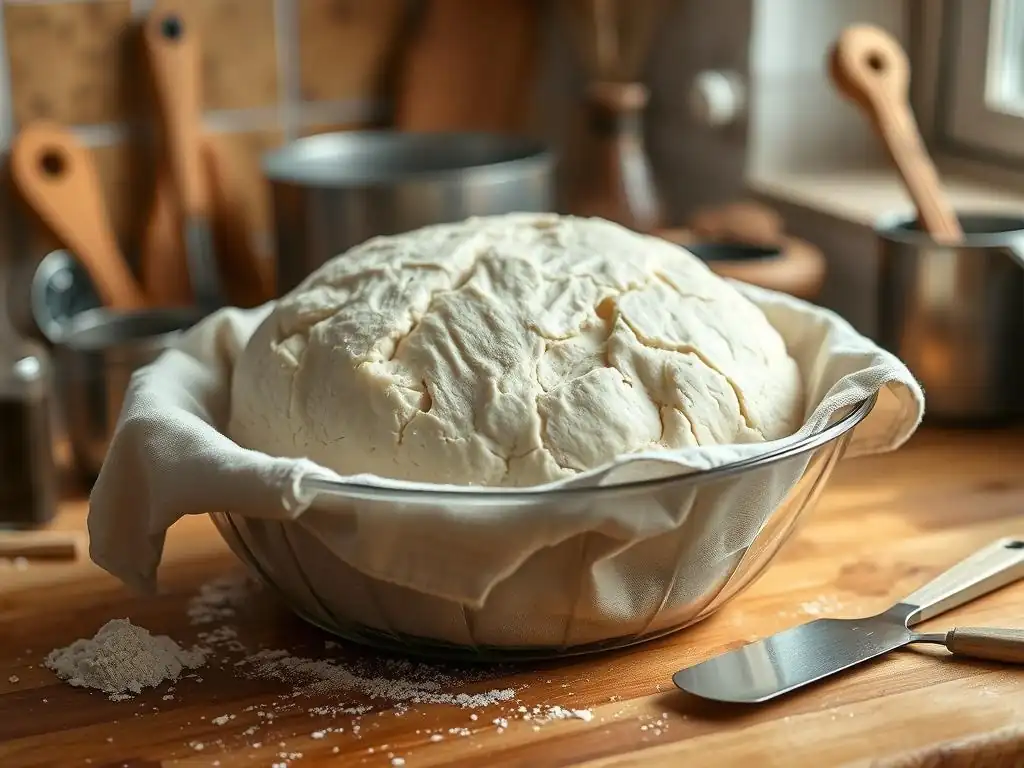
Proofing, or the final rise, is the period after shaping the dough and placing it in its final baking vessel (like a proofing basket or loaf pan). This is when the shaped loaf expands before going into the oven. The goal is for the dough to build up enough gas for a good spring in the oven, but not so much that the gluten structure becomes too weak to hold its shape. Proper proofing is critical for achieving a light and airy vegan bread.
The duration of proofing depends on temperature and the dough's activity. It can range from 1-3 hours at room temperature or significantly longer in the refrigerator (cold proofing, which also develops flavor). The dough should look noticeably larger and feel light and airy. The poke test is again a good indicator: if an indentation springs back very slowly or not at all, the dough is likely perfectly proofed or slightly over-proofed.
Avoiding Over-Proofing and Under-Proofing
Over-proofing occurs when the dough rises too much during the final proof, exhausting the yeast and weakening the gluten structure. An over-proofed loaf may look puffy but will likely collapse when scored or placed in the oven, resulting in a dense, flat bread with a tight crumb, far from the desired vegan bread airy crumb.
Under-proofing means the dough hasn't built up enough gas before baking. An under-proofed loaf will experience explosive, uncontrolled oven spring, often resulting in large, irregular tunnels near the crust and a dense, gummy layer below (the "gum line"). The overall crumb will be tighter than desired. Learning to read your dough and understand its readiness is key to hitting the sweet spot for a beautiful open crumb vegan bread.
Scoring Your Vegan Bread for Oven Spring
Scoring involves making cuts on the surface of the shaped dough just before baking. These cuts serve several purposes. First, they act as vents, allowing the rapidly expanding gases inside the dough to escape in a controlled manner during oven spring. Without scoring, the crust would simply tear unpredictably. Second, the score directs the oven spring, encouraging the loaf to expand upwards and outwards along the cuts.
Strategic scoring is essential for achieving a good rise and contributing to the vegan bread airy crumb. Deeper cuts generally allow for more expansion and can help create the characteristic "ear" on sourdough loaves. The type and pattern of scoring can also influence the final shape and appearance of the crumb. A well-executed score helps the loaf achieve its full potential volume and openness during baking.
Baking Secrets for an Airy Vegan Bread Crumb
Preheating Your Oven for Maximum Oven Spring
Baking bread in a properly preheated oven is non-negotiable for achieving a good vegan bread airy crumb. The oven should be preheated for at least 30-60 minutes at a high temperature, typically between 230°C and 260°C (450°F and 500°F). This ensures that the oven walls and any baking surfaces (like a baking stone or Dutch oven) are thoroughly heated.
When the dough hits this hot environment, it experiences a rapid burst of expansion known as "oven spring." The heat causes the gases inside the dough to expand quickly, and the yeast gets one last surge of activity before it dies. A hot oven sets the crust rapidly while the interior is still expanding, forcing the dough to rise dramatically. Insufficient preheating leads to poor oven spring and a denser loaf.
Baking with Steam for a Crispy Crust and Open Crumb
Steam is crucial during the initial phase of baking, typically the first 15-20 minutes. A steamy environment prevents the crust from forming too quickly, allowing the dough to expand fully before hardening. This extended period of expansion contributes significantly to achieving maximum oven spring and developing an airy vegan bread crumb. Steam also helps gelatinize the starches on the surface, resulting in a thin, crispy crust.
Creating Steam in Your Oven: Dutch Oven, Water Bath
There are several effective ways to create steam in a home oven. Baking in a preheated Dutch oven is one of the most popular methods. The lid traps the moisture released by the dough itself, creating a perfect steamy micro-environment around the loaf. This method is excellent for achieving both great oven spring and a beautiful crust on your open crumb vegan bread.
Another method involves placing a tray of hot water or ice cubes on the bottom rack of your oven just as you load the bread. As the water evaporates or the ice melts and turns to steam, it fills the oven cavity. Some bakers also spray the oven walls with water. The key is to create a significant amount of steam quickly at the start of the bake.
Adjusting Baking Time and Temperature for Vegan Bread
After the initial steamy phase (usually 15-20 minutes in a Dutch oven with the lid on, or the first 15-20 minutes in a steamy oven setup), it's common practice to reduce the oven temperature and remove the steam source (take the lid off the Dutch oven, remove the water tray). Lowering the temperature, often to around 200-230°C (400-450°F), prevents the crust from burning while allowing the interior to cook through.
The total baking time will depend on the size and shape of the loaf, but typically ranges from 30 to 50 minutes. The bread is done when the crust is deep golden brown and the internal temperature reaches around 96-100°C (205-210°F). Baking for the correct duration ensures the crumb is fully set and not gummy, contributing to the final quality of the vegan bread airy crumb.
Troubleshooting Common Vegan Bread Crumb Issues
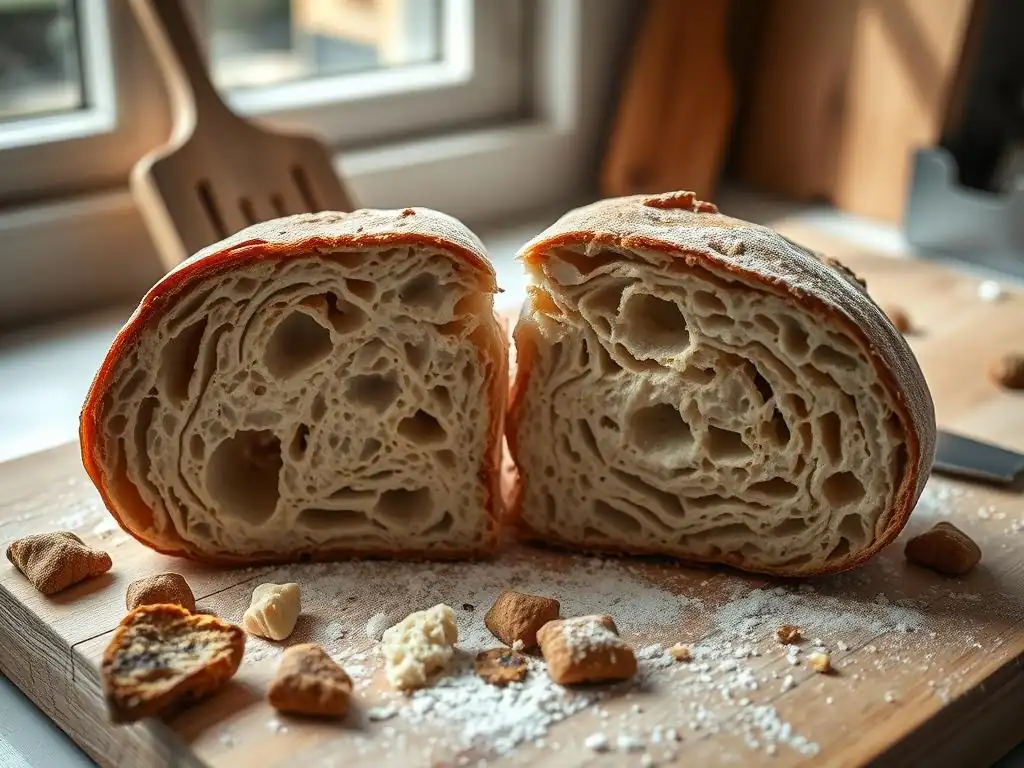
Dense Vegan Bread: Identifying the Causes
A dense crumb is a common frustration when baking, especially with vegan recipes. Several factors can contribute to this. Insufficient gluten development is a primary culprit; if the dough wasn't kneaded or folded enough, it lacks the structure to trap gas. Under-fermentation (not enough gas produced) or over-fermentation (structure collapsed) are also common. Using a lower-protein flour without adding vital wheat gluten can also result in a weaker structure incapable of supporting an airy vegan bread.
Other causes include insufficient hydration (a dry dough is harder to expand), baking at too low a temperature (poor oven spring), or not using steam during the initial bake. If your vegan bread airy crumb dream results in a brick, revisit your flour choice, hydration level, kneading/folding technique, fermentation times, and baking setup. Ensure your yeast or starter is active.
Gummy Vegan Bread: Solutions for a Better Texture
A gummy or sticky crumb often indicates that the bread has not been cooked through properly. This can happen if the baking time was too short or the temperature was too low. The starches in the flour haven't fully gelatinized and set. Another cause can be under-proofing combined with excessive oven spring, which creates a dense, gummy layer near the bottom crust (the gum line).
Ensure you are baking until the internal temperature reaches the target range (96-100°C / 205-210°F). If the crust is browning too quickly, tent the loaf loosely with foil for the last part of the bake while continuing to cook until the interior is done. Proper fermentation and proofing are also key; avoid under-proofing, which causes that uneven, gummy layer. Allowing the bread to cool completely before slicing is also vital, as the internal structure is still setting as it cools, contributing to a better vegan bread airy crumb texture.
Uneven Crumb Structure in Vegan Bread
An uneven crumb, characterized by large tunnels in some areas and dense spots in others, can be frustrating. A common cause is inconsistent gas distribution during fermentation or shaping. Rough handling during shaping can knock out too much gas from parts of the dough while leaving pockets elsewhere. Under-proofing is a major contributor to large, uncontrolled tunnels, particularly near the top crust, due to explosive oven spring.
Ensuring even fermentation throughout the dough mass (achieved partly through stretching and folding) and gentle, consistent shaping techniques are crucial. Pay attention to degassing the dough gently during pre-shaping and final shaping to create a more uniform distribution of air pockets. Proper proofing ensures the dough has built up enough gas uniformly before hitting the oven, leading to a more consistent vegan bread airy crumb.
Vegan Bread Recipe Examples: Showcasing Open Crumb Techniques
Recipe 1: High-Hydration Vegan Sourdough with Open Crumb
A high-hydration vegan sourdough is a prime example of a loaf designed for an airy vegan bread crumb. Typically using a strong bread flour (or a mix including spelt) at 75-85% hydration, the recipe relies heavily on a vigorous vegan sourdough starter for leavening and flavor. Techniques like a long autolyse (60 minutes or more) are often employed to maximize extensibility.
Bulk fermentation for this type of loaf involves multiple sets of stretch and folds (3-5 sets over 2-4 hours) to build substantial gluten strength, allowing the wet dough to hold its shape and trap significant gas. Cold proofing in the refrigerator for 12-24 hours is common, developing deep flavor and making the wet dough easier to handle and score.
Baking in a preheated Dutch oven at high heat (around 250°C / 480°F) for the first 20 minutes with the lid on, followed by baking without the lid at a slightly lower temperature (around 230°C / 450°F) for another 20-25 minutes, ensures maximum oven spring and sets the open crumb vegan bread.
Recipe 2: Vegan Sandwich Bread with a Soft and Airy Texture
While a sandwich loaf might not have the dramatic, irregular holes of a sourdough, it can still achieve a wonderfully soft and airy vegan bread crumb. This type of recipe often uses bread flour, perhaps with a small amount of vital wheat gluten added for extra structure, and typically has a moderate hydration (around 65-70%). A small amount of vegan fat (like oil or vegan butter) and sugar are often included to tenderize the crumb and aid browning.
Kneading is crucial to develop a smooth, elastic dough. Bulk fermentation is often shorter than for sourdough (1.5-2.5 hours), followed by careful shaping into a loaf pan. Proofing occurs until the dough is well-risen and fills the pan (often 1-2 hours). Baking is typically done in a regular oven, sometimes with steam introduced for the first 10-15 minutes, at a moderate temperature (around 190-200°C / 375-400°F) until golden brown and cooked through. The result is a reliable, sliceable loaf with a consistently vegan bread airy crumb.
Conclusion: Mastering the Art of Vegan Bread Baking for an Airy Crumb
Achieving a beautiful, airy vegan bread crumb is a rewarding endeavor that combines understanding the science of baking with careful technique. While vegan dough presents specific considerations due to the absence of animal products, focusing on key factors like using high-protein flour, ensuring optimal hydration, developing a strong gluten network through proper kneading and folding, and managing fermentation accurately will pave the way to success.
Techniques such as autolyse, precise bulk fermentation management, careful proofing, strategic scoring, and baking with steam are powerful tools in your arsenal. By paying attention to these details and practicing patience, you can consistently bake vegan loaves that boast that coveted open structure and delightful texture. Embrace the process, learn from each bake, and you'll soon be sharing delicious, open crumb vegan bread with everyone. Happy baking!
Frequently Asked Questions
How can I achieve an airy crumb in vegan bread, given the absence of eggs?
Achieving an airy crumb in vegan bread relies on gluten development and proper hydration. Ingredients like vital wheat gluten can help mimic the structure eggs provide.
What are some key ingredients to use in vegan bread for a light and airy texture?
Besides vital wheat gluten, consider using high-protein flours, apple cider vinegar (for acidity), and a generous amount of water for proper gluten development.
What techniques are essential for creating an airy crumb in vegan bread dough?
Proper kneading to develop strong gluten strands is crucial. Also, employ sufficient proofing time to allow the dough to rise fully and create air pockets.
How does the baking temperature affect the airiness of vegan bread?
Baking at the right temperature is vital. Starting with a high temperature helps create steam and oven spring, which contributes to an airy crumb. Then, reducing the temperature ensures the bread cooks through without burning.
What role does kneading play in achieving an open crumb in vegan bread?
Kneading is absolutely crucial. It's the process that develops the gluten network, creating the structure necessary to trap air and form the open crumb characteristic of a well-made bread.
Final Reflection: The Unexpected Joy of a Perfect Vegan Loaf
The quest for a light, airy crumb in vegan bread isn't just about texture; it's about unlocking the potential of plant-based baking. Achieving that perfect, open crumb—that delicate network of air pockets—transforms a simple loaf into something truly special, a testament to the possibilities of vegan cuisine. It's a challenge worth pursuing, and the rewards are far greater than just a delicious slice of bread.
The journey to mastering the airy crumb has been a fascinating exploration of ingredient interactions and baking techniques. It's highlighted the importance of understanding the role of each component, from the careful selection of flour to the precise timing of fermentation. The best bread is made with love and patience,
a wise baker once told me, and this rings truer than ever when working with vegan ingredients, which require a deeper understanding of their unique properties. This pursuit has also shown me the power of community, the shared knowledge and encouragement found within the vegan baking world.
Now, it's your turn. Don't be intimidated by the seemingly complex science behind a perfect vegan loaf. Experiment with different flours, yeasts, and techniques. Embrace the occasional failure as a learning opportunity, and savor the triumph of that first perfectly airy slice. The journey is as rewarding as the destination, and the delicious results will speak for themselves. Remember, the secret to an airy, open crumb in vegan bread isn't just a recipe; it's a journey of discovery, patience, and ultimately, joy.
Unleash Your Inner Baker: Craft the Perfect Vegan Loaf!
Thanks for joining us on this journey to airy, open-crumb vegan bread! We hope you gained valuable insights and newfound confidence in your baking skills. Ready to put your knowledge into practice?
- Bake your dream loaf: Grab your ingredients and try the recipe from the article! Don't be afraid to experiment – even small adjustments can make a big difference. Note down your modifications for future reference!
- Share your success (or even your stumbles!): Post a picture of your creation on social media using #BakeWithEaseVeganBread and tag us! Let's build a supportive community of vegan bakers.
- Explore our other amazing recipes: Delve into our collection of vegan baking recipes on the BakeWithEase website and discover new flavors and techniques. Find your next culinary adventure!
What innovative ingredient will you try in your next vegan bread masterpiece?