
Sourdough Baguettes: A Beginner's Path to Tangy Perfection

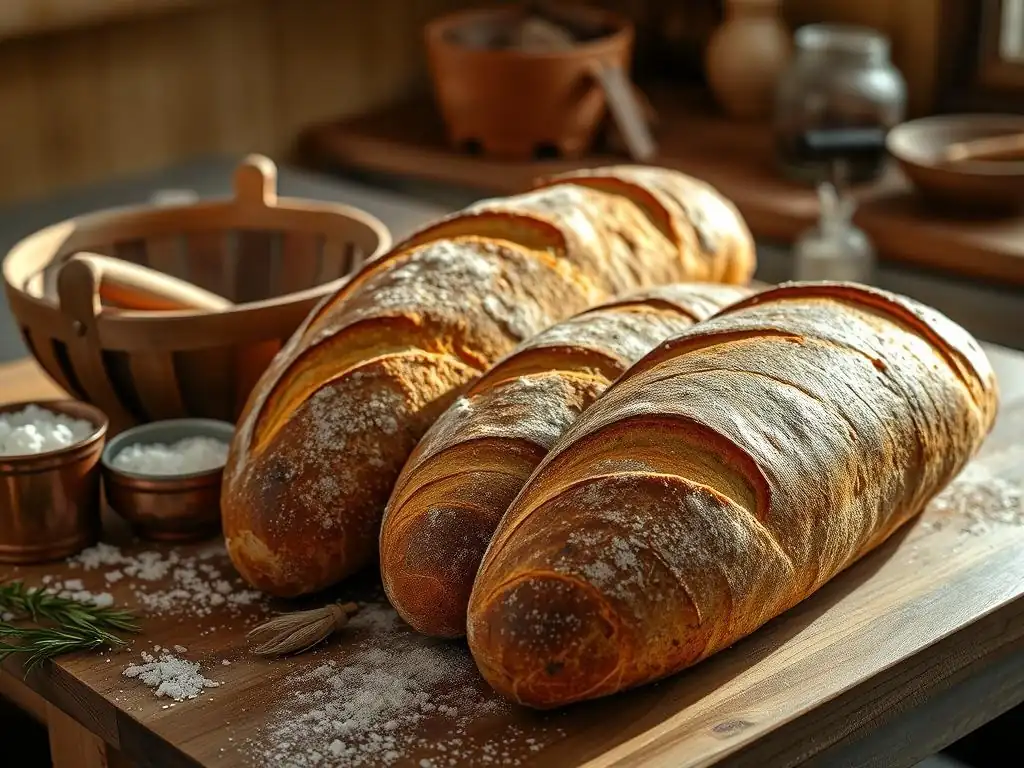
Welcome to BakeWithEase, your partner in baking adventures! Ever dreamed of pulling a perfectly crusty, tangy baguette from your oven? You're in the right place. Our guide to an easy sourdough baguette recipe for beginners unveils the secrets to achieving this iconic loaf, even if you're new to sourdough. Intrigued? Let's unlock the secrets to artisan bread, one simple step at a time...
- Sourdough Baguettes: A Beginner's Path to Tangy Perfection on BakeWithEase
- Introduction to Easy Sourdough Baguettes for Beginners
- Essential Equipment for Your First Sourdough Baguette
- Easy Sourdough Baguette Recipe: Step-by-Step Guide
- Troubleshooting Your Sourdough Baguettes: Common Issues and Solutions
- Tips and Tricks for Perfect Beginner Sourdough Baguettes
- Beyond the Basics: Expanding Your Sourdough Baguette Skills
- Conclusion: Enjoying Your Homemade Sourdough Baguettes
- Frequently Asked Questions
- Final Reflection: The Unexpected Joys of Sourdough Baguette Baking
- Unlock Your Inner Boulanger: Bake Your First Perfect Baguette!
Sourdough Baguettes: A Beginner's Path to Tangy Perfection on BakeWithEase
Introduction to Easy Sourdough Baguettes for Beginners
Baking your first sourdough baguette might seem daunting, but it's a wonderfully rewarding process! Forget the image of impossibly difficult techniques. With a reliable sourdough starter and a straightforward recipe, even a novice baker can achieve beautiful, crusty baguettes with that signature tangy flavor. This guide is designed specifically for you, the beginner, to navigate the path to homemade sourdough baguette success right here on BakeWithEase.
This journey isn't just about following steps; it's about understanding the simple magic behind sourdough. We'll break down the process into manageable stages, from mixing your dough to achieving that perfect golden crust. You'll discover that making an easy sourdough baguette recipe beginner-friendly is entirely possible with the right guidance and a little patience.
Why Sourdough Baguettes are Perfect for New Bakers
Embarking on sourdough baking with baguettes might surprise some, but they offer a fantastic learning opportunity. Unlike large loaves which can be tricky to handle, baguettes are smaller and quicker to bake, providing faster feedback on your technique. This allows beginners to practice shaping, scoring, and managing oven heat more frequently, accelerating the learning curve. Think of each bake as a mini-experiment!
Furthermore, mastering an easy sourdough baguette recipe beginner bakers can follow builds fundamental skills applicable to many other sourdough breads. You'll learn about dough hydration, gluten development, fermentation signs, and the critical role of heat and steam in baking. Success with baguettes provides a huge confidence boost, encouraging you to explore more complex sourdough creations down the line.
What Makes Sourdough Baguettes Different?
Sourdough baguettes stand apart primarily due to their leavening agent: a sourdough starter, a living culture of wild yeast and bacteria. This natural leavening process imparts a complex, slightly tangy flavor profile that commercial yeast simply cannot replicate. The long fermentation time also contributes to better digestibility and a more nuanced taste compared to quick-rise yeasted breads.
Beyond flavor, the structure of sourdough baguettes is often characterized by an open, irregular crumb and a distinctively crisp crust. The acidity developed during fermentation helps strengthen the gluten network, allowing the dough to hold its shape better and achieve impressive oven spring. This natural leavening is the heart of what makes baking an easy sourdough baguette recipe beginner-friendly a unique and satisfying experience.
Essential Equipment for Your First Sourdough Baguette
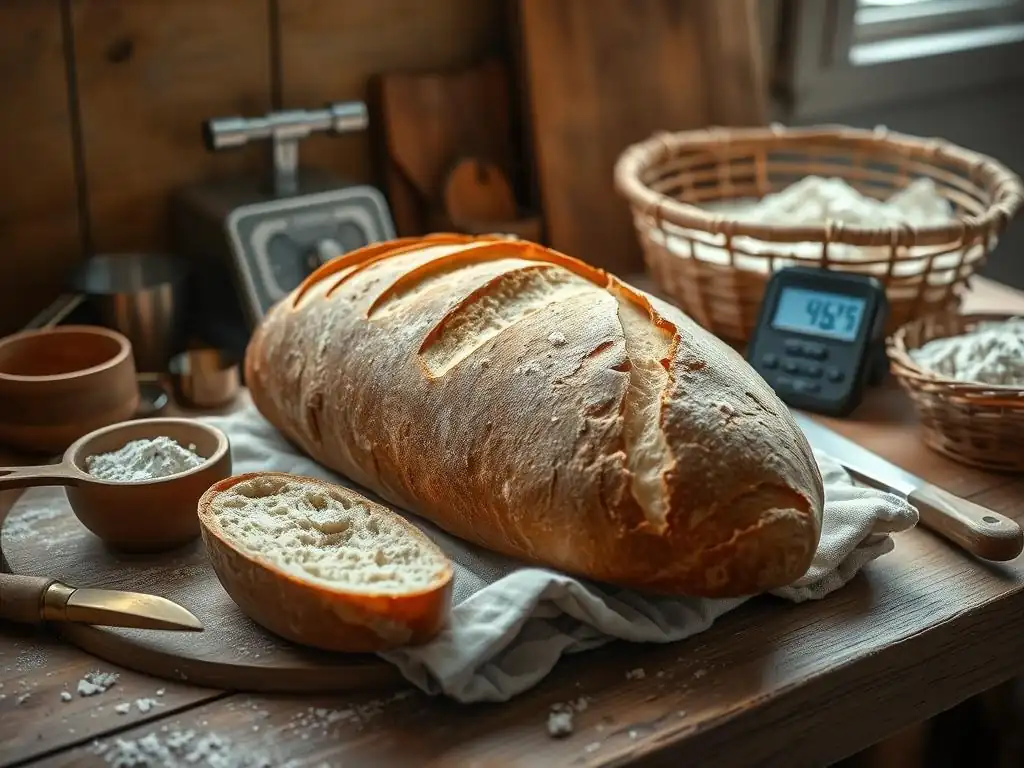
Having the right tools can significantly smooth out the baking process for a beginner. While you don't need a professional kitchen setup, a few key pieces of equipment will make handling and baking your sourdough baguette dough much easier. We'll look at the essentials and then explore some simple swaps if you're just starting out.
Investing in a few basic items upfront can save you frustration and improve your results. For example, a digital scale is almost non-negotiable in sourdough baking for accurate ingredient measurements, crucial for consistency when tackling an easy sourdough baguette recipe beginner bakers can trust.
Must-Have Tools for Baking Baguettes at Home
A digital kitchen scale is paramount for accuracy; measuring flour and water by weight (grams) is far more precise than volume (cups). You'll also need a sturdy mixing bowl, preferably large enough to accommodate the dough as it ferments and doubles in size. A bench scraper or dough scraper is invaluable for handling sticky dough, dividing portions, and cleaning up.
For the baking stage, a baguette pan (often a perforated metal tray with curved indentations) or a baking stone/steel is highly recommended. A baguette pan provides support during baking, helping the baguettes hold their shape. A baking stone or steel, preheated in the oven, provides intense bottom heat, crucial for oven spring and crust development. Additionally, a sharp razor blade or lame (pronounced "lahm") is essential for scoring the dough before baking.
Budget-Friendly Alternatives for Sourdough Baking Tools
If you're not ready to invest in specialized baguette pans, you can still achieve great results. A simple baking sheet lined with parchment paper works well; you can create makeshift supports (like rolled-up kitchen towels placed alongside the dough) to prevent the baguettes from spreading too much. Instead of a baking stone, you can use a heavy-duty baking sheet or even quarry tiles (ensure they are food-safe and unglazed).
- Scale: While a digital scale is best, for an initial attempt at an easy sourdough baguette recipe beginner bakers could try using standard measuring cups and spoons, but be aware that accuracy will be lower.
- Mixing Bowl: Any large bowl will do – glass, ceramic, or plastic.
- Bench Scraper: A stiff plastic spatula can serve a similar purpose for scraping dough.
- Baguette Pan/Stone: Use a regular baking sheet and parchment paper.
- Lame: A very sharp knife or even a single-edged razor blade held carefully can be used for scoring.
Using these alternatives might require slight adjustments or yield slightly different results, but they won't prevent you from successfully baking your first homemade sourdough baguettes.
Easy Sourdough Baguette Recipe: Step-by-Step Guide
Ready to bake? This easy sourdough baguette recipe beginner bakers can follow breaks down the process into simple, actionable steps. We'll use basic ingredients and techniques to guide you from a shaggy dough to beautiful, crusty baguettes. Remember, patience is key in sourdough baking!
This recipe is designed to minimize complexity while maximizing your chances of success. It focuses on the core principles of sourdough baking, making it an ideal starting point for your journey into homemade sourdough baguettes.
Ingredients for Beginner-Friendly Sourdough Baguettes
Keeping the ingredient list simple helps beginners focus on technique. For a standard batch (usually 2-3 baguettes), you'll typically need:
- Active Sourdough Starter: Approximately 100-150 grams. Your starter should be bubbly and active, ideally fed 4-12 hours before use.
- All-Purpose Flour or Bread Flour: Around 350-400 grams. Bread flour has higher protein content, which helps develop gluten, but all-purpose works fine for an easy sourdough baguette recipe beginner.
- Water: Approximately 240-280 grams (around 65-75% hydration relative to flour). The exact amount may vary depending on your flour. Use lukewarm water for easier mixing.
- Salt: About 7-8 grams (around 2% of flour weight). Salt is crucial for flavor and controlling fermentation speed.
That's it! Just four basic ingredients. This simplicity is part of what makes this an accessible easy sourdough baguette recipe beginner bakers can confidently attempt.
Detailed Instructions: Making the Dough
Making the dough for your beginner sourdough baguettes involves a few key stages: mixing, bulk fermentation, shaping, and proofing. Each stage plays a vital role in developing flavor and structure.
Let's walk through each step carefully. Don't worry if it's not perfect the first time; practice makes progress in homemade sourdough baguettes.
Mixing the Sourdough Baguette Dough
Start by combining your active sourdough starter and lukewarm water in a large mixing bowl. Whisk them together gently until the starter is mostly dissolved. Add the flour and salt to the bowl. Using your hands or a wooden spoon, mix everything until a shaggy dough forms and there are no dry pockets of flour. This initial mix doesn't need to be perfectly smooth.
Cover the bowl and let the dough rest for 20-30 minutes. This resting period, called autolyse (or a short version of it), allows the flour to hydrate fully and gluten development to begin naturally. It makes the subsequent kneading or folding much easier and is a simple step to include in any easy sourdough baguette recipe beginner.
Bulk Fermentation: The Key to Sourdough Flavor
Bulk fermentation is the longest stage where the magic of sourdough happens. After the initial rest, you'll perform a series of folds over the next 2-3 hours. For example, every 30 minutes, lightly wet your hands and gently stretch and fold the dough over on itself in the bowl. Repeat this 4-6 times. This builds strength in the dough.
Task List: Bulk Fermentation Folds
- [ ] Perform 1st set of folds (e.g., at 0 min)
- [ ] Perform 2nd set of folds (e.g., at 30 min)
- [ ] Perform 3rd set of folds (e.g., at 60 min)
- [ ] Perform 4th set of folds (e.g., at 90 min)
- [ ] Perform 5th set of folds (e.g., at 120 min)
- [ ] Perform 6th set of folds (e.g., at 150 min)
After the folds, let the dough continue fermenting until it has increased significantly in volume (perhaps 50-75%) and looks bubbly and alive. The total bulk fermentation time can range from 3-6 hours at room temperature (around 72-78°F / 22-26°C), or much longer if done in a cooler place or the refrigerator (cold bulk fermentation can take 12-48 hours and develops more flavor). Look for visual cues like bubbles on the surface and a slightly domed shape. This long, slow ferment is vital for the tangy flavor of your homemade sourdough baguettes.
Shaping Your Sourdough Baguettes
Turn the dough out onto a lightly floured surface. Gently divide the dough into the number of baguettes you plan to make (typically 2 or 3 for this recipe size). Gently pre-shape each piece into a rough log or rectangle and let rest for 15-20 minutes, covered. This rest allows the gluten to relax, making final shaping easier.
For the final shape, take one piece of dough. Gently flatten it into a rectangle. Fold the top edge down to the center and press gently. Fold the bottom edge up to meet the top edge and seal the seam with the heel of your hand.
Then, fold the dough in half lengthwise, pressing the seam firmly to seal. Roll the log back and forth gently with your palms, working from the center outwards, to lengthen it to your desired baguette length (often around 12-15 inches). Aim for even thickness. This shaping technique helps create the characteristic tight crumb of homemade sourdough baguettes.
Proofing for Optimal Rise and Texture
Once shaped, the baguettes need a final rise, called proofing. This can be done on a couche (a piece of linen canvas) or on a baking sheet lined with parchment paper, separated by folds or supports to prevent them from sticking together. Place the shaped baguettes seam-side up on the couche or seam-side down on the parchment.
Cover the baguettes loosely with plastic wrap or a light towel. Proofing time can vary greatly depending on temperature. At room temperature (around 72-78°F / 22-26°C), it might take 1-2 hours. The baguettes should look visibly puffy and have increased in size, but should not be fully doubled.
You can also cold proof them in the refrigerator for 8-14 hours; this slows fermentation further, developing more flavor and making scoring easier. Cold proofing is often recommended for an easy sourdough baguette recipe beginner as it provides more flexibility in baking time. To check if they are ready, gently poke one with a floured finger; if the indentation springs back slowly, they are likely ready to bake.
Baking Your Sourdough Baguettes to Golden Perfection
Baking baguettes requires high heat and steam to achieve that signature crispy crust and good oven spring. Preheat your oven and baking surface (baguette pan, stone, or steel) thoroughly, ideally for 30-60 minutes at a high temperature like 450-480°F (230-250°C). Creating steam is crucial in the first part of the bake.
One common method for home bakers is to place a tray on the bottom rack of the oven while preheating. Just before loading the bread, carefully pour a cup of hot water into this tray to create steam. Transfer the proofed baguettes (gently!) to your preheated baking surface.
Scoring Techniques for Perfect Baguette Oven Spring
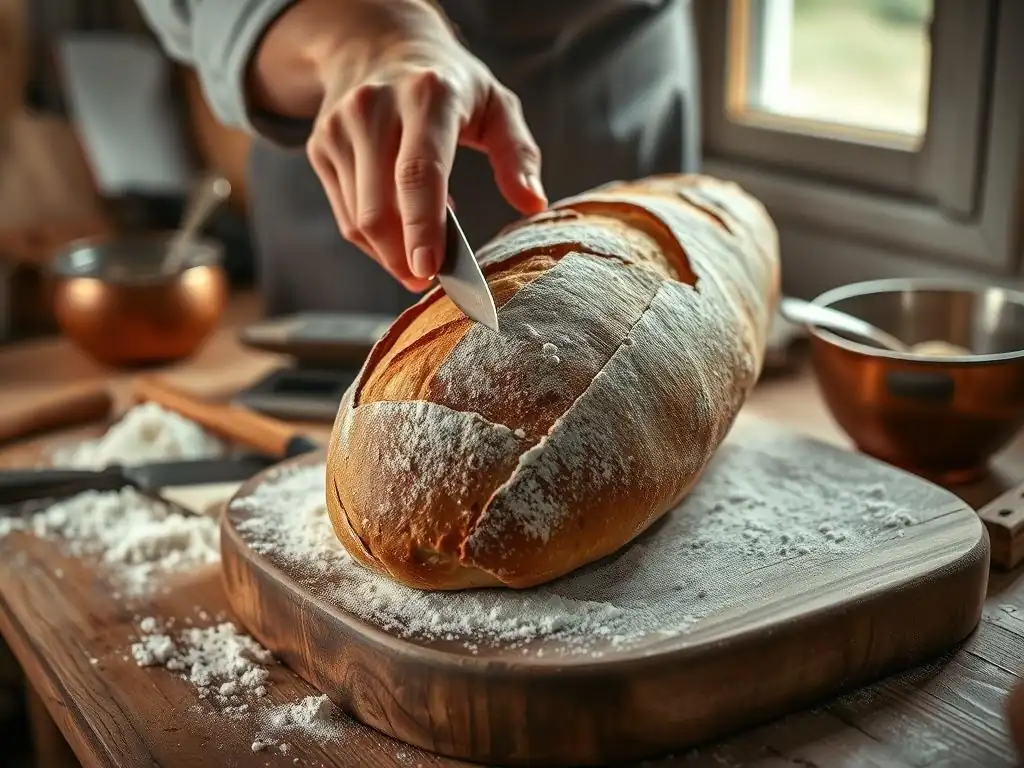
Scoring (making cuts on the surface of the dough) is done just before baking. It allows the dough to expand in a controlled manner during oven spring and creates beautiful patterns. For baguettes, the traditional score is a series of overlapping diagonal cuts running lengthwise.
Use a very sharp lame or razor blade held at about a 30-degree angle to the dough surface. Make quick, confident cuts about 1/2 inch deep. For a standard baguette, 3-5 overlapping scores are typical. Don't be afraid to cut decisively; hesitant cuts can tear the dough. Practice on a piece of scrap dough or even playdough if you're nervous. Proper scoring is a key step in transforming your easy sourdough baguette recipe beginner attempt into a professional-looking loaf.
Baking Temperatures and Times: A Beginner's Guide
Bake the baguettes in the preheated oven with steam for the first 15-20 minutes. The steam keeps the crust soft initially, allowing the dough to expand fully before the crust hardens. After this initial steaming period, carefully remove the steam tray from the oven (or open the oven door briefly to let the steam escape if you used a different method).
Reduce the oven temperature slightly, perhaps to 425-450°F (220-230°C), and continue baking for another 10-20 minutes, or until the baguettes are deep golden brown and sound hollow when tapped on the bottom. Total baking time is usually 25-40 minutes depending on size and oven. Using a thermometer to check the internal temperature (around 205-210°F / 96-99°C) is the most accurate way to know they are done.
Troubleshooting Your Sourdough Baguettes: Common Issues and Solutions
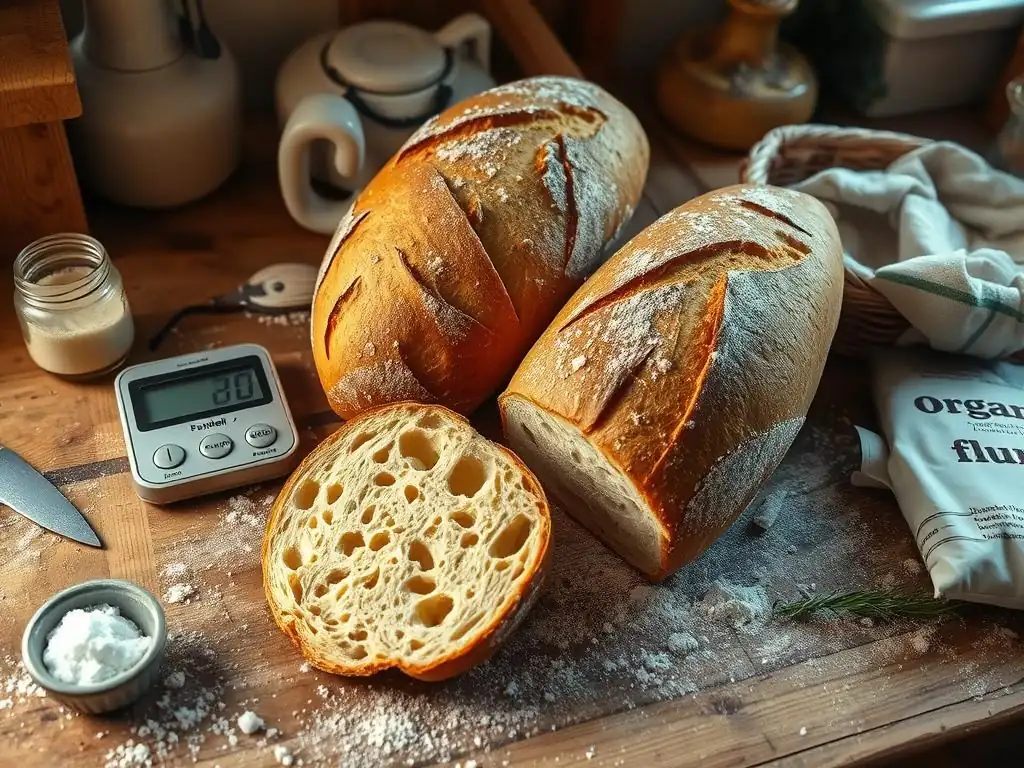
Even with an easy sourdough baguette recipe beginner bakers might encounter challenges. Don't get discouraged! Baking is a learning process. Most common issues have simple explanations and fixes for future bakes.
Understanding why something went wrong is the first step to improving your homemade sourdough baguettes. Let's look at a few frequent problems.
My Baguettes are Flat: What Went Wrong?
Flat baguettes, often spreading out instead of rising up, can be caused by several factors. The most common culprit is insufficient gluten development during mixing and bulk fermentation. If the dough wasn't strong enough, it can't hold its shape during proofing and baking. Ensure you are performing enough folds during bulk fermentation and that your dough passes the "windowpane test" (you can stretch a small piece thin enough to see light through it without tearing).
Another reason could be overproofing. If the dough proofs for too long, the gluten structure can collapse, leaving it weak and unable to support its own weight in the oven. Ensure your proofing times are appropriate for your kitchen temperature and that the dough doesn't look overly puffy or spread out before baking. Using a slightly lower hydration (less water) in your easy sourdough baguette recipe beginner attempts can also make the dough easier to handle and shape, reducing the risk of flatness.
My Baguettes are Too Dense: Possible Causes and Fixes
A dense crumb means the dough didn't rise sufficiently during fermentation or baking. This could be due to an inactive sourdough starter. Ensure your starter is bubbly and passes the float test (a small piece floats in water) before using it in your easy sourdough baguette recipe beginner. Feed your starter regularly to keep it vigorous.
Underproofing is another common cause of density. If the dough hasn't fermented enough, it won't have the gas production needed for a light, airy crumb. Allow adequate time for bulk fermentation and final proofing, paying attention to the dough's volume increase and texture rather than just the clock. Insufficient steam during baking can also result in a hard crust that prevents the dough from expanding fully, leading to a denser interior. Make sure you create plenty of steam in the oven's initial phase.
My Sourdough Starter Isn't Active Enough: Reviving Your Starter
A sluggish starter is a frequent roadblock for beginner sourdough baguette bakers. If your starter isn't doubling within 4-12 hours after feeding, it might need some attention. Try feeding it more frequently (daily or even twice daily) with fresh flour and water. Ensure you are discarding a portion before feeding; this concentrates the yeast and bacteria and provides them with fresh food.
Check the temperature of its environment. Starters thrive in warmer temperatures, ideally 75-80°F (24-27°C). If your kitchen is cool, find a warmer spot or use a proofing box or oven with the light on (not the heat!). Try adjusting the feeding ratio; feeding with a higher ratio of flour to starter (e.g., 1:3:3 starter:flour:water by weight instead of 1:1:1) can sometimes help a sluggish starter regain vigor. Persistence is key; most starters can be revived with consistent, proper feeding. An active starter is fundamental to an easy sourdough baguette recipe beginner success.
Tips and Tricks for Perfect Beginner Sourdough Baguettes
Beyond the basic steps, a few simple tips can elevate your easy sourdough baguette recipe beginner results. These focus on refining the process and maximizing the potential of your dough.
Implementing these small changes can make a noticeable difference in the look, texture, and flavor of your homemade sourdough baguettes.
Achieving a Crispy Crust on Your Homemade Baguettes
A hallmark of a great baguette is its thin, shatteringly crisp crust. The most critical factor for achieving this is steam in the oven during the first part of the bake. As mentioned, a steam tray with hot water works well. Another method is using a Dutch oven or a cloche, although these are more commonly used for round loaves; you can adapt them for shorter baguettes or bake one at a time.
After the initial steam period, ensuring the oven is dry is important for the crust to finish crisping. Removing the steam tray and potentially opening the oven door for a few seconds can help. Baking directly on a preheated stone or steel also contributes significantly to crust development by providing intense bottom heat. Finally, allowing the baguettes to cool completely on a wire rack ensures the internal moisture doesn't soften the crust from the inside.
Enhancing the Flavor of Your Sourdough Baguettes
The tangy flavor in sourdough comes from the lactic and acetic acids produced by bacteria in the starter during fermentation. To enhance this, consider a longer, colder bulk fermentation or final proofing in the refrigerator. Cold temperatures slow down yeast activity but allow the bacteria to continue developing those desirable acids, leading to a more pronounced tang in your easy sourdough baguette recipe beginner bake.
Using a blend of flours can also add complexity. While all-purpose or bread flour is great for beginners, incorporating a small percentage (5-15%) of whole wheat, rye, or spelt flour can introduce nutty or earthy notes. Ensuring your starter is mature and well-maintained is also crucial, as a healthy starter is the foundation of good sourdough flavor.
Storing Your Sourdough Baguettes for Maximum Freshness
Baguettes are best enjoyed the day they are baked, ideally within a few hours of cooling, to experience their peak crispness and texture. However, if you need to store them, avoid putting them in plastic bags, which will trap moisture and make the crust soft and chewy.
The best way to store leftover baguettes is loosely wrapped in a paper bag or left cut-side down on a cutting board at room temperature for up to a day. For longer storage, you can freeze cooled baguettes. Wrap them tightly in plastic wrap, then foil, and freeze for up to a month. To reheat, remove wrapping and bake directly from frozen in a preheated oven at 350°F (175°C) for 10-15 minutes until crisp. This method helps preserve the texture achieved by your easy sourdough baguette recipe beginner efforts.
Beyond the Basics: Expanding Your Sourdough Baguette Skills
Once you've successfully baked your first easy sourdough baguette recipe beginner batch, you might feel ready to experiment. Sourdough baking offers endless possibilities for variation and refinement.
These next steps can help you explore different flavors and textures as you continue your journey with homemade sourdough baguettes.
Experimenting with Different Flours for Unique Flavors
As mentioned, swapping out a small percentage of your white flour for whole grains can drastically change the flavor and nutritional profile of your baguettes. Try replacing 10% of the bread flour with whole wheat flour for a nuttier taste, or 5% with rye flour for a more intense, earthy tang.
Keep in mind that whole grain flours absorb more water, so you might need to slightly increase the hydration (add a little more water) when substituting. Start with small percentages and see how they affect your dough's handling and the final flavor of your easy sourdough baguette recipe beginner adaptation.
Adding Inclusions: Seeds, Herbs, and More
Once comfortable with the basic dough, you can start incorporating inclusions. Toasted seeds like sesame, poppy, or sunflower seeds can be added to the dough during the final mixing stage or sprinkled on the exterior before baking. Herbs like rosemary or thyme, chopped olives, or even chunks of roasted garlic can also be folded into the dough during bulk fermentation.
Add inclusions sparingly at first (perhaps 5-10% of the flour weight) to see how they affect the dough's structure and handling. Adding too many inclusions can sometimes weaken the gluten network. Experimenting with inclusions is a fun way to personalize your homemade sourdough baguettes.
Mastering More Advanced Shaping Techniques
While the basic baguette shape is a great starting point for an easy sourdough baguette recipe beginner, there are other techniques to explore. For longer baguettes, achieving even tension throughout the loaf is key. Learning to shape with less flour on the surface can improve the final crust.
You can also explore different scoring patterns beyond the basic diagonal cuts. A single long score, a series of short perpendicular cuts, or even decorative patterns are possibilities. Practice and observation are your best teachers here. Don't be afraid to try new things with a portion of your dough in future bakes.
Conclusion: Enjoying Your Homemade Sourdough Baguettes
Congratulations! You've navigated the steps to baking your very own sourdough baguettes. From understanding the role of your starter to mastering shaping and baking with steam, you've acquired valuable skills. This easy sourdough baguette recipe beginner guide was designed to make this process accessible and enjoyable.
Each bake is a learning experience, and your homemade sourdough baguettes will likely improve with practice. Don't strive for impossible perfection on your first try; celebrate the tangible result of your effort – a delicious loaf baked by your own hands.
Celebrating Your Baking Success
There's immense satisfaction in pulling warm, crusty homemade sourdough baguettes from the oven. Take a moment to admire your work – the golden crust, the potential for a beautiful crumb inside, and the irresistible aroma. Cut into one, listen to the crackle of the crust, and savor that first bite.
This success validates your effort and encourages you to continue baking. Whether your baguettes are perfectly shaped or a little rustic, they are a testament to your willingness to learn and experiment with an easy sourdough baguette recipe beginner.
Baking is often a joy best shared. Your homemade sourdough baguettes make wonderful gifts or additions to any meal. Slice them for sandwiches, serve with cheese and charcuterie, dip them in olive oil, or simply enjoy them warm with butter.
Sharing your delicious results with friends and family is a rewarding part of the baking journey. It's also a great way to get feedback and inspire others to try their hand at baking their own easy sourdough baguette recipe beginner loaves. Happy baking!
Frequently Asked Questions
What makes this sourdough baguette recipe "easy" for beginners?
This recipe focuses on simplified techniques and readily available ingredients, removing the complexity often associated with sourdough baking, making it accessible for newcomers. It also utilizes a straightforward mixing method.
How long does the entire process take, from start to finish?
The entire sourdough baguette process, including feeding the starter, mixing, bulk fermentation, shaping, proofing, and baking, usually takes around 24-36 hours. Most of this time is hands-off.
What if I don't have a sourdough starter?
You'll need to create or obtain a sourdough starter before beginning. BakeWithEase.com likely has resources on how to build a starter from scratch, or you can find one online.
Can I use all-purpose flour instead of bread flour?
While bread flour is recommended for a chewier texture, all-purpose flour can be used. However, expect a slightly softer and less structured baguette. Bread flour provides a higher protein content, which helps develop gluten.
What's the best way to store leftover sourdough baguettes?
Store leftover baguettes in a paper bag at room temperature for up to two days. To refresh, lightly spritz with water and reheat in a preheated oven for a few minutes.
Final Reflection: The Unexpected Joys of Sourdough Baguette Baking
The seemingly simple act of baking a sourdough baguette is, in reality, a journey of patience, precision, and profound reward. It's more than just creating a delicious loaf; it's a connection to a centuries-old tradition, a testament to the power of simple ingredients transformed by time and care. In a world of instant gratification, the slow fermentation and mindful process of sourdough baking offer a unique counterpoint, a soothing rhythm in the face of constant busyness.
The influence of sourdough, and bread baking in general, extends far beyond the kitchen table. It's a shared experience, connecting generations through the simple act of sharing a warm, crusty loaf. The aroma alone evokes feelings of comfort, home, and community. This resonates deeply with me, recalling countless family gatherings centered around the simple pleasure of freshly baked bread. Bread is the staff of life,
a simple phrase, yet it speaks volumes about the fundamental role bread plays in our cultures and our lives.
Now, I invite you to embark on your own sourdough baguette adventure. Don't be intimidated by the seemingly complex process; embrace the challenge, savor the journey, and relish the satisfaction of creating something beautiful and delicious with your own two hands. The tangy perfection you achieve will be a testament not only to your baking skills but also to your patience and dedication. The reward? A crusty, airy baguette, and a newfound appreciation for the simple, yet profound, art of baking.
Unlock Your Inner Boulanger: Bake Your First Perfect Baguette!
Thanks for joining us on this sourdough baguette journey! We hope you now feel empowered to tackle this classic bread. You’ve gained valuable insights into the process, and now it's time to put your new skills to the test.
- Start kneading! Use what you learned today to attempt your very own sourdough baguette. Even small steps forward matter!
- Share your baking journey! Post a picture of your creation (or your valiant attempt!) on social media and tag us – we'd love to see your results.
- Explore variations: Experiment with different flours or add-ins to create your unique signature baguette. What exciting flavor combinations can you create?
Ready to transform your kitchen into a Parisian bakery? What unique ingredient will you add to your next sourdough baguette?