Mixer Troubles? Quick Fixes for Common Hand Mixer Problems
😊 Facing hand mixer issues? Discover essential hand mixer repair tips to troubleshoot common problems quickly. BakeWithEase.com offers expert advice to keep…
Read article

Choosing the perfect hand mixer can make or break your baking experience, and our comprehensive Hand Mixer Guide & Reviews is here to help you whip, beat, and blend with total confidence. Whether you’re a weekend cookie enthusiast or a daily bread baker, we break down the best models on the market—from powerful stand-mixer alternatives to budget-friendly whisking wonders—so you can find the one that truly suits your kitchen style. We dive deep into motor wattage, attachment variety, ergonomic design, and noise levels, giving you honest, hands-on reviews that save you time and money. With our simple comparison charts and practical buying tips, you’ll learn exactly what to look for in a mixer—whether it’s a lightweight option for quick batters or a heavy-duty beast for thick doughs. Say goodbye to lumpy frostings and uneven cream, and say hello to perfectly aerated cakes and silky meringues every single time. Our expert guidance is tailored for every skill level, ensuring that even beginners can pick a mixer that feels intuitive, while pros can upgrade to pro-grade performance.
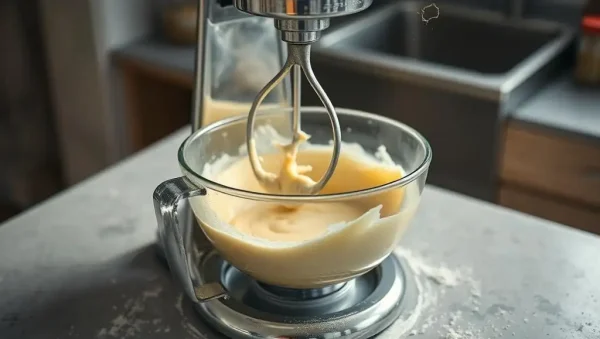
😊 Facing hand mixer issues? Discover essential hand mixer repair tips to troubleshoot common problems quickly. BakeWithEase.com offers expert advice to keep…
Read article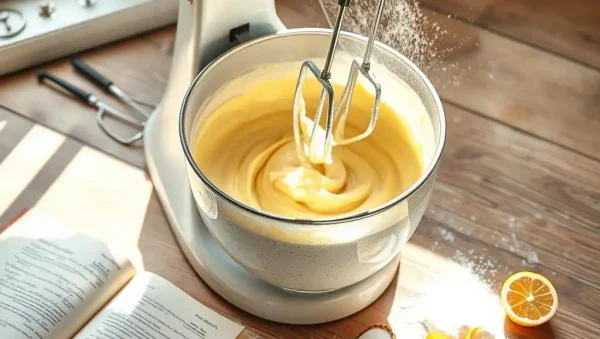
😊 Discover how to master the perfect hand mixer cake batter recipe with BakeWithEase.com. Our expert tips simplify mixing, making baking effortless…
Read article
😊 Discover essential hand mixer baking hacks tips that will elevate your baking game! From simple techniques to clever tricks, learn how…
Read article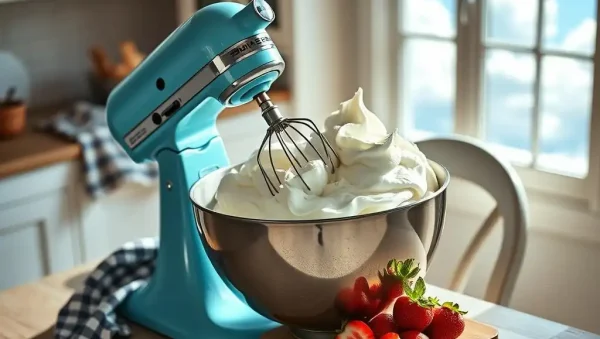
🌥️ Discover how to elevate your baking with our Hand Mixer Whipped Cream Recipe, perfect for creating fluffy, luscious toppings. BakeWithEase.com guides…
Read article
✨ Discover how a hand mixer revolutionizes your baking with our "Hand mixer baking tips easy." At BakeWithEase.com, learn simple techniques to…
Read article
😊 Discover how Braun hand mixers excel in performance and versatility, making "Braun hand mixer recipes easy" for every baker. This review…
Read article
😊 Discover the best hand mixer for beginners in our comprehensive showdown, comparing top models to help home bakers master everything from…
Read article
😊 Discover how the best hand mixer for baking can transform your culinary creations. At BakeWithEase.com, find expert tips and easy recipes…
Read article
🌟 New to baking? Our Hand Mixer Beginner Tutorial Guide on BakeWithEase.com makes mastering your first hand mixer simple and fun. Discover…
Read article
🌟 Discover how to choose the best hand mixer for beginners with BakeWithEase.com’s comprehensive guide. Perfect for bakers of all levels, it…
Read article
🔧 Is your hand mixer slow performance hindering your baking flow? Recognize the signs—like inconsistent mixing or extended prep times—and discover when…
Read article
🥄 Discover whether the best hand mixer for baking or a stand mixer suits your culinary needs. BakeWithEase.com guides you through choosing…
Read articleWelcome to the Hand Mixer Guide & Reviews section of BakeWithEase.com. Whether you’re whipping cream for a pavlova, creaming butter for cookies, or blending batter for a quick loaf, the right hand mixer can make or break your baking experience. This is your comprehensive resource for understanding hand mixers, comparing top models, and finding the perfect tool for your kitchen. We dive deep into performance, attachments, ease of cleaning, and real-world baking tests to help you make a confident, informed purchase.
When choosing a hand mixer, power and speed settings are the first things to evaluate. A motor between 200 and 400 watts handles thick doughs without straining, while 5 to 9 speed settings give you precise control for folding, whipping, and kneading. Look for a comfortable, ergonomic handle and a light overall weight (around 1.5-2 lbs) to prevent hand fatigue during extended mixing sessions. Also, consider the length of the power cord — a 6-foot cord offers flexibility, whereas a retractable cord keeps your counter tidy. Finally, check for burst or turbo buttons, which deliver a quick power surge for stubborn lumps.
Beyond basic specs, attachment quality matters enormously. Standard beaters with a central post and wire loops are ideal for most tasks, but balloon whisks are essential for aerating cream and egg whites to maximum volume. Some models include dough hooks, which are helpful for heavy yeast breads but often struggle with thick mixtures. Look for beaters with a non-slip coating or a release button for easy removal and dishwasher-safe parts to simplify cleanup. A mixer that splatters can ruin your baking joy — check for a deep bowl-rest feature or a beaters-removal mechanism that lifts cleanly without flinging batter.
You don’t need to spend a fortune to get a reliable hand mixer. Our top budget pick is the Hamilton Beach 62682, which offers 6 speeds, a snap-on storage case, and a powerful 250-watt motor for around $35. It excels at everyday tasks like mashed potatoes and cake batter, though its whisk attachment isn’t ideal for stiff peaks. Another strong contender is the KitchenAid KHMB732, which features a 9-speed motor and a wire whisk, but its price often hovers near $50. For under $25, the Black+Decker MX3200S is a no-frills option with 5 speeds and a comfortable grip, but it tends to vibrate more and struggles with heavy cookie dough.
Our testing showed that budget models often share similar motor technology, so the real differences lie in build quality and attachments. The Hamilton Beach model’s beaters feature a unique “no-splash” design that minimizes mess, a huge plus. Meanwhile, the KitchenAid’s two stainless steel beaters have a slight edge in whipping speed. If you bake occasionally, a budget mixer will suffice; just avoid ultra-cheap models with plastic gears that can strip after a year. Always read warranty details — a 2-year warranty is a good sign of durability, even at this price point.
For serious bakers, the KitchenAid 9-Speed Hand Mixer (KHMB732) is the gold standard, priced around $80. Its direct-drive motor runs quietly and maintains consistent speeds even when mixing thick batters. The standout feature is the dual-whisk attachment, which creates voluminous whipped cream in under two minutes. Another premium option is the Breville Handy Mix Scraper, retailing near $120. It includes a patented scraper beater that nudges batter forward, reducing the need to stop and scrape. Its 30-speed dial offers micro-adjustments, perfect for delicate meringues.
High-end mixers also excel in ergonomics and longevity. The Breville’s balanced weight distribution and soft-grip handle make it comfortable for marathon baking sessions. The KitchenAid offers a 5-year warranty, a sign of confidence in its build. However, these mixers are heavier (around 2.5 lbs) and take up more storage space. If you bake weekly and value speed and precision, the investment pays off. But be honest about your needs — a $40 mixer might serve a beginner just as well, and you can always upgrade later.
Hand mixers are compact, affordable, and easy to store, making them perfect for small kitchens, occasional bakers, or tasks like whipping a single batch of cream. They’re also quicker to set up and clean — no heavy bowl lifting or multiple attachments to switch. However, they require you to hold them for the entire mixing time, which can be tiring for thick doughs or long whipping sessions. Stand mixers, on the other hand, are hands-free workhorses that handle large batches, knead bread, and can grind meat with add-ons, but they cost $200-$500 and occupy permanent counter space.
For most bakers, a hand mixer is the smart primary choice, especially if you bake cakes, cookies, and quick breads. Stand mixers shine for heavy bread doughs or when you need to multitask — you can let it mix while you prepare other ingredients. Our recommendation: start with a quality hand mixer (under $80) and only invest in a stand mixer if you consistently bake large batches or artisan bread weekly. Portability is a bonus — a hand mixer can be used on the stove for instant mashed potatoes or at a friend’s house for a baking party.
Proper cleaning extends your hand mixer’s life and ensures food safety. Always unplug the mixer before removing attachments. Most beaters, whisks, and dough hooks are dishwasher-safe, but hand washing with warm soapy water is gentler and prevents corrosion. Dry them thoroughly to avoid rust spots. For the mixer body, wipe down with a damp cloth — never submerge it in water. Pay special attention to the ventilation slots; accumulated flour can clog them and cause overheating. Use a soft brush to remove debris. If you have a cord wrap, keep it loose to prevent wire damage.
Regular maintenance prevents common issues like grease buildup in the gearbox. Every few months, apply a food-grade silicone lubricant to the shaft where beaters insert (after cleaning and drying). This reduces wear and keeps the mechanism smooth. Also, check the beater-release button for stiffness — a drop of mineral oil on the spring can fix it. Store your mixer with the beaters removed to avoid bending the wires. If the motor starts smelling or struggling, it’s time to replace the brushes (for older models) or consider a new unit. With care, a hand mixer can last 5-10 years.
Yes, but only for soft, wet doughs like pizza or focaccia. Heavy bread dough requires a stand mixer or 10 minutes of hand kneading. Hand mixer dough hooks often strain the motor and may overheat. For best results, use the lowest speed and stop to rest the mixer every 2 minutes. If the dough climbs up the hooks, stop and scrape down.
A beater has solid, flat blades that mix and cream thick batters, incorporating air through friction. A whisk is a wire cage that incorporates much more air rapidly, ideal for whipping cream, egg whites, and meringues to stiff peaks. Use a beater for cookie dough, and a whisk for airy tasks — never swap them.
Start the mixer on low speed before immersing beaters into the bowl, then gradually increase speed. Use a deep, tall bowl and keep beaters fully submerged. Place a towel over the bowl if needed, but lift it periodically to check progress. Some mixers have a “splash guard” attachment — if not, angle beaters slightly away from you.
Metal beaters are more durable, conduct heat better, and are dishwasher-safe. Silicone-coated beaters are non-scratch and easier to scrape bowl edges, but they can absorb odors and degrade with heat. For most baking, stainless steel beaters are superior — they're hygienic and won't peel. Choose silicone only if you frequently use nonstick pans.
For general baking, 200-300 watts is sufficient for cake batter and whipped cream. If you plan to mix heavy cookie dough or stiff frostings, look for 350-400 watts. Higher wattage also means less motor strain and quieter operation. However, wattage isn't everything — motor quality and gear construction matter equally, so read reviews on reliability.