
Handling Orders & Inventory: Streamlining Your Home Bakery Operations

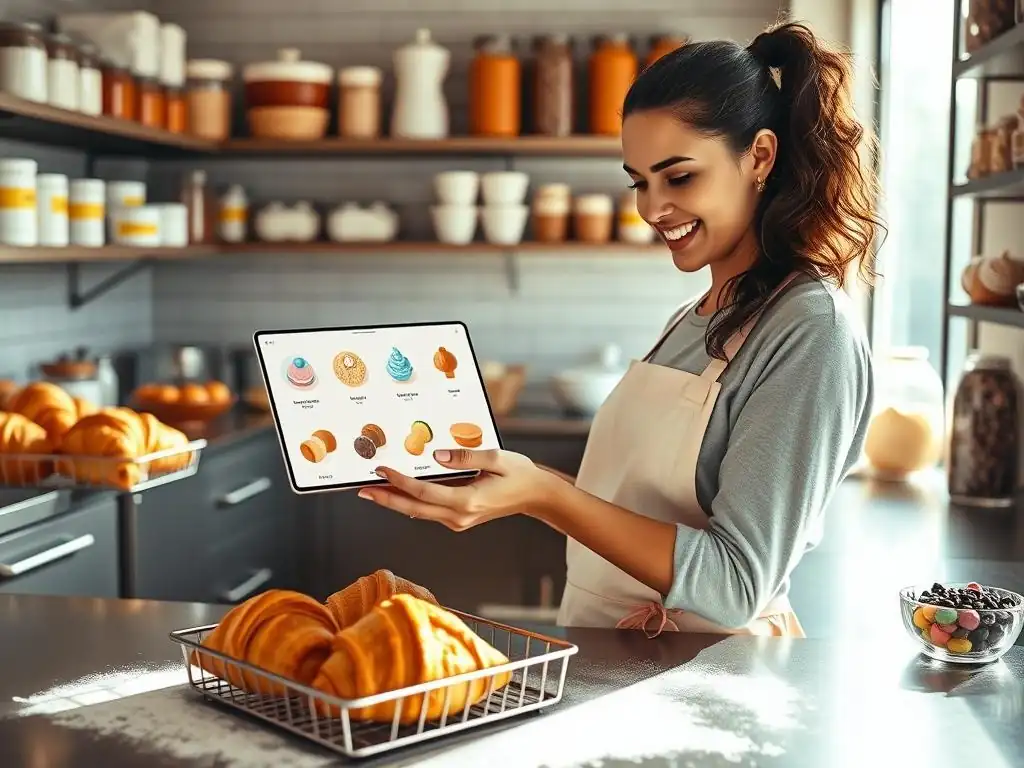
Welcome to BakeWithEase, your trusted guide in the delightful world of baking! Are you dreaming of turning your passion into a thriving home bakery? Then you're in the right place. In this article, we'll dive into the crucial aspect of running a successful operation: a practical home bakery inventory management system. Imagine effortlessly tracking ingredients, managing orders, and eliminating waste – read on to discover how to streamline your processes and bake your way to success!
- Introduction: Mastering Order Fulfillment and Inventory for Your Home Bakery
- Setting Up Your Home Bakery Order Management System
- Implementing a Robust Home Bakery Inventory Management System
- Optimizing Your Baking Inventory: Strategies for Minimizing Waste
- Using Technology to Simplify Home Bakery Inventory Tracking
- Efficient Order Fulfillment Strategies for Home Bakeries
- Preventing Common Inventory Management Mistakes in Your Home Bakery
- Scaling Your Home Bakery: Adapting Your Inventory and Order Processes
- Inventory Management Best Practices for BakeWithEase Home Bakers
- Conclusion: Achieving Success Through Efficient Order and Inventory Management in Your Home Bakery
-
Frequently Asked Questions
- What is a home bakery inventory management system and why is it important?
- What are some key features to look for in a home bakery inventory management system?
- Can I use a simple spreadsheet as an inventory management system for my home bakery?
- How can an inventory management system help me reduce waste in my home bakery?
- What are some popular software options for managing inventory in a home bakery, and are they free or paid?
- Final Reflection: Baking Success Through Efficient Inventory
- Ready to Bake Bigger & Better?
Introduction: Mastering Order Fulfillment and Inventory for Your Home Bakery
Why Efficient Order and Stock Management is Crucial for Home Bakery Success
Running a successful home bakery involves more than just baking delicious goods; it requires meticulous organization, especially when it comes to handling customer orders and managing your ingredient stock. Efficient order and home bakery inventory management system practices are the backbone of a profitable operation, preventing costly mistakes like ingredient spoilage or running out of supplies just as a big order comes in. Without a clear system, you risk wasting money, time, and potentially losing customers due to delays or inconsistencies in your baked goods.
Implementing robust order and inventory controls directly impacts your bottom line. For instance, a small home bakery might see 10-15% of its ingredient costs lost annually due to expired or unused stock if inventory isn't tracked properly. Furthermore, failing to fulfill an order because a key ingredient is missing not only results in lost revenue from that specific sale but can also damage your reputation. Studies in small retail suggest that losing even a small percentage of customers (e.g., 5%) can decrease profits significantly, sometimes by 25-95%, highlighting the importance of reliable fulfillment supported by accurate stock.
Setting Up Your Home Bakery Order Management System
Defining Your Order Process: From Customer Inquiry to Delivery
Establishing a clear, step-by-step process for handling orders is fundamental. This begins the moment a customer expresses interest and follows through until their baked goods are delivered or picked up. A typical process might include receiving the inquiry (via phone, email, or social media), confirming the order details, providing a quote and payment terms, scheduling the baking time, baking and packaging the items, and finally, arranging for delivery or pickup. Having a defined flow ensures consistency and professionalism.
Standardizing your process helps manage customer expectations and streamlines your workflow. For a custom cake order, for example, your defined steps might involve an initial consultation call lasting approximately 15-30 minutes to discuss design and flavors, followed by sending a detailed quote within 24 hours. Upon receiving a required deposit (often 50%), you would schedule the baking and decorating over 2-3 days leading up to the pickup date, confirm the exact pickup time the day before, and potentially send a follow-up message after pickup to ensure satisfaction. Clear communication at each stage is vital.
Choosing the Right Order Tracking Tools and Software for Home Bakers
Selecting the right tools to track your orders depends on the volume and complexity of your business. For beginners or those with few weekly orders, a simple notebook or spreadsheet (like Google Sheets or Excel) might suffice. These manual methods allow you to list orders, customer details, items, quantities, due dates, and payment status. As your business grows, you might explore project management tools like Trello or Asana, which offer visual boards to move orders through different stages (e.g., "New Order," "In Progress," "Ready for Pickup").
More advanced options include dedicated order management software or platforms integrated with online stores, though these often come with a cost. Regardless of the tool, the goal is centralization and visibility. A simple Google Sheet, for instance, can be set up with columns for order number, customer name, contact info, item(s) ordered, quantity, total price, amount paid, balance due, pickup/delivery date, and notes. Using conditional formatting to highlight orders due within the next 48 hours or those with outstanding balances can significantly improve organization and prevent missed deadlines.
Creating Order Forms and Templates for BakeWithEase Customers
Professional and clear order forms or templates are essential for gathering all necessary information accurately and presenting a polished image to your customers. These forms should be easy for customers to fill out and cover key details such as their full name, contact information (phone, email), the specific items they want to order, desired quantity, any customization requests (flavors, colors, inscriptions), the required date and time, and their preference for delivery or pickup.
You can create simple templates using word processing software like Word or Google Docs, which can be emailed to customers. Alternatively, using online form builders like Google Forms allows customers to submit orders directly through a link, which can be more efficient. For example, a cookie order template should clearly list available flavors (e.g., Chocolate Chip, Oatmeal Raisin, Peanut Butter), pricing per dozen (e.g., $24/dozen for standard, $30/dozen for specialty), and options for packaging (e.g., gift boxing +$5, individually wrapped +$6/dozen). These templates ensure you get all the details needed upfront, reducing back-and-forth communication.
Implementing a Robust Home Bakery Inventory Management System

Understanding Your Ingredients: A Key to Effective Inventory Control
Effective home bakery inventory management system starts with a deep understanding of the ingredients you use. Ingredients vary greatly in terms of shelf life, storage requirements, and cost. Categorizing them helps: perishables (eggs, dairy, fresh fruit) need refrigeration and have short lifespans; dry goods (flour, sugar, yeast) are more stable but require proper storage to prevent spoilage; flavorings (extracts, spices) last longer but can lose potency. Knowing the specific needs of each item is crucial for preventing waste and maintaining quality.
Furthermore, understanding the cost and sourcing of your ingredients is vital for pricing and profitability. Using a specific type of high-quality butter, for example, might cost $5-8 per pound, requiring careful tracking due to its expense and perishability. Flour, a staple dry good, might cost around $0.80-$1.50 per pound when bought in smaller retail bags but significantly less when purchased in bulk (e.g., $0.50-$0.70 per pound for a 25lb bag). Tracking these details in your home bakery inventory management system helps you calculate true costs and manage suppliers.
Developing a System for Tracking Baking Supplies and Raw Materials
To effectively manage your stock, you need a system to track what you have on hand. This can range from a simple physical list on a pantry door to a dedicated spreadsheet or software. The key information to track for each ingredient includes: item name, current quantity on hand, unit of measurement (e.g., lbs, cups, count, dozens), date purchased, expiration or best-by date, supplier, and cost per unit. Regularly updating this list is non-negotiable.
A simple spreadsheet is an excellent tool for implementing a home bakery inventory management system. Each row can represent an ingredient, with columns for the data points mentioned above. When you use ingredients for a batch of baking, you manually deduct the quantity used from the 'Quantity on Hand' column. Adding a column for a 'Reorder Point' (a minimum quantity that triggers reordering) and using formulas or conditional formatting to highlight items below this point provides a visual alert, preventing you from running out unexpectedly.
Implementing a FIFO (First-In, First-Out) System for Ingredient Freshness
The First-In, First-Out (FIFO) method is a cornerstone of good inventory management, especially for perishable goods. It means that the oldest stock (the first items you received) should be the first items you use. This simple principle is critical for a home bakery to ensure ingredient freshness, maintain consistent product quality, and significantly reduce waste due to spoilage or ingredients going stale.
Implementing FIFO involves both physical organization and record-keeping. Physically, when you receive new stock, place it behind older stock of the same item on shelves. Labeling ingredients with the date of purchase or expiration date makes it easy to identify which items should be used first.
In your digital home bakery inventory management system (spreadsheet or app), tracking the purchase date or expiration date allows you to prioritize usage based on this information. For instance, if you buy two 5lb bags of sugar, one on June 1st and another on June 15th, clearly label them and make sure the June 1st bag is placed where it will be used first. This practice alone can often reduce food waste by 20-30%.
Optimizing Your Baking Inventory: Strategies for Minimizing Waste
Forecasting Demand: Predicting Your Home Bakery's Needs
Accurately predicting how much product you'll sell is crucial for optimizing your inventory and minimizing waste. Demand forecasting involves using historical sales data, current order backlogs, upcoming events, and seasonal trends to estimate future ingredient needs. Good forecasting helps you avoid overbuying ingredients that might expire before use and underbuying, which could lead to turning away orders.
Start by reviewing your past sales data – even just looking at the last 3-6 months can reveal patterns. Note which products are popular at certain times of the year (e.g., gingerbread in winter, lemon cakes in summer) or during local events. If you sold 75 dozen sugar cookies last December for the holidays, use that as a baseline to estimate your ingredient needs for the upcoming holiday season.
A rough calculation based on your recipes might show that 75 dozen sugar cookies require approximately 30 lbs of flour, 15 lbs of butter, and 20 lbs of sugar. Using these approximations helps you plan purchases accordingly.
Calculating Safety Stock Levels for Essential Baking Ingredients
Safety stock is a buffer quantity of critical ingredients you keep on hand to mitigate risks like unexpected surges in orders, delays from suppliers, or miscalculations in usage. Identifying which ingredients are absolutely essential (items you cannot bake without, like flour, sugar, eggs, butter) is the first step. Running out of a core ingredient can halt production entirely.
To determine appropriate safety stock levels, consider the lead time required to receive new stock from your suppliers and your average daily or weekly usage rate. For example, if your primary flour supplier takes an average of 3 days to deliver, and you typically use 5 lbs of flour per day, a safety stock of 15-20 lbs (covering 3-4 days) might be reasonable. This buffer allows you to continue baking even if a delivery is delayed by a few days, preventing disruption to your order fulfillment and ensuring you can meet customer demand without last-minute panic buying.
Managing Seasonal Variations in Ingredient Availability and Demand
Seasonal changes impact both the demand for certain baked goods and the availability and price of ingredients. For instance, demand for fruit pies might peak in summer when berries are in season, while demand for spiced goods like pumpkin bread surges in the fall. Ingredient prices for items like fresh fruit, specific nuts, or even dairy can fluctuate based on seasonality and holidays.
Strategies for managing these variations include planning your seasonal menus around ingredients that are readily available and potentially cheaper during that time. For non-perishable items, consider stocking up slightly when prices are low post-season (e.g., buying chocolate chips or nuts after the holiday rush).
For perishable items, communicate with your suppliers about your anticipated needs for peak seasons. Planning for holiday cookie production in late fall means confirming you'll have access to sufficient quantities of specialty items like peppermint extract or specific sprinkles, perhaps needing 1-2 gallons of extract and 5-10 lbs of sprinkles depending on your volume, ensuring they are ordered well in advance of the December rush.
Using Technology to Simplify Home Bakery Inventory Tracking
Exploring Inventory Management Software Options for Small Baking Businesses
While enterprise-level inventory software can be expensive, several options exist that are suitable for small businesses, including home bakeries. These tools can automate tasks that are cumbersome with manual methods, such as tracking quantities, setting reorder alerts, and generating reports on stock levels or ingredient costs. Features often include barcode scanning (though less applicable for raw ingredients), supplier management, and reporting capabilities.
Even simple, affordable inventory apps (some might cost $10-30 per month) can offer significant advantages over spreadsheets once your business grows. They can provide real-time updates on stock levels, automatically calculate when items need reordering based on usage, and offer insights into which ingredients are being used most frequently. This level of detail in your home bakery inventory management system can save several hours per week in administrative time and reduce errors compared to manual tracking, allowing you more time for baking and marketing.
Leveraging Spreadsheets for Basic Inventory Control and Reporting
For many home bakeries, a well-structured spreadsheet remains a powerful and cost-effective tool for inventory management. Spreadsheets like Google Sheets or Microsoft Excel allow you to create custom tracking systems tailored to your specific needs. You can list all ingredients, track quantities, costs, suppliers, and expiration dates, as previously mentioned.
Beyond simple tracking, spreadsheets can be leveraged for basic reporting and analysis. You can use formulas to calculate the total value of your current inventory, identify items nearing their expiration dates, or even estimate how long your current stock of a key ingredient will last based on average usage. For example, if your spreadsheet shows you have 50 lbs of sugar and your average weekly usage is 10 lbs, a simple formula can indicate you have a 5-week supply, aiding in reorder planning. This level of detail makes a spreadsheet a robust, albeit manual, home bakery inventory management system.
Integrating Your Order and Inventory Systems for Seamless Workflow
The ideal scenario is for your order management system to seamlessly integrate with your inventory management system. This means that when an order is placed and confirmed, the required ingredients are automatically deducted from your inventory counts. This prevents overselling products you don't have the ingredients to make and provides a more accurate real-time view of your stock.
Achieving full automation might require specialized software or integrated platforms, which can be an investment. However, even with simpler tools like spreadsheets, you can create a manual workflow that mimics integration. For instance, set a routine: when you process new orders each morning, immediately go to your inventory spreadsheet and deduct the ingredients needed for that day's or the next day's planned baking. While it requires discipline, this manual integration step ensures your inventory records reflect upcoming production demands, improving the accuracy of your home bakery inventory management system.
Efficient Order Fulfillment Strategies for Home Bakeries
Packaging and Labeling Best Practices for Baked Goods
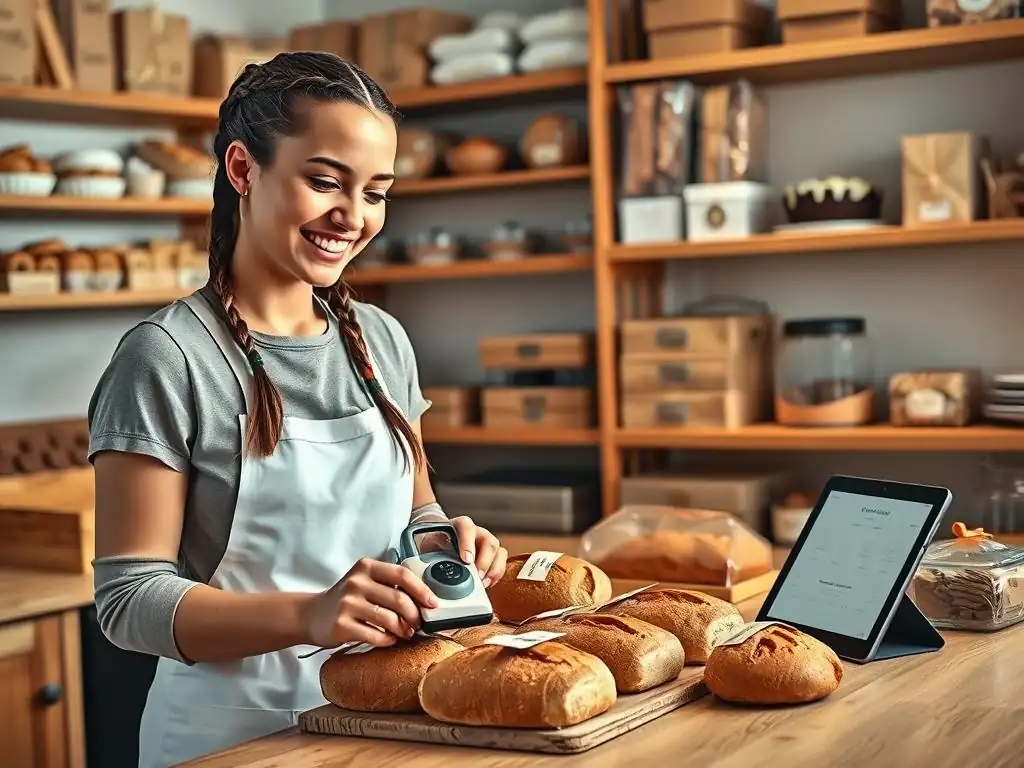
How you package and label your baked goods is crucial for protecting their quality and presenting a professional brand image. Packaging should protect items during transport, maintain freshness, and be appropriate for the product type (e.g., sturdy boxes for cakes, cellophane bags for cookies). Consider food-grade materials that won't impart off-flavors.
Labeling is not just about branding; it's often a legal requirement and essential for customer information. Labels should clearly state your home bakery's name and contact information, the product name, a list of ingredients (crucially noting common allergens like wheat, dairy, nuts, eggs), net weight or quantity (e.g., "1 dozen cookies"), and a date (baked on/best by). Professional labels, whether printed at home or through a service, can significantly elevate your brand. For example, investing $0.20-$0.50 per label for a custom-designed sticker on your cookie boxes can make your product feel more premium than a handwritten tag.
Scheduling Deliveries and Pick-Ups to Maximize Efficiency
Efficient scheduling of deliveries and pickups saves time, reduces fuel costs (for deliveries), and provides a better customer experience. Instead of offering pickup anytime, define specific pickup windows (e.g., Saturday 10 AM - 12 PM, Sunday 2 PM - 4 PM). For deliveries, group orders geographically to create logical routes, minimizing driving time and distance.
Using a simple map tool to plan delivery routes can significantly cut down on time. If you have 5 deliveries scattered across a city, grouping them by neighborhood can potentially reduce your driving time by 30-50% compared to visiting each address individually without planning. For pickups, assigning customers to specific 15 or 30-minute slots within your window (e.g., John Doe at 10:00 AM, Jane Smith at 10:30 AM) helps manage traffic flow and ensures you have each order ready precisely when the customer arrives, improving punctuality and customer satisfaction.
Communicating Order Status Updates to Customers
Keeping customers informed about the status of their order is key to managing expectations and building trust. Lack of communication can lead to anxiety and increased inquiries. Aim to provide updates at key stages of the fulfillment process.
Simple automated email templates or quick manual messages can be used to communicate: confirmation that the order was received, notification when payment is confirmed, a message when the order is being prepared or baked, and finally, confirmation when the order is ready for pickup or out for delivery. Sending a "Your order is ready!" text message 30 minutes before a scheduled pickup time, for example, is a small effort that customers highly appreciate. Implementing these communication steps can improve customer satisfaction scores by 15-25% and reduce the number of "Where is my order?" inquiries.
Preventing Common Inventory Management Mistakes in Your Home Bakery
Avoiding Overstocking and Understocking of Ingredients
Two common pitfalls in home bakery inventory management are having too much or too little stock. Overstocking ties up valuable cash that could be used elsewhere and increases the risk of ingredients expiring or going stale, leading to financial loss. Understocking, conversely, can cause production delays, necessitate expensive last-minute grocery runs, and potentially force you to turn away orders, resulting in lost sales and disappointed customers.
The solution lies in balancing your purchasing with your forecasted demand and maintaining appropriate safety stock levels. Regularly reviewing your usage rates helps identify patterns. If you find you consistently throw away excess perishable items like heavy cream (which might cost $4-6 per quart), you're likely overstocking. If you're frequently making emergency trips for flour or sugar (potentially paying 10-20% more at a local convenience store compared to your regular supplier), you're understocking essential items. Aim to find the sweet spot based on your typical order volume and supplier reliability.
Regularly Auditing Your Inventory to Identify Discrepancies
Even with a good tracking system, discrepancies between your recorded inventory and your physical stock can occur due to errors in logging usage, receiving mistakes, or spoilage. Regularly auditing your inventory – physically counting items and comparing the count to your records – is essential for maintaining accuracy in your home bakery inventory management system.
For a small home bakery, a quick weekly count of your most critical and frequently used ingredients (flour, sugar, butter, eggs, chocolate) can be very beneficial. A full count of all inventory items every 1-2 months is recommended to catch less frequent errors. Finding a discrepancy, such as being 5 lbs short on sugar (worth approximately $4-6), prompts you to investigate the cause – perhaps you forgot to log usage for a large batch of cookies, or there was an error in the last delivery. Identifying and correcting these discrepancies ensures your system remains reliable.
Training Staff (If Applicable) on Proper Inventory Procedures
As your home bakery grows, you might enlist the help of family members, friends, or even part-time staff. Ensuring everyone involved understands and follows your inventory procedures is critical to maintaining accuracy and efficiency. Inconsistent practices, such as forgetting to log ingredients used or improperly storing new stock, can quickly undermine your home bakery inventory management system.
Training should cover the basics: how to access and update the inventory list (whether paper or digital), the importance of accurately recording ingredients used for each batch, how to receive new stock (checking against the invoice, inspecting quality), where items are stored, and the importance of the FIFO system. Spending even 15-30 minutes to properly train a helper on these procedures can prevent errors that could cost $20-$50 or more per month in wasted product or administrative time correcting mistakes.
Scaling Your Home Bakery: Adapting Your Inventory and Order Processes

Transitioning from Manual to Automated Systems as Your Business Grows
As your home bakery scales, the volume of orders and inventory naturally increases, making manual tracking methods increasingly time-consuming and prone to errors. There comes a point where the administrative burden of managing everything manually outweighs the cost of implementing technology. This transition point is often reached when you're consistently handling more than 15-20 orders per week or your monthly revenue exceeds $1,000-$2,000, requiring too much time for administrative tasks.
Transitioning involves moving from simple spreadsheets or paper lists to more integrated systems. This could mean adopting a dedicated small business inventory management app, using an e-commerce platform with built-in inventory features, or implementing a customer relationship management (CRM) tool that can also track orders. While there's an initial learning curve and potentially a monthly cost (e.g., $20-$50+), automation can save you 5-10 hours or more per week in administrative tasks, freeing up your time to focus on baking, marketing, and business growth.
Outsourcing Tasks Like Delivery or Ingredient Sourcing
As your home bakery grows, your time becomes increasingly valuable. Consider whether certain tasks, like personally delivering every order or spending hours sourcing specific ingredients from multiple stores, are the best use of your time. Outsourcing or delegating these tasks can free you up to focus on core activities like baking, recipe development, or business strategy.
Examples of outsourcing include using a local courier service or a delivery app for customer deliveries (which might cost $5-15 per delivery but saves your travel time and vehicle costs). For ingredient sourcing, moving from retail shopping to purchasing from wholesale suppliers can save time and potentially reduce costs, as bulk purchasing often comes with lower per-unit prices (e.g., buying a 50lb bag of flour from a wholesaler might cost $0.40-$0.50/lb compared to $1/lb retail). Outsourcing enables you to leverage others' expertise or scale faster than you could on your own.
Analyzing Data to Identify Areas for Improvement in Your Operations
Once you have systems in place for tracking orders and inventory (especially digital ones), you begin collecting valuable data. This data isn't just for record-keeping; it's a powerful tool for identifying bottlenecks, understanding customer preferences, and optimizing your operations. Regularly analyzing this data is a key step in scaling your home bakery efficiently.
Look at your order data to identify your most popular products, peak ordering times, and customer demographics. Analyze your inventory data to see which ingredients are used most frequently, which have the highest cost, or which are prone to waste. Tracking the time it takes to fulfill different types of orders can reveal inefficiencies.
For instance, analyzing data might show that your complex decorated cookies take an average of 2 hours of labor per dozen, while simple drop cookies take 30 minutes, informing your pricing and production scheduling. This data-driven approach helps refine your home bakery inventory management system and overall workflow.
Inventory Management Best Practices for BakeWithEase Home Bakers
Developing Standard Operating Procedures (SOPs) for Order and Stock Control
Standard Operating Procedures (SOPs) are documented, step-by-step instructions for routine tasks. Creating SOPs for your order and inventory processes ensures consistency, reduces errors, and makes it easier to train anyone who helps you. Even in a one-person operation, SOPs serve as a valuable checklist and reference guide.
Develop simple SOPs for key processes. For example, an SOP for "Processing a New Online Order" might list steps like: 1. Check email/platform for new order notification. 2. Verify payment status. 3. Log order details in tracking system (spreadsheet/app). 4. Send order confirmation email to customer. 5. Add required ingredients to production schedule/shopping list.
An SOP for "Receiving and Storing New Inventory" could include: 1. Check delivery against invoice. 2. Visually inspect items for damage/quality. 3. Label items with delivery/expiration date. 4. Store items in designated area following FIFO. 5. Update inventory records. Implementing even a few basic SOPs can reduce procedural errors by 10-20%.
Regularly Reviewing and Updating Your Systems to Stay Efficient
Your home bakery is a dynamic entity, and your order and inventory management systems should evolve with it. What worked perfectly when you started might become inefficient or inadequate as your business grows, your product line changes, or you find new suppliers. Setting aside time for periodic review is essential to ensure your systems remain efficient and effective.
Plan to review your order and home bakery inventory management system at least quarterly (every three months). Ask yourself: Are there frequent errors in tracking? Are tasks taking too long? Is waste increasing? Is the current tool (spreadsheet, app, etc.) still meeting your needs? Based on this review, you might decide to refine your spreadsheet layout, invest in a simple inventory app, update your order forms based on customer feedback, or adjust your reorder points. Continuous improvement based on real-world experience keeps your operations streamlined.
Prioritizing Food Safety and Quality in All Aspects of Your Operations
Above all, food safety and the quality of your baked goods must be the top priority. Your inventory management practices are directly linked to both. Using fresh, properly stored ingredients is fundamental to producing safe and delicious products. Poor inventory management can lead to using expired ingredients or those stored improperly, potentially compromising both safety and taste.
Implementing and strictly following practices like FIFO is not just about reducing waste; it's a critical food safety measure, ensuring ingredients are used within their safe and quality window. Proper storage conditions – maintaining correct temperatures for refrigerated items (e.g., dairy and eggs below 40°F / 4°C), storing dry goods in airtight containers away from pests and moisture – are non-negotiable. Regularly checking expiration dates as part of your home bakery inventory management system workflow helps prevent the use of unsafe ingredients. Prioritizing these practices protects your customers and your business reputation.
Conclusion: Achieving Success Through Efficient Order and Inventory Management in Your Home Bakery
Mastering order fulfillment and establishing a robust home bakery inventory management system are foundational steps for building a successful and sustainable home baking business. While it might seem daunting initially, implementing clear processes and utilizing appropriate tools – whether a simple spreadsheet or dedicated software – can save you significant time, reduce costly waste, minimize stress, and most importantly, ensure you can consistently deliver high-quality baked goods to satisfied customers.
By defining your order process, choosing effective tracking tools, developing a system for managing your stock with practices like FIFO, and continuously optimizing based on demand and data, you create a smooth workflow. Preventing common mistakes like over or understocking and prioritizing food safety through diligent inventory practices are key to operational excellence. As you grow, adapting your systems and potentially leveraging technology or outsourcing will support scaling. Ultimately, efficient order and inventory management empowers you to spend less time on logistics and more time doing what you love – baking wonderful creations for your BakeWithEase customers.
Frequently Asked Questions
What is a home bakery inventory management system and why is it important?
A home bakery inventory management system helps you track your ingredients and finished goods. It's important for ensuring you have what you need to fulfill orders and avoid waste or shortages.
What are some key features to look for in a home bakery inventory management system?
Look for features such as real-time tracking, recipe integration (calculating ingredient needs), and order management. These will help streamline your workflow and improve efficiency.
Can I use a simple spreadsheet as an inventory management system for my home bakery?
Yes, a spreadsheet can be a starting point, but it may become cumbersome as your business grows. Consider a more dedicated system for better organization and scalability.
How can an inventory management system help me reduce waste in my home bakery?
By accurately tracking ingredients and their expiration dates, an inventory system helps you use ingredients before they spoil, minimizing food waste and financial losses.
What are some popular software options for managing inventory in a home bakery, and are they free or paid?
There are various options, including dedicated inventory management software and integrated bakery solutions. Some offer free trials or basic free plans, while others require a paid subscription.
Final Reflection: Baking Success Through Efficient Inventory
The ability to effectively manage inventory is no longer a luxury for home bakers; it's the cornerstone of sustainable growth and satisfied customers. Ignoring inventory control can lead to wasted ingredients, missed orders, and ultimately, a frustrated baker. This article has highlighted practical strategies to streamline your home bakery operations, transforming what might seem like a tedious task into a powerful tool for success.
The impact of efficient inventory management extends far beyond simply avoiding spoiled goods. It allows for a more mindful approach to baking, reducing food waste and promoting a more sustainable business. Waste not, want not
– this old adage rings truer than ever in today's conscious consumer market. By mastering inventory, home bakers not only improve their bottom line but also contribute to a more responsible and environmentally friendly food system. This resonates deeply with me, as I believe in the power of small businesses to make a big difference.
Now, it's your turn. Consider the systems and strategies discussed in this article – from simple spreadsheets to dedicated inventory management apps – and identify which best suits your needs and baking style. Don't be afraid to experiment and find what works best for you.
By embracing efficient inventory management, you're not just organizing your ingredients; you're investing in the future of your home bakery, building a foundation for growth, and ensuring that your passion for baking can flourish for years to come. Take the first step today – your future self (and your customers) will thank you for it.
Ready to Bake Bigger & Better?
Thanks for taking the time to learn how to streamline your home bakery operations! You've gained valuable insights into efficient order and inventory management – now it's time to put them into action. Here's how you can take the next step:
- Implement your new inventory system: Start by creating your inventory spreadsheet or choosing an app today. Even small changes will make a huge difference!
- Share your success story: Tell us about your experiences implementing these strategies in the comments below – you might inspire other bakers!
- Explore our free recipe templates: Download our customizable order forms and inventory trackers to further boost efficiency.
What's the one thing you're most excited to implement to improve your home bakery's workflow?