
The Home Baker's Equipment Wishlist: Essentials for Efficiency

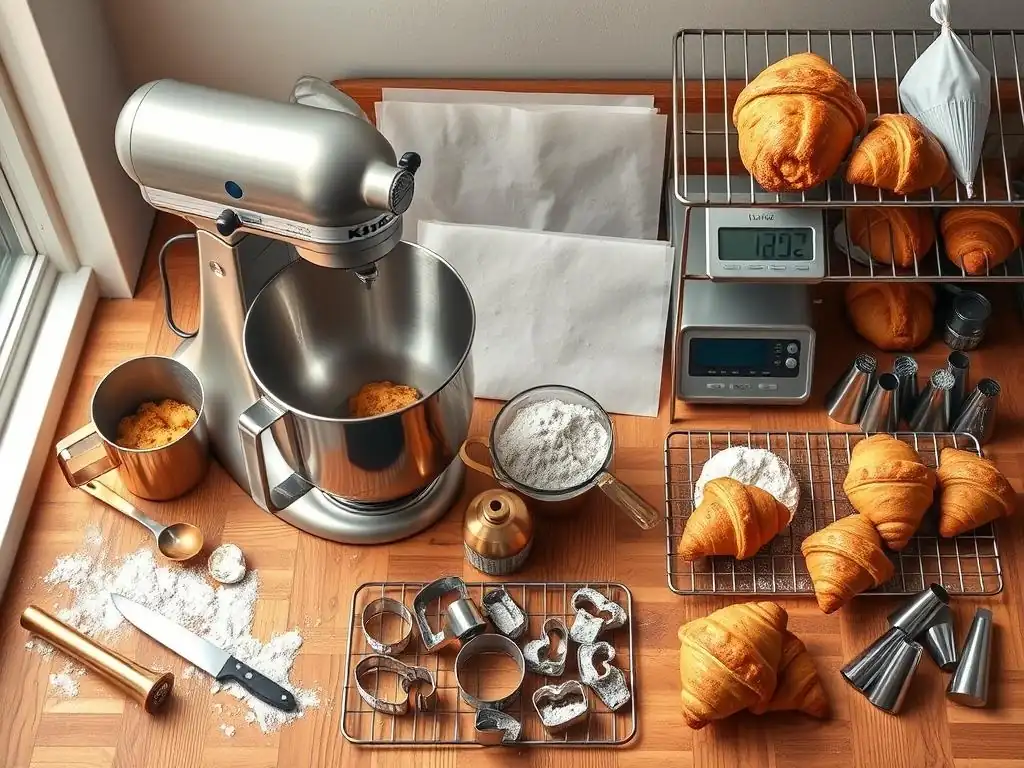
Welcome to BakeWithEase, your guide to unlocking the joy of baking! Are you ready to transform your kitchen into a haven for delectable creations? From perfectly risen loaves to exquisitely decorated cakes, it all starts with the right tools. Curious about what you really need? Dive into our essential baking equipment checklist and discover the must-have items that will streamline your baking process and elevate your results. Prepare to equip yourself for success and embark on a delicious journey!
- Introduction: Setting Up Your Home Baking Space for Success
- The Essential Baking Equipment Checklist: Must-Have Tools
- Beyond the Basics: Advanced Baking Equipment for Efficiency
- Organizing Your Baking Equipment for Maximum Efficiency
- Building Your Essential Baking Equipment Checklist on a Budget
- Conclusion: Your Journey to Efficient Baking Starts Now
-
Frequently Asked Questions
- What's the most essential piece of equipment for a beginner baker, according to BakeWithEase?
- Does BakeWithEase recommend specific brands for any items on the "Essential baking equipment checklist"?
- How does this "Essential baking equipment checklist" help experienced bakers refine their skills?
- Are there any budget-friendly alternatives for some of the more expensive items on the equipment checklist?
- What makes having the right baking equipment so critical to success, as described by BakeWithEase?
- Final Reflection: The Joy of Baking, One Tool at a Time
- Unleash Your Inner Pastry Chef!
Introduction: Setting Up Your Home Baking Space for Success
Welcome to BakeWithEase: Your Journey to Baking Mastery
Welcome to BakeWithEase, your trusted companion on the path to becoming a confident and skilled home baker. Whether you're just starting to explore the joy of baking or you're looking to refine your techniques, setting up your workspace efficiently is the first step towards consistent success. We believe that baking should be accessible and enjoyable for everyone, and having the right tools at your disposal makes a significant difference in your results and overall experience.
Embarking on your baking journey involves more than just following a recipe; it requires understanding your ingredients, techniques, and, importantly, your equipment. A well-equipped kitchen simplifies processes, reduces errors, and frees you up to focus on the creative aspects of baking. Think of your tools as extensions of your hands, enabling you to mix, measure, shape, and bake with precision and ease.
Why an Essential Baking Equipment Checklist Matters
Having a clear essential baking equipment checklist is fundamental for any home baker, regardless of skill level. It provides a roadmap for acquiring the necessary tools that will support a wide range of baking tasks, from simple cookie recipes to more complex layered cakes or artisanal breads. Without the right equipment, even the most straightforward recipe can become frustrating. For instance, trying to measure flour accurately without proper cups or a scale can lead to drastically different outcomes.
An essential baking equipment checklist not only helps you identify what you need but also helps you prioritize your purchases. It prevents impulsive buying of single-use gadgets that might clutter your kitchen and instead focuses on versatile tools that offer the most value. Building your collection thoughtfully ensures that you have the foundational pieces required for nearly any baking project, making your time in the kitchen more productive and less stressful.
From Beginner to Pro: Building Your Baking Toolkit
Every baker starts somewhere, and the journey from beginner to pro involves gradually building both skill and a reliable toolkit. A beginner's essential baking equipment checklist might focus on the absolute basics: measuring tools, mixing bowls, a few key pans, and essential utensils like spatulas and whisks. These items are the workhorses of any kitchen and can handle the majority of foundational baking tasks.
As you gain experience and tackle more advanced recipes, you can expand your essential baking equipment checklist to include specialized items like dough scrapers, cooling racks, or even investing in a stand mixer. This phased approach allows you to spread the cost of equipment over time and ensures that you're only adding tools that you will genuinely use and benefit from. Remember, the goal is efficiency and consistency, and the right tools are key to achieving both.
The Essential Baking Equipment Checklist: Must-Have Tools
Measuring Tools for Precision Baking
Precision is paramount in baking, often requiring exact quantities of ingredients to achieve the desired chemical reactions and textures. Using accurate measuring tools is non-negotiable.
Digital Kitchen Scale: The Key to Consistent Results
A digital kitchen scale is arguably the most important item on any essential baking equipment checklist, especially as you move beyond basic recipes. Measuring ingredients by weight (grams or ounces) is significantly more accurate than measuring by volume (cups or tablespoons). For example, a cup of flour can vary in weight by as much as 20-30 grams depending on how it's scooped and leveled, which can drastically affect the outcome of delicate recipes like cakes or pastries. Measuring 100 grams of flour on a scale, however, is always 100 grams.
Using a digital scale ensures repeatability. If a recipe turns out perfectly, you can be confident that using the same weights will yield the same results every time. This consistency is crucial for mastering recipes and troubleshooting when things don't go as planned. Most basic digital scales are relatively affordable, often available for under $25-$30, making them an accessible and invaluable addition to your essential baking equipment checklist.
Measuring Cups and Spoons: Dry and Liquid Measurements
While scales are preferred for dry ingredients like flour, sugar, and oats, measuring cups and spoons are still essential for smaller quantities and liquids. It's important to have separate sets for dry and liquid measurements. Dry measuring cups should be leveled off with a straight edge (like the back of a knife or a straight spatula) to ensure accuracy, while liquid measuring cups have a spout and a line to read at eye level.
Having a complete set of measuring cups (typically including 1/4, 1/3, 1/2, and 1 cup) and measuring spoons (including 1/4, 1/2, 1 teaspoon, and 1 tablespoon) covers most recipe requirements. Look for sets made from sturdy materials like stainless steel or durable plastic that have clearly marked measurements that won't fade over time. These simple tools are foundational elements of your essential baking equipment checklist.
Mixing Bowls: Versatile and Essential
Mixing bowls are the workhorses of your baking kitchen, used for everything from whisking eggs to combining dry and wet ingredients or proofing dough. Having a variety of sizes is beneficial.
Stainless Steel Mixing Bowls: Durable and Easy to Clean
Stainless steel mixing bowls are a staple on any essential baking equipment checklist due to their durability, lightweight nature, and ease of cleaning. They don't retain odors or stain, unlike some plastic bowls. They are also non-reactive, meaning they won't interact with acidic ingredients like lemon juice or vinegar, which is important when making meringues or certain batters.
A set of three to five stainless steel bowls in graduated sizes (e.g., 1.5 quart, 3 quart, 5 quart, 8 quart) will handle most tasks. Smaller bowls are great for whisking a few eggs or melting butter, medium bowls are perfect for mixing batters or doughs for a batch of cookies, and larger bowls are necessary for proofing bread dough or mixing large cake batters. Their versatility makes them a core component of your essential baking equipment checklist.
Glass Mixing Bowls: Great for Microwave Use
Glass mixing bowls offer a different set of advantages, making them a valuable addition alongside stainless steel options on your essential baking equipment checklist. Their transparent nature allows you to see how ingredients are combining, which can be helpful when emulsifying dressings or ensuring everything is fully incorporated in a batter.
Perhaps the biggest advantage of glass bowls is their microwave-safe property. This makes them ideal for melting chocolate, butter, or warming liquids directly in the bowl, saving you an extra pot or container. While heavier and more breakable than stainless steel, they are non-reactive and easy to clean, making them a useful item in your baking toolkit.
Baking Pans and Molds: Shaping Your Creations
The right pan is crucial for achieving the correct shape, size, and even baking of your goods. Your essential baking equipment checklist should include a few fundamental pan types.
Cake Pans: Round, Square, and Specialty Shapes
For cakes, having standard round and rectangular pans is a must. Two 8-inch or 9-inch round cake pans are standard for layer cakes. A 9x13-inch rectangular pan is incredibly versatile for sheet cakes, brownies, and bar cookies. These sizes are called for in countless recipes and are fundamental to your essential baking equipment checklist.
As you expand your repertoire, you might consider specialty pans like a Bundt pan for decorative cakes, a springform pan for cheesecakes and tarts (where the sides can be released), or smaller pans for individual desserts. Look for pans made of heavy-gauge aluminum or aluminized steel for even heat distribution, which prevents hot spots and ensures cakes bake uniformly.
Cookie Sheets: For Perfectly Baked Cookies
Cookie sheets, also known as baking sheets or sheet pans, are indispensable for cookies, but their utility extends far beyond that. They are used for roasting nuts, baking biscuits, preparing sheet pan dinners, and even as a base for placing items in the oven. A good quality, heavy-duty rimmed baking sheet is a foundational item on your essential baking equipment checklist.
Full-size (18x26 inches), half-size (18x13 inches), and quarter-size (13x9 inches) are common dimensions. For most home ovens, half-size sheets are the most practical as you can often fit two side-by-side. Look for sheets made from aluminum, which conducts heat well for even browning. Using parchment paper or silicone baking mats on your cookie sheets prevents sticking and makes cleanup a breeze.
Muffin Tins: For Cupcakes and Muffins
If you plan to bake cupcakes, muffins, or even mini quiches or egg cups, a muffin tin is essential. A standard muffin tin typically has 12 cups.
Mini muffin tins (24 cups) or jumbo muffin tins (6 cups) are also available if you bake those sizes frequently. Non-stick coatings are common and helpful, but using paper liners or greasing and flouring the cups properly also prevents sticking. A sturdy, non-warping muffin tin is a key part of your essential baking equipment checklist for individual baked goods.
Bread Loaf Pans: For Homemade Bread
For baking quick breads like banana bread or zucchini bread, or yeasted sandwich loaves, a loaf pan is necessary. The standard size is 9x5 inches.
Having one or two of these pans allows you to bake standard-sized loaves. Material options include metal (for good crust development), glass (which retains heat well but can sometimes lead to darker bottoms), or ceramic. A reliable loaf pan is a simple but critical item on your essential baking equipment checklist if homemade bread is on your baking list.
Baking Utensils: Tools for Every Task
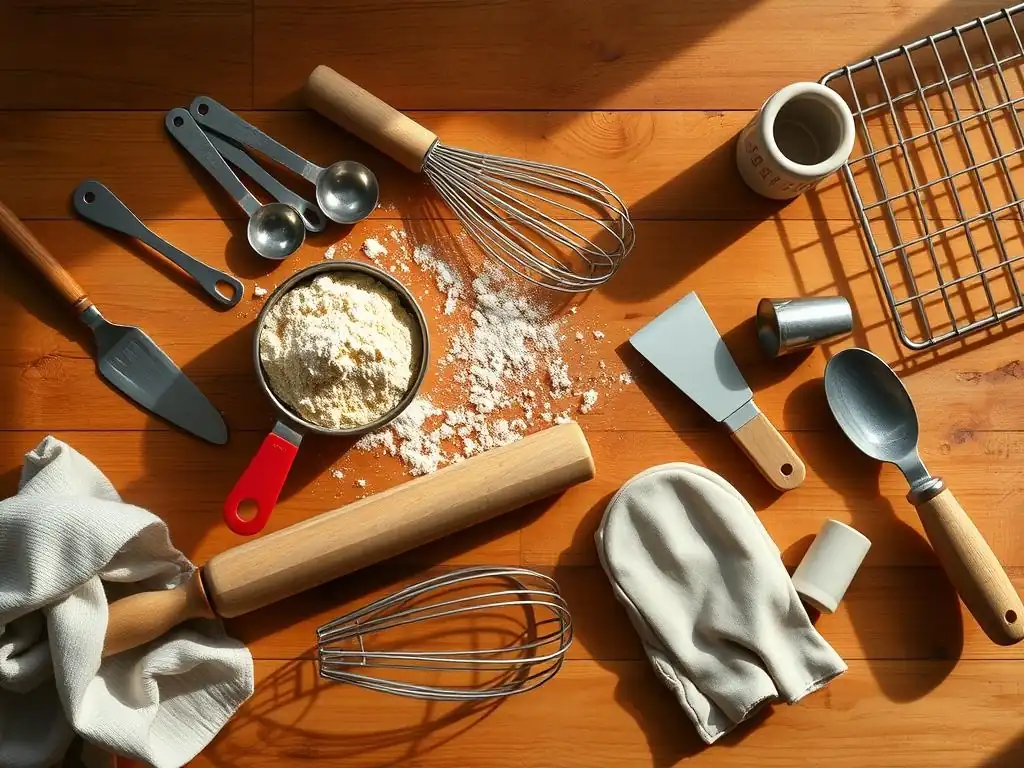
A collection of basic hand tools is crucial for mixing, scraping, shaping, and finishing your baked goods. These everyday items form the backbone of your essential baking equipment checklist.
Spatulas: Rubber, Offset, and Scrapers
Spatulas are incredibly versatile and you'll likely need several types. Rubber or silicone spatulas are flexible and heat-resistant, perfect for scraping down the sides of bowls, folding ingredients gently, or stirring batters on the stovetop (like pastry cream). Having a few different sizes (small, medium, large) is useful.
An offset spatula, with its angled blade, is invaluable for icing cakes smoothly, lifting cookies off a sheet, or spreading batter evenly in a pan. Bench scrapers (sometimes called dough scrapers) with a flat, rigid blade are excellent for portioning dough, scraping sticky dough from your work surface, or transferring chopped ingredients. These different spatulas serve distinct purposes and are vital items on your essential baking equipment checklist.
Whisks: For Aerating and Mixing
Whisks are used for incorporating air into ingredients (like whipping egg whites or cream) or blending ingredients smoothly (like making gravy or vinaigrettes). A balloon whisk, with its many wires, is designed specifically for aerating.
A French whisk, which is narrower, is better for reaching into the corners of pots or bowls and for mixing sauces. Having at least one good quality balloon whisk and perhaps a smaller whisk for smaller tasks is important for your essential baking equipment checklist. Look for whisks with sturdy handles and wires that are firmly attached.
Rolling Pin: For Dough and Pastry
If you plan to make pie crusts, cookies that need rolling, or pastries, a rolling pin is essential. There are different styles, including American-style (with handles and a rotating barrel) and French-style (a simple tapered cylinder).
The key is to find one that feels comfortable in your hands and is heavy enough to help you roll dough evenly without too much effort. Wood is a traditional material, but stainless steel or marble pins (which can be chilled to keep dough cool) are also options. A reliable rolling pin is a necessary addition to your essential baking equipment checklist for any rolled dough recipes.
Pastry Brush: For Glazes and Egg Washes
A pastry brush is a small but useful tool for applying glazes, egg washes (to give baked goods a golden, shiny finish), melted butter, or oil to pans.
Natural bristles are traditional but can sometimes shed; silicone brushes are easy to clean, heat-resistant, and don't shed, though they may not hold liquid quite as well. Having one or two pastry brushes on your essential baking equipment checklist will help you achieve professional-looking finishes on your baked goods.
Stand Mixer vs. Hand Mixer: Which is Right for You?
Deciding between a stand mixer and a hand mixer is often a question of budget, space, and the type of baking you do most frequently. Both have their place on an essential baking equipment checklist depending on your needs.
Stand Mixer: Power and Versatility
A stand mixer is a significant investment but offers unmatched power and convenience for serious or frequent bakers. Its powerful motor can handle heavy tasks like kneading bread dough (which can be challenging or impossible with a hand mixer) and mixing large batches of stiff cookie dough without straining. The hands-free operation allows you to add ingredients while the mixer is running or attend to other tasks simultaneously.
Stand mixers typically come with multiple attachments, such as a paddle attachment for batters, a whisk attachment for meringues and whipped cream, and a dough hook for kneading. While they take up more counter space and can cost anywhere from $200 to upwards of $500 or more, their durability and ability to handle demanding tasks make them a worthwhile investment for those who bake large quantities or complex recipes regularly, earning a top spot on many advanced bakers' essential baking equipment checklist.
Hand Mixer: Compact and Affordable
A hand mixer is a more budget-friendly and space-saving option that is perfectly sufficient for many home baking tasks. They are excellent for whipping cream or egg whites, mixing cake batters, frosting, and lighter cookie doughs. Their compact size makes them easy to store, and they are much more portable than stand mixers.
While less powerful than stand mixers and requiring you to hold them during operation, good quality hand mixers (often available for $30-$80) can handle the majority of recipes a casual or beginner baker might attempt. If your baking involves mostly cakes, cookies, and whipped toppings rather than heavy bread doughs, a hand mixer is a practical and cost-effective addition to your essential baking equipment checklist.
Beyond the Basics: Advanced Baking Equipment for Efficiency
Once you have the core items from your essential baking equipment checklist, certain specialized tools can further enhance your efficiency and results.
Dough Scrapers: For Handling Sticky Dough
Beyond the bench scraper mentioned earlier, smaller, flexible dough scrapers (often made of plastic) are incredibly useful for handling sticky doughs like ciabatta or focaccia. Their flexibility allows you to easily scoop and fold wet doughs in a bowl without them sticking to your hands.
They are also great for cleaning sticky residue from your work surface after kneading or shaping dough. These inexpensive tools are a small but mighty addition to your essential baking equipment checklist for bread bakers.
Cooling Racks: Preventing Soggy Bottoms
Cooling racks are simple wire racks that allow air to circulate around baked goods as they cool. Placing hot cookies, cakes, or breads directly on a solid surface traps steam underneath, leading to soggy bottoms.
Using a cooling rack allows the steam to dissipate, ensuring an even texture throughout your baked item. Having one or two sturdy cooling racks is a small investment that makes a big difference in the quality of your finished products and should be on your expanded essential baking equipment checklist.
Piping Bags and Tips: For Cake Decorating
If you enjoy decorating cakes, cupcakes, or pastries, piping bags and a set of piping tips are essential. Piping bags (reusable silicone or disposable plastic) hold frosting, whipped cream, or even dough (like choux pastry).
Piping tips come in various shapes and sizes (round, star, leaf, etc.) to create different decorative effects. A basic set of tips and a few piping bags allow you to add professional-looking swirls, borders, or messages to your baked goods, making them a key part of your essential baking equipment checklist for decorating enthusiasts.
Sifters: For Light and Airy Flour
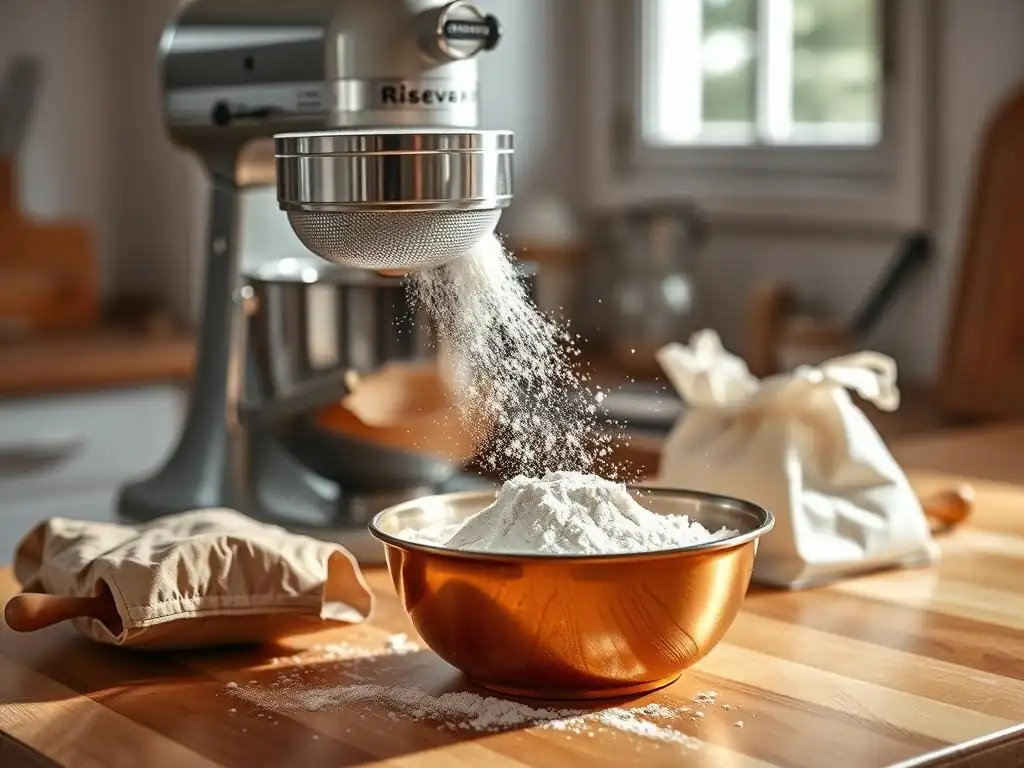
Sifting flour helps to aerate it, remove any clumps, and ensure dry ingredients are evenly distributed. This results in lighter, more tender baked goods, particularly important for cakes and delicate pastries.
While whisking dry ingredients together can sometimes suffice, a sifter (either a crank-style or squeeze-handle type) performs the task more effectively. Including a sifter on your essential baking equipment checklist is a good idea if you strive for the lightest possible texture in your baked goods.
Thermometers: Ensuring Perfect Temperatures
Baking is a science, and temperature plays a critical role. Using thermometers helps ensure your oven is accurate and your internal temperatures are correct.
Oven Thermometer: Accurate Oven Temperature
Oven temperatures can vary significantly from the setting on the dial, sometimes by as much as 25-50 degrees Fahrenheit. An inexpensive oven thermometer (often available for under $10) hangs or sits on your oven rack and provides an accurate reading of the actual temperature inside.
Relying on your oven's internal thermometer can lead to inconsistent baking. Using an oven thermometer allows you to adjust your oven setting to compensate for any discrepancy, ensuring your baked goods bake at the correct temperature for the specified time. This simple tool is a must-have on your essential baking equipment checklist for consistent results.
Instant-Read Thermometer: Checking Doneness
For items like bread, cakes, or custards, checking the internal temperature is the most reliable way to determine if they are fully baked and safe to eat. An instant-read thermometer quickly measures the temperature in the thickest part of the item.
For example, most yeast breads are done when the internal temperature reaches 190-210°F (88-99°C), while cakes are often done around 200-210°F (93-99°C). Relying solely on visual cues or the toothpick test can be misleading. An instant-read thermometer removes the guesswork and is an invaluable tool on your essential baking equipment checklist for ensuring perfect doneness every time.
Organizing Your Baking Equipment for Maximum Efficiency
Even with the best essential baking equipment checklist, a cluttered kitchen can hinder your baking process. Organizing your tools makes them easy to find and use, boosting efficiency.
Creating a Dedicated Baking Zone
If possible, designate a specific area in your kitchen for baking. This could be a section of a countertop, a drawer, or a cabinet. Store all your baking-related items in this zone, from ingredients like flour and sugar (in airtight containers) to your essential baking equipment checklist tools.
Having everything in one place minimizes time spent searching and allows you to get straight to work. Keep your most frequently used items, like measuring cups and spatulas, in easily accessible locations within this zone.
Storage Solutions for Baking Tools
Utilize various storage solutions to keep your essential baking equipment checklist items tidy and accessible. Drawer dividers are great for organizing smaller utensils like measuring spoons, cookie cutters, and piping tips. Vertical organizers can be used in cabinets to store baking sheets, cutting boards, and cooling racks efficiently.
Consider using hooks on the inside of cabinet doors for items like measuring cups or spatulas. Store mixing bowls nested inside each other to save space. Keep specialty pans stacked carefully to prevent damage. Effective storage solutions not only keep your kitchen organized but also protect your valuable baking tools.
Maintaining and Cleaning Your Baking Equipment
Regular cleaning and maintenance are crucial for the longevity and performance of your essential baking equipment checklist items. Wash measuring tools immediately after use to prevent sticky residue from hardening. Dry metal pans and tools thoroughly to prevent rust.
Follow manufacturer instructions for cleaning appliances like stand mixers. Periodically check your tools for wear and tear; replace damaged items like warped pans or cracked spatulas, as they can affect your results. Proper care ensures your equipment remains in good working order, ready for your next baking adventure.
Building Your Essential Baking Equipment Checklist on a Budget
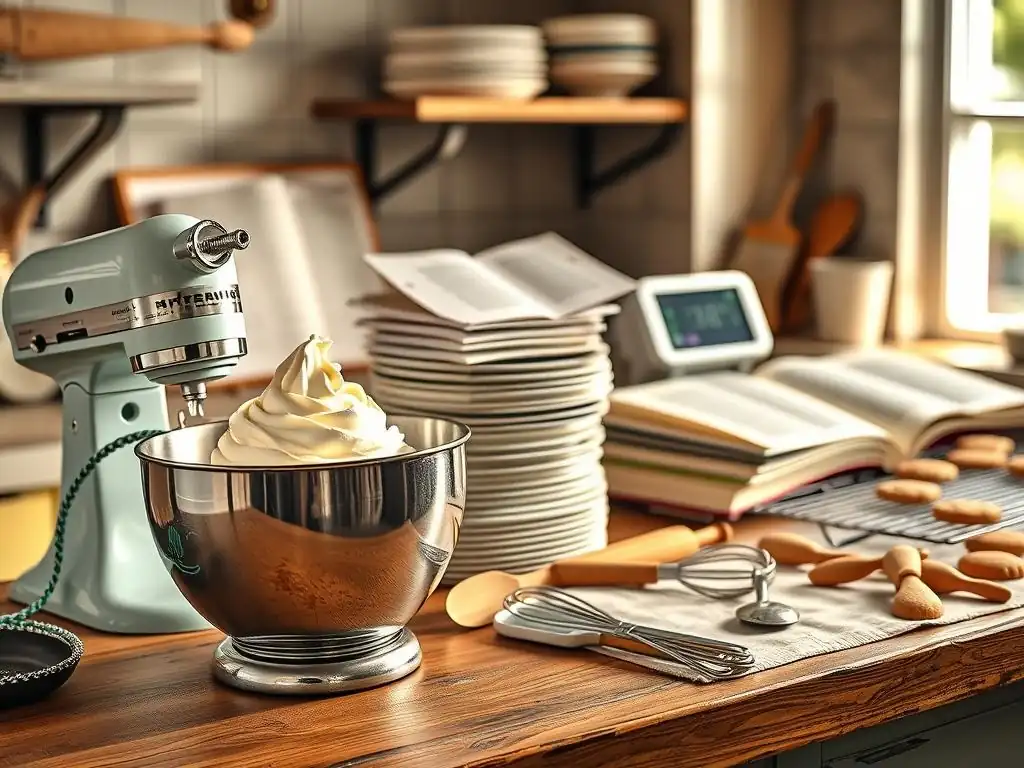
Acquiring all the items on a comprehensive essential baking equipment checklist can seem daunting from a cost perspective. However, it's possible to build a functional toolkit gradually and affordably.
Affordable Options for Key Tools
You don't need the most expensive brand names to start baking effectively. Many essential baking equipment checklist items are available from reputable, budget-friendly brands at kitchen supply stores or online retailers. Look for sales or consider purchasing sets of items, which are often cheaper than buying pieces individually.
For example, a basic set of stainless steel mixing bowls or measuring cups from a widely available brand can perform just as well for a beginner as a high-end set. Prioritize the most frequently used items first, like accurate measuring tools, a few good mixing bowls, and versatile spatulas.
DIY Baking Equipment Alternatives
Sometimes, you can find temporary or permanent DIY alternatives for items on your essential baking equipment checklist. For instance, if you don't have a pastry brush, a clean, unused paintbrush with natural bristles can work in a pinch for applying egg washes (ensure it's never been used for paint! ).
Aluminum foil can be molded into makeshift dividers in a baking pan for bar cookies. While not ideal for long-term use or precision, these alternatives can help you bake a specific recipe without immediately purchasing a new tool, allowing you to build your essential baking equipment checklist over time.
Investing in Quality Over Quantity
While starting on a budget is wise, for certain items on your essential baking equipment checklist, investing in quality can save you money in the long run. A sturdy, heavy-gauge baking sheet that doesn't warp will last for years and provide consistent results, unlike thin, flimsy ones that might need frequent replacement.
A good quality digital scale will remain accurate, and durable stainless steel tools won't rust or break easily. Consider the lifespan and performance of tools you use frequently. It's better to have a few high-quality, essential items than a drawer full of cheap gadgets that don't perform well or fall apart quickly. Build your essential baking equipment checklist with durability and performance in mind for key pieces.
Conclusion: Your Journey to Efficient Baking Starts Now
BakeWithEase: Supporting Your Home Baking Dreams
At BakeWithEase, we are dedicated to providing you with the resources and guidance you need to succeed in your home baking endeavors. We understand that having the right tools, organized effectively, is a critical component of this success. By focusing on your essential baking equipment checklist and gradually building your collection, you set yourself up for a more enjoyable and efficient baking experience.
We hope this guide helps clarify which tools are truly essential and how they contribute to baking mastery. Our goal is to empower you to bake with confidence and ease, turning your kitchen into a creative and productive space.
Mastering the Essential Baking Equipment Checklist for Success
Mastering the art of baking is a journey, and equipping yourself properly is a crucial step. By focusing on building a solid essential baking equipment checklist, starting with the basics and adding specialized tools as needed, you create a foundation for consistent, high-quality results. Precision measuring, versatile mixing tools, appropriate pans, and useful utensils all play a vital role.
Remember to organize your space and maintain your tools for maximum efficiency. With the right essential baking equipment checklist and a little practice, you are well on your way to baking delicious creations with ease and efficiency. Happy Baking!
Frequently Asked Questions
What's the most essential piece of equipment for a beginner baker, according to BakeWithEase?
The most essential baking equipment for beginners is a good digital kitchen scale for accurate measurements. This ensures consistent results and avoids common baking errors.
Does BakeWithEase recommend specific brands for any items on the "Essential baking equipment checklist"?
While BakeWithEase doesn't explicitly endorse brands, they prioritize quality over price and advise reading reviews. Consider durable materials and positive user experiences.
How does this "Essential baking equipment checklist" help experienced bakers refine their skills?
Even experienced bakers can benefit by reviewing the list to identify areas for potential upgrades or additions. Specialized tools can enhance efficiency and creativity.
Are there any budget-friendly alternatives for some of the more expensive items on the equipment checklist?
Yes, the list highlights that items like parchment paper can substitute for silicone mats, and basic mixing bowls are sufficient before investing in professional sets.
What makes having the right baking equipment so critical to success, as described by BakeWithEase?
Having the right tools significantly improves baking efficiency, reduces mistakes, and ultimately leads to better, more consistent baked goods. It makes the process more enjoyable.
Final Reflection: The Joy of Baking, One Tool at a Time
The pursuit of the perfect bake is a journey, not a destination, and the right tools are your trusty companions along the way. This article has explored the essential equipment every home baker needs to elevate their baking game, from the humble mixing bowl to the precision of a digital scale. But beyond the functionality, these tools represent a commitment to craft, a dedication to the process, and ultimately, the joy of creating something delicious from scratch.
The impact of home baking extends far beyond the kitchen table. It's a connection to tradition, a creative outlet, and a way to share love and comfort with others. Baking is at once child's play and adult joy. And love, of course.
– This quote perfectly encapsulates the feeling of creating something beautiful and delicious, and sharing it with those you care about. The rise in popularity of home baking during recent times highlights a growing desire for connection, mindfulness, and the satisfaction of creating something tangible with your own hands.
Now, consider your own baking journey. What tools do you already cherish? Which ones are calling to you from the wish list? Don't be afraid to invest in quality equipment that will serve you well for years to come. More importantly, remember that the most essential ingredient in any recipe is passion. So, gather your tools, embrace the process, and let the joy of baking fill your kitchen – and your heart.
Unleash Your Inner Pastry Chef!
Thanks for joining us on this delicious journey through essential baking equipment! We hope you've gained valuable insights into creating a more efficient and enjoyable baking experience. Now it's time to put that knowledge into action.
- Prioritize your wishlist: Identify the top 3 pieces of equipment from the article that will most improve your baking workflow, and start searching for deals! Think about what will truly make the biggest difference in your baking journey.
- Share your baking passion: Tell us (and your friends!) which tools you're most excited to add to your collection. What's your favorite baking tool and why?
- Explore new recipes: Feeling inspired? Try a new recipe – one that really showcases the potential of the equipment you've chosen (or already have!). What delicious creation will you bake first?
Ready to transform your baking game? Let's hear your thoughts!