
Your Recipe for Profit: Pricing Baked Goods Like a Pro

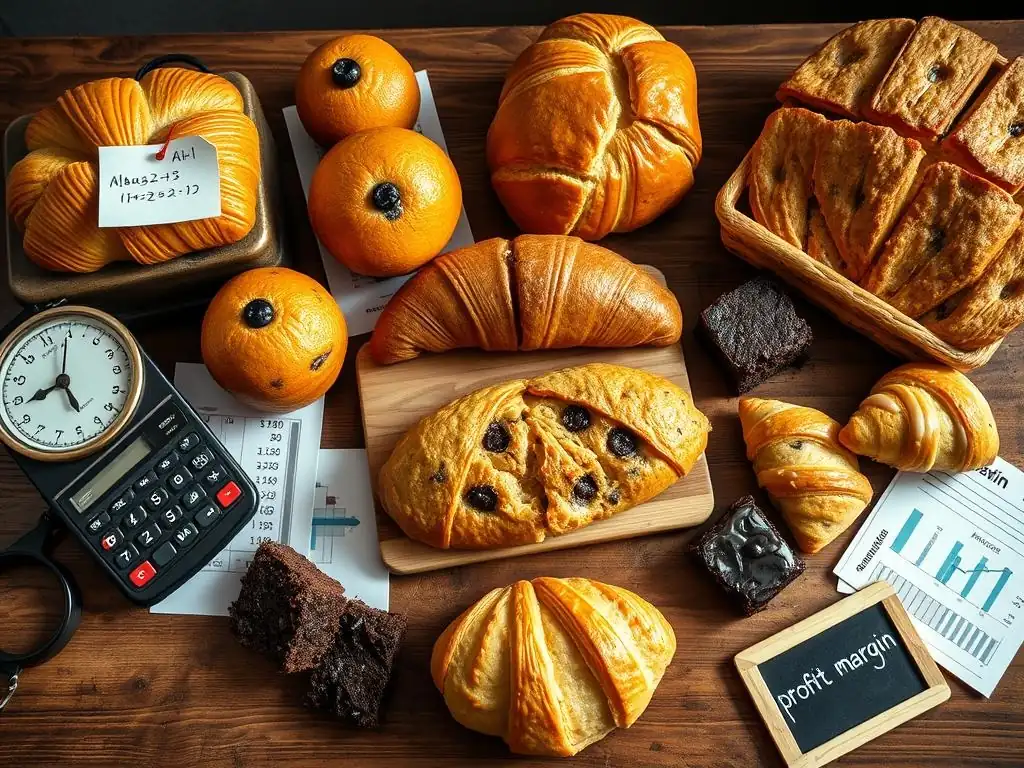
Welcome to BakeWithEase, your trusted companion on the journey to baking mastery! Are you ready to transform your passion for baking into a profitable venture? Discover the secrets to success in our latest article, "Your Recipe for Profit: Pricing Baked Goods Like a Pro," where we unlock the strategies for pricing baked goods profitably. Intrigued by the numbers behind the deliciousness? Let's dive in and turn your baking dreams into a sweet reality!
Factoring in Overhead Expenses for Baked Goods
Beyond the direct cost of ingredients, a crucial step towards pricing baked goods profitably involves accounting for your business's overhead expenses. These are the indirect costs necessary to keep your baking operation running, even if they aren't tied to a specific cake or batch of cookies. Ignoring these can severely underestimate your true costs and lead to underpricing.
Think about the electricity powering your oven, the gas for your stove, the water for cleaning, your internet and phone bills, business insurance (often a few hundred dollars annually, varying by location and coverage), marketing materials, website hosting fees, or even a small portion of your rent or mortgage if you use dedicated space. These costs add up and must be recovered through your sales to ensure genuinely profitable pricing for baked goods.
To accurately incorporate overhead into your pricing baked goods profitably strategy, you need to estimate your total monthly or annual overhead costs. Tally up everything from utilities (consider the increased usage from baking) to insurance premiums, licensing fees, and any other general business expenses. For example, your monthly overhead might include $50 for increased utilities, $15 for insurance allocation, $20 for marketing materials, and $15 for other miscellaneous fees, totaling $100.
Once you have this total, you need to allocate it across the products you sell. A common method is to divide your total monthly overhead by the average number of items or batches you expect to sell in that month.
If your monthly overhead is $100 and you anticipate selling 50 items (like cakes, dozens of cookies, or loaves of bread), you need to add $2 ($100 / 50) to the cost of each item to cover overhead. This systematic approach ensures that your prices reflect the full cost of doing business, setting a solid foundation for pricing baked goods profitably.
- How do I determine the cost of ingredients for my baked goods?
- What are some strategies for calculating labor costs when pricing baked goods?
- Besides ingredients and labor, what other expenses should I consider when pricing baked goods?
- How do I determine a reasonable profit margin for my baked goods?
- What are some common mistakes to avoid when pricing baked goods?
Frequently Asked Questions
How do I determine the cost of ingredients for my baked goods?
Carefully track the price of each ingredient used in your recipe. Divide the total cost by the number of servings to determine the per-serving ingredient cost.
What are some strategies for calculating labor costs when pricing baked goods?
Estimate the time spent preparing and baking. Assign an hourly rate based on your desired income and add this labor cost to the ingredient costs.
Besides ingredients and labor, what other expenses should I consider when pricing baked goods?
Factor in overhead costs like utilities, rent (if applicable), packaging, and marketing. Indirect costs can significantly impact profitability.
How do I determine a reasonable profit margin for my baked goods?
Research market prices for similar items in your area. Add a percentage (e.g., 20-30%) to your total costs to achieve a desired profit margin.
What are some common mistakes to avoid when pricing baked goods?
Underestimating ingredient costs, ignoring overhead expenses, and failing to account for your time and effort are common pitfalls. Always factor in all costs.
Final Reflection: The Sweet Science of Profitable Baking
The art of baking delicious treats is only half the battle; understanding how to price them profitably is the key to a thriving business. Ignoring the crucial element of pricing can lead to financial instability, even for the most talented bakers. This article has explored various pricing strategies, from cost-plus to value-based pricing, highlighting the importance of understanding your costs, your target market, and the perceived value of your products. This isn't just about numbers; it's about ensuring the sustainability and growth of your passion.
The impact of accurate pricing extends far beyond the immediate financial gain. It allows bakers to invest in better ingredients, expand their offerings, and ultimately, share their passion with a wider audience. This journey of understanding pricing has been a personal one for me, reminding me that passion alone isn't enough to sustain a business. The price is what you ask. Value is what the customer gets.
This quote perfectly encapsulates the delicate balance between cost and perceived worth that every baker must navigate.
Now, it's your turn. Take the knowledge gained from this article and apply it to your own baking endeavors. Don't be afraid to experiment with different pricing strategies, analyze your results, and adjust your approach as needed. Remember, mastering the art of profitable pricing isn't a destination, but an ongoing process of learning and refinement. Embrace the challenge, and watch your baking business flourish!
Unlock Your Baking Business's Full Potential!
Thanks for diving into the world of profitable pricing! We hope you now feel confident in setting prices that reflect your skills and ingredients. Ready to take the next step?
- Calculate your ideal prices using our free worksheet: Download our easy-to-use template (link to a worksheet on the site would go here) and see how much you could be earning! This is your key to unlocking sustainable profits.
- Share your pricing strategies with fellow bakers: Join our online community forum (link to a forum on the site would go here) and share your insights – let's learn from each other's successes!
- Experiment with a premium pricing test: Try raising your prices slightly on a few select items to see the customer response. This might surprise you!
What delicious pricing strategies will you implement first? Let's discuss in the comments!