
The Sweet Science of Pricing Your Home Baked Treats


Welcome to BakeWithEase, your trusted guide to the delicious world of baking! Ever wondered about the sweet science behind pricing your home baked treats? It's more than just ingredients and time; it's about value, passion, and profit. Discover the secrets to setting prices that reflect your hard work and keep your customers coming back for more. Let's unravel the mysteries and turn your baking passion into a flourishing business, starting right now...
Baking Up Profits: Your Guide to Pricing Success
Understanding how to price your home baked treats isn't just about covering costs; it's a fundamental recipe for building a sustainable and profitable home baking business. Many passionate bakers underestimate the true value of their time, skill, and the quality ingredients they use, leading to underpriced goods that hinder growth. Properly pricing home baked treats ensures you're compensated fairly for your effort and allows you to reinvest in your business, whether that's buying better equipment or sourcing premium ingredients.
The goal is to find a sweet spot where your prices are attractive to customers while still yielding a healthy profit margin. This involves a blend of careful calculation, understanding market dynamics, and recognizing the perceived value of your delicious creations. Mastering the art of pricing home baked treats is a continuous process, requiring regular review and adjustment as your business evolves, your costs change, or market demand shifts.
- What are the primary factors to consider when pricing home-baked treats?
- How can I determine the cost of my ingredients accurately?
- What methods can I use to value my time and labor?
- Should I charge the same price for all types of baked goods?
- How can I research the optimal pricing strategy for my local market?
Understanding the Cost of Your Home Baked Treats
Identifying Direct Costs: Ingredients and Packaging
The most obvious costs when pricing home baked treats are the direct expenses tied to each item you bake. This includes all ingredients, from flour, sugar, butter, and eggs to flavorings, leavening agents, and any special additions like premium chocolate or fresh berries. It's crucial to track the cost of every ingredient down to the gram or milliliter used in a specific recipe batch.
For example, if a bag of flour costs $4 and contains enough for 10 batches of cookies, the flour cost per batch is $0.40. Similarly, if a dozen eggs cost $3.60, the cost per egg is $0.30.
Beyond the ingredients themselves, direct costs also encompass packaging materials. This includes boxes, bags, labels, ribbons, and any protective wrapping used to present your baked goods beautifully and safely. A custom cupcake box might cost $1.50, while a simple cookie bag and label might be $0.25. Accurately calculating these costs per item or per batch is the essential first step in determining a baseline price when pricing home baked treats.
Factoring in Indirect Costs: Utilities, Equipment, and Labor
Indirect costs, often called overhead, are expenses not directly tied to a single batch but are necessary for your business to operate. These include utilities like electricity and gas used for baking, water for cleaning, and internet for managing orders and marketing. You also need to account for the depreciation of your equipment, such as mixers, ovens, baking sheets, and cooling racks. While these aren't used up in one go, they have a lifespan and represent a cost over time.
Furthermore, your time is a significant indirect cost. While it might feel like a hobby, running a home baking business requires paying yourself for the hours spent baking, decorating, packaging, marketing, communicating with customers, and managing finances. Even if you don't pay yourself a strict hourly wage initially, you must factor in the value of your labor when pricing home baked treats to ensure the business is viable long-term. Consider what you would need to earn per hour to make it sustainable.
Calculating Your Total Cost per Item/Batch
Once you've meticulously tracked both your direct and indirect costs, the next step is to calculate the total cost associated with producing a specific item or batch of baked goods. Start by summing up all ingredient and packaging costs for that specific recipe. For instance, a batch of 24 chocolate chip cookies might have $5.50 in ingredient costs and $2.00 in packaging if sold in two dozen-count bags.
Then, you need to allocate a portion of your indirect costs to that batch. This is often done by estimating the percentage of your total monthly overhead (utilities, estimated equipment depreciation, marketing, etc.) that applies to the time spent on that particular batch or item. A simpler method for labor is to estimate the hours spent per batch and assign a value (even if aspirational) to that time.
Adding the direct costs ($7.50 in our cookie example) to the allocated indirect costs (perhaps $3.00 for labor, utilities, etc.) gives you a total cost of $10.50 for the batch of 24 cookies, or roughly $0.44 per cookie. Knowing this absolute minimum cost is crucial for pricing home baked treats effectively.
Pricing Strategies for Home Baked Treats
Cost-Plus Pricing: A Foundation for Profit
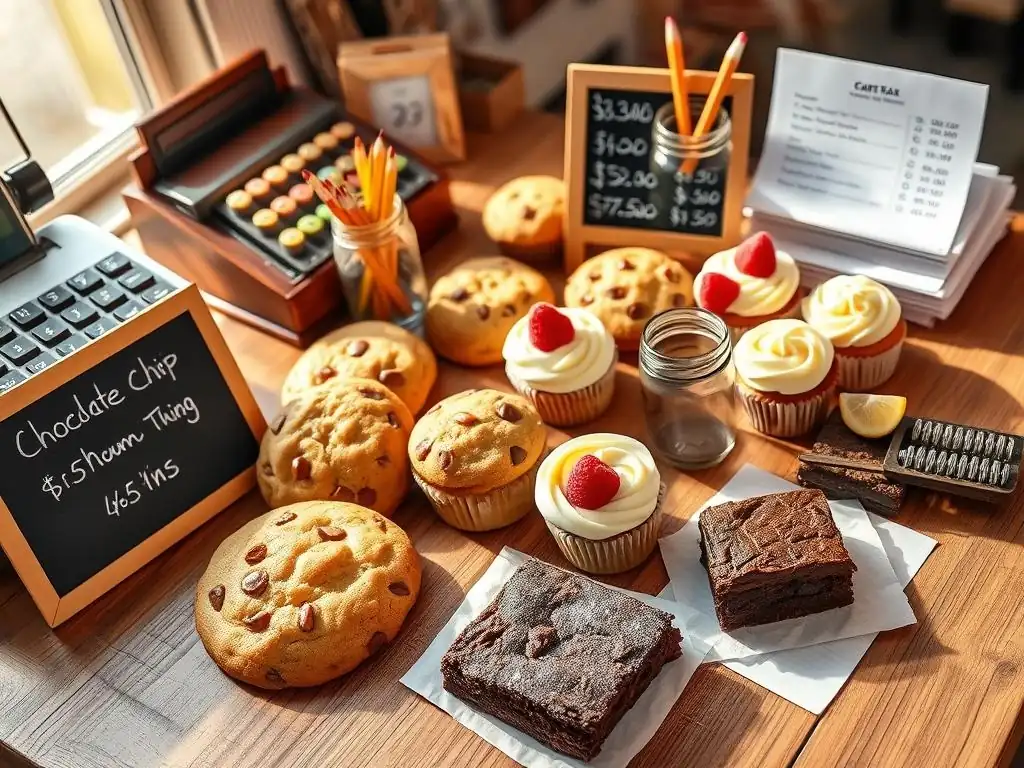
Cost-plus pricing is a straightforward strategy where you calculate the total cost to produce an item (ingredients, packaging, labor, overhead allocation) and then add a desired profit margin percentage. For example, if the total cost for a dozen cupcakes is $12, and you aim for a 50% profit margin, you would add 50% of $12 ($6) to the cost, resulting in a price of $18 per dozen. This method is easy to understand and ensures that, theoretically, every sale contributes to your profit after covering all expenses.
While simple, cost-plus pricing doesn't account for market demand or the perceived value of your unique baked goods. It provides a solid baseline but shouldn't be the only factor when pricing home baked treats. It's particularly useful when you are starting out and need a clear method to ensure you aren't selling at a loss. Always verify your cost calculations are accurate to make this strategy reliable.
Value-Based Pricing: Reflecting Quality and Craftsmanship
Value-based pricing focuses on what customers are willing to pay based on the perceived benefits and quality of your baked goods, rather than just your costs. If you use premium organic ingredients, offer intricate designs, cater to specific dietary needs (like gluten-free or vegan), or have developed unique, sought-after recipes, customers may perceive higher value. For instance, a custom-decorated cake for a special occasion holds much higher value than a simple sheet cake, justifying a significantly higher price.
To implement value-based pricing home baked treats, research what similar high-quality or specialty bakers charge. Consider the complexity of the decoration, the rarity of the ingredients, your reputation, and the emotional value the baked good brings to the customer (e.g., a wedding cake). This strategy can lead to higher profits, but requires strong branding and communication to convey the unique value you offer.
Competitive Pricing: Understanding Market Rates
Competitive pricing involves researching what other local home bakers, small bakeries, or even grocery stores charge for similar baked goods. This helps you understand the general price range customers expect in your area or online market. While you shouldn't blindly match the lowest price (especially if your costs or quality are higher), being aware of competitor pricing is essential for positioning your business.
Use competitive pricing as a reference point, but don't let it dictate your price entirely. If your costs are higher due to premium ingredients, you'll need to price higher than someone using standard ingredients. If your unique selling proposition (USP) is convenience or speed, you might adjust differently. Regularly checking competitor prices helps you stay informed and make strategic decisions when pricing home baked treats.
Premium pricing is a strategy where you deliberately set higher prices to position your baked goods as high-end, exclusive, or luxurious. This works well if you focus on gourmet ingredients, offer highly customized or artistic creations, have a strong brand story, or cater to a niche market willing to pay more for exceptional quality and experience. For example, a baker specializing in French macarons made with imported almond flour and unique flavor combinations might use premium pricing.
Successfully employing premium pricing requires consistent, exceptional quality, stunning presentation, and effective marketing that communicates the superior value. Customers paying a premium expect an elevated experience, from the initial inquiry to the final bite. This strategy, when done right, can lead to higher profit margins on each sale, reflecting the perceived prestige of your home baked treats.
Setting Prices That Attract Customers and Ensure Profit
Determining Your Desired Profit Margin
Before calculating your final price, you need to decide on a target profit margin. This is the percentage of the selling price that remains as profit after all costs (direct and indirect) are covered. A common range for small food businesses might be anywhere from 25% to 60% or even higher for highly specialized items. Your desired margin should reflect your business goals – whether you aim for modest supplementary income or want to build a full-time career.
Consider what profit margin is necessary to make your time and effort worthwhile and allow for business growth. If your total cost for a dozen cookies is $10.50 and you sell them for $25, your profit is $14.50, and your profit margin is ($14.50 / $25) * 100 = 58%. Setting a realistic yet ambitious target margin is crucial when pricing home baked treats to ensure your business is sustainable and rewarding.
Calculating Your Final Price Point
Combining your cost calculations with your chosen pricing strategy and desired profit margin allows you to determine a final price point. A simple formula using cost-plus as a base is: Price = (Total Costs) / (1 - Desired Profit Margin as a Decimal). Using our cookie example with a $10.50 total cost and a desired 50% profit margin (0.50): Price = $10.50 / (1 - 0.50) = $10.50 / 0.50 = $21.
However, this is just a starting point. You must then consider market competitiveness and perceived value. If competitors sell similar cookies for $18, selling yours at $21 might be challenging unless you can clearly demonstrate higher value. Conversely, if your cookies are significantly better or larger, you might find customers willing to pay $25 or more. The final price is a balance between covering costs, achieving profit, meeting market expectations, and reflecting your unique value when pricing home baked treats.
Different types of baked goods have inherently different cost structures and market expectations, requiring varied pricing approaches. Cookies often have lower per-unit ingredient costs but require significant labor for scooping, baking multiple batches, and packaging, especially for large orders. They are typically priced per dozen or per pound.
Cakes, particularly custom or tiered cakes, involve higher ingredient costs (especially for frosting and fillings), significantly more complex labor for baking multiple layers, carving, stacking, and decorating, and specialized packaging. Pricing custom cakes often involves quoting based on servings, design complexity, and ingredients. Cupcakes are usually priced per dozen, with costs varying based on frosting complexity and decorations. Pies have costs tied to fruit fillings, crust ingredients, and baking time, typically priced per pie. Understanding these differences is key to consistent and fair pricing home baked treats.
Optimizing Your Prices for Different Sales Channels
Pricing for Online Sales vs. Markets and Fairs
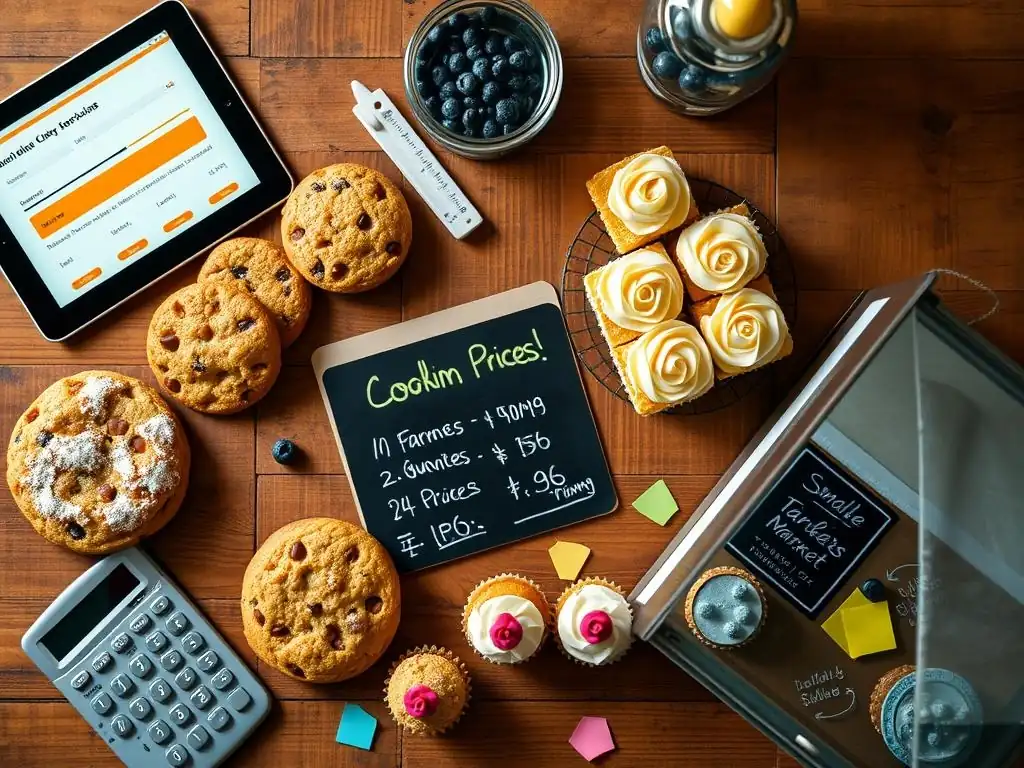
Where you sell your baked goods impacts your costs and how you should price them. Selling online often involves platform fees (like Etsy or a website's transaction fees), shipping costs (which might be passed to the customer or partially absorbed), and the effort of managing online orders and packaging for transit. Prices might need to be slightly higher online to account for these factors, or you might offer different package sizes or bundles.
Selling at local farmers' markets or craft fairs involves booth fees, transportation costs, and the labor of setting up and selling in person. While you save on shipping, you might need to adjust prices based on the local market's expectations and perceived value in a face-to-face setting. Customers at a market might be more willing to pay a slight premium for fresh, locally made goods they can see and smell. Balancing these channel-specific costs and customer behaviors is vital for effective pricing home baked treats.
Adjusting Prices Based on Customization and Complexity
Custom orders, such as personalized cakes, specific flavor combinations not on your standard menu, or intricate cookie designs, require extra time, effort, and sometimes unique ingredients or supplies. These factors must be reflected in your pricing. A highly detailed sugar cookie with multiple colors of royal icing will cost significantly more in labor and materials than a simple drop cookie.
Develop a clear system for quoting custom work. This might involve base pricing for standard items plus add-ons for complexity (e.g., +$10 for custom colors, +$20 per hour for intricate piping, +$5 per tier for stacking). Be transparent with customers about how customization affects the price when discussing their order. Accurately valuing your time and skill for complex work is crucial when pricing home baked treats for custom requests.
Wholesale Pricing Strategies for Retail Partnerships
If you plan to sell your baked goods to local cafes, delis, or shops for them to resell, you'll need a wholesale pricing structure. Wholesale prices are typically 40-60% lower than your retail prices, allowing the reseller to make a profit margin. While the per-item profit is lower, wholesale orders are often larger and more consistent, providing a steady revenue stream.
Calculate your wholesale price by ensuring it covers your total costs (direct + indirect allocation + labor) and still provides a small profit margin (even if smaller than retail). For example, if your total cost for a loaf of bread is $3.00 and your retail price is $7.00, your wholesale price might be $4.00-$4.50. Clearly define minimum order quantities and delivery terms when establishing wholesale relationships and pricing home baked treats for retail partners.
Legal and Regulatory Considerations for Pricing Home Baked Treats
Understanding Sales Tax Requirements
Sales tax requirements for home-based food businesses vary significantly by location (state, county, and city). In some areas, unprepared food items (like flour) are not taxed, while prepared food items (like your baked goods) are. You are typically responsible for collecting sales tax from your customers at the point of sale and remitting it to the appropriate tax authorities.
It's crucial to research the specific sales tax laws in your area and understand if your home baked goods are taxable. This tax is usually added on top of your selling price, so it doesn't directly impact your profit calculation per item, but you must factor it into the final amount charged to the customer. Consult with your local tax authority or a small business advisor to ensure compliance when pricing home baked treats.
Many regions have regulations regarding the labeling of food products, especially those made in a home kitchen under cottage food laws. These often require listing ingredients (including sub-ingredients), potential allergens (like nuts, dairy, eggs, wheat, soy), your business name and address, and a statement indicating it was made in a home kitchen not subject to state inspection (where applicable).
While not directly part of the price calculation itself, complying with labeling laws is a cost of doing business (labels, printer ink, time). More importantly, accurate labeling builds trust with customers and is a legal necessity. Mislabeling can lead to fines or legal issues. Ensure your labels are compliant before selling your home baked treats.
Business Licensing and Insurance Considerations
Operating a home-based food business often requires specific licenses or permits, depending on your local cottage food laws. This might involve registering your business name, obtaining a food handler's permit, or registering your home kitchen. These licenses have associated fees that are part of your overall business costs and should be factored into your overhead when pricing home baked treats.
Additionally, while not always legally required for small home businesses, liability insurance is highly recommended. This protects you in case a customer gets sick or has an allergic reaction from your product. Insurance premiums are another overhead cost. Understanding and budgeting for these legal and administrative expenses is vital for the long-term health and legitimacy of your home baking business.
Tools and Resources for Pricing Your Baked Goods

Spreadsheet Templates for Ingredient and Expense Tracking
Manually tracking every gram of flour or drop of vanilla extract can be tedious, but it's essential for accurate cost calculation. Using a spreadsheet program (like Excel, Google Sheets, or Numbers) can greatly simplify this process. You can create templates to input ingredient costs per unit (e.g., cost per pound, per cup), then link these to recipe templates where you input the quantities used. The spreadsheet can then automatically calculate the ingredient cost per batch.
Beyond ingredients, use the spreadsheet to track all other expenses: packaging, utilities, market fees, marketing costs, etc. This allows you to calculate your total monthly overhead and allocate it appropriately. Having a clear visual breakdown of where your money is going is invaluable for informed pricing home baked treats and overall business management.
Online Marketplaces and Pricing Guides
Explore online marketplaces like Etsy, local Facebook groups, or dedicated food platforms to see how other home bakers are pricing similar items. While not definitive, this provides a pulse on market expectations and can help you refine your competitive pricing strategy. Look at bakers with similar quality levels, ingredient sourcing, and branding to get a realistic comparison.
Some online resources or baking business communities may also offer general pricing guides or calculators. While these should only be used as starting points, they can provide a basic framework or highlight costs you might not have considered. Remember that local costs (ingredients, labor rates) vary, so always tailor generic guides to your specific situation when pricing home baked treats.
Photography and Presentation Resources
High-quality photos and appealing presentation significantly impact the perceived value of your home baked treats, allowing you to potentially command higher prices (value-based or premium pricing). Invest time in learning basic food photography – good lighting, simple backdrops, and appealing arrangements can make your cookies, cakes, and pies look irresistible online and in person.
Resources like online tutorials, food photography blogs, or even local workshops can help you improve your visual marketing. Similarly, researching attractive and functional packaging options adds to the perceived value and customer experience. While not a direct pricing tool, enhancing your presentation is a resource that supports higher price points by showcasing the quality and care you put into your home baked treats.
Tips for Successfully Pricing Your Home Baked Treats
Track Your Expenses Meticulously
This cannot be stressed enough: accurate expense tracking is the bedrock of profitable pricing home baked treats. Keep receipts for every ingredient purchase, packaging supply, market fee, and utility bill. Use your spreadsheet template or accounting software religiously. Knowing your true costs down to the penny for each item or batch is the only way to ensure your prices cover expenses and generate profit.
Regularly reviewing your expenses helps you identify areas where you might reduce costs (e.g., buying ingredients in bulk) or where costs have increased, necessitating a price adjustment. Without meticulous tracking, you are essentially guessing, which is a risky approach for any business, especially one built on narrow food margins.
Regularly Review and Adjust Your Prices
Pricing isn't a one-time task. Ingredient costs fluctuate, your efficiency improves (or decreases), market demand shifts, and your business goals may change. Make it a habit to review your pricing at least annually, or even quarterly. Re-calculate your costs based on current ingredient prices and overhead. Assess your profit margins – are you hitting your targets?
Also, gather feedback from customers (informally or formally) and observe competitor pricing. Don't be afraid to adjust your prices upwards if your costs have risen or if you've added new skills or premium offerings. Communicate price changes clearly to your customers. Regular review ensures your pricing home baked treats remains competitive and profitable over time.
Showcase Your Unique Value Proposition
What makes your home baked treats special? Is it a secret family recipe, the use of local farm-fresh eggs, gluten-free options that taste amazing, stunning custom designs, or exceptional customer service? Clearly articulate and showcase your unique value proposition (UVP) in your marketing and customer interactions.
Highlighting what sets you apart justifies your prices, especially if they are on the higher end. Customers are often willing to pay more for quality, uniqueness, or a product that meets specific needs. Ensure your photos, descriptions, and conversations with customers consistently emphasize your UVP to reinforce the value behind your pricing home baked treats.
Offer Limited-Time Promotions and Discounts
While maintaining profitable prices is key, strategic promotions can attract new customers, move excess inventory, or boost sales during slow periods. Consider offering a small discount on first orders, a loyalty program, a special price on a seasonal item, or a bundle deal (e.g., a cookie and brownie combo).
Use promotions judiciously so they don't devalue your products in the long run. Clearly define the duration and terms of the offer. Promotions should be calculated to still cover costs and contribute something to profit, even if the margin is temporarily reduced. They are a tool to drive sales, not a substitute for proper pricing home baked treats.
Conclusion: Mastering the Art of Pricing for Baking Success
Sweet Success: Empowering Home Bakers to Flourish
Pricing your home baked treats is a crucial element of running a successful and sustainable baking business. It goes beyond simply picking a number you feel customers will pay; it requires a thoughtful process of understanding your true costs, evaluating your unique value, researching the market, and setting prices that ensure you are fairly compensated for your passion and skill. By meticulously tracking expenses, strategically applying pricing methods, and regularly reviewing your approach, you build a solid foundation for profitability.
Embracing the "sweet science" of pricing home baked treats empowers you to move from hobbyist to thriving entrepreneur. It allows you to confidently invest in your business, improve your offerings, and achieve your financial goals. Remember, your delicious creations are valuable, and setting the right price is key to sharing them profitably with the world.
Frequently Asked Questions
What are the primary factors to consider when pricing home-baked treats?
The main factors include the cost of ingredients, your time and labor, and the overhead expenses like utilities and packaging. These form the base for calculating a profitable price.
How can I determine the cost of my ingredients accurately?
Keep a detailed record of all ingredients used per batch and their prices. Calculate the cost per unit (e.g., per cookie or slice of cake) to ensure accurate pricing.
What methods can I use to value my time and labor?
Consider your hourly rate if you were working a similar job. Alternatively, research the average price for similar baked goods in your local area and adjust accordingly.
Should I charge the same price for all types of baked goods?
No, different baked goods require varying amounts of time, skill, and expensive ingredients. Price each item according to its individual inputs and complexity.
How can I research the optimal pricing strategy for my local market?
Check prices at local bakeries, farmers' markets, and online platforms. This market research will provide a benchmark and help you position your prices competitively.
Final Reflection: The Enduring Allure of the Perfect Price
The art of pricing home-baked goods isn't just about profit; it's about valuing your craft and connecting with your customers. In a world increasingly dominated by mass production, the personal touch of a homemade treat holds immense value, and understanding its true worth is crucial for success. This delicate balance between cost, effort, and perceived value is what separates a hobby from a thriving business.
The impact of thoughtfully pricing your baked goods extends far beyond the immediate transaction. It reflects your dedication to quality ingredients, your passion for baking, and your respect for the time and skill invested in each creation. This resonates deeply with consumers seeking authenticity and a personal connection to their food. The price is not just a number; it's a story.
This simple truth underscores the importance of understanding your own narrative as a baker and translating that into a price that accurately reflects your unique offering.
Now, consider your own baking journey. What unique elements define your treats? What is the true cost of your time, ingredients, and the passion you pour into each batch? Take a moment to reflect on these questions, and use this knowledge to confidently price your creations. Don't undervalue your talent; embrace the power of pricing to build a sustainable and fulfilling business, one delicious treat at a time.
Unlock Your Baking Business's Sweetest Potential!
Thanks for diving into the world of profitable baking! You've now got the tools to price your delicious creations confidently. Ready to take the next step and turn your passion into a thriving business?
- List your treats today! Start small, maybe with a local farmers market or online platform. Get those amazing baked goods in front of hungry customers!
- Share your pricing strategy with fellow bakers in our online forum. Let's inspire each other and learn from one another's successes (and maybe even some delicious failures! ).
- Experiment with different pricing models – track your sales and see what resonates best with your customers. Which approach feels most rewarding to you?
What's your favorite aspect of the pricing process – and what are you most excited to try next?